The Letterman Podcast · Episode 39
Lee Ellenberg Part 1
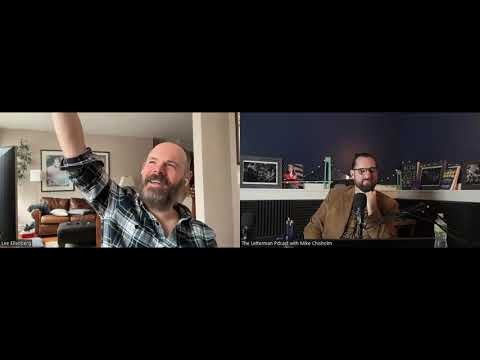
Lee Ellenberg is currently a writer for Jimmy Fallon’s Tonight Show. He also worked for David Letterman & Company in one capacity or another from 1994 all the way until the end of the run in 2015. He was a page, worked in audience coordination, worked the reception desk for Dave’s floor as well as the writer’s floor, and for 15 years was a full fledged writer for Late Show with David Letterman. In part one we talk about the first part of Lee’s career with Letterman, and he gives great insights as to how the show worked, and how he progressed up the ladder to his literal dream gig.
As always, The Letterman Podcast is brought to you in part by Rupert Jee and The Hello Deli. Nestled in the womb of the Ed Sullivan Theater for 30 years, Rupert and May have served soups and sandwiches to the delight of tens of thousands of people. They also are the only place to get official Late Show with David Letterman merchandise. Go to hello-deli.com to shop to your heart’s content. Rupert packs all the orders with care and if you ask very nicely, he might add onions as well.
Please take time to Like, Share, Subscribe and leave a positive comment for The Letterman Podcast. For every subscription we receive, Mike will throw a peanut to a squirrel, despite signs clearly telling him not to do so.
Episode Transcript
Read full transcript
Hi, this is Rupert Jee from the Hello Deli and you're currently watching the Letterman podcast. Welcome to the Letterman podcast. My name is Mike Chisholm. I'm going to shoot this intro right now just as my guest has left the building. The guest of this show, Lee Ellenberg, was a writer for the Late Show with David Letterman from 2000 to 2015. His relationship with the show, however, began six years sooner. Started in '94 as a page for the Late Show and went all the way to the end of the run. Right now he is a writer for the Tonight Show. Can you think of more of a fairy tale for somebody who wanted to be a comedy writer? Imagine if he didn't want to be a comedy writer and that was his life. I mean, thank goodness he did. He did from from a very early age want to be a comedy writer and and and and got to live you know, a dream come true to say the least and is still doing so. Very, very cool conversation that he and I had.
This is going to be part one of two. Part one is going to go all the way and talks a lot about some of the things that he saw and experienced before actually becoming a writer. Part two's going to come out next week and that's going to be Lee um you know, talking about how life changed and what changed after becoming a writer. I will tell you this, I'm going to pre-curse this. I didn't get to everything I wanted to get to. Fortunately, he's going to come back on. Maybe we'll have him and Joe Grossman on one day and we'll talk about this stuff. But either way um the Letterman podcast is proud to present Lee Ellenberg part one. So, when did you start working for the Tonight Show? I started working for the Tonight Show October of 2020. Of 2020, so it's only been a couple years. It's been 2 years, yeah. And and you're there with your with your buddy Joe Grossman. Now, that's got to be kind of fun.
It's great, actually. There's a um a pretty decent representation of Letterman guys. Uh one of the head writers is Paul Mecella, who was a writer at um at Letterman, and Chris Ballew. Um so, you know, I mean, it's a much larger writing staff um at The Tonight Show, but you know, it's nice to be able to work with some of my old buddies. Oh, that's awesome. And it's even greater working with this new bunch, you know? It's it's uh it's a lot of fun. I uh I will get we'll get to that. I I do There's a couple little things I want to ask you about The Tonight Show in a second here. Um Lee Ellenberg, I I'm so happy that you're here. Now, Joe Joe Grossman, or more accurately, uh uh uh through Joe Grossman, he has told us um that his wife actually has said that you are the most uh well-adjusted uh normal comedy writer that she's ever met. Is that something that you get a lot, or did you just hoodwink her?
Um well, I well well, another friend of mine once said that the most abnormal thing about me is how normal I am. Um I don't know how true I think I put on a good act. Like, I feel like Joe always kind of overstates my uh social gifts and understates his own. Um I don't think I don't think I mean, if Joe was sitting here, he would shoot me a look, but I don't think Joe and I are that different. You know, um I really don't. I mean, I don't think I'd be um as good friends with him if we weren't, you know? Um I'm so, I I don't think there's that big of a difference between us, to be honest. If if there's one difference, I mean, if you put us in a room full of people, I'm probably I'm probably a little I can negotiate that a little better than he, but you know, I I think we're all pretty well adjusted in our own way. I I I don't think I really don't think I'm that much different than the other writers I've met to be honest with you.
Um I I just I love this conversation like talking with the writers is a unique part of this experience for me here because the the the personalities are so eclectic and and and you know, you know, Steve O'Donnell has talked about that a little bit and and and that many writers like, you know, collect things or have these little eccentricities. Steve Young went as so far as to say that, you know, the the broken comedy writers mentality when, you know, when something is hilarious and you just go, "Huh, yeah, that's funny." You know, That's true. You know, and and it's it's comedy writers are such an interesting breed. They're fascinating to me in in in how they think and view the world and articulate those things. Did you always know you wanted to be a comedy writer? How did that How did that manifest? I always did. I always It It never felt like a conscious decision for me, to be honest with you.
Um like I never had a moment I mean, you know, as a kid you want to be a fireman, you want to be an astronaut. Sure. You know, I wanted to be Indiana Jones, but then it's I wanted to be a Ghostbuster. There you go, you know, and there's and there's still time. But I think when it became when getting a job was a thing that I knew I needed, this was what I wanted to do. So, yeah, I I really don't even remember making the decision. And I will say, I can't begin to tell you how just it made college a much more stress-free time cuz I saw a lot of kind of indecis- I'm sure you did, too. Like all this almost indecision and worry around me, and I was spared that. Oh, the kids who wanted who knew they were going to be a teacher, or they knew they were going to be a veterinarian or whatever, they were just like, "Oh, yeah, straight path. Uh these are the classes I'm going to take. This is the end game, and it's there."
It's the kids who were getting the, you know, the BA of of arts or something like just the general studies stuff that I'm not I'm not certain. Um so you tailor-made your college experience to become a a comedy writer. Well, I went to Binghamton, and there was no communications program when I was there. Okay. So, you know, there you know, my my friend two of my friends had a radio show, so I kind of hung around with them and did that, but I really did nothing during college to help um further this goal. Um I should have. That was a big mistake of mine. I should have gotten internships and all that stuff. I didn't do it, but college like I I'm trying to If my parents watch this, I I want to say this diplomatically. I knew college would do absolutely nothing for my career. Okay. I just knew I needed to graduate college, and I wanted them to feel good that I hadn't wasted their money. So I thought, "Well, you know, if I can get Although to my parents' credit, they always said, "You know, if it's a choice between um getting an A and being miserable and getting a B and having a blast, go have a blast."
Oh, that's fantastic. So I got a B and had a blast. Oh, that's great. but I you know, it's so uh you know, I I still remember in a way it's kind of haunts me in a way. I remember towards the end of my senior year, I was in this class cuz I was in the business school, I I say, for no reason. I didn't know what I wanted to do. I figured if it was my dad's advice. He said, "Look, until it you get the job, maybe a business degree could help." So, that's what I did. And I remember common sense there. Absolutely. And I remember being in this class. It was a human resources class. It was about 300, 350 people. And this is towards the end of senior year when, you know, a lot of the students started getting job offers and, you know, um and feel free to edit this out of This is boring, by the way. all. And um I I so distinctly remember cuz this is now when a bunch of people I knew had already accepted job offers.
And one guy raised his hand and said to the professor, "I was offered a job. I accepted the job in an accounting firm. It's, you know, it was like a lot of money coming out of college. Sure. And um he said, "The thing is, I don't love accounting." And I'll never forget the professor took a beat, stared him right in the eye, and said, "My prediction is in 5 years you won't be an accountant." And I can't begin to tell you just the hush that came over this room because everyone was in the same kind of boat cuz they just thought, "Oh my god, did I just make this mistake? Did I waste my 4 years?" And I have to say that, you know, I just felt even though they were making they were going to be making so much money that more money than I would, I just felt so grateful that I was being spared that. That I didn't have that doubt. Um and I saw it in the kid's face. It's, you know, he And I felt bad for him because he had worked so hard for this goal, but in a way he was kind of heartbroken. And I just thought, you know, I'm it might be a struggle. I, you know, I might go long stretches of my career without jobs.
Yeah. But, you know, I at least I won't have that. And, you know, that I always always always think about that. So, Lee, I I I you know, you and I don't know each other all that well when it comes to you know, the other the podcasting chops that I have were developed because I actually host a men's mental wellness podcast. My wife is building a men's mental wellness app called he changed it. You know, her and her team are brilliant and I'm just this dummy watching in the background. But, I I I can talk and I and I am interested and curious and whatnot. So, I and of course my David Letterman adoration from Yeah. you know, forever. I'm the opposite of you in that regard. And and and it's so funny that there are so many guys out there and this is a topic of the podcast constantly. Middle-aged men right now, many of them are having a crisis of purpose. They they they they they connected the dots they were supposed to connect.
You know, your parents were great in the sense that says you know, don't get the A, go have the B and have a blast. A lot of other dudes went through life where it was like, no, no, no, you follow this path, get the good job with the good benefits, you know, get the house, get the family, all that kind of stuff. And they're there in their 40s and 50s now going, okay, well, I did everything I was supposed to do, but they're not scratching that purpose itch. And one of Absolutely.
There's this crisis in that. The fact that in your early 20s, you were able to see that crossroad, recognize it and take I'm not being hyperbolous in saying the path of the the the the narrow path. Most people would take the money and go for the job and think that that's going to bring them happiness. When no, you want to you want to feel what's inside you. But, you know, it's not a function of of my being so wise. It was more that I knew what I wanted to do. Like I said, I didn't feel like the decision had been made for me. So, I felt like this was sort of just like a you know, a benefit of that. I mean, there's certainly a lot of downsides to it. Sure. um Well, there's struggle. Yeah, but but you know, like I have at my age now I I came to realize that like you know, it's the question is always well, what do you want to do when when young people start thinking about their careers where is now I feel like the question you should really ask yourself is how do you want to feel?
Like in other words, do you want to feel like those I won't have to worry about you know, feeding myself or putting a roof over my head or you know, like that I just know I'll always be able to pay my bills or do you want to feel like you know, every day I go to a job where I'm met with the the set of challenges and not only do I believe I have the skillset to meet these challenges, but I mean find it fulfilling to meet these challenges.
Yes. And I feel like that's the and I know plenty of people who say, you know what? I'd much rather pay my bills Yeah. Maybe that's security. Yeah, and just learn the banjo on Saturday and I can scratch that itch there. Which is fine, but I think that's you know, um And again, there's a lot of downsides to this. Unless you're one of those fortunate few who can merge the two and be which most of us, let's be honest, can't. I just felt like I knew that if I had chosen that other path, I would forever be questioning myself. Like and so, you know, that was very that was very important to me. It's so cool getting this stuff out of the way, kind of learning about your mindset then versus now and all these things as we as we kind of we're setting a beautiful table here. Where did you grow up? Brooklyn. You're a Brooklyn boy. I look so tough. Oh man. And and I mean, okay, of of all of the I mean, Letterman at the end of the day, you know, a national international institution that you know, kids from Western Canada absolutely fell in love with whatever, but at the end of the day, a New York guy, a New York institution, it was a New York show.
Did you gravitate to it immediately? Yeah, yeah, pretty much. I mean, I was I I don't remember The Morning Show at all. I remember actually we were on a family trip and my brother and mother were watching and they were in the other room laughing. And I so distinctly remember this and asking them, you know, what they were watching and they were saying there's a new guy, he's got a late night show, it's on after Carson, David Letterman. And so, you know, because they watched it, well, I wanted to be a part of it. And then, you know, you kind of like I eased my way into it and then by the time I was probably about 13 or so, like Dave had been on NBC at at The Late Night Show a few years, then I just became hooked and I just started watching it every night and then I remember how big a a deal it was when he went from four nights a week to five nights a week because now I didn't have to wait No more Friday night videos for you, sir. Friday night videos, exactly right. And it was, you know, like wow, I can watch Letterman once a week every every week.
It was Yep. It was such a huge thing for me. And I also liked that it was Friday cuz that was viewer mail night. And I always liked viewer mail because I I used to like the pre-tapes when they showed the offices and I always liked that little peek into the, you know, inner sanctum. But, so yeah, so I would say and I remember that was also the age when, you know, you stay out a little later, maybe, you know, you sleep over at a friend's house and Letterman just became a staple of that. So, that's from a very young age that became um that became my thing. And it was such a perfect age to be exposed to it cuz as you well know, like at 12:30, it was just this weird odd thing. Yeah. You felt like Different energy that hour. Absolutely. I think Dave used to joke that it oh it was only watched by uh prison prisoners and shut-ins. Um but, you know, it just it did feel like you were just stumbled upon this kind of public access show that no one else knew about. The studio was sort of like purposely you know, not very ornate. I used to love when he came through though when he was introduced and he came through, you saw the exit sign. Like it just looked like they put a desk and some um audience chairs it just in the middle of this event abandoned office building.
Almost industrial-like, yeah. Yeah. Yeah, absolutely. So everything about the industrial double doors that you yeah, I absolutely. And also, you know, I just it very much spoke to me uh comedically. Um not that I knew what irony was or this and that. It was just so different from Carson, you know? And as a young guy, that really appealed to me. So I was I was hooked very very young and that just keep grow and that just kept growing as I got older. I love uh being able to relate to you guys. Um I so I became a I became a financial advisor and um one of my uh first clients was my best friends parents growing up. They were in my office three days ago at the time of this recording here. Three days ago they were in my office and we were just going through stuff and talking about memories. And and and um I always do all these little side projects.
I'm kind of known in my city as a financial advisor or whatever, but I do these little side projects um to scratch the itch as you as you talked about it. And so he said, you know, I I had been a few months or whatever since I you know, I hadn't seen him since I started this uh this podcast. And then he uh he looked at it so said, "So, you're hosting a David Letterman podcast." And we bonded over the fact that their house was my favorite house to sleep over at because as kids we were cart blanche. At any time that they didn't care what we went to bed, they didn't care about, you know, the food that we ate and all that kind of stuff.
And one of the the the foundational things that at like 7 8 years old sleeping over at my buddy's house was we stayed up and we watched Letterman. That was our thing because we couldn't normally do it. And and um the Friday night like That's like with me. That that that's exactly it. And so as you're saying that, as you're retelling this, I'm getting goosebumps up and down. And this is something that's very relatable. There's a generation of us that all kind of feel this way. And then also um the fact that so many of these staff members um became cast members and became, you know, beloved characters to us. Uh who were some of your favorites growing up? Are there any favorite memories or moments of late night uh that you had that that that you kind of lock in the chamber of your nostalgic? You know, it's probably the usual cast of characters. Uh Chris Elliott, obviously, who I fortunately became good friends with, which was a a treat. Um another and Gerard Mulligan, who I also loved, who I also became good friends with. And obviously the bits the best Chris and Jerry did together. I used to love uh Biff, obviously. I used to love Al Franken. Um um I'm trying to think um back to uh cuz my mind still goes back to CBS. But those were probably Who am I forgetting?
It was uh Biff, Al Franken, um I like when they I used to like when they went into the control room with Hal Gurnee. Me too. Yep. And I'm trying to think. I remember Chris being the big one, though. Oh, sure. so funny. He's just I remember I remember when I saw him on Saturday Night Live for the first time I was like, "Oh my god, like like like it blew my my little mind seeing him on Saturday Night Live cuz oh my god, that Chris Elliott's like somebody discovered him. And and and I mean, you know, I was so naive at the time. I didn't, you know, realize how it worked, but it was like it was amazing seeing him and seeing some of these people do these some of these side projects and things. Chris Elliott was a was a was a big one. I would love to have him on the show.
You know, uh Well, he's also I mean, his career I mean, apart from I mean, he started as an intern and then to graduate to, you know, a pretty prominent role on the show and then, you know, he did his his one-man his his FDR show his his one-man show, which is brilliant. It's on YouTube if anybody wants to wants to watch it. And then to and then to parlay that into a successful movie career. I mean, you know, I was talking about this with Joe, you know, that I'm not only talking about Groundhog Day, but he was in Manhunter. He was in The Abyss. And it it's and the other thing I have to say, it was such a treat meeting them and and becoming friends with them in real life because using Gerard and Chris as two prime examples is I I can't even begin to tell you how funny and smart they are in real life.
They are just, you know, very impressive people. That was also a real big treat. But those were the guys and I still remember so when I got to CBS the first time it's so funny cuz I know him so well, but the first time I saw Jerry Mulligan in person, it was like seeing a New York Yankee. I couldn't believe it. Totally. And um you know, it was just like one of those faces from my childhood. Yeah. It was really it was thrilling. But but that show was was fantastic. You're preaching to the choir. A couple weeks ago I was in New York and and and uh um luckily just happenstance I happened to meet Barbara Gaines and when I met her, I I don't normally get starstruck. I'm norm I'm pretty unshakable when it comes to this stuff and I've met many of my heroes and and all of that stuff. Um, but with Barbara, I I lost it a little bit. Like I I I I I was shaking a little bit when I when I when I met her and I even said to Walter afterwards, I remarked to him, I said, "I hope she doesn't think I'm too freakish."
Uh, because I She's used to it. Well, I I imagine so and then oh oh this is this part here is something that I'm I'm kind of using as a moniker now as I'm sort of trying to force my way into the pants family. Just before they left, um, you know, I I thanked her for something and and I said just thank you so much for everything that you've you've done and I'm so grateful uh, for how you've connected, you know, the pathways in my gray matter. And she looked at me and she goes, "We're all nuts, you know." And I looked at her and she goes, "We're just nuts and we gravitated towards each other and we were all just kind of nuts and and and and it's the same kind of nuts and I think that that same kind of nuts is a lot bigger. I think there's a lot of us that related to that sensibility, that just that uh, let's not take life too seriously, um, you know, and and and there was a there was a mood and an attitude that was there that seems to be every single Pacer that I talk to seems to have a lot of these very similar attributes.
Um, Yeah. You started there in 2000, right? As a writer in 2000, but I was a page back in '94. You were a Okay, so this part I didn't know. You were a page at at at the insanity time. Like like just when it You were one of those um, I I call them the the happy audience greeters and people like that. Like you were that guy at the Ed Sullivan Theater? I was. I was I was happy greeter guy, yep. I start I think my class of pages who are are still my friends to this day. We began, I believe it was the I believe it was the very day of the first anniversary at CBS. Woah. Okay. Yeah, you saw Okay, that I didn't I didn't realize that part of it. Um is that directly from college to that job? No, I um I did apply to be a page at CBS. I didn't hear anything. Then um I did two internships um after college, which is unusual. Um then I was a PA. This was the then I was a production assistant, and then I was out of work for uh 8 months.
And I I applied for the page program again, and uh this time I got it. So, it was a year after I graduated college, almost to the uh not to the day. It was a year um it was August, so it was like 15 months after I graduated college that I became a CBS page. the Late Show with David Letterman. I'm sorry, what? A year later, you're a PA on the Late Show with David Letterman. No, I wasn't a PA. I was I I became a page. Oh oh sorry, you're a page at that point. Okay. Yeah, I was a page, and um yeah, in August of '94 we began. Wow. Yeah. Yeah. That's not a lot of time. Like when you look at it like that going graduated within a couple years, I'm doing the the dream job, you know, a Conan you know, Conan famously he leaves college and he's like, "Well, I've got two jobs that I would like. A writer on SNL or a writer on Late Show or Late Night with David Letterman at the time." Like you got a chance to kind of just get plugged essentially right into the system that would that would lead to uh you know, It was crazy.
Wow. um you know, because I I I knew I wanted to write for Dave. At the time, you know, there was a sense that, well, if, you know, you didn't go to Harvard and didn't write for the Lampoon, you weren't going to get in, which wasn't true, but I mean, I guess there was some degree of truth No, that perception is out there though, for sure. We're I love talking about this on the show. I love dispelling and and and saying what parts were true and what weren't. Like, clearly, the amount of writers that didn't go to Harvard, uh, you know, show that it's not an entire, uh, the stereotype definitely doesn't, you know, completely hold water, but there is some, you know, there's a lot of Harvard connection there, though. Oh, there certainly was, and I knew quite a few of them. But, I just felt, you know, well, I'm never getting into the front door, so I thought, well, how could I get my, you know, literally, my foot in the door? So, I said, I'll become a page.
And, like I said, it took well over a year for that to happen. Yep. Um, and, um, but even so, I was thrilled. I mean, I remember our first day where, cuz we're learning how to seat the audience. So, the day we had like this orientation at the Ed Sullivan Theater, and they just bring us in, and, you know, it's like the first time you see Yankee Stadium, and I really, you know, this sounds hyperbolic, but it's not. I There was no place else I wanted to be. When those doors opened, I didn't care that I'd be showing people to the restrooms. I just I just was I I just couldn't believe it. And, the next thing I remember, we're sitting in the front row, we're being taught about, you know, seating procedures, and 20 ft away is Dave's desk. And, I it was it was a remarkable moment, it really was. So, that was, yeah, that was August of '94. Wow. Yeah. Now, that being said, you being that role, uh, where were you during when the show was actually taping? Were you in the auditorium? Were you just outside still at your post?
Where Was it a variety of places and you kind of stations and you grew? That's it. I think there were 14 pages that worked Late Show every night. And depending and they were lettered. Um A B C so on. Was that a promotional thing like when A left and someone else become the new A? Was it kind of like a like a men in black kind of thing? It really it it really was more, you know, if you were let's say I don't remember all of them but if you're like A and B, you're at the at the first part during the seating, you are the ticket takers. And then you're shows. Essentially they're they're posts. Okay, I got you. I got you. Right. And then during the show, you stand here, you stand here. So and we had pages, you know, surrounding the perimeter on the bottom, um in the balcony. And then there was one page, two pages outside. One just outside the double doors and then there was one called the control room page which is funny cuz you're literally staring at the control room door.
Um it's uh yeah, control That was control room D. Um but so it depends what station what letter you were assigned for that day. Got you. but but it rotated but most of the time you were inside the audience. Okay. Right now already Lee, right now I'm going to say I would like you to come back, please, because there's so much meat on this bone that I can't even I can't even like the the amount of the tonnage of questions I have. Um now I I got to ask though as a page, Yeah. um you would have seen some of the crazy moments that happened of of certain people storming out or some of the different things in the audience pre-tapes that would have been filmed in the audience, you know, Alec Baldwin in the audience uh, drinking with I I I I I I can't even I have so many that are going through that my mind is spinning. Um, a couple that just come right to the front of your brain, a couple moments that you got to witness as a page uh, in the show. Like you you must have been focused on the show as a fan simultaneously trying to do your job. I mean, I can't imagine you wouldn't have been. Like, holy you got to see the show every night. Like, holy cow.
Yeah. I mean, what what was because we were pages, and so pages didn't have to report to the Letterman show until 3:00, unless you were there was one position where you had to report at 2:00. Which means we really didn't get to see a lot of the stuff that they produced before the show. And we were outside from 3:00 to 4:00. Now, there were occasionally they would they would shoot stuff very rarely, like, outside. I remember they shot one thing under the marquee, but by the time we got there, the show, I wouldn't say it was locked, but a lot of it had had been done. That's not to say we didn't see a ton of stuff, but I think the things you're referring to, we got to see more I got to see more of when I was actually a staffer on the show. Okay. Um, but cuz we were so focused like from 3:00 to 4:15, and then loading the audience, and then then you go to your stations. That being said, in a way that almost made it more fun because you're still trying to just like sneak a glance, and it's like, oh, there's there's Jerry, there's The mystique is still there.
Oh, absolutely. I remember I'm trying to think when it was. Um, how did I see this? At some point Oh, that was rehearsal. I That's what I'm thinking about when I was a staffer on the show. But, um, yeah, the mystique very much was still there. I mean, we didn't really have a ton of face-to-face with anybody from the show, uh, with the exception of the audience department. So, but, you know, so then at the end of the day we'd always talk about little glimpses of people we saw or a snippet of this or so and so forth. So, um, you know, it was great because we were all such fans of the show, but I I we didn't we only got like a slight peek behind the curtain. I feel Um, I'm thinking more of the moments like Chris Farley spontaneously gets up and starts running around all of the audience. Like like little moments like that that that those must have been really special when things like that would happen and like cuz it's it's something that breaks out of the ordinary a little bit. It's it's that spontaneous nature of the show that we love so much.
Well, you know, the the first thing to keep in mind, and I know I'm I'm going off on a different track for a minute, but Wherever you like. thing that is was special about the late show was it was in a Broadway theater. It wasn't in a studio. Yes. And I remember so, my first day as a page was also my first day as an audience member cuz I didn't know what unfolded. Yep. And I have to say the first time I I did it, it was thrilling. Not only because it was my first time there, but because I felt they did such a good job of making it seem like you're not just watching a taping of a show, you're seeing a show. Yes. Yes. comes in and for anyone who has had had never seen the show, you come in as soon as the 461st person was sat. Yep. Bill Scheft at the time came out and he introduced uh, a video piece. Yep. And so, then you see like a four or five minute it was David Taco Bell and people loving it. Okay. Then the lights come on, Bill comes comes on and does a warm-up. And Bill was the best warm-up guy I'd ever seen. Um he was such a pro. He had There were like every 5 seconds was a solid laugh line.
It was just great. He brought such an energy to it. And I mean the people there, especially back in '94, they they were just so happy to be there. Yes. Then he introduced the band. Then the band would come out and they would and they would play a song and then the towards the tail end of the song Paul would come out. Then they'd go crazy again. Yep. Then they would do another song. Then Dave would come out and do a little intro, some Q&A. Yep. So by the time the show started taping, the audience has already seen about a half hour of has had about a half hour education. is is is is up here. was tremendous. And again, I mean I I I was fortunate enough to see SNL twice and I loved it. I love SNL. I love going there. Yeah. There's no question it's different when you're seeing something in a television studio as opposed to a Broadway theater. Without a doubt. it's a it's a beautiful theater, the doors close and you're on you're in a theater on Broadway. And Yep.
you know, it was just so nice how they put together this whole little show. Um so and I remember the first time seeing it, you know, these people, the audience members, you know, they've seen an hour and 30 minutes. And it's it it was such a it's such a different experience than just going to see, you know, whether it's any show really that's that's in in a studio. It they're still fun, but this was different and it was it was really such it was really was unique. Um so, you know, that that that was thrilling to see for the first time. We've talked about the elements of this, you know, and and folks in the Letterman community who have been on this podcast cuz we want to really include uh the enthusiast community out there as well be because of just the nature of Letterman was different.
Breaking the fourth wall, allowing the audience to kind of be part of the show, whether it's a viewer mail segment, whether it's the cast members coming in, like, you know, the deconstruction of the talk show part. Uh I thought when developing this show it was a it was a very important that we had uh members of the community who love this as well also be guests and and be able to talk about their memories and things like that. And I'll tell you every single person I've talked to who has seen that show live, especially um you know, in the Ed Sullivan Theater, when you walk in, it literally assaults you. Like you said, Yankee Stadium, um you know, but the energy that happens like Paul and the band playing through entire songs, playing through the entire commercial break. It's not just a bumper that starts and stops. It's it's it's the it's a party the entire time. You guys were I mean, first-rate at "No, we're live."
Like you treated it like it was live. Uh um and and and and very few, you know, it was it was really tight. And even when there was a mess up of some sort, you know, you as the audience you didn't even really know it for the most part. I'm sure there are notable exceptions, but but you know, Dave just said, "Oh, what? Okay, no, we'll just take it from here. Okay." And unless you were really, really paying attention, you didn't even see it. Um and the energy just stayed up there. I think that that because of that you were able to keep that energy as high as possible for the entire show. Yeah, I mean, that's also owes to how good our production staff was, our director, our associate directors, um everything that um you know, we were an hour show. But well, let's say I mean, people like 42 minutes or whatever it is. And Nancy, yeah, could speak to this better than I, but you know, 42 minutes, but you know, and we used to play through the commercials. So, it was meaning that if it was like a 3-minute commercial break, there would be a 3-minute break.
Yeah. Live. So, it really was an hour. So, it wasn't like it took 2 hours to tape the show. I mean, I I used to speak to the editors, and they would you know, a bad night for them, and again, speaking someone on more of the production side could probably uh knows a lot more than I do, but you know, they were always We want to talk to them, too. Yeah, they would say, you know, we're 8 minutes over. Which is a lot for them cuz you do have to find 8 minutes, but you know, Dave was so good at what he did that, you know, by the time we were done, we had taped an hour show. When I was a page working in the broadcast center, the pages were once asked to uh to uh work a show on Saturday. It was a new like local talk show, I think it was local. The guy had never done anything before. The first day, it was an hour show, it took 3 hours. Oh my gosh. And you know, it's it it's not as easy as it looks.
I was going to say, there's a there's a getting covered with getting sprayed with a you know, ice cold water for you guys. Oh. What we see is tight as a drum. What else is out there? Holy smokes. Absolutely. It was this incredible moment, and then you watched the Letterman show, and you know, I mean, look, once I worked there, you know, everyone's complaining. It's like, oh, why don't we do this? And why don't we But in the Yeah. But it was really incredibly well-produced show. And then you have you know, the greatest broadcaster of all time leading the charge, Yeah. and you know, so on on the one hand, it really is emblematic of just how good of a show it was, but also it made it so much nicer for the audience. Nobody was itching to get out of there. Whereas and seeing that one show really was especially cuz I was so young, really was a wake-up call that oh, I see. They're very good at what they do over there.
That that was really interesting. I'll never forget that, but but yeah, but I think that was um um it was just a very well put together um not performance, just this production was tight as a drum. It was It was really impressive Well to behold this show exists. We talk about this. David Letterman, the greatest broadcaster of all time. Total agreement, by far. Uh you know, I've said this, he is my Walter Cronkite. There's a lot of other Gen Xers that feel the exact same way. Um you know, uh yeah, for for various reasons, Gen X is a is a different generation and and and you know, we were it wasn't just a newsman. Uh you know, we we we were apathetic and didn't trust a lot of that stuff and and Dave I thought was just That's why I say he is my Walter Cronkite. Uh you know, he just is. Uh but also, and this show is about David Letterman and company because the greatest broadcaster of all time, in my opinion, also had the greatest company of of support of all time and and you match those two together and you have what you guys had. So, um Yeah, we It was a great staff.
Yeah, to celebrate that. Yeah, we I mean, it really was a great staff. I mean, I I just think back to those years so so fondly and I mean, I I've I'm now on my third late-night show and I look, I can't speak highly enough of everybody I've worked with. I I I really can't. I mean, it it's not easy putting on these shows, but you know, I was with that show for 20 years. That's my family and, you know, my appreciation for what they've done and has only grown. They're they're really just a tremendous bunch of people, everybody. You know, like um the editors were great. Our graphic artists were great. Our set designers, costume designers, our directors, ADs, the crew, you know, I mean, it was really the production staff. I mean, you know, you you know, Walter, I mean, Walter's wife Nancy, I mean, you're not going to find somebody better in this business than Nancy. And it really and Barbara, I mean, I'm Barbara's biggest fan. I love Barbara.
But it really was it was a special time. It is I'm I'm very you know, it's funny. I I was there so long. I remember like leaving and thinking, can you be nostalgic nostalgic for something that was such a big part of your life? I don't know if that makes sense. It always seemed to me that, you know, you're nostalgic for college cuz it was like a snapshot in time or this weekend. But, you know, can you be nostalgic for two decades? But, turns out you can. Presently in the moment nostalgic and I mean, there is no greater gratefulness than being able to be present and knowing that you're living those nostalgic moments. To realize that the video camera of life is actually on and these are the moments that you're going to think back to. It what a gift to be able to be present and to know that at the moment it's happening. That is a very cool thing. Yeah, sometimes I wasn't always present. I mean, sometimes you know, you want to but, you know, we always knew how fortunate we were. We always really, I mean, first of all, nobody gets one job in TV that last that long.
That's just not how TV works. But, also to do it in a place where everyone got along so well and it was just like um I don't know. It was just a we were all very very fortunate. I mean, I remember not long after the show ended, we had a reunion and there must have been 60 people there. You know, we It it it's we just couldn't wait to see each other again. So, I'm I feel you know, I don't want to be too sappy about it, but like, you know, while I was there, I felt so fortunate to be able to work for this person for whom I had so much respect. But, now I feel fortunate to be able to have worked with those people. Oh, man. Okay, so I'm going to bookend this part, but just to let the audience I could sit here with Lee and we could do an entire episode on Tales from the Page Program. We could do that. I'm I'm doing my very best. I'm going to try and get David K on here as well because I love the science of the audience and and and all of that stuff, how that was systematized and and expertly executed. All sorts of little details that the public would never know that were you know, for lack of a better term, scientific.
You and I could talk about this stuff here, but you were a writer on the show from 2000 to 2015. Like, we got to get to that. Now, when you're a page though, and and I think I've got a bridge here, you know, we've talked to so many people who talk about the collaboration, the level of collaboration in the show, and how there is a place almost for everybody to to submit a top 10 joke or to get to to to get your your your foot in the door to enter the writing aspect or the creative aspect of the show. Did that happen for you very much when you were a page? Let's build the bridge of how you went from one to you know, the the entry level to the the purpose-filled role that you you got. Well, when I got I just wanted again to get my foot in the door. So, when I was a page, and and then I I got hired, which was, you know in many ways a bigger step or a bigger moment in my life than I became a writer in an odd way. But when But I didn't know what the path was.
Okay. Like I I didn't know that I didn't know the writers. I only knew really other you know people just out of college. And again, I was still operating under the assumption that well, you know, everyone went to Harvard. And I think at that point again, they were a fair amount. So I really had no path. My feeling was I'm just going to try to keep moving forward however I can. Um so and then I was like I said, I was fortunate enough to get hired at the show. At that time the audience was um run by a woman named Janice Panino who hired me and to this day, I mean, I I feel like I owe Janice my life. Someone who also um I'm still friends with. Um And again, I still didn't quite know what the next step was. Then I moved up to Okay, so now here's where I started now that I'm in the door, and now I'm starting to hear little things here and there. And around this time I had heard that the a writer's assistant What was it that No, first I went up to um I uh became the uh receptionist on the production floor.
Oh man. phones for Barbara and Rob and Dave and everyone or Dave's assistant. This would be the job that Art Kelly original took after you? Correct. Uh no, there were the Bob Borden had it after me. Oh, yeah. And there might have been someone else. Um But so I did that and to be honest with you, when that job opened, I wasn't even sure I should go for it because I my feeling was I want going on 14. Like I don't want to be I want to be with the writers. I don't want to be with the producers. Um not that I didn't want to be with them, but No, I get it. Like with TV, it's like it's one of these things where I feel like you have to be careful what you get good at. And you know, like being a not that I was good at anything. I I'm not sure I'm good at anything now, but I just didn't know that I wanted to You know what? I always overthink things. I was answering the phones. But I was a little but I thought you know, in like I started to learn that on the writers' floor, there was a receptionist and then a writers' assistant.
And if I started to learn that they would be promoted and move to the next step. So I thought like I got to get in line there. So I think that was my fear about um uh going up to going to 12, but I was on 12 and I loved it. Um everyone was so nice to me and it was great. When you're working in the audience department, you're on the eighth floor, you know, it was like the boiler room. Yeah. Where uh somebody used to call it the boiler room, which was act just because you don't see as much. And then now I'm on 12, I'm meeting everyone, I'm I'm seeing how things are done and again, everyone was great. Then I finally was able to answer the phones on 14. Okay. That is when I started seeing the path. Because the writers' assistant had just been promoted to writer. Right. The receptionist had just been promoted to writers' assistant. Okay, there we go. So now that I was in line, I thought that's the path. I mean, I would later learn people had been doing this before, but I didn't know.
No. So so that was really the first time um that I saw that's what I got to do. And you know, so that's kind of what happened there. And that was the other thing. I when I was on 12, I had been hearing that um not only the writer's assistant, but the receptionist um had been submitting jokes and getting them on the show. And that's the sort of thing that's Yeah, that's the sort of thing that's frowned upon now by the by the guild, but I mean, we're talking 20 years ago. But, it was That's how you got noticed. Yeah. So, you know, when I was on 12, I thought, "Oh my god, to get to the answer phones on 14, that would be tremendous." And when the job opened, you know, Rob uh called me into his office and we spoke and he says, um I think we can make this happen for you. And it was a really, you know, amazing amazing moment for me. So, at that point, had you already submitted jokes and had you gotten anything on the air?
None. Because you know, I said No, because again, I thought in fact, I think it was. I don't think there were a ton of outside people submitting. Right. There might have been people I don't even know how it works. I'm sure Steve or Bill could could give a a better um um look into this, but I don't think they were taking submi- that many submissions. Maybe for the monologue, but those are people who are contracted by the show. Yeah. This was a much more kind of ad hoc thing. But, I only started hearing about the receptionist and writer's assistant submitting just through, you know, and I'll never forget So, Rob, you know, gave me the job. And, you know, they said, "You'll start in like a week or so. We just have to fill your spot." Which Bob ultimately took. And so, I'm thinking that I'm sitting there thinking, "Okay, I'll get up to 14, but I can't submit just yet. What I'll do is I have to treat this as not a part of the job, but a privilege. And I don't want to be too presumptuous.
So, what I'll do is I'll wait a few months. I'll wait a few months, and then I will go to the head writer, um who was Tim Long at the time, and I said, "I will ask him, 'Would you mind if I submitted?'" I said, "I wanted to I I really And I also wanted to be respectful in the process, to be honest with you. And I'm not exaggerating when I tell you that day, a couple hours later, Tim was on the 12th floor. He was probably meeting with Dave or Rob, whatever. And he comes out to the reception area where I'm working, obviously.
And you know, he unprompted, he just comes over to me, and he says, "How You know, I heard you're coming up to work on 14. We're so happy to have you. By the way, if you ever want to submit, feel free." Aw. That's what he says. I could I mean, can you I couldn't imagine a nicer, kinder, more generous, more welcome thing to hear, to I think to say, and such a a welcoming thing to hear for a kid who's basically just scared out of his mind, and you know, again, I looked at the writers Imposter syndrome like crazy. Yeah, and I just said like, you know, how am I going to ask that I could submit material along, you know, the people on that floor? And for him to do that was such a kind, um you know, generous thing to do. And he was great to me. Um everyone was nice to me, but you know, it was a it was if you had asked me, "What do you want someone to say to you at this moment?" that would have been it. And he did. And so like, I think by the second day, like, you know, by uh after I learned just like how things operated, cuz it was much different than the 12th floor, um I started submitting jokes.
How is it much different from the 12th floor? What what are some What are some stark contrasts? It's pretty much what you think. I mean, the 12th floor was the main floor. You know, it looked like a very not looked like it was. It was like this respectable office. It was very quiet. And, you know, you had the producers, you had the showrunner, you had Dave. And then you go up to 14 and it was, you know, a much more Uh, it's it's what you would expect the writers floor of the Letterman show to be like. It was just So, what I'm thinking right now is that episode of The Simpsons where Bart Simpson, they go to New York and Bart Simpson magazine and he goes up there and the elevator door opens and there's just chaos going on and then the elevator door closes. Kind of like that. It was It was It was kind of like that, you know. It was just much more casual and, you know, uh, on on 12, again, everyone was very nice to me, but, you know, there was this protocol of what had to do things, you know, how to answer. I mean, I'm doing a job where, you know, at one point Dave's assistant says, "This is what to do if Paul Newman calls." And Dave's not in it. You know, so it's You know, it is kind of a heady experience. Or here's what to Here's what to do when the head of the network calls.
Yeah, the gate The gatekeeper aspect of that obviously completely different on 14 than 12. Absolutely. Well, and also, I mean, I will say in all fairness, on 12, everyone pretty much answered their own phones. But, you know, you still have to know what to do in case. But, on 14, you know, everyone grabs their own phone and, you know, if it was just Yeah, and you did feel like even though I didn't see them as my contemporaries cuz they weren't, but, you know, cuz they were younger closer in age to me, uh, it did seem like you know, no one's going to yell at me for, I don't know. Well, no, again, no one yelled at me on 12, but I I just felt like there was more margin of error even though I wanted to my fear of screwing up had increased exponentially cuz now I was with the writing staff, you know, it it was a much more relaxed vibe up there. I I love this you always knew you wanted to be a comedy writer. That was always there and and and and and now you're you're at the precipice.
I got to ask you, do you remember the very first thing you ever got on the air? I do. Well, I do and I don't. I don't remember the actual joke, but I do remember it was a top 10 joke and the subject line was about the woman in New York who gave birth at 60 the age of 63 who just through a crazy twist of fate I I wound up meeting her daughter years later, but um Oh my gosh. Yeah, but that was the topic and I don't remember the joke and I usually remember these things, but I don't remember it, but that was a little digging just so you know, we'll do a little we'll get we'll get Don if he can do some digging. joke. It was a terrible joke, but But you got it on. I got I mean the words came out of Dave's mouth. It was it was it was incredible. It really was. you know beforehand or did you see it in the broadcast? No. No, I cuz again, I'm the receptionist. I'm no one tells me anything nor should they. I mean I'm my job is to answer the phones.
So, you know, and it's so funny to think back cuz I didn't even have a computer. But you know, you I I used to write the jokes on a legal pad then I would run down to the ticket office, borrow their computer and then I'd have to and then I would get yelled at cuz I'm like, you know, um using their computers when I shouldn't be. Yeah, and then I wound up stealing a computer. Um um I I know you didn't ask us, but now just to think back to it, there was a a closet of all the old computers like the dated broken machines and one day I said, well, no one's using them, so I took one, put it on my desk. This is just when the internet was coming, you know, becoming a thing. So, just to show you how how old I am. And the funny thing is, I didn't have a printer. So, and I remember, God bless her, Nancy, I don't know if she remembers this, she helped me. She said, what you do is you could print it, send it to the production printer down on 12.
So, I would write it on this computer I just stole out of a closet. I would send it to to the printer Nancy used, and I would go to Nancy's office, and I would That's where I would get the paper that I could submit it. It just is funny to think, you know, now it's it would it would be much different, but um and that's how I would submit the submit the thing. But, um um but yeah, that was uh That was the first uh top 10. And and there's many folks who who who that's their first thing they ever got, or the only thing they ever got was a top 10. I love the the idea of collaboration that people could throw in ideas for the top 10 list from all over the place. Um Yeah.
You're a writer's assistant. Um guys like Jerry have been on the show and they've talked about times where uh you know, during the show the writers would have to be kind of on call just in case a new top 10 list was necessary and they needed to do something kind of on the fly. Um Yeah. When that call happened, were you the guy that picked up the phone for that and and and helped execute and and deliver that, or did that go to kind of like the head writer from the floor, "Hey guys, let's go and do this"? Yeah, I was pretty much out of the loop. That was like by the time if that ever happened when I was a receptionist, the head writer probably just called the conference room. Cuz the writers would have dinner during the show. Right. So, they probably or and they'd watch together. Dinner that you probably ordered, by the way. Um did I order? You know, I think I probably I think that was a thing with the No, actually, that I think the interns did that, to be honest with you.
Oh, yeah, that makes sense. I did my share of coffee making. That was my big responsibility. I had to make the tone 12, too. I made the coffee and did this and, you know, anything they needed to get done. But, um, yeah, like to be honest with you, the the the receptionist job on 14 there wasn't a ton to do because you know, they answered their own phones and if the head writer had something, he used to call the writer directly. So, um, I really don't remember ever being the, you know, the choke point in this crisis or something. You know, it was you know, I was very much just you know, just there. But, um but still, I I I finally felt like I was I started getting to know the writers, so I did feel like I was more in the mix and then I had started watching the show with them, then I would have dinner with them. So, yeah, but I I I I really could not have been any more useless as a receptionist on 14. I did nothing really to make anyone's job easier.
All the more time to be a sponge. If my math is correct, you do that for a year and a half, 2 years as the assistant and then you're promoted? No, I actually became the writers assistant for 2 years. Oh, yeah, from the reception Yeah, okay. Yeah, Rodney Rothman had taken over head writer and then I So, I was basically Rodney's assistant for 2 years. Yeah. By the way, you know, a lot of folks who had could have comic book character names who worked for you guys. Rod Rothman might be the, you know, a Marvel character. Yeah, it's a superhero alias, yeah. Right? Um, yeah, um, and then it's funny you you mentioned it in that clip of Chris Farley running through the audience when he goes to the audience member and they kind of like, you know, push each other and then he picks them up and throws them in the dump in the dumpster. That's Rodney Rothman. Yeah, there you go. Oh, you knew that? Okay.
Uh well, yeah, they did I think they did the hasn't come out yet the I think there's a uh a staff favorite moments that might include that clip. Maybe I might I might Okay. I watch a lot of Letterman stuff. It might be in a Gilligan clip somewhere, but but anyway, yeah. Um but I I I just I'm fascinated by all of this. We've kind of set the table to you becoming a writer now. It's like, okay. Talking about welcome to the show that Okay, we're going to end it right there. As you can tell, I just love that conversation. I love all the conversations with these dynamic eclectic people, especially because they have no idea they're dynamic nor eclectic, but they all are every single one of them. Lee is just a fantastic guy. Just a quick note. Uh yeah, Rod Rothman's staff favorite moments is indeed on the official channel. You can go check it out right now. It was put out mid-October, I believe.
And that Chris Farley clip is is in there as well, so you can go and relive that. In the next part, we've got other episodes that we can relive, of course. Lots of moments, lots of things like that that happened to Lee after he became a writer. And so much meat on these bones with these people and I just love the fact that once we get the intro out of the way, we can then move to the next phase and and start talking about other moments now that we kind of know each other and and and move from there. We've done that already with Steve Weiner and I just look forward to all of those Steve Young. We've done that with as well. I mean, the mind on these people. Fantastic. The reverence that they have for each other and I'm just so grateful to be a part of this. Um Let's see. The business before we finish this episode of the Letterman podcast. Of course, we are brought to you by Rupert G and the Hello Deli. If you want to get shirts or mugs or other Late Show with David Letterman merchandise, go to hellodashdeli.com. If you're in the New York area, go visit the Hello Deli while it's still around and doing its thing. Let's let's give Rupert so much love for all of the entertainment that he has given us over the years. Please like, share, subscribe to this this this podcast, whatever platform you're consuming it on.
We're doing very very well on the YouTubes and things like that and and all the other things. We just would love to get those metrics up a little bit. I cannot wait until I don't have to ask for that anymore. That's going to be a lot of fun. I believe that's everything for today. We just shot our Christmas episode. We've got a very special treat part of our Christmas episode that's coming out. I'll give you a little tidbit. Little tidbit. This is the first time we ever had to get a clearance on something. There's a piece of footage that we're going to be inserting into our Christmas episode that we had to get permission from up on high to to show it in our episode and they gave it to us. So, very happy about that. Lots of That's a little bit of a tease. You know, maybe you don't care about stuff like that, but it certainly takes this enthusiast of David Letterman and makes his day. My name is Mike Chisholm.
This has been the Letterman podcast with Mike Chisholm. I am so grateful for all of the support and all of the comments that we have gotten so far. Thank you very very much for supporting the show. We will see you next time. Until then, thank you and good night.