The Letterman Podcast · Episode 31
David Rygalski, Part 1
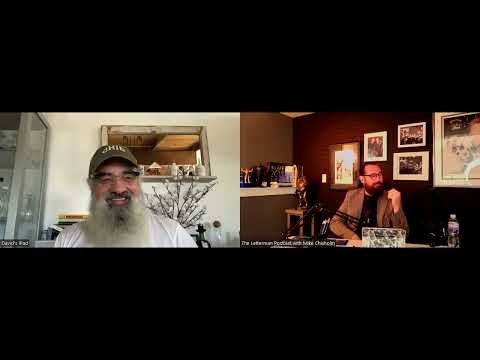
David Rygalski has an incredible history as a writer in both the Late Night genre and show itself. As a college student who voraciously consumed the first couple years of Late Night with David Letterman, ‘Riggs’ did what thousands dreamt of doing-he joined Late Night as an intern, and was then hired on. In part one of this fascinating conversation, Dave tells Mike all about how he landed the show as an employer and about his time working there. They discuss his evolution from the reception desk to writer’s assistant, to becoming a full fledged writer, and many of the adventures in between. Riggs had multiple on screen appearances on Late Night and many of them are discussed. We will link to some of these appearances in our Facebook group. This episode culminates with Dave talking about working with Calvert DeForest on the road for over 6 weeks during the famed ‘Pan American Goodwill Tour.’
As Always, The Letterman Podcast is sponsored by Rupert Jee’s Hello Deli. If you are in New York, head on over to the Ed Sullivan Theater and visit Rupert. While you’re at it, why not have a soup and sandwich, as they are delicious, and we are certain you must be hungry after such a long journey. Also, while you are there, you might as well pick up some ‘Late Show with David Letterman’ merchandise, as its one of the only places you can! Not in NY? No Problem! Go to Hello-deli.com and check out what you can purchase online. Packed by Rupert himself, these items make excellent gifts for yourself, and others. If you ask really nicely, Rupert may add onions to your order.
Please Like, Share, Subscribe, and leave a positive comment for our show, no matter where you came across it. Then get your little sister to do it as well, as a favor to us.
Episode Transcript
Read full transcript
yeah well so but the beard though I want to make sure that we're clear here um I know Dave inspires a lot of people and he is of course if he's not known for being a trendsetter I don't know what he is uh the the beard wasn't inspired by Dave though uh not really it was more laziness and uh the uh and it was before the pandemic started so I can't use that as an excuse it just was uh I had grown them before to a certain length and gotten rid of them but uh I don't know I I just I I feel like it suits my head it makes my head look smaller so um Seth Rogen talked about how you know the idea of the facial hair can change the shape of your face and he really likes that and that's why you see Seth Rogen and whenever you see him he's got a different length of beard many times because he just likes playing with changing uh of his face you said you said your wife uh she puts up with it she's uh she's accepted it she's grown to accept it uh though actually last night she asked when it was coming off and she tugged at it like this just to see the shape of my head and go she said I miss your face it'll grow back so we'll see I have a um I don't want to give it away but I'm I have a little musical project that I'm going to be recording soon maybe this week uh and then maybe after that I'll give it a rest we'll see is it like a Soggy Bottom Boys type thing where the beard will actually help or what are we doing um I don't want to give too much don't give it away don't give it away it's it uh yes absolutely let us know and uh and with all the power and might of the Lettermen podcast if there's anything to promote with our family and friends we will certainly do that uh before we get going on the Lettermen talk uh Dave rogalski um you know coincidentally and I'm not I'm not uh telling any Tales at a school nor am I admitting that there might be any uh Gilmore Girls fandom in my life whatsoever interesting how Dave rygalski not the most common name in the world yet uh uh there was a certain Mr Brody in Gilmore Girls Who had that same Name the character had that same name uh pretty coincidental isn't it no no uh my wife worked on the show and the character Lane was sort of based on her and uh the second season Dan and Amy Palladino uh wanted to come up with a boyfriend for Lane and uh they said we need to get Lane her Dave Rogowski so they just stuck with the name and uh I uh the other connection I have is the uh the band on the show is called hepalian which is an anagram for Helen pie and the bass player in the band on the show didn't play bass so I played bass for him off camera which was a blast to be able to and Helen Pie by the way your wife yes yes oh my God I love I love clever uh Easter eggs and things like that now okay so where were you working at the time uh when these episodes were airing what were you doing at the time then at that point that was Gilmore started in the year 2000.
and I believe in 2000 I was on a show called lucky okay scripted show on FX yeah um and then Orlando Jones talk show which was also on FX uh uh bouncing around I I went yeah I I was just bouncing around a bunch of different Comedy Central shows at that time gotcha did did people around you uh during the Airing of these episodes make the connection did they know like whether they're an inside joke every once in a while would you get that or was it only after the fact that people started putting two and two together uh yeah it was after the fact the um the the people that knew that were close to us knew and uh you know my best friend Brian's ideac was a guitar player for Sebastian Bach's character Sebastian Bach joined after Adam Brody left to go to the OC and he didn't really play guitar so uh uh you know my close friends knew it was and my mom must have loved that yes that's very cool yeah so okay so 2000 that is long pasture Letterman days what uh what were the years that you were working for the Big Show for Dave and Company I started as an intern in 84.
yep and uh I remember I went to school at Ohio University and uh I was walking in between classes down the hallway and I heard people talking about the internship being available and it just was like whoa what there's such a thing and uh you know this was before the internet so yep I don't remember how I sleuthed the the phone number I guess I just looked called information and asked for NBC in New York and got through to the show got through to Paul and meter uh had went to New York for the first time for an interview and uh it was between me and another kid and the only opening they had was for graphics internship and uh the other kid only wanted to do the writing internship and I said I'll do whatever and so I got the offer and uh went to New York for that spring of 84.
uh working with Ed Hall and Rick scheckman okay so uh a couple of names who um in the background I've actually been communicating with Ed we're gonna get him on the show here very well and Jackie is uh shecky has been one of my number one confidence in the in the building of this show here so um very very cool um Mark Carson as well would you have been working with Mark as well yeah yeah all the graphics Department Bob pook okay yeah yeah um and there was another woman in the graphics Department can't remember her last name but uh no that was a lot of fun one of the first things I did uh they sent me out to take pictures of steaming manhole covers with Polaroid and it was for a bookmobile book that was uh I think the joke was cheap places to sleep in New York for tourists and uh uh so that was like my first creative input on the show was just taking Polaroids it was a weird start to an insurance I was just gonna say yeah you're 19 20 at the time what 21.
you're illegal you're just legal yeah you sticked on the streets of New York to take uh pictures of steaming manhole covers we're not in Kansas anymore the first day I took a cab I was staying at a YMCA and I literally could have walked there but I didn't know New York at all so I took a cab and I got out with a cab on the street side and I almost took out a bike messenger who threatened to kill me uh the cab asked me cab driver asked where I was going I said uh Letterman show I'm gonna intern he goes oh what channel is that on and I said I don't know New York I don't know what channel anything is in New York you thought that was hilarious so that was auspicious beginning uh it's fantastic it's almost it's all it's also almost um uh you know cinematic in the sense you think about the you know and we're not in Kansas anymore literally you know we're not in Ohio anymore suddenly in dropped into the middle of New York and uh I mean how many times have we seen a stereotype of somebody you know Stranger in a Strange Land in New York being the background of that you lived it uh now okay so late night had of course the reputation um as it was picking up steam and you certainly showed up there as that scene was really starting to pick up not just the steam of a manhole cover but momentum for the show um you know the the lore or the legend is that uh with late night it was the college kids who were up watching it now you hear this rumor you start sleuthing around you dial 4-1-1 and by the way kids that's where the 4-1-1 comes from it's picking up the old phone dialing 4-1-1 and what city you're looking for okay who are you looking for like that's that's where 401 came from kids so uh there's there's one to grow on right there for you um were you one of those kids was was your college dorm one of those dorms that was watching late night already like were you excited about this because you were excited about that show already and the college kids had kind of been the early adopters of it were you one of those yes absolutely and and at first I remember maybe even being off put by it um because my girlfriend uh at the time covered her uh dorm room with People magazine covers so it was just celebrity faces uh just staring at me uh and there was she idolized it and then Letterman comes on and he's tearing all that down and I was like wait a second so it's sort of totally the veneer uh of celebrity away and it's like oh I get it this is all PR I'm being forced to like this and these These people aren't Untouchable and uh they should be made fun of uh so you know and then just the oddness and uh of the show grew on me personally as uh just the comedy of it and it was you know the opposite of Carson and we all stayed up watching Carson as well I was you know not not ever intending that I was going to be a comedy writer but just studying the monologue with Carson was like how did he come up with that how did they come up with that how do they make a joke and uh then studying it from Dave's Viewpoint was just a whole other world and way to look at stuff so um it definitely was a cultural thing and timing I love that I I love that there was a literal uh uh because we we you know that's what the lore is the lore is that you know he makes fun of celebrity and and all of that stuff you're talking you're you're literally going back and confirming at the time you know the the the example of the the People magazine you know uh uh covers being on the wall and by the way I'm not sure what's worse making out with a girlfriend in a dorm room with dolls looking at you or all those celebrities I don't know what would be worse a lot of pressure um oh God I just looked at Michael J fox oh no um like I I love this because that is what Dave was you know that's the legend of Dave because Dave obviously became so big and and and and Powerful at the end with the entire run and that's what I think a lot of people focus on but but the lore has always been that he came in and made fun of Hollywood you actually experienced while it was happening we're like yeah these people are just regular people we can poke fun at anybody we want and by the way were you dating her when you uh when you when you got the internship was that like holy cow look what Dave's look what Dave's going to do like that people must have freaked out when when you were accepted into that program it was that there was a very nice going away party for me uh and I remember driving home I had to go to Philly first to drop my car off very hungover on the 95 just oh stay awake stay awake must get to New York but uh yeah that was they were very excited for me the um at the time I had a scholarship and to keep the scholarship I had to take 16 credits every quarter and the internship was only worth 12 credits so I told my counselor I'll do an independent study for four credits and he was like great and then uh when I got back to school I hadn't completed the independent study and he was kind of mad at me and he's like why didn't you call me I didn't have a phone yeah uh and uh you know the idea was I would shoot some sort of documentary in in New York I'm like I I I didn't have money how was I gonna run a camera crew and shoot anything yeah so I managed to do something to get the four credits and uh it was like literally the scholarship was 500 a year so for that quarter it was like 160 bucks that I was fighting over for the scholarship and the guy's still there David mold at Ohio University really well I mean um I'm curious about that because okay so you finished the internship you go back to school and then you go back to the production at the end of the year did you quit school so you could go into it well get the job or the uh I was they wanted me to stay they uh even got me a job offer at Lindy's restaurant which was on the ground floor and uh I just I couldn't afford it uh even if you know working as a waiter at Lindy's it was still my intent was to go back from one more quarter to get my degree yeah which was ridiculous it was a video production degree and every 12 year old kid now can do more on his computer with uh movie making than my video production degree got me out yep but uh the I I felt I had to do it so uh I went down and worked two jobs down Wildwood New Jersey as a lifeguard and a bouncer and uh went back to the for the false quarter there were Quarters at OU uh and then went back to Philly uh worked at Lee's Hoagie house uh trying to get PA jobs and uh one night at Lee's Hoagie house the the manager yelled at me because I put the meat on the hoagie first instead of the cheese and uh which is the correct way it is the correct way but I was just like you're telling me how to make a sandwich I'm done I'm going to California so uh two days later I was driving across country to move into a studio apartment with three other guys that I went to college with uh to just get TV jobs and uh that didn't that didn't work out and I just like my head was you know I my only thing I want to do is work and write for Letterman I got to go back there yeah so I went back to New York was working at Tower Records and let them know where I was uh got the phone call that the receptionist job opened and I was like yeah boom I'll take that and then it was like I paid 300 bucks a week and I was stunned that it's like that's a lot of money oh my God I had to work two jobs to make 300 bucks a week so you can sustain yourself on the reception job working at Letterman in New York back in the day for 300 bucks a week yeah what time what part of town did you live in um I bounced around a lot that first year um I was in Queens a story of Queens for a couple months then I moved into Inwood at like 205th Street with a roommate that apartment kept getting broken into so we decided it wasn't the right spot for us and I moved into the George Washington hotel on 23rd in Lexington yeah literally the room was eight foot by ten foot my bed squeezed with a typewriter table fit and with my VCR and TV at the end at the foot of the bed yep and uh and then the then I got the writer's assistant gig and got a little pay bump so moved up a bit uh mostly I stayed on the Upper East Side of New York I didn't go to the west side yeah so um 84 you're working for Letterman You're the Reason 86 was a receptionist oh so 86 so so between okay so that's good context so between when you got the internship uh figured all your stuff out California no I really want to be working for for for Letterman and Company by 86 you're there permanently and full time yes okay so by this point uh and you're the reception um I mean I and I don't know like I know at the end like I mean there's there's multiple receptions for multiple departments and things like that I would imagine at that point there you were the Hub there was one reception for the entire production at that point right yes from and then they I believe they split it over to the talent department so there and there may have been a talent Department perceptionist but all the everybody's line was on the main yeah Hub sitting there and uh it was it was a busy job their phones were ringing that's for sure I can imagine and in 86 like I mean by this point here the show is um the momentum of the show is is incredible it's one of the hippest shows on TV this is the part where they're saying it's Reinventing TV all of that stuff and you're right in the kind of the epicenter of it um you do uh what kind of what were the what were the what were the kinds of calls you would get like I mean is it is it literally everything across every Department would you get uh you know shecky told me he thinks he remembers the story of certain comedians trying to call in to get on the show that kind of stuff like like you must have had a bunch of regular business type stuff and then a whole bunch of red herrings that would just show up as well uh crazy fans all that kind of stuff you must have just hit everything yeah you know most of it was business like passing passing calls on to Sandra furtin uh uh a lot of people wanting to get on the writing staff yeah want to get booked on the show and then there was just the cranks uh uh that it was I remember one calling specifically uh and Mary Connolly brings this up every time I see her where I I was just I kept the guy on the line asking him why would you do this why are you calling me I you're I have other people I need to talk to why what is your point why and uh you know they once they got the number they could keep calling right and uh so it was pre-crank Yankers but it was the uh when I moved on to writer's assistant was when I kept a file of the scary people that uh wrote in and uh let because Dave had that stalker yeah did she ever write in did any of her notes ever pass your hands yes whoa whoa I I and there were there were others that weren't uh as intent or intense yep but uh uh I don't that's the cost of the thing that I just remember uh the telephone had five for as receptions had five rows of phone numbers probably five or six deep and I remember putting uh bingo across the top and I said if I ever get a coverall I'm out of here so if all the lights were blinking on hold and that was my time to go that was enough whoa um that's Bonkers that's Bonkers that uh yeah I mean again this is history of the show that stalker was such a you know and Dave eventually started talking about on the air and all that kind of stuff but but that's um that's that's one of those things where yeah the job is um you know dealing with some crazy fans and stuff but sometimes the job is really intense and you've got some some really crazy fans to deal with here that's that's that's very interesting and you kept a file of that when you went over to the writer's assistant the uh I'm separating the two jobs the phone call stuff I didn't I didn't get uh on file but the viewer mail stuff with you know all the mail went to the writer's assistant right okay yeah everything from invoices to uh fan letters and uh gifts for Dave and stuff like that um and and the odd uh uh weird person who was more the stalker type but uh I don't think there was a private detective involved I just was I remember I kept a file and I was asked to I believe Lori Diamond was uh instructed me to do that at the time so viewer mail anything that went on the viewer mail segment and I mean there's so many I mean you talk about the gold that was the viewer mail segment how much comedy could be could be taken out of that whether it was you know a question that led to a remote or a a produced piece or or an audience piece or whatever the versatility of what came in the viewer mail a lot a lot of that for for a certain amount of time passed your hands first you were the first kind of guy that would be the uh what made what made for um you know obviously you get a the hang of that um you know and you're gonna hand something over the Merrell or to uh to O'Donnell whoever you would have handed that to I'm curious who who you would you handle it to what what was it that would light up the light bulb above your head to go okay this is one that I think I'm going to move over to uh to those guys to see if there's something here the uh the daily routine was to get through as much that came in there was like five boxes of mail waiting to get read and at the end of the day every day yeah well it would it would accumulate and then you couldn't get through so much and yeah um there were people in in a way it's sort of the uh precursor to like Twitter because there are people who really got it and could write really funny letters that they knew how to make them open-ended for a reply yep and and so they were snarky uh uh and uh but sometimes the ones that were serious were even better yeah uh uh the complaints and stuff but uh so there was a gamut to it um the it was that so every day I put a packet together Xerox Stone to for all the writers but 12 or 14 writers I think at the time and just put it on their desk and they get a fresh packet every day to find a letter that struck a note with them to to come up with a reply um and would you do that would you give it to certain writers or was it uh no they all got they all got the same packet they all got the same packet I see what you're saying okay okay so it was kind of competitive because they only did five letters a week and there's 12 writers and you want to get stuff on the air and that was one of the more open-ended ways to get material on and you know other than the top ten that was another Avenue but uh yeah that was that was fun oh Donald talked a little bit about the process of the top ten and a few other folks did as well um as they've been on the show and so um when you were apparently um and I'm not sure if it if it evolved into the place where everybody could just write top 10 submissions and things like that or if it was like that back then but were you uh throwing in submissions for the top ten when you were the writer's assistant when you were at reception were you uh doing that right from the start saying Hey I want to be writing for this show and here's an Avenue to show that I want to be writing for the show and if I have talent for it and to learn all that were you was that were you submitting right away not right away I felt my oats a little bit to make sure it was cool um Adam Resnick preceded me as the writer's assistant yeah and he was writing monologue jokes opening remarks for Dave as the writer's assistant and other stuff and I didn't want to be presumptuous that uh uh I it would be cool if I did it too so I took my time as the receptionist Barbara Gaines actually suggested that I write and submit man who's and from New York's so that was my first little uh uh writing contribution and uh there was it was such a endorphin rush when I would get a page back with checks that Dave liked this one and this one I'm like oh my God this is great yeah they like me maybe maybe this will happen so those check marks uh so many folks have talked about those check marks and how how how what a talk about gold stars in school I mean yeah that's just there's no bigger endorsement than than one little check mark besides something that you wrote um do you remember any of the ones that got on the air do you remember the first one that got on the air man from or or the New York the one the one I remember is it uh is a little wordy yeah uh it was uh from New York the city we liked when we saw the blueprints but upon completion uh we were like meh laughs I I that's not the exact phrasing because man that is wordy that is really wordy for one of those and that's on the air yeah yeah wow there you go bill yeah Bill earned his paycheck that night that's a lot to spit out that's a good one um and you were there you were a writer's assistant when that happened uh that I might have been reception then because that's when I started writing the uh those man who's that's when Barbara Babs suggests it I love that and I don't know if it came from Barbara or if it just came from Dave's sensibility or or where it came from but the idea that all of you uh and it was a revolving door of people coming and going but you all were a family and it was like everybody can contribute and that was that seems to be the show's moniker um you know and and that's off screen and on screen on screen certainly and you will talk about that with you in a minute here because you've got lots of on-screen stuff as well but um it seems like they and I don't know if it was Barbara who who cultivated that culture or if it where that came from but um a team atmosphere right from the beginning it sounds like yeah the uh you know there was lines you didn't want to cross uh uh but if you had an idea they were open to hearing it um the uh I I just went dead I'll think of it okay you had triggered something with the the idea of there being a team contributing family okay the uh the show that was its own farm system in a way yeah because you know the the Joe Fury followed my footsteps of being the intern for Ed Hall receptionist and then writer uh writer's assistant then writer and uh it was sort of a way you know of going to Dave's school as Boyd Hale once called it where you learned the things like uh Dave won't wear a hat you know as silly and minor as that sounds uh and you just it was it was definitely a process of learning his sensibility and and word choice and uh so being around it made it happen well his uh I think it was I don't know if Steve Winer was still there I think you guys may have just passed each other uh as as a writer but I think Steve Winer talked about that because he also he went after Letterman um he went and worked for Robert Klein and and and and talking as a writer writing for somebody in particular not just a show but for somebody um I think it's a little bit different than a sitcom and and things like that because it's not situational you're literally funneling it through this person's voice and personality and all of that learning his voice um you know and and and and not Crossing Lines like you're talking about you know like you almost want to imitate them to see if he says the words you know what I'm saying like and and it definitely his attitude and uh sensibility definitely influences everybody that was there I mean not just you know you almost have to stop yourself from saying catchphrases because you everyone's gonna well you took that from Letterman right right I mean I I don't know how much of my vocabulary to this day um has has lettermanisms inserted in it and I mean those lettermanisms yeah maybe they were spoken through his mouth but they're also written by you know hundreds of people over the years that you know it's it's such an interesting conglomeration um how these things are all mixed together and then how a guy from western Canada uh you know who never had any physical contact with these people um is saying these words and it all started from maybe a reception desk or or you know an office somewhere in New York it's so fascinating that's the idea that Dave is a broadcaster rather than uh a comedian or an Entertainer um you know put through that lens that's what you guys did and to this day there are echoes of that including you know many of the phrases I think good Lord is something I say all the time because of Dave like just little things like that um did that affect your writing after you left uh Letterman I can't imagine I mean your formative years were there and we'll get back to to help would evolved after the writing assistant in a second but that certainly must have influenced any project that you have been a part of since then because it's your formative years in in in the business absolutely um it created my sensibility and every other show that I worked on after that I I they knew what I was going to produce right they when you hired me you you knew my style I guess um so uh uh whether you know whether it was darker or edgier or more offbeat than that sort of my you know if maybe everybody says that about themselves but that's sort of my take on me as a writer yeah um and you knew you wanted to be a writer that was it right was that was performing it for something that you wanted to do no I I uh and that's every bit I was in I was biting my inside of my cheeks to not break out into laughter really yeah I was so afraid I'd blow it one time uh in a it was a who asked for it yep and you know we we went up and we you'd say somebody else's name a friend's name yep and I went it was my turn and I went up and I said uh yeah I'm Dave uh but Billy Patton because I was just so nervous I was gonna say my own name and I want to be Billy Patton and they've sort of mocked me a little bit for it like oh okay uh Billy yeah well that was that was the gold stuff whenever you guys whatever that would happen Steve Young had a moment like that too um and I I forget but there was three people with the same name and he messed up the first name of the three and and and and Letterman just took off with that and ran it that became the Nexus of the bit like that became that that was it was are you talking about the one where you um uh who asked for it you hammered your your arm to the seat uh now that was uh I didn't speak on those ones I was just an annoying audience member that was Adam resnick's bit where uh they either yeah they hammered my arm once they I think that did they cut it off they I think there was more than one uh uh but uh yeah that was Adams that's funny compilation of those on giller's channel um it's been a while since I've watched all of them but there is a for the who asked for it it's definitely worth watching and we'll link to it after um on on on the YouTubes anyway on the uh spotifys and the apples they'll just tell you go to Don giller's Channel who asked for it uh there's the compilation there um okay so so Adam writes this thing and it's like okay we're gonna need four people who are uh you know Annoying audience members or whatever whatever it is we're gonna need three or four people for this how does it how does it get divvied up as to who performs in it like or father Biff for example father Biff by the way I mean holy smokes you want to talk after school specials they got nothing on Father Biff thank you very much keep that leather jacket by the way no no there was I didn't realize there were so many of them I I think there was 15 or 16 and uh those were great I like me and Ed Hall as the punks uh yeah always we there weren't too cleaner cut looking guys around the office and all right throw the leather coat on them and put a cigarette in her mouth yeah so how do you get chosen why is that you that's doing that um Steve did most of the casting and uh so it was on him Steve O'Donnell did yeah yeah yeah yeah yeah uh and he spread the wealth I think it was a a kind of him um yeah those you know 175 dollar after checks certainly helped living in Manhattan yeah the uh and I had appeared so much actually I just got an after uh residual check which I haven't gotten in 20 years uh for like 190 dollars and like it doesn't say what it's for but I'm assuming it's maybe it's YouTube money or something or uh right or some kind of clip fee they didn't usually they list the shows that uh are involved but um I am I'm I'm retired from aftra and when I'm 65 I will get 165 a month pension because of all the appearances on Letterman yeah yeah oh my gosh that is I this is the one thing too that I do want this show to um uh to be able to differentiate um because a lot of folks outside of Show Business don't understand uh the union aspect of it and and not just the union but the multiple unions who who are involved here and and um you know we're gonna have Pat Farmer on in a couple weeks that's going to be a lot of fun um and and and uh and Glenn borders and stuff so who is uh one of the construction guys as well uh we're gonna have them on here and talk a little bit about that because you know it's it's it's in some ways Union versus Union and what certain employees can do what certain ones can't do and when Dave would uh you know he would literally pick anybody it might be someone from reception you know you mentioned the bookmobile Kathleen anchors um who might be on the show you know shout out to Kathleen anchors by the way yeah she was delightful she was so amazing yeah do you have any Kathleen anchor stories um just seeing her she uh invited me to a dinner once at uh her apartment and she made the most incredible Vietnamese food and uh I think I I don't know why I was invited I think I was too dumb to realize I think she was trying to introduce me to a young woman there and I was just I was so clueless that uh I was just like this is great food oh well she appears cultured she appears like oh my God absolutely yeah oh that's beautiful oh that that's that's so awesome um and that's yeah so anyway we wanna we wanna talk about you know the idea of the different unions and how many people when they made on-screen appearances what it turned into for them uh that is so funny I mean I'm not sure how many times you appeared on the show over the years um when that happened did it disrupt your work day like were you one of the guys and when you became a writer were you one of the guys in the room waiting in case you had to do a new top 10 or whatever but oh no I gotta be part of the show today I probably appeared less when I was a writer than because I did have to turn out the material yeah uh uh but yeah my Heyday was uh in appearances was receptionist and uh writer's assistant and intern I was in a bunch of bits as an intern um I was I think I was a Blue Angel if you remember that uh thing where the there were five uh Blue Angels in Flight suits like the jet planes flewing yes okay yeah yeah yeah and uh and the the gag was that the Blue Angels are here and they're going to uh show us one of their aerial stunts and we basically uh did a formation on our feet and put our arms out and just flew around in formation in the studio uh and I had a mustache then so I that's I got cast because I looked like I was in the military because the pilot or the mustache yeah okay there you go there you go um before we move on to the writer part um and I wanna I wanna find out about the transition from right assistant to right any other stories for when you're a writer assistant that want to pop out right now that that just uh come to mind that you want to throw out there yeah the one story I was as writer's assistant with opening viewer mail the one uh story I wanted to tell you is uh one of the grossest things I ever got was uh some a guy sent a Polaroid in of his naked self oh boy and he wrote on it I'm angry for you Dave and uh so I had mentioned this in somebody uh uh said oh my God that's the first dick pic right I had to think about that yeah selfies weren't a thing back then folks no no they certainly weren't uh that that seared into my memory I can imagine it is viewer mail I'm angry for you Dave yeah which is okay and context of that sentence is actually kind of funny like it's almost like you know the broken English part of it but yeah that's that's that's yeah it never made it to Mr Letterman's desk no really I can't imagine how that one wouldn't have been filtered too that's why you got to keep the job uh you knew how to filter that stuff um now you're doing the writer system job how long did you do that job for about two years okay so you were um you know you learned a lot I imagine in those two years uh the entire time still ambitious to move up and they knew it yeah uh absolutely uh was biting my time a couple openings happened uh and I got passed over yeah happens um so at one point I had actually applied for David Brenner's show yeah and uh but that might have been when I was receptionist I think that show is on when I was still a receptionist okay um but I and I didn't get hired obviously um thankfully yeah the uh so that you know I I was getting stuff on uh the show pretty regularly I was I knew I I had the ability it just was the patience for the right spot and uh I got hired uh we were in Chicago for the first week of Chicago shows that they did yeah and on on the last day um after the taping uh I think we took a picture staff picture on the stage and everyone dispersed and I was sitting there with Steve O'Donnell on the set and uh he just says well I guess this is as good a time as I need to tell you uh we're gonna bring you on the writing stash so that's like the best memory of uh Kevin Curran was the writer that left to go to Married with Children I believe yeah and that was the staff opening that I filled well yeah no kidding um Casey Saint on was on here she was Dave's assistant uh okay so you know Casey she was an assistant for yeah you know of okay and she talked about how uh folks in the show were big on gestures from Dave all the way down you know like she talked about when she was told um you know they were skating I think it was around Rockefeller Center that was getting through an ice rink or whatever and Dave stopped her and said hey we want to bring you on and it was almost like this gesture and and you're talking about the way O'Donnell said that to you as well in Chicago you know you're at the height this adrenaline is coming because I mean those are special shows I mean when you guys were take the show on the road those were special shows um and all these years later I mean we're 30 something years later and you're you're talking about that being a shining memory that is such a beautiful um sentiment now that being said that beautiful sentiment then leading to you being part of one of the I mean I'll throw this out there one of the most talented for sure maybe competitive writing staffs in the history of TV on a Cutting Edge I mean did you were you self-aware at that point of holy this is probably one of the most exclusive writing rooms ever um that uh I was I had to go to a dermatologist to get UV treatment because I my body broke out in hives wow okay you're aware because I was like okay now it's on I I gotta I gotta now it's a job oh yeah I got to keep up so uh uh yeah and it was a competitive like I said the slots to get material on yep limited and uh it's so you got you had a keep your nose down to the grindstone and pounded out the material and accept the rejection rate and yeah just keep pitching so uh how many of you were there at that point um I think it was around 12.
okay it's around 12 of you okay um certain amount of slots per night yeah it's it's crazy it's Breakneck most of what you submit is not going to be even looked at twice um and many questions come from this uh Steve Young talked about when when like there's Steve O'Donnell's name has come up he's been on two episodes already and he's come up so often because so many people uh have such reverence for him and and and there's a reputation that is really developed through whether it's kelison or young or some of these other people that were fit on the show Tommy ruprecht um uh well maybe you know I don't know if Tommy talked about Donald but anyway a bunch of people talked about O'Donnell and how he just had the reputation of of of of pulling people up and inspiring people and giving people chances that sort of a thing um when you got the job for the first time did he hand you anything and say okay start working on was it you know bookmobile or start working on certain things or was it just you've been a writer's assistant long enough uh wide open pasture yeah it was more that I knew the drill yeah uh and we had you know there would be the the the board the schedule would you know they'd have guests and the comedy pieces and viewer mail was always up there yeah and the there was two acts of Comedy act one and act five uh and it was daunting to look at the board and not see uh a card with a comedy bit on it like you know it's uh yeah a Dave remote bookmobile who asked for it and you're like all right we did who asked for it too too much we got to come up with something else yeah and uh show one of the directives from Dave to the writers was to open up because we were very self-referential and you know exposing the inner workings of a late night talk show and he felt like at some point we were Naval gazing and maybe we needed to expand what what the bits were yeah um the uh there was a you know he put out you knew what to write because it was on the board so all right we need jokes for the remote we need jokes we need bookmobile jokes we need Blacky props um etiquette pieces which is another prop piece uh but in between filling the jokes in those bits was the hardest part coming up with fresh new refillables yeah and even even fresh new one-offs um this uh the easy pieces to do or like we called them uh extras desk extras I believe they were called uh and they were just one-off jokes that you know it could have been something as simple as uh uh a joke off of a TV Guide cover or something like that I don't have a specific sure but but it didn't it wasn't ten if you if you could come up with an idea that you could cram 10 different jokes in like the top ten my I had this theory that the top ten made the show harder because it was one setup and 10 uh jokes just verbal jokes whereas some of the top 10 lists could have been props you know uh right and uh but they got so chiseled down to a verbal joke and it only took up a minute and a half of the show it's like yeah can we can we go back to doing these as bits you know it's you know it's funnier and and Pace better but it's it's interesting to watch the old shows actually uh just for the pacing uh to me and not just the comedy the whole the whole format of the show to watch and then you see Jimmy Fallon's Tonight Show it's like wow that's changed it's everything is a circus and and yeah loud and and keep keep things moving you don't want people to turn that dial yeah that's for sure um and I love I love the pacing of late night like yeah because Late Show is probably the the the bridge in between those two areas that you just talked about you know you guys went from a I don't want to call it relax because it certainly wasn't relaxed but it it definitely had the feel of of a looseness to it um that that just it went away the moment they got the 11 30 show it was like okay well now now we got to complete with The Tonight Show and we're we're having to change our sensibilities and then you know by the time Dave finished off his late night is Late Show run in 15 um you know late night TV had already you know Gordon was already on the air and Fallon was already doing his things with his games and all these different things and and and and and and and that is a but you don't get to what Fallon is doing on The Tonight Show without what you guys did on late night that's the thing like that's that the the inventiveness and the and the the wacky things that you guys did um you know there's a clear line of evolution there and and and you were a part of that um I want to know were there any any pits of material that you wrote or that you were a part of that uh started as one thing and then turned into something else completely and was uh was was aired um I don't have a recollection of that okay the uh the one character that I created uh that didn't have a long shelf life was tick boy I think tick boiling made tick boil he made two appearances and uh uh tick boys uh didn't speak and it was a full I was tick boy it was a full costume and in the uh Dave there was a little scripted bit uh where my answer was supposed to be no and I could just turn my body as a no and the way Dave praised the question was different and it would have required a yes answer and I I just froze like I don't know how to say yes in tick boy uh so uh I'm not sure if that was why tick boy was uh eradicate it but uh it was funny because we we played softball after that and Dave actually said hey sorry about that I messed you up on uh on tick boy and I was like I I didn't I couldn't shake yes instead of going like this but I don't know what that would have looked like did Sue make that costume for you um I believe she did who was the other costume uh Eric Anthony didn't build the stuff uh like it I guess it had to be yeah yeah it would have been Sue we're trying to get her I I've got a connection with her but we haven't had her on the show yet I'm very excited about that um lots of lots of being on that phone when it comes to Sue home and and the different um you know jobs that she's had over the years the different tasks that she's been given um well what's oh and then of course yeah well and again again another person on the staff that that that was uh incredibly funny and had the sensibility that you all just seem to have um let's talk a little bit about uh we're gonna we're gonna get back to some writing in a second here and if and I feel a little I'll throw out the idea of things that you got on the show that you were proud of or things that maybe you always wanted a second crack at we'll we'll kind of let your subconscious think about that a little bit because I want to talk about Calvert a little bit I mean Steve Weiner again writer he's the guy he and uh and Carl discovered right Calvert and that you know uh so we've talked we're gonna do a Calvert Calvert tribute episode at some point um it was the uh it was the the cross America no Pan American the Pan American journey Pan-American Goodwill tour yes yes yes yes yes yes you're you're actually on tour with Calvert the uh the back story was that I was a writer's assistant then uh Steve came in to tell the writers uh Dave loves this idea who wants to go and uh all the writers were like I'm married uh yeah I have kids I have a family uh this is a indeterminate trip uh so no one volunteered and I after uh the meeting this uh closed up and I went to my office and went wait a second I'm not married yeah I can go I can I can do this so I I volunteered and Steve was like oh yeah that'd be great so the problem with it was that it was uh no camera crew could go because that would be too expensive because it would have to be a nabit camera crew okay and and that would have been hugely expensive to pay their room rate and all that every night and as much as their day rate and all that so all we had was that uh Panasonic video phone that's interally scanned a black and white picture uh very grainy yeah that and Dave even said on the show one time you could just be backstage so uh we yeah we were on the road for six weeks you guys were on the road for six full weeks for that yeah one of the weeks was a dark week too so uh that that we aside from uh they called it off when we got to Guatemala City uh Calvert would fluctuate between uh being miserable and being happy and and by that time I think we we were calling it off I we had run out of vehicles the RV we left in we had to leave at Laredo Texas at the border because we weren't insured to take it into Mexico so we rented a 16 passenger van in Laredo and whoever that was we rented it from wouldn't let us take it further than Monterey which was about 60 miles south right the border and then we rented a Ford Taurus and we could only take that to the Guatemala border because we weren't sure to take it into Guatemala and then we took a um it's called a chicken bus uh uh they're they're basically school buses okay so it's a converted school bus it's like you see in the movies yeah yeah exactly that yeah and there were chickens in cages on the bus uh uh just being transported uh uh and it was a five hour bus ride because they stopped in every small town from the border to uh Guatemala City and at that point what we how what am I going to rent in Guatemala City to keep going down to Tierra del Fuego um so they called it off and uh they flew Calvert home and me and the driver who was a friend of mine uh uh who was a mechanic that I they brought on just in case there was car trouble sure uh uh we collected all the vehicles and made it we made it it took us six weeks to get to go Guatemala City and uh we made it back in 18 hours because I we flew we dropped the rental car off at an airport in South uh Mexico we flew to uh Monterey to pick up the van drove the van got the RV and just we uh uh alternated every two hours sleeping and driving to get to get back it was that that was an adventure just getting uh everything collected and returned and but uh I'm blown away by this so that entire trip that entire bit that went on and on and on and always had little remotes and updates and all that three of you total and it was over six weeks it was four of us uh Calvert had a friend Frank okay uh traveling with him and uh but Frank left uh I think when we got to New Orleans he had a family thing he had to deal with so then it was just the three of us into the last couple weeks okay so so a lot of down time I mean you got times where okay yeah you're recording you're doing these things um the downtime must have been like was it boring did you guys like get to know each other like completely like you knew each other's Secrets by the end of this did you hate each other by the end of it like what a crazy there was some tension between Calvert and I yeah that started like on the first trip we were the first calling we were in Lexington and we butted heads a little bit because he it was a college campus yeah everybody recognized him and he was giving away all the t-shirts and we only had a limited supply of Late Late Night t-shirts right and I said no no more and he got mad at me and he called his agent and his agent called Morty and Morty called me and you got to treat Calvert like a star and it's like but I I'd meet the t-shirts like I don't know how long I'm going to be on the road yeah you know and it was it was something silly like that but you know I accommodated him I tried to uh I I don't think I was ever mean I think we were both a little frustrated because uh it the traveling wasn't hard but it was mapping everything out where do we get to next uh no GPS back then no I we had all the maps um and I we did have a one of the original mobile phones in a a cachet case that was like a bag phone yeah yeah it was a big brick uh the I don't have any it was it was quiet and uh Calvert you know kept to himself uh the he enjoyed the scenery while we were driving yeah we did you know the week that they were down we were in watoko which was on the I guess that's the Pacific Ocean it's a Beach Community and uh there was we stayed at a hotel it was a Sheraton it had hadn't really opened yet so yeah the the accommodations weren't spectacular and we were at the beach and we looked across the cove and it's like what's that place over there and it was a club made so we we drove over to Club Med and I had the AmEx card from the show and said can we stay here for three days and uh so we had fun at Club Med for three days okay Calvin enjoyed that yeah he had a farm there um but he he took a spill and broke his glasses uh and they I was like at that point I sort of was like I'm responsible for this human being taken better care of him but uh I kept him alive for six weeks the uh when we got back the uh they cast me in a bit and I can't remember what it was but it was with Calvert and the punchline of the joke was I had to hit Calvert over the head with a board and the board was supposed to break and it was balsa wood and uh when I I hit him it didn't break even though it was scored and he it didn't break and I I don't think it hurt but he just said on camera son of a and so we did another take and it broke and that's it the clip that went in the show in the in the bit but then in the commercial they rolled in the son of the bit son of a line perfect yeah but uh I was gonna ask so so you get back things get back to normal or pseudo-normal or whatever uh you and caliber when you see each other on set different different Dynamic at that point I I imagine it was it was all fine I mean that was the first thing that was sort of like breaking any ice that there might have been between us oh that's what I'm saying like like just just you have this history now that just did not exist beforehand and it's a unique type of of experience together uh whenever you travel somewhere with somebody afterwards you always have that little little Bond and uh I'm uh I'm actually working on I had an idea for a mockumentary where uh I show the real clips of Calvert and Dave appearances like I said there is eight of them just edit it down and then show these exaggerated uh clips of what went on between City stops so and it gets pretty nuts I mentioned the idea to Donna Carey and he asked if I had read Norm McDonald's bio uh uh and uh so I read it and it's like I don't know if you've read it the market yeah oh yeah Memoir and it's always like a bio but it's all made up yes nuts oh yeah so I said I went that Direction with the Calvert thing to the point where uh a rival TV show is sending another celebrity down to Tierra del Fuego and it becomes a race to get there awesome take my money I'm in let's see if I can get that's that out oh that's cool um okay so that was when you were writer's assistant so you weren't even a writer at that point when you when that happened so yeah you you paid some dues and you you got some chops over those couple years that's for sure um okay so you become a writer uh how long are you a writer for for Late Night with David Letterman I was there about a almost two years the uh I when I left uh was when Leno Got The Tonight Show okay and all right what a way to end right there he left just as uh the the the late night Wars The Late Shift was happening um and then you know what you're gonna have to come back for Part Two For the Rest um and it is a fascinating tale there's lots more Letterman stuff in part two but it takes a it takes a bit of a shift uh part two is going to be very um a very interesting uh turn of events for those of you who don't know uh Dave or Riggs uh Dave rygalski's um you know his uh where his career went I'll give you a couple hints Chevy Chase show yep uh The Tonight Show with Jay Leno yep along with Ed Hall um and uh and and then some stuff in between but then another stint on uh The Tonight Show with Jay Leno and then also the Jay Leno show and back to The Tonight Show and and interesting really interesting talking with Dave in part two you're gonna really enjoy part two because he has a different perspective than some of the other guests that we've had on the show and I just really enjoyed this conversation it was it was such a good conversation that it just went and went and went and went the next episode is almost as long as the as as part one here um and uh I'm I'm very grateful that Dave opened up as much as he did about things we talk about his reaction to the Super Bowl uh ad um that had Oprah Winfrey and Jay Leno of course with with Dave and uh it's just it's a it's a fascinating perspective that Dave has it really is and I'm so grateful that he um he was an open book and I can't wait to have him on again and talk about some of these things I mean that the road trip with Calvert are you kidding me you know I I just uh and I would just recommend that everybody um I believe all all of these clips I don't think any of the stuff we talked about is on the Lettermen uh YouTube channel yet but much of it is certainly on Dawn's Channel um you know the father biffs thing and I think that's a 13 minute compilation it's not you know I know some of these ones here have have multiple Parts at an hour and a half each this one here you know there's a lot of ones that are easier to ingest um and I think that uh you know who asked for it I think that's uh that's a compilation on dealer's Channel and and and uh um I'm almost positive the Pan American journey Calvert's Pan-American journey is on that one as well so I highly recommend taking a look at some of Dave's uh work some of the things that he's done in there and then um become come on in fresh we're gonna try and post some of these things uh in the in the Facebook group or in the on the Facebook page as well we're gonna post some of these links to uh to direct people there but I highly recommend you watch them uh this is the classic classic stuff I love when we have late night people on um and I mean don't get me wrong I love Late Show love late show but having the late night folks on talking about the history of these of these amazing iconic moments has been so good uh we appreciate every single one of you as always please like please share Please Subscribe we hope you're enjoying what we're doing here at the Lettermen podcast um that's part one of Dave frykowski Riggs uh episode uh 30 whatever it is I think this is episode 31 part two is coming next week we appreciate every single one of you uh we're having a lot of fun doing this and uh thank you for indulging me in the in the Red Room tonight look at this we got the mood lighting going on in the studio and uh all sorts of great things to come more to come as they say so uh this has been yet another episode of The Lettermen podcast with Mike Chisholm coincidentally I am Mike Chisholm thank you and good night overcoat and Underpants