The Letterman Podcast · Episode 176
How Dan Cashman Booked David Letterman As His Final Guest
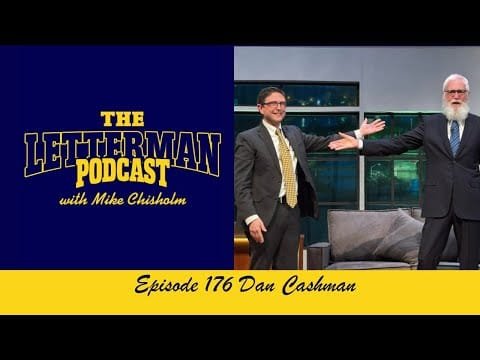
Episode 176 of The Letterman Podcast features a very special guest: Dan Cashman, host of The Nite Show with Dan Cashman — a regional late-night institution in Maine that has welcomed thousands of guests over its remarkable run… including, most recently, David Letterman himself.Mike and Dan dive deep into the origins of The Nite Show, reflecting on the early days, its evolution, and the incredible team Dan has worked with over the years to keep the show thriving. Along the way, Dan shares stories of notable guests, behind-the-scenes triumphs and challenges, and the unique flavor of producing a late-night show in Maine that still embodies the traditional spirit of the genre.Of course, the conversation reaches its apex as Dan recounts the lead-up to — and the unforgettable experience of — hosting David Letterman as his final guest. From how it came together to what Dave was like off-camera, Dan generously shares a treasure trove of insights, making this a must-listen for any Letterman fan.⸻Before we go…• Don’t forget to swing by our good friends at Hello-Deli.com — the only sandwich shop in history that also happens to be the exclusive home of official Late Show with David Letterman merch. Rupert Jee’s got mugs, shirts, and more… and if you’re nice, maybe even a smile.• If you’ve enjoyed this episode, please like, share, subscribe, and leave us a kind comment. Or leave a sarcastic one — we’re not picky. Just engage in some way so we can trick the algorithm into thinking we’re a big deal.
Episode Transcript
Read full transcript
All right, y'all thought that I might be fibbing. This is proof right now. The Lettoman podcast, we have one sponsor, one sponsor only, but it is Rupert G and the Hello Deli. Thank you very much for sponsoring our show, Rupert.
It's my honor, Mike.
Welcome once again to the Letterman podcast. My name is Mike Chisum. All right, Dan Kashman is my guest today. I'm I'm very excited about this, Dan. Um, for almost 20 years, the host of the night show uh the last regional um talk show, weekly talk show um on on on television and and uh he finished up his run a couple of months ago at the time of this recording. Um and and and uh his last guest on his show was David Letterman. So there you go. And we talk a lot about that obviously. Now, Dan, I was going to have Dan on about a year ago and and our schedules just it just didn't it just we was happening. We were going back and forth and then suddenly it just we both went in different directions and we never got back to it again. And then the news came out that he was going to be ending the run. Um I wanted to have him on, you know, talking about that because when you watch Dan's show, uh you can see the fingerprints of inspiration from the work of David Letterman and company all over this show. So, the night show, there's tons of clips available on YouTube. I highly recommend going and checking it out, especially, of course, the end episode with David Letterman, but there's been other appearances of Tom Spawn's Malone.
Um, Mike Mcante, uh, phen phenomen, one of the driest, funniest people I've ever met. Um, you know, helped write, uh, for Dan's show after um, his run with with Late Show ended, which is which is very cool. lots of Letterman connections. Um, and and again, when you watch the show, you will see what I'm talking about, how the inspiration is just uh all over this thing. U Dan came on here, we had a tremendous conversation. Um, you know, one of the things that he he wanted to make sure that we talked about was how much he appreciated everything. um that his crew, the people who enjoyed his show in the main area. Um all of these people that contributed to the run that they did, the unprecedented run, the unique run of the night show. Um he was he's just so grateful and I love that. Um he and I are are are are said I think I said it in the show um after the record light went on. He and I are very much uh pieces uh from the same piece of cloth. were cut from the same piece of cloth. Um, and and I just appreciate him very very much. He is fantastic. You want to see a a host of a show. This guy here, this is a real host. Um, very excited to present my conversation here with u, you know, former host, retired host of the night show, Dan Kman.
All right. Uh, the first question I got to ask you is, do you prefer Dan or Danny? That like most things in my life comes with a very complicated answer, but I'm going to try and condense it for the purpose of the podcast. Yes. And I will say Dan is just fine.
Dan, but the show it was the night show with Danny Kman.
Can you can you figure out why it was the night show with Danny Cashman?
Oh, I automatically I went to the um the automatop poetic resonance that Johnny Carson like it was the Tonight Show with Johnny Carson. And I I I that's why I went uh that's what I assumed. Uh is the answer a little more depth to it
there? Yeah, you're wrong. Uh you're right with the two syllable part, but it's uh Late Night with David Letterman and all of the guests called him Dave,
right?
Very few people called him David. So I thought I got to go with that two syllable. So you're sort of right with the Johnny part, but nobody very few people called him John on the show. They all called him Johnny. So it was more the Dave influence. Uh, and might as well get right into it. No, first off, first off, how long was the run of the night show?
That's also a complicated answer.
Yeah, because you started and stopped a couple of times, right? But at the same time, when was the very first incarnation of the night show?
The very f you'll you'll appreciate this. The very first incarnation started on David Letterman's birthday. And that was also calculated April 12th, 1997. Um, and it ran for a couple of years, went away, came back for about a year, and went away. And then the most recent version came back in uh October of 2010, and that ran until May of 2025.
Uh, incredible, incredible that you were able to do um to do that. And I mean, I I I uh I attribute your tenacity to that of MacGyver, just finding ways to figure out ways to to chase this dream. and to get it seen somewhere in a way that I mean uh Dave talked about it when he was on your show. Uh you know he said you know anybody could go and do a show in their basement or whatnot. Thank goodness for that. Oh thank you internet cuz you know it gave chuckleheads like me the opportunity to do this. But but you you actually, you know, 20 plus years, whatever it is, you know, were able to find ways to show up on television, locally, whatever, but network as well, local network. Um, what started this? And I mean, you've already referenced Dave and and what I love the fact that we get to do kind of a love letter to the inspiration that Dave gave to so many people and you took that inspiration and really really really uh took it out for a spin. Um, you know, what have you learned over that time?
Um, I learned I think I reinforced a few things. First, uh, I I grew up being told that you can do anything you want to do in Maine. You just got to put your mind to it and figure out a way to do it here. And um, I I so that was reinforced a thousand times over by the fact that I was able to do this job I never would have gotten in New York City or Los Angeles. I could do it in Maine. I could do it the way I wanted to do it in Maine. And I did it with a team of people that I've known for a long long time. Some of them since I was a kid. And um people I've grown to to respect and love. And I think uh that's probably the biggest reinforcer that I had. What have I learned? Um I learned how to roll with the punches, how to be nimble. Um, I learned that no matter how big or small your late night talk show is, you're faced with some of the exact same challenges. Um, I watched a whole lot of the Larry Sanders show and I can't tell you how many episodes I was like, that happened to us, too. Um, it's it's crazy when you have a format like this, the things that can happen. I I'll give you an example. Um,
the first time our um uh most recent governor before the one we have now was on our show. Um, we planned the whole show around him. There were a few monologue jokes about him. There was a comedy bit about him. Our show was a half hour show. So, he had both guest segments as well.
Yep.
Um, he canceled day of.
Now, this is not this show is not my job. I had a day job as well. So, in preparation for everything for that taping that night, we recorded three shows at a time. So, I was preparing for two other shows and I get notification about 10:00 10:30 that he's not coming and we record at 6. And so, not only was it trying to find another guest, it was trying to find a guest that could either fill two segments or find a guest and a musical guest, restructure a comedy bit and um and plug in some monologue jokes that would be more applicable. And that's that's a lot when everybody working on the show also has other jobs. So situations like that reminded me it's like we're doing a real show. We still have to go on with the show. We can't just scrap it. We still have commitments to the stations.
And so it it uh it taught me how to be um maybe overly uh flexible and um use the old adage the show must go on because it had to in our case whether big or small we we had come 6:00 we had to have a show ready that night. Well, and that that that makes to the uh the MacGyver point um exactly, you know, puts the exclamation point on that. You know, I'm reminded of of of the show with uh on Late Show where where where Senator McCain uh counseledled on them at the last minute and and and so, you know, what do we change? What do we keep? Uh you know, where's our standbys? Tony Randall has already left this earth. Okay, we'll bring in. He's our guy. Uh, did you have somebody did you ever did you have regulars like people that you could always count on just in case the show went off the rails somewhere and it's like, "Okay, no, no, no. We've got this backup here that's always in the paddic ready to go." Uh, things like that. Did you have that with the with with the night show?
We did. We ended up um eventually uh having some evergreen bits in the can that we could pull from. We did not when this happened. This was uh within the midst of our first season that this happened. God, it was early on.
Very early. So, we didn't have uh evergreen bits. We did have because we had done two prior versions of the show. We had some friends that had been on the show, media personalities, other elected officials. That particular night, we happened to get um a gentleman by the name of Matthew Dunlap, who was our secretary of state at the time. He was a state representative during our old shows run, and he would come on a few times. He was very funny for an elected official. So, it was it was good to pull him in. He had to he had to be uh he worked in Augusta, our state capital, so he had to drive an hour and a half to get to us, but he he made it work. Um, and we ended up when we had musical guests on, we ended up recording uh three songs from them.
One would air on the broadcast, one would be a web exclusive, and then that third one we would keep in the can, and we would always use it, but it was really helpful if a musical guest canceled last minute because we had this collection at at times up to 20 different musical guests that had an extra song that we could use either in case of emergency or if they happen to be playing at some festival and couldn't make it to do a new song with our show. um viewers watching at home, they didn't remember what they wore two years prior the first time they were on. So, it just it looked like a new performance and it was it was something that hadn't aired before. So, we ended up with all sorts of backup plans. Um and after we came back to our theater from COVID, we also had backup plan for guest hosting and music and musicians in our house band and and that sort of stuff. So, we were a uh we were an exercise in backup plans that uh thankfully didn't have to be put into action too much.
Um you you speak about guest host. Uh how many times over the course of your run with the night show did you have to call in somebody to uh to stand in for you?
Never.
Oh, there it is. Never. And you were weekly you were weekly like when the show was clicking obviously there were breaks and things like that that would happen um you know due to whatever whether you're switching a you know format network uh COVID that kind of a thing there were natural breaks that would happen throughout that run. Uh but through the for the most part when you were running on your sweet spot you were weekly right? Yeah, we actually aired weekly throughout all 15 years, but there were rebroadcasts that happened in there as well because uh we needed time off. You know, we had uh a big group of people. This took a small army of people to produce. Um I never needed a guest host, but we did use a guest host once for our 9th anniversary show. Um we pulled in John Davidson, who had guest hosted for Johnny Carson 80 something times, more maybe more than that. Um, so we thought, who better to be our our only guest host at the time than a guy who had done it dozens of times for the king and and he was great.
So he interviewed me about our show for our 9th anniversary and it was it was such an honor to have him do that.
U Dan, I mean I I'm listening to you talk and and it's almost like uh we're cut from a different part of the same cloth. Uh you know, I'm a 76 baby. What when what year were you born?
Uh 78.
Yeah. Okay. Yeah, I knew we were real close. Um, and and I mean, you know, of course, the uh the David Letterman influence uh cannot be understated. Dave made a joke about it when he came on your uh on your on your final show, uh talking about the idea that maybe he I think the word he used was corrupted you growing up. I have certainly been bent. Um, and and the kind of bent that I am, I really really enjoy a little bit of mischief, uh, a little bit of playfulness, a little bit of um, you know, definitely some cynicism and sarcasm and and whatnot. Uh, the influence of of that show growing up. Just it does not take very many episodes of the night show, uh, you know, watching a few minutes of it to see the influence that's there. Um, I want to go back a little bit. You said anything, you know, you can do anything in Maine. And I love I love the thesis of that because you've certainly proved it early on though.
Big to safe to say big big dreams, the idea of New York, the allure, let's let's let's go there and see if I can insert myself into the machine there as opposed to doing whatever I want here. Uh safe to say that that was kind of what the journey looked like.
Yeah. Um, I had an opportunity when I was in between my junior and senior year in college to go to New York City and intern at uh the IMUS show and it got me both TV experience and radio experience. The TV side, it was on MSNBC at the time. So I was in
uh Sakus, New Jersey 2 days a week. Um, and when it was uh the the 9:00 hour, they didn't broadcast that live. So, they actually let the interns maneuver the cameras. They were remote controlled cameras. So, you get to maneuver the cameras with joysticks and basically produce an hour uh or direct an hour of uh the IMAS show, which they would then rebroadcast the next morning. They had the opportunity to fix it in post-production. Of course,
it gave interns hands-on experience, but 3 days a week, somebody was on maternity leave that worked for him. So, I got to go over to WFAN and be there in the studio with Immus and Lou and Bernard and Charles and um I I loved it. I thrived on the city. New York City has such an energy to it. It is still my second favorite place in the world. And I say that as a diehard Red Sox fan. Like, it is still my second favorite place in the world. My favorite place in the world happens to be Eastern Maine. And I realized that about three weeks in as I was I was walking through the streets of Manhattan. I remember hearing the, you know, just the general traffic and the hustle and bustle and I was listening to it thinking how much I loved it. And there was just something about it that made me remember, God, I love Maine, though. And, you know, when I came back here, finished my last year of college,
uh, friends of mine were like, "You must have hated New York. You love it here too much." And I was like, "No, no, it's my second favorite place, but East Maine is first." And they are so different. But um the plan uh I think the that's when the plan was sort of crafted in my mind that I would stay in Maine uh and do whatever I could do here.
Um and that plan was put to the test about a year later. Uh an upand cominging late night guy, you you might have heard of him, Jimmy Kimmel. Um I got a job offer from him directly. I still had the email uh to be a production assistant on The Man Show and it was in LA.
Yeah. And there was a uh uh there was a writer strike looming and uh he basically said uh you might you might be out of a job in a few months if that happens. If that doesn't scare you, we'd love to offer you the position. And it didn't I wouldn't say that that scared me, but it did make me very nervous to go that far away from my favorite place when I had a job here. My family was here. Everything was here. And I said, "Why would I do that? Maybe there's something that will happen down the road, but I really like here. Why would I give that up?" And so I I had this little crossroads of life moment where I decided to stay here in Maine. And uh I haven't looked back. It's It's been great.
I uh I got to ask because Okay, so so was there ever aspirations for radio? I know I I understand, you know, uh you put your foot in the door into any internship or program or anything like that that you possibly can. Uh but was there ever a a pull to towards radio? Because I think about that, you know, Kimmel and Corolla, they they they were radio guys at that point that were kind of making the jump over. I know I think I think Jimmy at that point um had win win Ben Stein's money but but the idea is like okay there's there are these people that have you know this potential uh common and certainly Kimmel's adoration for Letterman that kind of a thing um must have been a very it must have been a very difficult choice I mean I I I get the idea of the of being home and nostalgia your favorite place that's beautiful the way that you framed that um but at the time and you think about chasing your dreams you think about the how old you were, that kind of a thing.
Uh, that must have been a really, really weighted decision at that point.
Yeah, it was. Uh, there was a pull for radio. I was actually working in radio at the time. And the reason we got that job offer from Jimmy is because my boss in radio was morning show partners with Jimmy in uh, Tucson and Tampa.
I want to say one other market. And um so he was still friends with him and that's how that connection was formed and um it was um I loved working in radio at the time but I I could see it was changing quickly and not in a way that benefited creativity. Um, I also, um, I figured at that point in time, so the second version of our show ran from 2001 to 2002, and I worked in radio till 2005, right?
And I figured at that point in time, there was just nothing more to be done. I just figured I I I had fun. I did it. I'm going to go work in another career path. And that's what I did. And um I don't think I think if you had asked me if The Night Show would ever come back, I would have wagered all of my life savings that it never would. So I would have lost that bet in a terrible way. But I did enjoy working in radio. I just I don't know that I was very good at it. And I say that not to be self-deprecating, but um I think I wanted to do things that I found to be fun and creative. And I don't know that was in the best interests of getting the most listeners for the longest period of time for a top 40 station especially. Like it just wasn't I don't think I don't think where I was at jived well with the audience we were trying to target.
Yeah. You didn't have room to play the way that you wanted to play.
Yeah.
But I tried to force it in and turns out nobody wanted to hear it. Are we talking about some of this Letterman sensibility like like is it is it what was what were examples of some of the things you wanted to maybe do that you couldn't do? Was it just you talk about creativity? Uh what any do you remember any of the uh any of the things that that frustrated you in that?
Yeah, I we um so I I shouldn't say that I couldn't do them. It's just that our ratings kept sinking so I could tell people weren't liking them. Um, I did a I did a live remote uh from the uh men's room of our of our station. Um, I thought it would be funny. I thought I still think it was funny actually. But um,
it is funny. It's fantastic.
It was sort of a parody of like we'd have to go do a a live remote like at uh Sears, you know, Sears got their jeans jeans are in today, so come on down to Sears. And it was just they they pay us for it, but it was just not not great for radio. So I said, "All right, well, let's the station's going down the toilet. Let's do a live remote from the men's room and see it happen." And so like for three hours, an afternoon for three hours, I sat in our men's room on the first floor of our radio station and did a remote with the afternoon guy on the air. And it um I don't know, like nobody mentions it to me now, so I don't know if anybody even heard it, but there was that. Um, I would try to do some uh promotions to give away tickets uh to things that just they didn't make any sense for the format that we were playing. But I liked them. I talked a lot about game shows and we were targeting like our our target audience was 20 um 18 to 34 year old females and I don't think there were a lot of 18 to 34 year old females who were like really vastly interested in the rerun library of card sharks. But that's what I was talking about. So between the latest Chingy record and the latest Nelly record. So it just didn't you know I was a fish out of water. I probably uh probably stayed there a little too long.
Okay. Uh you you were you were painting a beautiful picture about the Letterman sensibility uh that that was clearly clearly um you know hardwired into you as you were as your as your wiring developed. Um so at what point did you say okay let's we can do a local talk show. Let's make this happen. Who did you talk to? How did you make it happen? Uh how old were you at the time for context? because you were not an old guy at all when it came to you were you were a kid essentially doing this. Um, you know, did you have people right away that kind of, you know, said, "Yes, we'll carry this flag with you, Dan, and let's let's let's do this." How did it how did it happen?
Yeah. So, this was uh 1997. I was 19 years old when it started, 18 when I started talking about it. And it started with uh I was the mascot for a minor league baseball team in Bangor and we were trying the team was trying to get a kids TV show on television on this WB affiliate. So
uh I went to the general manager in my in my Babe the Blue Ox costume with a head on
and I said I have an idea for a TV show and um they said sure but I had to pay for it. So, I thought being a young go-getter 18, 19year-old, I thought, of course, I can sell ads on this thing. It's on television. Everybody wants to be on television. So, um I I racked up a sizable amount of debt, but we got the show on the air, and that's what matters. Um and it it did it did sort of have to become a MacGyver type thing because, um the the costs associated with with it were the production costs. This is before you could record anything on phones. Mhm.
So the produ we had actual cameras which we still used by the way more recently but um and uh we did it at a at a uh offsite location from their studio. So we also had to use their mobile production truck and um all of that came with a cost.
I was going to say that ain't cheap back then.
Definitely not. And then
even now that's not cheap. That's that's that's okay. And unions and all that sort of stuff involved with it like
Okay. No, not there were not unions involved because it was a family-owned business. So, it was like the husband was on one camera, the wife was directing. They did have a couple of employees on a couple of other cameras. Somebody was running audio from our side. Um, so it they were not equipped to do this. So, we we jerryrigged it together very much Macgyver style. Um, as time went on and we realized we couldn't afford the production truck, we started shooting with one camera and editing it together in post with like cutaway shots. Um, and that stayed for a while. This this went on for about 2 years and a month, but the group of people that were helping me were friends of mine from high school and early college. um our announcer became our announcer because he hitched a ride with me to the pilot shooting of it and he said, "Do you have an announcer of your show?" And I said, "No." And he said, "You need one, right?" And I said, "Yeah, I probably should." And so he said, "I'll do it." And then he handwrote copy on the way to the studio. We shot the pilot in a studio and then he was the announcer for two and a half years.
So um it it became this thing. Television back then was not what it is now. That was the only way to get in front of people visually. That was it. Um, and uh, you would still be found by people flipping around with the remote. There were the program guide was not you couldn't hit a button and get the program guide. It was on a channel and you'd have to watch it scroll through. So, people did happen upon the show quite a bit. Um, so it was kind of the cool thing to do that a bunch of 18 and 19 year olds were working on this um and and literally jerryrigging together a television production which by today's standards there is no way no way it would ever appear on television and I'm still shocked it appeared on television 28 years ago but that's how it started. Um yeah, a lot of lot of uh comparisons to Wayne's World I would think at the time. Things like that, right? Like that was the
that was but kind of the feel to it too though, right? Like there's that like a lot of people out there when it comes to music and things like that like the indie uh sort of a thing. And I mean it feels like you had that spirit, a little bit of punk rock, a little bit of kind of uh independent um entertainment at that point and and those types of people would have would have would have globbed on to it. Is it safe to say?
Yeah. Um, the Wayne's World reference was one that I think the first article that anybody wrote about about our show, the headline was Schwing's World meets Letterman and something something.
How did that make you Okay. How did that make you feel? Like was it was it because in the in the body of the article you talked about your your adoration for for for what Dave and company were doing? Is that that where that came? It made the headline though. That must have felt pretty damn cool.
It did. just having a headline at all felt pretty. I mean, this was the uh the Bangor Daily News and newspapers were different back then, too. I mean, that was that was the paper of record for my hometown, for my area, for my state. And uh it was front page above the fold in the arts, arts and culture section of the paper. And that was such a big deal. I remember when it came out and I was I was walking around like, you know, just like I own the city. And nobody else thought that, by the way, but I felt pretty good.
Oh, absolutely.
Um,
you had some swagger.
Yeah, exactly. So, it it felt pretty good um that it had that level of exposure. It felt pretty good that that people took notice and um yeah, it was it it it sort of offset the negativity I was feeling about how am I going to pay for this
because people are not buying into this like I thought they would. And also selling ads for anything is hard.
So
it was um it was a real shot in the arm to kind of keep things going um when I was I was starting to get kind of down about it. So it it certainly helped.
Oh man, I got some questions about the process, but I also have questions about your mentality. Uh I'll go for the mentality first. Did you have imposter syndrome?
Uh yeah. Uh very much so. Um the every so a lot of our guests back then the biggest guest we had on back then was strangely Don Mlan the guy who sang American Pie uh and also Vincent Star Night like pretty well regarded singer songwriter Don Mlan was on our show
nine or 10 shows in in 1997. Um these days, by the way, uh stuff has come out about him, uh that our our booking department has not reached out to him in a long time, nor would we. However, back then,
well, it's a different it's a different culture. People don't understand nobody nobody knew these things that that had happened. So,
and and I would I would submit to you that back then as we grew up, even if people knew some of those things, it might have been overlooked in certain places and and whatnot. didn't have the microscope or the the the magnifying glass necessarily some of these things that are out there about people that that they are now. I I would throw that out there as well.
That's possible. Although I would like to think that even back then these things wouldn't have been overlooked. I don't know if I had known then what I know now. I don't know that we would have booked him back.
Oh, fair enough. Fair enough. But yeah, I mean things an iconic even back then that song was iconic.
Yeah, it was a big deal. And
absolutely
later that year,
episode nine you said? Yeah. Nine or 10. He was performing. He was doing a concert in Orino, Maine, which was one town over from Oldtown where I grew up.
And um so we reached out to his people and said, "Can we have him on while he's here?" And they were like, "Well, he lives in Maine. Do you want him on before so he can promote the concert?" I said, "Oh, absolutely." And so he he did not know what he was getting into. He didn't know that there would be an audience. He didn't like it was it was a whole thing. But um he was the biggest guest that we had on at the time.
And most of our people though were like media local media personalities who I grew up watching. Bangor is a type of market where there's a lot of people that come in and leave within a couple of years. But there's also a lot of people who have been here for 25 30 35 years cuz it's home.
And um some of those people that had been here for a long time I really respected had them on the show. And I had tremendous imposttor syndrome. And when I look back now uh at those early tapes, I had every right to have imposttor syndrome. I was not good at this.
Yeah.
It gave me a uh a a platform where some people were watching enough to keep it on television but not a lot of people so that we weren't steamrolled off the air,
right? Um, it was a good training ground to later sort of hone the skills um to be comfortable with with how how I was running and hosting a show. Um, but yes, that imposter syndrome, that's a really long way around the barn of answering. Yes, that was
I I know exactly what you're talking about. Um, for for for this show here, I thought I did not anticipate for what and I mean, don't get me wrong. I mean, the I really am proud of the people that we've had on this show. I'm not necessarily proud of myself or any of that sort of stuff, but episode 7, I had Tom on and and and I thought before then, you know, I did not know that that was going to happen as quickly as it did. It was a dream to have him and Alman and some of these and I still got a list of pe some of these people from the comedy store days that I still want to have on but you know having Dre on that early um gave me a couple like holy crap kind of feeling and I I still to this day suffer the imposter syndrome. I mean I I uh so so back then I can imagine because I didn't have I am one of these you know people in the basement doing this thing. I it didn't have advertisers and all of these people around me um you know and the local community like you talked about.
I I I can imagine that uh when the gravity did hit I mean perhaps you know even a little bit too much naive or ignorance early on for you but when the gravity did hit it must have hit like a freight train. um you know now that being said also I want to talk about the process back then or the process uh depending on your on your on your version of the word uh was back then were you also doing the day job thing while you're financing this you know kind of dream project selling ad space and doing all of these things what were you doing as a career back then um and and and it must have been incredibly difficult to balance all of it
it was not because I was a college student back Oh, you were still in college at that point. You had not Okay. Yeah. Yeah.
So, I had these pockets of time in between classes. So, if I had 11 to 1, I could go shoot a sketch on campus or wherever. Um cuz I had a camcorder with me at all times. And um and it was relatively easy. I also was spending time working at the TV station in order to pay down my debt. So, that was another way I mgyvered my way out of the debt. Um, so
and gaining skills at the same time without maybe knowing it or not even knowing it.
No, I I I knew it. I recognized how lucky I was. I was running master control.
So basically I was sitting there watching television, inserting commercials and it was none of it was automated. There was not a computer. It like we had tapes. We had so it was hands-on but there were also 10 15 minute windows of time sometimes a half an hour where I could edit sketches together on their edit bay which was in the same room. So uh that made it uh much easier. The way I made money back then was that same job as a mascot for the minor league baseball team. So that was a summer job that allowed me to go enjoy watching baseball and run around and and act like a goofy blue ox. And um I also would go do appearances at during the off season at schools and um uh like youth groups uh festivals. So that was enough to kind of put a little extra money in my pocket to to live um if you will and and the other stuff I did for purely for experience.
Yeah. Um it's beautiful. Let's fast forward for a couple of years here. Um, at what point was there a was there a watershed moment where you're walking down the street, you get recognized. Um, you know, certain people, uh, I I assume the show had people who globbed on to it quickly. You had you had, you know, um, you know, for lack of a better term, fans or enthusiasts who who who kind of attached themselves to the show. Um, early on, was there a moment where you realized, man, we're actually we're doing something here?
Yeah. Um, I think uh we were poking fun at a guy named uh Vince Bavakqua. He was a local news anchor and we were poking fun at him for two reasons. One, the station he was on would not let people from that station come on our show.
Oh boy. Okay.
We were competing station.
There was nothing competitive about what we were doing. So, we latched on to that and poked fun at the station mostly, but also uh him because of because of his his name.
Clearly a stage name. Bavakqua. Is that the name here?
No, that was his real name.
Yeah. No, no, I I Yeah, absolutely. You know, eight continents in a row it sounds like in that one. Uh Bakqua, that's that's great.
So, we got we got some uh we made a sign. And we were in the Fourth of July parade and we made a sign for the float that said the year of the BVAqua and like had it on the very front of the flatbed truck and um the news crew from the station I see them running in front of the truck and getting video of the sign and I'm like, "Oh, this isn't good." So, fast forward again and he he leaves the station. He got another job somewhere and he came on our show.
Perfect. Y got newspaper attention and people were like, "Whoa, Vince is going on your show." And I was like, "Oh." So, this gained steam in a way that I didn't think anybody was paying any attention until he gave us a little bit more of a end of the story. And he said um he said he said in that interview uh that the station he was going to was actually making him change his name to Lewis. And I said, "Oh, so you're going to be Lewis Bakqua?" and he laughed like it was a very that that was the moment that I was like okay maybe I'm getting okay at this job maybe I'm maybe this like the but that was also uh that version of the show lasted two years and a month and that was well over a year into it so we were like we were on the tail end of doing the show when when that all happened. Uh well, still that is I mean as you're retelling this amazing event that is so Lettermanesque and and that's but you being you and being you in your favorite place in the world like you're combining it's worlds colliding perfectly in Dan Kman's world. like what what a what a beautiful example of of some of the things that you did in the show um that were Lettermanesque and you being able to be that guy uh that that that's moving the ball down the field. Whatever field it is, it doesn't really matter.
You're you're I assume that that is you being it's the opposite of imposter syndrome. That's you being your authentic self when that happens, I assume.
Yeah. I um I have a couple of quotes taped to a computer behind me and I'm going to botch them. Yep.
Uh but one of them I think was from Jimmy Kimmel and it said um as simple as it sounds, I've just always tried to be myself. And I that post-it note has followed me to different offices. And I I want to say I found that quote just before starting uh this version of the show. might have been after that, but just before starting the most recent version of the show. So, I I took that to heart. I couldn't I'm not a good actor. I've tried acting. I'm not a good actor.
Um I think if I tried to act like somebody else doing this show, people would see through it or at least very least I would think people are seeing through it and that would throw me off. I just I have to be myself. And I guess I'm fortunate that I was brought up um to be curious about things, to have a genuine curiosity about things, to um try and have a good sense of humor not only about everything around you, but also and most importantly about yourself.
And um to try and think differently about things and there there are lots of things. One I think one of the things that I uh I had imposter syndrome about until the very end is that we didn't reinvent the format.
Um we stuck to to what Johnny did and what Dave did but a half hour version and we didn't you know we didn't we didn't do what Melanie is doing. Uh do an after midnight thing like we stuck to the basic blueprint and I felt a little bit like we're just doing what everybody else did. But then I remind myself that everything that goes within the walls of that house
Mhm.
we are building from the ground up, every single episode, every episode starts from scratch. And whether that's us doing a show from a bus or doing a show from a lake or doing it from a contest winner's house
uh or doing it in the theater, there has to be um some version of a monologue and we always start from scratch with that. Some version of comedy sketch. We always started from scratch with that and then how we produced the guest segments. Uh whether there was a lot that went into it or just leaning heavily on my genuine curiosity about the guest and what they're doing. Um we started from scratch with that and that could go off the rails any number of ways and we managed to to keep it every episode different and fresh. We never did an episode where where any of our regulars that came to see the show or viewers would say, "Ah, this is starting to get stale. You're doing the same thing." That comment, we had plenty of complaints. Don't get me wrong. That one was never lobbed our way. Um people always felt like they were getting something different, fresh, new when they came to see our show and hopefully when they watched our show as well.
You and I were going to do this about a year ago and then it just uh for whatever reason it it it didn't it didn't happen. I'm so grateful that we're doing it now um for a variety of reasons. Uh number one uh and and you've just done a beautiful example of of talking about the reflection uh because you are talking about it in the past uh tense already two months in into it being the past. Um I mean the obvious question you asked it to Dave when he was on um I can imagine you you must miss it already. Um, I don't yet. And I think that's because this is the time of year we're always in reruns anyway.
Gotcha.
Feels like vacation.
Yeah. About a month from now, I would normally start booking guests and start shooting sketches. I I've come up with a few sketches that I thought, oh,
I mean, I guess I could do it for YouTube, but
comedy we would have done tomorrow night, that kind of a thing.
Yeah, exactly. Y
um I didn't uh I I haven't gotten to the point yet where I thought, "Oh, I should go shoot it anyway and put it on YouTube." Um I don't think we're there yet, but um no, I I don't I don't miss it yet. And I think I probably would if not for the way we ended it. Um, if you're writing a story, if you're writing a book, if you're an author, and you can come up with a beginning and a middle, but you're really agonizing over that end, and you never quite get the right ending, chances are you're not going to finish that book,
and it's just going to sit there. But if you come up in a dream with a perfect ending, you're anxious to write it down, and then you have a great book, and you're very satisfied with it, there is no better way we could have ended this show than having David Letterman on. It was a dream in 1997, it was a dream in 2025, and he came on, and and you've referenced it, so I know you've seen it. Uh he was every every ounce of Dave that anybody could have asked him or wanted him to be. He was engaging. Every every last detail I was worried about and he knocked it out of the park because he's David Letterman. I was worried is he going to wear a suit or is he going to come out here in his car hearts? Because this is last episode. I didn't ask him to wear a suit,
but I was like I really hope he does because this is a big deal for us. Yeah.
And and he did. And I mean I I am my own worst critic. And there was one question I wished I had asked him, but I just couldn't wedge it in.
Mhm.
Other than that, I have no notes. I mean, could somebody else have done it better? Probably. But knowing in the moment that I have been a fan of his since I was 9 years old. And not just a fan. I mean, I you you and I would probably compete pretty well on a David Letterman game show. Yes. But um there were plenty of people, especially in this town, I would blow him out of the water. Like I know too much about this man
y
his career.
Uh so the fact that I I didn't cry or wet myself when he was there uh is is a win for me. And um I don't have any I don't look back on it and say, "Oh, I wish we had done this differently or that differently or I wish he had done that." I mean, everything worked out exactly the way I could have possibly hoped and then and and more. So, I think for that reason, I don't I don't miss it because it's just it's like hitting a grand slam in your final bat, you know? I How do you how do you miss that? Well, and when you're when you're chasing a dream and the dream organically comes up with the most perfect uh conclusion, um I mean, how many people are given that opportunity in their life, you know, with anything? And never mind the idea that you got to be present during that moment. The idea you didn't have any notes does not surprise me at all. I can relate to that. I believe that if I had a conversation with him, I would be able to do, you know, uh something similar just because and and I I also understand the idea of being present.
I'm super curious of the question that you wish that you could have wedged in, though. Of course, I got to ask. Um you know, I I it doesn't sound like it's haunting you, though. It sounds like you were able to kind of be in that moment and enjoy it the way that you did. Uh Dave clearly, not just, you know, dressed in a suit and whatnot. Dave clearly came with stuff. It was lovely to see. And it was funny because as he came out, I was watching it and going, "Okay, clearly Dave's prepped for this and he's ready." Um, in my in my vantage point or my just in case you weren't, but then when you look at the way the dialogue happened and the ratat happened and how many spontaneous lines you came up with and I was like, "Okay, did Minty help him with that one in the back?" No, no, that's that's Dan just throwing it back, making Dave laugh, making the audience laugh. And you did the pitch coming down the plate. You know, you hit it and not just hit it, you did hit it out of the park. But I am curious about the question
that that's very kind of you to say. And I'm going to before I get to the question, I'm going to tell you two things. One, uh I don't know if you knew this, but McInty was in the audience that night. First time he had ever been to our show. And just like everyone else in the audience, he didn't know Dave was coming. So
what?
Yeah, he I didn't tell him. Dave clearly didn't tell him. Uh I didn't So this was a surprise to our entire entire audience except for maybe half a dozen people, 10 people. Um not many.
How did you keep that from Okay. Yeah, I got yo, this is okay. Yeah,
he's he's written for us since retired.
Um and I kept telling him, you got to come up and see a show. you got to come up and see a show. Finally, he's like, "All right, we'll be there for the last show."
Because it's the last show. That's how he ends up in the Okay. Yeah.
So, so he and his wife came and we had certain people that had assigned seats and I made sure he had an assigned seat in the second row because Dave knew he was going to be there um cuz I told him or I told his people and I wanted to make sure that if he wanted to say hi to him, he wasn't like way in the back,
right? So, we gave him an assigned seat in the second row and I made eye contact with two people after I announced him. And one was a good friend of mine that I work with who is just as much of a super fan as I am. And the other one was Mike. And um Mike had this look on his face unlike any time I've ever seen him in the past. So, that was wonderful. But the other that's great to crack him. I've only I've only been in the same room with him once and every once in a while we share conversations and whatnot, but to crack that guy must have had its own little piece of satisfaction in your mind too. That that's
it was great. It was so great. Uh and then the uh the second piece of that is again the camaraderie with with Dave that I didn't expect. He had he told me backstage later he had a question that he wanted to ask me and he forgot to. And I'm thinking to myself, I had one too. But the question I had was
um did he miss doing the Late Show not because he gave up comedy because you can give you can do comedy anywhere, but because he's a broadcaster at heart and what he gave up was the ability to broadcast five nights a week. And I would love to hear his take on that. I would love to hear if he's thought that. I would love to hear if he has any insight to that. I would love to hear if it's not that, but I was genuinely curious about that. I planned no questions for him because I knew I knew going into this I would have more than enough material,
not only with my own questions, but also because I've seen him on other shows before and I've I've studied it before I even knew he was coming. I knew he would come out prepped with the first set of questions. He would be the guy leading that interview when he came out and he was.
Yeah. That that that's right. Yeah, that's that's what I was talking about here where he, you know, he's he's a freight train and the good news is is so are you and you were able to, you know, run parallel with him at the same speed,
but he came out of the gates at full speed and and and that was very very obvious. Uh was that and that wasn't at all surprising to you? You were ready for that? You were ready that he was going to be loaded for bear. He was going to have his material on Bangor. He was going to be ready. You were ready for that. even though maybe not specifically the the the content.
Not specifically. You're right. I I was ready that he was going to um I was prepared if this wasn't the case, but I was expecting that he would lead that conversation coming out coming out of the gate.
Um when we came back from break, uh there was so there was this moment when he first came out that I I slipped out of Showdan very briefly and then I was like, I got to pull myself together. Yes, that's David Letterman, but I gotta host this thing.
So, I I went back into show mode. And then when we came back from break,
I don't know. I don't know what I was thinking. I think I was still in show mode, but I let my guard down for a minute. This would be the one note that I have actually is he said, "So, you're not you're not retiring, but you're you're uh going to your A gig."
To your other gig. Yeah. Yeah.
And I said, "Yeah, my A gig." And then I like I started rambling. I was like, "My C gig, my D gig." because I got two other things I do too.
And then I was in my head I'm like, Cashman, what the freak are you talking about?
You're doing an interview with David Letterman. Don't ramble.
So I quickly pivoted and um
and got that back on track. But there was just a moment where I I grew out of uh being composed and started just being a ram like I'm on a first date, you know? That's how my first dates go. I'll just start rambling about things nobody cares about. I'm back into talking about card sharks all of a sudden. Just it doesn't go well.
Uh, okay. So, you get out of that moment and then you just it just feels to me watching it, it feels organic. It really does. Um, but I I was curious like one of the questions I wanted to ask is was anything segment produced, you know, quote unquote with him at all? like like was there any um how much um how much time did you have with him before uh beforehand? Uh did you pull a Dave and not meet him at all beforehand? Like like how did that part of the process work? I still can't believe you kept it from M I I I came in here Dan honestly I came in here thinking Matt you called in a favor with Mac and that's how you got Dave. That like to me that was I was like oh okay yeah it makes sense uh that that that would happen. I'm I'm still blown away. Did you just reach out um you know through through normal channels go to Dave's team and basically do it that way? How did you how did you make it happen?
That is a long
okay
a long answer and I'm not even sure it's that exciting but I think it's I can whittle it down to a few things. One, we have some really good friends of our show who uh who also who we have mutual friends with. And I think it just the right conversations happened with the right people at the right time. Uh this was not the first time we had asked,
right? Okay.
I think
I know a little bit about that as you can imagine.
Yeah. So yeah, so that the timing just happened to work out. I think given that we were the last local late night show like this in the country
that happened to help. Uh the fact that we were going going away happened to help. And I was pretty open about the fact that I was struggling with it. And I I genuinely was.
Y
um the closer it got, the more sellers remorse I had. And I was thinking, I know this is the right thing to do, but what am I going to do about this and this and this and this? Um but to your your question before that, um that so I I've read enough about Dave. I know that he never interacted with the guest before the show or never wanted.
So that I I adopted that and unless it was a good friend of mine who I see all the time cuz Bangor is a small town. Y
um
I would never go into a dressing room or or encounter somebody backstage unless it was while the theme song was playing and I was waiting to go out and I'd see them standing across the way. I'd go over and shake hands, but it was so loud I couldn't talk to them. So, I'd at least shake hands and then I go do my thing. Um, so they told me that he would not want to interact with me before the show cuz he does that with everybody. And I said, "I know." And then they told me a second time and a third time. And I said, "Listen, I don't want to freak you out, but I I do the same thing because Dave does it. So that's how like that's how I learn to be a talk show host. Don't interact. Let that first encounter happen on stage." And they said, "Oh, okay. see you get it. So I did, but we did have a segment producer talk to him and his people beforehand. So yes, there were things that were segment produced in terms of uh we did a we brought up the the fact that he had called Bangor Main years ago in a segment late night because nobody here was watching late night. Um he he knew we would bring that up. I I think we I think we told him we'd like to call somebody.
Okay. Well, we did not tell him who.
Okay. I was going to say because you called a local politician and and and he didn't know. Okay. Yep. Yep.
And the local politician didn't know it would be David Letterman calling. I get I get nervous about an hour before showtime and I looked in the phone book and I was like, "Oh my god, all of these are businesses. There were no residential numbers in this phone book anymore."
And so I went through my own personal listing of numbers and every person I knew within the city limits of Bangor was going to be at the show. And I was like, "What? How? Who do I call?" And so I found this guy. And so I wrote it down in the phone book and I then I texted him and I said, "Hey, if you get a phone call from a number you don't recognize after 8:00, can you just please answer it? I can't tell you why." So he didn't know like he knew to pick up the phone. He didn't know anything else.
Um
that's just good producing right there because you want to make sure the bit doesn't fall flat that it goes to voicemail like so many these days do. It's a different culture now than it was back then. You just want to make sure that you get the same spirit of the old culture and Yeah. No, that's Yeah.
And the way the bit was originally conceived was we were going to call a random number in the phone book until I opened the phone book two hours before we taped and said, "Oh no, how are we going to work this out? There's going to be no dentist office open at 8 o'clock at night on a Wednesday." Um, but other than that, uh, I mean, he he knew that I was struggling. He knew that I was struggling with giving the show up. Uh, and I I think based on what he said to me during the show and after the show, I I think that um I don't think appealed is the right word, but I I want to say that that resonated with him. Like he
he could feel that. And I and I mentioned in the in the letter that I sent, there aren't many people you can talk to about this.
Certainly nobody locally. Um, and the people that are doing it now actively are too busy. And so why not the guy that I looked up to from the age that I was old enough to stay up and watch one of his shows?
Yeah.
Um, and you know, the guy clearly has a heart and a fondness for late night and uh and and he came and and he did. He made me feel a whole lot better about it both just by his mere presence but also because of the things he said on camera and off camera. Um that uh meant this is a this is a lofty term but meant the world to me. It really truly genuinely did. He will never know how much of a shift he single-handedly gave me in my mindset about uh about about moving on from this show. Uh I think I think he saved me a whole lot in therapy uh the therapy bills because just his
his his words I hope I never forget them. I hope I never ever forget them.
I can feel the gratefulness through the ones and zeros right now. I can totally totally feel it and it's it's lovely. um you cracked the code and and like you think about the idea of cracking a code whether it's one of those you know padlocks that has you know four numbers on it and you get the four numbers right and then suddenly the thing unlocks and and and that's kind of the analogy that hits my head as you're you're you're talking about this and then the result of cracking that code that opening up that lock is that you level up you know let's move it over to a video game kind of a thing and then suddenly you know suddenly you're you're you're two sizes bigger than you were uh previously just leveled up and and it it feels like that happened for you in a conversation, in a resolution, in all of these things. Now, that being said, um do you remember the first thing Mack I go back to the Mack I keep going back to the Mack thing because he's so funny. He's so great. Um he's a guy that that I just have been trying to crack in this show here for so long. I saw him at Rupert's retirement.
He's such a great guy. Do you remember what he said? Um what was his first couple notes or whatever uh to you after after everything? The first opportunity you had to talk to him?
Congratulations.
Dave came.
Yeah, after Dave.
We had So we had we taped the show with Dave on a Wednesday. That was our that was our penultimate show, last one with the guest. And then we taped our final show on Saturday. And he and his wife were here for both.
So we had dinner together Thursday. And um he and his wife both agreed that it was a big surprise, but they weren't surprised at all knowing knowing Dave.
Gotcha.
So, uh they they thought it they thought it was great. They thought the whole thing went great. They thought it was very very appropriate and very much David Letterman and the very, you know, every aspect of Dave that they came to know and love being uh Mike being there for so many years and and Denise kind of, you know, seeing it from afar but close up at the same time.
Yep.
Um which made me feel really good. It made me feel like it wasn't um the the fact that it seemed appropriate for him to do it made made and this may not have been how they intended it, but it made me feel like what we had built here, this wasn't just a pity visit. This was a visit uh because he knew what potentially he knew what I was going through, but also liked what we were doing.
Yeah.
Um and that that was really meaningful. And Mike, it's funny with Mike. Um, he, uh, when he first started writing for us, uh, one of the first jokes I told from him in the monologue spot was right around the same time that I had acquired this, a piece of the Ed Sullivan theater floor.
Yep.
You have yours?
Uh, mine's just a teeny one, but yes.
Yeah.
I I now have uh floor tile envy, but that's all right. That's all right.
Well, I think I I didn't know that there were smaller versions, but I did say when I got it that I was going to use it as a monologue marker. So, that's why this piece of blue tape is here.
Oh my god.
Monologue marker on the floor of the Gracie Theater. I would stand on this every night. So, it was right after I got this.
And the gu one of the guests we had that night sitting with the band was Tom Bones Malone.
Yep. So, I'm standing there. I deliver a joke standing on this from Mike McIntye and I look in the uh monitor after I deliver it and the cutaway is of Tom laughing and I'm like,
I don't know that it gets much better than this. And I think I told Mike that I might not have, but I think I told Mike that story. Um the Yeah, the the respect for not only Dave, but the entire Late Night Late Show franchise. uh or franchises is um through the roof. So when something like that happens,
y
it makes me realize just how fortunate I I was and have been with this show.
Uh you you segueed so beautifully into the exact spot that I wanted to move. I was going to say over the years um as your show, you know, gained steam and as you as you started to build and whatnot, you had a whole bunch of Letterman adjacent or or or Letterman moments that would attach themselves to your show. And I was going to ask about Bones. Uh we had him on early. Actually, I want to have him on again. Um you know, now that I've gotten a little bit better at this as well. Uh you know, he's such a great guy. Um I wanted to ask about some of those things and you segueed so beautifully into that. Your monologue spot that is That's borderline precious, man. That that is really really beautiful. Um, what were some of the the the moments over the years where your show intersected with uh the Letterman culture?
Yep. Um, so that's a big one. Um, we had uh we've had Eddie Brill on a few times over the years who
not only had done standup, but he would he would do standup. He would do gigs while he was here, too. So, we get to see him in action. And I've seen him in New York as well. Um,
isn't he one of the sweetest humans uh uh walking the earth?
100%.
I I just adore Eddie. Yep.
Um, we did a uh tribute to Dave uh the Saturday before his final show that aired. All of our stations in Maine are they have sister stations that are CBS affiliates or they are CBS affiliates. So, we got all three CBS affiliates to run it at the same time, and that was nice. Um, we had this tribute tribute show to Dave where we had an interview with a friend of mine who was on Beat the Clock at uh Jo's Pizza at one point. Um, and he recounted that whole experience. Had an interview with Eddie about uh about working there. And um we talked to all sorts of main media personalities and comedians about their memories of Dave and and that was kind of neat.
Um
we had um the uh on eBay I bought a um like a confetti blower.
Yeah.
Was at the Ed Sullivan Theater to blow confetti onto the stage. So we did a whole segment. I I it came and I handed it off to our uh our uh partners at the New England School of Communications at Hust University and I said, "Have the kids try to figure this out and I'll bring them on and they can do the confetti thing." And so we did a whole bit around how the confetti blower worked.
And it's funny how elementary it was. The way it worked was it was just a it was just a fan.
Yeah.
And people would drop confetti from the rafters and the fan would blow the confetti all over the stage. So, what I bought off of eBay was just this like piece of junk fan that happened to be used at the Ed Sullivan
that had some lineage to it because of where it was used. Yeah,
exactly. So, that's still in my closet here. By the way, I'm never selling that.
No way. Yep.
And then I think one of the biggest non- guest moments is uh I did get a supply of these blue cards, authentic Dave Letterman blue cards. So, I never used one on the show. I kept them for very special things, but I did use it to handw write my notes for our final show about I wanted to make sure I didn't forget anybody. And this is the only time one of the Dave Blue cards was used on our show. Um, and uh I'm not throwing this out either. I I actually took it out of a frame uh to show you here because I figured the glare wouldn't look good.
Yeah.
Um,
there are there are lots of of little things. I'm sure we did a um uh a bit where I was going through a box of my old things and this actually happened and I found my writer submission to the Late Show I had made back in 2000 right out of college and among the things you had to submit were a couple of top 10 lists
of topics they chose. And so I I did one uh on the show and I explained the whole thing. I brought out my box of things. I showed my old blankie which is weird but um anyway that came out too. Uh we did a tribute to Alan Calter by doing uh the celebrity interview segment but I got permission from Steve Young who had been on the show. He asked the writers I think it was the um Carter uh
uh so um he got permission he asked them if it was okay if we did it. So we did the we did a parody of Alan Culture celebrity interview
complete with the introduction for me going on stage that night was and now a guy who grew up idolizing Don La Herman which is very much like you need to know you need to know a few things to understand that reference.
Yep.
So we did a tribute to Allan that that way. I had I had emailed Allan about coming on the show and he was hoping postcoid he could and then he he passed away. So that was one we never had on the show, but would have loved to have had him on the show.
So there were a lot there were a lot of
noticeable things, but also not so noticeable things that we kind of slip in, but every show there was a picture of Dave behind my desk desk. And uh and he saw it on the way out. Uh, and he um we had the guy on the phone call mentioned to Dave that I interned for Don Imus and he saw the picture of Don Immus and the picture of him and he tapped it on the way out and there was something in that moment the combination of him walking out and taking that picture of and looking at me. I I uh I'm glad that was the final moment he had on stage because I had a really hard time after that keeping it together. I can only imagine. Um, that's so beautiful. Oh my god. Just Dan, you just body blow after body blow after body blow of sentimentality here is just it's it's amazing to hear this. Um, I want to finish it. I
It's all Dave though. That's That's the thing.
Yeah.
I had I was just along for the ride and I I prepared for it. I prepared for it for uh almost 40 years.
I was going to say. Yeah. Decades. So, I just I'm I'm happy I didn't uh like I said, I'm happy I didn't wet myself.
Not only that, you stayed um you stayed present. It was very clear watching it that you were present like you were really forward and and and and and alert and present. Um and I I just I just felt that. And even on the reflection of it, the gifts of of of the reflection, um like you said, you know, you hope you never ever forget them. um you know they're going to be with you as long as your mind allows it. Um clearly because they they permeated in in such a beautiful personal way. Um did you have people that were there from the very beginning to the very end and I want to like you know the idea that you're able to um you know even beforehand and you and I didn't really do much of a pre-in but it's very very clear that you are extremely grateful for your team. everybody who was there. Um, clearly you're grateful for every incarnation, everybody who was there at the beginning and maybe didn't make it to the end and whatnot, but uh, like I think about your band.
I think about like like when every clip that I've watched uh you know coming back from from from commercials and things like that it's very clear that you had a very big rapport um with many of these people that worked with you and I wanted to give you kind of the opportunity to kind of talk about that because our show is a great is you know our tagline a celebration of the greatest body of broadcast work in history that of David Letterman and company no offense night show was awesome but David Letterman and company that's what this show is it's a celebration of that and the company is where I find such fascination and talking to the company themselves, it is very clear that is the case with the night show. And I wanted to give you kind of the opportunity to talk a little bit about that. Uh unless you got nothing, of course, and then we can just move on. But I don't think that that's going to be the case.
No, there there's a lot. Um the people that were with me since 1997, the first version, there were two people. One was uh or one is a guy named Mike Boura who more recently was the drummer for the house band. Brian Neetto on the night show band. Uh when we started he was running audio, he'd run camera. He'd do whatever it took. Um and the other is Luke Bushard who is combination co-executive producer and qard guy. He was he was both uh Robert Morton and Tony Menddees all at the same he uh he was with me since 97 as well. And similarly, he ran camera. He he did whatever it took back in the early days. Um, and he had the institutional knowledge that was uh sometimes I would I would forget things and he'd remind me like uh just of of any number of things or reasons why we should do something or shouldn't do something. He was he was that like right-hand man from an institutional knowledge and history of the show perspective. Y
the other executive producer with me was Rodney Verrell. He's been with us since 2010 in his role at the New England School of Communications. Um he is the right-hand man in terms of like, hey, here's this crazy idea. Can we can we put a a bagpipe band out on the street and have them be a musical guest? And he would figure out the technical aspects of making all of that work. um he figured out technical aspects or his team would I guess at at NEZOM. Um but he would be that that person to take the vision and see it through to fruition if it were at all possible. Uh mentioned doing a show at a contest winner's house
never ever ever ever would have happened without Rodney making god I I don't even know how many hours worth of work to to make that a thing. But the other like unlike a an a regular executive producer, he had to not only find a way to make it work, but also make it a beneficial experience for his students because his first priority, first job was at the college. And something I haven't mentioned on this podcast, but our crew um were were students at the New England School of Communications at Hust University. So the camera operators, the the audio technicians, the live sound people, the broadcast audio people, the entertainment production people were all students getting experience and um Nescom and Rodney in particular uh trusted the vision for this and I'm happy to say that that I think it it met or exceeded expectations when when their students would get giddy about putting a microphone on Patrick Dempsey, getting him miked up to go for segment or I mean or David Letterman or um or being able to to mix live audio for our annual production of Christmas Baby Please Come Home. That's another intersection that I somehow forgot.
Um that was a big deal for them. And these kids have gone on to very big positions within the world of entertainment, not just because of our show, but because of the entire experience they got at that school. Um, and Rodney was the uh I I think the the lead magic maker for all of that to to kind of bridge what we wanted to do with what makes sense for students to do and make it beneficial for everybody.
Yeah.
And also you mentioned the house band. Our house band started as a fourpiece. Uh Brian Neto on trumpet, Brian Catel on keys, Mike Boura on drums, Bob Roman on bass. It grew to a sevenpiece uh that uh Brian Neto became the band leader, Brian Neto and the Night Show band. And they
like Paul and the band again structured after the Late Show
would they would have a specific song for every guest. And I think that's something that's lost these days with the late night shows as good as they are.
Yeah, it's lost with some of these late night shows. I don't know that they're picking out specific music for every guest that walks through the door. Um,
but they do it to make themselves laugh sometimes like like again you think Marv Albert coming out to Dreamw Weaver cuz he's got the like like that's such a beautiful little I talk to Will about that stuff all the time and we you know I just there was so much thought put into it. Uh would they do that as well?
Yeah, there were that that were just funny. There were some I I didn't expect that they would sometimes I would float ideas and then I wouldn't know until the guest walked out that they had learned the piece
and sometimes they were way out of left field.
Um and then there were others uh um Noel Paul Stoie was on our show a few times. He lives in Maine but he's from Peter Paul and Mary. He's the Paul Peter Paul and Mary. And one of their uh biggest songs was the wedding song. And so the band did a very jazzy version of the wedding song when he walked out. Um, and of course Noel Paul Stuki recognized it immediately, stopped, pointed out a big smile on his face, thumbs up. And that meant the world. Musician to musician, that meant the world to them that he not only recognized it, but liked it. And and we got that a lot from people who recognized the work that they were doing. Not only that, but like Paul and the band, they backed up a fair number of musicians, too. They backed up a a world-class opera singer who's performed all over the world who did a uh a version of I Love Paris that was in Aretta that went into a jazz version and they did it. Uh they they backed up
rehearsed how how much rehearsal a couple of couple of runthroughs in the in the day and that's it cuz you're setting the set up and then you got to tear down. So
sound check. Sound check is their rehearsal.
Oh man, that's a high wire.
It is. Uh they
that shows their talent right there. Yeah, they are super talented. And Mike Boura, the drummer who I mentioned, I called him before we started this version of the show and I said, "Can you put together a band, I didn't know the show was going to go on for 15 years?"
Yeah.
So, I didn't know what to expect. I thought he might call some college friends and get them back together. I did not expect that he was going to put together an allstar, like literally an allstar group of professional musicians. Brian Neto, the the band leader for the the last 11 12 years of the show. He he he played in bands with uh Frankie Valley and um just like major stars that were touring through and stopped in Bangor. Brian was one of the first people they call. These are good, highquality, professional musicians that somehow we were lucky enough to have on our show.
Oh, that's incredible. Um
and I also
It was funny, you know, to go back to Dave for a second. Uh coming back from one of the commercials, um one of the things that I would always love, I love how Dave loved music. I love music and I I you know, and and that was very clear early on um you know how much Dave loved music and many times coming back uh you know between bumpers, you know, you come back and and and he's watching because at the Ed Sullivan Theater they played full songs during the commercial break. I assume that that's the same uh with you guys as opposed to eight bars of this and then another eight bar, you know, going out and then another eight bars coming back in. And it was very cool to watch Dave uh after one of the breaks. It's vi it's it's visible that that he was enjoying the music and that must have been a little feather in the cap too for you. Um it it seemed that he really enjoyed that experience and the music was a part of that and uh it it's such a beautiful thing that you had such a a collaboration for so long. The depth shows up. I mean that time that shows up there, you know, the the depth is there.
So I just I love hearing you talk about that aspect of it. Clearly, you know, something that you took from from your love of Letterman as well. Yeah, he uh he liked he liked the band a lot. And one of the things that I heard that our band didn't hear uh in the taping was when he came out and they played the Late Show theme, wild applause at the end and he turns and goes, "Thank you, Paul." And it like a school girl, but they didn't hear it because you know that they have a monitor in front of them, but it was so loud. Y
there was no way they could have heard anything um that he or I was saying while the audience was was still cheering loudly.
So I told our band leader about it that night and he laughed like hell. He thought that was the coolest thing. Um
but yeah, our band always played through breaks unless we had uh if we had a musical guest that needed like a second quick sound check just to make sure everything was in a good place, they would stop down for that. But otherwise, uh, that was like Dave said about Paul and the band, that was half of the joy of coming to see a live taping of ours is you got a little mini concert from this group of musicians. And, um, that's one of the things, like Dave said, that's one that's one of the things I do already miss. Um, I got a front row seat to some of the best live music in our state. And, um, like you, I'm a lover of music, and I I do already miss that.
Ah, yeah. There you go. There's a there's a piece of reflection right there. And not not a surprising one at all. That makes a lot of sense because the energy I mean you you go into a room like that. Uh well and I mean you had been to the Ed Sullivan Theater, you understand that that that that the late show uh certainly did not start the moment Dave came out. It didn't start with the even the Q&A. It started when Paul and the band kicked in and they started that the that just naturally got the energy up. and your band clearly had the ability to do that as well and get the audience up to a to a a lovely frothy excitement uh before you even had to walk out there and do anything at all. I mean, that's uh what a what a what a home ice advantage that is. Um you know, I I got to this is a weird question to throw in here.
I'll tell you this, growing up in Western Canada, um and I'm I'm certain that this would not be the first time you've heard this sentiment or I'm pretty sure anyway, my um my knowledge of of Maine had to do with one man and it's because I grew up as a huge Stephen King fan. I was a massive Stephen King fan. Like uh you know, The Dark Tower is my favorite uh piece of fantasy writing of anything. No offense to Tolken and all those other people. I just I I'm such a a fan of his. and he would always uh talk about he was so proud he clearly was so proud to be uh from Maine and and and you know being as successful as he was uh once that train started going you know he could have gone anywhere but did not kind of did the same thing that that that you did and I can't help but see the parallel um and I I forgive me for my ignorance here any Stephen King connections
uh only through comedy um
yep
so it's funny that you say that Stephen King and I have a parallel because I can tell you his home is uh one of his many homes is
far larger than where I live.
Yeah.
Yeah. He's done pretty well for himself.
Local guy done well.
Long time. Um we we did a parody of uh it um when that came out. And I I think that might have been the only connection. No, that's not true. Uh that's not true. We there were a couple of connections actually. Um we had somebody on who had a website. Her name is Lori. Her her website was TV travels with Lori.
Okay.
She would go to different TV and movie locations and get pictures and write about it. And I thought it was the coolest website. And I reached out one day and was like, "Hey, any chance you want to come to Bangor, Maine and your TV travels and come to our set?" And she's like, "Sure, that sounds like fun." And I said, "Would you be a guest?" And she's like, "Oh, that's an entirely different ask." Uh, sure. So, we devised a bit where we ran around to different Stephen King location shooting locations that we shot like two or three months ahead of time.
Yep.
So, she came up for that then went home and then she came up to do our show and went back. Uh, she's based in New York and um so we did that bit and that was kind of fun. Um, I asked him to be a guest several times and much like almost everybody who's been on our show, he he doesn't need to. And I get the sense
from seeing him around town, he'll wear a Red Sox cap and and walk his dog or be in Shaw's or uh which is a supermarket. Um, uh, he'll he'll go in a bookstore sort of quietly. Uh, he was at a book reading his son did sitting in the back row by himself. um he's an introvert and I think uh he has been helpful with other things that I've been involved in. So I don't think it's a me issue.
I have a nonprofit that gives books to first graders and he made a he and his wife's foundation, the Stephen and Tabitha King Foundation made a a sizable gift to that organization. Um he helped me with a uh a campaign I was working on for an uh a new library in Ellsworth, Maine. Uh he provided a a voiceover and I wrote a script for it and uh his person got back to me and said, "Steve says this is perfect." And I was like, "Whoa, the world's greatest writer thinks my writing is perfect." Okay.
Yeah, take that.
Um so he's very helpful and he gives back to this community like nobody else. Yep.
So I I have nothing to be sad about him never coming on our show. I certainly wished he would have. Um but uh I I also get it. I it's an uncomfortable thing to do and I've seen him on the national shows. He does a really really good job, but I don't know what goes into that for him. I don't know if that's like his least favorite thing in the world to do. Um, so if he doesn't have to do it, he probably just doesn't want to. And I respect that. I I I would I He was So Dave was dream number one. Stephen King was a close second. Um, that's not true. He was second. He wasn't a close second. Dave Dave had
Yeah. No. No. No. Yeah. Yeah. Yeah.
So, I I wish I wish we had gotten him on the show, but I I fully respect the fact that it's just not something he was interested in doing.
Yeah. Um and shout out, by the way, to anybody who uh you know, has a creative outlet and wants to potentially express it. Um, and I think it goes beyond writing, but if you read Stephen King's memoir on writing, um, if there's not something that will inspire you to to to to chase after whatever it is that you're looking for and be good at it, especially in obviously in writing, uh, my wife and I wrote a book a few years ago and uh, I reread um, you know, Steve's book and and it was such a such a good one. I appreciate the fact that like geography again, I'm from Western Canada, Portland was always Oregon to me and whenever I would read in one of his books, Portland, oh, okay. anatomic you know dairy dairy is a place in Maine right dair another one
that's that's what he calls what is Bangor so
oh that's what he call okay there you go there you go yeah and uh I just again I I I felt a kinship to Maine because of because of that and so uh you know I I appreciate you letting me take that little aside
before I get to kind of the the the I know how I knew how I wanted to finish this um and I think you'll be okay with the way that I wanted to finish it. Was there anything else that we have gone any other rabbit holes that we didn't jump down that you wanted to jump down before I kind of move into the uh the way that I wanted to maybe close the show here today?
Yeah. I I just I want to say I I emphasize again uh the show would not have been as successful if it was if not for the New England School of Communications at Hassan University and their students and their faculty and staff and also our tremendous band Brian Neto and the Night Show band. I mentioned who was in the band at the start. I will say uh the band we finished with was Brian Neto on trumpet, Dave Clark on guitar, uh Bob Roman on bass, who gave me bass guitar lessons by the way when I was a kid. Uh Mike on drums, Steve Orloski on saxophone, Jim Winters on trombone, and Lincoln Blake on keyboards. Um Mark Nason was our announcer uh in the final season, and he was also our audience guy. He did some some funny stuff with us and was always like he was he was our audience warm-up guy and human applause sign and he was great. Um Steve Estie did the role of human applause sign for a long time and he was great.
Joe Kennedy was our announcer from like 2001 to 2020 or so with that hiatus in between. Lot of funny moments with him. Uh Rich Norton was our first announcer who was sadly no longer with us. And our first house band on the early early version was a group called the Literal Trio. Carl Lu was the professor of jazz at the University of Maine and it was his wife and son Terry and Arthur who played keyboard and and drums and he was on saxophone. Um none of this would have been where it is if not for for all of those people and some of the other people that I've I've mentioned. Um and Sue Potbin was the segment producer with with Dave and she uh she made that segment sizzle. She really did. Um, and we were lucky to have all of these people with us over the years to make to make something that is uniquely Maine. And uh, I hope something people don't forget for a long time.
Well, and that that that's going to bring me into uh how we want to end it. Um, and and again, I I I just because I have such a high regard for the guy, he doesn't realize how much I really really like him. I just love that Mac and was part of your show. I just love that so so so much. Um, do you have a favorite Mac and I'm putting you on the spot here. Is there a favorite Macy line or something that he threw at you that uh I'm putting you on the spot, Dan. I don't mean to do that.
And here's why. So, I I developed monologue every week for every show.
And because I did not want to um I don't even want to say play favorites. I didn't want to get into a rut. I would take the names off the jokes when they were submitted to me and scramble them so that there was uh so it didn't sound like too much of one person's voice. I wanted it to have a variation of perspectives and I knew the joke that I told when Tom Bones Malone was there, that first joke I told from Mike because I read through his first and I was like, "Oh my god, all of these are hilarious. How am I going to believe that?" Um, but I got into this routine of just scrambling everything. I didn't know who wrote what and I would go back and look after the fact. So, I got nothing. I'm sorry.
That's great. I that you got nothing but you got something. That's a lot of thoughtfulness there. I I just appreciate uh I appreciate that. And there's something Letterman about that as well. I mean, you know, um that's very very cool. Like, you know, you think about some of these top 10 lists and how uh the staffs would be given the opportunity to all submit things and sometimes it was it was the writer's assistant or somebody who was, you know, manning the desk on the writer floor or whatever that would get a line in and and things like that. I I I love the poperri aspect of of of that. That's a fantastic answer. Um and by the way, I you know, I was going to say this when I shoot the intro because I'm going to shoot the intro afterwards because uh it makes more sense to do that to me. Um, but but I do want to note it here with you on here. Again, another thing that appeal that appeals to me so much about this process and the and the fact that you had the students doing this. Um, so many people who worked in the Letterman world talked about the level of experience they got through making the show and and and what they moved on to do. I always go back to Andy Carson.
Andy Carson was an intern there for for for for for one year. He was not even a year. was a half a year uh with Paul and he's moved on and he's become the good morning Oregon guy for the last 20some years you know just in his in his area where he grew up he's that guy he walks down the street and people see him all the time want and he goes back to his time at Letterman and the idea that he was able to get practical experience out of this you know you think these the these writers who would come up with an extra well they became executive producers because they had to go and coordinate with everybody from from the camera people, uh, you know, to the the logistics, props, things like that, the editor, all of that. And they had to make these little mini movies, things like that. The fact is, it's very, very awesome that you and your team got to be that for a whole bunch of people who are going to end up in the in the creative or broadcasting uh, for careers. Uh, or they'll at least at bare minimum have scratched the itch. And I just want to salute you while we're on camera here to say, "Hey, that's really cool that you could give back to some of these people throughout all these years." And uh they're going to have similar stories and and the echoes to me of Letterman World just done in Maine. Um to me that is such a a beautiful, beautiful thing.
So I just want to throw that at you and say congratulations on that as well.
Thank you. Um a couple of notes on that too. Um, one is that, um, for our final show, a number of alumni from NESCOM came back to our show to be there. And when I got wind that it was happening, I knew we were producing a segment that uh, would um, kind of show some of the things we've had them do with us. Um, and I said to Mark Nason, who I mentioned, he also works at NESCOM. And I said, "Do you think we can get some of those alumni on stage and I will introduce them after that segment?" He goes, "Yeah, we can do anything." I didn't know how many people were going to be there. I guess in my mind, I had thought maybe a dozen. And when our flyaway wall went up and and they were revealed, there were at least three dozen of the alumni there who came. Very few of them still live in Bangor. So, they came here on their own dime to come see our final show and to be there. And uh I walked I actually couldn't see it in the monitor because our our executive producer QC card guy Luke Bushard was standing in front of my monitor. Like come on been doing the show 15 years.
You don't know where the stupid monitor. But anyway, so I walk around the corner to go shake their hands and I couldn't believe how many people were there. The other point I want to make is is Dave said the same thing in one of the segments where he said, you know, we in his case he got to give people careers and his wife reminds him of that. And I can't tell you how gratifying it was what I said to follow that up about the number of seeds that Dave has planted for comedians and radio people and people that don't get to do this and to tell him what an inspiration he was. And thankfully I made him laugh in that because I know he hates that stuff.
Yeah, absolutely. But um it's almost like I got some sort of like legend closure where I I was able to say something to him in a meaningful way that I think resonated and also made him laugh in the moment. Um that uh that's one of those moments like hopefully decades and decades from now when I'm on my deathbed I can look at that and be like, "Yeah, that felt really good." Because it did. I got to tell him exactly what I thought and that that was wonderful.
Um, this is how I wanted to end the show. The the cool thing about Dave's appearance is it felt like yes, you were very clearly of course you were having um the dream come true moment, the storybook ending, that kind of a thing. But it almost felt like there was maybe it was 51 49. Okay, but the 49 now you know what it might have been 51 the other way. It's very clear how much you love uh Bangor and and and Maine and and and it you know it felt like you doing that was giving a huge gift to the people in that audience and beyond. And it felt like you got just as big of a kick out of that than you did um the personal part. And it was a beautiful mixture of things. And and I that's Dave's talked about this. You know, the thing about uh uh um you know, being generous or or or things is it's self- serving. It feels so good to do that. And when you saw the roar, felt the roar of applause uh the surprise um and and and just how many people were so delighted by what it was and and and it's only through, you know, uh an amazing um you know, alchemy of events.
Yes. you doing this thing for decades to to get to this point, you building it over time, building momentum, building an audience, building a uh you know, all of this stuff and then, you know, the clear Letterman influence on your show. Um, and then having him, it felt like you were just as excited to give everybody around you in your area a gift and at the same time you received the gift at the same, you know, and and that's what it felt like. really felt like you were giving back to not just that community theater audience but to your area uh in general and I just thought that would be a cool way to kind of you know close our our conversation here because that's just it feels like that's who you are Dan.
Thank you. Um, yeah, that was a big part of it for me. And it part of it was selfish. Um,
of course,
because, uh, it wasn't it wasn't just like all the late night talk shows, tickets to come to our show were free as well. So, like it was a you know, people people came and I promised them that there would be a surprise guest and that was as much as people knew.
So, I think it was a guest that likely exceeded expectations for a lot of people in that audience. Um, and Bangor has been very good to to me in this show. And so, yeah, part of it was that, but also there were people who I personally invited there. They also didn't know who would be there. But my cousin, uh, John, who has one of the greatest sense of humors of anybody I know, came up from Salem, Massachusetts. Um, and I can remember we'd spend Thanksgivings there, uh, for years. And I remember we'd always, he and I would always go into his parents' bedroom and watch Letterman because everybody was still up playing games and having fun and you couldn't hear the TV where all the adults were. So we'd go in and watch Letterman and I was like, "He has to be there for this." So I didn't tell him why, but I told him he had to be there and he came.
my high school band director who uh I would I would waste his time every day before band telling him about what Letterman did the night before and I would work on material and uh he he was there and he was in like the third or fourth row and during one of the commercials when Dave was out shaking hands with people he ran up like a kid and I got to watch him run up to David Letterman like a child and shake his hand grinning ear to ear. So many little stories like that um that uh between family and friends and co-workers who were there who had no idea he was coming through the door. Um and then just general people in the community. There was a guy uh next door to my office uh last week. I I think they're doing renovations next door to the building next door to our office.
And I was walking out to my car. He was pulling out. He rolls down his window and he says, "Hey, that show with Letterman was magical." I said, "Oh, thank I mean, I didn't I I don't know who he is, but I I feel like I hope my my hope uh in winding this down was always that people just remember the show and hopefully positively, even if they hated it, though. I hope they remember the show. And I think that David Letterman created an opportunity to not only remember the show, but to remember this one moment in Maine television history that is unlike anything else this state has seen before. And I talked to a friend of mine who writes for Keml about it and I said cuz he said Dave's got to be the biggest star to visit. I said, "Well, Jerry Seinfeld's coming this summer to play at our uh concert venue." and he said, "But Jerry Seinfeld's coming there because he's being routed there. People know he's coming. People are buying tickets to go."
Yeah.
You surprised people with David Letterman, who is probably not only the greatest talk show host of all time, but the greatest talk show guest of all time. And you had him on your show, and people had no idea he was coming. And I was like, "Yeah, you're right. That's that's a pretty big deal, and I need to I need to own some of that."
Yeah. And I'm glad you do. I I I'm very glad that you do and and I'm glad that the imposter syndrome doesn't rear its head at this point here because it was big and I'm glad that you know that and I'm glad that you're being told that and it's being reinforced and uh if ever there's any doubt about that. Hey, call me up. We'll I'll I'll make sure you get that back again. uh from my end of things because I just again it was such a a be there was anytime that I can have a vicarious moment and there's there's there's lots of them when it comes to uh to to Dave and company and I have them for other things that I love in my life as well.
Uh but the vicariousness um you know it was funny as as this was happening um I was going through I've talked about it on the show a little bit my father was passing away and and and it was all happening and it happened at the uh you know the very end of April and and it was um a long it was a long ordeal to get to that and and and um you know there were some things that I did to kind of comfort myself um and and following along what you guys were doing really it was like I couldn't believe I was so excited by it and it actually transported me out of you know what what I was dealing with at home and personally it transported me to a place of joy just because of the vicarious nature of it and that's across the continent and and and really I'm so impressed and and and and happy for you um that you did have this you you talk about the idea of a storybook ending and and and who knows what the next few chapters are going to be because Stephen King talks about this.
He says the story never ends. You know it just it's where the author chooses to stop uh you know telling the tale but it always you know it always does move on those characters whatever they are they are always going to move on but it's just where the the author decides to tell the story and there's a huge chapter break here.
whatever it is that you move into next to scratch this itch, whatever that is. Um, or if it hasn't, if there is nothing else, um, I'm really really happy for you, Dan, that you've had this. I'm really grateful to have uh this conversation with you today. You are a friend of the show as far as I'm concerned. Um, you know, I hope our paths cross more uh in the future, but I just want to say congratulations on your run. Um, you know, it's an amazing thing that you did. Um, you know, I'll talk about it again when I shoot the intro here, but the idea that you were the last man standing when it came to watching this medium that we grew up with that that that really was a best friend for us, this medium of television. The fact that you had, you know, the last regional late night show, um, and and you went out with such a beautiful ending, to me, it just can't be understated. And I'm so excited for you. I'm grateful to know you. I'm grateful that you came on the show here and and just congratulations, man. And I hope I didn't make you feel too uncomfortable with that with that agilation.
Not at all. I I uh I I've learned watching Dave's retirement and how many how many people said kind things to him and he sort of brushed off. I remember thinking I wish he just takes some of those. And so, uh this is not an applesto apples comparison. Of course, I know I am not David Letterman, but I did learn from that moment when somebody says something kind and sincere, they they in all likelihood mean it. So, I've learned to uh to accept it and um and uh appreciate it. So, thank you for all of those kind words. It's it was an absolute pleasure and uh I hope I hope there's something in my life that comes along that is as fulfilling and gratifying creativity uh creatively rather. Um, but if not, then I am I am still one one happy individual and I'm happy we were able to make this work.
Absolutely. Um, before we close out, the Letterman podcast has one sponsor, one sponsor only. You're familiar with it. It was talked about during Letterman's appearance on the show. Uh, hello-delly.com, one of your only places now and Walter and the team do have at the the pants store. There is some stuff that you can get, but it's not the same stuff that you get from Ruperts. Hello-delly.com, the only place to get official Late Night with David Letterman or Late Show with David Letterman merchandise, I should say. Uh, mugs and hats and shirts and whatnot. We just have Rupert, there's another appearance of Rupert coming on the show here very, very soon. You got the mug from helloi.com. Rupert sent you that mug, right?
Well, actually, I got it in person back when he was them uh at the Hello Deli, but yes, I got it from Rupert. And is there a nicer individual, by the way, than Rupert?
Nope. He's the word kindness turned into a human. That's what he is. He sure is. Uh, yeah. I uh I uh I'm going to do all of my holiday shopping at hello-elly.com.
There you go. You've heard it. You've heard it here. I could say it all I want, but Dan Cashman, hey, uh you heard it for all your holiday shopping and more at hello-addelly.com. Dan, thank you so much for coming on the show here. I hope our paths do cross more. Um you know, sometimes we do some of these uh these friends of the show uh you know, collaborations where we all just kind of get together and talk. Steve Young comes on those and some of these other people or whatever. I'm you're going to get start getting on the invite list for those as we as we do more of these here. Um this has been another episode of the Letterman podcast with Mike Chisum. Coincidentally, I am Mike Chisum. Thank you and good night. Well, that was like butter. Overcoat and underpants.