The Letterman Podcast · Episode 173
Former Letterman Uber Producer Robert Morton Weighs In On Colbert And More!
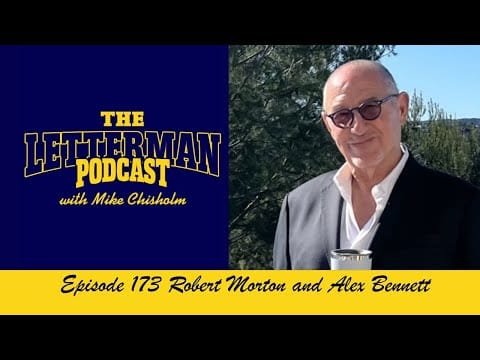
Episode 173 of The Letterman Podcast is a spontaneous mashup for the ages!Mike was about to appear on The Alex Bennett Program when his phone rang. On the other end? None other than former Late Show with David Letterman executive producer Robert “Morty” Morton. When Mike told him what he was about to do, Morty asked, “Can I join?” — and just like that, this one became too big for just one show.What followed was a spirited, thoughtful, and wildly entertaining three-way conversation. Alex and Mike both asked Morton about his time working with Letterman, as well as his take on current events — including expert insight on the unfolding situation at CBS and Stephen Colbert’s future at The Late Show.The spontaneity made it even more special, and we’re thrilled to share this unique crossover experience with our audience.And speaking of legendary institutions, don’t forget to visit Hello-Deli.com — still the only place on the internet to grab official Late Show with David Letterman merchandise, proudly run by Rupert Jee himself!If you enjoy the show, we’d be thrilled if you’d like, share, subscribe, and leave a positive comment. We’re just a humble podcast built on passion, nostalgia, and self-deprecating charm — so help us keep the magic alive!
Episode Transcript
Read full transcript
Hi, I'm Steve Winter. You have no idea who I am, but I've been watching Mike Chism show because no one knows who he is either.
Welcome once again to the Letterman podcast. My name is Mike Chisum. All right, so this week we have an episode uh that is going to be released that is done in real time. Uh actually it's exactly one week after uh the conversation that you're about to see uh with Robert Morton and uh Alex Bennett took place. Uh but this was not meant to be our episode. We've got a bunch of episodes in the can that we've been doing um that we've been kind of going through uh while I've been getting back into the swing of things. But ripped from the headlines as we all know. A lot of stuff going on in in in the world of late night television right now. And I'll tell you, um, you know, the the conversations have been fast and furious with all sorts of people within this world. So anyway, um, Alex Bennett, who we've had on the show here, uh, a at least once, I think a couple of times actually, now that I think about it, um, he, radio legend Alex Bennett, he loves it when I call him that. Um, he and I were going to record an episode for his show on Gabnet. Um, Alex is still, you know, into into his 80s. Uh, you know, you can never take the broadcaster out of out of pure broadcasters uh like Alex. It actually comes up in the conversation today with he and Morty.
But, um, we were going to record an episode uh that, uh, I thought we were just going to talk about I saw Fantastic 4 last night um, and at the premiere and I and also the state of of late night. He asks me I I'm a frequent guest on his uh Monday popup show and um I thought that he and I were going to have this talk one-on-one for Gabnet about all the things going on in late night. He was going to get my take of it. We were going to go. So we were getting the audio levels ready and as everything was um coming into place. Um a friend of mine returned my call. It was Robert Morton. He returned my call and uh and and it happened to be happening right then. Alex actually has a past with Morty. Um that actually uh even predates uh Late Night with David Letterman. And uh it turns out uh as Morty was growing up, he was a fan of Alex Bennett. They've known each other. Uh we hung out at Rick Sheckchman Sheekchy's funeral uh together for a little while and and and it was good.
So he happened to be calling at that time and so I'm like, "Hey, Alex, hold on. I got to I got to take this just to let Morty know what was happening." So I let him know what was happening and he's like, "Well, heck, zoom me in." And that's what we did. We zoomed him in and here comes Robert Morton uh coming into the conversation and we ended up of course talking about uh what is going on in the world of late night television right now. Morty gave us his take and he gave us full permission to use this as an episode or if articles need to be written or anything like that. He was uh you know Robert Mort I've I mean I'm I'm unabashedly uh I've talked about uh my regard for Morty. I always had it. This is one of those things where people say, "Don't meet your heroes." I of course have a different take on that. People are like, "Don't meet your heroes.
You're going to be disappointed." I've never had that um had that mentality because early on when I started meeting some of my first favorite like uh musicians and things like that growing up, I adopted somebody told me this and I forget who it was, but somebody told me, they gave me the advice, hey, don't have any expectations. Meet your heroes. Go for it. just have no expectations whatsoever and just enjoy the experience for whatever it is, even if they're a little bit cold to you or something like that.
No problem. That's just that's okay. It's it's all right for people to have a bad day. It's all right for people to be whatever they are. Um Morty is a guy that I always always always looked up to and had regard to. I talk about even my style to this day. Jackets and jeans and a t-shirt or jackets and jeans with a what or you know, I I I took that style from Morty. I always thought Morty was such a cool cat. And then I meet him and he's even cooler than I I would have hoped he was. And and and and so many people in the uh in the Letterman world and and and in the entertainment world absolutely love Robert Morton. Um, and so having him come on here and talk about uh, you know, what we've been talking about here the past few weeks on the on the on the the cold open intros, if you want to call it that, what is going on with Steven Colbear with uh, Late Show and um, you know, the coincidental timing of all the bigger events that are happening. Uh, we we talk about that here. Um, he flat out talks about how he doesn't think that it's even possible that uh, Colbear's show was not profitable. Uh very very cool insights from a guy who has been there, done that, and was one of the architects of building this franchise for CBS.
Super cool to have him there. Super cool to kind of hang back. And people who uh listen to the show or watch this show because they love the Letterman content, but hate the host, and I know you're out there, this one's for you. Alex Bennett actually asks a lot of the questions and don't get me wrong, I get a couple of get a couple in there as well, but I just loved watching these guys reconnect with each other and and and and loved the idea that Alex was able to ask uh Morty some of these questions that he had wanted to ask him for a while. Um so after everything was said and done, we Alex and I kind of looked at each other and said, "Well, he's going to release these as a couple of Gabnet episodes." Uh so to find radio legend Alex Bennett on uh broadcasting still, he is still around. uh go to Gabnet uh and you will find him there. And then we're going to release this as a Letterman podcast. So, it just it was one of those things that just the spur of the moment of it was beautiful.
Uh I'm going to just drop right in to where we made the connection and made it happen just cuz I like that kind of stuff. So it might seem disjointed as the episode begins, but you uh are about to see a very very cool conversation uh with my friends Alex Bennett, radio legend Alex Bennett and uh one of my favorite people in the world. I I view him as a mentor. Uh I Uber producer, Uber producer, executive producer is not enough to describe Robert Morton in my eyes. Uh Uber producer Robert Morton, enjoy.
Okay, you start recording. Morty says, "Hi, Alex." to record it. This is a Mike Chisum. Hello, Morty. Oh, hold on. I got to Okay. Okay. Okay. Say that again, Alex.
Hello, Morty. Oh, he can't He can't hear you. I don't think he can hear you, buddy. Oh, I wish we could.
We should do this. We should do this in real time.
Yeah, that's uh Bob Mo.
Oh, okay. Um I'm going to send you the Zoom link right now. I'm going to send my the Zoom link. He's going to jump in. Oh, okay.
Okay. I'll send it to you right now, bud. Uh, this is Mike Chisum, by the way, who runs the Letterman podcast. And Bob Morton, who used to be the producer of the David Letterman Show, is supposedly going to be calling us on Zoom. You did send him the link, right?
I'm going to send it to him right now, bud.
Oh, okay. Send it to him.
Uhhuh. It'll take me just a second.
Mhm.
Oh, this is hilarious. Oh, it's so funny. I did not I I swear to God, uh, Alex, I did not engineer this. This was not uh this is this is 100% spontaneous, which says to me there are no coincidences, and that's always a good thing.
He start he rang your phone, right?
He phoned me right as you and I were about to start.
Yeah. Okay.
And uh this is going to be a lot of fun.
Okay. I hope he gets it and we can
I hope he gets it, too.
And we can have him join our little gathering here.
Absolutely. I haven't I haven't se I think I saw Morty was at Shecky's thing.
Uh
yes, that's where we hung out with him all together.
It's the last time I saw Morty.
The last time I saw Morty before that I think was a couple of times up at the Letterman offices and then the Well, I'll tell him when he calls. We We'll remember the first time we ever met
if he ever calls here. But
yeah, just give me a second. I just got to copy the link and and text it to him. Oh, you haven't done it yet?
No, I'm I It's all happened at the It all happened at once, buddy.
I You know, I can pause this recording till you get all this done.
Um I don't know. I think I think it's kind of fun showing people how the sausage gets made. And you can edit if you'd rather, but if you don't want to edit, I totally understand that, too.
I don't edit any anything. I'm too lazy.
I know. Me neither. That's the problem with my show. Uh
I'm too lazy. Lazy. Have you sent it to him?
Copy link and send to Morty. Yeah.
Oh, this is so great.
Do you do you do know? Are you sending it to him by email?
No, texting it to him.
Texting it to him. Okay. Because
Okay, this should be He should have it now. And uh we should be good.
Oh my god, this is so exciting to me. I've wanted to do this mash up for a while.
Well, boy, you're so excited it's ridiculous.
I know. I get that way. That's part of my uh charm and annoyance of as host of the Letterman podcast. The enthusiasm is boundless.
There we go. And
there we go. Oh my god, this is so great.
Marty,
now you boys. How are you?
Nice to see you guys. Hello, Alex.
Let me take something off of here because I've got Chisum's uh uh name covering your face. There we go. Now we're okay.
There we go.
Bob Morton, ladies and gentlemen. Yeah, Morty was the producer of the David Letterman show for a long time actually.
Yep. Yep. 10 10 10 14 14 years total.
Late show rather late night and then later on with the Late Show. But the first time You want to tell the first time we ever met?
Well, the first job I ever had in telev one of the first jobs I ever had in television was I was a uh I I sold Manhattan cable TV door too. And you were doing it with uh Stu
Stu Smiley.
Steu Smiley.
Stu Smiley and I used to sell doortodoor, right?
We were based uh Manhattan Cable had their offices I think there HBO has it now on 23rd. 23rd off Lex and we used to meet in a phone room and then they'd give us leads and we'd go out and knock on doors. And where were you? You were on 14th Street.
14th Street. Yeah.
Was it the same building as Bernie gets? Absolutely. He used to in fact he wound up renting my apartment.
That's so funny. And and what we used to do what they used to do is they would it was before anybody had cable in Manhattan.
They went door to door.
Yeah.
You had your you you had your your 13 VHF channels. You had fuzzy UHF channels. And and what they did was they would set up a television with the cable feed in the lobby and we would just sign people up who never saw cable TV.
But of course Midnight Blue was the first thing that everybody wanted by produced.
Of course that's why I say it.
And Midnight Blue was, you know, the first X-rated show ever on on on television.
Yeah. and and and everybody wanted Midnight Blue except if you got a demo, they used to call them the demos. If you got a demo on Water Street in Manhattan, that was in Chinatown and there were two big buildings on in Chinatown. And they couldn't get anything in in Chinese.
So on on cable, they had these Chinese soap operas and these Chinese channels. It was like printing money. Yeah. You would stand in the lobby. You told me in in uh in retrospect that it was easier for you that was the biggest sale you made were the Chinese stations.
Oh, the Chinese was the greatest.
Midnight Blue was the second biggest. Yep.
And I met And I first met Alex Knocking on Doors.
I I mean, I used to listen to him on radio for God's sakes. I knew who he was obviously,
you know. I used to listen to you when I was, you know, in college. This all this all this all lives with the statement I make that I used to be a big shot. But go ahead,
Alex. You're still I just read about you in a book. Alex,
what book?
There's a book out on standup comedy. Uh I forget the guy's name. I have it upstairs. I'll go get it before we're finished.
Yeah.
And he talks about uh you know being on your show and how you were a big promoter of comedy in San Francisco for so many years.
Yeah. Yeah.
Yeah. Yeah. It was very nice. Very nice reference. I was thinking
you know who else used to listen to my show and mentioned it to Bill Maher, but I'm a little upset by it. Gutfield. You know this guy Gutfield?
Yeah. Yeah. Yeah. Good.
Yeah. This this this ridiculous right-wing bozo.
Well, I don't know if I I dislike him.
Listen to me every morning.
Everybody did.
Everybody did. I don't know. I don't know if I dislike Gutfeld because he's such a right-wing nut or because he's unfunny.
That's That's another part of it.
There's nothing funny about it,
but he thinks he is.
Oh, he thinks he Well,
and so therefore, he plays funny.
Yeah, he's been anointed the king of late night.
You know, Marjorie and I today were just watching a lot of old Letterman's, you know. We find Marjorie never watched the Letterman shows cuz she didn't get stay up that late, right? Yep.
I've been playing them for her and she agrees with me that Dave was endlessly entertaining.
Endlessly. Endlessly.
And you know, unfortunately, it was only an hour a night that he was endlessly entertaining.
That's right.
But it was the hour. But it was the hour that counted.
Wasn't it it was an hour and a half though, wasn't it, on late night? No. Maybe.
No, it was always an hour.
It was always an hour. Yeah. Yeah.
But man, you know, you were one of the early producers on that show and then you went to CBS with him,
right? First first four and a half years, Barry Sand was the producer and I was a segment producer. I was a number two producer.
Yeah.
And then I took over and ran the show for the rest of the time for, you know, nine more years. 10 more years.
Yeah.
And so,
it's funny. I watched last night what I consider one of the best interviews I've ever seen Letterman do.
What was that? Which one?
It was on uh that Busy Phillips does a show on
on the Home Shopping Network.
Y
and her sidekick is a woman named Casey St. An who was Letterman's assistant for many years
and
we've had her on our show
and she she's a lovely woman and she roped Letterman into doing this home shopping there. You know, he'll he he'll he'll do anything if he's invited these days.
Really? No, not anything, Morty. Not anything.
Oh, he better do you. If he's doing If he's doing her, he better do you.
Yeah, he better.
I'll send that to Tom. See what he says.
Yeah,
but uh but it was one of the most revealing interviews and he was totally taken it back by it. It was nothing was planned. It was very good.
By the way, by the way, I'll tell you a story about Dave though that we'll we'll get to. Dave. Uh oh, I was at up at the studio one day to see Shecky because Shecky, you know, is my lifetime friend,
of course.
And uh uh Dave walks by and sees what's going on and later on he comes into into Shecky and says, "Was he bothering you?" He said, "That guy is on late night cable on that sex show."
That's funny.
Yeah, he was bothered by that. He thought that I was, you know, a troublemaker, right?
Oh, that's funny. That's so funny. Oh my god.
Yeah. But, you know, I mean, that's Dave, I guess.
But he But you know something, had he known
and I'm sure he knows knows who you are
very well. And I would and I'm sure he would respect you tremendously because you're the quintessential broadcaster. I mean, you're, you know, and I I think Letterman respects broadcasters more than anybody. I think it's why he loves Jimmy Kimmel because Kimmel, you know, filled radio time for so many years.
Kimmel also understands what that show demands.
Yes.
And he does it he obviously being influenced a great deal by Letterman, you know.
Yes. Very much, very much so.
But he does it well. And I think that's the important part. I don't think a lot of the other people do it well. I don't think Fallon does it well. Uh and uh I I don't know about Colbear. You know, everybody's saying how wonderful he is, but uh yeah, he did a lot of politics and things like that, but I quite frankly I think Jimmy does more in that area than anybody. He's been after uh Trump relentlessly
and he gets things done. You know what he did with the healthc care and all that stuff when his kid was sick. I mean, you know, Jimmy is a a highly,
you know, how could I say, respected world citizen. He's he's he's a decent guy.
Yeah, that's
and and so is Steven. Steven's a great guy. You know, they're all great guys.
Colbear is fine, but I just he wasn't my cup of tea. you know,
well, I just I can't wait to see what happens with Stephen once uh once once May comes around because I think about him as a correspondent on the Daily Show and how mischievous he was and and clever in that mischief. Yeah.
And I'm very curious what he is going to be like when he doesn't have the mantle of CBS's late night show, uh, premiier late night show, uh, which wouldn't have existed if it wasn't for the franchise. Wouldn't have existed if it wasn't for Dave and company. I can't wait to see what he does. after the gloves come off when you
I think
Yeah. Go ahead.
I think he's gonna I think he's gonna totally make a shift. My prediction.
I think he I think he sees himself as as a Broadway performer. I bet you he does a Broadway show. I could see him. He did he did Sonheim a lot.
Yeah, I could see him in a Sheim revival if some you know he's too old for company. I could see him doing Sweeney Todd. I could see him doing something. You know, I think he
But I think
I'd go see him on Broadway. I would totally go Steven Stephen uh go and uh pay a ticket.
That's what I I'd see Steve I'd see Steven in anything. I I I
I'll tell you though, if I were Netflix, if I was the head of Netflix, who's you know, they got more money than they know what to do with, you know? They they puke money, you know. Uh they should just say, "Uh, we want to rent the theater. We want you to keep doing the same show. Come over to Netflix."
Yeah. Yeah. And they can afford it. They can afford it more than CBS could afford it. You know, you're absolutely
Well, then they'd have the Ed Sullivan Theater to do whatever they want to do. I mean, if they got them two or three nights a week or something like that, or they would have a wonderful venue that they could then put some of their specials on to. I mean, they could use for standup specials. Look how look how into standup uh specials they are right now. You'd have the Ed Sullivan Theater, which would be perfect for a stand-up special.
Yeah,
you're right. They should buy the theater.
Yep. Yep.
They should buy, you know, hey, look, they do that with they're doing it with movie houses,
you know, they bought the Paris theater in in in Manhattan. Yep.
They they bought the uh the theater that, you know, in the Pacific Palisades, which was a brand new theater. They bought that.
Netflix bought them.
They bought them with sole purpose. I'll tell you why they bought them. Yeah. So that all of their, you know, in order to qualify for the Academy Award nominations, their films have to have a a commercial release in a theater for x amount of weeks.
I think it's one day actually.
Is it one day? Really? Wow.
Yeah.
So So they bought all these theaters just to to release their their their films that they've produced. So they're Academy eligible.
But I think they've got more money to do shows with than CBS has.
Oh, god. Yes. God, yes. But you know, Mike, you were asking uh Mike about what u uh Colbear might do or not be able to do in the next in the next 10 months.
Yep.
Uh South Park already did it. They signed a 1.25 to a5 billion contract with CBS and as soon as the ink was wasn't even while the ink was dry they did this episode that was completely the biggest takedown of Trump I've seen
oh god
it was so good
an animated Trump with a small penis and they didn't even blur out the
in bed with the devil
I mean just amazing so really that gives you a certain freedom that you didn't have before, you know. So true. And he's got freedom now to do almost anything. And what are you going to do? Fire me? You know,
you know, something and and that was, you know, Letman invented himself
when his morning show was as as you know, Mike knows well, when his morning show was cancelled, you know, all bets were off. He just went crazy and did whatever he wanted. And that's when he became the late night David Letman. I, you know, we always looked at those last days of his morning show as the pilot for the late night show.
Yeah.
And and and Colbear has that same chance. Uh, you know, I don't know if he's going to squander it, but you know, but but he's he's he's got a great opportunity to to become a voice, become a legitimate voice, and nobody's going to stop him. I mean look when Letterman got cancelled when Letterman not got cancelled but when he decided to leave CBS and you know that's when he made fun of all the executives and he did you know the executive of the week and he was beating up on Warren Littlefield and John Agolia you know and he had their their pictures framed on the set and you know that's when all hell broke broke loose and they were they were fantastic. Did you feel I often tell Marjorie that my wife that that because she's not familiar that much with Dave as I said because she didn't you know she didn't get stay up that late she didn't have any life before me in other words but anyway uh I told her I said the late show was infinitely better excuse me the the um late night was infinitely better than the late show because Dave said to hell with it you we can do anything here. Who was the executives are asleep by now, you know?
Yeah.
And then when it went to CBS, he had to look a little better. The set was a little bit everything was more formal and he didn't have that same loose quality.
No, but he he eventually got it was a great show. And you know something, I'll I'll take some of that responsibility that that wasn't all about his performance. I remember when we got the show
at CBS,
I I had a talk with him and I said, "Look," I said, "We're in the big room now. We're not in the lounge anymore."
Y
and and you know, I think at at 12:30 we celebrated failure. You know, when when when when somebody up, we took a shot of that guy. Yeah. You know, I'll never forget the the famous one and you know, Hal Gurnie and all his genius, the the the famous one was when Kmart the magician was was doing some trick where he had to levitate Letterman
and he was on this flat table that was masked by some, you know, drape some fabric drapery
and he had to press a foot pedal to make Letterman levitate. And he did it the first time he's pushing the pedal and it doesn't work. And he does it again and you see him actually stepping on a pedal and Hal gets the shot and then follows the cable to the outlet where it's not plugged in.
I've never And it saved the bit. It made It made the bit worth every penny. It was It was great.
Well, what you But but we were celebrating failure.
Well, yeah. What I was going to say what you you had on that show was that you could try anything and even if it failed it was entertaining.
Yeah. Yeah. It was more entertaining.
Yeah. You couldn't do that though when you went to late to CBS because
No, we I mean we did it to an extent but you know it was like Johnny Carson did it. If a joke failed in his monologue, he brought attention to it, you know. Yes. Uh, and I think we wanted to we wanted to grow up a little bit, but but you know, we reverted we reverted back to infancy. Uh,
you know, a little bit about about the Carson show. Didn't he build in a bad joke so that he could do that?
So that he could,
you know, something I I've never heard that before, but it makes a hell of a lot of sense.
Yeah, that was Dave's theory. Dave's theory was that every once in a while he would uh he would he would put in a a bit of a dud so they could start playing T for two and Johnny would actually start to enjoy the celebration of
you know the taking it out to that perspective.
I was the best at recovery. He was the best at it.
Yep.
Y uh tell tell people about the three joke deal at the beginning of the show. Letterman on late night never told more than three jokes.
Well, what happened was and and it was it predated me as a producer. It was when Barry was the producer. When we first went on the air, we were partially owned by Carson Productions,
right? First half hour, I think, or something like that. Yeah.
Yeah. Because he was giving up that half hour. That that was his originally the Tonight Show was 90 minutes, blah blah blah, and then the Tomorrow Show and you know, all that nonsense. But they they sat us down. They sat Barry down and they said, "Look, here are the rules. You can't have a monologue. You could do jokes. He could do three jokes, but a monologue is owned by Johnny. Johnny is the master of the monologue." They said, "We couldn't have horns in our band because Johnny has horns in his band." They said they then went through a list of guests that we couldn't have and they were, you know, Stephen Edy and Don Rickles and Joe Williams and
but not K not Kmart the magician,
not Kmart and and and it and and as a result we forged an identity from from our our restrictions with the music. We had to have rock music and
you know he we hired Paul and the rest is history. We had to have uh you know
he didn't do a monologue. Eventually he got to doing a monologue and they kind of ignored it cuz it was a different kind of monologue.
Yeah.
You know.
Yeah.
Uh but they gave us and you know obviously we didn't want those guests. We weren't having you know
but yet didn't those didn't those limitations define who you were?
Yes. That's exactly right. that that gave us our identity. That's what made the show. You know, we were forced to find the, you know, the the the watermelon champion grower and the you know, whatever it was from whatever state fair. Those were those were our stars.
Shout out to Maline Smith on that one because that's what she did early on.
I was just going to give Maline that shout out.
Yeah. Yeah. Yeah. Yeah.
She was the best at it. She was the best at it.
Yeah. Um, you know, that's a standard question that I ask one of the writers from the early days on our show is is um did do you prefer the open field or do you prefer the parameters? Like I asked that to Steve O'Donnell and and the thing is when they give you these rules um it almost makes it better for the writers because then they can go and find ways to stay within the rules that are clever and more creative and it actually is a
and less less derivative. I found that I found that when I was set given a set of rules. Uh what I did Excuse me.
When was the last time you were given a set of rules? Come on.
When I first went to one station, I was given a set of rules, you know, back in WMCA.
No, San Francisco.
San Francisco.
Um uh everybody always wanted to see how much music they could make me play. And I didn't want to play music. In fact, I had usually put in my contract that I wouldn't play music. And the reason wasn't that I hated music, but that I just didn't want to be strapped down to being a disc jockey, you know,
and so was one station said they tried to get really mean with me and they said, "We want you to play as many records per hour as you possibly can." So, in one case, uh, I said, "I've been asked by the management of this station to play more music." So, what I'm doing, we're in stereo. On one channel, you're going to hear the show. On the other channel, you're going to hear nothing but music. And I did that. I played music on one channel and did my show on the other.
Oh, is that funny? That's fantastic. I'm going to move out of the sun because I can't see you. Hold on one second. No problem. Can you still see me? Oh, yeah. Oh, fine.
Yeah. Clear as the belt.
Now I can see you guys. All right.
And as a then they then after the show came in, he said, "You can't do that. that will confuse people who don't have stereo radios. I said, "Screw them." I said, "You wanted music, you got music."
That's funny. The next
Did you have to follow a playlist or did you uh produce the music to to fit the conversation?
I can't even remember. It might have been a playlist, you know? Yeah. But then I got it again at the next station I went to and I said, "Look, I don't I don't play music." Okay? And they said, "Well, we'd like you to play some music. Play at least three or four records an hour." And I went, I don't want to do that, but I'll I'll try. So, what I did is I went out, you know, there are are records uh that are like anywhere from 60 to 90 seconds long. I mean, actual records by big groups and so on. The Beatles even did some that were that short. Okay,
just to give you the segue.
So, I got all the short records I could find and I said, "We're now going to play them this hour." And I managed to play in an hour something like 30 records.
That's funny.
And I then from then on said, "This is your most music morning program." And I just, you know,
that's great.
But I did everything I could to bend the rules so that we could get away with it, you know, and so I could just let the audience know I'm well, basically I'm pissed, you know.
It's interesting that talent would do those 90 90 secondond things. Yeah,
that's when that's when during the days when you could get talent to do things
before they you'd get them into a station and you just have them record every promo and every
those were the days.
Well, I grew up in radio where I was kind of being asked to be an entertainer, you know, you had the disc jockey. He did jokes and he did bits and he did things like that and then he played a record, you know, and and whatever. And so that was the radio I grew up in and that was the radio I didn't want to give up,
you know. So, you you were great at it. That's also
I thank you, Morty. From you, it's a compliment.
Ladies and gentlemen, on the screen, you see Mike Chisum and below him is the former
I should always be above him. What kind of billing is below Mike?
Executive producer of the David Letterman shows, Late Night and uh Late Show. I I never can say this two and at the same time. I get mixed. Well, it's interesting that I I I just read this and I never knew it that when Colbear took over, he added athe'.
Yeah.
So, with Letterman, it was always a late show with David Letterman, there was no 'the'. And Colbear added athe. I I didn't know that until this week.
I guess it worked better on the marquee or something because it's above the 'the' is above the
Everybody called it the late show.
Yeah. The only thing I didn't like that Co Bear did here in New York is the marquee. He put a whole sign that went down the side of the building said cold bear.
Yeah, it's a little little
bald. You know, I mean, David just what
I'm trying to rush to run down a rumor. Apparently, Worldwide Pants still owns the copyright of Late Show and they lease it to CBS and I'm trying to figure out if that's the case or when they added the the if that uh is this still the case or not.
Correct me if I'm wrong, Morty, about the title Late Show. when I was first time I was in New York, okay, which was when he sold me cable, when Morty sold me cable. And by the way, that's Mike Chis I'm talking to now. There was a show that went on after all the the newscast and it was called the Late Show and it was a movie. They played a movie
and then after the movie they had the Late Late Show.
That's right.
So, I don't know. Could Dave possibly h own that title? Well, I I'll I'll I'll I'll take a little credit here when we when we, you know, I grew up, as you know, in New York,
and I remember the Late Show and The Late Late Show.
Yeah.
So, so when it came time to to come up with a name for the new show when we moved to CBS, I had suggested the Late Show and then when we got the 12:30 slot, I had suggested the Late Late Show.
Just remembering those days of of the movie blocks. And my prediction now is with Colbear leaving and Paramont, you know, stepping up and and I think David Ellison is is quite the
cophile.
Uh I think they're going to bring back a movie block.
Oh, interesting. Yeah.
I don't think they're going to give up I I I don't think they're going to give up the that revenue to the station. Paramount has an incredible library, I would imagine.
Yeah. And and I would think they want to monetize everything they have.
Well, they might run some of their some of their shows that they run on CBS late night, you know.
Yeah.
Which they used to do at one point. Uh
but
and if they curate it properly, it could it could be a winner.
Well, it's certainly cheaper
than than doing Co Bear. I mean, I don't know how much Co Bear is costing them now because they claim it was they were losing millions a year. You know,
Co Bear is Well, I I think they're they're definitely exaggerating the losses. I think, you know, Colbear costs about 100 million a year to do and they pay him and and they pay him between 10 and 15 a year. And I heard this from a a very good source who was a a former chairman of the network. So you could do the math.
Yeah.
Uh and they say that it's absolutely impossible that they're losing the kind of money that they say they're losing.
Okay. So you say they they spend about 100 million a year on that show.
100 million on production and between 10 and 15 to to pay him.
Uh Netflix poops that much money. Exactly. Exactly.
You know,
you know,
well, the late night show used to be considered the cheap show, right? That's the whole reason why it started in the first place.
It still could be a cheap show. That's what I don't understand.
Yeah.
You know, if if they truly had in mind keeping that show, and this is the only argument I have that's against the fact that it's all political.
Uh because I do think it is mostly political. Um why wouldn't they say look and he has more writers than any of the late night guys
and why why don't they just say you know all right cut your writing staff by by 75%
you know he has like at least 18 20 writers on that show.
Oh god.
Yeah. He's got a I you know I could be wrong but I I know he has a tremendous writing staff. Mike you might
How big was your writing staff? I think we had a probably the height that I was at 12 or 13.
I think it stayed at that pretty much the whole run for the most part.
Yeah. Yeah.
So that's considerably lower than Co Bear.
Yes, very much so.
Let me ask you this though.
How much is that theater costing them a year?
You know, I I don't know the numbers. I did look up yesterday out of curiosity. I remember that CBS paid very little for the the theater and the office.
Well, they owned it, right?
No, they didn't own it. They had they they used to own it when it was Studio 50.
Mhm.
And then Studio 50 was renamed the Sol the Ed Sullivan Theater.
Mhm.
And after the Sullivan run, they had sold it.
Oh, okay.
Originally, I think it was Reeves Teletape that bought it. Then they sold it to this old crazy hippie guy that I think was living in the theater and they they called him the captain or the wizard. I I I remember going there for the first time and I I was a page at that theater and I remember going there the first time when we wanted to see the theater and he had to approve he owned it and and it was a it was a mess. It was a real me. It was always, you know, ratinfested. probably still is. It was when we were there.
You had a about a couple of inches of water all over on the floors and
Yep. Yep. It was a real mess. And and and CBS at the time, so this is 1992 91 92 I guess. Uh they paid $4 million for the theater and the office building.
So they bought it back.
They bought it back.
Okay.
From the wizard or the captain or whatever the hell he called him.
Yeah. because you wouldn't want to do that much work on something you don't own.
No, that's true. That's true. And you know, and and look, part of Colbear's demise, I think, was, you know, it was a perfectly well renovated theater. I mean, and up until the day I left, and I would assume the whole run, it was very well cared for. you know, Co Bear came in and they redid the roof and they did that that, you know, they opened up the upper balcony that we had closed off and, you know, they built a very elaborate set.
Yeah. A lot of technology. A lot of technology.
Yeah. A lot of technology. And that and that's expensive. You know, you need people to run that stuff.
But you don't you don't think CBS then is losing They said tens of millions a year.
40 is the number they said.
40 million.
40 was the number they said for all of late night. for all of late night. Oh, well that's a little different.
40 million was the number they used for 11:30 and 12:30.
Well, I don't know how that current late show or what they changed the name of it. Uh I can't remember what the name is.
After midnight after it was so stupid of them to put that show in there
because what they wanted was a show with no writers. In that show, every word was written for every one of the comedians on the panel as well as for for Taylor, who was very funny, and most of the comedians they used were funny people, but they had every line scripted. You could see them referring to the cards on their podium.
Yeah.
It used to make me crazy. I wrote uh uh Judy Marl, who who was the executive in charge, you know, who was Taylor's manager, when it first premiered, I said, "Here are my notes." Because I like her and she's a she's a nice woman. She never answered me back. She never never acknowledged when I sent her the notes.
Well, what do you know? What do you know
exactly? What the do I know?
So, I said, "You got to get them off of that." I said, "Plus, what do you need writers on that show for? It should be It should be Let them add lib if they're funny. Get the funniest people and let them go." Oh, well, if you're bringing out a bunch of comics, which used to be my thing, you know, I used to load my studio with like five comics at a time, uh, you just let them go. They're there to work for you, not for you to, you know.
Look, I'm a I'm I'm a disciple of of the Tomorrow Show. When, you know, we used to have one guest the show, we used to put, you know, prepare Tom appropriately, but we had a tiny staff. Mhm.
We had maybe one or two researchers, one or two books.
I didn't know you I didn't know you worked that show.
Oh, yeah. I was I was a I think my credit at the time was associate producer and then I became a talent producer. I I don't remember, but it was the first network show I I ever did.
Yeah.
And and I, you know, I adored that show and I adored him. You know, we had
I would say, would you agree with me on that? I think Tom Snyder one-on-one was the best communicator with the television audience that I've ever seen. If you watch him, he never takes his eyes off the camera.
No, no doubt about it. He He knew how to create an intimacy.
Yeah.
You know, he he had all the right tools in place. He was
Some people say that Johnny, on the other hand, conversely, uh was the opposite. that he never looked at the camera or the audience. He looked to either side and
well, but he also he also was smart because he used looking at the camera as a device. And and that's the difference between a comedian and a broadcaster.
Well, what I'm saying is he I think felt that he didn't want the public to the audience out there to feel an intimacy with him. They wanted to look at him and appreciate him. You know, it was a different kind of way of sucking the audience in.
Yes. Yeah. Yeah. To a comedic effect mostly. He would use that that closeup when he had a you know, you know, when when the monkey peed on his shoulder, that's when he would look at the camera and give a give a take, you know.
Yeah. The nod and the wink was a very powerful thing that Johnny used for sure.
Absolutely. Yeah.
Uh, but you know, I just I think I I say to my wife all the time when we're watching old Letterman's, I said, "Admit
Marjorie."
Marjorie. That's right. You remember? Oh,
Marjorie. Yeah. She um uh she she I told her I said, "You know, he's endlessly entertaining." I said, "He doesn't even need a guest. He could just sit there and talk."
Yeah.
You know, and I said, "That's what that's what broadcasting is about. that's what I wanted to do in my life and how I tried to achieve it that I wasn't just doing a a an interview show or whatever that I was doing a program. In fact, I use the term program all the time. I never use the word term show cuz Jack Benny called his
show a program.
Really? No kidding.
Yeah. Yeah. That's funny because I remember we used to call on a tomorrow show.
We used to call it the broadcast.
Yeah.
It was it was never a program or a show. It was, you know, all right, we got to do the broadcast tonight. And
well, I watch people on MSNBC and they go on today's show and I'm going show. Are you going to tap dance at any point?
I know. I hate that they call news shows shows. That's that's that's wrong.
Didn't Tom call on the late Late Show? Didn't he call it a simal cast? And I love that because of the radio and the he he he he he made up a term. I forget what it was, but he did definitely call it a simalcast a lot. I love that.
Or the color cast.
Colorcast. I love that word, too. Yeah, I I I dug that. Morty, um, in a previous conversation that we had here. Um, and I want to I want to ask you about this. So, you talked about the energy that you guys felt when you were leaving late night and moving over to CBS. We referred to it, you know, the the morning show, the energy of knowing you were cancelled and so you could kind of take off the guard rails and things. We've certainly seen it in other places, too. I mean, of course, I look at Conan's last two weeks of tonight shows and they were fantastic. Um, we've seen that when the end is coming and uh and and how things get better and there's more of a, you know, the circus type atmosphere and things. Colbear's got it for about 10 months now. Um and then you look at those two um events that I just talked about. Bill Carter wrote books on both of those two. Do you think that this next 10 months it could be the circus time that we have seen in those two other instances? Are we seeing another emergence of that kind of excitement in late night?
I certainly hope so. I mean it could save the genre. Uh, you know, I I do and I think Colbear is absolutely more than capable of doing it. I think what you got to understand is there's going to be new management. So, let's see how lenient they are.
Uh, and then every one of those people have to get a job. So, it's let's see how how feel for that. Yeah. I let me ask you this question. years ago, Pat Sjack got a show, late night show on CBS before Letterman had one,
and I had interviewed Sjack in San Francisco years earlier with he and Vanna. They came into the studio and I was so surprised at how snarky he was and how edgy he was when he was with me. And so when he got that show, I said, "He's got a good shot because if he brings that snarkiness and that attitude to that show, he's going to succeed." And he went to CBS and he played it nice. Nice.
I I I I knew him only as a guest and he was always a good guest.
He always came on and he he always scored as a guest and I saw the snarkiness once personally. Uh, it must have been about, let's see, my daughter's now 23 at the time. She was probably, it was probably 10, 13 years ago.
I was at a Dodger game and I ran into Sjack and his first response, his first thing that he said to me was, "Oh, you're still in the business?"
And and I was just like, "Well, you." You know, it's like Pat S.
Hold on. Hold on, Morty. You didn't just know him as a guest. You also knew him as a punchline. And perhaps that might be a little receipt for that as well.
Yes. Yes. I I I agree with you. But I don't think Letterman ever made too much fun of Pat Sjack because he he kind of respected the guy.
Yeah.
Uh I just think
there were lines there were times where say that the the SJack show was definitely referenced though. And
Sjack had more ability than he ever showed.
Yeah. I agree.
Oh yeah. and and what he opted for is I'm gonna be the good guy. I'm gonna make money in this business. I'm going to be a success in this business rather than say I mean, let's face it, Dave was a was a smash because he threw all caution to the wind because he had been in the worst possible place. I mean, when you lose a morning show on NBC, you figured, hey, I'm through. It's over with. You know,
and when you
But he also thought he was through 10 years into the run of late night. I Shy used to talk to me about how unhappy Dave was, you know, and Merryill when I interviewed Merryill, she used I'll talk to her about uh about that period in her life. She goes, "Oh, that's old boyfriend stuff, you know." And she used to she said to me, she said, "I had to leave him because I had to go home with him every night and he was miserable about a show I had helped write."
Yeah. But you know something
to in his defense and I've said this to Mike many times.
We're talking about Maril Marco folks for those who in in Letterman's defense. Yeah.
Let Letterman never got pissed at the staff. He would never like
Yeah.
say, "Oh, this joke sucked and Steve O'Donnell wrote it. What the is he doing?" He would never do that. He would always get pissed at himself. And that was a lot of times for me more painful to see a guy like that who had everything going for him, you know, just being miserable.
But my exper my experience I was back I was outside the studio in the hallway right when the show was over because I was waiting for Shecky or whatever. And out comes Letterman. He went into a dressing room that was right next to the studio. I don't know. I think that was his ancillary dressing room. Yes. And he he looked so miserable.
Oh yeah.
He looked like the world had come to the to an end when he walked out.
And I went, "Is that what making it in show business is all about?" You know, maybe.
And guess who's the first guy that had to knock on that door and and have him open it? Me.
Oh. Oh god. He He used to throw things around too, didn't he?
On occasion he did. On occasion he did. Yep. Yep.
So you were good at dodging. That's why you lasted so long.
Exactly.
I want to marry I want to marry the last two things that we talked about though. Like one of the things I don't know who it was that I talked to now I can't pull it from my brain. Talking about Pat Jack and then also Chvy Chase. Uh both of them, one of the one of the things that I've heard about both of them is that when they took the gig of the late night host, they didn't come in with the tireless, backbreaking work ethic that the people who have survived and did this like Conan uh uh uh uh Letterman and and so many of the other ones that have survived came in. They came in, they thought it was kind of almost a cushy gig. And I don't want to I don't quite want to make that definition, but that was that person's uh you know that was their take on Pat is that he came in and he did not come in with you know geared up for war um and constant the way that that some of these other uh war horses in late night brought to it. So it might have been an attitude thing as well.
I'm going to go back.
How much preparation was he used to? You know he'd be given a card a penny saved is a penny earned. Okay. you know.
Yeah. I'll tell you something.
There wasn't much there wasn't much preparation on Pat's resume.
Let's go back for a second before uh Carson even. My favorite at the time when I was growing up and somebody who I kind of based what I did on was Par.
Parr was amazing.
Amazing.
Yeah. I mean,
amazing.
You you tuned in that show to see what happened to Par today. You know, it was and I learned that intimacy was important that if you were really totally honest with your audience in a brutal way
that they would like you.
Yeah. Yeah. He and he, you know, I I was watching an interview that he did just a couple of weeks ago with Judy Garland.
Oh, God. Yeah. and and it was amazing to see how he handled her, how how this this fragile human being and on a late night talk show and he was so empathetic and and handled it so wonderfully. He he was he was incredible. He was incredible and funny.
So, what are you doing with your life these days?
Uh trying to sell some real estate. Yeah, you went into real real estate. My father was a real estate broker.
I didn't know that. That's funny. You know, I I enjoy it. It's it's you know, you age out of television when I turned 65.
My father was a musician and then then violins kind of went to the bottom of the musical barrel. And so he had to find some way to support his young son and his wife and he went into real estate, you know.
Yeah. Yep.
Yeah. Well, you know, when I hit 65, it was kind of like, all right, I'm going up for jobs. One, they're paying a hell of a lot less than I was used to making. Two, they were looking for, you know, people who had younger ideas and younger point of view than I did,
you know, what they imagined I did. But, but it was interesting because in those days, my kids were young. I was 48 when my first child was born. So, you know, well into my 60s and now 70s, I'm I'm pretty attuned with with what what the youth and what the demographic that they desire is is seeking.
Yeah.
More than more than I ever was as a bachelor running around New York trying to pick up women.
Well, you were you were you were a worldclass bachelor. I have
I tried my best. I tried my
What What was the first job you did after you left Letterman? You went somewhere else and I'm trying to remember. I had I had two deals, two overall deals. One I had at ABC,
which was given to me by Mike Oitz.
Mhm.
Uh when I got fired from the Letterman show, I remember he fired me in his office. I walked back to my office and the first call I made was to Mike Oitz. Yeah.
Who at the time was running Disney.
Yeah. One of the biggest agents, by the way, in the business as well. But he was running Disney. Yeah.
And he said to me, he said, "Good. We got you out of there." He goes, "Now you could become the Lauren Michaels of ABC." And I said, "Okay, I'll take it." Simultaneously, my girlfriend became the president of ABC Entertainment, Jamie Tarsus. May she rest in peace. So OIT said, "I got to wait a while before I give you the deal because it's going to wreak of, you know, favoritism." So I said, "All right." So, I waited a good year before I got my deal at ABC because they didn't want it to look. And even then, even though it was Oitz who who predated Jamie and gave me the deal, uh, everybody wrote that it was because my girlfriend ran the network that I got the deal. So, I had a I had a two-year deal there.
Paid very handsomely. And I did
I did one, two, I did three pilots in in those two years. I got one show on the air. Uh, you know, so I I I had a pretty three or four shows, I don't know, but I had a pretty good track record for a for a non-writing producer. Uh, but they it was it was just too much of a hassle having me and and my girlfriend together.
Did you Were you still a girlfriend? Was she still your girlfriend to the end?
Uh, yes. Because I would say if she wasn't, if you broke up during that time, that period would have had to be terrible at work. You know,
towards the very tail end, it w she was, we had broken up, but it was very much at the end of it.
Yeah.
Because I remember how awkward it was that I had to pitch our shows. Uh was not fun.
Yeah. Yeah.
Uh but but then I left and I had a a three-year deal at Carsey and Wernern. Oh, okay.
Which I did I did a few shows there and you know Yeah.
Then I went on then after five years of deals I kind of went on my own and you know took whatever came my way.
But to answer your question directly now that you mentioned it the first gig I took after Letterman the very first gig was as a cons I was offered to produce the Chris Rock show on HBO. Uh-huh.
And at the time, Chris Rock was a respectable comedian, but I always looked at it as a bit of a step down coming from Letterman to be doing Chris Rock.
Yeah.
He had he he wasn't the Chris Rock he is today or has been for the last 20 years,
right?
You know, so I passed on that, but they asked me to be a consulting producer. So I consulted on that and Al Gurnie did the pilot and you know a lot of the old writers. I brought in Louis CK who didn't want to do it and I said Louie this is going to be a great job for you. So I brought Louisie in as a writer.
Great writer. Great writer.
Steve O'Donnell was already on the staff and he was great you know. So it was a lot of the people I was used to working with and I I basically worked with Chris on, you know, how to do interviews and all that stuff,
right? and he he didn't listen to me very much, but he was great.
Yeah, he was great.
It's a shame they don't listen to you because you're one of the better minds that has worked this business.
Thank you, Alex. It's very nice.
And I I've always I've I always think of you fondly as well. And Shecky always used to talk about you, you know.
Yeah. Shecky was something else.
Yeah.
It's funny you mentioned Shecky before and I was thinking
Letterman never got Shecky.
Yeah. It's it's one of the great regrets that I I have to this day because
he never understood what she was about.
Yeah.
He he knew that there was a savant there and that that he was brilliant at at finding whatever the writers wanted him to find. Uh but but he never he he would always say to me, "What does Shecky do?"
Yeah.
What what does Shecky do?
He wore the Elvis outfit for crying out loud.
Exactly. Right. Exactly. I have a photo of that, too.
Yeah, exactly.
Mark Mark Maloff and I had a phone conversation yesterday about this exact subject. Mark Malcoff is the uh the host of the Carson podcast and now inside uh late night for late nighter.com. He's the host of that podcast as well. And he and I were talking about some of the things that are going on. And Shecky's name came up. He's got a three-hour interview with Shecky that from years ago that we're trying to figure out how to repackage and put out. Um, but we talked about this and one of the things that Chucky said to him and he said it to me and I'm sure Alex you'll remember this as well. One of the things that Chucky said, the reason that he never really uh created any uh uh ripples in the water the way that some other staffers unfortunately did uh was because he knew how to stay in his lane.
Yeah.
And so all all the things that he was into and he was very into them and we all saw that at funeral.
Rick Richard Sheckman. Yeah.
Rick Shackman, our our boy um Letterman podcast would not exist without him. He was my northstar uh until he passed. Um and as far as I'm concerned, if I have any credibility at all, it was it was given to me by him. Uh he he he helped me so much and I love him u so much. I think about him every day.
How many years he and I were friends?
Well, that you guys were best friends and I mean
five years.
Yep. Yep. And and and the thing that Rick said is that he knew how to stay in his lane. So yeah, the people there didn't know necessarily um you know the the superior cophile that he was. the expert level of the people.
He had so many he had so many other things going on his licensings and his businesses that he never asked for crazy raises. He would get a standard raise whenever a standard raise came about
or title bumps.
Yeah. I always sense from Shecky, he just enjoyed being part of that family.
He loved being part of any family. It's absolutely the truth. And you know something, he was in in in in a consultancy role. He was extremely valuable. He had an encyclopedic knowledge.
Yeah.
He had an encyclopedic knowledge of every guest's name, of everybody who did anything on that show.
When when when we used to do things like stupid pet tricks, I I wouldn't pick the pets unless She was with me in the control room during the rehearsal. I would always say, "Can you get Shecky down here, please?" And Shecky would always go, "Do this one first, this one second, this one third." I go, "Okay." He would always order them. He would always be the guy that would say, "Use this one. I promise you it'll work." I never did it without Shecky all those years. It's funny.
Do you feel that at any point Shecky really knew his the full breadth of his talent?
Yes,
you feel he did.
He did. He did. But he was not a he was not a braggard. He he, as as Mike said, he stayed in his lane.
He never he never made waves. He was a He was quiet. He never he never looked to be friends with Dave. He never, you know, he
Yeah. He He just wanted to sit in his office with his tapes and his old films. And uh
and Yeah. And I would always say to Letterman, believe me, you don't know what Shecky does. You know something for a guy who didn't understand what Shecky did. He was at the end I think the third longest employee.
Oh yeah. Yeah.
He was up there for sure.
Yeah.
Yep. Yep.
Hey, listen. It's so great to talk to you Morty. I hope
anytime Alex We should do this again. In fact, bring Mike into it and let's uh do a mashup again. I love this. I just
I love you both. So, let me know whenever.
That is Robert Morton, ladies and gentlemen, former executive producer of uh Late Night with David Letterman and then the Late Show with David Letterman. And uh Mike Chisum, who is the current producer of the Letterman podcast, I guess, executive producer of the Letterman.
I wear many hats.
And uh me, I'm Alex Bennett. I used to be a big shot, so you know. Anyway, thanks Morty. Thanks, Mike. Nice talking to you guys.
Thanks, Alex, as always.
Byebye. Overcoat and underpants.