The Letterman Podcast · Episode 145
George Rothweiler Filmed dozens of Superbowls and exponentially more Late Shows and has the stories to prove it!
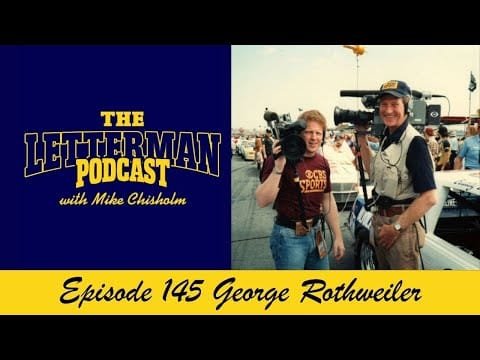
Episode 145: George Rothweiler
This week’s guest is George Rothweiler, an Emmy-winning camera operator who worked for CBS for over 40 years, including the entire 22-year run of Late Show with David Letterman.
George and Mike have an expansive conversation about his journey into the world of television, how he climbed the ranks to cover high-profile sporting events like Super Bowl XII, and his transition to become a handheld camera operator for Late Show.
They delve into the people who shaped his career, with George giving special recognition to veteran leaders such as Jerry Foley and Dave Dorsett. Naturally, they also reflect on George’s favorite moments working alongside David Letterman and the incredible team at Late Show.
And now, for our wonderful sponsor: the one and only Hello-Deli.com—the exclusive place to get Late Show with David Letterman merchandise, run by the legendary Rupert Jee himself! Seriously, where else can you support a sandwich shop with cult status and snag some official Late Show swag?
Lastly, if you enjoyed the episode, be sure to do your part! Like, share, subscribe, and leave us glowing reviews—or at least mildly positive ones. It keeps us going, and hey, it’s cheaper than therapy!
#LateShow #DavidLetterman #GeorgeRothweiler #CBS #CameraOperator #SuperBowlXII #JerryFoley #DaveDorsett #TelevisionHistory #BehindTheScenes #RupertJee #HelloDeli #Broadcasting #EmmyWinner #LettermanFans #ComedyLegend #TalkShow #LikeShareSubscribe #Television
Episode Transcript
Read full transcript
all right yall thought that I might be fibbing this is proof right now the Letterman podcast we have one sponsor one sponsor only but it is rert G in the hello Deli thank you very much for sponsoring our show rert it's my honor Mike welcome once again to the Letterman podcast my name is Mike Chisum I love today's episode and I know you say that every time M yeah well I love the show you know it's it's it's good that the host of the Letterman podcast loves the show loves doing the show loves the conversations that we have believe me it's not because of me I love it because of the guests that we have uh and today is certainly certainly an example of that George W rothweiler is on today uh a cameraman for the CBS network for decades almost five of them 47 years this guy was a cameraman uh for the Tiffany Network and it this this conversation that we have and then of course 22 of those years uh for Late Show with David Letterman he was a guy that would run the handheld he wasn't one of the original full-timers that was there uh but was a guy that was brought in by Hal gurny and then of course uh that Legacy continued On by The Late Late great Jerry Foley um we haven't had a real tribute episode to Jerry since he passed I know that we've got some previous episodes Amy Sharon Humes and uh and Tim Kennedy among others talking a lot about Jerry before he pass but but this episode here um Boy George does a wonderful job talking about how he felt for Jerry and and and um that's a that's a fantastic part of this episode he talks about uh we talk about 9911 we actually recorded this episode on 911 and we talked about um how he went from Sunday night uh winning the Emmy in California to a couple of days later um you know the atrocity uh that happened in New York and of course late shows place in that history from an entertainment um from a broadcasting perspect and from a moving on perspective for the rest of the world we talk about that um but then also he does such a good job talking about the role of a camera operator and is it the same for uh doing a Super Bowl because he did them all from Super Bowl 12 on um or maybe it's Super Bowl 14 I forget which one but but the early Super Bowls and he did them on is it the same being a c operator for a Super Bowl than it is for for for Late Show we talk about that um and many many other uh very cool um stories behind the scenes of Late Show with David Letterman this is a fantastic conversation I'm going to shut up now and we're just going to get to it uh the Letterman podcast is extremely proud to present my conversation uh with veteran journeyman uh Learning Tree George rothweiler okay George um The Tech Guys I've I've constantly said The Tech Guys uh the cameramen the utilities um the audio guys all these people who are are are the professionally invisible people who are behind the scenes you guys are the ones who knows where the bodies are buried when it comes to uh the things that happen on these shows I'm very very excited you've taken time out to be here today um your career it's funny because late night or Late Show with David Letterman came into your life but it's not like you didn't have a massive career you've shot some awesome stuff along the way before late night came or late show came in uh I want to talk to you a little bit about that how did you get into the business well I graduated high school in 1972 instead of going on a college I went to a broadcasting School in New York City RCA institutes yeah which is a pretty uh was a quick course it was only for four months and I gradu way June of 72 started RC RCA Institute September of 72 graduated December of 72 my first job was at New Jersey public television February of 73 worked there as a u a trainee or an intern yeah they put me on a $2 an hour it was a state funded station and then one of my buddies who had left the station said CBS was hiring and I said all right I'll give it a shot I was uh 21 years old at the time that I applied at CBS I started at New Jersey Network at 19 and I was one of the youngest guys hired at CBS and was funny during the interview process I said you know the only difference between where I am today and where I hope to be tomorrow at CBS is how much you're going to pay me because what you do for a director there is the same that I would do for a director at the network it doesn't change anything it's like when we do Super Bowls all the young guys who get nervous about doing a Super Bowl and I always told them the only there's three things that change at a Super Bowl the pregame the halftime and the the wrap-up show yep once the game starts nothing changes you still have to do the same job you've done for 17 weeks of an NFL season or if you're doing a final four World Series game you still got to do the same job it's all a hoopla that surrounds the event so I got to CBS at 21 one of the youngest guys there and you know the career just started a lot of those veteran guys who were World War II veterans were great they were all my father's ages they were 55 and above and I was the little you know red-headed kid at 21 year olds 21 year old coming in there and eyes wide open I love sports so at that time we did everything you know I did Captain Kangaroo I did some game shows and a few soap operas but primarily was Sports on a weekend y so when the rumor was that lman was coming over I didn't know anything about David I was a Johnny Carson guy I watched his show for decades and um but the thing about Letterman was I heard that his director and I didn't know who his director was well obviously now was Hal gurny was G to interview a camera crew and I thought I would love to be interviewed by this gentleman because I found out his background and I said let's see if I could go toe-to-toe with them to see if my knowledge of the business can match his knowledge that he came from and um one of the vice presidents out that I wanted to do the interview did not want to do the show because I knew nothing about Letterman I didn't know what it really looked like or if it was funny I didn't know anything about it but I want to be interviewed by this senior veteran director and they denied the request and I guess they were afraid that with the clout that Letterman had coming off from NBC that they could virtually pick and choose who they wanted on their show since they spent all that money so um didn't have the interview but they were so busy they were bringing in extra guys they were doing a lot of things on 53rd Street rer G's I mean all around Manhattan they really got really into the neighborhood and wanted to build friendships with people and I was sent over there quite a few times and you know how like what I was doing and they brought me back whenever I was available and they needed extra people then it just went from there um I really love what you said earlier about how you know nothing changes you're dealing with the director you're dealing with you know the the gig is the same no matter what is that something you learned along the way or is that something that a mentor taught you back during your formative years to me was just common sense yeah like I said earlier the only difference between New Jersey public television and the network was how much they they were going to pay me the works stayed the same and the gentleman that interviewed me just kind of smiled and he he knew that I was right nothing changed and I I never I never felt the pressure of coming to the network because I knew what I had to do on camera a camera operator I used to say cameram man but no that's no longer the case because we have some very fine ladies who do cameras now that um lot of common sense and you're loyal to your director's paramont yeah uh it's interesting to build that relationship and Trust well okay and and and we're going to get to relationship and Trust um from a director to a camera person or a camera operator uh uh we're definitely going to get to that because you know when you think about late show and the Breakneck speed and all of the spontaneity that would happen with it um you know you're not the the only one who uh did camera for Late Show who came from a sports background and part of that is because of the industry of course you know you go where you're supposed to go CBS of course has a long storied history with sport uh so I mean obviously that's that's a big part of it but at the same time I believe that having people who were experienced working in sports with all of the um the spontaneous things that could happen within a game uh was certainly part of the secret sauce as to why late show was such um such a a unique and amazing program because really the spontan was a huge part of that well you know the main camera guys on The Late Show that who did did the pedestal cameras they had done Sports a little bit over the years but the handheld guys myself flarity Al chelino John Curtain Fred shimuzu and John hannell just to name a couple handheld guys that Jerry Foley who took eventually took over rotated us all in we were Sports guys so we're used to doing things live and reacting in a split second yep um so I guess Jerry embraced that a lot I I I I make reference to Jerry a lot because I did 20 years with Jerry and maybe two not a lot of shows with Hal before he retired and I guess Jerry liked to have the you know the many guys do Sports because they're so quick to react to things because you never know when Dave's going to say something about ruper G or or sign outside and that quick we run outside to get it I mean you know in early you know the last few years I was up in the balcony doing the opening of the show and Dave was taking questions from the audience and one woman asked him how come you don't throw stuff off the roof anymore oh my go and all of a sudden everybody's scattered like ants utility guys are getting cables to run outside then we when we started the show next thing you know they're up on the roof with farmer throwing the stuff off the roof we had cameras out in the street and in in a matter of minutes we didn't have a lot of time to prepare but because of the experience of the utilities uh the camera assistance they had everything blocked out they knew what cables to grab plexiglass for us to stand behind because sometimes they throw paint off the roof and there's all sorts of stuff one time they dropped off a thousand of those little tiny super balls and they were bouncing all down 50 Third Street so now we reacted to a lot of things and Jerry had a good crew Everybody on that camera crew really wanted to be there in my opinion and that helps the director out a lot um and and and uh you you mentioned it earlier the consumate professionals and that's what you all were you were you know there that production uh required nothing less than people to be the top level and and and professionals um before we kind of move into late show stuff I'm super curious about some of the things the highlights of things in your career that you shot before that you were part of some pretty big events before you had that uh uh you know that uh the assignments to start going over to the Ed Sullivan Theater you had shot some pretty cool stuff along the way what are some of the things that stick in your mind of things that you've shot over your life George Well out of all the staff guys at the network I think I've done more Super Bowls than anybody I've done every Super Bowl did I lose you no I'm good I'm listening okay no I I just don't see it for some reason oh let me see what they did okay I'm back oh you're crystal clear on my end how many Super Bowls did you do and what was the first one do you remember the first one was Super Bowl 12 in New Orleans it was the Dallas Cowboys against um the Denver Broncos Super Bowl 12 and I've done every Super Bowl since Super Bowl 12 with two or three different directors over those years and again to me a Super Bowl is just like a regular game was just a hoopla I did the NBA Finals all during the early 70s when it wasn't a very popular event until magic and Larry Bird showed up and I did all the NBA Finals Boston LA and Boston in Detroit all during the 80s wow you know I did figure skating for a lot of years uh baseball World Series so you know I was pretty well-rounded uh The Late Show to me was in a lot of pretty easy I you know you come in there and everybody gives you a lot of advice what to do and what not to do but you know basically listen to the director listen to the show and see where it's heading because there were times where I always felt David Stone curveballs at Jerry and I want to make sure Jerry went two for three against them you know to be at the right place at the right time and um but no I've had a very good career along with many other my staff um colleagues we had a great rounded career uh so are you okay are you a football fan I'm a sports fan you know I was a baseball player for years but you have to love sports and if you know Sports it's going to make everything so much easier for the director and a producer because you have the instincts to know where to be at what time because you played those Sports where in the first generation technicians were like I said was our world world to Veterans who came to CBS in the 50s yeah and they didn't have the opportunity to play to sports like a lot of us who came 75 80 and 85 we played the sports so we knew the the mechanics of what could happen during event which makes for a better show because you know nowadays you know with all the videotape replays and the amount of massive cameras you have on these events it makes the camera operators you have to be perfect because you can make a make a difference in a win or a loss for a team yep if you're not there for that cage or you're out of focus yeah don't be out of focus um okay so so let's talk before you know before late show comes over you're working for CBS you're a CBS guy and uh you know that Network the Tiffany Network had gone through all sorts of ups and downs and all sorts of stuff do you remember the feeling um do you remember where you were when you heard that David Letterman was coming over to CBS you know what I have no idea where I was or anything like that because like I said I wasn't a letterman fan at didn't know much about him yeah uh his show was on at 12:30 I was always in bed a lot earlier than that so yeah I said the only thing I ever heard was that the director was gonna interview and that they were R doing the Ed Selvin theater because that theater had gone in and out of ownerships over the years that I was there you know Kate and allly were in there we did a game show in there CBS owned it CBS didn't own it and then next you know our construction engineer people are over there gutting the whole building and getting it ready for Letterman so you shot stuff in the Edan theater so you you you shot stuff in the Edan theater beforehand I did one game show called um oh I don't know Musical musical chairs I think it was it didn't last very long but that that was it that was the one show that I ever did over there then I went to ABC Howard coell did a show out of there like I said Kate Aly done there yeah and and that was the extent of my uh you know visibility at that Stadium uh Stadium studio until they until got in there um okay so so but at the same time you may not remember where you were when it happened but there must have been a lot of Buzz about Letterman coming over um at that point there what did your typical day look like like were you were you always you know um in the Northeast go to the broadcast Center every day look at your assignments is that what the the day would be and then suddenly after late show started you started seeing these assignments where you were being called over there would you be called over there spontaneously how did things change for you when Letterman did come over to CBS Well normally my we were on a five-day work week then so uh my days off for Tuesday and Wednesday and Thursday I was in a broadcast Center normally when you're traveling you'd be traveling on a Friday to your football weekend and we pick up our pran slips on our airline tickets and pretty much we were unassigned that day and because Letterman was doing so many things the scheduled desk would send over a couple camera guys or audio guys or whatever the needs of the show were at that time and U I would just go over and it happened more and more um and really that's how it really developed you know then I got Friday I'd travel to the football and come back on Monday and sometimes they'd call me in on my days off to do the show and then I'd have maybe Wednesday off then Thursday I'd be back in a broadcast Center and could be assigned to let them in if they had it extra people if not I would do other things whatever they need needed me to do I get into the weeds when oh go ahead yeah please I was going to say we were all unassigned in the field Group so we weren't assigned to a show weekly because they knew we're going out of town on Friday and if you're doing a soap opera they want the regular people to do it um so no no no that makes sense okay so so um I I get into the Weeds on this stuff I'm just I'm fascinated by all the little details when it comes to this stuff um okay so on a Wednesday you're off you're sitting up you're having your coffee in the morning you get a phone call saying hey they need you at the Ed Sullivan Theater today are you the guy that goes to the broadcast Center to get the camera is the camera there already are you a guy that like how does that how does that all work well the equipment's already there I'll give you a story we living I'm still living in Jersey at the time and it was a very very snowy snowy day I mean we got a over a foot of snow and I'm outside my driveway was 80 foot long I had my snowthrower out there and I and it was a Wednesday or Tuesday and I clean off the driveway I was just sitting down to have breakfast and then a call comes in from Bob Feller who's the production manager over there said couple of guys can't make it in can you get in and I went all right if I can get my Jeep out of my culde saac I know the rest of the roads will be clear well I did that and I drove all the way in I so I said to him where do I park my car I saids don't worry about it we'll park it on 53rd Street because a lot of our security where New York City detectives retired and whatnot so my car parked on 53rd Street I did the show and that night I was on the roof of the edsen theater shooting bumper shots down Broadway in in a snowstorm but that was my job because I did football games in Green Bay where it was 20 below zero yep or up in foxb doing a game where the weather's horrible or rainy when you're a cameraman you're like a mailman who has a viewfinder that have to deliver pictures and all sorts of weather so if you're a cameraman you you really can't complain about the weather that's your job whether you're in doing a golf tournament in Miami a 90 grade temperature or you're doing a football game where it's 20 below zero so I'm on the roof I do the bumper shots for a whole hour give the camera to my camera assistant he packs it away I go outside get my car and I drive home I drove down to the Lincoln Tunnel no traffic through the Lincoln Tunnel no traffic New Jersey Turnpike no traffic it was like I owned the whole roads because nobody was out driving and I drove home so there were many times where they were call me so much on my two days off that when I woke up my wife says what's going on I said I don't know but you never know sure enough a phone call would come in they see if I was available to work that day um and that wasn't just me that was guys had the same scenario absolutely oh yeah yeah yeah I get that um okay so I just I love the analogy of the mailman that's so cool you seem like and I mean it's all the years of course I mean you've got you're you're you're you're just literally spouting out wisdom here do you ever get called by any broadcast schools or anything like that to come in and do any teaching you'd seem like you'd be a really good teacher George you know what funny I was um one of my neighbors they had a career day and he knew a teacher in a school in New Jersey and they were bringing in different people from different as you know companies and they asked me to come in so I came in and it was a sixth grade class and you know what the first question everybody asked me was how much do you make that was from sixth grade kids how much do you make and I said that's good so we had a nice conversation the kids were great and there's one little girl in the back of the room says I one one last question are you married and I said yes and the entire class shifted and looked at the teacher like the kids are trying to fix me up with the school teacher which I thought was so cool um and they're betting how much do you make how much do you make are you worthy of the just going to this teacher you know they ask how much you make yeah I do okay great hey do you want to hang it's amazing what these kids ask but you know it's funny if I was going to talk to anybody who wanted to come into the industry I was just tell them a little bit about my background yeah and what I did because a lot of times a a teacher would come in and they'll have a scripted what they're G to teach that day but they may never hit the talking points that you want and you may be too afraid to ask a question so I would tell them about my background how I started how I came up and there's no clear path to get to where you want to be everybody achieved a certain status taking a different Avenue and I would ask them what questions do you have for me so you ask me any question you want if I can't give you the right answer maybe I can help you get the right answer from another resource because certainly I don't have all the answers yeah I uh I imagine that you worked with a lot of people who were your Junior I mean you came into this thing you worked with a lot of people your senior and and that's very much by the way the Letterman sensibility when Dave got his original show there were a lot of you know young Cutting Edge writers and things like that but then there's also some people like Hal gurny you mentioned Hal gurny I mean he's a legend now like an absolute Legend in broadcasting the guy worked with par with Jack par I mean oh my gosh um you know and and and and Jack Rollins you know we talk about Jack Rollins Dave's legendary manager and some of these people that have been around for a long long time but then there were these young people and there was this kind of alchemy or this chemistry of these people who were together you kind of went through your career going from talking to the old guys who had been around for a long time and then you got to the place where you became a veteran in this thing and you saw younger people coming up um pretty neat perspective when it comes to that I'm I'm super curious as to what uh has changed and what stayed the same well the thing that changed was um the industry went to more of a freelance highight ing process so once the current staff guys were in as they retired or left they were replaced by freelance and pums so I didn't have the opportunity to have a lot of young guys coming in behind me because that that door was being Clos got but I met a lot of Freelancers as a cameraman supervisor on remotes where I would set up a a football stadium and we'd hire local utilities to help and I would have to train them and motivate them and have them understand how we do it at our Network which could be a different way of doing things than say NBC ESPN or ABC and those are the younger ones that I met over the years and you know we spoke about a lot of things I was asked a lot of questions over the years of my experiences and I try to share it with them you know I just give them what I went through and hopefully they can have the same positive career career path that I had you know you want to build friends and relationships you know in this business not everybody's going to like you yep okay oh you're preaching to the choir on that one George you're preaching to the on that one yeah you hope everybody likes you and it hurts when you find out well this guy really doesn't like you because as good as you are people are going to be jealous of your success and wish that they had that same opportunity and I always tell younger people Johnny Brown may not like you but the thing that they can never take away from you is what you do in your craft area if you do a good job on camera just do a good job on camera and you don't have to brag about your camera work your directors and producers with do all the Talking that needs to be done try to be humble but be good in your craft because that's one area that they they can never take it away from you oh my God it's just the advice is just coming out of you the wisdom of of this of these years as we reflect on this stuff I want to start moving into Letterman stuff now um okay so you're used to you by this time by the time late show uh started production at the Ed San theater you have this uh body of work this body of experience you have these instincts that you're talking about you have this you know unfl flappable um you know mindset it doesn't matter we're just I'm just still doing the same job every day I'm the mailman doing the same job every day no matter what the environment is no matter what the show is fantastic you then start getting sent over to the Ed Sullivan Theater do you early memories of this are there anything that pops into your head of oh my gosh that's one of the strangest things I've shot or that's a that's a that's a little bit outside the box of what I've been doing over the years early on this is going to be a bit of a different Adventure anything like that no not really you know I went over there with eyes wide open yep not really thinking what's going to happen I just let it develop as any good sports cameraman would do or a live cameraman because it's never planned it's just going to happen we were doing things out on 53rd Street and you know Dave knew most of his crew members he didn't know me early on and we were doing a show close on 53rd Street and I was out there and they wanted Dave to close to my camera well when he looked at me he was stunned because he didn't know me but standing maybe five feet away from me was a cameraman that he worked with at NBC Joe the bonus yep and he immediately swung the Joe for the show close some camera operators would be really pissed that he didn't do it I understood it he didn't know me from Adam he wasn't sure so he went to what he thought was the right person to go to and then hindsight he did do the right thing I wasn't upset about it I totally get it because you know he sees a 100 camera guys all all the time out in the street you know it's not friends with everybody because it's stuff to get to know a lot of us because we're in and out yeah you know offing on and you know it is what it is but no nothing they put you put me in some weird positions like we discussed yesterday about one time I was on a ice skating rink um they had Don huitt I believe he was a stunt coordinator and Dave's Talking Paul schaer about what's going on on the on the hockey rink and I'm out there in front of the net and I hear Paul say to Dave why doesn't he just shoot at the camera operator well when that happened I didn't know if I was on air or not because in the studio you have a red tally light come on and you know you're on the air but on these remote cameras you don't get that so when Paul said I hit the camera guy I instinctively without thinking went no no no well then I hear the audience laughing because they didn't expect me to do this but I did because I didn't want to get hit with the puck so that was an interesting position to be put in was that Al or was that Jerry do you remember no that was Jerry that was Jerry okay so you you know yeah that and that's where you know the genius of that show where they would have members of the crew uh in this case a member of the equipment become a character within the show and that was that was one of the the genius parts of of what Dave and Company did was they would they would have moments like that where they would give you little teeny tiny moments to be part of the show that is a perfect Letterman moment that you just you just described again it was unplanned um yeah I was down with roer g at Shark River down to Jersey Shore and we're doing I don't even remember what the bit was but you know he's on camera and behind him is the Shark River and behind him is coming this Wave Runner and he you could see he's boogieing and I hear Dave go hey hey hey hey instinctively I just did a nice slow Zoom past rer and picked up the Wave Runner and followed the conclusion and I widen back out to bring roer back in the shot well Jerry Foy thought it was the greatest thing since white rice because instinctively I went to that because I figured Dave likes those zany things so yeah I just went with it and again all these little things that I might have done early on the production people liked it's all instinctive fly liked it he didn't have to direct it all he had to do was select it and that's not a knock on his ability as a director I can't comment much about how because I only worked with him a few times yeah when I did work with him early on Jerry was a technical director on the show so the day that I was a signing here for two straight days Jerry introduced me to Hal and says this is George rwi he's gonna be with us for two days and Hal says to him well let's see how he does today so I said that was pretty funny we had a chuckling off we went and after my second day as we were just ending the show um Hal said to me George come back any time which made me feel good because all right I have a new director in my corner he knows that I could do the show when and if he want to utilize me that's his call but when he does the call hopefully I'll be ready to do it and that holds true for Foley also um and we're gonna get to Jerry here um did you meet Mr Dorset right away did you know him very long uh before Oh I spoke to David last night oh did you we had our yes I did he's coming up to 90 years old yeah he has slowed down his mind is still pretty sharp um when I first came to CBS at 21 Dave was one of those guys who started maybe early 60s FR everybody million dooll smile always in good spirits he and I would run like hell after the show is over down to Port Authority we could probably get down there from 53rd to Port Authority in about eight minutes yeah we were hustling Dave was loved by everybody Letterman loved him he was like a little kid he was the senior senior member of our crew he in his 60s and when the scripts would come down to put him in bits he was like a little kid he get very nervous and we he'd read me his part and we would chuckle about it and and when it came to shooting it Dave must have liked it because it was so innocent his reaction to a lot of things um but Dave was one of those guys very supportive of the new guys coming into the industry would always give us helpful advice and that was a good thing about all those veteran guys they were helpful we were the Tiffany Network for a reason we always we always took care within our Circle would there be skirmishes within the circle like any family of course it would be but overall they were there to help you get through and that that Tiffany name to me is very important because of the class that we when I came on board they told me how to dress when we travel yeah how we interact with people on road because we represented the CBS television network and that was important to those first generation guys but as time went on you could see how the dress code had changed when the freelance world came into our world because they dressed a certain way and the network guys staff guys dressed the other way so it has changed over the years um but getting back to Dave he he was so supportive everybody loved him on the show um just I don't know how much more I can say about the guy he's just top-notch um had you worked with him at all uh before Late Show oh yeah he used to do the cbsd news with Walter crunchit and I was assigned there one day um as a utility and I sat behind Dave's camera and I kept thinking of myself boy if my third or fourth or fifth grade teacher Could See Me Now sitting 10 feet away from Walter kronite think about it when you're in grammar school you see all these World War II videos with Walter doing a voice over and here I am working with Walter kronite it's like all right that's pretty cool see I got used to working with all these big-time celebrities when I was 21 22 years old that holds true to John Madden and Pat soll and all the sports Gods you know they become your friends after a while you work with them so often they're just like one of the guys and um but to sit there with Walter konai was kind of cool and Dave had worked with Walter for years and you know you could see the interaction between them with they were they were friends which is important hopefully in indust see you pick up a few friends friends along the line well it it it feels like um there is very much uh like a Brotherhood um with and mean if you call it's not just the union guys but but but you're you're you're Fox you're literally to use a war analogy you're Fox old buddies with each other and and uh you might as well be friends because it's going to be pretty miserable in that Foxhole if you're not getting along you're and and while the action is coming in you've got to you've got to perform right so you might as well be at a place where and and you use this word a few times um you use the word trust and and it's it's it's the idea of of you being someone that that the director can count on that the show can count on that you're not going to get out of focus in your case as a as a as a um as as the handheld guy you know having those instincts that you're talking about that word trust really really is important in many different aspects of what it was that you were doing well if I do a lousy job on camera reflects the director in this industry the directors have always selected their we'll just talk about camera for now sure they select their camera for their Instinct and their desire uh I mentioned yesterday TOA uh Biff Henderson went in for a meniscus knee operation and Jerry assigned me to shoot it yeah prior to the operation we did all the all the taping with the doctor beforehand at the hospital and whatnot but the day of the shoot I made sure my lens was clean the camera was ready to go fresh batteries and once I got into the operating room I was on my own Jerry didn't direct me because like my sports directors yeah he knew what he had and I'm not the only camera guy he had a couple other camera guys in his stable Al chelino and and so on who could do the job also but he didn't have to direct me he trusted me and I knew what I had to do I couldn't let him down and I couldn't let myself down camera operators love their directors 99% of the time and our job is to make them happy pure and simple you may not always like your director but you're like LeRoy Neiman every camera operator paints a different picture yeah they have a certain style that they shoot Instinct on what they do and it was funny because during the operation I'm kind of peering out of my viewfinder see what where Jerry is and Jerry the segment producer and my camera assistant they were looking at the monitor as the surgeon was cutting the leg and it was funny on Biff's leg they put an X where they were going to do the incision so I was happen to be around that side and I see this x I do a a nice comfortable Zoom down to the X and just as I got to where I was going to stop the doctor went in with the scalpel oh and you know cut the knee open perfect and Letterman likes that kind of gory stuff he just loved it so when when I saw the finished product I went wow they actually used that and it was pretty good now people say well did you get sick when you sow up blood back then we had black and white viewfinders they weren't color viewfinders so was black and white so it wasn't as dramatic as it might have been in later years where we had color viewfinders uh you know what that's okay oh go ahead no please keep going no no no I got nothing else all right okay um man there's a couple places that I want to go with that but no I want to go to the I want to go to the heart place um you know we talk about Jerry and I mean we've had a couple of uh tribute episodes episodes that ended up kind of being tribute episodes to him um Jerry Jerry was gonna come on this show you know we had talked about it and and I'll tell you this George uh because I know you have the respect for Jerry professionally and and and personally um and and and I mean I I worship the guy I mean the guy took over for Hal gurny I can't even imagine being in the pressure cooker that Jerry Foley was uh the pressure cooker of of of Late Show with David Letterman was absolutely incredible and there's probably five or six people that I think of that were probably at the epicenter of that pressure who had more than anybody Jerry certainly in that place and I'll tell you um I don't think I've said this uh publicly um you know we we we had talked in person a couple of times at shecky's Memorial and we talked at at Rupert's retirement party and we had traded back a whole bunch of emails um sheeky was one of the one of the first people he connected me with was Jerry Foley and and and um we started going back and forth and and um this is something that he said to me a couple of times he said Mike um I will do the show but I'm just not ready yet for the Mike Chism treatment that's what he said to me I'm not ready for the Mike Chism treatment yet and it delighted me to no end to hear Jerry Foley say that to me um and and uh you know in the fall we saw each other at Robert's thing and then early in the in the winter we we we traded we were going to he was going to come on um and then unfortunately tragically he passed away and and I mean what a blow and he passed away on the same day one year later than Chuy passed away and I mean it's just on the same day um and and I mean you talk about a giant um you talk about somebody who's a giant who is professionally invisible and I mean don't get me wrong the director of anything David Letterman has ever done was visible was a part part of the show so much more than any other director say for Carson or other people have it other people along the way um but you've got this guy who took over for a legend and made the show his own and then he had these people like yourself who had this unbelievable desire to make Jerry look good and I know that you and many of the other people who who served under him felt that way let's talk for a little bit about Jerry Foley Jerry sometimes it's tough to talk about it yeah I couldn't go to his memorial it hurt that much yeah because he a guy was very loyal to a lot of people yeah like I said directors aren't liked by everybody but for the cameramen there's a certain bond that we had with them you know the loyalty is a two-way street from him to me and me to him and I realized right from the GTO that he was under a lot of pressure pressure that a lot of us in the trenches probably didn't see but could feel what goes on upstairs you know um we'll never know what that's all about but his goal was always to make David look good and make the show look good he would take a be there there were times on headset he'd say oh I'm gonna hear about this later and that always bothered me because my job was always to be prepared that would never give Dave an opportunity to pick on Jerry for not getting something I had a good uh camera assistant and St Stevie caufman unfortunately passed also yeah this guy would always we'd have a talk before the show I'd ask him do we have enough cable to get out to r g do we have enough cable if we had to go across the stage out the the stage door to get something do we have enough C getting the back and he always made sure that I was prepared because you just never know what Dave's going to say expect the unexpected right and he'd say something about r g or a poster that's across the street on 53rd Street well when I heard that we would run like hell to get outside and Jerry appreciated that and in the eyes letter go wow how'd they get it so fast how' they even know I was going to say that we were there to cover Jerry's butt and he knew that and he appreciated that you know there were times where he might get a little upset but all directors get upset and yell he just sometimes can't take it personal yeah and with Jerry he was loyal he would call me once I retired he would meet with uh Tim Kennedy and Rama gugin a graphics operator for you know have a cigar or and some wine and they'd always send me a picture saying man another one you couldn't make and I just I'd sent him a picture I'd sent him a picture back of miamis and I said I would have been there but I had to do some dusting so we always had that little TD Toby between one another or he'd say to me we're we're due for our yearly chitchat he'd say to me we're only gonna talk once a year yeah but with that said he I get calls for him to do other freelance stuff which I I was really on a available to do it by the time I retired after 47 years I still had the strength and the instincts to do the show but I was missing one important ingredient desire yeah the desire to carry that camera I'm still in good shape I work out a lot but I was losing that mental desire because I been that for 47 years yeah was very repetitious and because of repetitious I always still want to do that great job because I don't want want people to look at me and said ah he should have retired a long time ago you know he's just running out this string but you know the Jerry Foley thing was devastating to a lot of us it was like wow it's that's you have to appreciate people when they're here and uh it it was just too much to really go to his uh Memorial and um you know it's just for some of us it was very very difficult yeah but I have great memories I only remember positives about people we shared a lot of laughs and U loyal to me was a number one you're loyal to me I'm loyal to you right back a th% and sometimes loyalty is U something that disappears there may be intimate loyalty but the overall corporate loyalty that was once there is no longer because of a lot of different issues that are going on in the world today yeah but back when I started it was to so totally different you took care of your people um and and just one of the things that you said there was that so many of you wanted to cover Jerry's butt and it's it's it's so interesting like and I think of um the utilities that I've talked to um and I want and there's I want to talk to more I mean I've talked to a couple behind the scenes and Brian Brian's been on the show I want to talk to more of them because the utilities had the same loyalty to the cameraman and to Jerry of course as well but like this this this team that you all had there uh was a very very special team um and and and it was apparent it was apparent you know I have used this analogy on the show before but I I've never used it with you so I'll I'll say it uh my wife is one of the most amazing Cooks you'll ever you'll ever uh be served by and and it's because she has an intangible ingred ingredient she cooks with love she cooks with care and it was very clear that that shoe that show was written with love it was produced with love and on the technical side of things it was clearly created with love there's no doubt about that you know it wasn't a straight ahead thing it was a what can we do to make this that much better how can we think around the corners to do that um and you guys wanting to to to be that way for Jerry um not out of fear of a boss but out of uh respect for the boss is an incredible thing and I think it's something that that it's worth talking about because our society doesn't necessarily put the value on that that it used to well we had a a tremendous bunch of utility guys br Dan Campbell John Moran and my guy Stevie Kaufman we had a good technical director and Tim Kennedy again he was our boss on the technical side great personality I knew Timmy for years he always was very respectful of what everybody brought to the table which motivates the crew he never talked down to any of us he kept everybody motivated and uh like we had touched on briefly yesterday would Stevie Kaufman or any utility guy that I've worked with doing handheld they're the most unappreciated group of individuals around they don't show up in the Box we get to C great shot George oh that was great unbelievable you know it was unbelievable because Stevie my utility guy got got me to the position to get that shot and there were times where a simple little thing there'll be two guests on the set which means I'm standing next to camera 3 so Jerry wanted me to shoot next to camera 3 so we have close-ups on both of the guests well prior to them coming out I'm turning around to mention as Stevia I'll need my tripod tripod's already there waiting for me I didn't have to ask that's anticipation that's Instinct yeah so I'm walking down a port authority and I got down here and I said you know what I'm gonna call fley up and leave a message on his machine and I said jar for what it's worth I just want to let you know that Stevie Kaufman his head was always in a game he had that tripod ready for me he he's always there for me you may never know that but I wanted you to know that his head is in the game like the other utilities are I work with Brian many times same with Brian he's another guy whose head was always in the game so I worked with utility guys over the course of my football career where you know they're watching a game well they're not there to watch a game they're there to watch me to make sure my cable doesn't get caught as I move around a football field and I tell them concentrate on me if I get to a shot if I do something great we all get credit I don't always take all the credit you know a lot of times where the utility may screw up and I didn't get a shot I took the hit for them because I didn't want them to take the hit but on the Letterman show because there was always good morale amongst the crew most times um I felt that the utilities need to get the pat on the back so I left a message with Jerry the next time I was on the show I bumped into cofman and he thanked me for what I said to Jerry and I said well you know Stevie you deserved it just like any other guys deserve the Kudos is because if I didn't tell Jerry how would he have ever known well and then then there's the other side because Jerry didn't have to tell Steve that you know what I'm saying like you know Jerry could have just filed that away and said okay here's a guy I can count on here's a guy I can count on okay good to know all right great and then kept moving on with the other you know 10,000 things he had to do that day but he he was able at some point to take the time to tell Steve that you know the more you describe this um George I I really feel like you know you talk we talk about shooting sports and you can use Sports analogies you know as long as the day is uh but at the same time you all were a team like a sports team where you did count on each other and you were block you were blocking for each other or you were you know lifting each other up or you were you're doing things you guys were a team yeah absolutely no matter what show you do it's always teamwork and you know doing Letterman it's just a tape show no but it's it's live on tape it's spontaneous you have to be able to react if you know in the warmup times uh Dave will be talking to somebody and then he'll make reference to that individual during the show yep well when I'm on stage I'm watching who he's referring to and seeing where they're sitting so that you know if he makes reference to that person boom we got a shot of it it happened to me very happy I I you know I don't know if we talked about this it happened to me and the moment that it it got shot in the New York Times that's you have to be aware stage yeah well that's just it and like I say it happened to me and I've been looking I've been trying to um I was just talking with John Moran the other day and we were going real deep John and I were and so this is the moment where Dave and I this is a month before the show ended during the Q&A where where and it it happened to get shot um by the New York Times the moment I was going back and forth with Dave and Dave was making fun of me and all that sort of stuff about the salmon jacket that I was wearing and and a few other things I was asking if Lena was going to be on the last show and or you know I was being a brat and and and so you know he was making fun of me and all that sort of stuff well sure enough okay Paul let's go hands the mic uh you know and and probably to John and uh he comes out and the first thing that he does is references the salmon or the jacket the the jacket and then there's the shot of me in the audience that's the first shot of the show and I've been looking for I've been trying to look for people who were part of that moment and I'm looking for the remote through the uh the handheld guy that shot that um that's a that's a you know that goes all the way back to the NBC days you know that's an iconic thing that was part of the Letterman show where you had guys who had these or guys or gals who had this instinct to to do the stuff like that like that that's a Hallmark Letterman moment and it's so funny that that that you're just so you don't NE necessarily realize you personally don't necessarily realize that you're shooting iconic things at the time but for you it's just no my instincts are just honed and it's just another thing to do sometimes you have to step P step back and take a deep breath and see where you are and understand where you're at whether you're on a stage of deant theater or at a football arena or final four whatever and just take in where you're at and then go about your business it's like the NBA Finals would bird and Magic Johnson at the time we're doing it you know you don't really realize that that was history being made in those finals when I look back at the YouTube and I see myself kneeling down under the Celtic bench not the bench but the basket um it was historic you know to do all those things by the time you don't know they're historic right when you do the Letterman show you're I was essentially doing the Ed solvent show x amount of years later yeah same star status Major League stars coming in yeah and uh it it it didn't overwhelm me you know I just took it as it came you know we all knew what job we had to do and we just did it and it was fun I enjoyed it um I mean really it was the icing on my cake because not many sports guys full-time Sports guys had the opportunity to do Letterman for the 22 years that I was there yeah so I was very appreciated listen Jerry Foley didn't have to use me he chose to use me I served at his pleasure he could have replaced me in a in a blank of an eye but he never did and I always remembered that so I gave him th% anytime he wanted me I tried to be there for him because he was always there for me oh that's amazing I appreciate I appreciate that perspective so so much um by the way and and we're not finishing necessarily but but I want to do say I I'm GNA I don't like just leaving it to the end we have one sponsor here at the Letterman podcast and that sponsor is hellodd deli.com uh rbert doesn't own the deli anymore but he still does own hellodd deli.com where he is the only guy who is allowed to sell licensed Late Show with David Letterman merchandise the only mugs and shirts and all that sort of stuff that's rert that was a gift that Dave gave to rert on the way out he said well you can have the license to to to sell this stuff and it's coming back around now because it's all vintage now because the show's been off the air for almost 10 years and so this it's throwback stuff getting these things so you can go to hello- deli.com and you can get uh Late Show with David Letter merchandise now that springboards us over to you're there for 22 years one of the things that I used to love uh when I was in New York um I I I did visited the show a few times but but when I was in New York even if I wasn't going to the show many times I would go down 53rd Street just to see what was going on and it was always so much fun to see for lack of a better term the union guys outside or hanging out inside the hello Deli or anything like that did you uh do you have any rert memories that uh I mean cuz you would probably have memories of both sides of of shooting him but also seeing rert the guy in the deli as well yeah I'd go in there and grab a sandwich and like I said normally Tuesday nights was my regular night and that would be the night we'd go into rert rubert stelli and for whatever skit Dave had planned for him that day ruer was fine you know we had a lot of laughs you know I don't really have any bad stories but he course not professional always a lot of laughs he's a funny funny guy uh I didn't do a lot of the shoots that he and Dave used to go out and do but they were they were iconic and um you know again he was part of the Letterman history on when he came to the Ed solvent theater yeah one of the and and again um you know Rupert's good friend and and and one of the kind it's like God took the word kind and made it into a human being like he's just one of the kindest people you'll ever ever ever meet he's such a sweet guy there's a certain sense of Innocence with him when he came out on stage which I think the audience has always appreciated much like Dave dors said when he do his bits he could you see the little kid coming out in him the simpleness of the responses or the shyness of the responses which really you know turned on the audience to a certain degree and that's why they came back to him time and time again yeah absolutely um no no better Ambassador uh for Late Show than rert and and it was so cool I I I've I've said this to him and and I think a couple maybe maybe a couple times on camera here but you know there there there was no better a sidekick if if the Late Show was Batman there was a no better Robin for The Late Show than than than rert because you had tens of thousands of people who would be coming by and and they wouldn't have tickets to the show but they would still get a late show experience because they got to go hang out and visit with him and he just seemed to have the patience of I don't even know like it was like every single time he met somebody and he heard the same question for the 10,000th time you know what's it like to be with the Leo or what's it like to what's Dave like or whatever and he would talk to them like it was the first time him hearing the question he just had uh you know and and you said this innocence and and the sensibility about him he was the perfect sidekick uh for Late Show so I'm glad we got a chance to talk a little bit about him today um what are George I'm super curious if there's any particular either big moments uh publicly you know like some people have talked about McCartney and all you know on on the on the roof or on the uh on the the Marquee and different things or small moments what are some of the moments that you remember about your time in the 22 years that kind of pop up to the surface when people ask you about Letterman what are some of those moments that you kind of uh the cherish big moments that might have might have been there what are some of the ones that come to mind for you that's a great question I was on that the shoot when McCartney was there and that was an exciting day you know they had 75% of Broadway blocked off where only a few cars could go past the Marquee and head downtown and that was that was quite a day and um I don't know it was a pretty well balanced people would always ask me what was Dave like I don't know 22 years I think the most I've ever said to him was Hi how are you and that was it and that wasn't a lot yeah you know I wasn't there to be friends with Dave my job was just to be a professional camera operator I got to know Paul a little bit and some band members Alan quter and I were good friends um rup uh rer G of course and uh Biff Henderson but you know I wasn't there to Buddy up and I don't think Dave really wanted people to play grab ass with him all the time I think he just wanted to come in and do his thing and get out I respected that because you know I was good friends with John Madden John had a a small circle and I was fortunate be accepted by him and a good friends with him and Pat sumerall so I understand Dave had a smaller Circle and I respected that if Dave wanted be friends with me and he wanted to talk to me okay I'm gonna talk to him but I'm not going to go out of my way it's just like Talent they didn't want you to shmoo with the talent whatnot which I get that so you know if Talent talked to me I would be respectful to the talent and talk back to them but I would never try to initiate a conversation because you just never know when it would backfire it was the same thing we were doing a golf tournament yeah when we started many's out of the fairways we some of us would start talking to the golfers or the golfers would be talking to us and I never initiated conversations but certainly when Greg Norman and Jack Nicholas would become down a fair if they started talking I would talk back and plus our producer director Frank chin and would ask him ask Jack this ask fuzzies all that we would do that but I would never initiate it because that could backfire on you you could have asked the question at the long time which might have distracted them and whatnot so I was always very cautious because you know I when when Dave saw me on a shoot whether I was with him after the show's over for a post tape or a pre-tape I just wanted him to know that when he saw me we were going to get a good job there's not going to be any lot of grab ass or small talk we're g to get in and do the job and go home that's all I ever wanted but there were other guys who wanted to take it a little bit further but no that just wasn't me as far as highlights just doing the show for 22 years was a highight to be able to it was a privilege not a right to do that show and to be accepted by Hal gurny and Jerry Foley to me was what a cameraman want you want to be accepted by your director we're doing a football game out in San Francisco and our Hall of Fame director Bob Fishman is friends with Francis Ford Copa so he invites Francis to come to our camera meeting Francis he allowed me to call him Francis he's sitting next to me and he's asking me what my role in the show was because a film director everything is blocked the lighting's measure the focal length the the field the whole deal it's pre-programmed but on a live sporting event nothing is pre-programmed so I shooting highp speeded I'm recording 300 frames per second wanted to know what my role was during the show and I explained everything to him and and later on I'm thinking to myself I'm having a conversation with Francis Ford Copa one onone little Georgie rothweiler and it you know it doesn't overwhelm me but I think well you know I'm a very fortunate guy so about a week later my wife says there's a gentleman who just delivered a case of wine oh my from Franc copal he he had his local distribut in New Jersey bring me to my house a case of wine from his wine yeah I mean come on yeah you could you couldn't script that any better but these are just the little things it's like the people you meet it's just unbelievable I'd love to work with Francis Ford Copo uh if that ever happened because you know he's a director he liked by everybody no like I said you can't be liked by everybody but you have to be respectful of one's personal professional ability yeah you're gonna have your camera guys are G run through a wall for you and others might not run through that wall for you and I'm sure Fran is was very demanding but his results are his results Jerry could be very demanding and so could Hal all my sports directors were always demanding yep but when it's all said and done you're part of their deal you're part of their little family they'll bring it back the next time because they can go to war with you and you'll you'll get what they need on tape or on film it's really that simple yeah cam are weird oh are they well they are in a way because you know we want to be loved by our directors you know camera girls and whatnot it's like man I always told directors we were at a camera meeting with down at Baltimore and I said to the director not camera me said you know Bob this is the Bob Fishman my job is to make you a great selector well everybody and the all the camera people started laughing like woo and Bob knew because Bob and I worked together for 45 years and he understood that my job was to make you a great selector because these Sports directors they can't call every shot on a live event there just too much going on you listening to the talent upstairs what they're talking about you're looking above your camera to see what's going on because these directors don't know what's going on you may see a great shot of the um special teams coach reaming out one of his players well that could mean something depending on what the talent is talking about so you're all over the place and he laughed and he smiled he said you're absolutely right and that that's nothing against their their directoral AB abilities now with Foley we'd go out he shot this piece and I only shot a little bit of it with Alan cter the sh Shank Redemption bit you shot part of that oh that's iconic oh I love that where where Allen escapes to the theater oh that was great but but the thing with that is Jerry came so prepared like a film director he had his storyboard he had his yellow notepad had everything blocked out pictures what he wanted he came prepared and I always thought if he's that prepared I have to be even more prepared to be able to do what he wants at a moment's notice all right Y come prepared with all all all the things that you have in your head and your physical ability to get what he wants that he had on that yellow pad yeah and that's what I like about him he came very prepared like most of my directors have over the years okay so so this is a this is a great great question and I want to ask you about the extras that's actually one of the things that I I did write down I I if you if if you went on a lot and shot a lot of extras uh but there's a good example of one okay so you've got this this this this part of the show this comedy piece extra that they've prepared and shot like a mini movie like everything's written produced The Whole Nine Yards uh you know this this uh this sketch of of of Alan calter uh you know doing a takeoff of the shash Redemption escaping the theater it's iconic it's fantastic you go and you shoot these little pieces of you know Allan crawling through a sewer or whatever it was that you shot Allan coming out um great yeah nice job George K let's go give it to the editors they're going to go do their thing do you watch the final product are you the like like you know you're there on the show the show the extra is playing are you watching the Monitor and watching it happen or do you are you just there for the piece that you did and that's where you get the satisfaction out of things well I I know after I shot it it was good I felt good about it because I was traveling so much I I might not always see the piece um like we did the 50th anniversary of The Beatles one night it was myself and Al chelin with Paul and Ringo and Dave and we moved around the theater yep and um again the word was you know you don't talk to the talent but we were up in the balcony and David questioned him about the sound how loud it was that first night that they appeared at the theater yeah and he says like and Paul said something about the headsets and you notice my headset because I was pretty close to them the current headsets we had had gain control in the in the top of the earpiece so you can really bring up the level yeah and he made reference to my heads and whatnot whereas the old days he just had those little you know operator type headsets and you couldn't really hear a lot of things y um I did watch how much they were going to insert what we did into that main show I just happen to see it Ju Just I want to see how how they put it it wasn't great camera work but I just want to see how they edited it in and um you know you know if I was able to see stuff I would but I will tell you one thing um since today's 911 yes uh okay thank you yep we won our first emmy1 and how I feel right oh that night was I I I I mark this occasion by watching the entire show every year I have the entire show I have a dig beautiful version of it and I watch it every year I'm I'm watching a little later today yeah we were we were flying back uh that Monday from the emmies we had won that Sunday we didn't expect to win when we got to the U the theater that evening we were walking in the downstairs and we went too far and US says well can I help you we showed them our tickets they put us our camera crew in the last row downstairs you couldn't go any further back and we were kidding we saw the mini guys running around because it was being televised yeah and I was kidding I was saying to Dave D said I said GE I hope the mini guys have enough cable to reach us when we win just kiddingly well when they when they announced the winner for best tech Direction and cam work The Late Show with David Letter it was UN it was surreal I had never experienced that before walking down the island aisle going up on stage you know you're looking down you see Billy Crystal and all these other stars and it's like it's so so real you really don't realize where you're at you go back they give you your statues now mind you that wasn't my first Emmy but it was the first one for the crew of The Late Show yeah subsequently another one a couple years L later um so getting Emy wasn't overwhelming just the whole scenario of being at this event was cool and then later I'm going to the Afterparty my all the wives were there so they experienced that high also and then of course when we fly home the next day the unthinkable happen so it was kind of like all right you know a high one day and a very low the next day yeah uh so you know it's gets a little emotional um were you there that night for the 911 show no no okay you weren't there for that they can they cancel all the football games so uh for you know probably a week I just sat watching the watching the news and I'm thinking hm I can imagine what Pearl Harbor was like at the time even though it didn't have the media coverage that what you saw happen yeah and a lot of things go through your mind you know you know it's just it's a horrible thing and it's just well I can't I could never go downtown it would be too much for me there's a lot of who have given me that same um sentiment yeah it's it's just difficult so I'm resp respectful of the people that perished that day and you know life we move on hopefully it gets better absolutely uh did you watch um the first Late Show back as it happened you watched it as it happened um you know and I I I've said this to many people um you know over this last couple years since doing this uh I could not be more proud of what you did that night I mean you talk about I mean of course Dave is the tip of the spear um you know just just just uh starting the show with with with just talking to camera um but all of you in what you did um you created something that helped lead the world I'm I'm western Canada just outside Vancouver and and and that that led me you know and and it was it was of course Dave and his eloquence and his um his Brilliance and and that night his emotion um his leadership and and and The Bravery you know and and in that in that initial I don't know if you remember but in that initial um to camera piece at the beginning he talked about Brave and and and and pretending you're brave is the same as being brave and and and courage uh use the word courage um and and and that's what you all were in doing that because there was no road map for something like like that and that that crew those people they all went to work and they put something on that literally led the world and it was uh was Da was unbelievable you know the warmth that he displayed that night and the confidence as he spoke to people and then I had heard a rumor it's probably true that he bought the fire company a brand new Hook and Ladder fire truck I believe I don't know if that was ever publicized but we did hear that in a rumor mill but the doesn't generosity he doesn't publicize that stuff but yes he's extremely generous it's like I said early on I didn't know anything about D let him in before I did the show but over the years I thought he he did a great interview he could be sarcastic he could be really funny but he could also do a great interview and I I really had a lot of respect for him as time went on wish I got to know him a little bit better but I from afar I said this guy is pretty funny he had me chuckling all the time and sometimes on camera you don't want to chuckle because you don't want to distract them either but you know it's quite a guy and you know even his new shows now I watch I like the way he interviews the celebrities that he's doing so um you know yeah for me personally it was a great career I so many things and met so many great people and learned so much things that I would never have learned if I had gone to four five six years of college I mean once you get thrown in trenches you know you just you learn as you go man yeah hopefully you don't stub your feet you build friends and relationships and hopefully that should carry you but you have to have the ability ability needs to be there um and and you missed one part you don't just learn as you go but you and I'm saying this about you George you teach as you go because I mean you've taught me as we've done this here and I can just tell that you have iron sharpens iron and I can tell that you are an amazing piece of iron that would sharpen anybody who would let you sharpen them and and and I just uh you've got this great uh um you know skill clearly where you like to collaborate and you do like to share the things that you've learned and you do like to make people better um that is a a wonderful wonderful attribute to have as we kind of move this thing to the close actually and you know you talk about the Emmys too and and and uh um as of the time of this recording just a couple of days ago uh David Letterman won his first Emmy in a long long time they won for the my next guest uh with John meany and and congratulations to Dave and his team Tom Keeny the whole team and uh and what they did there John melany of course as well and and and it's so cool to see him you know in his mid 70s still going for it and it's uh it's it's it's really really neat to see that he you know you you talk about Dorset he you know shot kronite and he shot Letterman and I mean you know these are icons these are these are broadcast icons um you gota remember I can I can tell you about Dave dorsy you know he did a lot a lot of the space shots and everything else the thing about Dave and I love this man so much we were doing the NFL championship game in 81 out in San Francisco it was the game they called The Catch when Dwight caught the ball in the end zone but prior to that kickoff it rained and it rained in San Francisco and you know we're in the mud we do the football game once the football game is over we still have another two hours of Breaking All the gear down getting the cables in and here I am with Dave Dorsett he was doing the NFL Today Show while I was doing the game we're KNE deep in mud but yet that million dollar smile and his great sense of humor and worth ethic was still there even in a horrible condition we were in that was unique about These Guys these these first generation technicians they were hard workers um man I learned a lot from them and like you say you try to pass on to the next generation and my next generation was really the freelance world and you know the things that I learned and might have stub my foot on I try to pass on to the men and women coming in behind me because I don't want them to make the same mistakes yeah everybody's going to stub their feet but you know you learn from your mistakes and you move forward you know you fall down you don't fall backwards you fall down you get up you keep moving forward all right you know I don't linger in the past I only learn from the past to make my future decisions better as we go and I and I think most people try to do that goddamn George it's like you know how to frame a show and you know how to do that uh figuratively and literally you know how to frame a show what a perfect sentiment um for us to close hopefully this is your first uh just your not just your first uh hopefully we have you back on the show again I I cannot thank you for taking time out of your day to talk about some of these things and please uh give my best to Dave I know you talked to Dave Dorset last night please give my best to him and give our best as the Letterman podcast give our best to him as well and and and thanks and uh yeah I would love to love to do something with him but but but um George I cannot thank you enough for you today uh you really really I mean I'm on the I'm on the west coast and so you know my day really is beginning in a lot of ways and what a day to begin with a conversation like this uh you really really have put my perspective in the right place um I cannot thank you enough for for this conversation but I also just want to say on behalf of the legions of us who love this show and who counted on this show every single night uh some for the full 32 years that the show was on some you know you know younger people who came on along the way but we counted on that show it put us to bed every night and uh you were a big part of that so George I just want to say thank you so much for taking your time today to talk about this but also thank you so much for all that you've done uh to create this amazing art that we adore so much thank you man well I really do appreciate you have given me the opportunity because I felt for many years that the technician in the trenches are the ones that really know what's going on on the show were the foundation that the production people worldwide pants built off of you know we take the good and the bad in the trenches uh I was interviewed not too long ago by an individual was writing a book about John Madden and I was there from the Prem Madden to the current Madden and whatnot so when they called me to get some history about John and how how his impact on all the technicians what that was all about that's a story we need to share there's not many of us left from the early years that can talk about the history of the Tiffany Network whether it be in the entertainment division or the sports division how it went from 1975 to 2024 what what changes were made in that span technically changes philosophies of producers and directors yep everything corporate the whole deal and I like to share those things and there are many other technicians who have another take on all of this also so for you to dig in with the technicians I think is a is a solid for all of us and I thank you an awful lot for this opportunity oh George absolutely and and anybody that you can think of because my contact information uh some of it was dated right so some of these people it's just been a matter of not being able to get a hold of them any of them that you know of that want to uh that would be willing to have a conversation with me maybe just beforehand you know on the phone or whatever or just want to come on the show or both uh please please let me know um this has been amazing thank you so much I'm going to shoot a really quick outro and then I'll come back to you we'll say goodbye privately um Man live holy smokes uh there is where's the view here there we go um this is a picture perfect example of why we do this show today's episode was absolutely um a picture perfect example of that we want to preserve and continue on uh you know talking about the story uh in front of the camera but also of course behind the scenes of the greatest body of broadcast work in history that of David Letterman and Company and again we may never have Dave on this show but it's David Letterman and Company Dave was like we said the tip of the spear but the company were people who were all at the highest level and today George Roth rothweiler um stories his anecdotes his uh his sharing of his experiences show exactly that what a picture perfect encapsulation of uh the company of the greatest body of broadcast work in history that of David Letterman and Company uh this has been another episode of the Letterman podcast with Mike Chisum coincidentally I am Mike Chisum thank you and good night overcoat and Underpants