The Letterman Podcast · Episode 137
Anton Fig Was Drummer For Letterman’s Band For 29 Years Instead Of Joining KISS…Sort Of But Not Really
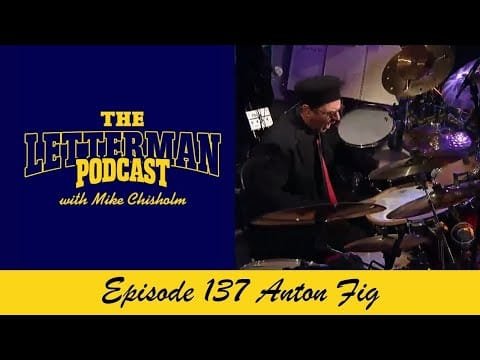
Episode 137 of The Letterman Podcast is a special one as our guest this week is none other than Anton Fig, who was the drummer for the World’s Most Dangerous Band and the CBS Orchestra for 29 years.
Anton and Mike have a fantastic conversation about his time on the show and his life outside of it. They discuss various projects he was part of, such as working with Ace Frehley and almost becoming a member of KISS, Cyndi Lauper, Madonna, performing at Live Aid, his tenure as the drummer for the house band at the Rock ‘n’ Roll Hall of Fame, and much more. Anton was a part of thousands of one-of-a-kind musical performances during his career working on the productions of David Letterman and company. He expresses how lucky he is for the ride that he never could’ve predicted and his gratitude and adoration for both Paul Shaffer and David Letterman for their immense talent, and the opportunities he's had because of them.
The Letterman Podcast is proudly sponsored by Hello-Deli.com, your ultimate destination for official Late Show with David Letterman merchandise. Operated by the legendary Rupert Jee, this is where nostalgia meets novelty. Don’t miss out on the iconic items that keep the Late Show spirit alive!
Love what you’re hearing? Do us a solid and hit that like button, share the laughs with your friends, subscribe to stay in the loop, and sprinkle some positive comments our way. It’s the digital equivalent of a standing ovation!
Episode Transcript
Read full transcript
Hi, I'm Paul Shaffer. I'm Will Lee. And you are watching the Letterman podcast. Welcome once again to the Letterman podcast. My name is Mike Chisholm. Let's not bury the lead. We got to Anton Fig. The drummer known as Anton Fig or Anton Zip or Buddy Rich Jr. Anton of course was the drummer for the world's most dangerous man in the CBS Orchestra at 29 years. Uh he came in to go over for for for Steve Jordan uh a few years into the run and and held on to it and and talked about the idea of this gig and holding on to it and how it really attached itself to him and his sensibility and who he was and and he absolutely um you know loved every minute of being uh the drummer for Paul Shaffer and the world's most dangerous band in the CBS Orchestra. Anton is just um he's a classy fun guy and we have a really great conversation. Well, again, one of those conversations where you know, my expectations are high for a lot of these a lot of these conversations and then the conversation itself just blows the expectation out of the water.
We go through all sorts of stuff from his uh where he grew up in South Africa to is is moving to the States uh to study music. Um getting involved in the scene, almost becoming a member of Kiss which is pretty crazy. You know, it's pretty crazy to think I Was Made for Loving You by Kiss the drums on that track uh are our own Anton Fig. Um And then of course getting the gig with with Dave. How it happened, some of the other artists he's worked on uh worked with I should say outside of the show and then moments in the show, people in the show that he worked with his take on some of the amazing things. I'm glad we have this one out of the way and we could have gone on for two or three more hours. I've got a card full of of of things that we didn't get to even. Um but it's a great intro conversation um and and and it's just a a really really cool starting point. I think we talk about some things that uh that haven't necessarily gone out there that that that that folks might know about.
Uh Don Giller has a couple things on his channel with Anton. I would highly recommend searching them out. And then of course uh Anton uh had one of the the the staff favorite moments on the Letterman channel. Definitely worth checking that out. Um this conversation talks a cup about a couple of those things, but um um you know, he he goes into a lot of other stuff. I tried to put things into this uh talk into this uh particular conversation that might not have gone out there um in other venues. So, uh Anton is just a phenomenal guy.
Appreciate him so so so much. Uh we talked about Warren Zevon and and and one of the lines that uh that Dave used to talk about all the time. I don't have it committed to memory the way that Dave does. Um it was one of the lines from Searching for a Heart. Um you know, the it's in the course of Searching for a Heart, uh searching everyone. They say love conquers all. Uh you can't start it like your car. You can't stop it with a gun. And that's how I feel about this show. Uh it's a perfect line to describe how I feel about this show. It it's something that is um not of this world. It's it's something outside of that. And I it the gratefulness that uh Anton feels uh for the career that he has, that's the gratefulness I feel for this show. It's the gratefulness I feel for all of the things that they did.
After talking to Anton, all it makes me want to do is is somehow some way figure out a way to do the live on Letterman uh um you know, podcast show, whatever, where we take some of these unique moments, these unique musical moments that are so numerous to count, and and so difficult for the people who that were involved in it to remember because there was always another show. But these magical moments that happened um on the music side of of of of uh the productions of David Letterman, unbelievable. And um getting a taste of it today and being able to tell Anton how grateful I was for him I am for him um on behalf of all of us who who who have been shaped by this show, an incredible honor.
Without further ado, the Letterman podcast, happy to present Anton Fig. Okay, Anton. I guess before we start this amazing conversation, I'm so grateful to have you here. Before we start, I I got to know one thing. Do you spell zip with one p or two? It's like Fig. One g, one p. Did you get that a lot? Did you get people calling you Anton Zip quite a bit? Like was there a time where there was a a resurgence of that? A little bit, you know. I mean, I I never understood why Letterman called me Zip. I mean, I think I think he thought that Fig wasn't weird enough, but uh I don't know. He suddenly latched onto that. Very fun I and that's the one thing that we just love about that show. You know, we're part of the club. It was an inside inside joke upon inside joke and everything had layers. Before we get to the Letterman of it all, I want to make sure I have the through line right. Grew up in South Africa.
Right. Is that where you learned to surf? Yeah. Yeah. I mean, yeah, as a kid, you know, I lived right on the beach. Yep. So, yeah. I surfed there. And I learned to That's where I learned drums as well. Absolutely. Absolutely. For your surf I hear that you have quite the surfing game. I hear you're pretty good at it still. Do you still get a chance to go out and do it? Yeah, no. I used to be better. I was never like great. I was, you know, but I used to be much better, but I had like a lower back things and it's kind of hard for me to jump up really fast now. So, I would say no. Not that good anymore. I still love it though. I've been watching, you know, watching in the Olympics. It's amazing. I was going to ask you about that. Yeah, it's very neat seeing the the the the press it's getting in Tahiti and and what they're doing with it. They're covering it very well. I mean, that is a that is a that's not that's a spot I would paddle out to and sit in the channel. I wouldn't try and take one of those waves because it's super dangerous, super heavy, and the water like when the wave comes it's it's so steep and that the it's almost like under sea level the actual bottom and the coral reef's right below it. So, that is you know, triple black diamond for sure.
Triple black diamond waves, I like that. Um uh so, you're growing up in South Africa, you're on the beach, and and and the surfing lifestyle, and then music. Music immediate, right? You you you started playing and gravitated to the drums right away, right? Yeah, I was about I I I I think I can maybe remember four or five. I was already playing. And I just loved the sound of the drums. And I was just always interested in it. I never made a conscious decision to play. Yep. Just found myself playing. So, it it sort of I in a in a weird way sort of felt like the drums chose me rather than the other way around. Yeah. Um and and and rock and roll immediately kind of the the the gravitation. Um if I have the through line right, um started in a band in a the biggest kind of thing you did in South Africa was a band called Hammock, which then led you at at certain point you're like going to move stateside and really take this thing seriously to go to university for it, Royal Conservatory in in in Boston with a jazz classical kind of a focus.
But then a reformation of Hammock of sorts with the band Spider, which then leads you to being the the drummer on Ace Frehley's project where you met Will Lee for the first time. Then you were a studio you're in the studio scene. Hung out with Paul a little bit. Uh Live Aid, played with Felicia. Like and and you started to kind of get to know these people. This is kind of the through line of what led you to Letterman? Pretty much. You know, I I uh actually I did a the Joan Armatrading Me Myself I Record and I think uh Hiram and Paul were were on that record. Um and I did Paul Butterfield his his last record and and Paul Shaffer was on that record. Yep. And um I I used to see, you know, the guys around town. I didn't, you know, know them all that well, but I said to Paul one day, you know, you have a lot of guys subbing uh on the show when Steve Jordan can't do it. Yep. Uh um you know, and and you know, call me sometime, you know. And he said, "Oh, you'll get your chance." And I didn't hear from them for ever, you know. And then I sort of just gave up. I said, "Oh, that's never going to happen." And then I had been I was playing with Robert Gordon at the Lone Star. Um And Paul and Will came down and I knew that they were kind of checking me out.
And um so soon after that they said to me, "Steve's going to be away uh for a week. Can you do a week?" And I said, "Sure." And I did a rehearsal and I said, "Actually, he's going to be away for 2 weeks. Can you do 2 weeks?" And I said, "Yeah." And I did the 2 weeks. And then Steve came back and then I got a call, "Come down to the studio. Steve's not here." And I ran down to the studio, pretty much ran on stage. Did half the show. Steve came. And then about a week after that Paul said to me, "Looks like Steve's leaving the show. And uh if you like, you know, you can have the job." And uh you know, I I said, "Let me think about it." I didn't say that. Yeah. say that. No. No. I said, "Right." It was an insta call, as they say in poker. Yeah, yeah, yeah, I know. Good. You go I'm I'm there. Yeah. Well, and it's funny because like we think okay, we'll talk about Felicia for a second here cuz it took Felicia a couple beats to say yes to coming to to to to late show.
Like again, I want to get back to a little bit of that studio stuff in New York beforehand because to me that's just a fascinating trajectory. Um but you're saying yes to something that is going to radically change your kind of your normal at that point. When you're a studio musician, you know, going around and gigging at certain uh certain certain certain studio sessions, going around gigging with certain artists, touring, you know, mini tours or or joining full tours uh versus we're in a TV studio four nights a week and we're rehearsing and doing all these things. It's a radical radical change.
Was that adjustment hard for you? Well, the thing is this is that we I you know, when I said yes, I didn't know how long I would last there, first of all. Ah, yes. I'm like, well, maybe this will be done. I might as well go for it. Yep. You know, uh then our contract on the Letterman show went pretty much year to year or two years to two years, something like that. Yep. So, even though I ended up doing it for 29 years, I didn't know I was going to do it for 29. It wasn't like I signed up for for a decade. I didn't know it from one year to the next. Yep. So, it was almost and then you know, it was a very high-profile gig. It was like probably excuse me, one of the best gigs in New York. Yep. But in the world really, you know, and um playing in a great band with uh you know, fantastic you know, guests. Uh high visibility. Yep. Uh you could be home uh you know, for dinner. And uh um Yeah, it was just amazing. It was something that uh you know, I didn't have to really think about, you know?
And the only thing that you couldn't do was maybe go on tour. Yep. Uh for an extended period of time. But, you know, when I got the show, I wasn't thinking like that. It was just like, okay, this is this is a a great gig, a steady gig, which is fairly unheard of as a musician. Yes. Uh you know, as far as, you know, at least for a year would even be a big commitment. You know, and so it was a it was an easy decision. Getting adjusted to the show, that was a slightly different thing. Yeah, that's what I was wondering about cuz it is a you know, regularity, schedule, all of that sort of stuff. Right. Well, you know, oh yeah, what I was going to say is, you know, you could do sessions in the morning and you could do sessions at night or live gigs at night. So, it you know, it took only a very short time of our day to do rehearse and do the show. It was all very immediate and it was all very off the cuff. So, it wasn't like we rehearsed the show and then we performed it. It was all happening in real time.
Different parts of the show rehearsed at different times. So, we just took care of the music. And and that was it. And then we came in and we were seeing the show for the first time, which was an ever-evolving kind of a show because they would go on tangents, the writers would have to change what they'd written. You know, so it was like it was very fresh and I you know, uh I sort of like the idea of being a somewhat improvising musician. So, the idea of a show that improvises then that was like, you know, right up my alley. I kind of liked that spontaneity and I liked that you did never knew what was going to happen next. That Did you um Did you have kind of a knack for comedy before you started the gig? Like, I mean, even the even the first night when Dave announces you, you know, you you you give him a rim shot during a joke. That kind of a thing. Um you know, so so so there's a timing there where where having to listen to what the host is saying and and what's going on or what's going on in the interview and then if you're going to take part, uh you did that your very first official night. Um you know, when it came to comedy uh was that something that developed over the years and and uh your role in that was that something that Paul directed you towards or was it just something that naturally kind of came from you knowing what the gig is?
Yeah, I think, you know, I mean, I think I can be funny at times, but I don't really work you know, work at it. Yep. But I think that if anything like Dave kind of and and kind of encouraged it and made the writers write stuff for me as well, you know, I mean, uh aside from the rim shots and that, you couldn't really speak out of place on the show. Right. so the writers did stuff, but I remember one time we were in Chicago and this was during rehearsal and the drums were up way high up on a riser at the back. It was like a huge hall in Chicago. Yeah. And you know that joke uh there's a a joke um and um the the punchline is I can see your house from here. Do you know that joke? Yep. Anyway, so I was up on the riser and we were in rehearsal and and I just blurted out uh I Dave I shouted I Dave Dave goes, "What?" And everyone went really quiet because you're not supposed to do that and I went "I can see your house from here."
And um and the whole place was just dead silent. I thought, "Oh god, I'm going to get fired now." And then Dave started laughing and then everyone started laughing. So, but you know, you couldn't pull that stuff on the show. No. No. Yeah, I but the rim shots alone like you are you are listening and you are a part of it. Um you know, it Will would do the same thing with you know, with a glissando here and there or something and and and um watching you guys get comfortable. Um it just it was evident watching watching the world's most dangerous man. By the way, check it out right there. Can you see that? Oh, you know what I was going to say? I saw it right away. I have that t-shirt. Yeah. And it's great. I I have a like a pristine version of it. It's right. This was brand new. I got this one and a white one from Will last time I hung out with him. Both with the tags still, which I was oh, delighted. What a time capsule. Look at that guy.
It's great. Yeah, he had a head of hair, but uh You had great hair. Oh, yeah, you had the great hair going on. The flow. You had the flow happening. Um, obviously you were all trained thing about the comedy. Um Yeah, yeah, yeah. I learned a lot from Dave because what he would do is he would create a joke and then sometime later in the monologue or somewhere in the show, he would refer to that joke and and correct it again. Yep. And or or similar version of it or something related to it. So, um, at first that caught me off guard and I realized like that was the kind of thing uh that he did. And so then I was after that I was prepared for it and I think, you know, it's a really good um device. And I'd heard that before in the in the '70s, a friend of mine sat me down and said, "Listen to this Monty Python record." And we were listening and they have a joke and then they go off into other stuff and then suddenly that joke kind of comes back again.
Yep. And so it it's a really effective thing and I don't know if Dave ever heard the record, but he used to do that kind of a thing. So, I sort of, you know, you had to learn his timing and after all years of doing the show, I could I could sometimes sense, okay, there's a joke coming. Yep. But Dave was so unpredictable and so like brilliant and that like you never really knew for sure. He would, you know, he could easily catch you off guard or catch me off guard. I uh I'm fascinated by this. Um, I've got to ask this question here. When was the first time that Dave sat down at your drum kit and started messing around with your drums? Was that in the old studio or was that in the in the in the in the in the Sullivan Theater? You know, I I can't remember, but you know, he stopped it after he had his heart procedure, then he stopped coming down to rehearsal. Yep. And that's when he stopped. But he used to come to the drums and like bang around. And then after a while I have a couple of snare heads somewhere in storage, but we like he wrote a note or something to me and then I replied to the note and then he would like write something and so I've got this drum head with like you know, the sort of conversation going on between me and him, which is great.
Absolutely. What a fantastic I was going to ask you about keepsakes. At some point I've got a I've got a a cheat sheet here and and Okay. keepsakes is one of the things. Uh that what a fantastic thing that is. Yeah, and yeah, Felicia talked about that. Um she when he came back from his from his heart procedure, she said she bought him actually a set of electronic drums where you couldn't you don't have to hit them as hard, that kind of a thing. That was a that was a sweet gift that she had given him. Um so so but back in the NBC studio, he would still he was definitely he would come around and muck on the drums back then, too? I can't remember. It was probably, you know, probably. But what's it, Lisa? Got a little more formal when we got to CBS. Absolutely. Yeah, and we're we're we're we're going to get there. It was very clear just watching the world's most dangerous band on on NBC that you're all a bunch of killers. You could just tell that that's what it was. That's what the gig was.
The idea of having artists part of a band, you know, the front person of the band coming on and and doing a version of of of a song that's either popular or coming out or something or something you just wanted to do and having your band be their backing track behind that created some of the most from a music fan and I love music. I adore music. You guys created some of the most unique moments in music because these one-off versions of songs and and arrangements you know would would would happen on the show. Um you seem like a guy who's pretty present. You knew that in the in real time some of these experiences you were having I I I assume that's true. I'm curious what were some of those versions of some of those moments in in the early days that stay with you. Well, I mean the the thing that I will you know go off on was like well, I'm playing with these guys, you know, a lot of them were my heroes and that and and you know, and uh you know, a bunch of a lot of people were we were all kind of older some of them came to the show, you know, they were part not past their prime. They were just kind of in a different Yeah.
in their career. But they were still like good, you know, really really good and you saw like well, these guys you know, have been good forever and like to get a chance to play with them, you know, is is just amazing, you know, and so you know, like formally, you know, obviously playing with Miles Davis was just I believe probably the highlight for me just cuz I was such a huge huge Miles Davis fan. And um playing with James Brown and playing with Springsteen and playing with Stevie Winwood and playing with Pete Townshend and you know, um uh playing with Eddie Vedder, you know, I mean it was like I I you know, I I hesitate to say because I don't want to leave anybody out. Yeah. Uh but it was just cuz, you know, just about every one of them was really, really great. And then there were a couple of like impromptu ones, like when we went to commercial break. Yeah. Like Lenny Kravitz was setting up for his performance, and we started playing, and I can't remember the My Mama Says, whatever that song is.
Yeah. Yep. And so, and he just picked up the mic and started jamming with us before he did his song. And that was like, you know, out of nowhere. So, there were those kind of things that happened as well, which were just like really, or I think we did one with Snoop Dogg where he just started rapping with us during a commercial break. Will Smith, uh I don't know if the Will Smith one was uh was planned or not, but but you did it with Will Smith as well at one point. Yeah. Well, you This is a problem is that I wish I'd written everything down because I can't, you know, I did I don't know how many shows, but, you know, bordering close to 6,000 shows. Yeah. And so, they kind of blend into like one or two shows. I just can't remember them. And the funny thing about doing a show every day is I would come home and uh uh you know, my wife would say to me, "Who was on the show today?" And I'd go, "I can't remember."
Yeah. Because you had to like kind of open You had to just forget it and cuz tomorrow was going to be a new day. You got a clean slate. It's a whole different show. You're not playing the same show over and over and over again. And but I found that Letterman said he had that's a similar like people who did that. It wasn't just me. No. People had that thing. But the but the end result is there's a lot of stuff that I can't remember. So, sometimes I go on YouTube and I just come across something Yeah. "That's great." I would So, what I'm saying is I wish I'd written down all the people I'd played with. Yeah. Uh and, you know, and if they had like YouTube and all that in those days in, you know, cuz in the beginning of the show they didn't and was able to catalog it all because it would be fantastic to, you know, look at this. Uh you you have just done a very very good job of articulating why this program exists.
Um because the analogy that I use is is and and it's it's it's the true from a comedy standpoint, but also from a musical standpoint. I'll talk about that the musical part in a second. Um the way that when when when I was talking to Shecky about the idea of this, you know, he was always like, "Why you want to do this?" And and and and it's it's you guys were miners. It's like you were down in the mine every single day and you would find these amazing jewels and of comedy, of music, whatever whatever they were, these amazing moments would would would happen. And and um you would have this diamond in your hand for a second and then you would literally cast it aside and keep mining because there's another show tomorrow.
And and and we haven't done a good enough job of picking up these diamonds now and that's what this show is and and I want to um the goal is is that we start a second show called Live on Letterman where we literally go through all of these moments from both shows, these iconic moments, these one-of-a-kind moments. You know, I I I had Harvey Goldberg on and and talking about the performances at the Ed Sullivan Theater, the hybrid between a live performance and a studio-produced uh uh uh you know, song. Um and and I mean, it was every day. The output was unbelievable and the musical one-of-a-kind musical moments that happened. Yes, we should absolutely be picking these things up and and and doing this. This is exactly why the show exists.
Um and this is the guy that Sorry, that that has cataloged a lot of it. Don Miller. Yeah. So, you know, he has a he's the person I know that has the most archival footage, you know. Absolutely. And Don's Don's uh helped us on the show many, many times and and and uh he told me to tell you hi, by the way, Don did. So too did Rupert. I just talked to Rupert uh 2 days ago. He's in Greece right now and he told me uh he told me to make sure I tell you hi and he hopes you're doing very, very, very well. So Thank you. Yeah, hi back. Absolutely. Um so these moments, I imagine you would go back to rehearsal for a second. So like um well, Springsteen's Glory Days is a little bit different, I think, because of the surprise element, but but you'd have some of these these artists come in and uh you've got these again, this this amazing core of musicians in in in the world's most dangerous band and it's like, okay, what are we doing tonight?
And and the rehearsals must have been so much fun to kind of muck around and figure out arrangements for things and whatnot. The rehearsals alone must have just been such a gas for you because of the creativity you were allowed than you know, say a Saturday Night Live or something where it's a little bit more, no, we're going to play straight to album and it's going to be the arrangement that you hear kind of thing. It must have been so freeing to have a little bit of that creativity uh on late night. There was some, you know, the the thing is is that when we had a set piece to do with an artist, Yep. we usually got a tape beforehand of what the song was going to be. Yep. And then we had to come into the studio knowing the song already. So we should we needed to be individually able to play the song right the first time. Yep. And the rehearsals didn't take that long, you know, we only did it a few times. So it was very spontaneous and the song was very new to all of us and we hadn't ever played it collectively before.
Yep. And like when we were in Vegas and we played with Sammy Davis, Mhm. he didn't want to rehearse. He didn't want to rehearse at all. He just wanted to do it on the show and the the director well, said, "No, I have to see that I have to see it least once so that I can look at the camera blocking and all that kind of stuff. Yeah. So, we did it once, but I mean the first time he did it it was fantastic, you know, so we were we had to be prepared to do it absolutely right away, but you know, we discovered the song. The hard part, I think, was you play the song a few times and you kind of get it under your belt. Yep. You go and you we took a break, then we come back on, we warm up the audience, then we get launched into the show. Yeah. Towards the end of the show, suddenly we're playing the song. Yep. It's like and you're playing and it's going fine and then you go like uh I know there's a bridge to the song coming up.
I can't remember what it is. And you sort of just go into it and, you know, somehow you get it in like a split second as it happens, you know, so that was the hard I think a hard part of it was sometimes, you know, you just couldn't retain all that info all that detailed information that you'd done in the like the two or three or four times that you'd rehearsed it. Yeah. That was a you know, so that's a skill. It's like I became a sort of muscle memory, brain memory kind of thing that we got used to doing cuz we did it like so much. But the other thing that I want to say is like at NBC Mhm. artists played with the band Mhm. all the time and and uh I was very grateful for that because I could see that um like there were bands that came on and they wanted to play, you know, and then I thought, well, you know, the policy of the show was play with the band and there was a certain cachet to playing with the band and was really great for us.
Uh when we moved over to CBS the whole kind of alternative music scene came in. Yes, sir. And and the show was sort of it was at a hour earlier and it was like a sort of bigger thing. And so at some point that kind of shifted a little bit where more bands played as self-contained bands. You know, once we were at CBS and we still played with a lot of like the solo artists and stuff. Oh, yeah. But we played with a lot of people, but some of the bands and I and I totally understood that because if I'd been in a band and we were playing our song and we were going on Letterman, I would, you know, absolutely love to be part of that. So, you know, and I I took myself out of the equation. I said, "Whoever, you know, they tell us to play, I'd love to and if we we don't play, well, it's unfortunate for us, but we can't, you know." No, that's a a very very well put. Um back then, I think of I think of some of these moments. You talk about Miles Davis. Um did you I know you started with rock and roll.
Did you appreciate jazz because of your degree and and and and get a deeper like deep dive appreciation for jazz at that point or did you always have jazz influences as well? Well, I I was, you know, when I started listening to music, it was like pre the British Invasion. Yep. It was like there were songs like uh like like uh Lloyd Price Personality and those kind of songs like sort of like a rhythm and blues-ish. Yep. And um then the British Invasion came in. But towards the end of that towards when I right before I came to America, I had started to listen to jazz a little bit. My dad had a jazz collection and so I I was listening to like Thelonious Monk and Sonny Stitt and all those kind of records, but not really understanding it. Yeah. And then Miles came out with Brew and that was starting to incorporate rock elements and I thought okay so this is my entry into it.
And so I went to school I tried to get in the jazz department and they admitted me to the classical department which I never understand why and when I got there then I kind of did both degrees at the same time. And then I went back into the whole jazz catalog and started really studied it wasn't because of the degree but it gave me the opportunity. I really wanted to seek it out and I kind of thought well if I learn all this stuff it's going to make me a better rock drummer because I'm going to have all this other kind of influence and stuff.
Um and so one of the uh one of the reasons Paul said he hired me was he said you know the same songs that I do. So I had the same repertoire but then I also had this I was for five years at the when I was in Boston I only listened to jazz. Yeah. Well I missed out on like a whole rock period between like uh whenever that was 72 and to 75 71 to 75 something like that because I just immersed myself into the the jazz stuff. Uh that oh go please continue. no no no I was just trying to think your initial question to that answer cuz I'm not even sure I got to the answer. You oh no no you answered it and then some and then some and actually you bridged to something I was going to talk about earlier might as well bring it back again. Um this show does jump around like it's spontaneous and I and I and I I love that I love that it's spontaneous conversation. Uh I want to talk about like for one day you were a member of Kiss like you that that that happened so you would come out of this um this period of your life um and and and and immersed yourself in jazz and whatnot and then you got kind of back into the rock scene um playing on you know on the studio side of things but playing a lot of rock with a lot of with a lot of rock bands.
Clearly influenced in in some ways like and then you start playing with guys like you know, Ace Frehley. And and it's like okay, this is really rock stuff. Although the Kiss album you played on like you're the drummer for I Was Made for Lovin' You which is kind of almost a little disco-ish rather than than than rock. You know, yeah, it's it's it's kind of a um it's cool that you could then go back into the rock scene and have these influences maybe with some different improvisation or you know, forever changed by jazz um and and and that probably made you a more unique give you a gave you a more unique sound I would think. Yeah, definitely and I think at that time you know, because like now people have a completely different repertoire. Yeah. But back then decades ago really um I was a rock drummer with a slightly jazz sensibility. So which was different from just a straight on you know, more cowbell kind of rock drummer.
Well, and you go ahead. why I could do a whole lot of different kinds of gigs and I found like in different sort of music I played with some like pretty heavy guys in their different styles. Yeah. You know, I got to like some really good guys that wasn't just like on the edge. I could get fairly deep into into a lot of different styles and so that really helped me a lot. And and pop. Like you look at the you look at some of the stuff you've done with pop like Cyndi Lauper and and oh, I want to know did you you never toured with Cyndi though, did you? No. Okay, okay cuz Felicia did and I just I love all of the ways that you a lot of the band members intersected throughout different projects. I can think about Live Aid. You're on Live Aid and there's Felicia playing with you when you with the the Thompson Twins things like that. Okay, let's hold on. Before I go back to that you played at Live Aid. Oh my god like, like you're already before the Letterman show already having some of these crazy moments. Like again, for one day being a member of Kiss, um playing on Live Aid. What was it like to play at Live Aid?
Well, it was great. I mean, it was like 120,000 people. Yeah. And uh I was up there with Nile Rodgers. Yeah. And uh and Madonna came and sat in on a song. Um and it was it was it was totally crazy. It was a music history. You know, and we haven't gotten to the Rock and Roll Hall of Fame yet. All these music history stuff that happened well before the show that you were a part of. Right. Yeah, well, I mean, I done the East record and uh that was huge. You know, I like toured with Robert Gordon. I done Joan Armatrading, her Me Myself I record, which was a big record for her. Yeah. Um I done I think Cyndi Lauper was I can't remember what year we did that, but you know, I I definitely done stuff and I was sort of working in the in the scene. I wasn't really a session musician. I was a kind of a Okay. I was a kind of a rock drummer that that did a lot of sessions. Aha. I yep, I see the distinction there.
I see the distinction. Um you know, later on uh you know, the Madonna Erotica album. And I mean, at the time, I mean, you've been like at the time, again, I try and say this on the show about the time where you moved to CBS, there was no bigger story in entertainment at that point. Right. It just it it wasn't. And and and and Madonna at that time, when that album came out, I mean, she's in the top one, two, three pop stars on the planet at that point that where the everything was on her. That's a very important project. Um how did you get involved in that one? I just got a call to do it. To come in and do a song. Um and uh and I went in uh what studio was it? I don't remember the studio even. It was either I think the Hit Factory or the Record Plant. And then um And she was there with her producer and they played and they made kind of comments and they And then I played, you know, till they were till they said you they were happy.
I remember she was kind of a little sort of combative a little bit not not um not um unkind or anything just challenging. You know, challenging like uh if you said something she would kind of challenge whatever you said. she'd give pushback. Yeah, like but not in a not in a nasty way at all, you know. Uh wanting to be the best wanting to you know wanting to see it through, you know. So so I guess I'll I might as well this is a good I had I had very little interaction with her because it was just that one day. I don't think I met her at Live Aid and uh that was just like one night in the studio. So okay, you had a lot of these one night in the studio nights um during the run cuz because like as you said Will talked Will's talked about it as well about how you could do gigs around the show and you did a lot of that stuff. Um was it ever a curiosity or a cool fun fact for the artist that you were working for that you were Letterman's drummer?
No, I think it like it it added to uh you know that I was a known quantity. Yeah. They knew that I was doing the show. They knew that I did it every night. They knew that I played with a lot of different people. They knew that uh you know, this the the music came off great on TV all the time. So that was a plus, you know. Like uh Yeah. that I could that I could do it. So you know, I think I got hired probably based on on that as well, you know, for sure. Yeah. That that that makes sense. Uh let's talk about the road not taken and I want to show you something. I don't think this is real. Um is that real? That's not real, is it? That's somebody somebody was wishful thinking right there. Yeah, that's crazy. You know, the reason they is, you know, the band the rock band that I had was called Spider. Yes. And so someone has fantasized that my Kiss uh you know, costume would be a spider, I guess, you know.
Hey, for one day you had the gig. In that one day did you even think about that or Well, at the time at that time my the Spider was in the top 40. Yeah. We had a song called "New Romance" in the top 40. Yep. And so when I was asked um you know, I thought, well, I could you know, there was the possibility of Kiss and then there was possibility of me being in my own band my own you know, where I had my own stake in it, you know, more. Yep. So um the way that I remember about it was Ace took me out for dinner and asked me if I was interested and I said, yeah, yeah, but let me and I thought about it. I didn't say for sure and then I then I thought Okay. then I thought like, you know, and it wasn't one a little while later I said, I don't think I can do it, you know. And then Paul and Gene kind of said, well, we don't think uh it'll be right anyway because and their thing was that Ace and Anton would be a Excuse me talking in the third person. I never do that.
Ace and me Ace and I Yeah. Uh would um would be like a faction. It'd be a counter balance that would just be yep, yep. were a faction the same way as like Ace and Peter and that didn't have necessarily good connotation. So so they and I think, you know, it didn't really bother me and it wasn't like I had made up my mind not to do it, you know, and I don't remember anything like it was a day and then they took the thing back. I remember agonizing for a couple of weeks about it. Uh-huh. Maybe for them it did happen in a day, but for me it didn't. I was still like mulling it over and stuff like that. Okay, so when you were agonizing over it for those two weeks, that's a that's even more interesting to me because it's like you're agonizing over like you said, um, do I want to do my own thing where I can throw my creative output or do I want to be plugged into this machine that that, you know, is rolling along and it's more of a franchise and you've got to, you know, learn to play like the franchise. Did you actually think about oh God, I'm going to have to go on stage and do the makeup thing?
What is it going to look like? Did you actually like put yourself in those shoes? I didn't put I didn't sort of have a column A, column plus or minus column. I just kind of thought like do I want to do this or do I want to just stay with my own thing, you know? And like I mean when when I look at I have no regrets whatsoever. And when I look at the way that I play and that I've gotten to play with so many unbelievable people, I think that's suited me better than just having been in the one situation anyway. So, I I'm totally sure that I made the right decision. Yeah. Oh, absolutely. know, if they want to say they made the decision, then as far as I'm concerned, they made the right decision as well. Yeah. Um, you know, all these years later, the the KISS machine rolls into the Ed Sullivan Theater. I remember that performance.
It was near the end of the run, uh, at the Ed Sullivan Theater and KISS actually played on on Late Show and and I remember that night, um, as a viewer, it was it was it was a neat moment because um they you didn't see the bridges and stuff. They literally had their set up and I don't know if they've got set up A, which is a you know a big stadium, set up B, which is a an arena, and maybe stadium set up C, which is a smaller. But they had the KISS set up and they literally transformed the theater uh where the rock band plays or where the band plays into KISS's uh you know the pyro was there and all of that stuff. Um do you remember that night at all?
I remember them playing, but I don't remember all that stuff. You know, I I remember them playing. I remember I think they sounded really good and you know they they you know I love the original KISS. I thought it had a real beautiful charm to it. Um and then but they've endured for a long time and they you know they sound really great and you know I've always liked them and um and I remember them playing on the show, but I don't remember uh you know the whole set up. I hear you. I mean again, just another show the next day. They're another show the next day. They're just they blend into being other moments. Um okay, let's let's kind of go it seems that for everybody in the Letterman universe um but in a very special way for the for for for for Paul and the whole band, um you had this sort of um if we're talking dynamics in music, you know, it's a crescendo. It literally is a crescendo where you're having these moments and and bigger moments are happening on late night. Bigger opportunities are coming from it, that sort of a thing.
When the show was um in transition, what was that like for you? What year I want to curious what year you got married, you and Laura uh connected and and and um you know, were you married at that time? And when the show was um getting ready to end its run on NBC, move over to CBS, were you locked in yes, I'm following the show no matter what? Was there a pause there where you were like, okay, is this something I want to continue with? Um it was the biggest story in entertainment. You could not go anywhere without hearing about, you know, the Johnny Jay Dave, uh, what's Dave going to do, all of that stuff, the courting of Dave, Dave is being courted to take the show to all these different places, whether it's syndication, whether it's a different network, all of that stuff. Do you remember any of that time? Um, was it chaotic for you or did you just go in and play? Yeah, no. I mean, you know, same with with Kiss where like when I did those records, I wasn't, you know, I just came in to do the records.
I did not involve myself with the politics of the band at all. I just went like, I'm here to play the drums and I'm going to that's what I'm going to do. They told me not to say anything. I didn't say anything for 20 years Yeah. that I played and, you know, I just came and played. I didn't involve, didn't get involved in anything like that. Same with the show. It was just like, you know, this is totally out of my control. I'm just going to see what happens and I remember I read in the New York on I saw on the cover of the New York Post Yep. uh, Letterman's moving to LA. That's, yep. And so I thought, oh, okay, now we go I guess we're going to LA. And uh, I would have gone, for sure. Yeah. Yep. So, uh, you know, there was the um, there certainly was the uncertainty. Is this going to continue? Am I still going to have a job? You know, but in terms of doing the show, there was no question in my mind that I was going to continue to do the show if if that's the way that it went.
You know. shows that you were the perfect guy. Uh, did you know Steve very well before you, uh, before you took over for Steve Jordan? I don't I wouldn't say I knew him very well, but of course I knew him. Yeah, you ran into him. You know, and whenever I see him, I always thank him for giving me the job. Never would have wouldn't have gotten it if he hadn't, you know, not done it anymore. But, um, yeah, I mean, he's a fantastic drummer And I love the the original Letterman band with Hiram and Steve and Will and Paul. I thought it was just an amazing band. It was so great. The The good thing, to go back, the good thing about when it was with me and Sid, uh was that I found like and it would be the same for the other band, the four-piece was like a real easy band to play in because you could turn on a dime. You know, if if something had to change, Paul would change and everyone could follow really fast, you know? With the horns, and this is not a a negative thing, it's just different.
Yep. You know, you had to set the keys in the arrangements a lot more. Yeah. Wasn't so flexible, you know? You You could like You could maneuver. It was like a a speedboat as opposed to a a bigger a cruise ship, you know what I mean? Yeah, absolutely. But it's not a better or worse, it's just different. Yeah. Uh talking about horns, um you know, I can remember on the on the NBC show, it would be very cool with when when when folks would sit in and and horns, of course, uh would be a big part of that, you know, Al. Before Al was hired at the CBS Orchestra, when he was on, we you know, we lots of moments where he would be a a player for certain gigs that would happen on Late Night. Um when it comes to horns, obviously, no bigger than David Sanborn. Uh just recently lost him and I mean uh um what what a blow. Uh listening to him uh wail with the World's Most Dangerous Band, you know, Fridays. Like like David Sanborn nights were always really, really, really special nights and you got to be a part of that. That must have been something amazing and uh you know, David was David was kind of a you know, he was a sort of a member of the band is the way I always saw it.
Yeah, kind of. I guess he would be like an honorary member. Yep. You know? He was He was a fan fantastic and you know, I got to I think I did we did a song with him and Sam Moore, a feature song. Yeah. I got news for you with Sam and you know, he was very specific about how he wanted the drums to be. I remember I went up to his house. He lived um we lived like a block away from each other in New York New York I went up to his house and he pointed out this is what I want to happen in this section. And um and we pretty much nailed it afterwards he told me great it was perfect. But you know, talking about sex players I remember at the old show Yeah. Michael Brecker came on the show one night. And and he said to me "Man, I'm really nervous, you know." And I'd already done probably a few years of it so I'd kind of gotten more used to it. Mhm. But and I said but "You Michael Brecker, you know, I mean you can't You could do nothing and it would be amazing, you know what I mean?"
And I I never understood like how he could be but I guess, you know, that was like the humanness and, you know, always wanting to be really good and, you know, setting a high bar for yourself and all that. So in a way there was like a lesson to be learned. You know, just from like a a couple of sentence exchange. Yeah. Yeah, cuz he was like also like he was incredible. You know, I mean there was so many good thing going back to Hiram and Steve. I mean what a band that was, you know, just I have the utmost like respect for that band. It was just incredible. And it's so I was like so honored to um continue that that path. Absolutely. I never would have thought like if someone had told me like that's what you'll end up doing, I would never would have thought that. That's a sentiment that everybody in the uh in the band that I've talked to has all said because I think it's such an unconventional gig. When you're a musician coming up and you're thinking, "How can I make a living in this in this unpredictable kind of world that's constantly constantly changing?" The last thing that you think that you're going to get is a long-term gig where you end up playing with these people.
You know what? I have to thank Paul for that. Excuse me. Yeah. Um I have to thank Paul for that because he, you know, he hired me. You know, there were a lot of different people in New York that he could have hired and he hired me and it was uh I'm not sure what went into his decision process, but you know, it was incredible that he obviously saw that I would be, you know, right for the band and um you know, I really have to thank him for that because it was an absolute life-changer. Um our boy Paul Shaffer, fellow Canadian Paul Shaffer, our hero. Um he uh the you would take over for him when he was off. Did that happen at the NBC show ever or was that only a CBS gig where you became a band leader? Yeah, it was only the CBS and you know, apparently, you know, I was right behind Paul in Dave's eye line. I Okay. And so Dave was sort of used to seeing me and comfortable with that. Yeah. And so they made me the uh well, originally, the first time it happened, I think they had me in the front with um at Paul's organ. I was playing and and they had a drummer at the back which actually was Dave's secretary's brother playing drums.
And uh so you know, so then like before the show, eventually, I said, "Listen, I I to play on a cocktail kit. I got to I can't just leave it all up to him. It's a demanding, you know, gig. Yep. So, I played in the front and I got to talk to Dave. And so, you know, but after that, he got Warren. Yep. I did a like a week like that. Then then he really liked Warren Zevon. So, I was the band leader and Warren spoke to Dave. Yes. Um but you know, when when you're doing that job of counting the band in, counting them down, calling the side and like writing what songs we were doing, Mhm. people cues we were doing, stuff that Paul did in his sleep every single day. Not only that, while you're playing, you're listening to the show in the control room. Yep. They're going, "Okay, we're going to a commercial in 30 and 5, 4, 3." And I'm like, counting the band. Yeah, we go. We're going to stop. You know what I mean? All that kind of stuff.
Because like Paul was in front of the band, he could just turn around and do stuff, you know? It wasn't the kind of gig where you could play with your eyes closed and um you know, you had to watch the whole time. Yep. But I was at the back. So, I had to verbally scream at the people and scream because my drums are coming into the microphone as well. And they don't want to hear so much drums, but if they turn it down, then they can't hear my voice. So, like really pretty challenging. And you know, it made the way that I played. Yep. I I think I played much more direct and simple uh in order to achieve the things, whereas you know, when when Paul's conducting, I sort of felt like I could be a little more You're looser. Yeah, a little looser. And you know, the after the um after the Letterman show ended, Yeah. I went right away and did a like a six-year tour with the Joe Joke. Yeah. And you know, the thing that I learned about that was when you they you do a similar show like a 2 and 1/4 hour show, similar kind of show every night.
Yeah. Do it a lot. You know, it was like we played like five nights a week and with just like a few after seven weeks we'd have a few weeks off and we'd start again. Mhm. But the thing that I learned was that a whole long show like that it has its sort of arcs and peaks and all that kind of stuff. Yeah. You know, you can close your eyes and really get into it and you sort of try and go around the corners and make them really smooth musically speaking. Yes. You know, and and and just kind of make it seamless. Whereas on Letterman, it was you don't know what's going to happen. It can stop at any moment. Yeah. We start with a song. Do I know? Do I Maybe I don't. Maybe I just said, "We're playing this and it's sort of like this. It's sort of like that." cuz he's talking to us through his through a mic. And then, "All right." and we're playing. You know, we sometimes played songs we'd never played collectively before or even at all or even knew, you know? So as long as few people knew it, you know what I mean? We could get through it.
That rhymes. But anyway, um uh So, it was a very different way of playing. Yes. And you know, the Letterman show was uh you know, it gave you the chops for really being like on top of it, you know? And testing your memory, you know, like in or like working that muscle, that memory muscle uh every day and like keeping you on your toes, which is nice cuz that's sort of like improvising. It's like just, you know, one free free associating sometimes. Yeah. Musically speaking, you know. But yeah, in every sense of the word. It just you know, and it is a a variety I I don't like the term variety show, but at the end of the day it it there I don't know if there's a better term to kind of describe it because there was everything and and and you got to flex the muscle of you know, coming up on the fly with jingles and comedy pieces that would be you know, either as part of an extra or or or you know, a comedy piece onto their onto them themselves and I like to think about Stump the Band and all these things that you did along the way that that were things that were on the fly almost something that you put into your short-term memory and then you just let it go because there is so much but but at the same time the creative output extremely high on some of that stuff coming up with these things on the fly.
I have this I have this dream or this this fantasy for the Letterman podcast that somehow some way I could I could make it so a jingle some of the writers have said to me, "Oh, wouldn't that be fun if the band could sort of come up with something on the fly the way they used to on the show?" That was marvelous to me how you guys would do that how how a comedy writer Steve Young would come up with it with with with a theme song for the the strong man, the fat man, and the genius something like that and and and within an hour here's a fully produced hilarious unbelievably tight theme song for this comedy bit. And and again, think of another drummer who has that in their repertoire. It's an amazing thing. Did you enjoy doing that stuff on the fly and coming up with stuff? Yeah, I mean I I wouldn't say that I came up with it it like, you know, ensemble in the ensemble. Yeah, when I was like you when I was leading the band, you know, it sort of I felt like the responsibility fell on me.
And sometimes if I knew a comedy piece, I would sort of write a little cue, 10-second cue or something like it, but mostly that was very rare. Mostly it fell on like Paul Mhm. and with the help of like input from other people in the band, so they will would add something, you know, um but it mostly came from Paul. Yeah. And and uh he was very I mean, he had such facility on the keyboard, such a huge knowledge of music. Mhm. He knew all kinds of music. You know, show stuff, you know, jazz stuff, rock stuff, old rock stuff, new rock stuff. You know, so he had a wealth of of uh knowledge to draw from and was able to write a lot of those things very effortlessly and and you know, he was the guy. And and and then you combine that um in the late the later years, the Ed Sullivan Theater years, uh with Bones as an arranger. And just this and it seems like everybody there knew their role and was extremely proficient at that role, whatever that was, and that added to the able to the uh the versatility that you had, the on-the-fly versatility that you had.
Mhm. For sure. I mean, we had to play together, you know, so you know, as long as everyone's pulling their weight, you know, it's going to sound and they have weight to pull, it's going to sound really good. You know. Um did did you have a relationship with Sheila Rogers? What do you mean relationship? No, no, no, like like because I mean, you know, you've got somebody who who Not at all what I meant. Um you know, you've got these two wings of the musical uh portion of of of the Letterman show. Somebody who I would consider to be I'd put her in the top She's not the top, she's in the top three musical bookers of any show of all time, I would I would say. know, you know, I knew Sure, I knew her. And you know, but I mostly saw her you know, it was like a work-related work-related um you know, like she one time I went up to the office and she said Dave wants to do a the drum solo week. You know, he would tell me about the plan. We would talk talk about that.
You know, um but and and her son and I knew I knew Hal Willner. I've done a couple of record dates with them. Mhm. Um and her son uh went to school same school as my son. I think he was a maybe a year behind or you know, Yeah. in the same year, I'm not sure. And so, you know, we had like tangents in common, if you know what I mean. Yeah. Yeah, the reason I asked again because you know, that's a huge piece of the puzzle as well. The bands that would be booked, the people that would be booked either to work with you guys or or or things like that. Um Well, she might have had she might have had more conversations with Paul. Again, I was like a come in, you're going to play with so-and-so. I didn't There was no input like, you know, would you like to or blah blah blah. I wasn't Yeah. about that at all. So, her line of work really didn't but of course, I knew her and stuff, you know, and saw her and all that. We were really we were very friendly.
Yeah, yeah, yeah. I'm just uh you know, that that was part of the alchemy, too, was just it just the the artists that would be there that you would end up collaborating with. She obviously had a huge hand in that. And one of the questions I had, too, was um when you had folks who would come in and play with the band either for a night or for a week, um did you ever uh have any friends who said to you, "Hey, I'd love to play with you guys for a week." Did Did you have people trying to get you to book them on the show ever? You know, it'd be so fun much fun to play with the CBS Orchestra. Yeah, you know, it would, but I mean it became like, you know, we can't do it. I think I tried to get Jeff Healey on the show once. No kidding. Yeah, and and uh Another Canadian right there. Wow. He got on the show, and I and I think I put in a word for Joe when as well when I was playing with Joe to to sit in with the band.
Yep. But, you know, that was something that I kind of shied away from because um you know, again, like all these departments were different, and you know, the booking department I don't think wanted to be necessary and this is just a surmise told by the band members how you should book this and you should book this kind of infringing on their department. Yeah. No, I appreciate that. I appreciate that. Now, that being said, um you know, with that, you've got, you know, Dave's input, you've got the booking department, whatnot, relationships form. And and and and I don't know that there's a more special relationship that formed with with with you guys and with Warren Zevon. And and you mentioned his name earlier and and and I think it's a you know, we got to we got to mention him. Um you know, he from a from a music enthusiast perspective, a fan perspective many folks believe that that show was a gateway to learning about Warren Zevon and his unique place. Uh God, the unique, the quirkiness, the thoughtfulness, um you know, the reverence of of of of his writing, of his music. I wouldn't know Warren Zevon if it wasn't for your show, and and I'm one of many many many people who share that sentiment. Um how aware were you of Warren before the show and Warren kind of collided with each other? And yeah, did you know each other?
I knew about "Excitable Boy", and I knew about um the Bruce, the sax player on the show who had done a tour with What was his name? Richard Marx and Warren had opened up for the show. No kidding. Okay, yeah. And and but Warren on solo piano and Richard Marx's audience, I'm not sure was a good fit. Yeah, that's an interesting that's an interesting concept. But you know, I got to know Warren very well because um there was a time when when wasn't there and I was I had to kind of you know, say, "Okay, like what are the songs we're going to do?" We did all his songs. So, I got to learn his whole repertoire and I got to say, "Okay, we're doing this, we're doing that." and kind of conduct the whole band. Um to the point that um uh he asked me to do a record which was called My Ride's Here, his album. Second last record he did and it was just me and him in the studio and then he got a bass player.
Um so, it was a very kind of personal thing um and I got to play on a on an album of his which was absolutely great. Yeah. And it was the record he did with all these other poets like um but he was amazing and then you go back and you hear these songs and I got to really love them and they are just like so clever and witty and and but deep, you know, his his words were like so poignant. Yes. And and and beautiful and like really deep. You know, They they've appreciated good writing um and and and clever and thoughtful and and and I mean yeah, absolutely a unique unique talent um one of my very favorite moments of that show ever was his last performance of of Mutineer. I mean a Mutineer's a great song that that you know, the album version's fine but but again, this is a prime example of one of these magical moments on the show where a different arrangement, a different tone and and what not. That that song that particular performance was just jaw-dropping and and and and and heart-stopping.
words the words take on a totally different meaning, you know, in that situation. Yeah. Uh so, yeah, I loved Warren. It was great. And then we would communicate, we'd talk on the phone. He was getting into golf, you know, before he got diagnosed. And so, and I was, you know, into it and so, you know, we would talk about that. Uh he'd hit me to a Carl Hiaasen book. Mhm. I think that it featured golf. He got me on the phone with Carl. Yeah. You know, to talk to him while we were in the studio. It was like he was great. Warren was great. Oh, that is excellent. I'm glad you brought up golf. Um when did you take it up? Well, I I took it up as an adult, which is that was my first mistake. Turned out to be a rather big one. Uh my dad was a very good golfer. Uh-huh. Um but um you know, so I I took it up as an adult and I've been struggling with it ever since, but I really do enjoy it. You know, especially cuz I was like in New York and I couldn't surf anymore.
And so, barely, you know, we'd go out to places. We'd go out to Long Beach or Mont- you know, out in out on Long Island or whatever. But um Yeah, I really love the game. It's fun. All right. Culter, Chez, Bruce or you, who's the better who's the who's the better golfer? Who am I putting my money on? I would put it on me, but you know, the uh the Alan, you know, at that point Alan belonged to a club, you know what I mean? Yeah. So, I think he did better than I than I than we did because you know, it was his club and he got to play like three or four times a week, whereas we played once in a blue moon, you know. Yeah. But that was the foursome, right? It was It was It was before you. Yeah. Yeah. Um I can play a bit more now, but you know, Um but uh Yeah, I would still put the money on me. I wouldn't put too much money, you know. Um you know, I've got I've got a literally a list of huge list of things. I Culture's on the list.
Um I want to talk Let's Let's go Culture Rock and Roll Hall of Fame and then maybe a little bit about Dave and then we're then then then we're And unless there's anything else you want to talk about. I know you're extremely busy to this day. Um and again, like yeah, like like like you say, you're the show ends, you jump on a on a bus with with with uh with Joe Bonamassa for for four or five years or whatever, complete change, and you're still this in-demand thing.
You told me about your day before we started this. It's It's It's crazy. I'm glad you're so busy. I'm glad you're still doing what you love so much. Um it's such a beautiful thing when musicians can say they're doing what they love. Um you know, there's a lot of musicians just looking for gigs. So I'm so grateful that you are still doing so much cool stuff. Um the crescendo that we talked about, the opportunities that showed up for you, um you know, you got the gig and it's building and building and you got this reputation and suddenly you find yourself being the house band for the Rock and Roll Hall of Fame. And and and and and how how crazy was that? Because that led to a whole bunch more of these very similar pinch-me type moments, but just in a different setting, and you're doing the Letterman show at the same time. That's bonkers. Like that's a bonkers thing. Yeah, we used to we used to uh Well, first of all, I missed the first Hall of Fame.
Yeah. Steven Steven Tyler, I guess, did that one. But I did I I the second one. And I probably did I can't remember but at least 14 of them after that. And um and so you know, we got to play with the classic bands because they were they were all kind of inducted first. I think the year that I was there the first year I was there it was like Dylan and the Beatles and the Beach Boys and you know what I mean it was crazy. And you know, the jam in those days the jam before it was on TV Yeah. the jams was just Bill Graham pulling people out of the audience to jam. It would literally was a jam. And so you'd have like maybe five or six of the world-class guitarists, world-class all playing together. But I mean it was like just a mess sometimes. You know what I mean? It was like No, it sounded like a bunch of cats in an alley but they all doing their thing, you know, but amazing. It was amazing and there were I think on one of them I got I don't know where everyone was. I was playing with the Who which is just great. I mean I'm looking for that.
I've got to try and find that tape cuz I don't remember other people in the band doing that. I don't know how come I was up there and maybe I'm remembering it incorrectly. But um then when it went to TV that it started to get much more formal. Yes. More arranged and lost didn't have that spontaneity and like you know, I don't we haven't done it for a few years. It's kind of changed into something else now. Yeah. And it's also like different kind of bands going in now more you know, more from 20 years ago as opposed from like really a long time ago. Yeah. You know. Um Great. It was great and you know what it is It you know, I mean I had nothing to do with getting the gig. So it was like other than being in the band. Yeah. You know what I mean? Like whoever got the gig Paul, you know what I mean? I I like the reputation of the Letterman band being a chameleon style band and backing up so many people was like that's what made it possible. Okay, that would be a good band to have and you know, as you said was super popular back then. So, you know, it made sense for it for everyone. But, you know, we would like go to the Letterman show and we would have to literally run over to the Waldorf where they would have the the thing and you know, be there and ready to play.
You know, and then you'd be on stage the whole time, you know, the whole show, you know, cuz it was it was different. Now it's much more I mean, I did it last year with I played with Jimmy Page at at the Rock and Roll Hall of Fame. We did we we we inducted Think about that sentence. Think about that sentence. I played with Jimmy Page at the Rock and Roll Hall of Fame. THAT'S A CRAZY SENTENCE, ANTON. We we we inducted Link Wray and I used to play with Link for years with Robert Gordon and on his solo project and Jimmy Page was a big Link Wray fan who like he said he was responsible for him kind of getting going playing. And so when they the guy that put it together uh Perry Margoloff, he he knew me from the Link days and he was friendly with Jimmy and so he said you know, you got to use Anton. So, uh like all of a sudden I get a call, you know, you want to you know, do the Rock and Roll Hall of Fame with Jimmy Page.
And again, I said, well, I'll think about it. No, I didn't. Yeah. Yeah, for a microsecond. That's right. no, not at all. Not at all. Not at all. Not at all. That was a thrilling experience. It really was. It was great. But, you know, there was it was a very different show from when I'd done the whole it was in a much bigger venue and you know, it was it it's it's made for TV kind of thing. You know, it was different to how those early rock and roll shows rock and roll Hall of Fame shows were. Yeah. Um you know, you think about these opportunities uh that that that the show led to and and and created. Did you Do you have uh forgive me for not knowing this? Um but if I'm nothing if not daft, Anton. That's That's one thing that I am is daft for sure. Uh do you have your own like drumsticks and things like that? Have there been things named after you? What What are some of the things that have kind of uh We got the I want to get to the video in a second, the drum video, which is so good.
Um but but what are some of the things I have a CD that I really like called Figments. Yeah. Um that I still think that's even though the records kind of you know uh done a while ago, it still sounds amazing to me. Absolutely. Yeah. And it's great. So, I got that. I got the sticks. You know, and I have the endorsement of the drums and the symbols. Uh did Did you ever have an instrument that was custom-made like like to the specificity of Anton Fig? Uh I got a snare drum. A snare drum a Anton Fig snare drum, which was like Yamaha's one of the Yamaha's like absolute best-selling snare drums. Uh Amazing. Yeah. So, which was cool. And that was from being on the show. Yeah. You know, they they asked me if I wanted to have my own drum cuz it's so so visible up there. In fact, the Yamaha logo on the bass drum was right behind Paul's head. So, apparently, that logo And by the way, the show asked me to take it off many many times.
I can imagine. Yep. I said I can't do it. They give me the drums. I can't do it, you know, but I kind of had the had that up there and it was one of the most visible logos on television for many many years. Yep. So, that and then also Zildjian sponsored me when I was still in Spider and really not known. And so, I was able to And by the way, Spider was managed by Bill Aucoin who managed Kiss. So, there we go. That happened after Ace, but you know, but um Anyway, so the uh I was able you an endorsement deal back then. That's crazy. I know it's crazy. And but then I was I was able to put the symbols up on the show. So, you know, I felt like I paid them back, you know. Absol- Yeah, and then some. Forever, yeah. Yeah. Um God, I could talk to you all day. I hope I hope I can convince you to come back one day. I want to have a couple of you on at the same time. I think that would be a lot of fun. I talked to Will about that. That would be That would be neat to have you know, maybe you and Bruce or you and somebody on at the same time to talk about some of these moments. I mean you're so gracious with with your time.
Um Alan Colmes, you know, one of the reasons why why when Rick and I were talking about this show when Jackie and I were talking about this show one of the catalysts of oh my God, we have to do this is when Alan passed away. It was just one of those things and and Rick said to me goes, "Oh Mike, if you if you'd been doing this show, you know, Alan would have done the announcing for you. He would have been on all the time. He's one of the kindest people that you'd ever meet, one of the most clever people." You became friends with him, a golf buddy with him. Any any words about Alan Colmes before we uh Well, he was a great guy. Really nice. And you're right, kind and you know, compassionate. Um what one of the things that I liked about him the most was bef- well, no, no, no. There's other thing I liked about him the most. One of the I thought was really funny that he did was when he would go on stage to make his uh you know, to warm up the audience cuz he would warm up the audience before the band came on and then the band warm up the audience with a couple of songs and then the show would start.
Yeah. And so, he would be announced and now, you know, the greatest announcing in the world and you know, please, you know, clap for, you know, this guy is like the best and all that. And he would walk out and he would be the person that was saying all this stuff about himself. I thought that was really funny. Yep. Yeah, you know, there was a while before I didn't even realize. And then one day I was kind of sitting standing backstage and he hadn't gone on yet and I see him talking away and doing the whole spiel and then walking out. I thought it was great. Yeah, he just a talent of of talents. You know, one of the things where where again that just made the show better that he didn't come along at the very beginning, but when he did come along, boy, did it the show it added a new dimension to the show, you know. some very funny bits. He really did. They had the right You know, again, the writers write the stuff.
Absolutely. He delivered and they wrote like well for the characters, you know, and then uh they he did some very funny stuff on the show. Absolutely. Um I'm I'm I'm moving into the close now not because I want to, but because I'm trying to be respectful of your time. Yeah, I mean, I would love to. I'm having fun, but I I I do I'm You got a bear of a day. No, no, no, you've already like no. I've got a crazy day today. Um you know, one of the things that I loved um about you and then we are bringing it in. This is the end here. Um um unless there's anything else you want to say, but but really at the end of the day um you know, I think a good example of this There's a many examples of this. How much the show trusted you. Uh hey, we need a shot of Brian Teta looking interesting or scary or or or creepy or whatever. Where can we put him? Oh, let's put him on Anton's lap, you know, or or or um you know, just these moments that would happen. Oh, let's give it to Anton. You could tell that they gave you the ball many many many times. And and and it's cool to see when somebody on the band had a project of some sort um and how the show would endorse it. And the show would do something fun with it.
When you brought your video out, when you released your instruction video, not only did they talk about it on the show, there was a fun top 10 about it. Um uh and and and Dave actually uh you know, put his formidable drumming skills uh you know, as as part of the video and and and what not. They highlighted you. Dave highlighted you personally. Um you know, the greatest broadcaster that's ever lived as far as we're concerned. Um you know, would would would would do that. Um how did that feel? You got to be a part of you know, let's talk about the man himself. Let's finish that way. Um I don't usually throw a ton of pointed questions about Dave. I want you know, the the show to be about the guest. But at the same time, clearly the broadcaster had an affinity for the guest. And and and and how does that feel? Like what a cherry on top knowing that this guy feels the way about you the way that he does and and and endorses some of these things. Um let's finish talking about Dave.
Well, you know, I thought Dave was amazing. I really looked up to him and you know, he would often say there's no off position on the genius switch. Yes. And I think in his case that was absolutely true. He was like really funny at will. And uh really smart. And and very respectful of other people. Yeah. Uh and he was very encouraging to me. I mean, he did a lot of great stuff for me. He he did the video thing. He also on my record, he liked my record and we did one of the songs. We did Inside Out. We performed it on the show live. Yeah. Um he towards the end of the show, my son who kind of grew up backstage and who wrote his is at USC, he wrote his his his college essay on growing up at the Letterman show. You're kidding. Yeah. And and he got he got in. They bought it. But uh Aw. Uh I'd love to read that one day. That that's fantastic. Oh, that's charming. That night that he brought brought him up on the show was amazing.
I mean Letterman knew his son since he was in Letterman's son is a year younger. Yep. And uh and uh he Letterman would come through and kind of like terrorize him on the way through and and but then one time he brought him up and he just picked him up and put him on the drum riser and so he played he played the whole show with us. I mean I did I looked around and go, "What are you doing here?" He said, "I don't know, Dave Dave." You know, so I went I went got to my locker and get a beer for him. Yep. And and I gave him percussion stuff and then then Letterman said, he first he said the percussion section's never sounded better. And then he said this looks sort of like a eerie like a a scene from Whiplash. But Yeah. But anyway, I mean he was he is amazing. He's absolutely amazing, you know, a comic a comic genius, a wonderful wonderful person, a very private individual. Yep. Um and you know, and you have to um honor that, you know, with him, but he you know, he will be extremely nice, extremely he's was extremely nice and extremely good to me and very encouraging.
And uh I I um forever indebted for having known him and what and spending like, you know, 30 years of my life sort of on it tangentially close to him. Absolutely. Yeah, getting to be the uh the one of the best seats in the house and and and at times part of the show. Um I always said that if there was but but for me I go back to the music and I and again I loved I love Dave so much, but one of the equally uh because I'm such a music fan, um what you guys did every single night, uh you know, these unique moments that you created. Um Anton, you are a literally a part I say this to to to to many of the folks that I I I throw the intro out um and to see if they want to come on the show and I say look, I'm not the person I am if it wasn't for what you all did together. And it's true. It's it's true. I'm a different person because of it and and and you fed the my music fandom so much and I always said if there was one part of the show that I wish that I could be a part of especially later on, it was in the intercom with Yeah.
Paul had to say with you all. To me the show within the show. The camaraderie was so obvious. Um Anton, I can't thank you enough for coming here. I'm going to twist your arm to try and come back at some point. We just barely scratched the surface. But again, on behalf of everybody who would consider themselves an enthusiast of David Letterman and company, you are a huge part of the company Anton and we just want to say thank you so much for everything that you have done in helping us become the odd humans that we are. You were a part of that. Congratulations on this amazing run. May it continue for years and years and years to come in in new ways. I love seeing you on the Tonight Show when the band does get back together those times. Maybe we can create moments where the band gets together for you know, one another big reunion of some sort. Wouldn't that be fun? But thank you so much for everything that you have done Anton.
Thank you. It's my pleasure. It's great that it's liked and appreciated. I'm just moving forward in the best way that I know how, you know. You absolutely are. May our paths cross more and more sir. Thank you for your time today. I'll shoot the outro separate but thank you so much. I really appreciate it. Thanks a lot. Okay, how much fun was that? I think you know, for anybody who views this show or listens to the show with any sort of regularity, first off again as always what is the matter with you? Second off, I think you understand how big of a deal that was for for a conversation piece for for for those of us that love the Letterman mythos. Anton, what a classy guy. And it was it was it was just a a delight to talk to him about this stuff. I can't wait to have him back on and and and to get more. I've got I've got a card here full of stuff that we didn't even get to. There's so much meat on that bone. Um and if if there's an example of a reason why we should pursue, somehow, a live on Letterman type offering, whether it's a podcast, whatever it is, we can go back and explore some of these amazing moments.
This is the example. He's had literally so many amazing unique moments within music that he forgets them. They forget them. The the the band was part of all of these amazing one-of-a-kind moments. And um it's great to go back and revisit these things. What a great guy. Our thanks to Anton Fig for taking time out of his insanely busy schedule. The guy is still so busy. Um we met at at Rupert's uh retirement party and he's like, "Yeah, yeah, I'll do it. I'll do it. Um you know, just we got to we got to find a window." And just like Will, like I mean I I love that these these cats are still so busy. And it's just a testament to the talent that they have that that that they're still working and in demand and and having all of these amazing new moments and making new moments looking forward. Just really, really grateful for Anton Fig today. The hello-deli.com is our one and only sponsor on the Letterman podcast. Mugs, shirts. I think now that Letterman's been off the air for almost 10 years, I think a Late Show with David Letterman shirt is is is it's throwback and throwbacks are in right now. Get yourself the only place that you can buy official Late Show with David Letterman merchandise is hello-deli.com.
This has been another episode of the Letterman podcast with Mike Chisholm. Coincidentally, I am Mike Chisholm. Thank you and good night. Overcoat and underpants.