The Letterman Podcast · Episode 118
Al Chez Blows a Mean Horn, and Did so for Jon Bon Jovi, Don Rickles and The Rock & Roll Hall of Fame, Not to Mention Letterman
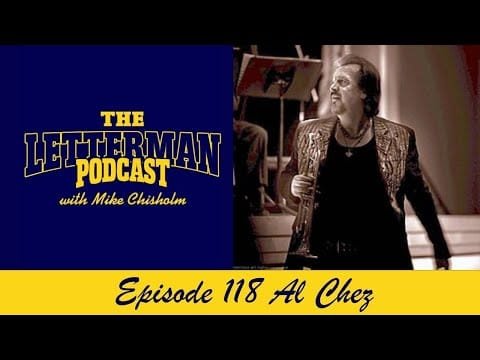
Get ready for a musical journey! Episode 118 of The Letterman Podcast, features the incredible horn blower, Al Chez! 🎺
Join Al and Mike as they dive into Al’s fascinating musical background, from his formative years playing on the Jersey Shore with fellow musicians like Bruce Kapler and a young Jon Bon Jovi, to his first encounters with Late-Night legends Paul Shaffer and Will Lee.
Discover how Al’s journey led him to become a supporting musician on Late Night with David Letterman, to how he got the gig as a regular player in the CBS Orchestra, endorsed by none other than David Letterman himself!
In this episode, we uncover some of the special musical moments Al has been a part of, including his legendary rendition of the iconic Matador fanfare that always played out Don Rickles, his being part of the Rock & Roll Hall of Fame house band, and being regular golf buddies with Alan Kalter.
And don’t forget to check out our sponsor: hello-deli.com, your one-stop shop for official Late Show with David Letterman merchandise, curated by the legendary Rupert Jee himself!
We implore our listeners to join the fun – like, share, and subscribe to The Letterman Podcast for more entertaining episodes!
Episode Transcript
Read full transcript
Hi, I'm Paul Schaefer. I'm Will Lee. And you are watching the Letterman podcast. [laughter] Welcome once again to the Letterman Podcast. My name is Mike Chisum. And uh I we got Alchez. Finally. And I say finally because and I say it finally uh fondly as well as finally. Um you know, he and I have been going back and forth for well over a year now. He was uh going to come on last year and it didn't didn't quite materialize. He's a road. Okay, so the trumpet player for Late Show with David Letterman. That's who Al Chz is. Uh phenomenal musician and and I mean as you're going to see here, I'm going to try and keep the intro as short as possible. You're all like, "Yeah, right, Mike." Um I'm I'm going to try and keep it short. Fantastic. Like personality, uh the stories that he has, just we had such a good time just riffing back and forth about um about music. Uh please go on to uh either Apple Music or Spotify, whatever. Look for Alchez and and and grab his two albums that he has on there. Um it's, you know, it's uh they're under uh The Brothers of Funk. Alchez and the Brothers of Funk.
The the there's a version of some uh songs that you you know of. There's some there's some uh written songs as well that they they wrote, some originals, I should say. um like listen to him whail on the immigrant song and and you know Led Zeppelin uh classic and it'll bring you right back to listening to Paul and the band playing. Uh we talk about all sorts of stuff on the show here uh including um you know how he got the gig uh what it was like uh you know uh he did some stuff for for Late Night as well as a session player uh and and and then of course got the gig uh in 97 on Late Show in and 17 years or whatever it was. Just just just good stories. Don Rickle stories, Warren Zeon stories, lots of great stuff. Uh really really excited uh to present this episode of the Letterman podcast with Al Chz. Al uh as you know I have been trying to do this with you for a long time. Uh you have put up with my incessant bugging you and bothering. I thank you so much for for doing that and finally coming on the Letterman podcast. Thank you so much for being here, man.
I I'm I'm sorry it took so long. you know, we just had to work work our schedules out, you know, still still a busy guy. So, you know, Well, abs and I want to I want to start with that there. Uh it's so crazy um you know, the the the run that uh that you guys and gals had having a a gig that was so uh you know, you could set your wristwatch to it. And then, you know, you finish off and you do what many other musicians are constantly doing, which is kind of that that uh grind, being in the grind, going, not knowing exactly where all the gigs are going to lie and that sort of thing. That's been your life the last uh the last few years here. It's very very interesting how your career has developed that way. Yeah, it kind of, you know, we kind of uh grew up doing that. you know, we all played. I know me and Bruce Kappler, you know, playing in the in the in the clubs in New York City for years.
You know, we we we we kind of came up doing all the jam bands in in New York City and we would go to a different, you know, jam band uh every night and like Monday, Tuesday, Wednesday, I think we took Thursday off Friday and then we did gigs on Saturday. So, we were out in the clubs like every night. going from that, you know, to touring to Letterman was was a shock, you know, and then after Letterman going back to that was also a shock, but it it's all cool, man. It's all, you know, it's all the entertainment business and it's it's it's what we do. So, you know, you're playing a lot. You're playing a lot these days.
Yeah, we're Yeah. You know, I'm pickier because I'm older, you know what I mean? But we're But definitely definitely playing a lot. you know, we're hey, we're not digging ditches, you know what I mean? We're we're we're we're playing music and we're doing what we love and you know, it doesn't matter ma to me matter where, you know, I'll do a jazz festival in front of, you know, 60,000 people or I'll do a gig in front of 120 people. I, you know, and I don't care. Same same gig, same job, same same, you know, same effort, same always 100%, you know, always going in. And I think we got that from, you know, we kind of learned that ear well being a Jersey guy and a Bruce disciple. I kind of learned it from from from Bruce. But, you know, also, you know, being in that studio on Letterman where there was only, you know, not many people, but there were millions watching, you know, so it doesn't matter who's there, you do, you know, 100% no matter what's there, you know. Uh you bring bring up I've got a whole list of people that you have worked with here. Uh Bruce Springsteen of course is on that list. Uh I want to ask about the Jersey connection and and uh you know you came up uh you know as as John Bon Joy was coming up that sort of thing. You you know Springsteen obviously an idol and then later on in your career you get to play with him and have all of these experiences with him.
uh surreal. Like if you would talk to to to to 19-year-old um Al Chznovitz and tell him some of the things that you're going to do in your life, would he even be able to believe you? No, I don't believe it. You know, I I I I don't believe it. Sometimes it's like, you know, you're I got it. It It's weird like that. It it it really is. You know, I I I was fortunate, you know, my first band. I I got a call from Bon Joy when I was 15 years old to come to his house that he's starting a band and to go down his basement. And, you know, we would rehearse in Bon Joy's basement. And we would play the Jersey Shore, you know, the Fast Lane down in the Jersey Shore when I was a kid. The cool thing was that when we played like the stone pony and you know the fast lane in Asbury Park is that we always got the a dressing room because especially at the at the fast lane because there was a door to an alley and they had this red light and if they [clears throat] would put this red light on it would mean that we would have to go into the alley. we would have to get out of the club because that mean the that the ABC, the alcohol bureau was coming into the club and we weren't old enough to be in the club, never mind headlining the club. It it was it was it was crazy.
Uh what was the name? What was the name of the band and what did you play? It was the Atlantic City Expressway. Y um I I played trumpet. It was three trumpets and a uh a saxophone. And we played all, you know, Southside Johnny and Bruce Springsteen and Jersey Shore, you know, f fun music. And we were like 15, 16 year old kid. We didn't know what we were doing, you know, and and we just did it. But it's better sometimes it's better that way because you don't know like you don't know the rules and so you also don't know the limits of the rules and so you just decide to just go for it. Uh, beyond that, when I was playing trombone in high school, um, I mean, I loved it so much, but it was so structured and it was like nobody ever gave any of us permission to go and and and do things like what you're talking about here. Um, and and and with that, I mean, 15 years old since you're 60 62 now. Yeah.
And you've been performing that entire time. [snorts] Getting tired, man. [laughter] No, it's it's cool. It's cool. It's, you know, we we we would we would get up, we would go to school, you know, go go go to high school and then we'd come back and then a lot of us worked, you know, uh BonJovi uh delivered carpets. I worked at at at uh the John F. Kennedy Medical Center delivering, you know, food to patients. And then about, you know, six o'clock at night, we'd get off and we'd go home. We'd shower. We'd get in somebody's car because we weren't weren't old enough to drive. We'd drive down the Jersey Shore. We'd do a gig and we'd get back about 3:00 in the morning and we do it again. Yes. Crazy. You just lived for it. Um, when did you know that you were uh as good as good as you are? And I mean, you're incredible at this. I mean, anybody just go go search YouTube for Alchez and and everything from from from teaching these kids, the cadets. I want to get to that.
I want to get to how much you give back uh and and whatnot, but when did you realize that you were a cut above, you know, everybody else in the trumpet section at the band at school? Like, when did you know that you were that guy? I'm I'm I'm not there. [laughter] Oh, there's a secret right there. You know, uh I I I don't know. You know, when you're It's kind It's kind of weird. And you know, it's it's it's me. It's it's my life. So, I don't see it that way. I see it as I'm a member of these different ensembles that I'm a a member of this band or I'm to entertain this and you know I just do what I do. You know when it's it it looking from it from an outside maybe you might see it that way but I I I don't I I just think that I'm another trumpet player another part of the horn section another another part of the band and I do 100% and it it's it's it's what I do. I I don't ever, you know, I don't I I don't look at it that way.
I hear I that right there I think is a is a is is a key that you don't see yourself that way. But that being said, to get in the rooms that you have gotten into the game that you have to have is absolutely um incredible. Uh now that being said, did you did you move to, you know, rock and roll or jazz or funk or like what was your discipline growing up? What was the thing that you just that love to your heart? I'm sorry. I was always a rock guy. Always because I grew up playing, you know, in rock and roll bands. Uh, you know, I uh and going from, you know, playing the Bruce Springsteen stuff to, you know, doing the Tower Power stuff to the Bruce Springsteen to the the Bon Joy and, you know, I I've always been playing I've always I'm a rock and roll trumpet player. You know what I mean? if they're, you know, like, um, if I'm I'm I'm in my car and I'm driving around, I'm gonna put on, you know, Led Zeppelin or Van Halen. I'm I'm not I'm not the Miles Davis or the, you know, I'm not a jazz guy. I'm a trumpet player that really [laughter] doesn't, you know, not that I don't play jazz, you know.
Oh, no. You can play anything. Yeah. But, well, thank you. It kind of, you know, what hits my soul is that, you know, is that soul [snorts] rock and roll, you know, funk music. That's that's the stuff that that that makes me go, you know, when you're you were saying when you're in these rooms, you know, I got to tell you, when when you're when we're doing like the Rock and Roll Hall of Fame or something like that or the concert for New York and we're we're playing with Bowie and and the Stones and and you're you know, you're you're this kid and I can still I still consider myself a kid. You know what I mean? Me, too. Yeah. Except when you when you look in the mirror, when you look at at yourself at this Zoom thing or when you stand up from a seated position, then you discover that you're old, you know? I'm the same, you know, 14year-old kid that that that I've always been. But when you're in these rooms and like Bowie walks in and or Jagger walks in, I I don't care who you are, you know?
You're like inside you're going, "Oh my god, like what what am I doing here?" you know, like some you're looking around like me, you know, you know, what am I? Somebody made a mistake and and they threw me in here, you know, and then you start playing and you start doing your job and you're like, you know, I I got this, you know, my my wife my my wife's my biggest supporter. Like here here's a great example. I I went uh about uh a year and a half, two years ago, I get a call from Tower Power that their trumpet player had to go to a funeral and that would I you know come and sit and and do the play with BB Kings on 42nd Street in Manhattan with with with the band and I'm and I haven't played with them in 10 years, you know what I mean? And I'm like, "Yeah, okay.
Yeah, you know, I'll do it." I said, "When is the gig?" And the guy says, "It's in two days." So, I I went I went down my cellar, you know, I went down into my studio and and I hit it, you know, and I just I worked I worked I worked and I got it. And I'm on the gig and I'm looking at my wife and she's in the back of the room and like the first third of the of the gig I'm playing and I'm I'm kind of taking it a little easy, you know? I'm being I'm being smart. and being that smart musician and and I'm kind of, you know, holding back a little bit and I look at her and she goes like, "Smack them, you know, get them, get them." And right there I just went boom, you know? So, you need that. You need that support. You need that you need to be reminded of of, you know, what you could do. Like when you're a musician, you don't you don't you don't have a coach. You don't have a coach on the on a sideline telling you, "Go, dude." you know, do this or do this. You're your coach.
You know what I mean? And in that instance, my my wife was my coach. He was the one that was saying, "Put the hammer down, you know, let let them do what you do." You know what I mean? And I did it. Oh, it just felt it felt wonderful. [laughter] An artist of any caliber, uh, one of the greatest gifts they could ever receive is having a partner in life who gets them and gets it and under and has that support. Um, you know, how how long have you and Cat been together? And she's a she's a DJ as well. Like she's she's as well. Yeah.
We've been together, you know, long long time. Long long time. Uh to We got m I got married. See, I I don't do things kind of wishywentally. No. No. That's right. We We got married on the rim of the Grand Canyon at sunset on the 4th of July. Awesome. the Yeah, that's a moment. That's a moment right there. Um, great. So, going back here, when did you meet Kepler? When did you guys uh connect for the first time? I met uh believe it or not, me and Bruce Kepler played in Labomba and the Hubcaps, which Labomba was the trombone player on the Conan O'Brien show, of course. Absolutely. So, the year 2000 guy, Laba, he's an amazing singer. He's an amazing singer and he's a great trombone player. He was with when I Okay, let's go back.
When I was like 15, 16 years old and I was in the Atlantic press with Bon Joy, the guys from the Jukes would come over and watch us play because we were playing we were probably the only Southside Johnny cover band back in 197879 that there was, you know, because nobody knew who Southside Johnny was out of out of the East Coast back then. never mind a cover band playing their music. So these guys would come in and see these little kids playing that and they were like, "Well, that how cool is that?" You know what I mean? So I knew Leambomba from when I was a kid. So Le Bomba started a band. So I met Bruce um I don't even know what year. Oh my gosh. I'm terrible. I got married on the fourth.
Don't worry about years. Don't worry. But but like age around the the the age or whatever. Like you're a teenager still. Yeah, pretty much. pretty much. And I met Bruce and and we played with Labomba in the hub caps for for 10 years and and the horn section was great. It was Bruce, me and Lab Bomba, [laughter] you know. Wow. Yeah, it was it was it it was incredible. And and and you know, I met Bruce through there and [clears throat] I you know, he was he was if I had a coach, it it would have been him. He was my mentor. He was the guy that was like, you know, he played um he went through it, you know, he was up from Syracuse, New York, and he played with uh you know, um the Manhattans and all these all all these bands back in the day. So, he was the guy that had, you know, the musical knowledge. He was he was my Obi-Wan Kenobi, you know, coming up. So, I kind of grabbed on to Bruce and I was like, "Let's go, man." And he was like, you know, we would go to the to to the like I said, the the jam, you know, bands.
Yep. And I, you know, I don't um I I don't judge people, you know what I mean? But I don't I don't I don't drink or do drugs or anything like that. So when we went to these jam clubs, people would be there for a different reason than I would be there that me and Grace would be there. They would be there to be partying and to have fun, which is great, you know. Well, yeah. Your job is to help them have a good time. That's your your job is to be the accessory for for that stuff. That's exactly right. That's what musicians don't get. We're not there to have a good time. We're there so you have a good time and we're compensated for it. [laughter] You know what I mean? So we would go to these jam things and we were there we were there to work. We were there to network. We were there to get gigs.
So we would kind of wait and we would kind of like hold back and and let all these other guys go up and and play and do this stuff and then at the end of the night, boom, we would come on at the end of the night and we were the guys that they remembered because we were like this this force that came on like uh you know, trumpet player comes on, trumpet player comes on, trumpet player comes on, I come on. OH MY GOD, WHAT DID you know? Because I was there for a reason and I was there it it was it was our job, you know, and I got that. Thank you, Bruce. You know, I [laughter] got that from from him and it I guess it worked. That's how we met Paul and uh Will.
Okay. So, yeah, let's let's get to that. Let's let's let's talk about how that connection was originally made. We we we were Let me see. We were in the China Club, which I think back then was 76th in Broadway. The old China Club used to go uh used to go downstairs. Oh my god. The China Club. That was a long time ago, man. Pretty cool. But we we were doing one of those jam band jam bands and uh I think we're playing with Benny Harrison and Benny and the Spiders back then and it was uh you know Richie Canada from Billy Joel's band. We had a bunch of us and we would just go from this one to this one to this one and uh Willie came in and he seen us play and the the Will, Paul, Sid, and Anton were doing um jazz festivals on the off weeks back then when they were on NBC and they wanted to hire Tower Power Horns to supplement them on these jazz festivals. a they couldn't afford Tower Power Horns and came in and they seen me and Bruce and they said, "You know what?
Use two guys sound like five guys." So instead of hiring five guys that we can't afford, let's hire two guys that sound like Five Guys. So that's how we got to we started doing the, you know, the festivals, the Jacksonville Jazz Festival and all these different festivals with the World's Most Dangerous Band. This is years before, you know, CBS. Yep. and and we would go and me and Bruce would sing and uh you know we'd play the horns and and percussion. We were like you know the jack of all trades and the and the four guys would be up front and we would be in the back kind of doing our thing and uh you know that's that's how we met those guys.
So versatility obviously is one of the things that I think that uh um that you guys were all known for individually and as a band. How just how versatile you you all really really are. Uh that's obviously one of the one of the keys that that that allowed you two to stick out and and um I you know what it's funny uh the first appearance that I could find with you and Bruce on Late Night uh was in 88 with with uh Tony Childs I believe. And um and and that's that's out there. That's you can you can people can find that. And and the reason I bring it up now a little prematurely perhaps, but it's because, you know, the world's most dangerous band didn't have horns at that point, but she comes out and she's got this crazy vocal. Like, she is so powerful. Just bringing on YouTube to accompany that. You guys did sound like five instruments when you hear her. And she's belting it out like she is going for it.
and behind her the horn support that's there uh does sound like the horn support of you know uh the CBS orchestra later on like you guys could really really belt it out. Uh you talk about how you would sing as well and I mean uh you can find that Yeah, there it is. There [laughter] it is. Um did you always sing? Did you sing right from the beginning as well or is that something you developed along the way? I I did not. I did not. I I um I started singing. I I never sang in in any of the bands when when I was a kid. And then my my I said my wife Cat um is a DJ and she also did karaoke and she comes up to me and she says, "You know, you're in a band, you you know," and I'm dating her. She's like, "You want to sing a song?" I'm like, "Oh, no.
Absolutely no." So finally she she coached me in in doing karaoke and I learned to sing singing karaoke singing karaoke with her and I would go back and then um you know when we do the commercial breaks I I you know we would sing and do all the stuff and I would go to my wife's karaoke and I would find the right key to sing a song in and then I would you know go up to you know uh Felicia or Paul or Will whoever and say hey you know let's try this and they, you know, let's do Magic Carpet Ride by Steman Wolf. I could sing that. You know what I mean? I remember there was there was um uh Leon Russell and Elton John were doing a backtoback piano thing and all of a sudden during the commercial break uh Leon Russell starts playing the beginning of a song for you the the you know the which he wrote the halfway and Paul turns around does anybody know you know a song for you you know sing it and I was like right here.
So, I got to sing a song for you with Leon Russell and Elton John playing pianos. And I got that great. And and I got that from singing karaoke with my wife. Unbelievable. And then um there's a version of that on uh on the the second Brothers of Funk album. I think I think it's the second one that you actually have uh a I was going to ask about that because you put out a couple of uh of albums after um Late Show ended and uh some of the songs that are there. I'm I'm thinking to myself, okay, I wonder if there are roots from the actual Late Show as to why you chose those titles and a song for you is one of the songs that you did there. That's uh um another one you mentioned Zeppelin earlier. Um, by the way, everybody out there, go on to the Apple Music or the Spotify or whatever and and and and download and and add to your libraries. Um, if there's one that you're going to add, add the immigrant song.
I now Led Zeppelin is is notorious for not allowing people to to do anything with their music or whatever. And and and but you boy oh boy, do you do that song justice like like hearing you whail on immigrant song is unbelievable. Was that uh was that difficult to be able to get or was that publishing fairly easy to Yeah, they're all they're all hard to get and and I don't get the whole publishing thing, you know? I like if if I wrote a song, which which I wrote a couple songs on those on those albums, and somebody else wants to cover my song, that means that somebody else is gonna hear my song. And you know what I mean? I'm like, hello. I'm gonna expose my art to more people. The more the more the better. That's what it's for, you know? That's like It's like making a painting and not letting anybody see it.
Why Why would you do that? I I don't I don't get it. I don't get it. You Everybody could could see my art. You know, everybody could listen. Or or you write a song and say, "You know what? You can't listen to it and you can't listen to it." No, it's for it's for you're creating it for others. You're not creating it for yourself. I don't. Absolutely. Um, I love doing that. I love doing that immigrant song. The uh the you know, the horns on it. I just heard that boo. I was like, "Oh, that's a great trumpet line. There you go." You know, I I hear things as a trumpet player. So, there you go. So, thank you very much. This is again, it's it's it's like you've done this before, Al.
Um obviously with uh with CBS Orchestra um you know one of the things that that that would happen is the band would interpret uh songs in pop culture many times it was the trumpet that would do the vocal part of Are you at a place in life where you hear a song on the radio and you hear somebody singing and you're like oh yeah okay and you [laughter] do a trumpet part in your head or is it just as as songs came along you just did it you just every day I I hear I [laughter] hear everything everything through the ears of a trumpet player because that is I you know that's that's how I like there's songs that um like I I've been on gigs and guys like oh do you want to sing this song do you want to sing this song and I'm like well I should know that song but you know what I only hear the horn part and I've never really listened to the vocal I listen you know what I mean I hear it through you know I hear it through a horn section guy you So sometimes it it separates, you know, sometimes I hear I hear it as the horn player and sometimes I hear that as a as a vocal.
It's weird.
Yeah. Oh, no. I can only imagine how it is. Uh your interpretation of music must There's a lot going on in here. Like you hear a Taylor you hear a Taylor Swift song on the radio and it's like, okay, yeah, I would do that here. I would do that here. I'd go for the higher note here. Like like you you just that's that's probably how your brain works now after all these years. Yeah. Usually, I want to get to uh a couple uh interesting little uh trivia tidbits that people might not necessarily know. Uh I believe if my math is correct, you are the second longest serving uh trumpet player in a in a in a late late night facility uh band capacity, I should say. Um second to Doc Severson, who you also share a birthday with, correct? Which is which is really interesting. Um, did you ever I know you were a rock and roll guy, but growing up and knowing um, Letterman's reverence for Carson and all of that stuff, was Doc a guy that was on your radar as as as you grew up, or was it just because you were part of the Late Show and you had some experiences with him and it just kind of came together uh, organically that way? I'm going to think, you know, all those I have respect for all those cats. All all all of them, you know, they're all there's all the little pieces, you know, of this and that and this and that. You know, I'm a I'm I'm a collector of of influences, you know what I mean?
Like I heard Doc, I was like, "Wow, that cat is smooth, you know, smooth as can be." And then I heard Maynard and I was like, "Oh, you know, Maynard Maynard wasn't afraid to break some eggs." You know what I mean? The imp the impurities of his sound made him perfect. Okay, if you could if you could relate to that. So, I would I would I would hear these guys and like especially Doc on the on the Carson show. And I what I got from Doc is Doc is smooth and he's such a you know, a great band member, but when it's time and the spotlight goes on him, boom. You know what I mean? I I I dig that. I I like that. when it's time to fly, Doc can fly. And when it's time to be an ensemble player, Doc is the best. You know what I mean? So, I I I grab that, you know, that from all these different guys. From a moment's perspective, I'm going to ask about uh the tribute show you guys did to Carson in ' 05. Um you know, Doc famously, you know, came came to the stage at the Ed Sullivan Theater and played one of Johnny's favorite songs.
Um and and and you guys were all There's that Randy Dead. Is that what he did? that there's that R. Yeah. Yeah. There you go. Yeah. Um, so had you met Doc before then? No. That was the first night that you met him? Wow. First time ever, you know, and I I go up to It's weird. I It again, it's weird when it's you. Like I remember the uh I remember going up to Doc Sevens and same thing with I think Harry Kic uh was on the show and he had you know these legendary horn players you know uh in his band and [clears throat] and I'm like waiting in the wings and I'm just standing there and you you I just feel like this 14year-old kid, you know, and I go up to them and I'm like I I want to go and shake their hand and say hi. I'm I'm Alchez, by the way. And before I get there, you know, DOC TURNS AROUND GOES, "ALCHEZ," YOU KNOW, AND I was like, "Oh, like I Yeah, I I I can't I I I still don't have that.
I still don't I still don't have that." You know, when you go to the the local pizza parlor and your picture is in the pizza parlor, you're like, "What am I wanted or something?" that it's really weird like you know playing these jazz festivals with with Alchez and the Brothers of Funk when your when your face is on the t-shirt of the festival. It's really weird. It's really it's it's it's not right. It's just weird, [laughter] you know. It's weird. Um Ingram was the the trumpet player on on the Harry Kick. Same thing with him that I I was going to go up to him and say, "Hi, you I'm a big fan and you you know, uh Henry Winkler, the FS the F is on the show." Okay. And the Letterman dressing room is on on the fourth floor and you got to come down these stairs to the the security desk and then you you go outside and I come out at the end of the show and I come from the fourth floor and I go I'm going out the door and Henry Winkler is on the bottom of the step. The fonts he's on the step and I I'm go it's the font. So So I go up to him and I'm I'm an idiot. So, you know, I go I go up to him and I walk down and I'm going, "Oh, you know, Mr.
Winkler, I'm [clears throat] big fan." He goes, "Oh, Alz, I'm a big fan." I was like, "Oh my god, like the fonts." All right. He played trumpet in high school and he's he's he's a a trumpet fan guy. Yeah. you know, and I thought I gave him the [laughter] thought. I'm like, "Oh, you're so you're oh, what is the matter with you?" But you never you never know. And that that is it's just a weird weird thing for me. It still is. It still is. Well, it's a little club. And I mean, you know, uh uh trombone players do the same thing for me. Like I I I've always been I think it's I don't know if it's one of the instruments that you played in high school or whatever it was and then you just stay aware of it. But that being said, um you guys were so powerful again listening to you play every night and those people who watch the show every single night like like me and millions and millions and millions of others.
Um you know obviously the biggest uh difference between the world's most dangerous band and uh the CBS orchestra was the horns. That was obviously the the the biggest difference between the two. And it was just it made it made it feel so much bigger like Johnny's band except still very much in the lane of what Paul and them did at at NBC. Um when you were at NBC with you know Tony Childs is the first one in 88. Okay. Now we're getting already to the place where where uh late night was becoming this really big pop culture uh iconic thing. The kids were all behind it. It was it was my generation's Tonight Show already at that point. Um, you started you played on there quite a bit. You were on late night quite a bit. You were there, you know. Uh, can we talk about some of those memories and and how that how that happened? Obviously the jelling of, you know, you two you and Bruce sounding like like five, you know, bang for your buck, that kind of a thing.
Um, what were some of the uh the instances where you played on late night that you can remember?
Well, the Tony Charles one that that was that was tremendous. I you know I remember once we went on the show me and Bruce uh and you know it was back I'm going to say late 80s and uh you know we come on the show and we got you know ripped jeans on and and you know like a a a t-shirt on and you know we're still playing well but we look like we just cleaned out our garage. [laughter] You know what I mean? And Leman looks comes over. He goes, "Hey, the horns the horns sound great, you know, but you know, you you you guys you know, if you come back, you got to dress up a little bit." Yeah. So, we came back the next night wearing tuxedos. [laughter] That's just, you know, the the uh the mentality of us. Everything is a joke. You know what I mean? Everything is. But, uh I love I loved getting those calls. I remember, you know, um I learned a lot from it, too, being I was Oh my gosh. Uh, what was that? 19 86 was it? What? What? What year was the Tony Childs? Do you have that?
88. Yeah. So, I'm like what? 26 years old. Yeah. Something like that. Like just just crazy. Just crazy. And I, you know, going on and and doing that in the old, you know, the old uh 30 Rock. Was that your first time at 30 Rock? Yeah. Yeah. Wow. Yeah. I was, you know, I I never really got I don't get scared, you know. I I I want to I want to kind of like a a being a trumpet player is kind of like being a fighter. You know what I mean? You can't be afraid to get punched in the face. You know what I mean? So, I'm I always have that mentality. I go in there and I'm not like, you know, a 20 26 year old kid can go in there and just be, "Oh my god." And and be scared. I'm like, "No, I'm gonna I'm gonna rip your head off." You know what I mean? Ah, that's that's my gig, you know what I mean? So, I I kind of love that. But getting those goals, it was so long ago we I had a beeper. Yep. [laughter] [clears throat] I would have You were something for having that beeper at that year. That was early.
That was early on getting a beeper. Yeah. Oh, yeah. I would have the the beeper and I would get a thing. Oh, can you come over to the Letterman show? I'm like, when? I'm like now. You know what I mean? Like, yeah, I I I I can. You know, I remember doing the old NBC show, um, and I think it was me and Bruce. I don't remember who we were playing with, maybe Dr. John. Um, something [clears throat] like that. And it was the great L. Soloff and Ronnie Cuber playing Baritone Sachs. And me and Bruce, both of them had passed, uh, unfortunately. But I remember L Soloff coming to me uh really being really nice and taking this young kid and I'm playing the lead trumpet part and it goes up to this really really you know high note and I'm like ah I can't play that. And he goes yes you can. I'm like well you know it's a little bit above my range you know um you know it's on national TV. He you know I don't know if I got that. He goes yes you do. He goes don't try. He was like a yoda. He was like don't try to play it.
play it, you know, and I always got that don't try to do something. And Yoda used to say, don't try, do, you know, do or do not. Yeah. L Solo said that to me 10 years before, you [laughter] know, I think that I think L Solo was Yoda. You know what I mean? It was great. I I took all those, you know, I took again, I took all those you take them in. You know what I mean? But I love doing the I love doing the show on NBC. That was that was a really long time ago. Well, absolutely. The night you wore tuxedos, did Dave say anything to you about it? No. [laughter] He no sold it. NO SOLD IT. You're like, bastard. [laughter] Um, were you were there any moments where you guys were a part of uh obviously you know uh you know the horn the horn section uh you know became became a a go-to in in the later years. Um but early on at the NBC were were you ever part of uh any bits any any anything that was outside of just playing or at that point at late night you were just uh session players that would come in and and and augment on NBC on NBC?
Yeah. No, NBC. We were just hired hands, you know. Yeah. I think when we came to to to CBS, we we we did some of those bits and some of them some of them were were wacky and and a lot of a lot of them didn't even air. I remember they wanted me to go in the Hudson River and meet on pair 61 and go water skiing on the Hudson River. And I was like, "Well, I don't know how to water ski." And they were like, "Yeah, we know. I'm like, THAT'S THAT'S NOT FUNNY. THAT'S NOT FUNNY. SO, when was this? This was I think like ' 080 somewhere around there. They wanted to water ski. You want me to water ski on the Hudson River? And I'm like, I don't know how to water ski. They go, "Yeah, we figured that that we don't know." I'm like, "I'm going to fall all over. I'm going to kill." And they go, "Yeah, it's going to be really funny." I'M LIKE, "NO." NO. [laughter] Why you Why would they choose you for that? I I I have no I have no idea. I have no idea. You know, they I have no idea.
They have one that um it was a a a room full of reporters asking me questions and I had the long hair and I had, you know, the beard and the and the goatee and they and it was me and Dave at a podium and all these reporters were asking us questions and then they panned back to the reporters and every reporter had long hair and a goatee and they all looked like me. [laughter] That was another one that they had and it it that never aired. Doing doing those bits were great, man. That that was that was a lot of fun.
Uh we've been talking a lot to uh to some of the writers and producers about about things that got made that never aired. And and that is something that uh boy, I'm not sure what the the legalities are and the rights are for something like that, but boy, wouldn't it be cool if we could unearth some of these uh non-aird extras that were made um you know, and it just shows it shows how high the standard was for the show that something like that that that would play well. That's really really funny. Uh would love to see that on YouTube right now. That'd be amazing. It shows the standard of the show. And for whatever reason, whether Dave was talking about a current event, whatever, that that that comedy piece might have just been sitting there and it just never never aired. It seems to me that um the standard of the show was so high in every regard. That seems to be in in in the hund and some odd episodes we've done here, that seems to be the consensus of everybody. Nobody denies that whatsoever. Um, when you came on board into the CBS orchestra, uh, for you yourself, was it a different standard than what you were used to or were you already kind of at that standard?
Um, inside I'm always, it doesn't matter what it is. And you can't be aed by whether you're playing at the White House or like I said, if you're playing in front of 15, I don't look at it that way. I just look at it as doing doing my job and and ripping your head off no matter no matter what it is. I I don't I don't really look at it I don't look at it as levels. I look at it as as me doing my job. Right. But the standard of perfection of perfection is obviously the goal. uh the product that you put out every single night was like the music was absolutely top shelf and and perhaps that's just who you are and you just like working with top shelf people. Um you know, perhaps that's what it is and and and maybe you're just comfortable because of because that's the level you're at. Yeah. I I I don't know. I I don't do levels. I just kind of, you know, I just kind of do my my job and do my gig and if you know I do it well, I get more.
You know what I mean? So I I I don't I don't really know. I think you know I did a lot of gigs before I did um let before I before NBC I was green. You know I did I did but when I by the time I got to CBS I had played with Tower Power and I have you know did that Dave I'd done a lot of tours by then. I was pretty seasoned seasoned by that point. You know what I mean? I was out in California when they went from NBC to CBS. I was out in California playing with Robert the Robert Crayan and Tower Power. Y and then Bruce and Tom went over to the you know the the other show and um how did how did I get fireworks? I have no idea. But I love it. I don't know. That's never had something like that on here. But that's I dig it. I dig it. I hope it happens again. Yeah, me too. [laughter] Me too. But they went over to NBC when I was out in California. So when I uh when I got done doing my tour with Tower Power, you know, that's how I got that's how I got a thing now. Look at this.
You got a thumb up. I have no idea. I don't know what that is. That's so funny. [laughter] I dig it. So So when did you get the So did you get the call from somebody? Did was it Paul that called you? Okay. So, when I came back, this there's a When I came back from California, I came back and I I was kind of tired of going I was a road rat man. I was going I went all the way around the world a couple times. I went, you know, I left with I did one I left with um oh, I don't even know who I did the Dave Edmonds band. Dave Edmonds Rock and Roll Review with Steve Craropper on. It was a just a great band. There's clips of that of that concert um of that tour online. Uh Dion, the fabulous Thunderbirds, Dave. It was great. It was great. And that was me and Laba again. [laughter] Meaba. Yeah. And uh Ed Manion, who's now playing with Bruce Springsteen, um and a saxophone player in Mario Cruz from Texas. And we k we went around and we did the Dave Edmonds tour and that ended I think in England.
And then I hooked on with Natalie Cole and I went with Natalie Cole from England to oh I don't to some I don't even know somewhere but then I ended up in Germany and I did um the Howard Carpondale tour in Germany for about three months and then I ended up in Tokyo with Natalie Cole doing Yoko Ono's John Lennon's 60th birthday at the Tokyo Dome went from Tokyo to LA, hooked up with Tower Power, and did a tour and came back to New York. So, I did a a full lap around the world. It took about a year and a half, and I came back, and I I I didn't know who I was. I had no clean clothes, you know what [laughter] I mean? I was just like, I I gotta I I got to stay home. I got I got to get a, you know, I got I got I got to get a life. There's There's a life, too. You know what I mean?
Yep. So, I I made a I called up I think I called up Schaefer and I I said, "Hey, man. I've been on the road. You know, you guys, you have horns in here. You know, if you want to hire because Tom Malone was playing trumpet. Tom Malone's a great guy, but he's not a great trumpet player. You know what I mean? He's a good blown player, but trumpet is not his his Oh, yeah. Amazing arranger. All of that stuff." Absolutely. Yeah. So, I was like, "If you want to hire a real trumpet player, you know, full-time, I won't go on the road anymore." So, I'm like, uh, he's like, "All right, we'll see what we can do." So, I get a call from the producers to come in for the sweeps period, which the sweeps period is that determines how much a a 30-cond commercial time is worth by how many viewers, the Neielson ratings and all that. Y So, I get hired for the sweet the three weeks of sweeps. So, I go in and it's Tom and Bruce and then me for the for the three weeks.
And I go on, I'm doing my gig and it's the last day of sweeps and [clears throat] I don't I don't even know the date of this. Um, Letterman looks over on the last day. Everybody's like, you know, thanks for coming and you know, if we need you again, we'll we'll call you. So on the air, on the air, Letterman looks over and goes, hey, Paul, the new trumpet player sounds great. And Paul Schaefer goes, "Well, that's Alchez." And you know, and I'm like, "Hi." [laughter] You know, and and Letter and uh Letterman looks over and he goes, "So, so did you get the gig or what?" And Paul Schaeer goes, "Well, we're waiting to hear from you, Dave."
And on the air, Letterman goes, "Well, as far as I'm concerned, the kid stays." And the next Yeah. And the next day, the CBS lawyer is calling my house to negotiate a three-year contract. And he's like, "I I want the name of your lawyer." And I'm like, "All right. Well, hold on. I I don't I don't have a lawyer." You know what I mean? I'm looking at the yellow pages. I got him. And I'm looking at, you know, uh, let me see. I didn't have I didn't have a lawyer. I'm just a Jersey rat. You know what I mean? It was like so and and and there there went 17 years or something like that from Yeah. So So now in retrospect, looking back, do you think they had made the decision and they decided to have a little fun with Al and and let you know on the air and that that you got the gig? Maybe. I You know what? I never I never thought about that. I never I never knowing them. You know, they're really smart. you know, [laughter] they're really smart and and and they and they planned stuff that that could be or or or it could have just been Dave just saying being Dave, you know, whatever.
You know, he was so quick and so fast and you know, that mind is is just thinking and you know, who who knows? But I'm glad he did, man. Of course, we all are. Um we absolutely all are. Uh uh uh so, okay, you you get the lawyer, figure it out. Yes, it's a yes. We're doing this. Sign the whatever. Um, you're living in Jersey at the time. Yeah. Did you stay living in Jersey the entire time? I love I love New Jersey. I I I always lived in New Jersey and I always um worked out of New York City and and Jersey Shore and I live like in Northwest New Jersey. I used to live in central New Jersey. So, it was I had to commute either either either place. [clears throat] And it was to me it was kind of like um like a sports guy going through the tunnel, you know what I mean? When when I went through that Lincoln tunnel, I was coming through the tunnel of the stadium. And when I got to New York, it was it was the field of play. You know, same thing of down the Jersey Shore.
When I drove drove on that jersey on the Garden State Parkway, I was going through the tunnel. And then when I got to Asbury Park, I got in the stadium. So, you know, it was kind of like that preparation and I kind of dug that and that was my my ritual. So, I I don't want to mess that up. And I love New Jersey. I love where I live. So, no, that's awesome. You're actually you're answering part of the question here. I wanted to know about the daily commute like what it was like, how it was like getting to the theater. Um, you know, are you are you subwaying it? Are you you know, how I drove every day you drove? Where'd you park? Uh, right around the corner. I had to buy and get like something like 500 bucks a week to park your car during the day around the corner from the from the studio. But I kind of dug I loved, you know, it was it was how how do I say this? I'm not I'm not a loner.
You know, I grew up doing the drum and bugle corps activity and there was like marching band and there was always a lot of people around me. I have two brothers, you know. I'm I'm used to having a lot of people. But when I was in that car on my way to work, uh, just by myself, uh, going to going to work, it was that zen moment. It was that preparation moment, you know what I mean? It was that preparing that when I got out of my car, I was I was ready to go. You know what I mean? So, I kind of love the commute, you know? I I I kind of dug [clears throat] that. I didn't dig going home so much. [laughter] Oh, yeah. Because you're going home in rush hour, right?
Yeah. I'm going right there in rush hour. And it was uh I was 50 not not that far. I'm 56 miles out of out of New York. Okay. So not not really that bad, but I always gave myself to go 56 miles, I would give myself like two and a half hours that I would go in before I had to get there. And that way if I'm going and some guy wants to pass me, hey dude, go ahead. If I want to stop and get something to eat on my way or go to a store or um I have that time. if I want to go in the dressing room and hang out, I have and I always made it that I always left the same time that I had that that leeway, you know, to go and it just made life a lot easier. Don't always be in such a rush, you know what I mean? There other things to do and and root, you know. Um, you get there, you your your first couple weeks there. Um, any surprises? Like I mean, you're getting your routine down, you're getting your commute down.
Um, any surprises that first couple weeks? any major acts show up and you're like, "Holy wow, [laughter] this is going to be a new adventure." All of all of them. All of them. Every time somebody came in that that you think it on the inside, I'm I'm again I'm I'm the 14y old kid. I'm the 16-y old kid going, "Wow." You know, that's that's the BeeGees over there. There was some weird ones, too. Um I came up and I had to come in for a comedy bit. I think I was doing a comedy bit with George Plimpmpton helping me do a crossword puzzle. I I know. I know. It's just like it's just it, you know, incredible. And I go and I go into the dressing room and uh we're on the on the fourth floor and I go in there and I open the door and it it just smelled like like alcohol. It smelled like a bar. Yeah. In and I was like, "What the?" And I look on the couch and there is this fat guy sleeping [snorts] on the couch and I'm like, [clears throat] "What the heck is going on?" And he rolls over.
It was David Wells who had just pitched a perfect game with the Yankees and he went out in New York partying after and he didn't make it home and the security guy let him into our dressing room. So, he was sleeping [laughter] on the couch of the dressing room the next morning after throwing a perfect game. And I go into the dressing room. I open the door and I'm like, "It's it's Dave. Oh my god, it's David Wells." So, I went downstairs and I bought a Daily News newspaper, you know, it said D. It says Wells. Perfect. And it had the date on it. And I kind of woke him up. I said, "Hey, man, sign this." So, I got this autograph on the I dated it and signed it and I got I got that in my office. somewhere. Oh, that is fantastic. Oh, you never know. You never know. Well, that's the thing about that show is you never knew what was going to happen. Um, so the routine you had no problem. So So you had been on the road for so long.
Uh, suddenly you're literally living the exact opposite life than that. you're you're into a routine with randomness, don't get me wrong, because you never knew what was going to happen, but very structured getting there, rehearsal, uh you know, if there's any extras or comedy bits, that kind of a thing. Um the pregame, all of that. Did you have any like did you have any adjustment uh issues with that or did you actually crave it so much because of the previous year?
Definitely adjustment. Definitely adjustment. you didn't play as much as you did previously cuz you did the commercial breaks and you did the the you know listen Paul and Will and those guys you know have been doing it for how many year 20 years before that 15 years before 12 years at uh at at NBC 11 and a half years at NBC. Yeah. So they didn't they didn't really want to rehearse, you know what I mean? They don't want to go down and do, you know, like Conan O'Brien that those shows, those guys would get there like five hours before the show and they would rehearse for three hours before the show. We rehearsed for about seven minutes before the show and it was like boom boom boom boom boom boom boom boom boom boom boom boom. Okay. And that's it. You know, Alec Bowwin's on the show. Okay. Alec Bowwin likes classical music. We're going to play Simple Gifts by Aaron Copeland. And that's in the key of A and it's got a uh uh a trumpet lead.
Okay. So I write simple A and I circle it and I put lead on it. Alec Bowwin. Okay. Now we go on. That's that's the rehearsal for Alec Bowwin. Now we go on and we get about 40 minutes off and then the comic comes on and then we come on and we play a couple tunes. David Letterman. Letterman comes out and you know he does his monologue. Okay. our first guest. And I'm looking at the thing and it says simple a lead and I have no idea what that means. I have absolutely zero. You know what I mean? So I'm like, "Okay, come on, dude." And that adjustment was probably the the big the biggest one. You know what I mean? You got And I'm like, "Oh, what is what does that mean?" Okay. So I hear the THE FIRST CHORD. SIMPLE GIFTS. [laughter] There it is. Oh, that is fantastic. Um, yeah. You know what? We've had uh well, we've had Bones, Felicia, and Will on here, and we've talked about that with with with each of them, Paul, too, actually.
how how quickly you could adapt uh to things and how quickly something could be arranged like like hearing Bones sounds like he's almost like Rayman freaky about how quickly uh you know an arrangement can be put together for you guys and and and and sometimes it would happen on the fly you know uh a band plays something or whatever Dave likes it or whatever and then then then you guys are suddenly called into action to improvise. Uh I want to talk a little bit about improvising. Is that something that you have um uh you know prided yourself on or is that something that that uh you're are you an improviser?
I I am I I I am I think I have you know being a a Jersey club guy growing up. You know we played a million songs in every club, you know, in the tri-state area. So, you know, Springsteen's guys, they'll tell you the same thing. They're the biggest club band in the world. Uh the Olden Street band because they played in every club and every bowling alley and every VFW in American Legion in in in a 100 mile radius, you know. Same thing as me. So I kind of the music encyclopedia that I have in my head is kind of vast. So [snorts] you kind of adapt and you use that. Oh, that's kind of like that's kind of like this. It's you know, it's kind of like that Neville Brothers song. Okay, I got to change it a little bit here. Schaefer, his music encyclopedia in head in his head is second to none. He's he's he's amazing with that. Again, not the greatest player, but the music encyclopedia in his head was was amazing. Bones, same thing.
Bones would take a piece of paper and without, you know, trying to figure out uh a chord on a piano and then write it for the horn section to do that on the fly without the keyboard. Just go, okay. and and he would write a three-piece horn chart and a rhythm chart on the band stand while we were going on. And that was like ingenious. Again, you know, when it comes to to playing, not not the baddest cat in town, but the mind was it was part of that, you know, a football team, everybody's not the fastest guy. You got to have the muscle guy. You got to have, you know, you got to have a good team.
And that and that's and that's what it was. It was a it was a great a great team. That makes so much sense. Um, let's talk about some of the bands that with the world's most dangerous band on uh on on NBC. You know, the whole thing was many times it wouldn't be uh a musical act that would come on or the entire musical act. It would be the lead singer that would come on and they would play with the band and and it would be the band's interpretation of of of music and pop culture, that sort of a thing. Um, obviously that happened a little bit differently on Late Show, but there were so many times though where you guys would create a brand new one-of-a-kind experience because another band would come on, but then you would supplement you would supplement in and and and augment some of these some of these amazing uh moments. That's I mean, I think the the greatest untapped musical library out there is that of Late Show with David Letterman.
Uh because so many performances were just straight up one of a kind. Um yeah, you know, uh uh this is probably before your time, but I mean like you know, White Zombie appearing and there's a keyboard part that doesn't exist anywhere else cuz Paul's playing with White Zombie. [laughter] Like it just that that performance is entirely unique. Um are there any acts like that where uh they showed up at rehearsal and it's like, yeah, okay, the band let's let's let's bring in the CBS orchestra into some of this stuff that uh that you proud of that you you remember. Uh like yeah that was a really cool kind of a a oneoff.
Probably my fave was probably the the Warren Zevon stuff that Warren that when Warren Zeon came on and you know not a lot of horns on the Warren Zevon stuff but you know we're playing these just gorgeous tunes and and and his material when Warren Z when okay Paul goes to go do the the Blues Brothers 2000 and Warren Zeon comes on as for like three weeks to to be his replacement for three weeks. And I got I wasn't really familiar with I knew werewolves of London, excited boy. I wasn't really familiar with the whole catalog. Yep. And in our dressing room the day that we come in Monday morning, there's a box of cassettes. That's how [laughter] long ago it was. And it had it had all the Warren Zeon uh material on the cassettes and a note saying that Dave would like for the next three weeks want us wants us to play nothing but Warren Zeon songs. It was like okay. So, you know, we did the ones that we knew and then we went back and on my commute, you know, had the cassette player in my car [laughter] and put it in. I'm listening to these tunes. I'm like, "Wow." like just just amazing, you know, and to take his [snorts] genius of tunes and to add the augmentation of the music to it to to me was really special and he was a great really really funny guy.
Well, that's the thing. His music was funny. Like it was it was ironic. It was it was Yeah, it had a like you talk about somebody who went to the beat of his own drum. Warren Zon is that guy. like just just you know he could do a he could do it's almost like he could do any type of song whatsoever but loved doing you know ironic or comedic type type songs they had a little bit of they just they all had such personality to them great great in my favorite Warren Zevon story he had an intern that was that was uh assigned to him you know to make sure that in case he needed anything and he would go the intern would come up to him every day at lunch and say, "Mr. Zeon, what would you like for lunch?" And I was up in his office, you know, talking, just shooting it. And um the, you know, the intern comes in go, "Mr. Zemo, what would you like for lunch?" And he goes, "Um, he goes," he goes, "Check this out." He goes, "I would like a sandwich and a beverage."
And that was it. That was And the intern had this look like, "What what does that mean?" He goes, "Well, what?" He goes, "What kind?" And before he said, he goes, "I would like a sandwich and a beverage." And the intern walks out, not knowing what to get him. And Warren starts laughing cuz he knew [laughter] exactly what he was doing, that he was driving this guy crazy there. A sandwich in a there's a lot of ways that could go. You know what I mean? But he's like, "It's a sandwich in a beverage. I don't care what it is." You know what? It's a surprise. So I I take that now when I go to a restaurant with my wife and they say, "What kind of salad?" Salad dressing is salad dressing. It's like cereal. They're all good. Yeah. I go I go into the You go, "What kind of salad dressing?" I said, "Oh, you you decide. Surprise me." And the waitress like, "Oh, you know, I've gone into I've gone into a restaurant and say, I would like an appetizer, an entree, and a dessert.
[clears throat] Knock tell the cheer tell the chef to knock me out." Oh, that is and they would and usually when you do that, the chef comes out and he's like, "Oh, you know, I can create, you know, I have something I have, oh, I'm going to make you something that's not on the menu and all this." When they get to, you know, the creativity when they get to do that, bring me an entree. Well, okay. I'll I'll bring you an entree, kid. You know what I mean? And I got about improvising. Yeah. Yeah. I got that from Warren because I love that story and I love that he thought that that was really funny. [laughter] It is funny. Like that's that's that quirky nature. You've just encapsulated it. Um but then you know taking that quirky nature and then throwing it let's go to like oh my god like I know I I don't know if there's any of the musicians that I've had on the show that have brought up that night the the the tribute night to him. You know the enjoy every sandwich night. Um you know he does three performances. Um, that performance of Mutineer, like I mean I I love the song Mutineer, but that version of Mutineer is just, oh my god, does it ever hit me. And then the enjoy enjoy every sandwich. Like that's the life lesson. Be present. Enjoy every sandwich, whether you know what's in it or not is is it's it's added an element to it here. The way that you've described it.
Now you now you get the every sandwich with his story. Yeah. Oh yeah. Yeah. That is uh um [clears throat] so you think about nights, you know, you performed at presidential inaugurations, White House, you know, Rock and Roll Hall of Fame, big moments. Um you know, personal moments. this this night, the emotion um having, you know, the only other person to be a band leader um in the CBS orchestra. Um and he's there, you've got the knowledge of the uh the gift of foresight knowing it's going to be the last time that he's going to be there. Um I I just curious, was rehearsal different? Was prep different? was like, did you guys have your own kind of scrum or or talk with him beforehand or was it kind of business as usual and you just kind of let it play out? Job first, man. Business business as usual. Get get the script, get it figured out. Y get what you're going to do and then, you know, after that it was, you know, time to to reflect and it it was it was kind of solemn.
You know, Warren was a great guy and we all knew he knew he was going, you know what I mean? we knew where he was going and it was just wow, you know, it was it was pretty emotional, you know, after that he he had used um basically the same guitar his whole career and at the end of that show he went up to Letterman's dressing room and he gave that guitar to Dave and said, "I don't need it anymore. This is this is it."
And that was his last performance. and he g he g he gave the guitar to Dave in his office. That was that was another one that's Yeah. It hits you right right in the heart. Um you know, incredible um it's it's a wonderful legacy and you're a part of this this this musical legacy right now. Um I don't think I'm telling tales out of school, but we had Zeon's official historian. We're hoping to get uh to get Jordan on here, too. I think Jordan's going to come on and and and and and be a guest here. But uh right now we had Zevon Historian right now is working on a box set and um there's just been the word is apparently the stuff that was live on on Letterman. Uh nobody has any um any ties to it except for Pants, which is cool because they want to take some of those performances and potentially release them on a box set. That would be a very very special thing. Yeah. Great tunes, man. Absolutely. uh you know would be so so cool. I hope they can all get that worked out because these are these these amazing one-of-a-kind moments. Um let me ask you this. What's your very first uh the first time that Don Rickles crossed your path? [laughter] He call he called me a hockey punk.
There you go. Good. Excellent. He looks over to me and he comes on and I'm I'm playing, you know, the the the the Yeah. you know, and I'm playing and Rickles looks OVER AND HE'S LIKE, you know, he goes and he goes, uh, he gets on there and he's like, oh, THE THE FAT GUY WITH THE BEARD, you know, IS HE STILL LOOKING AT ME? AND AND HE GO, WHAT are you what are you, A HOCKEY PUCK OR SOMETHING? I WAS LIKE, YES. [laughter] SO, RICKLES called me a hockey puck. You know, he was another guy. He was like, you know, you you gota like Dave, same kind of same kind of mentality, different kind of humor, but that quick, you know, you never know what's going to come out. You know what I mean? It's like was just just tremendous. To get called a hockey puck by Don Rickles is a badge of honor, you know? [laughter] Well, and to play that uh like again, we're talking, you know, legacy here.
uh you know when those of us who who uphold uh late night to the regard that you know there's a group of us that just absolutely this is our thing we love it so much and and and to take on that anytime that the show took on something from the the Johnny Carson's Tonight Show you know whether it was Stump the Band or or or some of the different things that that that that uh you guys would homage um it was always a special thing for for for a select few of us viewers who who who got it and and and and appreciated the reverence that is being delivered. Um, Don coming out to that theme is one of those things and you got to be the guy that carried on that tradition with him for a long time.
When I first got that that that the chart for the Don Rickles play on, too, it was just written, [clears throat] you know, kind of like in a in a classical vein. And I was like, well, you know, it's Don Rickles. Let I'm I'm gonna take it up an octave. I'm gonna I want to rip his head off because it's Don Rickles. It should be It's the bull. You know, the bull is, you know, it should be screaming. It should be high. And I tried it at rehearsal. Everybody was like, "Yeah, that that." [laughter] And it it became, you know, it became thing, but originally it was like this real classical like real nice, you know, nice. Changed it. Change it. Change it a little bit. Change it a little bit. You did. and and and I'm glad that you said it instead of me saying it because I felt it as a viewer. I still feel it today. I can still put myself back in that place when he would come out. It was a fanfare. It was it was a proclamation. And and certainly certainly um you know, I'm certain that there are there there's crossovers.
There's there's songs that Doc's band played and you guys played. I don't know what they are off the top of my head. I'm certain that they are obviously very very different interpretations of those songs and and you doing that. Exactly. you evolved something that the Tonight Show did, but you guys made it your own. I was actually going to ask you, I've got it right here. Was that something that was uh you know, I'm I'm so glad that you said it that way. It's almost like we pre-ined, but we didn't. That's how that's [laughter] um you know, you had you ever played with a hip-hop act before uh Letterman? I mean, you think about some of these different genres and the mashup of of being able to play with all of these different things. Uh, any hip-hop I know Snoot, you've played with Snoop before and things. Are there any hip-hop um memories that come to your mind as I say that? Yeah, I'm in the I'm in the um I'm in the dressing room and I get not stuck, but Jay-Z comes up to the dressing room and he's talking and everybody had to go downstairs for something and it ended up it was me and Jay-Z in the dressing room. Okay, first of all, I'm like, "Oh, you know, so and he and he same thing. He goes, "Do you ever play with a hip-hop band before?"
I'm like, you know, no. you know, and I was like, he goes, "Uh, do you dig it?" And I was like, "I like you know, yeah, to be honest." Yeah. He I I said, "I don't get it." Okay. And what he told me, he says, "Well, the origin, what what's happening is that the what happened is the American poet dropped the ball and the American poet was writing poetry about the common American and the urban American and that, you know, the the Woody Guthries and and the writers and the Bob Dillons and that kind of went away and the and the modern poet and writers were writing songs about things that weren't real about, you know, the mountains and the sky and all this and they lost their vision on writing songs for the urban American and the the average American.
And what hip hop did is those poets came back and started writing poetry about the urban American and about the the average American and then they put the beat to it on the street and they recited the poetry and they came up the poetry and that was the birth of hiphop. And I WAS LIKE BOOM, I get it. I got it right there. And that was from the king's mouth. You know what I mean? And I went back and and on the way home and and and got some Eminem and Buster Rhymes and and all that stuff and listened to it and I was like, I I get it. I get it. You know what I mean? Not my, you know, not not not my favorite number one choice, but I get it, you know, and I got it because it was explained to me by the king. So there you go. Um, like I listen to The Roots and and and I mean you you talk about evolving, you know, a late night band and and having their own identity still and whatnot. The Roots, I think, do a phenomenal job of of of fusing some of these things together.
I think uh you ever you ever work with Quest Love and those guys at all?
No. No. No. Silly guys. [laughter] They're silly guys. Never did. And we got, you know, we they kind of came up when we got out. You know what I mean? Yeah. Oh, yeah. Yeah. Ships's Passing in the Night for sure. Um I I find it so funny that you grew up with Lab Bomba and uh and and and uh like Will plays with Jimmy in in in uh you know in his Beatles band in Fab Fo and it's just it just it's very very interesting how everything is connected at that point. It's all the New York scene all coming up together and some of you ended up in places that were very you know similar to each other. cra just crazy like we're on, you know, the old lab the hubcaps, you know, and Mark Pender, the trumpet player on Conan, uh, he was in Labomba for for a while and then I I kind of he left and I came in and then I left and he came in. So it was like Bruce, me, Pender, Leamba, the four of us, you know, kind of lab bombing the hubcaps and we're on Letterman and Conan, you know, [laughter] it's bonkers. Like it's bonkers. It's it's a crazy story and I'm glad we're talking about it now because a lot of people just don't know that. It's it's it's such a neat it's such a neat thing and um are you still are you still in touch with any of the uh any of these guys?
Yeah, I uh Leamba I talked to yesterday. Right on. So uh I forgot. Oh, I see there was a a uh like a Tik Tok video of a guy with a with an afro and a mustache and he was like dancing crazy and I sent that to Lamba saying that's you. So that's how you know Bruce I still talk to. I go over uh and you know we used to have a a a monthly golf outing. It was me me and Allan Coulter against Bruce and Anton. We would and we would we would call up these country clubs and say, you know, hey, we're you know, uh the horn section and the announcer from the late night. Oh, come to our and you know, they would give us a caddy and we would we would play golf at like the Alpine membersonly golf club. You know what I mean? Like before the show, we'd get it there like 8:00 in the morning and play 18 holes and then and then go do the L. [snorts] It was my golf buddy Alan Coulter. Man, I miss him, too. I was gonna say, give me some Alan Coulter stories. We we worship Allan on this show. Please give us some Alan Coulter stories.
Just really really Letterman dry funny. You know was Alan Coulter and he was and he would he would have the stories too. He did so many bits that that didn't air like we'd be playing golf. He goes, "Oh, I got to leave after 14. They they got me riding an elephant." [laughter] Okay. I I understand. I understand. They wanted me to water ski. So I I get it. you know, I got love loved loved loved Alan Coulter, you know. Oh, he's he's just um you know, and for those what uh Don Giller's Don Giller on his channel has got uh the Allen Coulter tribute, please please please go and watch that. It is it is absolutely astounding. Um you know, guys like that, you know, on the show who just got it, him, Tony Mendes, uh some of these other these other people who are on the show that just just got the sensitivity so well. They could be a player in anything that the show did. they could be a a player in that and and just Allan is such a um you got Rick Sheckchman here.
He's just off camera here. Um but uh you know Shecky is is is is the reason that this whole show exists is because Rick Sheckchman gave me the um the credibility to to to start this thing and he told me at the beginning uh one of the reasons why this show started was because Allan died and he's like oh Mike Mike you don't understand like he would have come on your show 10 times. He would have done your He would have done your uh you know opening and closing announcing. He would have done he would have done all of that. He's just the kindest kindest man that you'd ever meet. And like you said, whip smart funny just like Dave dry. You don't know if he's joking sometimes. You just like like he's just that he's at a higher level. And uh yeah, the answering machine on my phone was Alan Coulter. I [laughter] had I had Alec Calter record my on my phone. It was like you've reached Alchez's voicemail.
This is Alan [clears throat] Coulter and he would do the no you and he goes, "Hey, this is Alan Coulter. You have reached Alchez's voicemail. Please leave a message." ALCHEZ. He would do that. And it was like and I got that I got that from Sha Schaefer had Mr. Haney from Green Acres [snorts] do his voice the voicemail on his phone [laughter] and it was like you read Paul Sha and I was like that that's the best that was the best. So I went up to I and I I went up to Coulter and I said hey man can you do the answering machine on my phone? He goes oh yeah he goes write me a script. So, I I I I wrote [laughter] the script what I wanted to say and one take he I held my phone up to it and he read it down and it was perfect. It was perfect. I wish I still had that. Yeah. My god. Oh. Oh, God bless Alan Coulter. Um, so you Anton Bruce and uh and and Coulter, who was the best golfer? Allan. Yeah. Alan Cter was a really good golfer.
Yeah, it was really really good. It was really good. It was a lot of fun and it that was it was always uh Bruce smoked so nobody wanted to ride in the cart with Bruce so we stuck Anton with him because Anton always got there late so it [laughter] was me it was me and Calter and then Bruce [snorts] Bruce and Anton so Oh this is this is absolutely precious hearing this stuff. Um I just uh I appreciate your time very very very much. We're we're over an hour here, so I just want to be very Oh, sorry. I want to say Oh. Oh, this is great. I I I love it so much. Um, and I love establishing, you know, these first ones here. Like I I just talked to Will yesterday. Uh, and oh, you know what? The day we're recording this was the uh let's just throw it out to the universe right now that that that Love the Love Rocks concert is going to go really well in New York. And he's he's just doing so much good for the world. And I just appreciate him. Um, I can't wait for the second time you come on the show because I am going to bug you to come on again and I'm going to have another list of memories just to get you to riff on and comment on. Um, so cool that you've you've you've come on here today, Al.
Um, what are some of the other is there any other like looking back um are you still familiar with what Dave does now? Like have you seen My Next Guest on Netflix or any of the stuff he's doing? No, you're just in your world of of of music and playing and all of that right now. Yeah, I kind of, you know, we did that for a really long time, you know, we were on the show for a really long time and they're they're they're great memories and and all that. I w I wish I wish the show I wish people could see the show, you know? I mean, I wish the reruns were were out there and I wish that people like I run into kids and they have no idea who David Letterman is. And I think I think that's a shame that there is just genius in there.
And like you said, the the the musical performances, even the ones that didn't involve us were just so special on that small stage, you know, to see, you know, whoever it was, Sting or Peter Gabriel or whoever, you know, on that small little stage performing for a couple hundred people, it was just special. And and I w I wish those shows were out there for for for everybody to see because they they they were tremendous, you know. Love my time love my time doing the show, you know. love Dave and uh you first time first time I met David Letterman I I get the show and I'm I'm walking down the I'm walking down the stairs and Dave Letterman's coming up up the stairs and Paul Paul and Bones had left to do the Blues Brothers movie and it was Warren Zevon and this bone player named Burch Johnson was subbing for for for Bones and finally I'm I'm going and I see David Letterman. I'm like, "Oh, he's I'm going to I'm going to meet the man.
I'm going to meet the man." And I come down the stairs and and he kind of he's in a hurry and he and he stops for a minute. He looks up and I look at him and I'm like, "Oh." And he looks at me, he goes, "Birch." He thought I was Birch Johnston and he walked up the step and I was just like, "Oh no." And he turned and he goes, "You mean I MEAN AL?" I WAS [screaming] LIKE, "YEAH." [laughter] Wasn't as good as Henry Winkler, but it was pretty good. Oh, no. That's that's that's great. No, because again you're telling the story today. If you would have just said Al, it would have be a different story than than than what you've just told here. So, um I appreciate hearing that so much and I get it like like you guys you guys were foxhole buddies forever. Um you know, all the different adventures that you went on. I totally totally get and you're a guy that looking forward, you know, as you look back. I love how you help with the kids. I want to I want to ask about that a little bit here. Uh, but I would be uh I I would be not good at this job if I didn't ask you about the Rock and Roll Hall of Fame. Like when that gig showed up, I mean, you know, you got to say yes, but you're so busy and you're doing all the things that you're that you're doing already.
Was that an insta yes for you just because of what it is? And and uh and talk a little bit about that. Talk a little bit about the Rock and Roll Hall of Fame if you don't mind. It instant yes. Yeah, instant [clears throat] yes. That that that was great to get a chance to, you know, not only give I like giving back to the kids, but you also got to give back to the people that made it possible for you to do what you do. And to me, that's the Rock and Roll Hall of Fame. These are the guys that laid the groundwork for us to do to live the life that that I'm living. and we owe it not just playing with them and be on TV, but to give back to those pioneers that paved the way for me to do what I do was I couldn't could never say no. Um, you know, some of the uh Paul talks about a lot about that in his book, that kind of a thing. Just any any two or three Rock and Roll Hall of Fame memories that that pop up into your head, whether it's a rehearsal, a performance, uh uh what are some of the things that uh that that come to mind?
There there there was a [laughter] was a couple of them there. There was some great ones. Um I remember playing with I think we were playing with uh [snorts] it was Billy Joel and then Springsteen back to back and we Yeah. Just just think right and we're playing with Billy Joel and then we come over and then the horn section goes over on the side of the stage because we didn't have enough. We didn't stay on the riser. We were on the riser and they wanted us out of the camera shot. Y So we did the Billy Joel and then they had like a a little area with three little stools and a and a curtain above it. So the horn section we go I think at that point I think it was me, Bruce Kappler, uh David Samborn and Edgar Winter. Okay. So we go back and we're and we're behind this little curtain and we're hanging out behind the curtain and I think Springsteen's going to come on and I and I'm not sure. So, I kind of open the curtain and I kind of stick my head out of the curtain and there's a camera right right there. Oh. And I stick my head back on the camera. So, I look I go and I watch the Rock and Roll Hall of Fame say, "Oh, they edit this thing, you know, and they put it on."
He didn't [laughter] say I gotta I gotta try and find that mother. Those are my stories, you know. Um the Kid Rock uh um Keith Richards on the on the on the side of the stage. Kid Rock. Oh, God bless him. He comes over and he's like he goes up to to to to Keith Richards and he said, "Hey, Keith, can I get a can I get a picture?" And Keith goes up to him. He go, "Yeah, okay." He's got, you know, all fishnetss and stuff hanging from his head and everything like that. And you know, and he goes up and he takes a picture with Kid Rock and they take the picture and then uh Kid Rock looks at me and goes, "Hey man, thanks a lot Keith. That made my career." And Keith looks at him dead pain goes, "You don't have a career." And he [laughter] walked away. And I was just like, "Oh my god." And Kid Rock looks at me just like, "Oh." Like he broke my heart. I was like, "That was so mean." [laughter] you know. Oh, and the irony the irony of that is I don't know if you've ever been to a kid rock show or not, but that uh Brown Trucker band or whatever that he surrounds himself with, like Kid Rock puts on a show. I've seen him three times. The first time the first time somebody took me to it, and I thought, "Okay, well, all right. I'll go." And the the next two times were me enthusiastically going, "Oh, I've seen these They are fantastic.
We got to go. They are Boy, did those guys put on a show." I I seen him warm up uh for it was Bon Joy at Giant Stadium and Kid Rock was the opening act and Kid Rock was amazing. He was amazing. Absolutely. Yeah. We used to all all them all them little, you know, the Rock and Roll Hall of Fames were were were just tremendous. Back in the day when we used to have the open jam, uh they don't have that anymore. They used to have a jam at the end of the Rock and Roll Hall of Fame and every artist that came on would come out and we play play a couple songs. being a trumpet player um and having a mic on a stand, the singers would always come up because there was never a enough mics and they would come and they would try to steal my microphone. But I would be holding this thing on I'd be holding it here and I'd be playing it because I play with one hand basically, you know. This one kind sits under here, you know. And that the reason I do that is so when I could pick up the flugal horn, I could play the flugal horn with this and then play the trumpet with this one.
You know what I mean? So I would I would grab that microphone and I play the I play this way. And I I remember going up to uh to Edgar Winter who was on and Edgar Winter tremendous singer. Tremendous. Like the the the the Edgar Winter's White Trash albums. Listen to this guy sing like really high. this this screaming, you know, and he he I go up to him. I said, "When when the jam starts, you know, first of all, hold your microphone because somebody's gonna, you know, somebody's going to try to Eric Clapton or somebody's going to come over and try to steal your thing is going to try to steal your microphone and don't let them, you know, hold it because once your mic's gone, you're you're you're you're useless." Oh, yeah. It's not coming back. Yeah. Yeah. No, they're not giving it back. So I said, "But when we do the jam, you know, when it's going, I'm going to hold on to my mic and if you could, like right in the middle of the jam, I'll give you my mic and I want you to give YOU ONE OF THOSE ONE [laughter] OF THOSE big edges." And he's like, "I could do that." You know, in that Texas draw and I was just like, "Wait a minute. [laughter] I love that guy. He's great player.
Great player." Um, speaking of Bruce Springsteen and all that, I gotta ask, did you ever meet uh I mean, you must have met Clarence Clemens. Yeah. Yep. play with Clarence down at the at the Jersey Shore. Tremendous. Tremendous. Uh his kids doing a great job of of of, you know, picking up that, you know, picking up that uh the way he plays and everything. It was just different, man. I play with this guy, this cat Rick Seir that was in the Atlantic City Expressway, and I still play with him. I play in a in in like a show band with the the drummer from Skid Row, uh, Robafuso, and a bunch of guys that were in Cool in the Gang, and um, they have this Soul System Orchestra, and we do corporate events and stuff like that. But we do we do corporate events in like Russia or we'll go to Jamaica or we'll go to Vegas. It's Yeah, just really strange. But again, you know, here here you go. This I I don't want to be too long, but after after a while, this is what guys don't get. Like when I started my band, same thing with this Soul System Orchestra, it's not level, but after a while, everybody, you know, can play. You know what I mean? Yeah.
Everybody's good. Like you can get So you don't go out and Letterman Van is is a great example of this. It's not always the best players, it's the best team. Yeah. that you can get and guys that you could hang with and guys that you love and guys that you could, you know, be in that foxhole with a as you said, you know what I mean? And my band and and the Brothers of Funk and Letterman band and the Soul Sith, that's what it is. It's that group of of people that just that just click together. You know what I mean? It's not always the you start off and you get the best guys and you're like, you know what? you know, the limo's the wrong color and my lunch. Go dig a ditch. You know, I don't got time. I ain't got time for that. I want somebody THAT'S LIKE, "YEAH, MAN. LET'S GO KICK THEIR ASS." You know what I mean? Yeah. Those are those are the cats, you know? Yeah. It's a team sport, not a uh not a not a solo endeavor. Um No, I get it.
Um you get you you love to give back to kids. I love I love the fact that you you know with cadets and you put on band clinics and things like that. Um, that must that must thrill a lot of people. Uh, you know, to me more than them. Oh, I love hearing that. It does because I I kind of owe, you know, um I I kind of owe I had a great life and I've been very fortunate to, you know, to do all these things and you you got, man, you got to look back. You got to give the kids the opportunity and you got to open their horizons to that they could do anything, you know, that that anything they dream of, they could do. And I think it's getting worse and worse that society is telling us stay in the box. Stay stay don't don't don't dream. Not don't dream, but don't follow your dreams. John Melanchamp had a a line in a song that says save some time to dream because your dreams might save us all. And I was like boom.
[laughter] that performance when he came on cuz he did that one like I I enjoy the studio per this is a perfect example of of of of a performance that needs to be out there because the studio version of that song is fine but when John came on and did that song just with his guitar it is one of my favorite musical moments ever and that line to this day like the moment you said John Melancham you start my my body just went into automatic goosebumps that it goes into anytime I see that performance and and you could not be I could not agree with you more.
Art is something that is so precious and it's it's been taken for granted and thrown away and and in so many ways in schools uh you know kids are not the kids who can who who are are are coming up that don't necessarily have the means but they have the gift inside them don't have a place to start polishing that rock that beautiful rock that they've been given and turn it into a diamond. and and and to hear you say that uh is really really cool. Al, thank you for doing that. That's fantastic. Well, it it's it's kind of uh I get more out of it. I remember who I am and I learn I probably learn more from those clinics than than they do. You know what I mean? I learned something about myself and I learned something about my fellow man and and you know, I'm still trying to make myself a better human by making them better humans. You know what I mean? So, it's kind of giving, you know, I I get a as as I give. I I I I figure it that way.
You know what I mean? The these, you know, it's just it's just something that has to be done. And I I I really love it. I'm I'm still that 14year-old kid inside. And, you know, uh like I said, I was fortunate enough to to to to live a good life through this. So, what you know, give somebody else an opportunity. I'll do it. I'll do it every day. You know, I I absolutely adore love it. You know, I I I dig it. Um I love this so much and I appreciate this time that you've given me. I'm going to finish off. I knew how I was going to finish off. By the way, didn't get to half the stuff on the cards, but that's okay because we got stuff for next time. Um I've been blessed with the gift of Gab, so I apologize. No, no, no, no. I love it. I I love it so so so much. And I uh you're you're this has been fantastic. Um the Here's what I want to finish off with. Uh the thing that always fascinated me um as a viewer was uh watching the band in particular was the show behind the show.
At a certain point uh a microphone was given to Paul that nobody else got to hear except for you guys and gals with the earpiece. Um the show behind the show, you guys all having your own fun over there. Uh as I say that, any funny memories that uh that were inside jokes for the band? Um a lot of them. [laughter] Most of them we keep. Most of them we keep it. I know. I know. But but here here's one. Um Kalista Flockheart. Yep. I think that was her name. She was on she was on on the show and the way the light was hitting her, it looked like she had gray teeth. And I go on the microphone. I said, "Hey." I said, "This chick got great teeth." [snorts] And it I had sang the song on the commercial break before it and there was a little switch and when you hit the switch it went to everybody and when you put it this way it went to the audience. [laughter] I say that this chick got gray teeth and it went out to the audience in the theater and Letterman looks over. He goes, "Paul, what was that?" And Schaefer pinned me out. He goes, "It wasn't me. What was that?" And I was like, "Oh." He goes, "What did you say?"
I said I said I said she's got great teeth, Dave. [laughter] I was like, talk about talk about improv improvisation. Done. We're done. That's it. I'm going to say my goodbye right now. Stay on here. We'll say our goodbye privately, okay? So, just stay here for one second. Um, there there is right there why we do the show. Alchez, uh, legend, uh, in in in so many different ways. Of course, for those of us who love uh David Letterman and Company and and and the shows that they produced forever, uh you know, a legend specifically for us, our legend, our guy, but of course has done so much else in the world uh of music and beyond that. Uh we're so grateful for him. Uh by the way, Letterman Podcast has one sponsor, one sponsor only. That is hello-dlli.com. Rupert may not own the deli anymore, but hello.com is alive and well. Mugs, shirts, all of that stuff. Go to hell-delly.com. Get your only source for official Late Show with David Letterman merchandise.
This has been another episode of the Letterman podcast with Mike Chisum. Coincidentally, I am Mike Chisum. Thank you and good night. Overcoat and underpants.