The Letterman Podcast · Episode 85
Chris Schukei held a pile of raw meat in the park for hours and lived to tell about it
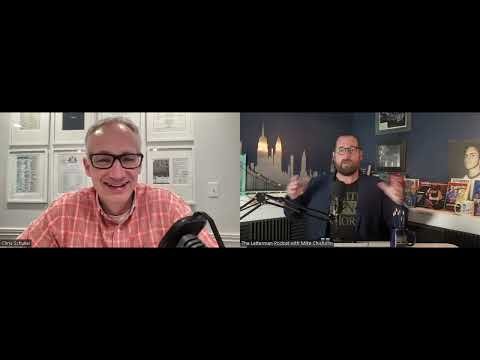
Chris Schukei served as the music coordinator and was a key member of Paul Shaffer's staff from 1993 until 2003. After that he moved back to where he grew up in Nebraska, yet still worked for Late Show remotely, making sure musical acts were organized and properly papered until the show's end in 2015. Chris has an excitable personality, so Lord knows Mike was especially energized for this one as well. The two have a splendid conversation spanning how Chris ended up in New York and how he got the opportunity to work for David Letterman and company, and his entire run.
This is a conversation that has many facets; exploring memories of some of the fantastic musical moments on the show, reminiscence of many of the comedy bits Chris found himself featured in, and even some of the behind the scenes workings of the administration of how musical acts were booked and paid.
The Letterman Podcast is brought to you by Rupert Jee's Hello Deli. For over 30 years Rupert has made soup and sandwich's for the good people of New York, and the hundreds of thousands who made their way to see him from all over the world. He also is the only source that sells official Late Show with David Letterman Merchandise. Go to Hello-deli.com to get yours today!
Please Like, Share, Subscribe to, or leave a positive comment for our show. Its like feeding a puppy, but even better.
Episode Transcript
Read full transcript
all right yeah I am Paul Schaefer I'm will Lee and you are watching The Lettermen podcast welcome once again to the Letterman podcast uh my name is Mike Chisholm I am excited to be here um and uh thank you for everybody who has you know reached out realizing that my city has been on fire this last week and it has it seems like things are calming down I appreciate everybody who has reached out and uh um you know wished for the safety uh and for those who you know wish that the studio would burn down and the show would burn down uh sorry about that but thank you for you know uh not reaching out and telling us as much um this is a fantastic episode sometimes I shoot these intros uh before um the guests and I have a chance to talk and sometimes we shoot it after this one is after and you can kind of see it by the it was fantastic Chris shukai is a wealth of anecdotes and gratefulness and entertainment uh when it comes to uh telling stories about the world of David Letterman and Company um he was Paul's guy he was kind of in many ways Paul's right hand Paul shaffer's right hand for 10 years and actually stayed associated with the show he worked uh from 93 to 2003 so that's when the show basically started at CBS uh and then after 2003 ended up staying on as well just doing it remotely um so so right up to the end right up to the very very end so here's a guy who has created uh a lifelong memory a letter lifelong Letterman memory and and some of his best friends in the whole world are friends from that show we talk about all sorts of stuff in this episode oh my gosh I get a chance to ask about some very very cool moments even though we're building rapport doing all this stuff the next time he comes on I mean there's so many moments I want to ask him about musical moments but uh he does a really really good job of of um allowing kind of my chaotic brain that goes from one place to another to uh he he just he's a pro you can tell he's a pro in every uh you know uh sense of the word uh just really appreciate him so much uh he's back home where he grew up now in Nebraska and he's working for a local school district as a as a fundraiser for um capital projects and I just appreciate where he is coming from he's as the same um you know energy that he brought to late show that you can tell that he's attacking that project and we talked about the episode how people can support some of these projects as well I just he's got a great heart uh a keen mind a great history and uh we're gonna get right to it right now so the Letterman podcast is proud to present Chris shukai Chris shukai is here I am excited about this I have been wanting to have this conversation uh for a long time um Chris thank you so much for taking time out of your schedule to come on the Letterman podcast so happy to be here Mike I've been I've been a fan of the podcast been uh a faithful viewer and uh so uh glad to have my chance to be in there you've gotten some big names and uh I don't know if I can deliver like like they can but uh I'll share what my stories are well um the secret to to my mentality is that you're all big names having you on is just as important uh we just had a we just had a an intern on named Molly sweet she was on for one summer in 91 back at 30 Rock and um it's funny because she inadvertently was responsible for the Smashing Pumpkins getting their very first uh network television debut like this is back in 91.
this is long before you know the you know the they they broke per se okay and and and just that story alone hearing that this gal who was just there for a few months and a conversation that she had in the in the office there uh with some of the people who were you know trying to push this this up and coming band you know it led to in many ways history um so yes having you on is so important to me because if you have been watching the show you know how much I love music and I love the musical segments that late night and late show had I think they're extremely important um and and I want to celebrate those as well so as we get going here uh you started in 93 with late show and what was your uh what was your title while you were there yeah so um it's kind of a weird build up I I come to New York I'm growing up in in central Nebraska went to college in central Nebraska give a shout out to Hastings College great wonderful place um and they have a team uh yeah they're Broncos go Broncos fighting Broncos okay exactly right um and so luckily I had some professors push me into this fellowship program that was sponsored by the international radio and television decision Foundation I think they may be a society now or something but they're still continuing this program which is phenomenal and they took kids from all over the country and brought them to New York City for a summer and so that's how I got to New York City because remember in this was 1993 the internet does not exist um so it seemed how would I even start to know how to get to Manhattan and find a place to live and all of those things just seemed so overwhelming yep but luckily this summer experience really is what it was um had dorms we were at the dorms at NYU and another group of 18 fellow students ready to hit the city and explore and do all of that so I had a base of friends um anyway I had nothing with Letterman at that point but I it was a fortunate summer that we're in the summer between NBC and CBS and I had graduated from college all ready and I decided I don't really have anything else going on let's see what happens I was obsessed with late night like so many others um and now I've been much more willing to share that I mean I want to thank Jimmy Kimmel for his willingness to share all of his obsession as a kid and uh you know and then through podcasts like this and everybody else realizing oh I wasn't and I had a group in high school that loved we loved late night lived for everything so I was a bit obsessed with it and that was the ultimate place to be and you would watch that every night at for me in the central time zone at 11 30 at night and you would say wow that must just be amazing that must be an amazing place so I ended up just sort of randomly trying to make some calls and ended up showing up at 30 Rock they had they had ended the late night but they were still in the offices and doing some moving and I'm gonna drop a lot of Letterman names here because there's a lot of people this is the place Zoe Friedman Susan schreier Miller they were so kind to me as I went up there and then I met with Dave Hamilton and Christine Schomer and I think Jay was there Jay Johnson who had turned but I can't remember which is terrible because Jay went on to be one of my closest friends um and but I I talked with them and I thought well okay let's hope and see what happens um and I ultimately get the call and I'm still in New York and it's like hey yes we'd like to have you and it was really for an internship because I just thought can I get my foot in the door and of course those were the days they weren't paying for our interns or anything like that but luckily I had a little bit of savings and I we were living in Union City New Jersey four people in a one bedroom I had a cot I was just telling the story to somebody else this morning I we had a cot and I had three uh milk crates to my name basically that was it um but I got on and interning and it was for Chris Albers who was working with Paul at that point so Chris had been trying to get some riding opportunities going uh both at late night and ultimately late show but got a job then in October so they Premiere in August of 30.
I get there a week before we're doing Shakedown shows I I sort of know New York but I'm still about as green as it can possibly be right off the central Nebraska proverbial Farm I didn't grow up on a farm but uh felt I mean I had that sort of naive look about me uh with everything in the city and um so Chris gets a job at what at that point was the Jon Stewart MTV show wow John hosted the show on MTV with Howard and yep absolutely yeah and so I don't know if it was just sort of matter of hey who's got a pulse and I'm sitting there in the office but somehow I sort of take over that role and so it's technically assistant to the musical director or assistant to Paul Shaffer is the title for that and um get in there quick I am incredibly unprepared for the job I'm incredibly I mean Not only was it my first full-time job after college it was basically one of my first full-time jobs and I had worked in local television stations in Nebraska so my office etiquette and just knowledge of some professional sort of level standards was not where it really should be and so you will hear me say this all the time God bless Paul Shaffer for his kindness his patience um I'm sure there were times where he was like this kid uh you know and it was at a very stressful time that first fall you know the Nielsen ratings were coming out every day it was that battle there was some pressure Dave was feeling pressure or the entire show was feeling pressure that this had to be successful and for me to sort of be bumbling around that first fall uh and Paul letting me survive through that is was just an act of Grace like no other um there is so much in that introduction that I could pick apart and get into the first thing I gotta ask because you know you know uh you know Sinatra nailed it if I can make it there I can make it anywhere New York obviously I'm I'm the Zack guy in high school too where there was like eight or nine of us that just loved Letterman and and oh man your uh staff favorite moments package that Walter and the team created was fantastic that they because I'm sure that there's all sorts of stuff that they could have cut together and put there I'm so glad they put where you talked about the moment that you took the VHS tape of late night to school to show people I was that guy too I remember my band teacher and I were both huge Letterman fans and huge music fans you know from Canada he's a jazz pianist he loved Paul Schaefer so much and we would spend time during band class talking about bits from the night before of that first season in the Ed Sullivan Theater by the way so these moments in in trying to get the rest of the band the students to to get on board this train and become part of this club and and you you captured it so perfectly what we're trying to do with this show and there are so many people who felt like they were part of that club that now are wanting to get together and talk about these moments because they were so special so important you're one of those guys and uh I I love that so so so you know I'm very grateful you talked about that yeah well I did have that formative experience with late night definitely and you know I mean it was as much as Dave is sort of giving us as sort of this group of friends cues on even how to live uh how to talk to girls uh you know all of those things okay wrestling shoes with khakis that's kind of cool so maybe we try that and and you know it was just sort of all of those things were so formative at that time oh my God I yes absolutely and we're still feeling it some 35 40 years later like we're still feeling it to this day and I just yeah I I Adore that uh we can share that kinship now again to go back to Frank um you know New York obviously has this pull we're we're fans in high school love it very very much we want to be part of the club New York is and it's got the magnet the pull but guys like me western Canada Nebraska you know never been there before you got some training wheels which is great uh but I just am so curious about those first couple months even before you know the the Letterman stuff showed up getting used to New York I mean your eyes must have been wide for you know every single day there must have been new things that just blew your mind yeah incredibly wide and again you know looking back I'm again so grateful that it worked out to to do this through that irts summer experience because there was there were 19 other students ready to go out and explore as well because on my my own I'm a guy that was probably scared of my shadow a little bit and forget about the stories of what New York City had been and this was sort of pre-cleaned up Times Square and yes and things like that so you know it was the the edgier New York uh in all areas of it and all I knew were the stories instead of really living it and so even a a jaunt down the stairs of a Subway was like I thought I was the boldest uh you know I was the bravest person in the world to be doing this and um it was it but it was great and it was fun and you know that energy was just so incredible and he gets sucked into that and then those early days of the show yeah the energy around the theater was phenomenal you know that first night that Premiere night it's satellite trucks from local stations just around the block and then just a monster crowds and that did not let up for several years you know it's just far as just 53rd Street being just mobbed with people just trying to grab shots of of celebrities coming in out of the stage door and things like that and the one thing I tried to do I mean I did realize how lucky I was very very early on and I'd come up out of that Subway or early on I was walking from Port Authority uh on 8th Avenue and um I and you'd get to the theater and you just realized wow this is the center of the universe in some cases and certainly in my world it was this is where it was all happening and I I tried to always save her and really realize wow I get to go inside that's really great and and how special that was um you are articulating these feelings so well the energy because I mean again I try and tell people uh you know her her under 30.
you know people who are over 30 kind of understand it and they they understand the cultural impact but people under 30 don't understand like the cover of Time Magazine like like there was arguably there was no bigger story in entertainment Than The Late Shift than than the time that Johnny announced the retirement all the way up to you know you know yeah like you said several years into late show and people were riveted all of the time talking about it constantly um you know the younger under 30 crowd got kind of a flash of it in 2010 when late shift 2 happened but uh you know it was such an amazing thing and you being able to soak up all that energy being an an incredible Enthusiast of it knowing you were there like present and knowing you were a part of History all around you um I imagine that those first few weeks bumbling not sure all of that you would have you you probably worked so many hours you wouldn't anything to keep that position I assumed like that was uh that was absolutely it and it was yes and uh of course my office space the space in the offices were nicer than my Living Spaces were again I had four people so it wasn't such a bad thing to be at work from from the top of the morning until late late at night uh that actually worked out quite nicely because it was a better place to be um I was also going to mention you know the J versus Dave sort of vibe was it was just a national Obsession yes and I was just mentioning this to somebody earlier this morning but you know in a pre-youtube pre-internet world where you had to either stay up and watch it as it's being broadcast or VHS or DVR and some of that technology was there but you didn't really Dr you wanted to be part of the conversation the next morning and that that sort of focus on that was what that I that's what I miss as much as anything is that Collective sort of broadcast feel that had been part of that and then you had newspapers basically reporting on what Jay did the night before and Dave was doing and they were certainly the New York tabloids the post and the Daily News were you know J versus Dave as much as they could and being part of that sort of energy was for me also just exhilarating I'm living vicariously through you right now because back then my friends and I all wanted to be there so badly um and and you're right we live in this in this world that uh you know the instant streaming all of that the water cooler moment uh is is is is a lot more difficult to achieve it can happen um but it's a very very different deal uh but back then yeah you wanted to be like you said you wanted to be part of that conversation and the moments that would happen did you see what happened on Dave last night no I missed it oh my God what happened like there was a lot of urgency there but again shielded like because it's like okay I've got I've got 100 friends around me and there's six of us that are like this is the most important thing that is happening in the world right now and you're trying to convey that and it's very difficult to do that I used to try that and convey jokes all of the time uh but it was these moments that would happen um you know I mean I'm gonna ask you about Eddie Vedder of course as part of this please please please remind me um I I just I I don't there's one thing in prep that I wanted to make sure that I asked you um it was part of your uh it was part of your staff favorite moment you were the Mulholland and Barry of ampt that line that line made me laugh so hard and that line is what this show is for uh like that is a fantastic line what you were the Mulholland and Barry of yes so of the American Federation of musicians which actually on that table I said music I don't know why I mean in the course of talking with Walter and Barbara I I know the union is the American Federation of musicians and so uh I'm glad I knew I was talking to about an audience of 75 to 100 on that but um I got a big chuckle out of Barbara Gaines so it was all worth it for me it was wonderful to hear her do that and um so yeah so I I'm there from 2000 from sorry 1993 until the very end of 2003.
yes but I was the only one I guess silly enough to really have learned or at some point I needed to learn because I Was preparing the American Federation of music American Federation of Music contracts yep um AF of M is what that was termed uh so and you know we're basically paying scale as a show but I just would put somebody had to put them together and somehow that sort of fell on me and I got that and so I learned the the nuances and the variances if they rehearsed at 11 A.M it's this amount of money if there was a rehearsal at 3 15 then this was the payment for everything so I kind of knew that and nobody else there wanted to learn it and so I when I moved back to Nebraska I realized I could do this remotely and uh so I did until the very last show I continued to be the American Federation of musicians contract preparation person and would get that all set up and take care of all of that so Mulholland and Barry as many people know were comedy writers that were always based in Los Angeles and would facts in jokes all the time and so you'd see these names they were Johnny's writers exactly yes and and but nobody had ever really met them and yeah and again they could have come by the show in New York and I wouldn't have necessarily seen them but I never knew them to ever be physically in existence there at the Ed Sullivan Theater but yet on every listing of monologue jokes and everything else they were there so that was you know they were they were remotely just a big part of the show and so I tried to sort of tie myself in that I was sitting there cranking out AFM contracts remotely similar to Mulholland and Barry you did it right to 2015 I went up to the very last show with the American with the with the contract pieces so you were in New York until 0-3 but associated with the show right to the very end yeah that's correct yeah oh man I'm glad we're making that distinction today um and then also like you talk about the audience of what whatever I want to get into the nooks and crannies of things so like like you talking about the bands these little nuances that fascinates me um like I I I you know I'm that guy it's just a lot about me I guess uh but a band would um okay so I'll get into this now I was planning on getting into it anyway um when a band would come in um the every member of the band would not get paid it was the same amount whether it's a solo artist versus a band coming in right here's how the split went for that so if you did if you performed vocally yes you were paid through aftra which at that time was not combined with sag but it was the American Federation of television and radio artists so if you if you sang or did backing vocals they paid you through aftra if you just performed on an instrumentation then we paid you through the American Federation of musicians right um and and the scales were a little bit different on those but that was sort of how the split went but you're right we never there was never any negotiating with a band no to say it works hey we're gonna give you two thousand dollars for this appearance uh and in the back and forth it was known that if you were appearing and this was for after two that it was just scale and that's I think one of the great traditions of these well not great but one of the traditions of these late night shows going back to I suppose Pat Weaver coming up with The Tonight Show right is that it was a promotional vehicle so we won't pay to have these this Talent on there but we'll just give them the base union scale and thank goodness because it ain't the Super Bowl but some of the moments are just as big you know just as groundbreaking from a right standpoint but yeah it's a Level Playing Field I love that so uh just to just to drive this one last Point into the ground and get people hitting stop if Green Day shows up you got Billy and you got Trey uh get paid the same don't get paid the same even though they're part of the band getting paid this um the after scale was maybe like 40 dollars more okay or I mean it was pretty close but different sources yes and then to make things even more complicated of the musicians that were on the American the AFM contract you'd have to designate a leader even though that wasn't really truly a band leader but they would get double scale and there's so there was all kinds of crazy nuances in that contract um and so again I I at some point learned the booklet and uh knew the nuances so I could kind of get those together and keep it pretty accurate very very neat um I love I did not know that you did it all the way to 15 that's that's uh that's really cool uh you know even after you left you were seeing you know you get a call sheet or whatever whatever it was whatever mechanism it was letting you know who was coming on the show and all of that kind of stuff I assume through Sheila's office or something you'd be yeah email and then Dan feder who kind of took my job over there Dan would keep the the stuff coming from me and then I'd work with the business office so Pat O'Keefe and I think Paul shagaris was still there and stuff too and ultimately we were kind of faxing and emailing and doing some scanning as the technology sort of continued to get better uh we were trying to utilize that a little bit more and yeah I think at one point I might have even been mailing some finished contracts each week but I think luckily the digital technology got good enough fast enough that we could get to the emails and and everything else pretty easy um as the Enthusiast of the show though seeing moments that are coming up that must have excited you one of my very first questions I was gonna ask you now we can kind of get around to it uh you're in Nebraska you know this this uh radio TV Grant or program shows up whatever were you a music fan before you showed up at Letterman uh I was I was uh you know I spent I joke that I didn't have much of a social life so I spent a lot of time listening to the radio and and it was radio I mean uh and I'd go out and buy CDs and um I'm hesitant to always say this because some of my some of the light show Friends know this but I might have had this sort of mobile DJ service when I was in high school in college and we'd go around and play high school dances and uh College dances and so uh you know I knew I was I was living in the top 40 for a while oh my god um but here's the the lessons that I learned though so I thought that I had a pretty good sense of current popular music yes but oh yeah and you get into what I call the Masters World which is Paul's head and his knowledge and and you know goes back to the 60s and of course the Phil Spector sort of wall of sound that nobody in the world to this day can recreate like Paul could in getting that you know making a live piece of this thing that was only really supposed to happen in the studio yes just so phenomenally and so I had a lot of learning still to do I thought when I came in that I knew popular music but boy and his knowledge of just songs and songs that weren't necessarily you know again in the top 40 so it wouldn't have been on that mainstream a and FM that I had been listening to yeah uh there was a lot of learning curve for me from that but boy he he knew all of that I'll tell you this I love talking to people like that um and and we've had will on the show I talked to will quite a bit and I feel like because guys like that are so they're like you say they're so far down the rabbit hole and and I love music to always have loved music to be able to even just hang in a conversation like we had Harvey uh Goldberg on yeah I mean to be able to hang with people like that in conversation there's an element of it though where they are just kind of like a cat playing with a with a rubber ball because their knowledge is so vast and and if they'll even let you talk music with them because they're just so far down and they they know the mechanics of it they know right down to the you know oh this person played on this in the studio for this part like they just are so uh their knowledge is vast being able to even hang with them in a musical conversation is incredible that what an education you got that is amazing yes and some of it trial by fire you know in a good way of course but yeah to to really be there and and watch Paul be able to work and the rest of the band guys be able to work and and then you know it would have been up in the office and sometimes there were so many outside sort of gigs too that we were involved with all the the Hall of Fame shows um those guys that CBS Orchestra group really became the go-to backing band for anything and everything so concert for New York City after 9 11 they were the the house band for that um and and especially the Hall of Fame shows Paul was was very involved in working with kind of what the musical selection should be for the nominees and everything else and to hear him just sort of work that through with the other producers was just amazing to watch him be able to sort of talk about and say this is going to be great on stage in this group this is really represents who the the they were and things like that um I love that we're talking about this uh yeah and for those who who want to know more about that uh Paul's book really does uh shed a lot of light onto the Rock and Roll Hall of Fame stuff the next time I have him on I'm gonna I want to go into that a little bit more and and talk um those amazing moments and I mean again you're just to put the exclamation point on what you're saying that band I mean when you consider the artists that they have worked with and the moments they've been a part of I don't know that there are other like I say this to will the other day I don't know if there are other musicians um on this planet that have been more involved with big artists big moments and also little ones too that people don't even know about necessarily you go and watch Paul and and will perform at The Bitter End with Oz Noy in in New York like all these little moments too I don't know that there are musicians other than those seven or eight that have been involved more than them um it's just incredible and at such a Breakneck speed and then the other part that um this is I've said this many many many times I would love to expand and have a second podcast called live on Letterman because the business end of things especially near the end of of late night TV they weren't even looking at some of these musical moments as they weren't even checking the ratings on them and things like that because taste had spread so much but when you're a music fan and you see all of these amazing moments that are just getting for lack of a better term thrown away because the new show tomorrow night and all of that and it's the last segment these are some really important things some played by extremely important musicians uh musical history in many ways and this is the stuff that I think we need to revisit so so you know I think I've got a brother in that yes yeah and and it's and you talk about the band and it's that range that they were so amazing and you're so right that Breakneck speed and when we would bring in subs or have to have somebody else in I think they were always surprised at wow how fast this comes together and Paul would often say I would hear him say that Saturday Night Live was actually less live in a lot of cases than Letterman because they had gone through a full dress rehearsal and there'd just be much more rehearsal opportunity and late show was just felt live because it was that you had very little time rehearsal wise and then of course anything could happen it was going to go any direction that Dave was going to go and you better be ready for all of that and of course Paul was that's where his genius was was being able to take those areas and Dave goes off on something and be able to just add lib at any time at a moment's notice uh ugly and uh yeah good job on your on your uh staff favorite moments kind of tributing that and I I love that and there's so much meat on that bone um that that's going to be explored you know as as uh you know this letter in retrospective stuff that that is coming out on the official Channel um you know yeah let me because I'm going to add a little more because it really and I I don't I can't just emphasize this enough that Paul had the hardest job in all of Show Business uh because you when you think about it so a he's got to have the greatest tightest band in the world that plays with anybody every time great that's enough for one person that's a full-time thing right there yeah then oh you also need to be able to riff with Dave and play that sidekick role perfectly which is in itself so hard because you either have you've got to know when to sit back and not take the spotlight but also be ready with a incredible line to help save something when things are just not working out very well and his ability to do that night after night after night is Just again so phenomenal and so amazing and then never mind the fact that later on the show behind the show which I love talking I love talking about the show behind the show and they're they're funny they're reluctant to talk about it some of the things that he would say into the microphone that the band would hear only right I love it you never had an earpiece for that did you no I was not on that monitor system so I did not hear all of that but then again think of the logistics so in his ears he's got band talking to him plus Dave's audio that he has to absolutely be and he's got to watch because he you know Dave's peripheral vision was very he was focused on the whole thing so if there was too much movement or if Dave did not feel like Paul was paying attention to the actual show even though he's trying to prep the next break or get something up and going Dave would sometimes call him out on that at times too so he had to walk this very very thin tightrope all the time absolutely so yes yes he's a Canadian hero there he is Paul Schaefer there's everybody I knew you'd have I knew that will gave yeah I brought mine in there as well my man um you know and he is he's up here in Canada too he's revered in so many ways he's an order of Canada uh uh uh recipient which is the highest honor that a civilian can get in Canada um he's just this he's this amazing magnet of of of just electricity and talent and all of these things and so personable and so behind and just yeah he's just a a wonderful wonderful man you got to be technically his assistant for this amount of time um I gotta ask you know your first okay you're going through the Shakedown shows and all that we could spend probably three or four podcasts just talking about the first six months of of of of of uh Late Show uh but like I said in the as we were going back and forth you know our first one is building Rapport and all that we can start digging into the moments later for future episodes but I do want to know what a day was like so if you were there for after the Shakedown shows we start getting a semblance of a schedule and some routine and all of that what time did you show up did the day stay fairly regular um and then we can talk about you know Oddball things she did afterwards or was it simply unpredictable between the hours of 10 a.m and 10 p.m or whatever it was uh a mixture of both okay um I think now in hindsight there were several pieces of it that helped keep the Rhythm and the routine daily which is so vital to just getting that on the air so when we started early on I think the production meeting was at 11 A.M um and so I would be getting in around 10 15 or 10 30.
um and then you know do some odds and ends and stuff like that but then get into the production meeting and I'm notating then everywhere that we need music now obviously each show we know we're going to need bumper songs we know the theme is going to be there but play ons for guests and then the real wild card was what music for comedy segments would we need yeah so I would notate that entire rundown and and make that and you know see where we needed stuff and then I would get on the phone with Paul and again this is pre-cell phone car phones were a thing so if he was driving I could kind of reach him but otherwise you better be ready to go he's he'll call in when he has a chance someplace and you better be ready to go with the information right um and then it was just kind of dealing with some odds and ends but the show then would sort of change as the the comedy segments would come in and Dave like certain things and didn't want certain things and so the music piece would sort of change from that at that point I think they were doing rehearsals at two o'clock for comedy stuff so I'd sort of watch that a little bit and just sort of get a good sense of what would happen yep and then the band would start at 3 45.
so I'd make sure around 3 30 the people were getting in and everybody was where they needed to be and also if there were changes or anything like that throughout the show that needed really extra prep from the band or something I'd be reaching out to them before also again pre-cell phone so a lot of beeper usage um you know just trying to get seven people and and talk to them was a bit of a challenge always at that point but the band rehearsal comedy rehearsal would end at 3 45 and then we'd have the the band would come on and they really only had 15 minutes for the cues portion of it the play ons for guests um any and any of the comedy music that they needed really 15 minutes and then at four o'clock then the feature band would come on right and if the guys were working if the CBS Orchestra was playing with them then they'd be part of that um and sometimes it was just a feature band and then they would go and kind of do stuff but I would then during that four o'clock hour I was the somewhat notorious stopwatch Runner because they were so adamant three and a half three and a half that 330 was a magic time for what that length of song would be and The Producers did not want to budge early on with that that got looser as the show went on but initially it was three and a half and it was like Don't Kill the Messenger sorry but yeah they did not want it to run so I was the stopwatch runner on all of that but four to five and it was a hard out at five o'clock the audience was going to come in and again it was treated like a live broadcast which in essence then that's where I think was so important because you would have never you never felt ready and so you could drag it out until seven o'clock and keep an audience going and whatever so five o'clock doors would open we're done and you got to get ready because it's gonna start and so then the guys would go up and change I would get final sort of Notes From The Producers on changes and get a revised rundown then get the band down by around 5 15 520 um then you know Eddie Brill or you know uh Wally um I can't remember his last name now uh the warm-up comic though whoever was doing the wrong story yeah would do some stuff with the audience and then bring the band out they'd play two songs we do the band first and then bring out Paul separately for the second song so I'd go up and make sure he was ready to go and keep him time queued and everything as well um and then Dave would come out for a short warm-up as well for what was a 5 30 on the dot start yeah and again nobody judging on that we started at 5 30.
and you know it was painful at times because you were scrambling but again in hindsight it was so important to keep that Rhythm and routine because otherwise it does become like I don't know when we're getting out of here I don't know when we're going to be able to do that also the energy of the show like like you felt yeah that that that's where I think a lot of the crackling electricity of Late Show uh came from was was was it's a Big Show and it's happening like it's live and if there are screw-ups we're gonna put the screw-ups in there as much as we can especially if we can massage it or edit it right so it's uh you know so it's comedic um you know and some things don't work out we're gonna celebrate that um and and so yeah I I think yeah that that live aspect of it was was so key for it and um you know I think I think it loosened up maybe a little bit as as editing technology got better yep you know uh certainly in the in the 90s there it was still some hard cuts and you know did the digital technology was just not there so it was a clear it was clear when you saw an edit and I think Dave hated that sort of feel and look and it just it's not what you wanted to see so going live was vital just to eliminate as many of those as you could possibly do yeah um and and then ultimately you could make it it's much more seamless and I think maybe they loosened up again I wasn't there for the tapings uh after 2003 right um but I I think still the spirit was there that we're gonna tape this and it's gonna be live and first time I saw the show live was in 04 and uh I was blown away by watching because you're you're in the audience and you're watching a segment happen and and it's funny both shows that I saw a live uh both shows were after the Rock and Roll Hall of Fame and there was no top 10 list because Dave uh decided to do a you know a monologue about how it was a a travesty that you know the world's most dangerous man of the CBS Orchestra wasn't a member of the Rock and Roll Hall of Fame and it was just it was um you know both shows and and I remember uh the first time I saw him in o4 you have to watch so carefully because it's like okay yeah oh I missed up on my words okay yeah no we're just gonna take it right from there and then he restarts and you don't even realize that that's gonna be a an eight second cut in the show like it is seamless they are going they don't stop um it is uh it is a real impressive piece of machinery and yeah and as that technology got better that became much easier to do and I think Dave got comfortable of like well let's let's not we don't have to have everything be just raw as it was we can we can fix a few things and I think that that feeling got better but again mostly because it was quick uh and the audience did not have to sit there and wait for a extended period of time uh it kept it going and I mean again the temperature of the theater I mean people are shifting like it's it's excitement it's energy I love I love that so much whenever I public speak in in my office um and it drives my it drives my partners crazy IQ keep the office really really low in temperature I'm like you can put a sweater on come on you know if people are falling asleep you know you can't get that back and that's what I I love that logic very very much um okay so I have to go back and again everything that you said there I could probably ask three or four dozen questions just on the little nuances but your day um I guess there's an overarching question because you've got to see the comedy rehearsal as well as the band like you were in the theater during that I was in the theater for a lot of it and then you know it was on a feed throughout the building also so I would have been either in the offices or on the stage depending um and and then but always looking and watching The Comedy feed just to see what changes were happening okay and you and I are similar animals in our adoration for the show would love to see the behind the scenes because the behind the scenes stuff that made it on camera is the stuff that got us so excited you know Jerry Mulligan is just as big of a celebrity as as the biggest movie star did you have to turn your enthusiasm for the show I've talked to a bunch of people who off camera have told me this and it's come up a little bit on the show here I feel like you and I can talk about this did you have to hide your enthusiasm for the show because clearly as a fan you are getting for 10 years the Ultimate Experience because you were there for the not just the taping but the rehearsals and all of that and you were a part of it did you have to turn that part of you down because there is a there is especially with the writers I will out some of the writers who have said this um there was definitely a sentiment of yeah it's cool not to be a fan as much and I don't want to talk about that as much like there's a you know we had to turn that part down in being there even though inside there's a part of them that is jumping up and down for joy for being able to be part of it did that affect you at all or were you able to just kind of keep it that you know I switched it completely off actually I was just I was scared to death of of of overstepping any bounds or anything like that um uh and so I shut it completely off um and and um you know I was enjoying it at the time but I knew that I needed to I just felt like I got to be professional in all of this and oh yeah uh you know you they're big big wonderful celebrities who I've been big fans of and sure you know um but you did not bother them and all of that piece I'll tell you the biggest thing I got one giant regret and this was not even with the show um but Dave when the end when the Emmys would come out and the show was nominated they would take the entire staff fly him out to LA and there was this wonderful dinner at granita in Malibu on Saturday night before the awards and it was so great and this was probably early on so this is probably 94 maybe 1994 I mean September or Emmys time of 1994.
and Johnny Carson stops by granita and has dinner with everybody and you know you know in your head holy cow this is legendary look at that two tables over I've got Johnny Carson and David Letterman just eating and talking and at some point I wonder if they're going to take pictures and so the boulder of the staff got great photos with Dave and Johnny that night I was not that bold uh I still felt relatively new I certainly still felt green and like I'm still on Shaky Ground here possibly so I did not push that but uh if I had one sort of memento from that time that I think that I should have stepped in there I mean there was a line it wouldn't have even been that out of place there were other people that were doing it um but I decided no I better not but that photo with Johnny and Dave would have just been legendary oh that's that's that's incredible now that part I'm gonna stay on this for one more second because that yeah I'm all on the map I'm sorry about that no no no no no no no you're great this is fantastic I love it like this um and I do have you know a basic structure in my head anyway but but but um I do want to stay on this one point for a second because for me too like again as as an enthusiast the big movie stars to me okay that's great especially if it's somebody that I have adoration for or it's a big moment or something but for me when I was watching your staff favorite moments and one of the things that it talked about in it was your position where you got to see the show from so you're kind of sitting right near the Bill Murray doors right near the band there and all of that and you're watching the entire show unfold for you those are the moments where I try and put myself in your shoes where I would be like the the kid would just be like okay yeah I'm being cool I'm part I'm I'm professional all of that but it's like holy crap I can't believe I'm I get to see this every day like never mind you know watching it every night when it shows up at 11 35 you got to see it every single day and and and uh that's the part that I'm just like mind blown by that you had that 10 years of of that experience um it seems like there was a lot of Joy there and and and uh I just I'm I'm grateful for you that you got that you got to enjoy that yeah thank you uh some of my my greatest friends are were part of that show and you know and looking back and again I was so young and so naive and again hadn't really had other workplaces to compare it to but right just the the uh and you're getting such a good sense of of just the so many great great human beings that found themselves here working for that show and to be able to be part of that group uh it was just amazing and and while I did shut off had to shut off the fan piece of it a little bit I did try to as I mentioned savor every day and I did realize that my my casualness really of the Ed Sullivan Theater uh so you were talking about I sort of stayed it was right off from the drum kit and kind of behind will and by the Bill Murray doors but there was a sliding door right behind the drums that would then lead into what was called the airlock which is is where the Green Room was and all of that space there and my ability to just sort of even during the show as needed sneak in and out of there and just have that I just you know I was like hey this is great and then those tunnels between the stage area and the office space too and navigating that basement and being part of that was like wow this is really cool did you yeah you would have ridden the freight elevator wouldn't you um Paul didn't always stay after and go so I didn't always so sometimes Jordan that was George Clark running that thing yeah so uh sometimes he would do that uh other times then I'd I'd March up the stairs to the regular elevators I got to to get back up we were on 11 is where uh our our offices were on the 11th floor so that would have been segment producers are up there the research space is up there the talent Bookers were all in on that floor also okay um where did you spend most of your the majority of the time of your day were you in those offices or were you in the actual theater itself mostly offices and um and and again early on because the phone and and being where the phone was was where I needed to be able to answer the phone because I didn't know when the people who I needed to get information to were going to call I couldn't necessarily get information out to them yeah so the office was really the space for most of that now we had great receptionists and they could get there was a backstage phone and stuff like that but ultimately it was the offices then until rehearsal and then back and forth so early part of that offices and then mid afternoon then down in the stage area Okay um and you're Paul's guy if Paul needs something you're the guy that that helps to execute that and make it happen correct correct but I'm curious to know the bridge that's built between acts that are coming on the show and there's going to be a special moment um you know I have to ask about Eddie I okay we're gonna ask about Eddie Vedder first because yeah I remember being at home you talk about me and my band teacher trying to convert the rest of the band The Eddie Vetter moment is one that is clearest in my memory so you got Dave for I don't know how long it was weeks singing Black and he's singing the the end of black uh Pearl Jam's black and it's you know um it's it's fantastic that he's trying to call these musicians out um and then suddenly Eddie does a walk-on sings with the band playing you know playing Black sings that last part hands the microphone away and then Lee and then leaves and it's this crazy awesome moment I'm curious when that happens how are you involved with that is that yeah I assume you are yes yes uh uh and lots of other people of course you know as well of course um too so we can make that happen let's talk to those people too but yeah I'll talk about kind of the lead up to it so Dave starts to just kind of sing because I have a bit of an embarrassing story about the lead up Dave starts to just kind of sing you know during the monologue and at the desk that and I knew my Pearl Jam songs but I wasn't I couldn't have necessarily and he was just doing that Riff on it and so the CBS Orchestra pretty much learned everything by ear yeah and I know you had Tom on and Tom was doing a ton of arranging as we sort of got into the horns they would scratch out their own stuff but a lot of what happened was still the old school where those guys were just drawing up sometimes we're called Nashville charts with chord progressions and things like that but they were just doing their own stuff so my role in a lot of cases was there was a c player in the back and if you see some of the shows you'll see it sits there it wasn't professional it was a consumer model yep Boombox style sort of thing portable CD player and a lot of what my role was was to have those CDs ready to go so that in the ears they could hear some of that and Paul had gotten that so he could play during the show if he needed a reminder of stuff so Dave starts sort of singing this song and Paul then says can you get that and so I run upstairs we have a whole big giant drawer of CD stuff upstairs and I I run upstairs and I grab that and I so I know the album yeah but I don't know for the life of me what track he's actually what song is that I do not know oh and it's the end of it's the end of black too so you're not necessarily going to see that if you go through all of ten yes I hadn't gone through there so who saves me and you had him on Tommy ruprecht was working research he knew that album backwards and forwards and he luckily guided me on there um but then you're right it's like well where is that point on there and at the beginning Paul's trying to listen and I'm going oh please let's just find this so we can do it so the band had gotten familiar with that song because Dave had been singing it and luckily I figured out which track it was and so they had been sort of comfortable but then at one point and I'm sure this came through Sheila uh and they said hey we're gonna have Eddie vet or come in and do this and so they would try to do a quick rehearsal in those 15 minutes so even for things like that it's still within that very tight window of time and so Eddie would have come out and again I'm going off memory so uh not under oath here if I mistake it to any late show people I'm sorry but this is how my memory is how it happens but we would rehearse that and him coming through and doing all of that just within that tight 15 minutes and kind of work that out in which section and how that's going to go and Eddie here's where you're going to kind of stand and you'll come through those doors and it really is as tight and as quick as that and I think and I feel like that kind of came together if my memory serves right somewhat last minute being the day of or something like that that we didn't we didn't have it on any sort of prep tapes that I would have distributed or anything like that yeah um it was sort of hey this is going to happen this day so be ready and then we had that tight 15 minutes to try to work with him in addition to all the other cues yeah and it came together just as in some ways as hard but yet as simple as that it's such a for those of us uh of those of you out there who want to know a little bit more about this uh on Dawn dealer's I'm almost positive it's on Don giller's channel uh there's a there's um a compilation of Eddie talking about those moments and then he interlaces the moments on The Late Show uh all leading up to it too including like for what seems like weeks uh Dave just singing that riff at the end of black and just singing it and then finally Eddie coming on and and how it led up to it and all that uh including there's a part where Eddie's actually saying I was a fan of the show and I would watch it and then there's this one point where Dave you know starts talking into the camera and saying Eddie Eddie come here and and he said he was at home and it was really freaking him out um yeah in that course of time they're they're as a band just getting white hot you know I mean they've had some success but the the album is now just exploding everywhere and they're just they're they're every place white hot so it was just a great sense of the timing of it was just wonderful as well yeah and I mean that's where you know Dave and Ducks Pearl Jam into the the Rock and Roll Hall of Fame uh you have the Foo Fighters had just broken at that point too and I mean this is where Dave a lot of people who know that Dave loves the Foo Fighters it was because this was a time and and I think I would throw late show and what you guys were doing in on this music had completely changed you know the alternative revolution had come up and and for lack of a better term grunge although that that that term is so um such a whitewashed term it's it's not it wasn't just grunge but music was changing and and and so too was entertainment you guys were a part of that I think I think the two were married to each other you know I think of the moment of you know White Zombie uh um which I think the band actually played on that track with white zombie I do too I have that memory of that yeah yeah and I mean I I remember there being an extra part with Paul playing a keyboard part to it it was like holy cow because the song was great but then when the the band would come in and accent these major types of me you know major uh musical acts that that wouldn't have been popular eight or nine years before maybe even two or three years before because everything was shifting um you were yeah man it was so cool that you were a part of that I feel like I'm starting to get giller's gonna tell me that I'm Chris Farley right now saying oh that was so awesome when but it was so awesome when you had these moments um well the musical pieces you're exactly right and it did change and and you know Sheila was so good at really finding these amazingly amazing acts just before they were breaking and and really pegging that and then you know I but Hal and Jerry they shot it beautifully you know Mike de lug and Harvey Goldberg and The Mute I mean there was a real commitment to making that music segment great when a lot of other shows just don't want to put the investment into it and it becomes a throwaway sort of piece and it was a very vital part of that and I think it all stems from Dave's just love of music and and being there so close to these live acts and and that really being one of the most enjoyable parts of the entire show for him and it all kind of LED from that piece but it was this team that really could put together great great music and then knowing for Sheila that no matter what happened Paul in the band were this amazing backup so again some bands would come on and they could just work independently other times though she knew that she could book anybody and they would make that work and as hip hop got larger and you were working with tracks but Paul's commitment to keeping stuff live and again taking stuff that was only designed to be in the studio and making a live performance whether it was Phil Spector or LL Cool J or other hip-hop acts he just was a master at that oh man I could not agree more and and I I'm A hip-hop guy too so I love watching I love that Dave gets I I call it a pass or whatever you want to call it into the land of hip-hop so many hip-hop artists love him so much my theory it's because he embraced it early on and he let you know he helped promote the genre when the genre was was coming up just like you know these these uh the alternative movement as well um yeah like you think about when the Beastie Boys were on and they came in you know I mean again that's a band that you could pretty easily just have a DJ play the play the track but they never did that I mean sabotage was a little bit different because they you know they were playing their instruments for that song anyway but like when they came and did the uh the entrance from the subway with that yeah was that after your time were you were you there for that uh boy I'm trying to remember and some of these have become so ingrained from the video that I can't remember yeah yeah so I would have to check the date on that I feel like I was there for it but I'm not sure if the dates actually uh actually coincide or not but so good and that willingness to to do that and just be open to what can we take a step further and you know I always tell people late show was the first one to do the outside concerts so the 53rd Street concerts were well before the Today Show and Good Morning America were doing any of those it was it was Dave and Late Show Turning New York City into a playground that then opened and up all the other changes with total requests live I mean there was a time during the 90s when you could just bounce between broadcasts in New York and it was great but you'd be at 53rd and Broadway and see late show and then go down to Total request live and down Broadway and then Good Morning America moved into their space on Broadway and the Today show had the plaza and stuff like that but I think really late show was the predecessor of all of that and I'm sticking to it whether or not that's accurate or not I don't know but I'm holding to that so so okay I'm I the VMAs are like a religious experience for me not so much now as they were back in the day um because one of the things that I loved about that is that they would have these big moments and ninety percent of it 95 of it was no lip syncing especially at the beginning of it um the live musical experience is something that I love when Harvey was on here he talked about how that feeling when you're at a concert there's a certain feeling there that you don't necessarily get on a studio album and his job was to kind of urge the two I loved that analogy and that that description of things and the thing that I love about Dave is his standard is so high um you know when when the best guests that he had are the ones that are preparing for their appearance Two Weeks beforehand you know they're they're shooting something or they've got you know an anecdote or a story or something with them where they're really really thinking about it uh the Musical part of Late Show this is why I want to do live on Letterman because I don't think that point that you just made gets enough credit I think you know the fact that they had a high expectation and we're not just gonna have TV on the radio even though TV on the radio are awesome we're gonna have TV on the radio on the fire escape playing and and it's not a matter of oh yeah are they gonna lip sync how much of it's going to be processed or whatever no no no no we have a very high expectation that the performance is going to be very very good uh you know just Regina Spector just playing with a piano or or James Blake coming on and doing all of his looping live like like really really big stuff and then of course the guys like Paul McCartney on the Marquee and things yeah yeah well I mean um there must have been moments okay now that I know that you were associated with the show officially from 03 to 15 there must have been moments that you would have seen that you're that you would have said oh it'd be cool to be there for that one yeah well McCartney was was probably top of that list yeah you know I mean that he had always been a dream get uh through all the years that I had been there as well and you know the Marquee comedy music everything one of the great things about Late Show 2 was if you could dream it then a lot of cases you could do it uh and I think Rodney Rothman probably talks about that from the comedy standpoint that I gotta get him I have a lot of limitations they were willing to put some budget out for stuff and ultimately you know within reason but ultimately if it seems like a cool thing to do then we're gonna do it and that culture permeated through everything so the Marquee had been sort of this could you perform what would that be like yeah um now the city was willing to close down 53rd Street without a lot of pain but they didn't like to close down Broadway that was God that better be big and that ultimately I think drove sort of hey this better be big and we got to wait to do a big Marquee thing on there uh is because yeah the city was not wanting to shut Broadway all the way down 53rd Street no problem great let's do that but uh if you wanted to shut down Broadway better be something big I this time I remember the market I be smoking cigars uh on the on the Marquee I think that's the first time maybe it was utilized I could be wrong Don well I'm certain correct yeah and they and there was maybe one other yeah we need Dodge on this uh there was maybe one other band even before McCartney did it that may have done that I feel like Rage Against the Machine was someplace that they shut down Broadway but I don't know if that was on the Marquee or under the market um but I don't remember that because ultimately what they had to do as well was bring some other load-bearing yeah to make sure that you could get all of that weight out there and so that became a whole other construction project also um we got to switch over now to to how much you were on screen because you were on screen a lot you had a lot of on-screen appearances uh in in comedy bits and things like that uh I've talked to many of the writers and and asked them you know what was the secret to getting a staff member like which which staff member would you choose and there's all sorts of different uh reasonings and many times random many times it's it's that was the closest person to get in here that kind of a thing um how freaked out were you the first time was it was it on microphone uh you know for a for a a letter segment or something like that where you're on microphone and Dave saying what's your name and you're asking him a question was that the first time you were on camera no thank goodness because who asked for it who asked for it was the most stressful one you could possibly do but as you may have heard me say uh in the in the course of the Union payments it was also the most lucrative absolutely because if you could break five lines then you would get moved up to that principal payment and that was a nice extra amount of money plus you got residuals and all of those things so who asked for it was the best but I think my very first appearance was in the backdrop of the stage and it was just a group of pedestrians walking past Dave behind the desk um and then there was hold on do you call Mom and Dad when that's happening are you like my idea to actually yeah yes yeah yes right um I did because that was super exciting for me you just never knew if you were gonna get it again um and then I think the second one was I they dressed me up in a Domino's Pizza outfit had a stretch limo it must have been Bill Clinton was in New York and hey do we have any shots of him you know the city's been closed down because the president's in town and then cut to me running down 53rd Street behind a stretch limo with a pizza handing that off and then coming back with money and uh that shot so that I thought those are the Bubba days right there that exactly was it and that was all pre-taped uh so you know and I think behind was live but it wasn't super stressful but uh then the who asked for it and things like that uh were able to come but that those were the best because you could get that back and forth with Dave and again the goal was you made up your character so you came up with a fake name a fake story and all of that and I don't know this for sure this was just always in my mind and sort of Late Show lore yeah but Dave wanted to see how good you'd thought through your story and see if he could trip you up and the first couple times it was just nerve-wracking ultimately again again this was the wonderful group of people that were there I just decided hey those that band they're on my side here and look there's Corky a stage manager he wants to he wants me to succeed here also and Dave this is going to be fun and back and forth and uh anyway those those were great uh going back to how you got cast I never knew I never ever knew so thank you to all the writers who put me in uh spots I had no idea why you could never really Lobby for it or campaign to be in it like not liking the show it's kind of that same thing yes you necessarily want to be on camera like yeah yeah if that if they felt there was that desire to be on camera then no you can't do it so you you reluctantly took it and did it but uh I never figured out why or how I was cast I got into a whole routine of rat sort of things there was a New York Post photo from a Dunkin Donuts where a mouse was crawling through the donut piece and so we did this this was another pre-taped bit but we did this one where I'm at Dunkin Donuts employee and Dave wants uh two glazed and a mouse and so I gotta hold up this live mouse and do that and then somehow this never saw air so this is the worst of everything you never get any payment for it was a pre-tape piece but I'm laying in this circle of all of these rats oh my God they're real yeah and that was almost too much I that was the timer I thought uh I don't I don't need to do this and it didn't air no no so there was no payment for it I laid in this disgusting group of rats uh for about 20 minutes and uh got nothing for it that's so funny so the okay let's go The Dominoes uh you're in a Domino's outfit you're chasing after a limo obviously it takes time for you to change into it takes time to set up the shot takes time to so you're also Paul's assistant yes yes how do you what are you missing to do that and and was it just you just got into a rhythm and you knew kind of where people knew where the holes were or was that uh produced on a different day no it was during the afternoon and so it was just letting people know where I was and again the grace of Paul he never would step in when he knew there was an opportunity for additional as sometimes he'd call it you can get some extra bread out of that uh and and he he would never step in the way of those opportunities and he was always Grace and kind uh about letting people do that um obviously I also had some intern help so you know you try to use that piece and then late in the show um we had a second person of in the office also a paid person that was there and that's how Dan Fetter started with me actually he started as an intern but then he was kind of the first second assistant part of that so there was a little more flexibility then to do some of those pieces but you're right early on it was please don't let there be a big thing that happens and uh thank you Paul for letting me be a part of this um okay so we're gonna go back to Paul's kindness now for a second here because uh one of the things that I was just thrilled to learn and just it just hit my heart and every time I think about it it hits my heart Paul would you know you talk about royalties and music and again I want to pick your brain about this stuff too like oh my gosh and we're yeah I can't wait to have you back on I can't wait to talk more about this stuff I I want to pick your brain about uh about the ins and outs of of musical um you know being able to publishing and being able to play tunes and stuff because Paul would sometimes know that artists might be having a bit of a hard time and he would play their music on the show so they would get a payment um you were part of that because you were part of the guy that you were you I assume that these checks that you would would go out weren't just for the live Acts were you part of it for the uh well rights that you would use when I did I did the music clearance list so we were treated as a live show so we the only things we ever sort of pre-cleared were bumper songs right um because then we just had this list of 200 songs that Paul could look at and call out at any time so we would pre-clear those the network CBS actually did the clearance all of the actual payments and stuff like that were handled through CBS but I would then do a cue sheet every night of exactly what was played and the length of time and all of that and then send it over submit that yes okay and then Paul was one of the things that he learned very early through his Saturday Night Live experience was even the smallest song that's on there register that because shows could last for 50 years in repeats and and you want to have that music at least helping to bring some income so he was always great and and sharing that with the band also just for the quick little comedy songs and stuff that would be written yeah we'd and I would help with the registration of that through Paul was in csac s-e-s-a-c was the Performing rights agency that he was involved in but ASCAP BMI and stuff like that so I would also assist with registering those songs in there and getting those attached then to the proper publishing and and composers um so sweet that he would play you know People's music just to get them a a check and things like that I just I I Adore that uh you were part of that process that's just that's that's beautiful it's such a genuine um act of kindness you know for a fellow musician that uh I just I I adored that that's such a great thing um okay so we'll go back to Comedy stuff that that you did uh you worked a lot with Alan Coulter um and and I mean again you know when shecky and I were talking about this show here you know you know he said to me well it's too bad Alan Alan Alan is the kindest man in the world he just talked about how kind Alan was he goes Allen would come on your show 20 times he would do whatever he'd do the voiceover for your show if you wanted he was just such a sweet sweet man and anytime I have an opportunity to talk to somebody who worked with him directly at all I always bring up his name and and you worked with him a lot I did luckily you know again that he became a go-to for so many comedy segments and they just knew that it was going to be gold uh every time and you could write and I I think Carter or Craig or you know I had mentioned about this too um you could write anything and the more ridiculous it was the more he'd commit to it and and and so just to watch that happen and his commitment to all of that but then off of that just the nicest guy in the world would do anything for anybody and as a guy who at one point thought hey maybe voiceovers would be my future uh a guy that could really do it and watching him work and how just brilliant he was with that microphone and getting that sound going was was amazing a master at his craft yeah um and oh I'm gonna note this out right now again one thing I love about this show is the uh the intangible when things just organically kind of connect to each other between guests and things last week we had our boy Chris Harris on um again phenomenal writer awesome guy and and I asked him about some of the things that he he did maybe an extra or two or whatever and he said oh there's one that I'm really really proud of um and it was the it was the 1-800 collect the Saving Private Ryan and and I said to him I said I know it's in Don's tribute to Alan but I pretty I'm almost positive it's also on the uh someone's staff favorite moments or something and then prepping for you it's like yeah that was that you were in that and and uh Chris is very proud of that that was a boy the production on that for that one joke to meld those two things together and and it gets gets more ridiculous and more ridiculous was that the most um uh produced segment that you were that you were a part of yes yes by a long ways actually so I was gonna say that one's then yeah so early on again we're taping Monday through Fridays and then at some point and I can't remember exactly the year 95 maybe 96 we go to two shows on Thursday and using Friday for kind of those pre-tape remote days much had been similar to what that NBC schedule had been absolutely so this was a Friday shoot and we went up to Inwood Park which is very Northern tip of Manhattan yeah and um it is rain cats and dogs and it does not let up and Jerry is in there with Chris Harris ready to go because they this is going to be Spielberg for them and there's pyrotechnics yeah all of this stuff ready to go and meanwhile it just continues to rain and rain and there's not we didn't have trailers or anything like that to escape to we're just standing out there getting poured on I'm carrying I had actually forgotten until Walter put the clip on that I did have those that fake meat that was supposed to be my guts in there so I'm holding on to that as well there's not even a place to sit that any place to set that down and and ultimately we we run through it several times and then all right we're gonna do it with the pyrotechnics here we go and by this point three hours three and a half hours have gone and I just remember I am shaking uncontrollably and I feel like Randy grossack was out there also as a associate director uh but she starts to get worried for me because I mean I'm just shaking uncontrollably um and uh anyway we shot it and it happened but I'd never been that cold and wet to the Bone and there's a there's a shower so Felicia's dressing room was on the seventh floor of the stack in the dressing room area and then there was another just shower that anybody could use and Sue hum I got out of those clothes and Sue says go in there and take a shower and I stood in there under that hot water for about 45 minutes and just tried to but that wasn't even the end of the production that's the only time we ever did audio over dubs so uh between all the pyrotechnics and everything else not all of that audio was extremely clear so we go down into the music room and do audio overdubs which I'd never done before and haven't really done since I don't think uh but yeah that was heavily produced but great and funny and uh just just a you know what an experience yeah oh and it was so good and I'm glad it came up again I'm glad it came up organically talking to Chris about it he was very very proud of it and and it is it was it was fantastic but it was over the top if I do get Jerry on here I really want to get Jerry on here so badly such a nice guy um you know I want to talk to him about that too because I mean my word running from place to place you know all of the things the edit that guy there you want to talk about somebody who had all these hats on he was able to do this stuff to be able to be a director and never leave the studio or the theater in this case is a tremendous thing but to be able to actually go and do extras the way that he did and and some of the other stuff that I mean absolutely again it's jaw dropping what you guys did um I don't think that there is a show that works as hard um as as you guys did back then and and did as well as you did um do you have time for one or two more here do you have yeah sure absolutely okay okay I just want to be very very um I don't want to piss you off because I want you to come back I'm having a blast Pike I'm having a blast thank you um okay so again I'm gonna go back to rehearsals for a second here because you actually got to see Dave I think in his entire run of doing rehearsals live like being actually on the stage and seeing that and I think it stopped after 9 11 I think is when it is when that seems about right or heart surgery I can't remember which one for sure um but it was it was around that time but no he the early ones he was down there um and he would sometimes so if they were going to do a phone call segment yeah we're gonna do something we're gonna call a pay phone or something like that they'd really just want to test the phone at the desk to make sure so he would often do prank calls oh test the okay yes yes and and you know some of the characters that I mean you've probably seen the Tom Snyder stuff when he would call into Tom Snyder and he was the I love that you know the the uh the gravel uh you know haul rocks and gravel and and that sort of thing and he'd call zoos and anyway so you'd get that sort of he'd call pranks to do that sort of thing of course the the catching the football uh you know he'd play catch with Walter was the designated sort of you know football guy and uh they'd play catch on there and then go through the stuff and make sure it was all working it was it was somewhat laid back in there with him you know um and just kind of go through if it was an art card piece you know just making sure that everything was set and he'd sometimes do some editing during that time but it was it was somewhat laid back through most of that or at least now again I I can't speak Jude Brennan Barbara they may have different ideas of how laid-back it was or not I was in and out of there but uh for me it seemed like it was and then you'd walk in and they were testing the phone and Dave's doing a prank call and you thought oh this is just gold yeah I I well okay so this is why because uh I don't know if you watched Conan much or not I I my my golden age of of late night TV was watching Letterman I'm in the west coast so I watch him at 8 30 30 because I get east coast feed so so and then I would watch Ferguson and Conan depending on which order but it didn't matter Conan on his his TBS show they made an entire show where they would put out it was a Friday show or whatever that was just pre-tapes of rehearsal footage of Conan just sitting behind his desk during the rehearsals and stuff and there was so much comedy there because of the laid-back nature of it because the host was screwing around between you know camera shots being set up or or whatever and um and I've heard there were a lot of funny moments um that that you know obviously there's going to be funny moments in rehearsing the show but I heard there were a lot of very very cool moments during the rehearsal that helped Bond you all as a team and create all of these things and isn't it yeah I think you could have easily put that style of show together with Dave no question from those records yeah I was gonna say like as Letterman enthusiasts how great would that be I mean I want to see some of this Cutting Room floor stuff the extras that never made it but that energy there when Dave was down in rehearsal uh that must have been a lot of fun to be a part of yeah and and of course you know you've heard this from lots of people it was a volume industry it was a volume show I mean it was a lot of Comedy material each day that would then get you know narrowed down to a little teeny tiny funnel yeah exactly so there was always some great stuff that hit the comedy you know that hit The Cutting Room floor um just all kinds of yeah pieces in there and then just the ad-lib sort of waiting around for other technical stuff to happen let's do something funny sort of pieces that would happen during that space too um Okay I uh I want to do a commercial for Rupert first and then I've got a couple more questions uh that's that's kind of what I have in my head to kind of finish off here thank you so much for being so generous with your time this has been so much fun yeah absolutely but uh so let's Okay so the the thing after the commercial for Rupert um are there any moments that you had kind of thought about that you wanted to talk about today here and then I've got a couple questions for you to kind of take us out but uh the Letterman podcast has we have one sponsor we have one sponsor only and that is Rupert G in the hello Deli um go to Hello deli.com if you want to get yourself a late show mug a late show t-shirt hat Rupert merchandise get your Rupert merchandise I know what's the sale is happening okay so and I know that the deli is going to be uh changed forever when the when the sale happens I think I can say that out loud without without getting anybody in trouble um so go to Hello deli.com and grab your stuff because this is one of those things where three or four years from now people are gonna be saying well you know what I wish I would have gotten that Rupert t-shirt or that late show t-shirt while it was there hello deli.com uh you were there 10 years and I mean I know for a fact that you just love Rupert and may um they're going away do you want to say congratulations they watched the show here so yes absolutely to both of them who were so wonderful to me and you talk about you know I mentioned I'm a Kid Fresh from the Midwest and I don't know anybody and I don't know anything and Rupert and may were both so kind and I knew that was just literally an oasis for me down there and it was lunch every single day and the only time that I didn't there was a another restaurant called Ranch one over on Broadway that sometimes I would grab but Rupert introduced me to Noki I had no I mean I come from potato pasta I don't know anything about that he had that as a special I ate a ton of Schaefers that was my go-to sandwich I love the Shafer too yeah yes so good and of course it's not a sandwich Paul always jokes that actually Paul would eat uh but Rupert and May so kind always just so iconic and then my Christmas gift to the staff several years were hello Deli gift certificates for a free sandwich that I talked to Rupert into letting me put together and I said here's everybody who got it because I was scared to death somebody was going to try to counterfeit it on him or something like that and we made this I don't even know I mean Walter might have helped me with this but I made basically a dollar bill with Rupert's face on there and that was the gift certificate that I gave as a staff Christmas gift so Rupert and may were such an important part of my time in New York I love them both dearly uh absolutely and I wish them both the best of luck and uh yeah I just I appreciate them so so so much and again Rupert again it's like God took the word kind and made it into a human I've said that many times but it's yes yes I just love him so much and boy you're the professional the Segway uh my word I love that okay so I'm a collector of things I that's just what I do when I get into something I collect things around it um I've been fortunate enough with this Letterman podcast to now be really really have some cool stuff uh I now have something on the list that I would like though one of those gift certificates with Rupert's face as a dollar bill I will see if I can assign it yes and I don't know if you can see behind me my wife uh is part of our interior decorating has some menus up and I don't think you can see this but this is hello Deli menu right behind me so Rupert's face is is right there as we've been talking he's been right on our shoulder oh that's incredible um my one of my questions was gonna be did you keep anything from the show uh do you have anything with you now where in that from the show is mementos I have a couple things that um I've got the double eraser uh pencil of course I got one and this is one of my most we actually we've had some fires here recently uh in Kelowna and it looked like we were gonna have to evacuate this is one of the things that I grabbed actually yeah and that's in the ready pack exactly the go pack yeah you want to have it I love it um uh the first ticket from that August 30th 1993 show I have with me and then I just stumbled across this is the script binder that I would have every single day uh and you know it's basically just a three ring binder but uh this is where the scripts would go and other notes and I'd carry all kinds of things and there were still some things in there so I don't know if I just had put it in a cabinet but it had the five types of meat for know your cuts of meat that I think I would carry at all times and then I'd give that to Paul because he was always going to get dragged into can you tell me the five cuts of me so one of the things I would do is try to have that ready for him so just for the viewers out there now it's beef veal lamb pork and of course variety meats that were part of know your cuts of meat um and then I had a list in there of everybody who had done the cape uh oh Nathan Lane Ted Koppel Trump uh John Goodman Justin Timberlake Jimmy Fallon uh Nancy agostini uh Jude Brennan uh Hal Gurney Chris Elliott Andrea Nadine did it uh Kiva the grinder girl uh did it one time John Mcenroe Bill Murray of course James Brown Don Rickles uh Solomon Burke which is really between James Brown and Solomon Burke that was sort of the the driving force of of the uh of the cape segment which again is it's really started organically Paul just started adding the Solomon Burke piece in as a bumper song and then it kind of grew as just a fun thing to do during the commercial breaks and I think Dave was so Charmed by it that let's make that always a part of that segment and uh Jill Lederman still has I think nightmares about it because it was just on that double taping day and when viewer mail was going on there was a ton of celebrities and stuff and it was just one more celebrity that she had to book for something and get coordinated and everything else and uh after I did the staff memories you wrote to me and she goes thanks for reminding me of uh of the cape and the nightmares that I had around that but what a great great segment the uh yeah I gotta ask that you led to this one now too I asked this I asked this a lot more now uh because it seems like it's a pretty common thing you still dream about it do you get the dreams of the of the the Panic of the show I haven't for a while but I did I did and I did plenty and it would be a lot of times I'd fall asleep on the stage or something like that and then the audience was in or uh Paul's trying to talk to me but I can't get over to where he needs stuff delivered or something like that and there was a lot of yes angsty sleeps uh from some of that time yep um I just I'm speaking of time I'm so I'm so grateful uh that you've been so generous with yours um have you kept up with Dave have you kept up with my next guest and all of that stuff um oh yeah watch I watch almost everything that he does yes definitely and and doing that um I haven't talked to him very much um at all um Paul and I trade shocker holy cow yeah no I meant I meant have you kept up with the content coming out uh yes special the YouTube special must have given you a very you I I imagine Chris you would have a very unique uh uh um opinion of the YouTube special well I I again I thought it was great I was not there during the week-long time that they were there no no um but Late Show staff members will know that I had this big giant Joshua Tree poster in my office um hanging there for years and years and years so um just that sort of all of those worlds colliding sort of piece was phenomenal I could not agree more seeing Dave um watch at the edge you know play the beginning of the where the streets have no name and say okay play it again will you like just sitting there watching him and he plays the intro to it it was just it was a I thought it was a magical thing and watching Dave have these mashups with these artists now that he has you know it's cool watching him with Billy eilish too that's fantastic as well but seeing him talk to Rick Rubin uh you know Jay-Z of course and some of these you know YouTube you know these legendary musical acts who have kind of all they all kind of came up together and the perspective only exists because of the Legacy and and and watching them have this uh magical you know him being strong enough he's David Letterman I think I swear to God he could say anything to anybody uh because of just his forthrightness his curiosity all these things being able to say to Bono um you know so did you ever embarrass the band with any of your activism and things like that or some of your your for lack of a better term your antics that was just mind-blowing to me um and as a fan yeah okay so you're a fan of you two as well watching those Worlds Collide is a is a tremendous thing if there's anybody that you would like to see Dave uh talk to in this current incarnation of what he's doing the longer form stuff is there anybody that you've thought of that you uh you'd like to see him wow great question um well I'll I'll keep along with the theme a little bit so you put a Bruce Springsteen a a Paul McCartney uh into that mix and let that those great interview skills talk about all of that I think would just be incredible yeah could not agree more uh was there anything else that you would prepare that you had thought of that you wanted to talk about today on your first your first appearance on uh well you're you're kind you're kind um no I this has been really so much fun and and I think you know again for me the entire experience there and the chance to be with just these amazing humans um and and share this uh wonderful experience that again could be stressful at times uh this level of amazing Perfection and and and product that really was needed to be there but this group effort that it it took day after day after day and and the wonderful people that were a part of that I I'm so grateful to have had that opportunity and I continue to be grateful to have the friendships that I have from that to this day it pours out of you I appreciate it let's finish off what are you doing now what have you done since 2015 and and uh are you still the Mulholland and Barry for somebody when it comes no no I'm not actually I I think maybe I sent an email in the Colbert times to see if they were interested but they had their own and that was going to work out fine so no more I couldn't tell you what scale is for a uh a two-hour rehearsal and a one-hour broadcast time anymore I've lost all of that I'd have to go refresh myself for that no I came back I'm living back in central Nebraska a parent of two kids and I worked in higher education actually for a while I was uh dean of admissions at my alma mater at Hastings College for a number of Broncos right on yes go Broncos and uh now have switched over I'm doing fundraising for the Hastings public schools and their foundation so we work we've got a big Elementary playground project that we're doing now but in addition to what they can do within the budget stuff we find wonderful donors to help the students of Hastings public schools and to do additional wonderful things for them that's fantastic is there uh is there a website is there any shout outs that we can do to help you with yours thank you for that yes hastingspublicschools.org Foundation we'll get you there and so yes if anybody feels moved to want to philanthropically help the wonderful students of Hastings Nebraska we would be glad to do that there's a wonderful online giving Forum there and information about what we do fantastic um Chris I appreciate you so very very much I'll uh I'll do the outro here and then we'll say our goodbye privately um this is why we do the show everybody um and again uh knowing someone said to me before Chris and I got together that our positive energies are going to converge very very very well uh yeah absolutely uh I'm fascinated by this thank you to everybody who has given support so far for the Lettermen podcast we appreciate it very very much once again I've had a lot of kind people reach out about uh how how my city is doing after these wildfires and stuff thank you for all those kind words we really appreciate that things are getting better and better and better and uh so thank you for that uh this has been another episode of the Letterman podcast with Mike Chisholm coincidentally I am Mike Chisholm thank you and good night overcoat and Underpants