The Letterman Podcast · Episode 70
Craig Thomas wrote Alan Kalter’s descent into madness and lived to tell Mike about it
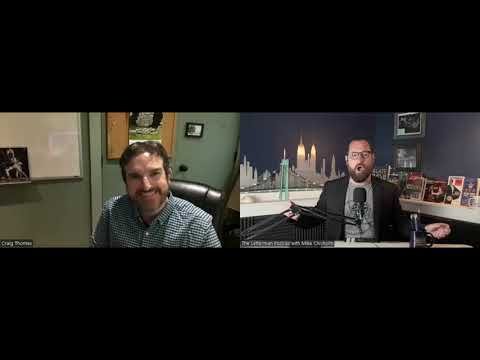
Craig Thomas, along with his writing partner Carter Bays, are known in some circles as the King's of the CBS mailbag. For years they wrote dozens and dozens of mailbag bits on Late Show with David Letterman before moving on to create one of the most successful situation comedy's of the modern era, 'How I Met Your Mother.' They also happened to write one of our host's favorite Letterman moments of all time, featuring Late Show announcer, Alan Kalter. In this episode, Craig and Mike discuss some of Craig's favorite moments, the process he and Carter had working for Late Show, collaborating with Paul Shaffer, and the value of writing in the entertainment business.
As always, The Letterman Podcast is brought you to you by Rupert Jee's Hello Deli. Nestled within the womb of the Ed Sullivan Theater, the Hello Deli has been making soup and sandwiches for residents and tourists of New York for over 30 years. Its also the only place to purchase official Late Show with David Letterman merchandise. Go to hello-deli.com and get yours before its too late. As we all know, its so much fun to 'get yours.'
Please Like, Share, Subscribe to and say nice things about The Letterman Podcast. You can also interact with our rapidly growing community on The Facebook.
Episode Transcript
Read full transcript
hi this is Rupert G from the hello Deli and you're currently watching The Lettermen podcast welcome once again to the Letterman podcast we have been on a roll lately and as stoked as I was from the very first awkward couple of episodes that we put out I am even more excited about this show and the conversations that are happening I mean bucket list items are getting just checked off left and right and center and all of that crap it's been a lot of fun uh still reeling from the uh the anniversary week the episodes with Morty just just fantastic uh time hosting the Lettermen podcast thank you very much I'm I'm never not going to say I'm grateful for this thing I'm so grateful for it I'm grateful for everybody who's jumping on and we've had a lot of during the anniversary week during the May 20th week also Morty's birthday uh we've had a lot of responses I've had a lot of people reaching out to me and I just want to say thank you to everybody uh come on in join the Facebook group let's do a lot of this stuff publicly where we can all bounce off each other and learn from each other but at the same time the people who do reach out to me personally thank you so so so much for that uh it's delightful okay a few weeks ago we had Carter Bays Carter Bays uh was part of a writing team for The Late Show with David Letterman and today we've got his partner Craig Thomas uh these two guys are fantastic they both have this uh I I really enjoyed interviewing them as close or having a conversation with them I should say it's not so much an interview show it's a conversation show where we go back and forth and I like it better that way because then it gives me an excuse to you know to blather on like a blowhard um in an interview it's not like that hey [ __ ] I love I love I love conversing with people and I love conversing with people about David Letterman now it's been fun talking to these two so close to each other because they were writing Partners in everything that they did from college all the way to the current day with uh you know obviously the co-creators and show Runners of How I Met Your Mother phenomenal run um I love the contrast talking to Carter and then today talking to Craig the two uh points of view that come into this I can see I can certainly see why they complement each other uh but very different episodes very different episodes um and and just exciting stuff uh Craig and I talk about a lot of things now I I've been thinking about what my top 10 favorite moments are in Letterman history I've been thinking about that for a variety of reasons there's a couple of us behind the scenes who are coming up with our top 10 lists and maybe one day we can share those with everybody but in my top 10 list in definitely there's a moment that is it's in the top three for sure and depending on the day it's my number one moment my very very very favorite moment in all of the Late Show with David Letterman uh uh gosh the body of work is what we call it but the the entire run on both shows there's this one moment with Alan Coulter and it is mind-blowing to me I've talked for those of you who have been early adopters of the show uh you've heard me talk about it before I've actually asked writers about this moment before and they've kind of pointed me in the direction of other writers I found the guy Greg and Carter did this and Craig and I talk about this moment a lot so Craig and Carter uh also just had recently their uh top fan uh top moments staff favorite moments on the official Letterman Channel um Walter put up a wonderful compilation between both of them of these moments and they played this segment I believe in its entirety uh with with white rabbit and everything I'm not sure if they had to get clearances on that or what but holy cow it is one of my very favorite moments it's Alan coulter's descent into madness this guy helped write it and produce it and and um Craig has this fantastic conversation and we talk about this moment but we use it in a much broader way to talk about how writers particularly uh writers of things like the mailbag uh where there would be segments and how their job was to kind of sort of be miniature showrunners they would they would they would take these Concepts and from from the beginning and and and and literally Shepherd them all the way to when they were ready to Air and um we talk about a lot of stuff uh we talk about How I Met Your Mother a little bit and and and where the inspiration for the bar came from in How I Met Your Mother and and we have a beautiful bonding moment over cheers and then he tells me uh about the bar that the writers used to go to and how they base that bar on for the show uh How I Met Your Mother and and just anyway all sorts of great stuff I'm gonna stop right now Craig Thomas is fantastic we also talk about the writers because at the time of this recording the writers are on strike right now um and so we talk a little bit about that as well and many many other things I'm very excited about this um I can't wait to maybe have them both on uh on a future episode uh both Craig and Carter but for now the Letterman podcast is a proud to present Craig Thomas of all of that of all of that material till now you were you were cherry picking and searching for it a needle in a haystack and there was a lot of it but it wasn't organized and curated so I I think it's great that they're doing that in the same way it's good that you're doing this I swear to God Craig that's where part of my uh uh childlike delusion comes from is that is is that it started around the same time I started around that time and um and it would be so cool and again when I started it it was 100 percent uh authentic in the sense of I don't want negative stuff I want it to be positive I want to be a celebration of the greatest body of broadcasting work in history so it was automatically kind of on brand with what pants is doing and and uh uh well and let's talk about this a little bit because Walter and I do go back and forth um sometimes and there's nothing ever really coordinated other than I've had a couple moments that I've wanted to see on the channel where I've kind of messaged them and said hey would you mind throwing this up because I just love it and he's like yeah we'll put it up as a fan Friday or whatever which is great but I love some of the um unintentional synergies that have happened and there's one that's involving you and and Carter because we had you we had Carter on I should say before your favorite staff favorite moments went up um I'm sure you would see Walter had shot it with you guys or whatever but I didn't know what was going to be in it uh I had Carter on and then in between having Carter and you on your staff favorite moments went up it just went up a little while ago here uh I can't wait to dive in to this with you because one of my very favorite moments of all time I've actually taught I think I talked to Grossman and ellerberg or or weiner about about these this one moment with Alan Coulter Which is my if you had to tie me down and ask me about my favorite Late Show moment that didn't involve Dave it would probably be this one moment and it turns out you guys wrote it um so I gotta ask you this first and foremost I mean you're How I Met Your Mother is such a um you know it's it's it's a huge huge part of of sitcom history certainly of modern CBS sitcom history that kind of thing you get questions about that all the time you're famous for that I want to know if it's um I want to get into if if this is something where you feel like you're a little Typecast because of it like does it overshadow everything um now that your favorite moments segment has come out have people come out of the woodwork and been asking you about Letterman stuff again yeah I mean yeah so many thoughts all at once I know I'm sorry brother no no it's great it's great and I I'll send you the blurb I just said something nice about your podcast off the air off the air and now that we're on the air by air I mean you're recording a podcast yeah I'll say I I think it's great that you're doing this I think it's great to have like a curated thoughtful conversation about this like almost three decades of material I grew up watching the old show watching The Late Night show in the 80s into the early 90s that was like pivotal to me pivotal formative um it hit me at exactly the right age it's like a great finding your favorite band you know is like it was as defining as that and it changed my life it changed my life watching that show staying up till 12 30 and being tired at High School in high school the next morning but it being completely worth it because that kind of was more valuable to me in some ways was um so that's that thank you for doing for doing what you're doing and keeping these memories alive but uh but yeah in terms of my memories my connection How I Met Your Mother in late show the biggest connection that comes to mind there is the the years we were writing about on How I Met Your Mother the idea of being in your 20s living in New York City going out to bars feeling a little lost but having your friend group and everyone's kind of trying to find their way those years for me and Carter were spent writing for Late Show with David Letterman in New York City the bar and How I Met Your Mother it's it's called McLaren's named after the last name of our assistant Carl McLaren at the time it was it was our assistant and became our dear friend yeah one of the reasons we named it after him not to diminish naming it after him because he's a wonderful guy is we also wanted it to be a name like that a good kind of Irish Pub name because the actual bar it was based on in New York City was McGee's which is the pub on 55th Street all the Lettermen Crew The Late Show with David Letterman crew would go to and drink on Thursday night after the double taping we would take the Thursday night show yeah in the afternoon uh and then the Friday Night Show and kind of the evening two shows and everybody would go blow off steam getting drunk and geez and you're drinking with Pat and Kenny and all the writers and I mean we'd be packed into that bar every Thursday night and that and we if you watch How I Met Your Mother and then you visit McGee's which does still exist a lot of the Irish pubs in New York have gone out of business and I I like to think that How I Met Your Mother has helped keep this one open oh that's cool big McGee's on 55th between uh Broadway and 8th Avenue still to this day and it's come a little bit about How I Met Your Mother theme bar uh and you know we would do that that was those were our 20s we would go there and and party and like and hang out and if you look at the design of that bar to this day it has these red booths it has these green Walls it has these big murals up on the wall all of those touches we stole for the set design of How I Met Your Mother we we copied the booths we copied the vibe the green color some of the lamps we uh we and we said to the set designer here's here's one of many strange connections between the Lettermen world and the How I Met Your Mother world we hired our set designer Steve Olsen who won multiple Emmys set designing production designing How I Met Your Mother and uh he it turned out had lived right over I don't know if it was literally like next door to the building that was over the Ed Sullivan Theater but on one of those let's meet the neighbors early shows right in like 1993.
yep they've sent the camera up all right let's go into the building next door and we'll go and knock on somebody's apartment door door opens it's Steve Olson oh my gosh that's designer our production designer for How I Met Your Mother we only discovered this like after we had already met Steve and found in love with him and wanted to hire him because of his amazing work and portfolio it turned out he had been on the air as one of the let's meet the neighbors segments and in that segment David said all right you know they chit-chatted with him at his front door and like came into his apartment he said come on down here Steve runs down gets into the Ed Sullivan Theater and sits I believe with Dave and his area this is Steve Austin our neighbor everybody and I think Steve to this day has like an awesome picture of him sitting on the guest chair with Dave so when we met Steve Olson and we're looking to hire a Scenic designer for How I Met Your Mother we said I know you probably won't know this there's a lot of bars in New York City but there's this bar called McGee's on 55th Street he's like what are you talking about that used to be my local bar oh my God all the time and I I you know and also by the way I was on the air uh as as a let's meet the neighbors guest on Letterman so we knew right away we had this kind of like mystical weird connection to to Steve Olson our set designer who went on to win I think like three Emmys for production design on how much your mother and there's just this weird overlap of the Lettermen years and then How I Met Your Mother years there and it's not it is not the only one of those I have to have Steve on is Steve still around he's still uh he's still yeah I gotta have him on I gotta hear that story I've had probably more contact with Dave than 90 of the writers who wrote for Dave um that is fantastic yeah it's still random well and I want to talk about the bar for a second here because you you bring up and we're not gonna make this How I Met Your Mother uh podcast obviously that you you've done lots of press and things about that but at the end of the day the two are related and I love how we've started this show talking about that um I I just want to talk about you and I growing up a very similar experience uh when it comes to the reverence for Dave and Company and and and and and how that uh changed our created Pathways in our minds and I always I always talk about how I am the odd human that I am in an adult as an adult because of that show because of the formative years at 12 30 that it's just the perfect Synergy that type of humor for that time of night uh it was different when you watched it at night than when you watched it the next day on the uh you know recorded it or whatever it was different watching it in real time um but that being said a cultural phenomenon at that point was cheers and you would hear people who would make pilgrimages to go see the Cheers bar in Boston and come home disappointed because the experience wasn't the sign was there and you get so excited you go down under the street and and then suddenly it's like oh no this isn't no and then upstairs they ended up doing something that was very similar but it was way later on um now that being said you guys inadvertently I would assume just organically you talk about these amazing natural kind of uh uh uh Destiny type moments you guys created from your experience this iconic place in New York that's still around and you showed it on TV and give these people this experience I I assume cheers had the same you have the same reverence for cheers that I have or or at least the respect for it as a franchise isn't that interesting how you've created that with your sitcom it blows my mind uh cheers is my all-time favorite sitcom all-time favorite sitcom by far by a mile like I I'd have to think about what is second place compared to Cheers um when we were launching how much mother our dream was that we would we we said TV needs another great bar it's been a minute we're already gonna get compared to friends if we succeed it can't be anything like a coffee shop we want we all hang out at bars okay New Yorkers in their 20s hang out at bars it's not a coffee shop in our in our lives we said let's make it real let's make it a bar and we wanted it to have that feeling of that kind of like dark inviting like cheers just like the look and feel of the Cheers bar is like heaven to me yeah it's like home it became I mean it and I wanted how we wanted how much weather to feel that way to have that kind of dark the sort of greenish brownish kind of like it looks a little bit like a nice dark whiskey or a scotch you know it has that color kind of that Amber inviting kind of warm tone so we slightly classy slightly classy and and very east coast and dark yeah and we wanted we wanted it to feel like that we didn't want it to be some bright over lit like no it's a dark inviting warm New York Pub Irish Pub and that's what McGee's was like and uh you know it it pleases me to no end two things one that that How I Met Your Mother had a bar that felt that way to people the way that cheers felt that way to me yeah that's that blows my mind and fans you say that to us sometimes and I feel like honored by that comparison but another just in that this is a letterman podcast not a how I met from other podcasts the other thing that uh really pleases me is like it's such a great Venn diagram overlap of these two of the most important things I've ever done in my life and will ever do in my life which is being at writing for Dave Letterman for four and a half years yeah and then creating how much your mother and McGee's is this a great Venn diagram overlap of those two those two worlds because that is the bar we base the bar on if you go in and see those murals and those big murals that were on the wall and how much mother bar one of them's like 12 feet long and there's another one I mean you have to sort of like go back and watch it and notice it like oh yeah there's a huge long 12 foot mural in the back of the how much mother bar and then kind of a smaller like five or six foot one both of those pieces are up here are up on the walls in my apartment in Tribeca right now that I'm talking to one of them is over our we have a piano our kids sit and play piano at they're sitting under one of the murals and the other murals in my bedroom and uh it's me those those exist because Carter and I said to Steve Olsen you know those murals and McGee's he goes yup I drank beers under him many nights we said we're gonna rip off that and we're gonna create something like that and he said yep I know exactly what to do and he made those and they're up in my apartment to this day on the walls and like those those represent this great connection between how much mother and Late Show in in my life and uh so yeah it's it's pretty awesome to think about that way uh incredible I've got two questions that come off that the first one is going to be um okay so you got those murals from from How I Met Your Mother obviously different situation uh because you know when you left late show you went to kind of make your bones and all that once you made your bones these are the types of things you can end up with as souvenirs from the show uh the question is did you uh did you keep anything from Late Show uh so I'm gonna ask you that and then I want to ask you about these nights these Thursday nights or whatever nights you ended up at McGee's did any fans of of Lettermen or enthusiasts of David Letterman no wait a second like there's a pattern here the writers would keep from Letterman would show up here and did anybody ever want to come out and party with the writers I know I certainly would have had I known a piece of information like that and been in New York at the time but did you save anything from uh from Late Show first of all no one ever wants to party with the writers they're like writers wait there's writers I didn't know writers exist I thought Dave was making all that up off the top of his head uh no and you I wrote there from 97 to O2 yeah so the internet was not as much of a thing it makes me sound so old to say but of course now you could look up anything you find out what's the How I Met Your Mother bar what's this bar it was a local bar up there so you had a lot of people just like from the area and people that worked maybe people like crew guys from other Broadway shows yeah you got some Lettermen just very down and dirty it was very like you had to know it you know that that was just the Letterman bar and it felt like we took it over every Thursday night like you looked around and there was almost nobody that hadn't just worked on the show maybe every once in a while we we had somebody pop in and go hey that's Pat and Kenny or someone would shut us up a little but not not that much and that now to McGee's it's like very much like How I Met Your Mother tourist destination stopped you go in there this is that bar uh it was The Late Show bar before it was the How I Met Your Mother bar and uh I think it was much more of a secret back then you had to know but uh no you know we left late show in 2002 and I think we just you know took personal ads and ends from there we didn't it wasn't like the end of a run we weren't sitting here like let's steal this set item or that item so I don't really have anything like from that but you know what I do have that that's literally on my desk right now that I was just looking at and thinking about talking to you this is that late night with David Letterman writer's book that was like do you have other people talked about this some this is I'm doing no not on the show I know exactly yeah no no let's talk about it uh I was looking through this because in talking to you I was thinking about you know what the old show meant to me too what the Late Night show meant to be and for people that aren't watching this video I'm holding up the Late Night with David Letterman the book from the 80s that I got I was trying to figure out how I got this book when I was a teenager and I could I was actually asked my mother recently I said did you get me this book do you know who gave me this book or did I somehow was I somehow clever enough as a teenager in the 1980s yeah find a way to get this book because I don't remember it the reason that point feels important is it's like a life-altering thing I was gonna give my mother the credit I was like if you got that book for me somehow for my birthday this like changed my life because the book is a collection of like written material by the late night writers right and sort of some it's stuff that aired but it's also like funny essays that the writers wrote each writer that was on staff wrote a little personal essay and it just it communicated to me the existence of writers like I I would study the credits and look at these names yes as an aspiring teenage writer wanting to write stuff like this yep and uh so that book if you're asking me about like cherished items related to Letterman that book was the Holy Grail to me that book as a teenager studying every word of that book and seeing it gave you the idea too that like this material on TV could be in hard copy form right there was a descriptive form yep so if you page through that book some of it's just they took the bits off of TV and sort of put in a book for them some of it they probably wrote new copy to sort of frame pieces they probably added stuff um and my God it was like it was the Bible to me it was just one of those things where it was just like it taught me comedy right it's probably the first thing that really taught me comedy writing I remember I got that I got like a Monty Python script book and like a faulty Tower script book and those things as a teenager um are what made me understand what that job is what even that it existed that you could write stuff like that uh it wasn't like I was Finding scripts of Cheers on the Internet or something there was no internet no I would have loved to have gotten that stuff but I didn't so these were some of the first like words on paper that I ever studied that communicated the idea of comedy writing to me and so that is one of my most cherished Letterman related items but I've had it for since I'm probably 15 or something Greg I I'm obviously I'm going to ask you to come back on here and and talk about this stuff because because clearly we are uh we're Kindred in the sense of this I remember getting my first Kevin Smith script uh bootlegged from a from a local comic book shop in Vancouver and I I can remember I know what you're talking about here reverence for writers the reason that I'm precursing it with this is let's talk a little bit about at the current uh time while we are recording this um we're seeing another writer strike and it seems like every decade uh or so since I've been a little boy I remember seeing these writer strikes that would come up from time to time as the times change um you know the protection of how precious what Writers Do is uh I love that you kind of segued into that right now um the wgas on strike I'm going to New York in a couple weeks I plan on uh finding a bunch of old Letterman writers and picketing with them for one day uh if possible because it's really really important um it's always unprecedented times when things like this happen so we can kind of set things up where writers can be free to have a career in writing and it isn't something that you have to be you know wealthy or independently you know making money doing something else to be able to do uh to be able to to do this in my opinion gift that comes from within that gets inspired from the universe you talk about these series events for for you that led you to becoming a writer uh reverence for writers I just am so supportive of what's going on right now uh how goes the uh how goes the strike it's funny when it's I mean I think the strike is about issues that are existential to to the job of being a TV writer and a movie writer um there was no avoiding this strike and it will set the tone of what this career is for like the Next Generation yes and my my feeling of support for the strike comes for the younger writers the people the people who were the age I was when I got hired for to write for Dave Letterman Carter and I were 22 years old when we got hired to write for a late show with David Letterman we were right out of college it was it was a complete fluke and we had opportunities before us to get those types of jobs yeah and to make a living at those jobs that that younger people now aren't getting yes and you know I'm in my the second half of my 40s now I'm at an age where I can look back a little bit and and feel just so lucky and then and then a sad and a bit guilty that other people aren't younger writers aren't having these same opportunities that I had that's not how this is supposed to work right in every category of the world we hope to give the Next Generation something better than what we got this is that's not happening and it's going backwards right now in this category it's true too where it's like we have to do something to improve this one of the things I loved it's funny you would bring up the writer's strike because the 1988 writer strike I think that's when it happened yeah it would have been 12 13 years old right yep and so that was pivotal he Craig Thomas Young Craig Thomas falling in love with late night with David Letterman years Peak Peak formative years of me finding that uh which again just it's hard to communicate this to younger people maybe there was no internet there was no show like this show maybe Saturday Saturday Night Live obviously in the 70s and the 80s did have that kind of like secret Club there was something dangerous and weird happening late at night aside from that the TV landscape in the 1980s was very um there was a lot of artifice there was a lot of phoniness yeah there was a lot of just sort of uh homogenized uh ridiculous supreme package plastic feeling television yep so the feeling at 12 30 at night to turn on NBC and see this like secret weird TV Clubhouse uh that that was the Late Night show and just see this bizarre deconstruction of a talk show it was like it was commenting on itself in real time it had this self-analytical post-modern Detachment it was talking about being a show while also being a show yes I go to that long preface is to say this when the writer's Guild strike happened in 1988 I at third I was a 13 year old growing up on Long Island who was made acutely aware that there was a writer's Guild strike happening why because Dave Letterman talked about it every night on his show me too Alger News Network time killer is introduced I'm killers they would make fun of the fact that they had no writers and they would you read for for people listening that don't know this reference Hal Gurney was the director and because they had no written material Dave would say okay we're going to do something now called pal Gurney's Network time Killers or to rate it was that it and uh and they would just go talk they put a camera out of the control room and talk to Helen he would just do like dumb clips and dumb trivia and like they were just killing time because they were and if you think about that idea first of all it's classic Letterman like kind of like opening up the hood of the car to show you how the car works but the other thing it is subversively and this is no accident it is very much uh solidarity with writers yeah it's showing you the importance of writers by showing you the absence of writers and every night of that strike Dave showed you the absence of writers and it it indicated something about that show in general that was true before that writer strike and after and and was true the whole time which is that it was very writer forward that show yes it was it made you know that jokes were written Dave would comment about the material if he didn't like something he would make a joke about about the written material but he would also bring out writers bring out Chris Elliott bring out Jerry Mulligan writers would come out and be in bits and and the idea that this show was written by people I mean that's why this book exists and I was just blabbering on about last night you let him in the book is a tribute to the written material of that show it's not a Dave fan book it is a writer's fan book yep and uh that's that was unique about that show it was very writer-centric writer forward Dave Dave himself is such a good writer if you if you look at Dave's stand up before the show and his involvement with the writing through the show he is he's a Wordsmith he he is brilliant with a turn of phrase he cares about the specificity of word choice he's always been a writer he's a writer he has a writer brain and uh he always you always felt that on his show including during that writer's strike and I remember having this feeling of solidarity towards TV writers at age 13 because Dave was talking about it how would I have ever known anything about that at 13 years old but but but for Dave talking about that so I was like I think that just indicates Dave's reverence for writers I could not agree more um and I think about the different strikes that have happened over the years uh and and Dave's uh role in that and not just Dave but worldwide pants and and I think about the uh the strike at the end of the odds um when uh you know worldwide pants was actually able to make a deal outside of the guild to put pressure on uh on everybody to to to to make a deal Bill shaft has talked about that recently and and just um you know it's happening again and I love seeing a lot of these old school like I love seeing bill on the picket lines right now you know and and you've got these writers who have been around yourself you're a writer that's been around as a 13 year old you have these uh you know these ideals and these these these things start to form which which lead to the lily pads of you getting to where you are now and it's been stunted in many ways for 13 year olds right now and and like a pool player you know uh putting a nice leave on the table for the next shot um you guys are are really guys and gals are doing a really good job right now I think of standing up and standing strong uh in the face of streaming in the face of AI in the face of all these things that are happening if we can get another decade or two of things figured out here where p people can have a pool that they can safely jump into to create a career um that is you know that'll be a good day's work if that's the case and I think that's what this strike is about and and if I have it right you know for my little spot in western Canada that's that's that's that's that's uh what's happening here um how can people support these writers what's the best way right now for people who uh are uh awakened to this these these things that are happening out there that do have appreciation for these art forms that we love so much and how they're created right now what are some ways that we can uh help support the writers well well you know I I just this past weekend I saw a pretty fun viral video a bit of Civil Disobedience which is when uh the head of like Warner Brothers got up to speak at Boston University uh at the graduation all the time all the young all the wonderful young humans graduating drowned him out his speech pontificating on his career and his his journey drowned him out with the chant of pay your writers pay your Riders I know it was as a writer it was hard not to enjoy that it was hard not to enjoy the multi-multi multi multi-millionaire uh representative of this side of the the other side of the coin the amptp yup who have been finding ways to devalue and diminish writers him hearing that from a bunch of like 21 year olds heading out into the world is wonderful yeah I think when people make their voice heard and say hey I'm aware it's the same thing I was saying about Dave making 13 year old me aware like when when young people are aware that the things they love to watch and the things that define their lives the shows the movies these are written by human beings who have every right to make a living at it uh providing this content that makes billions of dollars for the studios and it's just it's an issue of honoring and valuing art and artists so I think yeah I think any any Civil Disobedience like that if people want to cancel a subscription to something and make it known that they're doing that until the writers get a fair deal if they want to just be noisy and find ways to to write to you know these to Netflix to Amazon to different places and say hey I I'm gonna cut the cord on you I'm gonna I'm gonna turn you off you know I'm going to end my subscription uh unless you do this I think I think people being vocal and showing that I guarantee you that dude who got heckled at the College commencement I guarantee you he went home that night no matter how rich he is yeah I thought man that was embarrassing and sucked I just got heckled the videos come tomorrow a bunch of young people were yelling at me this Big Rich CEO to to Value artists and pay writers it's great that's how I think that's how to do it I think they did it this past weekend those kids did it kids these young adults uh the other thing I would say the other big issue about this strike that I think is very indicative of how I learned to be a TV showrunner uh so there's this issue of experience and I'll tell you what I mean the experience of getting to not just write for a show but right through the production of the show right be the writer on set for a show be it be there on set as the onset writer guiding that production rewriting it solving problems working with the actors working with the director being a writer who is paid to stay on through the post-production of that show the writer sits in the edit room with the editor and maybe the showrunner and shapes that episode and sees it through the writer that gets to sit in the writer's room take it to set take it to the edit room lock picture go to the sound mix here's why that's important when I worked for when Carter and I wrote for Late Show with David Letterman we learned only after leaving there to Los Angeles and writing on a couple of sitcom staffs we learned something that we didn't know because we're such we were ridiculously young newbies on utterman yep on Letterman and I'm sure other writers on the show have talked about this a great thing is when you would pitch an idea for like a video piece you are responsible for Every Beat of it yeah you had the idea you wrote the script if that script got approved you were handed Back The Script a little check on it it said great we approve your little videotape skater your mailbaglet or whatever it is go make this then what you did was you took the script and you talked to the director you talked to you talk to everyone involved in production about what you needed for that shoot you talked to Sue ham and wardrobe yep you talk to these sound effects people you talk to music clearances if you wanted a song a specific song you had to clear that song to use it and you went and you you with the director kind of co-directed and Coach you know shot the piece that you wrote you were on set you're working with the actor you're working with the camera people you're working with the director you take you get that shot you take that to the edit room you order up the sound effects you need you call up Graphics you call up Chiron you say I need this text you say I need uh this graphical element that that's that needs to be created before I'm in the edit room because if I'm in the other room I don't have that I can't finish it yep and you bring your music you literally back in that day because I was there 9702.
we were bringing down CDs we're like okay it's track six input this this is the music but then halfway through it switches to this other music cut that's on this CD and you hand it and you uploaded that those songs and then you chose the parts of the songs you wanted you sat with the editors you you put all of the graphics and the music and whatever together the doing that for four and a half years is what taught me how to be a TV show runner because what I learned when I moved to Los Angeles is a lot of sitcoms wouldn't involve their writers in parts of that process some data some didn't sometimes writers you'd meet writers who had years of sitcom experience and they go oh I never sat in an edit room you know I never never I don't know I don't know how editing works and you go like so on How I Met Your Mother we made this huge point of every writer is involved with every beat of this they're on it's set for the whole shoot they're in the edit room for the for every part of it they go to the sound mix and the reason I'm saying all of this is that that's what writers nowadays Young Writers are being robbed of because these giant companies don't want to spend the extra money to have an onset writer and have a writer and edit they're working off a false premise that writing is something that happens before the shoot and then can be the paycheck can be cut off at that point and there's no more need for a writer that is an objectively terrible and flawed idea because you're constantly tweaking things and rewriting things on a set editing is rewriting the editing choices if you have a narration and a voiceover you're rewriting that yeah every editing Choice you're you're writing your the writing doesn't stop until the picture is locked and the sound is mixed all of its writing so anyway I always loved the Late Show treated writers that way and involved writers in that way and taught you how to do that not every sitcom did that uh in Los Angeles but but some did we always try doing how much a mother and then now seeing that that is effectively now this kind of financial Point within uh the writers strike it's not it's one of many grievances writers have yes when you when you shrink down writer's paychecks and shrink down the number of days you want to pay them for you you cut out a huge part of what writing actually is which is the entire process um I could not that is wonderfully wonderfully said uh we're gonna take this video we're going to cut this part out even before the release of this show we're gonna get it out there and hopefully um you know anybody who listens to Craig talking about this uh that is in some sort of a position uh that that can help affect this this this protection of this amazing Craft um but we're gonna try and get that if we can help with that we will because I support this 100 what you're talking about here thank you very much for talking about this you've also provided a really nice little springboard over here um the collaboration that you're talking about of a writer with the rest of the production um how fortunate you and Carter were that you could be part of that you could literally learn how to not just write something but uh take it and produce it all the way to the end with these amazing amazing things and you and Carter in particular like it's funny talking to people after uh uh that came out after you guys you guys were legendary for the mailbag segments like like there are writers who came out that came along after you were like oh man those are big shoes to fill um because so much of the mailbag was you know somebody asking a little question which would lead to okay well we could produce this and and you produce a little short film um I gotta ask you about because it is it's one of my favorite moments of all time I I I I the scene with Alan where Alan goes into The Descent of Madness with white rabbit playing and all of this stuff I had it on my DVR I'm I'm not kidding you Craig I had it on my DVR for years and if I had a good day I love it sometimes and I would watch it just hit me so perfectly and and when you talk about this process um I can think of nothing better than that clip so if for folks who are wondering what we're talking about if you go to the Letterman Channel you watch Carter bays and Craig uh Thomas's um staff favorite moments at the very end they thank God thank you Walter plays the entire clip including having the clearance for White Rabbit in there I don't I don't imagine that was cheap um so I gotta ask that question so you guys have this the Sailor sketch uh him sitting in the Sailor suit I gotta ask did Dave improvise the line of thank you for bringing your own suit um and second um going through that the sound effect of him in the elevator all like uh then White Rabbit playing um as as he's doing this and and and and and and all these things happening did you guys see that exactly in the process that you described and when it's something like White Rabbit does that give you four or five extra days because you got to get a clearance for this music or could that be done on the Fly Like This couldn't have been something you did in 24 hours could it no I mean first of all it's thrilling that you felt that way about that piece because it's one of the single most insane things we did in our four and a half years on the show and that's saying something because we did some legitimately crazy [ __ ] on the show if I could yeah I guess I assume I can curse on here absolutely absolutely we did some crazy [ __ ] on that show this was the craziest [ __ ] we ever done I mean it is it is Bonkers that thing yes it is on our staff memories that that's something great that I I will give a shout out to to Walter Kim and Barbara Gaines and everybody working on the Letterman YouTube channel yes fantastic that they're doing that they're curating all of this material that was previously maybe you could find a clip or a fan had an upload or something that was was laid you know Letterman sanctioned and some of it but this is they've created this great kind of curated Hub and compendium that you can find stuff on it looks great it sounds great yup it's fantastic so thank God thanks to them for doing that absolutely when we were doing our uh staff favorite memories you know they shoot you doing an interview piece and what you realize as you're going into the interview you're like whatever I talk about they're gonna have to dig out dig up and and dust off and shine up all pretty and put it in this piece so we're like I definitely wanted to talk about that one because I wasn't sure if fans could find that or not anymore I I think at one point you know over the years I tried to find that piece I think when Alan passed away actually I wanted to try to find that piece yeah and I remember thinking I think we reached out to Don Giller or something I think he he founded he built a great Allen reel so you could find it within that but that's like a big old huge piece you have to find it somewhere in there now it's sort of curated on the Letterman YouTube channel so it's great my point is saying all of that other than to compliment the fact that they're doing that uh the Lettermen folks my bigger Point here is 1997 to 2002 is when we were on the show yep I remember looking back on it years later you know when we're making How I Met Your Mother or something we'd sometimes think of old bits we did on Letterman and we would lament as you know as the years passed and like YouTube became a thing and there was viral clips and now every late night show half of the way those shows are consumed is in small bits on the internet and on Twitter I'm this and that and on Instagram and so things were excerpted and could be found and traded by fans and nothing was ever lost you could find everything not so 1997 to 2002.
you didn't see it I mean DVR was new like yeah the fact that you even had a dvr'd uh and you could and like kept it that was special so the reason why this is a very long way of saying thank you for because you write these weird things like that and it's like a little Message in a Bottle you're on your deranged desert island me and Carter and whoever else were writing these things with you're just these crazy people on your little deserted island of Madness and you write your little message you slip it into the bottle and you toss it out into the ocean yeah and you say I hope somebody I hope this weird message in a bottle drifts Through The Ether and finds somebody and someone will find this and get it and you have to take it on faith a little bit in 1999 2000 one there was a letterman you know they had there was a great website that again Walter Kim and Jay Johnson did that you got you know you could be messaged on that website and there were like forums you could see comments on so you could get a little feedback from fans then but it was it was in the nascent stages right it was not a thing to get like fan feedback all the time so a lot of the time you took it on faith you're like I hope this finds somebody the way that the crazy [ __ ] they did uh on Late Night with David Letterman on some random Tuesday in 1989 found me yeah found a 15 year old me and meant the worlds to 15 year old lost in high school my parents are divorcing things are hard but there's this message in a bottle of this crazy [ __ ] that's being beamed out at 12 30 to 1 30 at night on NBC and it finds you and the idea of writing something like that that would find somebody else in that same way and stick in their head that's the dream I mean that is the absolute dream that's a very long grandiose answer to to talk about something as insanely dumb and stupid is this Allen piece which is this Allen's descent into madness because his sailor skit gets canceled I mean he goes on an Apocalypse Now descent into madness because he can't do his sailor skin whatever that was supposed to have been and uh I I I I recommend if people go watch it simply not not because it's such a brilliant piece of writing but Alan calter should have won some type of uh special Emmy Award for that piece alone he is a genius in it he committed entirely to we would have Alan do so many insane things and God bless him he was so game to just a hundred percent commit yeah and uh yeah it was you know it was great I'm so thrilled that that piece meant that to you uh well okay so yeah um I was I gotta tell you this I was devastated because I did have one of the early DVRs and it the early DVRs were synonymous for you know crashing and then you got to go back to the cable company get a new one or whatever and that's what happened I had it for years though and I had that clip saved it was it was it was sitting there I would watch it um because to me it perfectly perfectly encapsulated Late Show we'll talk about Alan Coulter right now for because one of the lily pads of this show uh coming into existence was Alan past and I was like God damn it like there's a guy who would have been on a show like this whoever did this show and I'm so grateful that it got to be me it's the most Joy I get outside of my family it's the most Joy I get in my entire life is doing the show which says a lot about me uh but Alan would have done a show like this once a month he would have just loved to do this from everything I I only had one teeny tiny little interaction with him and when he passed it was like oh my gosh this is we have to do this because yeah yeah we're losing people we're starting to lose that helped that helped Inspire it a little bit huh not just a little bit a lot it was a it was a huh what a what a lovely tribute to Alan and to the show I agree with you completely um yeah when they when they asked us to come talk about staff memories I wanted to talk a lot about Alan and a lot about Kenny because we've lost them both we lost Kenny too yeah we got to write some some of my favorite things we ever wrote in our four and a half years there were for those guys and uh yeah I mean to to answer your practical question that that particular piece yeah that wasn't something quick we shot that over weeks we had to shoot right okay yeah there was a lot every now and again you chose something to go bigger on right because you were there was there was sort of these tiers and levels of work you put into things and some things had to be topical and you turn them around very quickly same day or two days three days but the things that interested me more in Carter more and and the head writer at that point Rodney Rockman who co-wrote that Allen piece with us yep um what interested us most of all were the the weird things that were Timeless and bizarre and kind of could stick in your head and you kind of can look at them right now and there's they're not diminished in any way by time passing I hear Conan O'Brien talk about this a lot when he talks about his his show Conan said he didn't want to be a topical show he wanted to do timelessly silly ridiculous things and I I really relate to it when he when he says that yep uh this this is that that Allen descended to Madness piece that's a perfect example it's just completely abstract it's so bizarre Ellen interrupts the show I mean Alan basically just hijacks the show to talk about his Sailors he's dressed like a sailor and he and in this bright white old school like 1940s sailor costume and he says and Dave lets him know they won't have time for his sailor skit whatever that was going to be but did he improv that line where he said oh yeah that was Dave's line that was I love that I I knew it and I love it and I'm glad that you're saying that right now that's excellent uh that's another little side point because that was the delighted you seeing him improv that line for that piece oh yeah we I mean that's an interesting side point I want to take two seconds to pay Dave accomplished yeah yeah yeah you can say you write these little scripted intros for things and sometimes Dave would kind of do your scripted intro and it would be fine but when whenever he would deviate from it it would become so much better like Carter and I also created that piece uh Patton Kenny read over transcript yeah it was so honored became like a runner it happened many many times over the years and even after we left they kept doing it just like a dream to get like a runner you know like one of those bits they go back to and I wrote some like little generic intro you know here our stage times we're gonna read these upper transcripts uh tonight they welcome the celebrity guests whatever Oprah welcome to celebrity guest whatever it was very Bare Bones but Dave takes that and he goes have you heard about this Paul uh you know what you can do is the you can get you can right away and get the Oprah transcripts and put everything I say on the show so you can act him out at home in your living room so you can just act out the the Oprah episodes in your I even said this whole bit about how so you can just write there in your living room you sort of paint this picture of this quaint like living room scene where you've gotten these Oprah transcripts and you're you know you're acting them out at home and it just made that intro so much better and he would he would almost always riff like that when he when he introduced that piece and I loved I always loved it better than anything I could have come up with and see so too with this I I assume you brought your own sour costume in from home Ellen it's genius it makes it elevates everything before the piece even starts it's already great and as a writer that's what you guys because again I mean how many writers have we talked to who haven't who never met Dave you know literally had no contact with the guy yeah uh you know quite literally I'm not even being hyperbolas there there are people who went through an entire writing Run for the show that they loved and worshiped and never met the man I never had any contact and and and so part of the The Urge or the desire is to get to tickle Dave if you could tickle him if you can kind of oh yeah you know get him invested in whatever piece it is um you know there's a special satisfaction a unique satisfaction for for those folks oh yeah um and to have him do that that's a huge thing and I love that I I literally I don't know how many times on this show uh I know I I'm pretty sure I asked Tommy about it I'm pretty sure I asked Joe and Jeremy like who wrote this piece in particular this one year that we're talking about here like I'm so grateful to be talking about this with you right now it's not even funny um because it was it was there were like stunts in it practically we had to you know Alan like takes a baseball bat to a television set he destroys a room he had to like build an office set that he could destroy safely and like we were shooting you know like crazy camera angles like it was a movie that thing it was like so it was an elaborate pre-taped piece I think at first we weren't sure if we're gonna do it as a mailbag ladder or like just its own interrupt I think it ended up airing as a mailbag loader if I recall correctly but we we were building the piece to be its own thing either way yeah and sometimes those bigger pieces became a mailbag letter sometimes they they they didn't but uh to get the you know Late Late Night with David Letterman was more of a crazy mad scientist laboratory and then Late Show with David Letterman right definitely or mainstream I don't think it's sacrilegious to say that no there's an evolution that happened yeah and it's there were two different shows at two different time slots under different networks fulfilling different roles but I will say that I I always felt on Late Show even though it wasn't quite as mad scientist as the old late night show there was always room because Dave always had this part of his brain that liked this stuff there was always room to do something subversive that was a CR that was abstract and weird and kind of deconstructed yeah the medium uh in the way that the little late night show used to it was always room to do that still at Late Show I I you know for me that's the stuff that I love most I I don't I don't feel like my strength as a writer is writing like topical jokes about like opening the newspaper and being like by the way you had to do that you had to write topical jokes oh yeah it was jokes and we did plenty of topical things but I the stuff that really spoke to me and also to car harder with these more elaborate movies we got to make and and elaborately edited elaborately shot elaborately put together and when we left after four and a half years it was because we wanted to build on that and go and within making How I Met Your Mother that was a very ambitious sitcom it was was a sitcom on CBS but we would do you know 80 scenes in 22 minutes and it was like packed and crammed and edited and we we were always trying to sort of stretch the form and be very sort of cinematic and and Late Show is where you learn how to do that where we we built confidence to do that by making pieces as insane as this Allen culture piece was so I'm thrilled that it meant that too well and and I you know I could literally do it obviously we could do an entire episode on this piece alone just because of my enthusiasm for it um there's so much about it that I just appreciate as far as I'm concerned it is a 10 out of 10 from beginning to end perfect uh encapsulation of what David Letterman is and again you did a really good job of setting the table like this feels like the child of a Steve O'Donnell uh bit from late night like it really does it feels or Meryl that means the world to me Mike because those were my heroes there you go when I when I held up this book earlier once more the late night book that celebrated late night writers Steve O'Donnell's in that book Steve O'Donnell was a hero of mine uh to to write something born of that Spirit it was you know it's a dream come true to have that opportunity to do it if it felt that way to you then that's very gratifying to hear very very much so and actually it leads to my next question like the legacy of uh you know the appreciation reverence for writers um have you gotten a chance because doing this show uh again it brings so much delight because I get to talk to people from all of the different eras you know when you talk about uh you know what late night was um and and how it made fun of itself it made fun of pop culture and all that having Dave Regal on here who was a college student and had his his girlfriend literally had when People magazine came out she had things on her wall from People magazine all over her dorm room wall then when Late Night with David Letterman comes out within three months of that she's ripping them all off of the wall and a few months later he's working for Late Night with David Letterman like he was there so that's like the father or the grandfather of of where Late Show writers were at have you got a chance to talk to some of these Legacy writers from uh from The Lettermen camp and and meet some of these people definitely yes but not as much as I would like I think I met Steve O'Donnell once in passing when I was very young at like a writer skilled East function in New York I think we crossed paths and I was like this skinny 23 year old guy or something and I was like it's a pleasure to meet you yeah I mean the cool thing was I still get that way when I talk to Steve there Craig I'm still that way I get dumbstruck every time I always I always loved and and never ceased being Star Struck by these writers like Jerry Mulligan and Steve Young that straddled both shows so when I 22 year old Craig Thomas shows up to Late Show with David Letterman yep as having been a super fan of the old late night show yep when I met Jerry Mulligan that was like meeting Tom Cruise to me absolutely if Tom Cruise were a giant bearded Irish writer and uh Jerry Mulligan is this like six foot three hulking bearded teddy bear hilarious like subversive uh teddy bear who is faster than anybody and will will uh take take take the piss out of everybody in that room in the most hilarious and lovable way I was absolutely Star Struck by him he was on he was on the air all the time on the old late night show he and Chris Elliott would come out and do bits and uh I Chris Elliott was like again like a Tom Cruise level star in my mind Chris would lose his mind at me saying such a thing but uh and to transition there we got to we got to have Chris Elliott on How I Met Your Mother he played multiple times like 10 times or something like that right he played Allison Hannigan's father yeah Lily aldrin's father uh a frustrated board game inventor and uh who invented some very questionable board games uh and he we got to work with him over the years and became friends with Chris and now he's like somebody that I'm friends with but I can't ever fully step away from looking at him like this this star you know I'm Starstruck still by him Jerry Mulligan's my friend yeah he's my friend but I will still you know start Dorking out and quoting old jokes from uh like Steve Young there was this top 10 list that I will just quote the wording of this one top 10 joke because I discovered at some point when I was at late show that Steve Young had written it remember all the old top 10 books that are behind you as we speak I'm looking at your mantle I'm looking literally at okay wait this was the other one I was paging through ah there we go I was I was getting in the mood to talk to you by looking at these books yeah I remember just funny how some of these little bits of wording again these messages in a bottle that find people it's not even the greatest top 10 list of all time but it was his topped it was like from the 80s top 10 Mrs Paul pet peeves Mrs Paul the frozen frozen fish stick company top 10 Mrs Paul pet peeves some random you know Tuesday night in 1989 this marriage or whatever God knows when and it was just a bunch of like pet peeves that would be true of someone manufacturing frozen fish sticks and one of them was this lion that's somehow I discovered that Steve Young wrote that was the flat accusing stare of a Dying Cod and it cracked pardon me getting over a little cold here accusing the flat accusing stare of a Dying Cod that's poetry yeah poetry that's Emily Dickinson could have written that top 10 item it's intimidating it makes me want to go home going oh I could never I could never come up with that it conjures up this incredibly uh evocative image of Mrs Paul watching a fish die that she's gonna chop up and turn into fish sticks and it's watching her with this flat accusing spear judging her as it dies and that's one of Mrs Paul's Pet Peeves apparently and uh I don't know how it acute I probably just quoted that it's like because I always wanted the top 10 lists to be more like that more like yeah Timeless like forget about the topical like that was if I had a pet peeve about Late Show it's like I wish more of the top 10 lists could have dabbled in those colors you know that that's acoustic palette some of them still did on Late Show sometimes you would do an abstract list or sneak in a weird joke like that but they were a little more topical right it was the 11 30 show now you were serving up the news of the day a little bit I missed I I I always loved that when you can just write something as poetic as that um so yeah that's just to say like every now and again while working with some of these guys you'd quote the flat accusing steer of a Dying cotton Steve Young would go I wrote that Jesus Christ you know what that meant to Value remember that I could quote you that verbatim from 10 years ago 15 whatever and uh so yeah I got it was nice to work with a couple of those guys and get to like send them those appreciations because again back in the day they weren't getting to hear from fans as much they weren't getting to hear people quote their joke they're in a vacuum yeah some of that and you meet people along the way and you start realizing oh people like the show but it was different it was harder to get the sense of like fandoms right like this is why like Comic-Con became a thing this is why the internet this is why fandoms on the internet and now people can have more of a sense of people responding to it that's good and bad because you also get plenty of hate until yeah this used to be better but there's the upside of realizing like some of these weird things you craft and you you pour yourself into in some weird way I mean you that's what I love the Artistry put into something as dumb as that Mrs Paul's Pet Peeves joke the level of artistry put into something that incredibly stupid yeah that's that's the dream for me so uh yeah getting getting to overlap with some of those guys getting to work with Chris Elliott I mean I always remain a little star struck by the by the the people that I was watching when I was a teenager um Chris hasn't been on this show I I've had a couple little uh you know contacts with him and stuff the thing that strikes me about him because I mean I'm Canadian too right so shit's creek which was you know up here before it went down and I'm so grateful that it that it got the do that it did because again talk about a talk about a show that encapsulates all of the things that we're talking about here and Chris got to be a part of that um you know one of the most humble people I've ever met I like I I am dumb struck by how humble Chris is about his body of work and I'm not telling I don't want to tell Tales out of school but you talk about people Jerry's another good example of this and I mean these are two guys that work together a lot on on on screen certainly who did the tonnage of gold that they mined and Nuggets that the boulders of gold they found just to cast them aside so the next day they could try and mine for more gold and now these moments are are coming out here um you know Jerry Mulligan wrote for Dave during monologues of guest shots of Johnny Carson's Tonight Show when Dave would guess host the show like yeah yeah history I get equally Starstruck uh I'm glad that we got a chance to talk about some of these names Steve Young oh my gosh uh Legend I'm just so grateful that I can yeah you know message Steve right now you know and and I want to get some of these one of the ideas for this show the reason I went down this path uh with you here organically I I want to get like you and Steve O'Donnell on this at the same time and and talk about the different the things that stayed the same yeah that's a good idea that the idea of two different people that worked one one on the late night era one of the Late Show errands yeah similarities and differences in that experience because they were different right they were great similarities and there was a great carryover of the aesthetic but it also was different and there were things that kind of didn't didn't translate from the old show to the new show and that that is a that's interesting yeah I haven't heard people talk about that as much that's a good okay you're on the list um so you know we'll have you on with with some of these guys I mean that'd be so much fun to deconstruct this stuff uh because it is like and we we I think we've used this example on the show before certainly I have with the recorder off with people you and I are from a generation where I think Letterman uh led the charge in TV but we also saw it in music where where we didn't like our generation Gen X did not like what the establishment was giving us when it came to music and that's the birth of the alternative music scene and all of that which of course intermixed beautifully with with Dave um you had writers who worked for late night in the vacuum perfectly happy to be in the vacuum and then when Dave decided um and and and evolution happened where he would become Our Generations Tonight Show Our Generations Johnny Carson um you know those writers said nah you know what it's just like some of these bands that we would love um growing up and they didn't want fandom they didn't want to be or fans who were fans of a band when they were Indie once the band blew up they kind of lost the luster for those people and and Late Show uh or Letterman's Legacy certainly has an element of that would you agree with that hugely hugely I mean and the translation from late night to late show was tough because it was like watching your favorite Indie alternative band get a massive Hit album let's play stadiums now and play stadiums yep and of course some of that fandom of that hypothetical band because that happened too would say ah they've changed they've lost something and I'm sure they're fans of late night that said that about Late Show yep and uh it's just it's just different sitting there and and trying to compare them is hard I will say this I love I loved it when I felt that original flame of the Late Night show stay alive until the Late Show universe and the Alan Coulter descent into madness piece is an example of that absolutely one thing I love They carried over from one show to the next was this kind of like egalitarian spirit that I think Dave brought to TV which was I'm going to give as much air time to the stagehand as Julia Roberts is getting airtime tonight yes I'm gonna I'm gonna let Alan calter hijack the act one of the show that's airing to millions of people to go have a three minute emotional meltdown about his sailor skipping canceled or like Pat and Kenny read Oprah transcripts I have one of the reasons I'm like that's one of my most proud things I worked on at the show because Pat farmer was Oprah and Kenny was like you know uh Barbra Streisand and it was this idea of like why why can't they get as much air time but they're getting as much air time today to some of the guests or certainly as much memorable air time you're gonna remember their their time on the show as much as you know whatever celebrity guest is on oh my God even more so than the celebrity guest promoting a movie or whatever and they were there for something canned and Dave couldn't turn it into something you know amazing yeah the patent Kenny thing that absolutely Arthur Kelly is Mike Singletary there's the times where Dave went up to him afterwards and said you saved the show tonight uh because it was so yes so anyway I'm just making it elevated it elevated um it elevated the people making the show yes the people working on the show who are just like average regular folks they're as important they can be as funny and charming and engaging as as the guests can and that Spirit of elevating those folks and elevating again like that idea of the right strike elevating the the people that make the show showing you the people that make the show as they're making the show as they're performing the show yep that and kind of pulling the curtain back and sort of fourth wall breaking of that that spirit that began on late night um continued to late show and I always loved that because it always felt like it was Dave is at some level this guy from Indiana he is this guy he did he's not he he didn't like the fancy sort of phony glitzy Showbiz side of things and the way he showed you that was by who he chose to elevate and give a platform to and and feature and I it was the writers it was the stage hands it was Biff Henderson and it was there's something it was it was Rupert oh boy Rupert Mike is supporting a very fine hello Deli shirt and that I I feel like that's a great thing about about Dave and Dave's Roots is valuing those folks as much or more than than the celebrities that come on and uh I I always felt like that was one of the essential sort of spirits of the original show that that did preserve to late show and certainly there were differences but I I always I always liked the similarities without a doubt and I I love the evolution I love Late Show uh so much because of the evolution of the body of work hey man I'm a YouTube fan you know you know coincidentally YouTube and David Letterman just put that special out on Disney plus which shows the relevance of Dave today still and I love that so much I love you know people talk about you know how Rattle and hum and Joshua tree for you too was a pivotal change but I would submit that you too has evolved from boy all the way up to now they've constantly reinvented themselves constantly changed while keeping some of those fundamental things that make them you too uh the the David Letterman and his body of work and the legacy of people who helped create that body of work in my opinion identical analogy um and and the things that the DNA that that carried its way all the way through uh was evident all the way up to the very last show we talk about you know as we're recording this we've hit the anniversary eight years since uh late show went off the air thank goodness Dave didn't just go off into the night um with that last show uh the last lead up to the last show I mean in my opinion it's the greatest six weeks of Television was was was the last six weeks the culmination it was an unbelievable Crescendo into a coda uh unprecedented um and and I just loved that so much now you had uh you know this big run with your sitcom um and and as it kind of closed off um you know I I get I just can't see I can't not see parallels um you know you put everything that you have into this thing and it comes to an end um I guess I got a couple of questions about that uh does it cause you to be reflective and when Letterman ended did you have you must have had a very interesting perspective uh on on that Craig you you have a unique perspective you and Carter have a unique perspective because of the formative years training building something um seeing it all the way through yeah can you talk about that a little bit yeah I mean I I felt emotional watching watching that era come to a close you know what I mean I I was we we got to we actually went up there for the last show and sat in the writer's room and watched it air sad man I hadn't been back to that writer's room in years and years and we the the late the you know Letterman ruled by pants folks were nice enough to invite us to sort of the wrap party I think a couple days later I don't remember I don't think it was that same night it was like a few days later and we went and we we shook hands with Dave and told them hey thank you for giving us a career basically you know he used our first job in TV and I I already blabbered on earlier in this uh podcast about how how much I learned uh yeah as a writer at late show that in directly informed the Hands-On nature of being a TV show Hunter you're in a writer's room you're on the set you're editing Etc yep I I tried to convey that to Dave in the you know two-minute conversation we had at the party where he had to talk to 500 people yeah but he was he was gracious and and nice to us and and it was it was emotional it was like I I felt a connection to 15 year old me you know uh looking back and 2015 looking back to you know the late 1980s and realizing how much this meant to me and uh that I that I was so lucky to be a part of it for a little bit of it for four and a half years I was part of that the fact that we wrote a few things that that fans like you still remember and still like uh to see that you know you just hope that that it gets remembered and that's why it's great that you're doing this podcast that's why the Letterman YouTube channel is great this idea like keeping alive there was so much great work that was done and it's not how we're lucky with How I Met Your Mother it's gonna play in reruns forever because it's a sitcom and it air you know it's all around the world it airs a late night show it's tougher because no one's like I'm gonna go back and watch like the February 23rd show from 1992.
yeah and yet maybe there was freaking solid gold in that absolutely and to go back through and kind of sift out some of that stuff again especially the Timeless things that weren't like limited or tied to topicality when you when you can excerpt that stuff and realize that those bits were created by people who went on to write for The Simpsons who went on How I Met Your Mother who went on to do cool [ __ ] later yep that when they were younger these were their this was their formative material like this was uh and and that people like Conan O'Brien Conan O'Brien wanted to be a letterman writer you know Conor like the the the the number of people this show influenced and sort of sent spinning out into the universe to create their own [ __ ] and the what that meant to Comedy and pop culture like it's you know the end of the end of that show in 2015 was a good reflective moment I loved hearing again people like Conan Conan had Dave on his podcast and talked about how much it meant to him and just realizing like this show it you couldn't even calculate how many how many brains the show impacted how many people had inspired and changed their comedic sensibility and stuff like that and sort of it takes years passing to realize that impact and uh you know I'm still wrapping my head around that idea that I got to be part of that for four and a half years it's still it's still a great honor of my life to have been part of that so yeah I love how grateful you are about it and and again I I I'm not surprised there are so many Echoes of clearly there was a culture there right from the very start right to the very end there are echoes of of this similar culture uh part of it is is none of y'all can take a can take a compliment uh at all y'all you all seem to are really definitely good at uh deeking around compliments um the other thing is gratitude no one better no one better than Dave Letterman though no if you take too many compliments you you lose your Edge or something Chris Elliott's terrible at taking a compliment yeah right now Chris Elliott's a genius yeah here he would start refuting that but he's not here so I just get to say it yes and now it just is out there Chris Elliott's a genius and uh yes I I think there's like there's a shared sensibility of self-critique and self-analysis that that Dave has and a lot of comedy writers have and I think it's true I I think some of that is healthy and some of that keeps you striving to be better and beat beat your first idea and not be lazy not be self-congratulatory and yet then there's this other side but it's we're a certain point it's terrible and you should just be able to feel good about what you've done and good about yourself and I think that's it's a funny little psychosis we're hitting upon here I think uh that a lot of writers have but uh without a doubt um and and uh the other thing though is grateful and I can tell how grateful you are like again all of these people are eternally grateful um you know we had Gabe Ableton on here you know and I mean he had a he had a run where Bill Chef had left and and Gabe became the uh the uh the head monologue writer for for a number of years and the gratefulness that is coming out of him still after all these years from this you you know the small run in a small time I think intersected with you guys as well um you know just so grateful and not just like all of you seem to just have this Spirit of gratefulness which is which is spectacular do you have a few more minutes for me here I do yeah okay yeah I appreciate that because I mean again I'm gonna have you back on we'll talk more specific moments and things like that but I'm so grateful for this conversation as well Craig this is so much fun um I'm super curious about so you and you and Carter are here uh you're right as a team um he gave us a good impression of of what writing as a team was like and and right from the very beginning you know Steve Winer and and and and Carl tiederman uh you know we're we're a team writer at the very beginning you know the the Calvert forest and the pencil through the what the the glass and all that they helped create the DNA and it seems like writer teams have been a part of um The Secret Sauce that was uh David Letterman's Productions this you know always from beginning to end there seems to be teams there including uh you know brothers who were head co-head writers at one point like um can you talk a little bit about that talk a little bit about the process uh what kind of a tennis match was it between you and Carter these assignments would come under the door all the time while you're still doing these big things uh and wanting to do you know Opus type uh segments but then the assignments come under the door and you need to do the day-to-day stuff as well um what was it like writing as a team where versus uh versus some of the people who who were more solo yeah I think it really I think it was very beneficial because there wasn't a ton of in the writer's room group writing at that show there was there were certain pieces where you would all sit around a conference table watching video clips and writing jokes to that and you'd have like a morning meeting where you'd pitch ideas a little bit and people would get assignments but it wasn't like on a sitcom you know rewriting a script sitting around a table you could be there for days on end all together in one room yeah it was not like that there was a lot of peeling off to your office to write assignments again there yeah like Carter I think probably said to you is like a memo would fly under your door and it would say more top 10 jokes by 145 whatever or more jokes for this piece more jokes for this and you were you actually laid it out well where it's like in between all of that you're trying to also like write these bigger crazy video pieces or you're you know planning something a little bigger a little different while keeping up with these kind of more newsroomy sort of like assignments sometimes it felt like you were working on a newspaper or something because it was sort of you were you were writing topical things scale you had a stack of newspapers you were reacting to the news and the way that like journalists are in some ways except obviously journalists are saying something real and we're staying really stupid [ __ ] but you are you are moving on a certain Rhythm like they are and uh so yeah I think what what benefited us as a team is the ability to sort of like do do those things all at once where if one of us was like writing some longer being ambitious script uh the other one could be like I'll turn in top tens for us everything's gonna say both of our names but maybe one of us is like hitting that top 10 assignment while the other one is like putting together that week's mailbag right and again we got lucky we were very ambitious we were there we were young we were very ambitious we didn't know how in over our had to be where we were confident based on nothing I mean not really ignorance yep we were blissfully ignorant and ambitious based on nothing we were plenty unconfident actually but we were ambitious God damn it we kept on asking homework we'd put our hand up and say could teach her can we have extra homework and that took the Forum of uh we volunteered to take over the mailbag at like that's slunkers six or seven months in whoever was doing the mailbag had had left and there was an opening of running that segment and we just ambitiously went to the executive producer we said give us the mailbag segment because we were starting to get some stuff on the air people sort of knew we were doing a pretty good job and we we put up our hand God bless them and uh for all the opportunities they gave to very young us every now and again I stumble upon a photo of myself from my Letterman years from the age 22 to age 26 and in the photo I looked four years old and Carter does too and I I'm in my 40s Now you kind of forget how different she looked 25 years ago yep and you see it and I just my my initial feeling is immediate gratitude to the people at late show and then the people at like CBS later the game that took Carter and I seriously ever at all it took us seriously for one second because we looked five years old yeah somehow looking that way we raised our hand we said give us the mailbag segment and we took it over and so we did we were there four and a half years I think we did mailbag for four of those four and a half years yeah and the only way we could do that I feel was as a team because mailbag was you're writing basically eight scripts a week you're calling through real letters real letters from viewers and stuff and you're trying to come up with funny ideas off of that so all week long you're servicing that you're trying to create eight mailbag letter scripts out of which you'll choose four that will be the mailbag segment on the Friday night show wow and along the way you are shooting pre-tapes with Dave one of the nights after one of the shows like on Tuesday night or Wednesday night whatever night I think it shifting around and so Carter it's funny you talked about some writers not having as much face time with Dave because it's true as the show went on for years and years and years it wasn't hanging out in the writer's room he was like doing less he was targeting his uh you know what how he used his time yep harder and I were lucky because I think we straddle those two arrows a little bit because we were the last people that were in charge of like comedic pre-tapes with Dave right one night a week after the show so one night a week after that night's show Tuesday night or something the dust would settled they would go change whatever and they'd come down and shoot skits with us for a little while Carter and I were in charge of that because usually they were for the mailbag segment sometimes they're something else but we were in charge of that because there's mostly mailbag beds so we got like FaceTime we did because of that um but yeah and then at a certain point Dave did less of that and we left and and I think writers that came in after us had less exposure to Dave than we did and and we were jealous of an earlier era when Dave used to be more hanging out with the writers collaborated on everything yep again he you know and now as I get you know when I worked for Dave he's probably in his 50s 50s yep and as I now get into my later 40s I'm like I get it I get being I get being a little more tired not letting this sit oh yeah smarter not harder all of that stuff yeah absolutely at the time in my 20s with that energy that I had then I'm like why isn't Dave in this room with us because I was because I even hear the old show people Dave used to hang out more I kind of get it more now as I get a little older but uh but yeah we you know we we basically we we got very lucky because we got to shoot all those bits with Dave uh while he was still doing it and uh yeah I I I I I ultimately I feel like again the old show versus the new show I feel like we were in a little bit of an overlap period between those two those two shows because we got there in 97 and there was still you know there was still some some maybe even more of a bridge between those two shows still then there is so much that you and I could just drill down on um and and talk about all of these things this is a beautiful first uh kind of episode I got a one-off question that I've always wanted to ask a writer of of late show that I haven't uh I haven't asked it yet it just has always gone to the bottom I'm gonna ask it right now uh I'm not a big fan of the Emmys um and and watching award shows there there are some times where there'll be notable exceptions like when Conan hosted or things like that one of the things though that I would always I would always DVR the Emmys always because I would fast forward to when you guys inevitably would be nominated for for writing and there would always be a videotape piece of okay and the the the writers for the late night for for Late Show with David Letterman and it was all of your names but it would be to crazy like a crazy videotape piece of horses or or different uh different things uh were you ever a part of that yeah excuse me we I always like that too uh and that was that was something I always liked about like Dave's brand Dave was Dave he would find a way to sort of sneak in his sensibility to things yes whether it was in print whether it was like these books were talking about yeah and even if it was a little opportunity like that the one I remember we certainly did things like that when I was there and we were nominated you know each year we were there we were nominated as a staff and we went out the enemies and we would lose and then we'd fly home but it was fun anyway um we are many time Emmy losers Carter now we lost the membies for how much a mother and we lost some movies for late show it was back then it was everyone who was uh cleaning up at that point right he was making his bones and he was cleaning up I think yeah yeah yeah yeah I think so yeah I think some of that yeah there was a bunch of there like yeah whatever was the hot show then yeah and certainly it was great late late night got to scoop up a bunch of Emmys when when it was the newer shinier thing and then oh yeah Dave did it to Johnny and and Stuart circle of life there's no bitterness there absolutely uh but yeah the one I remember is just that and I know I don't think it was my idea or Carter's idea but it was funny and it was as the writer's names were listed the pre-tape package showed bodies being disposed of like dead bodies corpses like being thrown into the back of like garbage trucks and stuff and then at the very end the the payoff of it that they got uh this personal I'm about to say to shoot a bit for because of his respect for Dave uh it was when The Sopranos was big and you saw the garbage truck pulling away with a bunch of corpses like mob disposed corpses in it that were the writers and the garbage truck pulls away revealing James Gandolfini uh as Tony Soprano and I think God damn it I feel like another actor from The Sopranos was with him and then people can probably look this up online and was it like was it Steven like who like who who was who was with him I think it was another surprise another Sopranos person I can't believe I'm gonna not remembering who it was and they they sort of like nod like all right we disposed of all these bodies good job and they nodded each other and walk off and they've they've we've got we've all all the writers got whacked by Tony Soprano's crew basically I've been wanting to ask that question for every time I've had a radar on here I'm so glad to discuss this with somebody uh I wish that there was a way I hope this way Walter if you're if you're if you're listening you're watching if there's a way that you can get some of those and do a compilation of those on the official channel that would be spectacular because they were like really really funny um oh my God this is so much fun um okay so let's just go right to uh you know I I thank you for being so generous with your time here obviously I'm going to bug you to come back on and and and do more of this um favorite moments I mean obviously your staff favorite moments uh segment did the big brushes you know the uh and I the Oprah transcripts was absolutely genius I think again in the in the idea of a pool playing uh we had Jonathan Green on here talking about how you know the Oprah transcripts thing happened and then he they put a him and Gabe put a a spit on you know with Dr Phil afterwards I thought that was great um you know big big moments that we've talked about here uh please watch the staff favorite moments but what are some other like there's got to be a couple little tidbits when I ask this question of little things that you guys got on the show that maybe not weren't you know staff moment worthy or or whatever for the big tentpole uh compilation were there some moments maybe early on or uh that you're proud of that just come to mind that you guys got on the show um yeah was there anything else that you just just really really we're proud of I mean it had you know any anything like that Alan descent into madness piece where it was sort of non-topical and just bizarre yeah I always yeah I always loved I loved any opportunity to do something just super strange to me to me my favorite thing my favorite thing and it still is one of my favorite things is putting an incredible amount of work into something incredibly stupid yes and like like and building on an idea like and I did talk about this in the um staff memory so forgive me for doubling it up but like no no that's good the uh the way Pat and Kenny read Oprah transcripts yes I pitched that idea as like stagehands read over transcripts I think we did it once like it was just called that but then Pat and Kenny are so iconic looking they look like a sort of like Laurel and Hearty like sort of like it was comedic Duo and like of course we have to call it Pat and can you read open transcripts so then it evolved to be that and then we sort of built out the piece and they bow at the piece that there's sort of the structure to it and then Oprah did her own real theme song Oprah decided I'm gonna start singing and performing a theme song It's a super cheesy music video of her singing and Performing her theme song and we said well we have to do that and so then we take Patton Kenny and again like that on culture pre-tape we shoot for days this location shoot Pat and Kenny in a studio like Oprah was in the studio in black and white singing her song Pat and Kenny up near an elevated train line because that was in her piece because she was in Chicago where there's lots of elevated trains so she was out dancing and doing like skipping rope with people out under an elevator trailer like we're gonna go do that we went up to Harlem found where there's an elevator elevated train Patton Canyon dressed in like pastel colored flowy clothes jumping rope and like performing the theme song we went to a music studio and like the late you know Paul Shaffer and the band recorded that music and they basically sang their own sort of Weird Al version of Oprah's theme song where they sing lyrics the reason I go I'm talking about it that way is I loved anything where you could sort of pour that amount of Labor into something that is so dumb that is two guys coming out and pretending they're Oprah and a celebrity guest and reading building something that ornate the intricate and like elaborate this route it becomes a sort of Rube Goldberg machine where like now it's not just stage entry Doper transcripts it's Patton County River transcripts with their own like like hugely expensive opening theme song like location shoot editing recording studio and uh I love that I love that anything where you get to obsess and build something like the Alan culture Punch Out pieces oh yeah yeah that started as one we just needed a funny payoff letter which is what we call the fourth letter in the mailbag where you thought you could go out on a big laugh on something that was a little Punchy this is literally Punchy Alan gets insulted by a viewer who writes in he says to Dave hey where where was that person located and they say it's you know Mike Chisholm in Vegas are you in Vancouver is that where you live uh just outside Vancouver yeah three hours away from Vancouver yeah yeah it's my Chisholm outside of Vancouver yeah and where was that letter written from I was Mike Chisholm in Vancouver that was great thanks he leaves this he leaves the theater and then there's this intentionally long pre-taped piece of Ellen like walking out getting a cab he goes making the track yep making the track and he goes he finds Mike Chisholm and he punches him out and it's exactly what you think is gonna happen there's no twist yeah the twist is there's no twist and then he comes back and now you know a minute and a half of network air time has been wasted watching Alan go punch out a guy that insulted him and there's no twist to it and we did so Dave enjoyed this Dave likes those pieces you find that Dave for whatever reason he liked how dumb it is he liked that there was no twist but then over time we did it over and over again and it started being little twists like Alan wound up punching out uh Regis Philbin yeah ended up punching out I think at one point he punches out I believe himself in a some incredibly sophisticated split screen technology if I'm not mistake and that happened once unless I'm inventing that but there was just like an elaborate series of these and just like where else but a five nights a week show could you just sort of find a way to drag out drag out and belabor something like that I loved doing that I love that the old late night show would do that and and there were pieces that kind of could come back and evolve and characters Chris Elliott the guy under the seats you know oh yeah you'd be watching and you would hope that these recurring bits there'd be a new installment of some recurring bit and I think that instinct if I'm thinking about it and projecting forward in my life that instinct is what turned into US wanting to write a show like How I Met Your Mother which was a very serialized sitcom which we would plant an idea yep and beat it to death we would it was a sitcom with a memory week to week it didn't have that sitcom Amnesia you know we had we wrote it like a soap opera where things got strung along emotional arcs and God if we found a joke we liked on that show we just found ways to twist it and bring it back a slap bed and slaps giving and Robin Sparkles has this song and that's what I'm speaking thing of the Canadian love yeah yeah yeah uh and we that idea of having the real estate across time on a TV show to find ways for these ideas to evolve it just doesn't happen it doesn't happen in a movie you know it doesn't and a lot of sitcoms it didn't happen but when you have that was the great like playground of a late night show and late show and late night with David Letterman because it was this thing where there was five shows a week and you could just try stuff because of that and it was sort of this big canvas that you could paint on and you couldn't do weird stuff every single night but you could there was enough real estate to sneak in these weird subversive bizarre ideas and and every now and again those ideas kind of one of them popped and it transcended and it it felt like it spoke to people and then you could find ways to bring those back and play with them and there was not those were all of my favorite things when we could like build those out and find character Alan culture I felt like we found Alan Calder as a character we would write so many these elaborate florid crazy speeches for him yeah and bizarre pre-taped pieces like he was a singing duo with his twin brother oh that was so good oh my God that was Alan Proctor for the ladies we would any chance we could we could have Alan Ebert either give a huge long monologue live there on the stage or could could spin him out into a pre-tape piece anything we did with Pat and Kenny over time that's so much Tony Mendez fighting I was gonna ask about 20 minutes if you had any Tony men yeah yeah and finding ways to kind of like find those characters 20 minutes was like this like hot head firecracker and would freak out and storm off and like finding ways to sort of like Define those characters like when Sue would come on and b-rate Dave oh my God yeah yeah and like I think those are my favorite things and when I connected to the rest of my career I'm like I think it's because those were like hints of character development I know it's funny to say that about these little late night bed The Late Show Bits but there is there's a sense you were finding Alan's character you're finding Patton Kenny like what they were good at what their comedic strengths were and those are actually the same things you need to carry into a sitcom as you find out what those actors superpowers are and call them out and have the sort of time and space to do that over years and seasons is a is a gift and I think that's a real crossover between that launch of my career on late show and and my like how much a mother for example well you you've you've hit on a really cool uh a reason why these this podcast is so much fun everybody who worked for these Productions were character was a character yeah um you know they were there was something that was just a little bit askew or for whatever reason I think it attracts everybody I had I had a really um amazing moment that I cherish to this day which would make her roll her eyes if if she heard me say this uh I met Barbara when I came out in October because Rupert Rupert sponsored the show and so uh we're the only sponsor of the Letterman podcast is Rupert Gene the hello Deli and as he kind of closes up and gets ready to sell the place um you know I happened to show up on a day where Walter and Barbara were shooting Rupert's favorite moments segment and and and uh Walter said yeah come on down and and see this and I had a chance to talk to Barbara and and I just I thanked her uh in the way that I thank you and she just kind of looked at me and she just said we're all kind of crazy we're all just crazy you know like like everybody who who worked there and and I think that it attracts you know these young two young guys who get the shot of their lifetime these people who like I think of Brian tedda comes in as a as an intern just wants to intern like I look at the Lettermen podcast right now as that I'm kind of in the spirit of that I'm interning like I just want to be part of it because I feel that same connection to the oddness and I'm not saying I'm a character I'm saying you all were characters though and and I just uh I appreciate the fact that you could find the real life but also the humor um and and and and the joy and the entertainment in these people and again you said it perfectly more so than than someone you know one some of these a-listers that would be sitting there doing the thing that needs to be done to keep the money coming in for the show yeah but you guys yourselves were characters I talked to Steve Young once about refillables and it seems to me that the refillables that showed up as a writer get writing refillable is one of the most difficult things you could ever ever set out to try and do um but you fall into these refillables when something tickles the fancy of Dave you touch on something without even knowing it there's a third rail there you and Carter touched on so many of them and um I just I'm really really grateful for your part of of of The Late Show and The Lettermen Legacy you created iconic things and well look man it's so humble like you still say it's so humble with this Craig we're we're we're so grateful to it to you for you know like remembering that stuff and appreciating at the time like I said there wasn't as much of a sense of the connection to the fans night tonight yeah lucky we got a little bit of it there were these forums and there was a late show like.com like the website and you would get messages and if you were mailed the funny thing is we we really did get huge Stacks we get Stacks and stacks of letters like we really did if you walked into our office on any given like Tuesday afternoon you would just see streams and it did mostly switch to email but sometimes we'd get some some you know email through the late show website and stuff we get some real letters too and you would get some fan feedback that way kind of at an earlier time than before social media and that stuff so getting to knowing that there were fans like you out there really receiving this work and getting it spoke to you on a level where it it stuck with you in some way yeah that's the dream that's the dream honestly as a writer that's a dream I don't care if you're writing for a late show David Letterman or How I Met Your Mother or like whatever it is like whenever you hear that something that you obsessed over some really strange Arcane thing again that you poured so much work into something incredibly weird and stupid and pointless but but it's Artful and it's pointlessness in some way uh and the fact that that could like reach somebody who's like a smart cool person like you and and that it can mean that and you could articulate that back to us it's like I mean that's that's a gift to us too so thank you for oh okay well fantastic um gosh uh gratefulness all around everybody uh you talk about the Stacks and stacks of letters uh at that point was there a writer's assistant who would bring in those letters to you guys like was it Ellenberg or guys like that who would or or did you go through them yourselves like they were curated a little bit before they hit your desk right yeah they were I we would get huge huge printed out Stacks very very unenvironmentalist of us really in retro huge stats that I did yeah it was it wasn't we leave one of my favorite uh writers on the show with us and people what a great guy he's a great guy he did start off as an assistant when at the very beginning of when we were there but then got promoted to be a writer yeah um but it may be but I don't remember who it would have been bringing us these Stacks and stacks of letters but yeah we did get served up by a PA or maybe the writer's assistant's writer's researcher somebody would bring us we didn't I don't think we printed them out ourselves but we they really were Stacks they were giant stacks and we you just Leaf through and but it was in retrospect it was a way to get a little like fan feedback too because sometimes you just get something like that before the internet you know before like social media and stuff the nascent days of the internet so I guess we got a little extra feedback more so than other writers because we saw each and every one of these uh you know messages to to Dave that sometimes became mailbag letters but yeah it was like an early interface with the fans in a way to get them to get those messages directly do you still play music yeah yeah yeah Carter and I we we played we met playing music in college we met in bands playing in bands is what led to us being a writing Team all through our days at Letterman we were still like writing songs and playing in bands our band The solids we would we'd play shows when we wrote for Letterman and we would pass out our little band gig flyer hey would you come to our gig Saturday at seven you know whatever probably not even said it might be Sunday it's some shitty time slot that we got and a lot of the Lettermen like crew and writers would come to our shows because they were supporting us and so yeah I even remember like our last night our last night working at Late Show with David Letterman the night we finished and left we played a solids concert and a lot of writers and crew and stuff came out to the show and like sang us out you know we should give us gave us our final round of applause performance and it was great so yeah we we and we kept the band going and we did like we wrote a lot of songs for How I Met Your Mother we did the theme song for How I Met Your Mother the solids that's Carter and I anytime you saw a really dumb comedic song on How I Met Your Mother we usually wrote it I I I will for I will briefly plug that there are two albums worth of that how I met your music I wanted volume two that you can find on Spotify and apple music anywhere that's all the reason I bring that up and other than shamelessly plugging something I did uh is that we tried to write as much musical stuff as we could on Letterman too and we got to create these fake musicals and these fake this fake boy band called Fresh stuff yep yep and to that we weren't really writing the music for that even though we probably were we would have loved to have done that because we were these frustrated songwriters but to write lyrics serve those lyrics up to Paul Shaffer and then Paul Shaffer comes back to you with a hit song Yes were they straight up hit song or musical number that is unbelievable yeah to see that band of like some of the best musicians in the world turn your little lyrical [ __ ] into something amazing that was such a gift of that show so the music the music side of us was fed by that show because we got to do that and we got to we I mean we did we kept we kept writing songs for How I Met Your Mother we kept writing like real songs or our attempted real songs to be a rock band where I ban the solids and yeah the solid says we have the salads we have a bunch of music up we have our own Spotify solids Channel if people want to check that out and there's a lot of like our our non-communic not intentionally comedic yeah and uh so yeah music is all you're still playing we we still we still like record some of our songs and put them out we haven't played a concert in like years we did a little salads reunion concert a few years ago where we played a lot of the music of How I Met Your Mother as a charity benefit and we raised some money fun that's fun it's close to my heart and I we had intended to do it again because it was a huge success it's like three and a half years ago but the pandemic hit and we didn't get to do it again so I'm hoping so we will do that at some point we had like Josh Radner from how much mother came and did some songs with us Kristin miliati who was the mother of mavatra she came out to songs with us and uh at that concert so I'm hoping we can do something like that again someday but yeah the music has always been a huge part of my creative life Carter's creative life and it was a huge part of our creative life on late show and then how about your mother so like and now my main way to perform music is playing songs with my son my son's on the drums I'm on a guitar and vocals and we we play about 50 like 90s alt rock songs awesome we're basically a full-on like Dad band I've made him old to be on his ear he's like six 16 and he's like to him it's all about Pixies and Radiohead and Pearl Jam and like he's to him like music died about it 2003 or something uh so I've really indoctrinated him unfairly brainwashed him into liking all the now dad rock that I like but uh but it's wonderful so I play music all the time with my son and it's it's still a huge part of my life and you just made my day uh with Will Lee when he came on the show the first thing we did was start talking about Radiohead like I I and my granddaughter she's she's five uh you know I'm already doing the same thing with her when I take her in the vehicle and I'm I'm putting the same thing it's like when we were growing up and and and people didn't have the MC Hammer shirt on they had like the doors shirt on uh you know they they like the the stuff from or Pink Floyd or things like that it's crazy but now it's that and I think that's a good I mean that is what Letterman's Legacy is to so many people like sometimes I think of that old late night show yeah in the 80s like akin to like the Velvet that was like not the big Hitman Late Show the one on CBS that had many more viewers than late night ever did but that idea like they always said about the Velvet Underground only a thousand people bought the Velvet undergrounds album but all of them started bands yeah that's always the old the old line about the Velvet Underground and that idea of like owning your influences and knowing that even if you weren't the biggest hit of all time if you do so if you do work that is unique and true and has a vision and a voice and you stay true to that you can you that can reach people and maybe they will start a band and that's how this whole thing keeps going um okay so we're gonna I'm gonna I'm gonna move to the close now but we're gonna do a nice little leave here if if this thing ever becomes a thing like this is a thing but if it ever becomes a real thing uh one of the things that I'm going to do is I'm going to do a Companion podcast to this will be a second one it's gonna be called live on Letterman and it's gonna just focus on the musical aspects of Letterman both the the music acts that either came on and broke or or had legendary moments that kind of a thing because again you could do an entire podcast just on that or the comedic writing like I think of Steve Young I think of going all the way back to late night you talk about Weird Al as an influence music and the comedy uh music on on Letterman again a gigantic piece that doesn't get talked about enough so live on Letterman we'll talk about that if we ever great idea it's a great idea and there was so much music-based comedy on late night and late show because of Paul Schaefer and then you trans that speaking of influences in the interconnectivity of everything that goes back to Saturday Night Live and Paul Shaffer you know doing music comedic bits back then with like Bill Murray and like Martin Short and like it's it is all I know and it's all interconnected and yeah I think the musical side of the comedy because we did a lot of music based comedy on that show there was this great big pedestrian theme songs where we would write lyrics to footage of just people walking around here and you would see a guy walking down the street and we would write lyrics and give it to Paul Schaefer not we the writing staff in general I think Chris Harris was in charge of that piece another brilliant writer you should have on I gotta get him on like if we can get them fantastic Late Show writer who then wrote on every season of How I Met Your Mother for nine years if we can hook that up I feel like he was in charge of that piece pedestrian theme songs and that was a room written bit where you would watch clips of just b-roll footage shot of pedestrians walking around New York City and you'd come up with a funny theme song lyric for it give the song to Paul Without Really knowing what it was going to be musically and Paul would Paul would see the footage and and read your little lyric you wrote and go that's going to be Bruce Springsteen and he would create like a Bruce Springsteen sounding theme song for some guy that was like crossing the street at 56th Street uh on you know two days ago and now this guy has his own Bruce Springsteen song written by Paul Schaefer and uh the so the musical yeah I think don't don't short sell the music based comedy on that show and and we got to be part of a lot of that you're right that's a whole other conversation it is and and we'll start there the next time um the next time that we do this uh it's funny you as you say that I I get this little uh sometimes I'll have little regrets of of times where it's like okay I know I could take a step out on the bridge but I don't do it when we had Paul on one of the things I got I got uncharacteristically nervous normally I'm not nervous doing these things I'm excited but the moment Paul entered the the room uh I was like [ __ ] and and I got I got nervous and so I I pulled back on a few of the things um thankfully he said it'll come back on and I think I'll be a lot more forthright with him one of the things that I wanted to ask him is if he would is what it would take how how quickly he could write a jingle and hey you know the Letterman podcast needs a jingle you know what would it how fast could he do that because I've heard yeah that turnaround time was in in doing things like that he could do things so quickly um and we will live on Letterman is going to as far as I'm concerned in my mind it's going to happen we just got to figure out a way to make it a thing have him have him tell him that when he comes on he has to be at a piano or a keyboard yes and you say to him I'm gonna give you these lyrics for a jingle you write some lyrics you write What You the lyrics are the jingle of the Lettermen podcast and you say live on the spot you say Paul here's these lyrics There's just like two lines get a Melody get a jingle you will watch him write an incredible jingle in front of your eyes that would be I guarantee you he would be like yep there'd be no I feel like he would just do it and kill it because there was never a moment where we gave Paul something that he didn't Elevate and we did a lot we really got to write a lot of music-based stuff because we we were in a band we wrote songs we we were music dorks so any opportunity we spotted to do that we try to be part of that and musicals and fake music acts and uh you know a fake boy man that did multiple appearances on the show we and we would you know the gift of handing something these stupid lyrics you wrote to Paul Shaffer and why and then he comes back with what could be like a radio friendly hit song talk to the hand by Fresh Step you gotta be fresh to fresh with the Fresh Step one's like the Rave up one's The Ballad they're both hits I I really want I was trying to pressure Like Walter and the Letterman YouTube folks you gotta get those like up on Spotify you got to get those songs those two songs hit songs and you have to like go dive into this sort of video clips those are hit songs I would like listen to those as songs to this day uh so yeah the I I think you you you see if you can get Paul to do that that would be amazing if you can write you a jingle I bet he would do it he's the nicest guy and I bet he would just dust off the old shops and have it in one second I think I think you're right um and I'm and I'm gonna do it that's that's that's the goal I'm glad we went down this musical uh part because it is it's such a big part some of the stuff that's again stuff Steve Young did and and just that turkey that industrial the Thanksgiving song is hilarious yeah hilarious yeah Steve is a great songwriter singer music guy too he did he did so much funny music based stuff on there and record collection that Steve was the connection between late night and late show to music in general whether it's the comedic side or whether it's just honoring and platforming and and giving an opportunity and voice to amazing new bands and alternative Stranger music that was not getting on at 11 30.
uh that old late night show was was I mean the number of Music acts it helped break and helped expose people like you and I too as teenagers um that was really something special and they were they were bands and acts and types of music you weren't going to see on other you know more mainstream shows and I think I I yeah I think there's a huge amount to be said there uh so I think you should do it I think you should do it oh well yeah like I say the moment it becomes a thing and if and if and if that were the case where we could then have access to some of this footage and sorry because I think I think you almost need the performance at that point and at that point there's rights and clearances and things like that that have to come into play so it's it's a little bit more intensive but yes uh I think it's a it's a wonderful wonderful time capsule um and if we don't if we don't I'm a big fan of the transfer of knowledge and if we don't transfer this knowledge um it gets lost um you know I I said this to Robert Morton the other day after he came on uh I said I said my granddaughter is is five years old and God damn if she doesn't know what you guys did before I leave this earth I won't have done my job I don't know why I feel compelled to do that but uh I do and this transfer is so important um I'm going to finish off I knew the last question I was going to ask you Craig and and so this is this is it um I knew it before even Carter came on um you are part of the legacy of Letterman where you came in young you got to build a career based on the fact that you started with Letterman that puts you in a legacy part of of the greatest body of broadcasting work in history that of Dave and Company you're in a unique part you went from Letterman you created this massive hit show got a chance to really stretch out and become an artist that got a chance to to do these things dreams come true moments and things like that now you know what you and I are both of similar age I'm a 76 baby you're in your late 40s as well um you're at this place where you can kind of create you can kind of stretch your your feet out and I'm really curious as to uh what you're doing now and maybe some of the some of the the dream projects or aspirations that are in your head now that you can create and you're in this place that you can do that congratulations on all of your success by the way it's amazing to see uh congratulations on staying so grounded and so you um through that success what are you working on now what are some of the aspirations of things you'd like to create well it's it's funny I mean it's one it's you know first of all one of my one of my I have so many thoughts at once there but one of them is like be nice to everyone and stay in touch with everybody because so many of these opportunities and overlaps they come back around in your life you know what I mean like what one of the things I'm doing uh is I I do like rewrites of movies sometimes and I punch up movies it's because most of that that I do is related to the fact that these guys Chris Miller and Phil Lord were writers on on How I Met Your Mother in season one and then they go on to direct the Lego movies and they go on to direct the Spider-Man movies and to this day they'll bring me on to do like punch-ups and jokes and work on scripts that they're working on and stuff because they're my buddies because we had fun making stuff up in one setting and then in another later where I was their boss I was they worked for me on and Carter on how much money season one and now they bring me in and I get to like add jokes and make their already amazing stuff like a little bit better every now and again yeah that's like that's sort of like a little pop in pop out you know like keep up the writing the joke writing chops but uh but I I you know I'm writing a lot more Pros these days I just published my my first short story in the Iowa review that just came out a couple weeks ago yeah I published a personal essay in the Boston Globe last fall they're both on the theme of being a parent of a child with a disability which I am and they're really meaningful and personal to me and I I have I'll plug my website which is Craig Thomas writer.com you can find those pieces there yeah different shouts and murmurs for the New Yorker and ever for mcsweeney's so I like just like writing I'm simplifying things in a lot of ways because I got to do all these big crazy things with these big Rube Goldberg machines and like meeting the actors and locations and needing to pitch it and needing money and millions of dollars to make stuff and I still am doing some of that the dream project is Carter and I wrote this musical movie um that we've been trying to make for years that that it brings together so much of what we've done in our lives where it's it's very personal it has music it has comedy it's actually very dramatic it also is set within that world of being the parent of a child with a disability and it's just something it means the world to me and Carter and I wrote all the songs we're at the script and we've been trying for years to get that green linen made and we we came very close and sort of went away and the classic Indie movie style where we were almost about to shoot it and then it fell apart due to unfortunate Logistics and some celebrity stuff that happened and it's it's a much longer story than I can say here but the the point I'm trying to make is I think we just always look for you know for me I'm looking for ways to keep expressing things in new ways that I haven't already done before and and that is one of them and I'm trying to write a lot more words on the page because there's something satisfying about that's the final product this is a short story this is an essay this is a thing I don't need a hundred other spinning plates to make this be the final thing and so I I also am trying to write more prose and I'm sort of working on a book idea and I've been writing more stuff like that while still doing some feature rewrites with my friends and like basically I I try to do things that are either deeply meaningful to me and personal whether or not they would get to be made or not or that are just fun and keep the joke writing kind of like chops up a little bit so I sort of like volley back and forth between those two things and mostly I'm a out of my two kids I have a 16 year old son that I play music with my daughter's seven and hilarious and awesome and wonderful and I'd say that being their dad is the number one thing and then everything else is kind of after that I love it um I love it so much and and love that you have been afforded the opportunity to experience all of these things uh from the big to the small if I take a lesson out of that because I mean you're a guy that's seen it all you understand um what it it is to be to see something from the beginning middle end of an entire project and be successful at it and then you go back to what's important in life being a dad and uh the process because the process of writing these things creates a satisfaction unto itself that is something I can 100 identify with the process of doing this show brings so much joy that I don't give a [ __ ] about the outcome because the outcome is the process and and hearing you absolutely yeah being able to write and find the joy in that that's incredible and I'm so grateful that's wisdom by the way you're in your late 40s that's wisdom that you're giving to people right now talking about being present in the process uh that's a very very important part of life I think yeah yeah I I think I'm only just learning it right now I'm only really just learning it right now it's like you the search for meaning and the joy of the the process of doing it those are more important than the outcome the outcome's wonderful when it when it happens and we got so lucky to have a lot of wonderful outcomes but chasing the outcome can diminish the search for meaning and the joy of just doing and so sometimes simplifying things down to just words on a page or like you know I'm not going to try to make necessarily another big years-long TV show like maybe that's not you think you're supposed to keep chasing after all these things and this idea a bigger bigger bigger result outcome external validation and then after what you realize over time and it takes a while is like the times you were most joyful in your life are when you were really loving what you were doing you're loving the people you're doing it with and slash or you were finding deep meaning and connection and you can find deep meaning in making really dumb stupid funny stuff too like if you pour your entire existence and focus and creativity into like shooting pattern Kenny singing Oprah theme song that is a form of like divinity and uh and uh you know Elation and Nirvana in its own self and you realize that that getting lost in what you're working on and the joy of creating something is that's the real word that's the reward ultimately so and find a bar where everybody knows your name yeah and if you can't find one if you can't find one make one oh my god um we'll see our goodbye privately uh so I'll stop recording here but I just on behalf of uh you know uh this the strong but feisty uh fan base that we've already created here at the Letterman podcast I cannot thank you enough for taking time out of your insane schedule to come out here and and and and spend time with me I can't wait to do it again uh you know getting you and another writer or something like that on I'd love to do that I'd love to get you and Carter on at the same time if you guys can still stand on being in the same Zoom to call with each other I would I would love that I would love to have you guys on at the same time down down the line as well uh but the more most important though Craig um I can't tell you personally from a personal standpoint um how grateful I am for you being part of this Legacy of of this thing that I hold so dear and I'm just representing a lot of other people who say the same thing thank you so much pleasure to be on I would come back again and it's uh thank you for keeping alive this body of work and the idea that you want to like find a way to keep it alive for the Next Generation you think about wanting to communicate what it meant to you to to your to your granddaughter to other younger people that is you know that's why writers uh write and that's why we make the stuff we make and so we you know thank thank you to you for doing that and for having me on it was it was a lot of fun uh the pleasure was all mine thank you sir I appreciate it foreign okay how much fun was that that was a really fun conversation and it was fun because Craig had fun with it too and and um I just love the fact that some of these people that have gone on to these monster careers in in in in in in many respects after Letterman uh love to just go back and talk about their time at Letterman it's so it's so great it's funny you know talking about the different eras that that Dave and Company went through and you talked to some of the old timers who were there at the very beginning of late night and and and then and then you talk about people who were there near the end and they kind of started their careers with late show and the things that they learned and the things that they then went on to do I find that very fascinating as well and how many folks uh who worked for that show have gone on to some really cool uh unique sometimes very big things like How I Met Your Mother that was a fantastic episode so grateful once again the Lettermen podcast brought to you by Rupert G in the hello Deli go to hellodashdeli.com if you want to get any Late Show with David Letterman merchandise official Late Show with Letterman David Letterman merchandise also Rupert G merchandise get it soon it's gonna be a collector's item the place is up for sale he's had some bites on it and uh there is stuff that is progressing so we don't know what the future is going to hold for these things one thing we do know is that that Rupert will not be a deli owner in the not so distant future and we can uh you know we're not being cryptic saying that I'm saying go to hellodashdaily.com to get your Late Show with David Letterman merchandise your Rupert G merchandise uh this show is so fantastic I love it uh very very much thank you to everybody who has reached out please continue to please like share subscribe all of that crap I will keep asking until we don't have to ask anymore when will that be we will know we'll know exactly when that that will be but uh we just appreciate everybody else out there who appreciates the greatest body of broadcasting work in history that of David Letterman and Company this has been the Letterman podcast with Mike Chisholm coincidentally I am Mike Chisholm thank you and good night overcoat and Underpants