The Letterman Podcast · Episode 64
Jonathan Green wrote for Letterman, The Office’s last season, and helped run Superstore
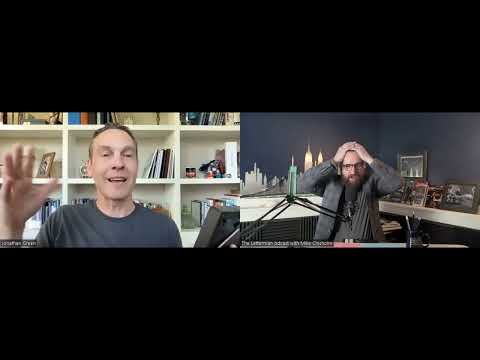
Jonathan Green (along with his writing partner Gabe Miller,) wrote for Late Show with David Letterman from 2001-2004. The pair then left and worked on all sorts of projects including the final season of 'The Office,' and went on to be major contributors to the NBC hit 'Superstore.' In this episode, Jonathan fills us in on where he came from, when he met Gabe, how they started their careers, and of course how they ended up writing for Letterman. Lots of cool Late Show stories here, as well as what their antics since leaving the show.
The Letterman Podcast is brought to you by Rupert Jee's Hello Deli. Go to Hello-deli.com to order official Late Show with David Letterman merch before its too late! Also, at the time of this recording, Rupert is selling the Deli. If you have every wanted to get into the New York Sandwich market, now is a tremendous time to do so.
Please share this show with everyone you know. Studies show that doing so will make you feel euphoric in doing so. Note: Studies do not show that.
Episode Transcript
Read full transcript
You're watching the Letterman podcast with Mike Chisholm, endorsed by the Hello Deli. Yeah. Welcome once again to the Letterman podcast. My name is Mike Chisholm. Um I I I have a hard time not saying I'm excited about this episode. I actually had an idea in my head that I'm going to say, "You know what? I'm not going to say I'm excited for this episode." Um but it just didn't happen because organically I am excited about this episode. I'm excited about them all. Lots of good stuff happening in the world of the Letterman podcast. Thank you very much to everybody who is uh piling on um piling into this clown car that is the Letterman podcast. Uh we got a writer this week. Now, before we get going, Jonathan Green uh so excited that he's going to be here. Um some neat symmetry with the episode last week with Carter Bays. And then uh you know, Carter um and Craig writing team, they leave to go create How I Met Your Mother.
Um and then another writing team shows up. Uh Jonathan Green and and and Gabe Miller. And and it's just really neat to have that kind of symmetry happening. And we talk about that a little bit in the in in the episode. Um great episode. I mean you know, these guys were were uh were writers on Late Show for a few years. Um they moved on. They worked on the last season of The Office and then worked with uh the creator and they became showrunners Superstore. So, fascinating. Lots of stuff to talk about and we do. It's a great episode. Um but before we get to it, we're going to talk right now about the writers' strike. Uh obviously we are throwing as much support as we can for what it's worth. But you know what? For what it's worth, I think everybody who anybody who supports these people and puts it out there publicly, I think is a good thing. So, uh don't think that your voice is too small.
Um if you know somebody in the WGA or or you see these people posting, you know, Bill Scheft has been posting a lot of stuff. Um you know, jump on there. Like that stuff. Share that stuff. These people these these writers these people who who who who really really delve deep sometimes into the into the the muck that is creativity and pull out these original ideas. Um you know, it's it's we're at a place right now where uh with AI, the invention of AI and and some of these other uh things, we're on the precipice of things changing. Well, let's give these people a deal uh for the next decade so things can settle down and they can figure things out or whatever. Let's let's let's let's support these writers. Um gosh, I I just appreciate getting to know so many of the former writers for David Letterman and company and and and in other projects as well. And uh they're just a special group of people.
So, we want to just say from us at the Letterman podcast, we support everybody on the crew here. Right. Yeah, there's nobody here. Uh we all support the writers uh that are on strike right now. Thank you very very much for everything that you do. Um and then let's bring it back to the episode here. Jonathan Green, thank you so much for your contribution to um the world of David Letterman and company. And we appreciate you taking time out of your day to come here and to talk to us. Uh that's what the audience is here for. So, without further ado, the Letterman podcast is proud to present Jonathan Green. Jonathan, I Oh, dude, I am really really excited to talk to you for a variety of reasons. Um but of course this is the Letterman podcast. We want to talk to you about the Letterman about your time at Letterman. And and I want to talk about The Office. I want to talk about Superstore. I guess for you, when people do want to talk to you about this stuff, many times you are more known for like the Superstore or The Office. And that's really where people focus their attention and time on you these days, right?
Yeah, I mean you know, Superstore is obviously the most recent thing, but didn't quite have the um cultural impact that the other two shows that The Office or The Late Show had. So, um yeah, lately it's been more about Superstore uh for sure. Um it was also my uh longest stint on any show, really. It was the longest job I've ever had in the business. It was six seasons. Um so, yeah, there's uh the most experience there for sure. We're going to get there cuz uh as we as as you and I talked about beforehand you know, there's a Costco connection here. Uh no pun intended to the to the periodical that Costco puts out monthly. Um I I I can't wait to talk to you about Superstore. Um I definitely definitely have some questions about The Office. I'm one of the the people that really enjoyed the last two seasons of The Office and enjoyed kind of where things went and some of the the the the things.
I can't wait to ask you about those things. But obviously going back to the Letterman of it all uh very very excited to have you here. I I it's ironic in the narrative of where this show is going uh I believe if we have it done right, it'll be Carter Bays. Then it'll be you, which is very interesting because Carter um and and and and Craig came on as kind of a writing team, did their run. They leave. You and Gabe come in as kind of a a writing team. And and I I love that that's just that's organically happened. There was nothing Yeah. planned about that. We overlapped with them by about a month. Yeah. Yeah, we came in right at the end of their run. And those were some gigantic shoes to fill, obviously. Gabe and I didn't have nearly the impact on the show that those two had. And it was intimidating, for sure, to be working with those guys. And not that we were brought in to fill their shoes, but but we you know, we ended up moving into their office. And uh all we heard the whole time we were there was, you know, Carter and Craig had this great idea for this. And uh you know, Carter and Craig did that. And a lot of the bits that we were still working on and pitching for were things that they had created while they were there. So, yeah. Uh I was in awe of those guys. Continue to be in awe of those guys. Oh, that's But I'm glad we got the chance to overlap a little bit with them.
Uh the writing teams uh on Late Show back to Late Night. All the way back to Late Night. Like I think of you know, again I brought this up before, but Stephen Weiner and uh um and Carl Titterton, we you know, you know, Calvert DeForest, the whole thing. Like building the infrastructure of the show. Things that would continue on till the very end of the show. Uh writer teams have always kind of been a part of this production. I'm super curious as to where you and Gabe connected. Um and and and the what brought you to Letterman. I really want to talk about that. How did you get that gig? Was it um was there reverence for it in the sense of so many people worship this groundbreaking franchise. And and and you got a chance to work on it. Was there was there awe and shock? Um so let's let's let's start there. And then uh take it from there. Yeah, all of that, for sure. Um there's tons of reverence and awe. Um and just excitement at getting the chance to to work on the show.
Um but yeah, to take it back a little bit. Um Gabe and I met in college. Uh we were in an improv group together. Uh and that's how it started. Right on. And then uh after we graduated, uh Gabe was a couple years ahead of me. Um but we both ended up moving to LA at the same time. And um to basically try to write for TV. Um or try to get assistant jobs that would then eventually lead to getting to write for TV. Um we lived with a bunch of other college friends in a house that we rented. And we basically just tried to keep the college experience going as long as possible. Awesome.
Uh And so we were both we were both worked as assistants on different shows. Um In LA? Yeah, in LA. Yeah. What college did you go to? I went to Stanford. To Stanford. And what uh interesting. So, we got a Stanford crew uh you know, waving the flag mightily against the Harvard lineage that shows up there. Um Yeah, there were a few others. Um you know, Chris Harris went to Stanford. Um he was a few years ahead of us. I I didn't know him there. Yeah. We didn't meet until we got the job on The Late Show. Um and yeah, worked with him there. And actually we just ended up working with Chris again about a year ago on the show Acapulco that he was running for Apple TV. Um but yeah, and there and Pete Hayek and Alex Gregory. know if you know those guys. Talked to them, but they were Haven't talked to them yet, but let's connect it cuz I want to know Another Stanford team, but yeah, I don't actually know them. They were also a few years ahead of me. Um so and we didn't overlap at Letterman at all. Um but What did you study?
Uh psychology and English. And where did that fascinates me because there's so many people who end up being comedy writers that did not go to school to get communications or get broadcasting. Um you know, the improv group, obviously there's some seeds there. Uh where did this as much you know, I did as much comedy writing as I could. Honestly, it was always like something I loved doing, you know, from back in high school even. Um and just sort of grabbed every opportunity in college that I could to write comedy. There were student written productions. And um there's a a friend of mine, Joel Stein, who uh is a a journalist, magazine writer, podcaster now. Um but he had he tried to do during college sort of his own version of a a Letterman-like talk show. And I was one of the writers on that show. Awesome. Very short-lived.
But uh yeah, that you know, any any opportunity um to write, you know, I was taking, but um in the psychology major, I was mostly focused on developmental psychology um and actually had thought about sort of combining that interest with my comedy and TV writing interest in writing for children's television. And Gabe had actually had similar thoughts. Um and so the two of us at first were talking about trying to write for children's TV together like uh you know, with Sesame Street or something being the um the dream job. Um and actually I uh yeah, I wanted to bring this up cuz uh I know you're a Mr.
Rogers fan. Very much so. Um and I actually had the opportunity to uh work I I grew up in Pittsburgh, which is where he was from and where the show was made. I have goosebumps right now. Yeah. So, I work I had a summer internship working for the show and for Family Communications. Um they were at they weren't in production while I was there, but I was um helping sort his fan mail uh in the office. And there must have been tons. Yes, tons of fan mail. Yeah, and actually yeah, one thing I I uh a souvenir I I kept from uh there was that I have here framed um which was in his handwriting um Mr. Rogers' handwriting. This was a particularly uh enjoyable This is a a fan letter that had already been responded to and stuff, but I was filing it away or whatever. And he wrote um uh So, this was a submission he had gotten uh for I guess some sort of uh musical element someone wanted him to to incorporate on the show. And he wrote um Elaine, let's ask Jay Costa, that's Johnny Costa, the music guy on the show to answer this. I find the sameness in the musical themes to be disconcerting and boring.
And the theme of child sacrifice to be intolerable in a piece for children. Which I thought I it was just a great example of burying the lead. I mean, maybe that's the should be the most disqualifying thing before the sameness in the musical themes. Um but uh I just loved the sort of uh yeah, perfect Mr. Rogers tone there, but also the idea that somebody would send something to him that involved child sacrifice with the idea of it possibly getting on the show. So funny. Yeah, and so he would Yeah, go ahead. Sorry. No, you go. Please, please. Well, so he was not he was away in Nantucket. The show was on hiatus while I was there, so I was working in the office. He came back to work on what happened to be my last day working there, so I did get to meet him finally, which was a thrill for me. Um but also our conversation was great and very memorable. He um Someone introduced me to him and said, "Jonathan's been helping out in the office, uh but he's going back to to school now." cuz this was before my senior year of college.
And he said, "Oh, uh where do you go to school?" and I said, "Stanford." and he's like, "Oh, well, you're very lucky to be at that school." and I was like, "Yes, I know." and he said, "And they're very lucky to have you, too." Oh my god. Which was the most Mr. Rogers thing he could have said in that moment. And you know, he had known me for all of 30 seconds at that point, but somehow it just felt so sincere and it made me feel so good. Yeah, made you feel like a million damn dollars. Wow. And it was like Yeah, it was just the perfect interaction. You're giggling thinking about it right now and that's that's People who had interactions with him, they giggle when they talk about it because of the the kindness, the sincerity, and just the the complex simplicity of of of of of of Mr. Rogers, of Fred Rogers and and I uh Yeah. He was he was my gateway broadcaster. He was. He was absolutely Yeah, I've heard you say that. That's great. Um yeah, and so I was a huge fan, obviously, and and Gabe happened to be a big fan of Mr.
Rogers, too, and he also had studied developmental psychology. The two of us for a while were talking about just uh writing for kids TV uh and educational kids TV uh specifically. But then paths lead you where they lead you kind of and uh we ended up writing for some uh kids shows on Nickelodeon. Fun. Which were All That and Kenan & Kel, um which were lots of fun to work on and you know, not necessarily the educational Mr. Rogers-y stuff or Sesame Street-y stuff that we uh had thought about doing, but um yeah, sort of more comedy-based uh kids TV. Um And that, you know, I I've just always been a huge comedy fan, a huge Dave fan. I uh you know, watched I when I was 13 for my bar mitzvah, I got a little black and white TV uh in my room. There it is. Uh and that and I would stay up, you know, as late as I could, sneak it on weeknights when I was supposed to be sleeping and you know, I I watched Johnny, too, but um that was just sort of like, "Okay, Johnny, get on with it. Let's get to Dave." cuz he was my guy, you know, and uh yeah, I watched as much as I could.
Um I would stay up to watch it, too. That's that that's that's awesome. And um and Gabe, same thing? Like you guys both you bonded over over Dave bits and things like that? Remember when, remember when? And Yeah, yeah, definitely. I Yeah, I would say Gabe hadn't maybe been as familiar or as watched as much he wasn't as much of a die-hard fan as I was going into it, but definitely a huge fan and a huge comedy fan. We were both huge fans of I don't just thinking about those early days when we were living in LA uh we were huge fans of Mr. Show. Oh yeah, yeah. And went to we went to a bunch of those tapings and were you can still like see us in the audience in certain shots and we know which sketches were you know, we were there for and so we were just two big comedy nerds and uh into all of that. How happy are you for Bob Odenkirk? Like I'm I'm I'm delighted for him every single time I see him do another project or so. I'm so happy for Bob. Yeah, and he's always great no matter what he's doing. It's yeah, he's impressive, yeah. He's an action star. He's an He can do action movies.
Like what? Yeah, I know. It's uh it's crazy. Genius mind, genius performer. Uh oh, that's very cool that you got to see some of those cuz that's formative years in in so many ways. That experimental uh boundary-pushing in many ways. Um the the the the creative stuff. I'm Canadian, you know, I yeah. Kids in the Hall were something I loved to to watch and of course before that SCTV, but um I thought that Mr. Show in particular uh took the mantle of of the strange and and and and definitely pushing boundaries and things and and and went down that path. You're seeing that as you're in LA in your formative years being influenced by these things. Um Where when did the first professional gig come from? Was that the Nickelodeon stuff? And did that springboard you to Letterman or Yeah, the Um yeah, I'll try not to get too into There were a bunch of shows along the way, but the the basic gist was um Gabe was working as a writer's assistant on this show called USA High, which was a Saved by the Bell uh sister show uh about a group of kids going to an American school in Paris.
And basically the only nod to it being Paris was that you saw an Eiffel Tower backdrop out one of the windows. All transactions were done in a in dollars, you know, there was no discussion uh euros or you know, Blissful ignorance back then. Yeah, exactly. So, it was just like the bare minimum to make it different than any other uh Saved by the Bell type show. Um anyway, he was working as a writer's assistant there. I was at the time working as a writer's assistant on the show Home Improvement. I don't know if you remember that, the Tim Allen show. Yeah. Of course. Um but a couple of writers uh ended up leaving uh the show USA High and they were looking for uh new writers to replace them. So, Gabe was able to By that point, the two of us had written some samples together. Gabe was able to show our samples to the showrunner there and we got hired there as our first job. Um and it you know, was not at all uh the type of show we dreamed of working on or anything, but it was a good first job.
And got a ton of experience in the room. It was run like, you know, any other sitcom. Um You have a psychology degree. You're not in a counseling office. You're doing you're you're you're working on the dream. And where would you rather be? USA High or you know, there it is, right? Like that's A lot of pinch-me moments there, too. You're getting paid to write. Exactly. Yeah, so we were there for about a year. Then we ended up you know, once we were working there and it sort of gotten in through the back door, we were able to get an agent who helped us get a job on All That at Nickelodeon, um which was you know, their version of kids' version of Saturday Night Live. Uh it's where Kenan Thompson started and uh Nick Cannon was uh there and uh So, we worked there. We worked on the show Kenan & Kel. Um another season of All That. Then made the leap from that to speaking of sort of the Bob Odenkirk world. Um I don't know if you watched The Ben Stiller Show.
Um that was another formative uh you know, or show that we we loved growing up. But Andy Dick we heard was going to be doing his show on MTV, a sketch show.
Um and we managed to get a meeting with him and that was how we somehow made the leap from Nickelodeon to Andy you know maybe not as big a leap as as you would think but yeah writing sketches basically Hold on at the time in your mind it certainly is though at the time in your mind cuz he's coming off NewsRadio at that point in in many ways hot polarizing definitely one of those people that a lot that that the folks are paying attention to at the time that's a big that's a big deal and definitely yeah We were huge NewsRadio yeah huge NewsRadio fans Me too oh I want Paul Simms on here really bad cuz I want to talk about Letterman I want to talk about NewsRadio I want to talk about Shandling Oh well yeah yeah like yes NewsRadio is huge in my heart too Right yeah so we were so excited to get to work for Andy Dick and he was at a relatively like together place in his life at that point I don't I know where things stand at the moment but that that was a good like couple of years working for him and writing stuff for him Were you in LA still or were you back in New York okay that was still LA cuz MTV MTV They had some stuff in New York yeah Yeah yeah yeah okay okay so Um no but that was all out in LA and what happened was in the second season of the Andy Dick Show a new showrunner came in named Jeff Stillson Okay who had been he had been a writer for Letterman So and he was still in close touch with Bill Scheft I think particularly also with the Stangles a little bit um but he basically offered to pass he said if hey I think you guys would be great on Late Show and if you ever if you wanted to get a packet together I could send it to Bill Scheft to hand off to the Stangles and so yeah we took him up on the offer obviously That was an instant like in poker uh term that was an insta call right like you were like immediately yes okay Yeah I mean the only possible hesitation was that it would mean moving to New York but that you know we were I think I was engaged at the time or had just gotten married maybe so but that that was all like we were relatively you know free and clear of responsibilities in LA and um so yeah it's a we ended up you know jumping at the chance to put together the packet it was there were no promises from Jeff or anything he just offered basically to send our stuff along An opportunity here's an opportunity yeah and I guess he had seen that our he thought our sensibility would be a good match for the show in his opinion anyway and that a I think we had sort of the work ethic that you need at Late Show where you're it's can be a grind and you're just churning stuff out um so yeah we threw together a packet and I feel like it was maybe 6 months after we submitted the packet that we got a call from the Stangle brothers and uh they I think maybe they called us in December and wanted us to start at the end of January So not even a meeting you got the call yes you're in come on over no I guess there was a phone meeting first but it was the meeting was basically saying like we're interested and yeah there was I I think if we'd been you know maniacs on the phone somehow then we could have screwed it up for ourselves but I think yeah by the time they called they were sold enough on us I think they were looking for there was another writing team that started at the same time as us I think they had some they had a bunch of needs at that point so they were it wasn't too arduous hiring process Um we've talked about writing teams here at this point here before we kind of get into some of the bits and some of the things that you the experiences once you got there I think it's probably a good idea to talk about you and Gabe for a second and how you worked together like I'm so curious about writing teams I love how you know the pants crew embraced writing teams in the sense of no we'll give you both a livable wage we'll you know we're not just going to pay the one position where a lot of Yeah so you've heard about that yeah that's what I mean Oh yeah yeah we talked about Carter and a couple of other people I think have mentioned it as well like just the culture is different there um Yeah and honestly I'm not sure how much it is I mean definitely the worldwide pants crew is great but I'm not sure if that is Writers Guild mandated in late night I think maybe this is versus sitcoms where they can have you share a salary for whatever reason it's been established that in late night TV writers get paid individually Oh there you go okay so that that might be a thing too now you and Gabe since college uh you know things that you wrote together then it got to the point where it was professional where you're actually professionally writing together you're doing this day in day out how do you compliment each other what are the what are the what are the roles cuz clearly with writers teams that I've talked to there are definitely defined places that play to each other's strengths and it seems to be that the one strength complements the weaknesses of the other and vice versa is that the case with you and Gabe or was it more like no we're just the same note and we're right on pitch together Yeah I mean it's a question we we get a lot and I think early on maybe we thought of it a little more as I was the story guy and Gabe was the joke guy if I mean that's how people often you're encouraged to like define yourselves that way I guess as a team like people expect one person to be story and one person to be jokes Okay but I don't know that that's ever really fit us I think more it's that we have the same sensibility and we are sort of on the same pitch like you're saying um and I think that you know the main thing the reason we like well there are a couple of reasons that we we've chosen to work as a team for all these years but um one is like as writers in a writing career it can be just you know a a battle of self-esteem and like am I crazy and you know like For the nation Yeah I like weird things happen in the room and it's great to have like somebody to bounce it off of like wait you saw that too you know or or um so there's that like career side of things that we're going we're going through it together which is has been really nice it's a less lonely pursuit um but then also the actual writing obviously like we feel like by the time we submit anything it's already been through a little writers room of the two of us and uh It's not just half-baked it's it's it's a little more it's three-quarter baked Yeah exactly which can you know have its own frustrations at times when it like you know people expect it to take half as long because there are two of us working on things but it actually takes twice as long because where you have to have a whole extra step of showing it to each other and and dissecting it and punching it and whatever before we we turn anything in um Is that how it would be like like two computers both set up doing your own thing swapping things or like like what's your process when it comes to that It depends what the task is or what the what kind of show early on on USA High when we first started writing together we tried to have tried to actually write everything together have one person on the keyboard but the other one pitching in it we realized we were just running out of time it like because we would haggle over like every little word and like you know maybe the the whatever the the funny word should be at the end of the sentence or whatever it is um just not arguing but just like yeah No you're stuck in the weeds you're in the minutiae of things Yeah Yeah exactly so we realized it took us you know a couple of scripts there probably to realize that like we just needed to get something down faster and then we could rewrite it together so ever since that with narrative stuff when we're actually writing a script that's how we've worked we split up halves each write half of it and then and then we come back together and rewrite it together Wow do you do you surprise do you ever surprise each other with with directions that things go and that must be that must be really fun that sounds that sounds a lot of fun Yeah it is fun I mean usually we're writing from an outline by the time we're actually scripting something so and we split up the outline into halves too to work on that usually that's based on a an agreed upon story and sort of scene breakdown that has happened in a writers room so there's not a ton of like taking it in a completely different direction but we're definitely surprising each other with jokes and with sometimes we'll add a little runner for a character that you know wasn't in the outline or whatever or you know little little things like that so yeah it's it's always that's a really fun step of the process when we get to see each other's stuff and like oh wow yeah you did this cool thing let's try to work that into my half now also or whatever um so that's so so we learned that yeah we the it's much easier to rewrite something than to write something from scratch with a blank page um Oh and we had to learn it all over again we had worked for like 5 years or something before we started working on Letterman but had to learn that lesson sort of all over again um we tried I remember that our very first day with one of our first assignments was a top 10 list Yeah of course.
We're like, "Okay, let's do this. Here we go."
You know, first Letterman top 10 list. Lots of like just the weight of the world on us cuz like that'd been the dream. And we just, you know, managed to take probably our 50 or 100 ideas that we had come up with and the only acceptable ones to actually put down and submit by the time we had talked them all through were like, you know, I don't even think we had a full 10 jokes by the time and it was like, "Oh, it's time to turn it in already." And we were like in a panic and we, you know, had maybe eight jokes or something that we submitted which is, you know, you've probably talked to enough writers by now to know that that's a very small number you know, to compared to what we were expected to produce. Um And it was embarrassing and it was like, "Okay, but this is what we've got and it's time to move on to another assignment." And so we had to learn again sort of to not be precious with stuff, not we weren't going to get a chance to look at each other's submissions. We just split up, wrote separately and I would say for most of the time we were there on on most assignments, we worked completely separately as though we weren't even a writing team. Wow.
UH OH, I FIND THAT FASCINATING. YEAH, uh I mean it was just sort of the way that the the show required it us to work just because of the constant deadlines. Break neck. And and maybe yeah, and maybe our slow pace uh of writing. I think we're a little bit slow and methodical in our writing maybe more than others. I don't know if Carter and Craig, you know, maybe collaborated more on stuff while they were there but I get the sense that they're also faster writers than we are. Um I I I find this fascinating. You said something that touched on I want to have Tommy Rubrick back on again and and and and talk to him more about some of these things because it's like ping pong, right? Like like a writer will bring something up and then another writer will bring something else up and and and we'll be able to evolve into new areas of discussion. One of the things Tommy said when he was on, I asked him was there anything and I'll ask you the same question actually because that fascinates me. Was there ever something that you were in your mind was clear this should get on but never did. And he said the the only ones I could come up with were ones within the first couple months before I learned to not have any attachment to anything because of how the sheer volume of what was expected and whatnot. You're smiling. I I I I assume that's a similar sensibility to what where you're at.
Yeah, I mean I just think we had learned that lesson before we came to the show. We had had enough other jobs where that was sort of the preciousness was sort of beaten out of us where you realize like, yeah, you can't hold on to anything or fight for anything. I think maybe on that first job, you know, the truth is probably when we were worked on USA High, we thought like, "This isn't really what we want to do. This show is a little beneath us." Whatever we might have been like, "No, you know, fighting for our idea. No, no, no, you don't understand. You know, this joke should be this way or whatever." Had a little bit of that smug attitude that we very soon were, you know, uh Cleansed of. Yeah, cleansed of exactly. Yeah, that it's like, "No, you're you're writing for the show and you're you can't be precious about anything." Um so yeah, I I don't really have any memories of that at Letterman of having things that like I'm sure there were things where I was disappointed they weren't picked but you have to very quickly move on and now you're on to the next thing and And there was no you know, Doctor Zhivago you know, you know, idea of a of a of a of a tape piece or something that you always wanted to do that you thought would have played and never got done. Was there any itch that didn't get scratched creatively?
You know, wanted to get somebody doing something Alan or Dave or someone like that doing something. Nothing like that. Nothing really coming to mind at the moment, no. You were part of the machine and I and I I appreciate that. I I appreciate that very very much. Okay, so you guys get there. You've done a phenomenal job of setting the table here of kind of what it's like. You get to New York. Um again, I represent a group of people who look at at New York with a mystique and it is. It just is and people like me when we go visit New York, that mystique is nothing but enhanced you know, because you get to see it. You don't live in it. You get to kind of be in that dream world that is New York and the imagination of working in it especially in a creative endeavor. Beautiful beautiful ideas and dreams and things. You get there, what part of town do you move into? And and and what are the first couple days like? What's the first thing that you remember actually getting on air?
How did that feel? So Okay. And that. I know it's a lot of stuff but Yeah, it's great. It's great. Um yeah, I pretty strong memories of that time and and yeah, that you know, it was all just heightened by this being the dream job too. It wasn't just working in New York. It was like working for my, you know, getting my dream job and and feeling the weight of that, the excitement but also the pressure of that. Responsibility, yeah. Yeah. And 13 week 13 week deal, right? That's Exactly. Yeah. And I remember after things like that I I remember pretty clearly feeling after that first day with the debacle of our first top 10 list attempt just feeling like, "Well, I guess we're just not right for the show and it's not you know, we tried it." You're breaking my heart. We're going to yeah, we'll have 13 weeks and you know, hopefully last all 13 weeks but I guess some people can do this and some people just can't. And yeah, Is there such thing as a three month lease? I don't know if there were.
Yeah, really. No, I got lucky actually because um my wife's brother, my wife's parents had basically been they had an apartment on the Upper West Side of New York where her brother had been living. And he happened to move out or be moving out right before I got the job. And so they were like didn't kick your brother-in-law out of his place. You didn't move over Letterman stuff. Get out of here. It wasn't that. He happened to move I swear I didn't do Serendipitously. Yeah, exactly. The timing couldn't have been better. So yeah, I was very lucky with my living situation. Yeah. beautiful part of town and yeah, that couldn't have worked out better. And my in-laws were, you know, generous enough to like allow me to stay there for the full two years that we were there. My wife ended up moving. She was in grad school at the time. Yeah. And finishing in LA for the first year. So I lived in that apartment alone for the first year and then she moved there with me No kidding. the second year. For the context of our of our of our viewers and listeners, we're talking 02, right? Okay, so so 02 you're in New York, stranger in a strange land in the dream land in the dream job. What what did what was your wife finishing for grad school? What did she study? Um so that was she was getting a masters in clinical psychology.
She is now she's done a a few careers along the way but she's now teaching. She's a learning specialist at a school. She has a her teaching credential in special ed and she's also now in grad school again getting a doctorate in education. So Did she take your last name? Uh yeah, she Doctor Green then that's what you have to call her for the rest of her life is Doctor Green I guess. Yeah, basically I'm going to yeah, exactly. All right. Um so yeah, anyway, she moved for that second year that we were there. Um And we ended up having our first kid in New York. Um actually I think it was about 10 days after Harry Letterman was born at the same hospital and our and the nurse there, the baby nurse told us that she had been the nurse for Harry, too. Did Dave know that? No. Dave doesn't know about it. Yeah, yeah, yeah. No, He never heard my name. Me, too, buddy. No, me, too. Same deal. So But yeah, that was pretty cool for me.
That's really sweet. That's that's really really sweet. And this was, you know, the the show put out this script cover when our son was born. I one of the souvenirs I dug up which I I thought was great. You know, they they didn't he didn't announce it on the air which he did with some staffers babies but yeah, I was thrilled to have this as a souvenir and my son is thrilled to have it. He's actually time he was talking about Harry and not stop because I mean, you know, that's the one thing I loved about Dave, you know, going through my life in the time cycle that I was compared to the time cycle that he was. Um he was always I would say say he was always there for us every night, you know, we take for take for granted the fact that we got to watch this man as the broadcaster himself and then the company uh of all of the amazing things that you guys did. You take for granted that we got to do that every single watch it every single day.
Um but when he would go through things um it was we went through it with him. You know, seeing fatherhood in him um you know, at at at the age that he was and discovering the beauty and the joy of it and all that. We got to see it through his eyes and whatnot. Um did that change the right So Harry's born, I mean you become a father at the same time. So clearly there's some blurred lines. They're both feeling similar things. Did the sensibility of the material that was written coincide with things that Dave was going through in life? Like clearly it did in 15 with with the Leno thing or 10,000 10 I should say with the Leno thing cuz that's what everybody was talking about. Sure. But like moments like that, would the writers ever say okay, Dave just had a kid let's write you know, something different and I mean maybe you're not cognizant about it, but do you think that that that happened? I imagine there was probably some of that. I mean part of it also is that I ended up leaving the show soon after we had our kid. So I wasn't there for the end of 2003 and then yeah, and that was a big part of you know, we realized we wanted to raise our kid back in LA where there was a little more space and things would be easier in some ways.
Gabe also wanted to move back. His wife had gotten a job and his wife was set decorator and now is again on Jimmy Kimmel that weirdly. Wow. gotten that job. He moved he actually left one cycle 13 weeks before I did. I stayed because we had just had the baby and Yep. Yeah, it would have been too quick to try to try to move right then. So I stayed on. But basically I wasn't around much for once Dave had the baby. As a writer to see if the tone changed in that direction or what not. Yeah. But watching the show I don't think I noticed much of a I mean you know, other than him talking about it a lot. I didn't notice much of a tone shift in like the written comedy. Right. Right. But yeah, I don't know. I'm sure everything has its effect somehow and yeah. You had a crazy two years there. Like like that that that time of your life must be in a weird like bubble almost almost fantasy type type thing. Like holy cow, this two-year period was a bonkers two years for me.
I love that yeah. I love seeing the emotion coming out of your face as you're remembering some of these things. Like No, it's definitely yeah, it feels like did that actually even happen? Yeah, in some ways it's yeah, it's weird and you know, going back through some of my old like memorabilia and stuff that I've kept. Yeah, it brings back a lot of memories, but it also does feel like yeah, a totally different life. Yeah. Let's let's get to the who was born at the end of that is now in he's in college in New York in New York now. So he funny enough a couple weeks ago told me that he got tickets to see Colbert. So I told him the last time he was in that building he had to have his diaper changed there when I brought him by so everyone could see the baby. But yeah. It's it's funny. He he has he been there already or is it an upcoming show? He hasn't been to Colbert yet. Did you know Rupert very well?
Yeah, I mean ordered lunch from him almost every day and I would go in and he was yeah, as you as you know, he's so friendly. Like he was one of the people in that world who like knew our names immediately and was yeah. Yeah, one of the most welcoming people there. Yeah, I was trying to tell my son that he should go stop by Rupert's because it might be the last chance. And identify himself because that's exactly what I was about to say. Like if Rupert happens to be open that day have him pop in and say who he is and what not. Rupert will be so happy. Nadine Henley, you know, one of the Hi-Ho babes, she just went in with her son to see and see them again and all that. He loves seeing the people from the show but offspring and all that kind of stuff. He he's so he still is kind as ever and loves loves loves that stuff. He'd get a real kick out of out of out of your kid going there and Yeah, yeah, I'm going to really try to I'll try to get him to do that. Yeah.
Super cool. Okay, so let's go back to material. The stuff that you got No, this is great. This is this is what we do. This is exactly this is a textbook perfect show already and we haven't even talked about all the other stuff yet. I'm I'm just so excited to know the types of stuff that you got on that you were proud of. The first thing that you got on was the first thing typically it seems that most writers the first thing that we I got on the air was something on the top 10. Did something that first day? I mean you know, skeleton One of them did get picked. Of the few jokes, yeah, one of them did get picked. I still yeah, remember what the joke was and it was not something that I was particularly proud of, but it was more like a move that I had seen them do on the show before. The the list was top 10 signs you've been watching too much football and my joke was your hands smell like saddle soap and leather. Oh wait, that's a sign I'm sorry, that's a sign you've been washing too many footballs. One of those.
And it got a little bit Textbook top 10 joke right there like you said. But it was like it almost felt like cheating a little bit cuz I knew like that's the kind of thing that sometimes gets on cuz it's a little off from The device oh wait. Yeah, all right. That's however that was phrased. Yeah. Yeah. But you know, and we watched the show with the writers, you know, every night as it was being taped and I remember it getting like a little bit of a groan from the other writers. It was like I couldn't disagree really. Okay, so okay, that moment right there. Yeah. Do they know it's you or is that just them viscerally reacting to what they said? Do they know it's you? Viscerally reacting to that horrible joke. No, no one else knew yeah, that was something that surprised me early on I remember because it was like yeah, different comedy bits you know, mostly in top 10s I guess was where you really weren't aware of who had written what, but when there was a joke that they didn't like or that they like all right, you know, like rolling their eyes like they didn't hold back on on reacting that way in the room even though well, somebody here obviously wrote that, you know.
So it was yeah, you know, there it was a great group of writers and a you know, a lot of people I'm still friends with and stuff and so yeah, I didn't take it personally or anything. It was just like people who were serious about their comedy and you know, it's like yeah, they didn't want anything hacky to get on there and yeah. Now, is that you and Gabe's joke? Is that your joke? That one was mine. Did Gabe get one on? I don't remember if he did from that. I think that was the only one from that initial list. He got something on soon after. Yeah, so My goal is to get him on here and I want to ask him the same thing. What was your first reaction of what you got on there? I'd love I'd love that. Okay, so Top 10 there's that the other thing that I remember more clearly and that I was more actually proud of was like the first time Dave actually laughed on camera at one of my jokes or bits. it? That was a bigger deal. Yeah, it was There were two there were two things early on. I'm not sure which one was first. The one of them was just sort of a found footage thing.
There and I was sort of constantly trying to stay aware of what was on TV that we could possibly take clips from. It was a weird way to live for those two years. Like anything that happened in the news or anything that was on TV, it was always like how can this be material, you know, and that was like my you know. But there was no YouTube. Like like again, different time period for for people who are listening or watching this show who have been born and and bred with YouTube being around and you take for granted that that you you talk about it being found footage. Like you see something on the on the on the CBS newsfeed or something like that, it's a bit of a journey for you to even get what you just saw. Yeah. You know, like like that process Absolutely. Like it's a different time, right? But if you see the exact right thing and you come up with the exact right reaction to it, there's there's there's that's that's gold. That's the gold right there, right? Yeah, so the first one was Ted Danson had been in some TV movie where he played someone who saw ghosts like saw dead people.
Yeah, yeah. So the bit was Ted Danson reacting to seeing dead people and it was just like a you know, mashup or you know, clips of him and his reactions not ever seeing what he was seeing, but just his you know, where you imagine that he was you know, acting against a green screen or whatever in the actual thing. So some ridiculous thing, but I remember that Got Dave though. Tickled Dave. Yeah, and enough to show it again the next night and that was like oh great like something that actually wasn't just filler, you know, he he chose to show that the next night. Take that Justin. There it is. There's another 13 weeks baby right there. Yeah, exactly. So yeah, and then the other the other one that was like that was it was off of a news story that was like a a made up news story I'm pretty sure about Bruce Springsteen someone was trying to get Bruce Springsteen to run for uh Senate from New Jersey or governor or something get into politics. And so it was like an anti it was like a an attack ad against Bruce Springsteen saying like you know, Bruce Springsteen once called New Jersey a death trap, a suicide trap.
And this is you know, this is a man who despite having a wife and kids in Baltimore, Jack took a went out for a ride and he never went back and it was like vote no on Springsteen or whatever. That was another thing I remember Dave laughed at and showed again the next night. And showed again the Oh, man. Yeah, that was always a coup when you're like, "Oh, wow, he really liked it." If he's showing it. So, yeah, those were Attacking America's sweetheart like that like that's that's hilarious. I can see how he would be cuz it's it's preposterous, right? And it it just the silliness of the voice over guy saying, you know, "wife and kids in Baltimore, Jack." You know, throwing the Jack in there and yeah, it just felt like something Dave would like and I was glad that that Yeah. So, let's take that Those moments, yeah, those moments really stood out to me obviously because it was like yeah, it was Yeah.
not just get something on the air, but like something that was pleasing him enough that maybe I'll survive beyond these 13 weeks. Okay, so the the the maybe I'll survive beyond the 13 weeks, that is something that I I think is a is a unique kind of pressure, but the first part that you talked about there, I can't get over how many people, no matter what their role, Jonathan, like like writers obviously on the firing line of this, I cannot get over how many people that I have talked to both on camera and off earnestly they just wanted to make Dave happy. They just wanted to do a job that just made Dave happy. That's another part of the culture just like you guys don't take compliments well and all these little things that I'm finding that seem to be linked up with people who worked for Pants for an extended period of time, but the other thing is I just wanted to make Dave happy. Clearly, you know, it's different you know, if it's if it's a producer getting a good booking, making him smile that way versus making him literally react to something Right.
you know, be surprised by something. The satisfaction on that my moment with Dave, I made him laugh. Like I I I said I I talked about my moment that I had with him where I actually made him laugh for the audience and it was a second because in that second he just fired right back and said something even funnier, but I made him laugh just for a second and it was one of the Yeah, when you see the guy who, you know, has given you so much and who you've just idolized for so long, you know, uh laughing at something that you wrote or said, like, yeah, it's just a it's a surreal but amazing experience. It really is. Uh and I'm I'm so grateful that I get to talk to you guys about this and we can and we can, you know, build community around this. Let's go back to the Springsteen piece for a second here cuz I'm curious about process. You come up with the concept. Okay, Springsteen's running for something or there's a fake article about this. Let's run an attack ad on him.
Okay. Do you outline that? Do you immediately start collaborating? When do you bring the digital guys in to start doing the video pieces of it? How does that go and how many hours from outline to finished concept? Is it something that's going to appear on tomorrow night's show cuz we don't have time to do it for tonight? Is it How does that How does that go? Almost all the time it was you would pitch it in the morning, get it like one of the first things that we were that we would do in a day was pitched extras, which were those kind of tape bits that he would do at the desk. Um and not necessarily, I guess, in the at that point in the show, but usually, yeah, at the top of the show. Um And so, you would pitch sort of like a paragraph version or one-line version enough to sell the joke and you would write a list of those that everyone submitted to the Stangles. Gabe and I would write individual lists that we would each submit. Um and then you would get, you know, a half an hour later or something, they would come back to you and with, you know, checks on which ones they wanted you to actually write up and produce.
And then you were always producing it for that night's show, which was So then you start sort of the mad rush. You write the the script and sometimes the script wasn't much more than what that paragraph thing You know, these were always short bits, so But two to three hours basically this is going on the air. Yeah, yeah, maybe a little more than that sometimes, but yeah, something like that. Um So, you would be off to editing, you know, the uh Randy Grossack, I don't know if you've talked to her Not yet, but we're I'm I'm I'm I'm going to I've talked to her a lot offhand cuz we're both real good friends with Rick, but Oh, right, right. And and and so, yeah, but I cannot wait to I like even if it's just not record button, I cannot wait to talk to her about some of these things. Um Yeah, yeah. The montage at the end, I can't wait to talk to her just about the montage. Right. Never mind. I just watched her, you know, highlights thing on the Letterman YouTube channel. Yeah, and I yeah, it was interesting to hear her talk about that montage and putting it together with Barbara. Um So, you go talk to Randy or someone like that?
you go talk to Randy or Jessica Santini? Santini? Uh Um who would coordinate like the voice over actor you know, when they would come in to record it. Usually they would record it, then you'd be like collecting visuals, trying to you know, work with the art department for visual For a piece like that Springsteen thing, it was probably just a few shots of Bruce, you know, performing just still photos of him performing and just a voice over over it or up for those lyrics that are highlighted or whatever. Um but yeah, it was um basically you're just down in editing then and you're missing out on The good thing is you didn't have to do every assignment that's coming in because it was like I've got an extra I've got to produce. I better go get this done. to do, yeah. Exactly. So, you're then down in editing. If you didn't get an extra picked on a given day, you are basically every 30 or 40 minutes getting a new memo slipped under your door with the next assignment and it was just constant all day and it was like you know, often before you had finished the assignment you were working on, you get the next assignment is.
So, it was nice you get a little break from that if you go down to editing, but then there's a whole other stress of trying to get the piece ready in time. And often we were rushing those pieces to Dave's in his dressing room. We wouldn't we would stand in the stairwell outside his dressing room. I never even saw into that room, but you hand off the tape. Um And you wait to hear you wait for his reaction to come out of the door by Yeah, that was a whole other experience. Justin I get Would it have been Justin or Steve that would have uh Justin and Eric were both Yeah, in there. Uh yeah, Steve was in there, I guess, working on monologue stuff with him uh too, so sometimes he was in there. Bill Scheft. Yeah, of course, yeah. But yeah, it was Justin and Eric who would be showing You'd hand off your tape pieces to them. They would take them into Dave. And you literally sit there in the stairwell waiting at this point.
Yeah, and sometimes you could sometimes you could hear sometimes you're hoping to hear Dave laugh. Also, I mean, you're always hoping to hear Dave laugh, but sometimes you can hear him actually laughing at the thing. You can't He's it's You can't really hear what his feedback is, but often he would he would approve something. Sometimes he would just be like, "Okay, we're not doing that." Yeah. Other times it would be he'd approve something but have a few little tweaks like change this, change that. They would come rushing out of the room, hand you back the tape, and go, "Okay, go make this change." Randy, help help, Randy. Basically, you're running back to the editor and there was so many times where you're just watching the clock. The show is about to start. Sometimes the monologue had even started while you're still finishing your piece because, yeah, it you know, there was a little time still to get it ready before he, you know, he was going to introduce it at the desk.
And then sometimes the word comes out of the office, I assume, not strong enough. Yeah, and you'd definitely would hear that sometimes or I guess the way that they would deliver it diplomatically more often was like, "Yeah, okay, we're good. Yeah, like don't need any more work on it." Which basically let us know, "Okay, it's not going in." Or most of the Yeah, I guess there was a chance that it was good enough that it was going to sail that it was going to sail through and go on, but There's a bunch of those that are sitting somewhere that I would like this is the type of stuff that the roads that weren't taken. Oh, yeah. There's some there's some there's gold sitting there for sure. And uh and and and one of my goals is to somehow worm my way like a termite into the Pants land and we can start getting some of the stuff out there. Um What a what a crazy paced work environment to be in. Like bonkers. What you're talking about right there with these extras, did that prepare you for for life as a showrunner?
Yeah, you know, it did I mean, just the um sort of the the the pressure like yeah, having to produce something, turn it around quickly. I mean, it's not I'm it's not like being a showrunner for a sitcom because the immediacy is so you know, the Yeah, the urgency is it's a very different pace. But the skill set is kind of the same like Okay, in the office we're about to watch the the trailer for the documentary and they're going to see it all on the TV together. Okay, so we got to go and do like it's it's sort of you're producing an extra for that, you know, in in my mind anyway. Is it is it similar in that regard other than the pacing? Yeah, totally. There Yeah, there's and late show was great training for just like producing your they let gave writers so much responsibility and trust and like and I think when we first started it was like wait you you're not going to have someone else like shepherd this through you're going to you know I I'm just the writer like I'm actually now producing this thing Not anymore kid. Nope.
Yeah and you learn to write things in ways that they were more producible you know from the beginning too because you're going to have to execute this you you can't just you know I think so often writers are just like yeah someone will figure this out I'll just write you know a version of it that I'd like to see and then sit somebody else's problem how to actually do it but yeah it was great the the amount of responsibility they gave you at that show was really yeah incredible. Um was there something that you and or Gabe were more consistently like I talked to Carter and Carter he had a lot of mailbag stuff. Where that just that ended up being just in charge of they were completely supervising mailbag when by the time we got there. Yeah is there an example of that where there was something that you gravitated to a little bit more than than others? Well the one thing that sort of became our consistent way to contribute to the show was I don't know if you remember Dr. Phil's words of wisdom that Yeah went on every night basically for I'd say at least a year Oh yeah you guys drove that one well.
Yeah and Dave just kept wanting to do them uh Well they're great. Yeah and it was so like they were so easy to find but uh Gabe and I had to watch every episode of What episode has like 10 of them no problem cuz you take it the right snippet it's almost like great it's almost like Tommy's great moments in presidential speeches almost right like It was that kind of thing it was a little bit yeah before that but it was the same type of thing yeah. We did a super cut of that I'll talk to I'll talk to Don and Walter and see if there's a super cut of that cuz I don't think there's a super cut of Dr. Phil's words of wisdom. Yeah I don't know I haven't seen one but That would be a great one and and Don will correct me if he apologize Don if if if it is he was going to be here today but he couldn't be here today but I apologize if you do have that already and I just have forgotten it on your channel but that is a that was a fantastic fantastic bit that was you guys?
Yeah that was us and we pitched it originally I think as a part of like a new for fall thing or things that the show was going to be changing and and it was just supposed to be like a one-off thing that every once in a while we would hear a little bit of Dr. Phil's words of wisdom but I remember distinctly like knowing that you know Dave had had his whole Oprah thing and the Oprah log of you know or not calling and all of that which I think was Carter and Craig's also but knowing that Dr. Phil was coming out of the Oprah world and I'd seen like oh this this guy from the Oprah show is going to have his own show now that is definitely going to have something that we can use for day you know that it it's going to fit into Dave's world somehow and so then it was just a matter of like how do we use it so yeah I remember recording you know on my TiVo the first Dr. Phil show and like okay let's see what what we can work with here And there's a lot.
Yeah there is a lot but yeah just narrowing in on that way to to use his and he just you know set himself up for it time and time again like anytime he would sort of you know whenever he started Any metaphor or simile that he gave Totally and he like takes there you know speaks in the persona of the person like I'm I'm just a big dumb idiot or whatever like he was just giving us those but it meant that we had to watch every single episode of Dr. Phil and that became a regular assignment for us and we would we would switch off who was doing it on a given day but um Is it in the TV in the corner like just playing and you're writing other things and stuff and you're like oh there's one like does it get to that point where it's just automatic where you you hear it almost instantly?
It was more like scanning through and fast forwarding anytime anyone else was speaking and then it's like okay here we go like he's Dr. Phil's going to talk again. But here's an example though right here of of something that that enhanced like again greatest broadcaster in history okay also you know smartest comedic mind you know in reacting and all of that stuff. You as members of his team give him this and every time and and all credit to Dr. Phil who as Dave would say can take a punch better than almost anybody like no problem making fun of himself. Right. Now you guys are doing this and every single time Dr. Phil is on the show it's gold because of how you guys are building this to support Dave this is a phenomenal example of how they feed the the two feed each other. Yeah it did start a little bit of a thing yeah I remember it was a big deal when Dr. Phil was going to be coming on the show for the first time after we'd been making fun of him for so long. Yep.
And I don't think we knew at that point that he had such a great sense of humor about himself but it was like this will be interesting to see how it goes. Um and he quoted some jokes and stuff yeah when he was on the show you know so it was nice to see that he was playing along but you're right yeah it was a it ended up becoming more than just those bits but the great thing for us was that like in in in one way it was like nice to know that we were going to have something on the show every night just about sometimes there were two of them in a night the downside was like it was very much a formula and like you said he was beating it into the ground and it was like okay maybe it's not always as great you know as coming up with something new.
I I I okay and there is that danger great moments in presidential speeches same thing same premise same everything but when you find something new that does make you laugh despite like it's almost that that circular thing it's funny it's funny it's funny okay it's less funny funny funny but you keep on it keep on it and then it becomes funny again for a different reason Yeah right. there's a little bit of that there because again you're working with somebody who is going to say something completely unpredictable yeah you saw this three nights ago but now tonight's is you know it it catches you you don't think you're going to laugh but you do Right right. which that is a I'm so glad we got to talk about this bit today that didn't hit my radar at all and I remember it very very well that's what a cool that's a very cool thing. to see like that the audience after a while started to know it too and so when the when he'd introduce it people would start to you know you'd hear Jonathan you did you made it refillable.
Yeah exactly. One of the hardest things I mean I asked so many writers you know did you ever try to make it refillable and and the first time you did that I mean it's probably that probably became a refillable just because it delighted Dave that's probably why it did you know it didn't just go one time and that was it. Yeah I guess so yeah it was just written as a one-off and yeah I remember yeah the Stangles came to us and said like okay we're going to need more of those like get ready to watch more Dr. Phil so yeah they would um yeah Randy and her her gang would send us the tape every day of the Dr. Phil show scan through it So there's there's the tapestry right there there's somebody in the control room whose job now it is to make sure you record Dr. Phil off of whatever feed or at home or like how does that happen like like these are all the little chain reaction things that I want to get to with this show um this is fantastic okay so um um what about um uh did you ever do any Alan Coulter stuff?
Yeah we did some mailbag segments with him I remember shooting one up in that you know up behind the Behind the stand up on the top of the balcony? area yeah where the Oprah and Leno uh but definitely remember that one it was like a I don't know a bit about Alan's first kiss or something but uh yeah we worked with him I'm trying to remember other bits yeah it was mostly mailbag stuff I'd say that we did anything great guy to work with and so you know as you know up for anything Yeah. just sell the hell out of it too just like you could give him anything and yeah he didn't just knock it out of the park. Uh what about some of the other staffers that we've know come to know and love over the years Pat and Kenny or We did a bunch of um yeah we did some stuff with Pat um yeah I think Kenny left the show during the time that we were there it was maybe about a year in um uh some stuff with Pat definitely a bunch of Biff remotes we got sent on yeah I went to the World Series with him Oh cool. NBA finals one year and Gabe went to we did a bit where Biff went to a high school prom in New Jersey and Gabe went and supervised that um so that was always fun working with Biff also just on the streets with fun with the bullhorn I don't know if you remember him doing that Absolutely.
he would ride along and and do that yeah exactly yeah and he was always great to work with a lot of fun and and again it was a sort of pinch me moment where you know, I'd been watching Biff for years and it was like, "Oh wait, he's I mean I knew he was the actual stage manager, but to see him like actually doing stage manager duties on the show." And and then also going to do bits. Yeah, it was just it was great. Um Um we talked to to Jeremy Weiner and and and some other people who have been on the road with um um a few other people who have been on the road with Biff. really had some time with Biff, yeah. Yeah, he did. In a Winnebago or whatever. I uh my goal is Okay, so I'm I'm going to throw it out right now. Let's manifest this right now.
I'm talking to Biff son and and and yeah, I think dad wants to come on and we'll figure it out how to get it like that's obviously, you know, talking to him and then to have some of these people who maybe worked with him might, you know, get questions thrown in there to to jog memories and things like that because it's again such a breakneck pace, but hearing the fondness, I would I think that he would love to hear the fondness from some of these people that I've talked to that did go on the road with him and did have these experiences that were just so memorable and fun and they just have such a place in their heart. I think he would love to know that. Um so so we're hoping to make that happen here uh you know, sooner than later. Yeah, and I don't know if at a certain point for Biff it was like "Okay, who's this newly hired writer now who's telling me what to do? Like I've been doing this for so long. Like relax, I got this." You know?
But you know, of course we were all, you know, over eager and and trying to make sure that uh we returned with the footage we needed and all of that. So um yeah. needed to be the case though. Like you guys were such You ran at such a high vibration, such a high level. Um the output was breakneck. Um you know, a few notables stayed there for for for for more than 5 years or a decade or more longer, but so many times it seemed to be reliever were coming in with a fresh arm who had that energy that you're talking about and it was just simply necessary because of five shows a week uh not nearly as many dark weeks as as as Johnny had, you know, things like that. Like like like again, this whole show exists because there's gold that you guys found and literally big pieces of gold that got dropped and haven't really been looked at again. Uh you know, other other than other than thank god for Giller uh and and and now Walter and and and and Pants are actually, you know, getting this stuff out there because there's so much of it.
But I think that energy you're talking about is necessary and of course people are going to you know, burn out over their time. Were you burned out when you were when it when it when it was when it was done? Um started to feel a little bit of burnout um toward the end. Um mostly it felt like I think it was just like we were doing the same kinds of things over and over again and not getting to sort of uh there was a uh the window seemed to be getting a little bit narrower as far as what would get on the air and what Dave was willing to do. All right, like from the beginning of our time there Dave was no longer doing any pre-tapes or remotes. Yep. Um which, you know Was he still doing rehearsal? No rehearsal, no. doing Okay, so yeah, this is after 9/11. This is yeah yeah. Yeah. Yeah, so yeah, he wasn't doing rehearsals. Um and yeah, so anything we were writing for mailbag had to be with other people uh other and there was a obviously a great cast of characters you could involve those things. So that was fine.
Um but as far as the actual jokes that would get on to, you know, it was like started to feel a little bit like we were doing the same thing over and over and um uh you know uh And you're a writer, you're a creative. You have other things obviously that are bubbling. Uh obviously there's other ideas and things like that, shows or or or or um uh you know, opportunities as well. I mean we've talked about this lots. I mean you when you can the moment you can put uh writer late night or late show with David Letterman on a resume, opportunities are going to show up. Um that that's that surely must have been happening for you unless you had the blinders on. That surely must have been happening for you at that point already. Yeah, I mean it wasn't happening so much I think while we were at the show. Maybe we did have the blinders on a little bit, but it was like, you know, we were focused on keeping the job and getting renewed for another cycle, you know, another 13 weeks the whole time. Um but there it was more like seeing that maybe we could get back out to LA and then work on some more narrative stuff or um yeah, just other types of shows.
Um I think and and then also personal family stuff like having had the baby and and Gabe wanting to move back uh Gabe and his wife both wanting to move back. Um to LA. That's really what sort of pushed us to uh to leave after a couple years more than any burnout or anything. Yeah. No, that's good. It's before the burnout. Like that's that's great. That that's awesome that you got a chance to kind of chart your own course based on life circumstance rather than uh you know uh I got nothing left in the tank, captain. Like, you know, that's that's that's kind of cool that you could do that. Um I think I know how I'm going to finish this episode cuz I you know, I want to go to I want to go to the office. I want to go to Superstore for sure. Uh do we still have some time or you still okay? Are we we're okay? I've still got time, yeah. I'm just now realizing I've probably been pretty long-winded talking about all this other stuff. So yeah. Not to me. No, this is great. Love it, Jonathan. Like this is all I I just don't want to inconvenience you in any way. Um did you go to the um uh the the the final night party?
Uh no, no. Weren't there for that. Okay. What was your last interaction with um the Letterman crew? Uh Did you do any reunions of any sort? Did you ever go to any uh There was an art gallery thing out here. I'm trying to remember what it was exactly. It was maybe art from the uh like the bumper cars or something. like Mark Carson's bumper? It might have been that. Oh, that's cool. I wanted to go to that. That's rad. Not sure if that was what it was, but there were a bunch of uh yeah, staffers there. And then I just gotten together with people as they've come to, you know, uh Lee Ellenberg and Jeremy were at Yeah. uh actually on the Universal lot uh for a meeting one time when we were doing Superstore there. So we got together with them. Um there was Well, we worked with Chris Harris again. Yeah, so some small groupings and stuff. Uh we went Tom Ruprecht was out here uh working on I think he was it was when he was out here to work on the Goodwin Games, which was the Chris Harris Yeah.
show. Um so yeah, that was already years ago though now. You've just named other than Chris who I haven't met yet, you've just named a whole bunch of people and the the the commonality of them is they're just again, every single nice people. Like I just love the kind nice people who who um it's so uh the antithesis of the stereotype of a writer's room, which is shark tank and all of that kind of stuff. The exact opposite. The people you're talking about exact opposite. Like and and and and more. It's not just them, it's it's other ones too. I love the culture that was there. Oh god, yeah. No, I got to ask this. Were you ever Oh, go ahead. You say go I just realizing also that just another person who really contributed to that culture and just the nicest guy is, you know, Steve Young. Um we saw him when his documentary was making the rounds. He had a screening at the Writers Guild out here and Gabe and I went and it was good to catch up with him then, yeah. How happy are you for that dude for getting that movie made?
Oh, so happy. That's so amazing, yeah. Um And it's just the whole story of it is just perfect how it started from just doing Dave's record collection and yeah. Yep. That whole thing, yeah. It's great, yeah. And and these people like the amount of people that he has gone and shone a spotlight on of joy and love and and for some um even uh a feeling of of of of um vindication almost even. Like, you know, you know, they were looked down upon, but no, you were appreciated. You were this, you know, uh Mr. Bibi and who who Steve just, you know, tragically lost, but but but knew at the end of his life that it actually came back full circle. Being able to do that for people. Um and I mean there's so many stories of that within the Pants world. I love being able to talk about that. Uh cuz you guys may not take compliments and like to, you know, uh but I'll do it. I'll I'll hell, I'll talk about the kindness that exists and how many times people give people hands up and delights and blessings. Um but here's a question for you that goes back to the writer's room.
Uh were you ever in the writer's room watching the show and uh you got the call, the phone rings? Oh we don't time for a new top 10. Were you ever Did you ever know that unique type of pressure? Yeah, there were a couple times when that happened and yeah, that definitely would feel your stomach drop out a little when that when that phone rang. Um yeah, I don't think it happened very often while we were there, but um yeah, there were definitely some moments where it's like, "Okay, rush back to your offices, everybody, and leave your dinner on the table." And So you wouldn't do it in the room? You go back to your offices. That's interesting. Yeah, that's how I remember it anyway. Yeah. But it's like take 10 minutes or whatever. You know, it was not much time to do it. Um and just churn out whatever you can. Does Chef show up there and you hand it to him and and he goes down with it or does it like was there an intern or a runner? Like like how did that like it was um Have you talked to Bob Borden? Not yet. He's on my list. I certainly want to. Oh my goodness, do I want to talk he did all that stuff and would yeah, he'd be the guy who would have to run all stuff down. Uh Him and McIntyre are two guys that I very very badly want to talk to. Um Both great guys, too. Yeah.
Abso- That's what I've heard from everybody. Um so so those who I can't even believe I get to say this. Hey, those you who watch the show who were part of the show and know those guys, nudge them over to this way, please. I can't believe how many staffers watched this thing. Uh that right there is as far as I'm concerned, I've won. Um I just I Well, I've been loving it. Yeah, I've I'm so excited to see that it came up. I think I first learned about it because Tom Ruprecht posted that he was on the show and then yeah, and then I've been listening to them all. I want everybody. Uh so so if I haven't gotten to you personally or if I haven't, you know, sent feelers out or whatever, don't be left out. It's just because I don't have it in front of me. So everybody who who listens or watches There are a lot of people a lot of people have come through that place. Well, that's just it.
Somebody somebody said to me the other day, "Are you going to run out of people?" And I looked at him like, "You're joking. There's no way I'm going to run out of people ever cuz we haven't even gotten to you know, some of the the guests who worship Dave that weren't allowed to talk about how they worship Dave cuz the producer said to them, "Now don't talk about how much you love him." But there's like like this thing has there's so much meat on this bone and and I'm I'm really grateful that that that you've taken time to do this. You transitioned over to one of the greatest and you talk about how Superstore maybe had doesn't have it yet.
The thing about The Office was it had time to percolate. It had time to kind of find its audience and then turn into the growing juggernaut sensation that it became. You got to go and finish out The Office. I'm one of those guys that loved like to me Robert California sounded like something that would have been a name of a character on Letterman. Like like like there were things in the last two seasons that I loved. You were there for the last two seasons of The Office, right? Actually just the last season. I wasn't even there for the Robert California year. Yeah. Yeah, he came in after that. Um yeah, and it How crazy was that that you got to work on The Office? Insane. Yeah, and Gabe and I it was our third time meeting on that show when we finally got the job. Um we've been in consideration twice before, had come in, met with Greg Daniels, met with a bunch of the writers cuz he likes to have these meetings where he cycles writers through to like get a feel for people and uh Alchemy.
Checking out the alchemy of things and okay, yep. Exactly. So we came close two other times and then finally on our third time, we actually didn't it it was um not even a foregone conclusion that we were going to get to continue to write for The Office cuz Greg Daniels also had uh at that time um a pilot for an adaptation of the show Friday Night Dinner that was a British show that I think actually I think John Beckerman is doing a adaptation of now right now. Um but um Yeah, uh so he Greg Daniels had that show. He was it was looking like that show was going to get picked up but it hadn't yet gotten picked up and he wanted to hire writers for The Office but they were making him split his staff between the two shows. Oh, wow. Our deal when he hired us was that we would start working on The Office and if in the first month or so or a couple months Friday Night Dinner got picked up, we would be moved over there. What a big shot What a big shot Greg Daniels is. Like that's crazy.
That's like some working stuff out there. Like that's that's bonkers that you got, you know, the idea that I've never rooted I've never rooted against someone's show as hard as I did against Friday Night Dinner because all we wanted was to stay on The Office. It was a you know, another dream job. It was a you know, one of our favorite shows and I had definitely very much that same feeling starting there of like, "Oh my god, I hope I don't mess this up."
because this is the what I've always wanted to, you know, show I've wanted to work on for so long. So um like Okay, so I don't care if we segregate the audience at this point here. Like I just don't care. I'm I'm sorry. It just it's I don't know the next time I'm going to have the opportunity to talk to you about this stuff and and and I hope there is another one but uh Okay, so at this point in the series of The Office okay, we've gone through the the transition of Steve being gone and all that stuff and and and these things. We know that we're wrapping things up. We know the tension with Jim and Pam. Like that which is in my God, in my lifetime I there's the Sam and Diane or I don't know who else you want to compare them to but but Jim and Pam are special to the world. Um the tension, the wrapping up, the idea that that we're now breaking the fourth wall, you know, again very Letterman-esque. We're getting the chance to see the crew and all that kind of stuff.
You guys got to be there for that part of The Office and again, as far as finales go grand slam home run of a finale of a series finale and and the lead up to it as well. You got you got people to care about Dwight and Angela almost the same way they cared about Jim and Pam at the beginning. Like what a season to be on. Again, I've thrown out a whole bunch of um But yeah, it's all exactly spot on, you know, yeah, it was so exciting to to be part of it but to take all these characters at you know, who we'd been following the whole time but to get to wrap up their stories and figure out what was I'll you know, although I will say like the big exciting thing I think for everyone who was working on the show for season 9 was that Greg was coming back and running the show. Yes. He hadn't been running it for a couple of years. Yeah, I forget how many but um he came back at the top beginning of season 9 and he had a pretty clear idea of what he wanted to happen in that season. Yep.
For most of the characters. I'd say like the at least you know, the big tent poles of the season and and definitely where they were going to end up at the end of the of the series. Um so a lot of it was just coming in and like trying to you know, serve that vision and we weren't, you know, I won't say that Gabe and I, you know, had any say in what or or The arcs necessarily. yeah, and and and where characters ended up or or how things were wrapped up. It was like we were excited to be there trying to give him what he wanted and you know, pitch things that could uh map on to his vision for the season, basically. Um I got to ask. Okay, cuz like I mean I've got so many lines and and moments from that last season uh you know, Dwight getting his black belt and you know, the little David Wallace lines along the way. Um were there any moments in that season that come to mind right away that you and or Gabe uh put into any of these iconic characters' mouths or or moments that was like, "Nah, that was I I I was me and I loved that one." Is there anything like that that you can kind of throw out there that yeah, okay, you did that?
one of one of Gabe's jokes was a big one that gets quoted you're going to mention one of Gabe's. You can't Okay, yeah. Um it was in the finale the Michael Scott line. No! My kids get like that's my favorite line in That's his line? That's Gabe's line? Every parent's dream. Yeah, that My kids all grew up and got married to each other. It's very Yeah, yeah, exactly. Yeah. So that was like the big one, I think. That is Oh god. There you go. Yeah. Wow. other the other thing that's just sort of an interesting like we wrote an episode where Dwight was teaching Aaron Dothraki, the language from Game of Thrones. Um and the interesting like thing that came of that, neither Gabe nor I watched Game of Thrones at all but we were sort of assigned that story and then had to figure out how to write that. But we there's a scene where he has phrases up on the whiteboard and he's teaching her how to say like, "I throat rip, you throat rip, he she throat rips."
Um Conjugate the verb throat rip. I love it. And then the the guy who actually came up with Dothraki, the the language on Game of Thrones, saw that episode and said that we had credited us with um coming up with a new uh I guess syntax rule for Dothraki. Um we had sort of just based it on you know, I speak a little Spanish and I had sort of like based it on what I thought, you know, if we looked at like he had come up with this whole glossary of actual Dothraki words and But onomatopoetically it made sense and it Yeah, it was like that's how it would work, you know, syntactically or whatever. And that is now he adopted that as part of Dothraki and calls it the Schrudian compound after Dwight Schrute. That was our other not really that office related but uh there uh Oh, that is contribution there. Damn John, that's amazing. And Asian Jim was the other one that that gets Oh, that was such a good one. The cold open? Yeah, the cold open with Randall Park.
changed. Oh, that was that that You know what I loved about that one? That felt like it would have fit right into season two or three cuz I think the hottest ones like the vending machine and and there's a few other ones that I could think of him coming dressed dressed as Dwight early on you know that one there Asian Jim I think was in my mind a really good throwback that could have fit very very easily in season two or three that was such a good cold open. Oh that's Yeah that was a fun one that was one of those moments like I had said with you know the Dave moments where it was like okay we're safe here we've pitched something that has gone well and it going on the air and like we're going to be okay. Here for a little bit. We got the the rest of the season will be fine. We'll finish the show out. Yeah that's how I tend to operate it's like just so much stress and and nerves until you get a little bit of relief from something like that so you can barely even enjoy it you're just you're just thrilled to be hanging on.
Oh god that's that's fantastic I think about the I obviously the rap party for The Office that you were there for that kind of stuff right the end of the I think of Paul Rudd at the end of Friends. And there there there's this legendary story about how the Friends it's the last episode of Friends and and they're all hugging and all these kinds of thing and Paul Rudd is going out cuz he just showed up at the end. Yeah I remember I love that one. Well I was going to ask was that you guys a little bit like like feeling this is a weird place to be because it's such a big moment means a lot to your heart obviously as fans and things. But then you're seeing these some of these people who have been there in the trenches for the whole time that must have been a really surreal experiences finishing The Office. Yeah it was definitely like that yeah and I still feel a little like that when people mention really wrote you know people know that I wrote for The Office or whatever and I always feel like I have to say well just the final season like Didn't really contribute to the part you liked the most about The Office. Except for Gabe writing one of Michael Scott's most iconic lines ever like that was that that is crazy that he wrote that but not crazy cuz I mean you know you think about where you guys came from.
And and I mean okay You got a few minutes for me to talk about Superstore? Sure sure. Cuz and I think that that is going to be a show Holding on until now but we'll see. I get I don't I don't care. Like this is the show that we do this is the it's long-form we go deep. Yeah yeah I'm happy to talk about it. Oh that's awesome thank you brother. I so so some of the audience knows not very many of the audience knows this so you guys asked about me so I had a career at Costco Wholesale like a full-on career I was in the marketing department 23 years I worked for Costco I built my financial business on the side and built it and built it and built it and got to the point where I was making a kind of a full wage Would diminish my role at Costco until I finally decided to just leave it I stayed there longer than I needed to because I actually loved it. I met my wife at Costco and and and so both of us you know worked there for a long time.
And I'll tell you this we watched The first couple episodes of Superstore. As they aired. And I'll tell you this straight up. And this is going to be a massive compliment to you cuz I know that this is not the case now which flabbergasted by. Candy and I looked at each other and we're like Too soon we could not watch it because it was just it's like that Shawkshank Redemption thing where Red is talking about being institutionalized you've been there for too long and all this kind of stuff working for That environment Does that. It it certainly does that and I'm not I'm not being disparaging I'm not being anything about it because the people in those boxes become family and friends and the drama of everything that you can imagine happens. Your show was in many ways where it would seem far-fetched to the civilian not at all far-fetched for people who work for the box store we would see your guys' names in the credits too but but this Justin Spitzer guy we looked at the first couple episodes and we're like clearly there is a guy who worked for a big box store That is going through therapy right now and this show is his therapy.
Only to find out that none of you have ever worked for a big box store. Not really man. And and and it just happened to be You had some consultants and stuff that were on the nose I got I've set the table for this right right? Yeah yeah exactly yeah we did a ton of research and yeah all credit goes to Justin he created the show and just we had worked with him on The Office in that one season we were there and so he brought us along to help him with the show when it was getting started but he did we weren't involved in the pilot or any or you know coming up with the characters or any of that that was all him. But yeah once the staff was hired we just did a ton of research we would go and tour targets mostly I think every every season at the beginning of the season we would take a tour.
Where manager would lead us around and we'd get to ask questions and stuff and we were on there employee websites and stuff where there was something called the break room for Target where employees can talk about different issues and commiserate and would talk about crazy customers and all of that stuff so we would just did a lot of research we had people come and talk to us about from Walmart about a test to unionize and Yeah. I saw those at Costco I saw a couple warehouses one that actually did it and then came back a few years later that was oh yeah terminology like like what the first time you guys used the word go back what are you doing I'm on go backs Candy and I looked at each other that was actually when they said go backs that might be when we stopped when we came back to it and we absolutely loved the whole thing we ended up binging it.
You know we we we we ended up seeing it when the the final season aired we ended up watching those week to week so we had caught up with it at that point. But but like your terminologies were bang on the storylines were bang on. Yeah I mean go backs and it sort of became a running joke in the writers room that like everything was about go backs soft lines. Always mentioning those things whenever we needed someone to exit to go do store stuff they were going to zone soft lines. Yeah. Soft lines hard lines haba all of these departments like Yeah but it it became a little bit of our yeah sort of go-to we only knew a few little terms that we'd use over and over again and hope nobody noticed and I think we then did have some jokes where new employees would be like told to go zone soft lines and they'd be like I don't know what that means I don't speak your language. But yeah.
Oh that's that's awesome gratifying like I mean It was like I think it was the Greg Daniels example on The Office of trying to make things yeah as real and grounded as possible to allow for I mean obviously there was big huge comedy on that show and and ridiculous things would happen on both shows but if you Base it in a grounded real feeling world it sort of gives you license to go and do some crazier things.
Yeah you turn it up to 10 the idea of the copier being the bane of somebody's existence or having to send a fax three times because the machine is faulty okay that is a relatable to the point and then then you bring Dwight dressed as a As a whatever and you go from there but but yeah like like and and Superstore was A fantastic example of it I can certainly see why just again I have talked to members of the Costco staff that are still friends of mine and we've talked about Superstore sometimes for like 20 minutes or a half hour Talking about your show and relating it back to our experiences working for that place. Oh great.
Like well yeah like you need to hear that and I'm certain I'm not the first to tell you this like you must have heard this many many many times over like it's such a beautiful show. No that's nice to hear yeah definitely we were trying to To capture a real experience as much as possible and yeah it's not always You know in a big colorful network sitcom you know you don't always get to to actually deal with real Stuff as much or or you know have that it's just such a plus when you you can Ground it in reality I think and And hit a nerve cuz you did you hit a nerve in a good way. Yeah and we tried to you know bring up some or deal with some social issues and stuff like that that You know we always tried to just uh Use for comedy but it because they were again based in things real people were dealing with like It it made the comedy all the better so. It's it's certainly did. Oh god well it's right from the heart it's it's just and I and I know I'm representing a large number of people who would say the exact same thing had they had the opportunity. Was there a favorite character that you had to write that you wanted to write for on on that show?
Um I mean there were a lot of Justin created a lot of really fun characters. Um I mean I will say it was a thrill you know going back to my comedy roots and education and stuff it was a thrill to write for Mark McKinney from Kids in the Hall. So you know Glenn was always really fun to write for. Yeah there's a character. Like I mean, you want to talk about a modern character in a in a in a in a in a sitcom or whatever you want to call, you know, the the documentary style. What we have now is our version of a sitcom. I mean, Glenn has got to be up there as one of the most original characters in the modern age. That guy was multi-layered in all the right ways and there you go, Mark McKinney. That's that's uh And I remember going to the first table read for the pilot actually cuz we were helping Justin a little with that. Um But and and hearing the voice that Mark was going to be doing for Glenn. Was it that high squeaky voice right from the start like he oh that It was and I almost felt like did he run this by anybody?
Are we sure we're all okay with this? I was skeptical at first and then it just grew on me so much. You know, because that was, you know, one of the obviously bigger cartoonier aspects of the show but there are people who have those voices and uh 100% Yeah, and he yeah, that he became definitely one of my favorites to write for and and just who's the greatest guy just the nicest most down-to-earth guy too. Oh, isn't that lovely? Is that nice? Yeah, our whole cast was incredible and and loved working together and like they would hang out even when they weren't working on the show. It's like yeah, it was like we really lucked into something there with you know, and Just like Costco employees just so you're aware. Like like seriously, a lot of them and they hang out in pods and and you know, cuz you got 400 people that work there in a in a in a in a Costco example and there are cliques within and and divisions within and this is where the debates start and the gossip goes around like it was you guys nailed it from my perspective anyway.
To finish off on on on some okay, first off, is there anything that I missed anything you kind of thought about any debris that oh, I'd like to talk about this today other stuff that you saved from the show anything else that you wanted to kind of talk about today in this installment? Um yeah, I don't know. I feel like I've sort of droned on long enough but yeah, I think there have some yeah, I collected some some souvenirs but it's nothing yeah, that we can't show next time. Okay, well that sounds that sounds great. I do want to get Gabe on here and then maybe one day I I haven't had a team you know, I had Jerry Mulligan and and Jeff on together. That was a lot of fun. I would love to have a team together here at some point and and maybe you know, multiple times. So you know, please please please don't be a stranger. If there's anybody you know that I haven't reached out to or would like to come up, please get that in my in my viewpoint here.
Can I do a quick let's do a shout-out to our one and only sponsor. We have one sponsor on the Letterman podcast, one sponsor only. Don't know how much longer I'm going to be able to say this cuz Rupert G is selling the Hello Deli. Rupert and me are selling the the joint. Paul was on last week. He suggested that he and I buy it. I like that idea. Rupert, amazing guy, amazing sandwiches. Go see him, right? Like enough said on that? He's just the best, yeah. And that was yeah, he was it's just one of those things about Dave's world where it's like no, that's the actual that's not an actor. That's the guy who is selling sandwiches who happens to have the place by the Ed Sullivan Theater. So yeah, we would order our lunches from Rupert every day, you know. Did you ever write anything for him? Yeah, I mean uh all the time but mostly those sort of what we're called actives where it would be like something happening in the deli where you know, a game someone brought in from the street to play a game with Rupert or whatever.
Those kind of things I'm not yeah. Extras and actives. Um Yeah, sorry. All the weird names for things only used on that show. Fantastic and we want to know more. Um Go to hellodashdeli.com if you want to get I mean, Dave gave the license of the Late Show with David Letterman to Rupert again. We don't talk about that too much on the show cuz we don't want to embarrass anybody. Not that he'll ever hear it anyway but I I you know, really really Rupert is so grateful and and and you know, we don't know what's going to happen when he closes the shop. So if you want a Letterman Late Show with David Letterman shirt, mug, hat, some of the other stuff, go to hellodashdeli.com. You know, and if again once again, if you ask really nicely, Rupert who packs these orders himself, if you ask him to add onions to your order, he'll probably do it. Um Jonathan, I just can't thank you enough for freeing up time for me today and and to go down this trip down memory lane. I I I am so grateful for you. I'm so grateful for the things that you have done knowing the Dr. Phil thing right there. Again, I say this compliment all the time. You are responsible for putting gray matter pathways in my brain.
We've talked about just some of them today. I thank you very much for your contribution to entertainment, your contribution to to me, your contribution to the body of work that is David Letterman company. Thank you so much, Jonathan. Well, thank you yeah for including me in this. You know, I feel like I made a tiny dent compared to some of these other people that you've interviewed so yeah, I was really excited that you reached out to me and glad to be a part of it. And it ain't going to be the first time so get used to it there, buddy. Thank you so much. I'll I'll close it up right here. We can say goodbye or go by privately. That's another episode of the Letterman podcast with Mike Chisholm. Coincidentally, I am Mike Chisholm. Thank you and good night. Overcoat and underpants.