The Letterman Podcast · Episode 7
Tom Dreesen Part 1
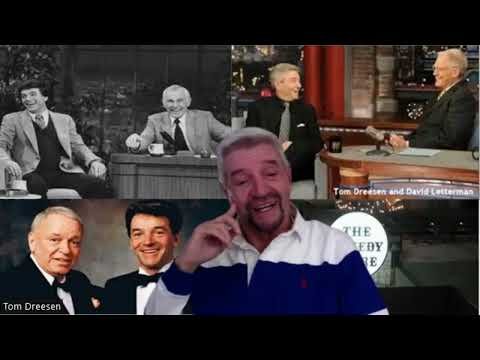
Tom Dreesen has been performing for over 50 years, and is one of David Letterman’s best friends, going all the way back to their stand up days at The Comedy Store. He is the author of two books: Tim and Tom: An American Comedy in Black and White, and Still Standing…My Journey from Streets and Saloons to the Stage, and Sinatra. Tom jumped at the opportunity to come on our show and say some nice things about his friend Dave. But he and Mike get into WAY more than that! This episode explores Tom’s early years, touching on his groundbreaking comedy partnership with Tim Reid, meeting Dave at The Comedy Store, (Do you know what their basketball team was called?) and the night Dave guest hosted Johnny Carson’s Tonight Show for the very first time, then joined the picket line during the infamous comedians strike right after. This episode is a delightful journey into the past and sets the stage for Part 2. We are so grateful for the overwhelming support of The Letterman Podcast so far! We have grand asperations for the show and are excited to celebrate Dave & Co and their incredible legacy in the broadcasting world. Please Like our channel, Subscribe here, (and where audio podcasts are found) and share the show. We also have a group on the Facebook where our community is growing as well. May all your favorite bands stay together!
Episode Transcript
Read full transcript
Welcome once again to the Letterman podcast. My name is Mike Chisholm. I come to you excited and grateful and with a little bit of impostor syndrome that I still that this is this is happening. For those of you who are enthusiasts of Dave and company when you realize who my guest is, you will see why. What the heck is this guy doing talking to some of the people that I've been talking to you know as a result of my enthusiasm for David Letterman and company and the tremendous body of work that they have created. I'm looking forward to the next few weeks of episodes that are going to be coming out. We're going to be doing we've got special guests of course like the guy that's on tonight. I got to tell you not making it up. He was in my top five of people that I wanted to have on this podcast. The fact that we're having him so early is flabbergasting to me. I'm gobsmacked by it. But we've got some other great guests coming up in the next few weeks and we've got the postmortem.
The postmortem is going to be having special guests talking about each episode of My Next Guest and then even more so what I'm really excited about is Dave's new show on Netflix. That's My Next Time with David Letterman where he talks about talks to I should say new stand-ups coming up who get a chance to do a set in front of him, have some panel with him. I was at one of the tapings a couple of weeks ago down in LA at the Fonda Theater. We're going to talk about that. We're going to go over that show together as a podcast. And that's very exciting, but I'm not going to talk anymore about that because I want to talk about who is on our show.
Before I announce him, we are going to talk about him. This is a man who I again said would in my top five when we decided to do this. The folks who worked for Dave who pushed me and and and around Dave, people who wrote books about Dave, nudged me saying, "Yes, you were the guy to do this this endeavor." I said Tom Dreesen is a guy I would really like to talk to very very badly. And the reason for that, for those of you who are new to the show, I've talked about the idea of passing the torch and and the transfer of knowledge and how important I think that is. We had Mark Malkoff on the podcast and and talking about the Carson podcast and how I just it astounds me how fast the many in the world have forgotten about Johnny Carson and how big he is. And I just appreciate Mark so much for preserving the stories, some of the behind-the-scenes stuff, and and the love of who Johnny was. And and we're brothers from another mother when it comes to that. The guy who's going to be on the podcast today, there are many things that I could say about him. We could talk about how he and Dave came up from the Comedy Store together. This is a guy who and by the way, I'm a I'm a I'm a former JC. He was a former JC. I love that connection that we have.
Tom Dreesen, of course, came up with Dave in the land of the Comedy Store. And while Dave's career bloomed into broadcasting, Tom's career bloomed not stand-up, successful stand-up of course, without question, Tom Dreesen is one of the best stand-ups the world has ever seen. But he also bloomed in a direction that he might not have been able to predict. How can you predict that you were going to get involved with Frank Sinatra and the Rat Pack? And you are going to be the carrier, the passer of of a torch, a torch carrier who passes on the knowledge and the stories of Frank Sinatra and and and the biggest people in show business. And how are you How does it happen that you become the guy that that that that passes on that knowledge and that intros and and and opens for these amazing giants in show business. That's what Tom did and but at the same time as they bloomed in their careers, they always stayed friends.
Dave and Tom always stayed friends and I don't know if there's anybody living on the planet right now other than maybe Paul Shaffer who's been on more late show with David Letterman or David Letterman shows than Tom Dreesen. Um I'm extremely humbled and excited that he has agreed to come on here and we can talk a little bit about David Letterman together. Tom Dreesen, um you've written the books two books the the the latest one is still standing my journey from the streets and saloons to the stage and Sinatra. And then I also want to talk to you a little bit about Tim Reid cuz you and Tim Reid black guy and a white guy comic team from back in the day. You you guys wrote the book Tim and Tom an American comedy in black and white. Um you're a legend in comedy, a legend in entertainment and uh Tom, you're one of my favorite people. I I swear to God I'm so excited that you have agreed to come on here today. Thank you very much for taking time out of your schedule to be here.
Yeah, I'm happy to do that because I know you love David Letterman and I know the people that watch this love David Letterman and I love David Letterman for all of the things that not for only for the things that he's accomplished but because I knew him back when and then and and to me he's never changed. He's the same guy. We have the same kind of relationship. But I like the fact that you introduced me as a legend but I want to tell you how you become a legend. All my critics are dead. You know So I outlived I outlived those who hated me. Yeah, I'm happy to be here and and happy to hear what you have to ask me about our mutual uh you know mutual what can I call him? Uh our mutual I would say our mutual friend but I I know that he signed an autograph to you to you know, to my my best friend. Yeah, you know what? I'm glad you brought that up cuz I just wanted to make sure there weren't going to be any static between us right there. Um, you know, hey, I mean, I got written proof here. I don't know if you have it in written proof or not, but I'm just saying, I'm going to get a lot of mileage out of this thing. Let me let me tell you.
Good. By the way, that's the classic of David Letterman's humor. That's his kind of humor. That that I mean that that that's the way he would sign an autograph to to thousands of people. My dad and then and then thousands of people in the world or now millions are going around saying, "I'm David's best friend." But you Darn right. you sure you are. By the way, he wrote the forward to my book uh and it was it's hysterical. It's hysterical the forward he wrote to Still Standing, you know, my journey from streets and saloons to the states and to Sinatra. Uh he he wrote the forward. I got I had other, you know, Clint Eastwood said something nice and Gary Sinise and you know, other people wrote in my book and and and I'm I'm I'm happy for all that, but David's was beyond hysterical, you know. Let's uh before we get into to some of the stuff that I've prepared to ask you about today. Um, let's talk a little bit about that.
You released the book cuz I mean, I know your stand-up your stand-up is fantastic and and at some point you started morphing the stand-up show into also telling um amazing anecdotes about the Rat Pack and Sinatra and and and all of that. Clearly, you can't plan for that in a career and when the book was released, you never really got a chance to do a book tour with it. Let's talk a little bit about that book and and I mean, heartfelt project I that that must be one of the the greatest accomplishments of your life being able to uh uh to take that and take these tales and and put them down on paper. Well, the you know, that my whole career wherever when I started out in show business with Tim Reid, you know, as you pointed out earlier, Tim Reid and I were America's first black and white comedy team. Yes. History shows we were the last. Uh Tim later be We stayed together 6 years and there were no comedy clubs in those days. So, we toured the nation all black clubs in the north and the south, what they affectionately called the chitlin circuit, black-owned, black-operated nightclubs, where I was the only white guy for miles. And then we'd go to We worked all white clubs, where Tim would be the only black guy.
So, we crossed the line. At that time, the Vietnam War was raging, students were protesting all over America. I had just gotten out of the service, Tim just got out of college. The There were riots, race riots in all the major cities in America, including the neighborhood I grew up in. So, America was in turmoil. And here we were going across the land trying to make people laugh. We weren't preaching, but we were just trying to make people laugh. So, the The interesting thing is in those days, all over the world they were saying, "You know what we need?" All over the United States, I should say. But they say, "You know what we need? We need better race relations. We need better race relations. We need more discourse among the races." For Tim Reid and Tom Dreesen at that time were the only discourse among the races. We were on stage having race relations. In order to have race relations, you got to have two people having a relationship. Tim and I were having a friendship and a comedic friendship on stage. So, we were having the discourse America was not having. Now, flash forward to 45 years ago. You know what they're saying in America today? You know what we need? We need better race relations.
You know what? Uh We need more discourse among the races. So, Tim Reid and I were America's first black and white comedy team in history shows we were the last. There's never been one since. And that speaks volumes. So, we wrote a book in 2005 called Tim and Tom, an American Comedy in Black and White. And And of course, we went around the country promoting it as much as we could. Now, there's talk of us of them doing a mini-series about Tim and Tom of yesteryear. It won't be me and Tim, of course, it'll be someone playing us. It'll be a young white guy. What we endured, the hardships we endured, and the joy we endured being a comedy team. We're still the best of friends today. His children call me Uncle Tom ever since they were little kids, which Oh, that is that's fantastic that his kids call you Uncle Tom. That's that's amazing. funny in itself. But may I say that when we wrote the first draft of this book, you know, we showed it to Dave, and the first thing Dave said was, "You guys were before your time." And I wanted the book title to be called Before Our Time, but the publisher insisted on this long academic title, Tim and Tom: An American Comedy in Black and White.
I I think Before Our Time is it should be the title of our mini series, too, you know, if it happens. But saying all that with in answer to your in the typical tradition of Tom Vision, I went way longer than I should. Please do, sir. As much as you want, you go as long as you want. You You got it. Why I wrote the book. Every since from the day one when I went in show business with Tim, wherever I I never thought I'd ever be a comedian, I never thought I'd be in show business. It was the furthest thing from my mind. It wasn't a childhood dream. But when I got into it, I fell so much in love with stand-up comedy, with making people laugh. The thought that you might make a living making people laugh overwhelmed me. I couldn't believe that God was going to grant my prayer and and find a job that that I love. Cuz I'd been wandering aimlessly.
But the moment I went into show business, wherever I went, if something poignant or something funny happened, that night I went home or I went to my room and journaled it. I would write down all these stories that happened. E- even meeting David and and all the everything in my life that I thought was a a poignant moment or a funny moment, I'd write it down and then I and I accumulate these stories throughout the years. A couple years ago, uh two young writers named John Russo and Darren Grub contacted me and said, "We'd like to write a book about your life, Mr. Gleason. We think it's a very interesting journey and we'd like to write a book about it." And I said, "Yeah, I've already written one, but I I've written one, but I would would love if you guys would help me with the narrative and stuff." And they did and they did a brilliant job. I would send them the chapters, they would tell me, "You know, this sentence should go into chapter four." And things like that.
They they really helped me so the book flows. It's a page turner and that's what a lot of the reviews are saying. We've got 355 star reviews now on the book on Amazon. So, I'm I'm thrilled about that. But I want to get back to David. I'm sorry, but cuz I'm this show isn't about me, although No, well, hold on. Hold on. Hold on. It's about Dave and company. That's that's the thing. And because when you know, we talked about this, you and I talked about this on the phone. The Tonight Show with Johnny Carson was phenomenal. It was like show business that opened the window for all of us to look in the window and watch it a little bit. Dave was completely different. Dave blew the walls off the joint and said, "Hey, everybody come in and be a part of that." And that included So, that's why this this podcast is about Dave and company. And and I don't know who might be a more important part of the company than you for a bunch of reasons. Before we move on to the Sinatra book, and I want to move on to that and talk about that and how you didn't get a book tour, you kind of got kind of screwed out of that. Thanks, pandemic.
I I when you and Tim came on the show to promote And by the way, Tim to me is always going to be Venus Flytrap cuz I was a little kid and that's how I was introduced to Tim as as as Venus Flytrap and it just delights me that that you and he have this backstory that I wasn't even born for that I get to unwrap like a present. But I want to ask you a question. Do you remember the song that Paul played the night where you and Tim came on the show to promote the book? Yeah, I would No, I mean I I went on. Paul played Come Fly With Me. He played Sinatra, Come Fly With Me. Yeah. But that night he played a different song. I wonder you know, I I know one song it could have been Ebony and Ivory. Close. Oh, that is Okay, you you that is that is a phenomenal phenomenal guess. It was Black or White by Michael Jackson. Oh, well, I'm we done with you. I I didn't I didn't realize that, yeah.
And and and and that was a phenomenal and for those of you who are who are on the YouTubes, uh please go in and check that um and if and if Don and if our friend Don Giller put it up, look at his feed of uh the interview between uh with with Tom and Tim on the show promoting that book. It was a phenomenal segment uh never mind uh never mind the book itself which which also I would recommend that if you can find it go pick it up. Uh let's talk about the Sinatra book though because I mean like at the end of the day could you have predicted in a million like if someone would have told you, "Okay, you're going to be this guy on the inside. You're going to be for lack of a better term a made man with Frank Sinatra and company to the point where you're going to be passing the knowledge of these amazing stories of show business. Could you ever in a million years have predicted that?"
No, and you know, the book is not really all about Sinatra. It's my journey. You know, and and and and also the one man show I do is that you're talking about it's called The Man Who Made Sinatra Laugh. I do it in theaters around the country, you know, and and and basically I come out there's a screen comes down and Dennis Farina, God rest his soul, Uh-huh. he narrates my my life story, you know, in about a 3 and 1/2 minute film and and um then I come out after the film and I do stand-up comedy, which is what I am, a stand-up comedian. And I I do about 25-30 minutes and I wander over to a stage and and and the I wander over to a bar on the stage and I sit on a Jack Daniel's on it, which was Frank's drink of choice. And I tell a funny joke at the bar and when the audience is laughing, all the lights go out and on the screen Frank is singing like to me, "It's quarter to three, there's no one in the place except you and me.
Set them up, Joe. I got a little story I think you want to know. It's like he's singing to me and I got a drink, you know. And I got goosebumps right now. when he gets to the course make it one for my baby and one more for the road, you know, he goes off screen and now the spotlight hits me and I'm in a bar. And I've come home and the audience is in a bar with me in a saloon. And I say that I tell them the first time I heard that voice I was 10 years old shining shoes in a bar in the south side of Chicago, suburb called Harvey, Illinois, and he was on the jukebox. And then I take the audience from that little boy hearing Sinatra on the jukebox on the south side of Chicago to one day carrying his coffin out of a church in Beverly Hills, California. And I take them on that journey. As I'm telling the stories, pictures are coming on the screen authenticating the stories. So, I start out with my childhood and there's pictures come on the screen to my years in the military.
Pictures on the screen to coming out of, you know, meeting Tim Reid in the JCs as you pointed out, you know, going in the show business and Tim and Tom pictures and what we endured and profound stories, poignant stories, funny stories, you know, through that. And then the team splitting up and me struggling going to the Comedy Store where I was on stage every night with all these unknown comedians. The struggle to get on the Comedy Store in those days. The pressure was enormous. There weren't any comedy clubs in LA but the Comedy Store. There wasn't the Improvisation nor the Laugh Factory at that time. Yeah, they all came later. It was on Sunset Boulevard and comedy was the rock and roll of the '70s. As you pointed out, as David went there, Jay Leno went there, Tom Dreesen went there, Michael Keaton goes there. All these people came from all over because one appearance on The Tonight Show and your career was on its way. Freddie Prinze made one appearance on The Tonight Show and he got a sitcom the following day. That showed where we were in America at that time.
People say, "What do you do for a living?" I'm a stand-up comedian. The next question out of their mouth was, "Oh, yeah? You ever been on Johnny Carson?" If you ain't been on Johnny Carson in the eyes of America, you weren't a comedian. So, that's where we all migrated from all over the country. Johnny Carson had been in New York with his show, and he moved out to Burbank. Yep. In 1972. By 1975, it was the show to do. So, we all came from all over the country, and the audition at the Comedy Store to get on at the Comedy Store. If Mitzi didn't like you, the owner of the Comedy Store, Mitzi Shore, if she didn't like you, you're going back to Vancouver, buddy. You're going back to Toledo, or back to Chicago, wherever you're from. Cuz that was the only game in town. So, the pressure was enormous to get on at the Comedy Store. Yes. Once you finally got on the Comedy Store, then you got all these people to come and see you. And I would go on stage every night with all these unknown comedians. David Letterman, Jay Leno, Robin Williams, Gallagher, Michael Keaton, Elaine Boosler. You know, the girl waiting tables was Debra Winger, you know, all these unknowns. But, you know, and and that's where I met David, you know, and so, you want me to tell the story how I met him?
Oh, yeah. You know what? We can get to it whenever we want. I want to make sure your your your book is adequately covered, but we can we can PS that and make sure we do it before the end. I we definitely definitely want to hear how you met Dave. Okay, so now, but my in the the in that story about the book Yes, sir. book is my journey. It takes you through the years I toured with Sammy Davis Jr., Smokey Robinson, Gladys Knight and the Pips, Natalie Cole, you know, Tony Orlando and Dawn, Frankie Avalon, James Darren. I worked with singers all over because they were looking for a comedian that could work clean cuz they had family audiences in front. Right. In those days, television was only this big. ABC, CBS. You know, later when cable came along, you could work as blue as you want, as filthy as you want. You know, but when I started out, we were in the business, show business. How were we going to get the world to know who we were? Well, then we had to get on the Tonight Show. Everybody knew that. So, well, how do you get on the Tonight Show? You're You're in show business. What's the business side?
Well, you watch the Tonight Show and say, "Oh, I see. You got to write material that can make grandma and grandpa, mom and dad, and the kids laugh." Yes. You know, so that's the kind of material you had to write. And so, we all went on that that endeavor, you know. And and you know, and and so, it was It was the place to work, the Comedy Store. And and so, the book takes you through all that stuff and to finally turn with Sammy, all the other people, and finally how I met Frank Sinatra and how how I said something funny to to work with him for 1 week. And I thought that that was going to be it. The second night I was I figured, well, I'll work with Frank 1 week. I'll get try to get my picture taken with it with him. I'll hang it in every bar back in Chicago and and say, "I Okay, before you continue on with that, uh I want to bring this back up for a second.
So, so, so, during that exchange, that's me talking to Dave, and that's Dave uh the the way I like to say it is he's using me as a comedy speed bag for the audience at that point. Now, during that exchange, there was one moment I talk about this. I've written it all out and all that stuff. There was one moment where I made David Letterman laugh during that exchange. And in in in that moment, like it was one of the greatest moments of my life. And I literally we left the Ed Sullivan Theater that night, and I was calling my dad, and I I called my dad at home, and I said, "And and I was almost I'm I was I was emotional about it." I said, "Dad, I made David Letterman laugh tonight."
Now, clearly, that was just the beginning for you when you when you did that with Frank. Do you remember making him laugh for the first time? And and was did it make you feel something inside when you did? Oh, yeah, man. Are you You know, if if you played a word association game with me, Yes. it I a raggedy kid growing up in the South Side. I had eight brothers and sisters. We lived in a shack. We had no bathtub and no shower, no hot water. I had holes in my shoes as big around as as as a coffee cup, you know. Uh you know, I was shining shoes in taverns, setting pins in bowling alleys, caddying in the summertime, selling newspapers, all to feed my brothers and sisters. Yeah. If you were to play the word association game with me in those days and said love, I'd say mom. If you said baseball, I'd say Chicago Cubs. If you said show business, I said Frank Sinatra. Yeah. The epitome of show business was Frank Sinatra. He There's no greater career than that. No greater career than that.
I don't care what anybody says, he's the greatest pop singer of all time. He went to the studio 1,431 times. He He had over 100 albums. Forget about he was the greatest pop singer of all time. He won the He was an actor. Yeah. He won the Academy Award. He was in 61 motion pictures. Yeah. He has three Academy Awards in his lifetime. He won the Academy Award in From Here to Eternity. He never took an acting lesson. One night sitting with him in his compound, him, Gregory Peck, Kirk Douglas, Clint Eastwood, it was Robert Wagner, Jack Lemmon. All the women had gone to bed. We were sitting up till 3:00 in the morning, you know, having a few drinks, and they were talking film. And I was fascinated that these that the all these actors were showing such great reverence to Frank Sinatra. So, I was curious and I said, Frank, cuz in Hollywood, everybody wants to know who you studied with, you know.
Oh, yeah. Okay. Who Did you study acting? And before he could answer, Gregory Peck grabbed my arm real hard. He said, acting lessons would have ruined him. He was a diamond in the rough that you didn't fool with. This is a man who danced with Gene Kelly, for God's sake. He never took dance lessons. This is a guy who uh you know, when you gave Frank Sinatra a song, when you gave him a song, to him it was a script. What did the writer feel the night the writer took pen in hand? He would immerse himself in the lyric and become that lonely guy in the bar whose woman left him and you're never going to find love again and he felt that. And then the joy of a song, come fly with me, you know. I mean, there was never a career like that. So as a little boy, you know, to think that you would meet this guy one day, let alone him to say, "Come fly with me, Tommy." and grace the stage with me wherever I go. You grace the same stage with me. 20,000 seat arenas, 40,000 in Hawaii. To walk out all these people expecting Frank Sinatra and your job is to turn all that around and get them laughing and get them ready for for him.
I mean, all all those incredible things. Um So no, I never I I I the the thought that I could make him laugh. You know, the I was with him for two nights. We were doing one week at the Golden Nugget in Atlantic City. And the second night, like I said, I thought it'd be a week gig and I'd say, "Great." Second night, he and his wife Barbara took me out to dinner. In the middle of the meal, I can remember like it was yesterday. He set his knife and his fork down. He said, "I like your material and I like your style. I'd like you to do a few other dates with me if you're interested." And I didn't say, "Let me check my calendar." Yeah, no. You Yeah, absolutely. I mean, and and that turned into 14 years of 45-50 cities a year. A friendship that At first he was like a boss of the tour, of course. Second and years went by, we were buddies. We hung out together till 6:00 in the morning, you know. He never went to bed till the sun came up. So whether I was seeing at his home, I stayed at his home six times a year. A big compound down in Rancho Mirage, Palm Springs area. Or whether we were on the road, we hung out till dawn. It became this incredible friendship. I was a pallbearer at his funeral. I spoke at his funeral. And and I miss him every day of my life, you And and I want to do a quick thing about Dave.
Yes, sir. Dave said to me one time, "What I can't believe you're with Frank Sinatra. Frank Sinatra? For God's sake, I mean, you don't talk to him, do you? Come on, you don't talk to him. I said, "Well, of course I talk." No, you don't you don't really I you sit and talk to him like we're talking right now. I said and I start telling him I said, "Yeah, on the road at his home with the" He said, "What what do you talk to Frank Sinatra about? You know, what do you, Tom Dreesen from the south side of Chicago, talk to Frank Sinatra about?" I said, "We talk about you." Yeah, yeah, yeah. But the irony is that I'm in Hawaii with Frank and we're at a big dinner with Tom Selleck and a bunch of people and I've got a tape recorder with me and I'm going to do a roast for Billy Martin who was the manager of the New York Yankees at that time. Yep. Frank knew him and I had said to Frank I I said when I leave here I got to go into New York I'm doing we're roasting Billy Martin.
Oh, jeez, tell him I said hi. I said, "If I bring my tape recorder would you say something on the tape recorder?" He said, "Yeah, yeah. Bring it to dinner tonight." So, I bring the tape recorder and Frank and I are about to talk. I said, "Frank, I" Oh, yeah, Tommy. I said, "It's Billy Martin and say whatever you want." And I pressed the on just in time Selleck interrupts Frank and now this is all on tape. They're talking. Hey, how you doing? Lou blah blah and somehow they start talking about Frank's dog and Frank says, "You know, I sing to my dog.
You know, I I sing to his face and when I sing to him the dog goes woo like back to me." And so, they were talking about it and Selleck says, Gee, Frank says, "I'm thinking about talking to Fred de Cordova and bringing the dog on the Tonight Show and doing that." And Tom Selleck said, "Gee, you should take him on David Letterman. He has that stupid pet trick thing." Oh my god. All this is on my tape recorder and and and and Frank said, "Oh, that's the guy." Now, this is years ago. He said, "That's the guy who follows Johnny." He said, "Yeah, he's crazy but I love him." That's what he said. You're kidding me. That must have blown Dave's mind. I've got I've got that on tape. So, now, when I originally said that to Dave, I I was joking. He said, "What do you talk to Frank about?" I said, "We talk about you." "Oh, yeah, yeah, yeah, yeah." Now, when this incident happened, I bring the tape in the in the New York with him. I said, "Remember when I told you?" And I click and sure enough there's Frank saying and talking about David Letterman.
Um the there are levels of satisfaction that must have come from that story. That just That is fantastic. Um I love to ask you this one question cuz everything I've read about Dave and heard about Dave, um when it comes to when when it came to Johnny, you know, and and I don't know if uh Frank Sinatra to Tom Dreesen is what Johnny Carson is to David Letterman. I don't know if that's an SAT question that would be accurate or not, but I bet you it's pretty damn close. Um you've heard I've heard and read stories that when it came to talking to Johnny, Dave was very standoffish. He didn't want to he didn't want to wreck anything. It was almost like he's walking on eggshells a little bit, uh at least early on. And and and the idea where he says to you, you know, "What do you talk to Frank? Do you guys actually talk or whatever?" I'm wondering if he's kind of inventorying that in his mind and cataloging and comparing it to the relationship with Johnny. That's the first thing that came to mind as you were telling that story.
First of all, David Letterman would be uh you know, nervous talking to you. You know, I I I I only said it because he he he I I I wrote this so many He and I are best friends, so him being nervous talking to me is crazy. Well, I wrote this so many times that and said it so many times to David, David never ever realized just how good he was at what he did. He would never take credit for that. He never even when he was a stand-up and he and he would never do stand-up afterward how funny he was. How good he was. But he he he he he's not a guy and by the way, Johnny Carson was the same way. He They didn't They don't take compliments easily. And I didn't for many years when I was in an acting class when I before I was ever in show business. I couldn't take a compliment. I would be uneasy. But I was in acting class one time in Chicago before I when I was still with Tim Reid. And I did a scene and a husband-wife team, Madeline and Joe Young were the the the teachers. And he Joe Young didn't compliment you rarely, the the teacher. And he gave me a compliment on the scene and I just hummed hummed and and his wife said, "What's wrong with you?"
"He just gave you a compliment." I said, "I'm I'm not good at taking compliments." He said, "Why don't you just say thank you and shut up." I said, "Okay." Sometimes the simplest advice is the best advice. The rest of my life, whenever somebody I say, "Thank you." But David doesn't take compliments easily. So, he would be he was always uneasy about sitting down with Johnny, you know, I went with David the first night he hosted the show, you know. I I went with him the the first time he did the show, you know. Not the first time he did the show cuz he didn't want anybody around him at that time. Even the girl he was dating at that time, Marlo Marceau, he didn't want her there, you know. For his first shot. And that first shot was legendary. I mean, he talk about being shot out of a cannon onto the stage of The Tonight Show. His original set was was fantastic. I got to let me digress to that.
Yeah. To that, I I was doing The Tonight Show a couple times and they had me up for a game show. A guy named Ron Greenberg, real nice guy. He came to me and said, "They want you to maybe host a game show." And I I I went They ended up not wanting me. They wanted the guy Jim Lange who did The Dating Game many years ago. Right. And but there was two guys, Lloyd Bochner and and Jim Lange who who were up for it. But Ron Greenberg said to me, "Tom, the networks are after for a bigger name to be the host of the the show in those days. But would you help me break in these two guys to find out which one we want by bringing some of your comedian friends over here play the game. Yep. Yep. It was called throw me a line. It was the name of the game. So I brought Jay Leno. No one knew who he was at the time. I brought David Letterman, George Miller, Johnny Dark, Elaine Boosler. Um I I there other people um anyhow, but Imagine a show written by those names by the way. Just just the cleverness and hilarity in that group that you just mentioned and and the idea of throwing lines and being part of a game show geniuses when you look back with the benefit of of history and hindsight. Oh my god, what a what a stream that must have been.
It was really and and and what really happened was the first night we did it the first day we did it we were they were going to give us $6 a piece, you know, and we we we really wanted the $6. More than you were making at the Comedy Store by the way at that point. We we made no money at all. Right. We're going to talk about that, too. So so anyhow, so you know, we all went there. Now Jay was his funny self. George Miller had with clever lines. We all were having a lot of fun. David wasn't really funny that day. He wasn't really on to it that day. Now when we when everybody left they went outside Ron Greenberg said to me Tom, I wish I could think of the girl's name, but he said Tom, have everybody come back tomorrow, but don't don't come back with name the girl's name. I forgot I'll think of her name in a minute, but anyhow, It wasn't Lynn, was it? No, no, she was a black girl and she was a nice girl, very shy. She eventually was on on the movie Roots, you know.
Okay. She was a nice girl. But yeah, he said and the guy Dave Letterman, I said he said I don't think that he wants to play the game. I said, oh, Ron, he's really a funny guy and and you know, the show he he said, well, you know, Tom, I don't think he really was into the game. I said, Ron, he wasn't really loose today, but he's a fun guy. He said, all right, be six bucks. He didn't care. So I went outside David was leaning up against a parking meter and I said, "Man, I apologize. You know, I said, "What are you talking about?" You know, he said, "No, I mean I know I didn't I didn't I just couldn't think anything clever or something like that." I said, "They want us back tomorrow. You know, we're going to have a good time tomorrow." We went back the next day and Dave killed he killed them. You know, some of the questions were I remember they they The guy Lloyd Thaxton every time he'd go to Dave, David say, "Well, thanks Lloyd." You know, and the next time he'd say, "Thanks Lloyd." He'd never call him Lloyd, you know.
The questions was, "Why would a person wear garlic around their neck?" You know, that's an old Italian thing that garlic around your neck will make you healthy if you wear garlic around your neck. Yeah. It was a whole thing at the time that it was a healthy thing for you. So, the question was, "Why would a person wear garlic around their neck?" And Dave said, "Cuz it goes with the it goes real good with a brown sport coat." You know, or something like that. Idiot. Dave had these clever like Anyhow, he was so good on that that uh when they showed it a screening at NBC, Madeline David who was at NBC at the time saw him and said, "Whoa, we want to keep our eye on this guy." And that's the time Oh, wow. I know I know Rollins and Jaffe will take all the credit for and they should. I'm I'm not trying to but I'm telling you the first time she saw him was on that show. And then um when they when they finally did the pilot, they didn't want us. They wanted what they they wanted um all the stars of that time, Jack Cassidy, all these guys who were on TV shows men and women.
Yep. We did a pilot so those people those stars could see how the game is played. And Jan Murray was one of the comedians at that time when he saw it, he told NBC, "Why do you want us? Those kids are brilliant." Those are newcomers and they're brilliant, you know. So, anyhow, long story like you guys were like I think about the the opening class of Saturday Night Live. And and and I think that that group at the Comedy Store, your generation and the next generation, which included like Seinfeld and some of those other those other people and then it got to like Kinison and those guys. Uh when I think about generations of of of of actors or comics or funny people how they all kind of bloomed together and helped each other come up together. I'm fascinated by that. There's another thing that I'm fascinated by. One thing that Dave has said many many times both in written and and verbally it has been talking about confidence.
And and and you're describing a guy who you know drove for whatever reason drove his pickup truck all the way across the country to say you know what I'm going to go take my shot look move towards my dreams and whatnot but clearly not a confident guy and one of the things he said about confidence is that many times and he said this during the um he said it one of the times he said it was during the 9/11 address to the nation and I don't know if there's ever a more important time where he was on was he a broadcast than that day and he said what I'm about to say that day. You know when it comes to confidence or being being scared of something and courage pretending you have courage many times is the exact same thing as the real thing and and it sounds like day two there you got a guy who's you know not courageous but pretending to be courageous and suddenly the entire world takes notice. One of as you know we talked earlier I give motivation talks Yeah.
perception visualization self talk I love that stuff. You want to elaborate on them. One of the things I say to young comedians when they're when they're when they're starting out and I'm scared I'm nervous I I say act as if you are and you will be. You know what do you want to be? And I I too like any other comedian like David Letterman when we first started out I didn't walk out on stage the first time I went out there like this calm collected guy you know that that years later opened in front of 20,000 people open mic. I too was nervous and scared and frightened and could I pull this off? But I remember reading an act as if you are and you will be. So I said, I'm going to act as if I am a very calm, confident comedian. I sure hope that works.
And and and and you weren't at first, but you start acting as if you are and you become that, you know, and and yeah, courage I spent four years in the military, you know, it's hard to describe what people are going to do under circumstances when the [ __ ] hits the fan. Yeah, it's hard to describe. You don't know how you're going to react till that comes, you know, that that there's no Stand-up comedy is the highest of highs and the lowest of lows. When it works, there's no describing that you wrote all this material and you produced it and you directed and then you performed it and it worked. You go back to your room or back to where we are on cloud nine and there's no describing when it doesn't work, the lowest of lows, you know, so it's courage is really acting courageous when you're really not, you know, being courageous things when you really don't want to.
I and and and Dave, I mean, is is is a prime prime example of that anecdotally. Again, never met the man, but but have heard this over and over and over again and how a giant like this with a giant talent like that can cannot understand it. Like I've talked to so many folks who worked for him and and everybody there just loved him and and he didn't from what I'm hearing, he didn't know it. He didn't understand it. Like he didn't he in a in a million years he could not fathom the joy and the love that the folks around him had. Like I think about a guy who's going to come on the podcast here in the next few weeks. His name's Brian Teta. You know, that guy come came in and started as an intern there just because he worshipped Dave, and I I live vicariously through that guy cuz if I could have gone on to that show as an intern, um I would have done it because of the admiration that I had for him. And isn't it ironic that so many people thought so much of him, his talent, um how just how funny he is and and thoughtful and all these things. And and then there's the things that people don't know about generosity and all these things.
And he doesn't get a chance to necessarily know it or enjoy it. That's really ironic that someone who is that loved doesn't doesn't uh can't live in it. Why he strove to be as great as he was, you know, and and he that he never really I mean, these are my personal observations and may not be true at all. Sure. I don't He never really felt like he deserved that much love. And he did. Wow. And and by the way, I'm I'm I'm going to make an equation that if Dave was here, he'd go, "Oh, stop." But I Mickey Mantle was a friend of mine, and I never went to Yankee Stadium. And the first time I went to Yankee Stadium Mickey was long retired. I was under contract at the Claridge Hotel in Atlantic City, and so was Mickey. He he was a greeter there, and he brought four different um he brought four different uh um high roller uh but junkets into the Claridge Hotel a year. And for that, they paid him, and he played golf with these high rollers and and smooths with them. But now I'm invited um master of ceremonies for the Billy Martin. They were retiring his number at Yankee Stadium.
Yep. And and all the old-timers are going to be there that day. So, I go to Yankee Stadium my first time. And I'm sitting at Yankee Stadium, and they're introducing all these people, Whitey Ford and Billy Martin I mean, not and and um Yogi Berra and Joe DiMaggio. Sure. All of a sudden, after all these major stars that people are cheering, in the dugout, you can't see him yet. You know, Mickey's going to come out, but all of a sudden the stadium started to tremble. And I thought I'm living in California. Oh my god, we got an earthquake. It's an earthquake. Stadium was shaking. And and finally Mickey comes to the top of the stairs and those people in New York went crazy. Yeah. Cheering and cheering and later I said to him, Mickey, you're a little small town small town guy from Oklahoma. These Bronx, Queens, Brooklyn, Manhattan, these mean, tough New Yorkers adore you. How does that make you feel?
And he fluffed it off. Like, oh, well, you know, Tommy, I like he didn't hear it. And that's David Letterman in his world. David would never say, well, yeah, you know, I I did this and I did that. He The last thing he would ever do was think that he deserved that much love. But you know, and respect, you know. Yeah. Uh the the you know, whenever people used to say to me, and by the way, Jay Leno uh was my friend. I met Jay before I met David. I met Jay at the Boston Playboy Club when I was working there. Jay had been in the business for like 4 months. A friend of mine, a comedian named Mike Preminger, introduced me to him. I came offstage one night with him and and I said, hello to him. Jay had big glasses and a goofy hat and a pipe and he'd been a comedian like 4 months. So, I knew him a long time. I met David much later, you know. Sure. Whenever somebody said to me, you know, do you watch Jay Leno or do you watch David Letterman?
I said, the way I feel about it and I think you'll agree with me. If I was going to watch Jay Leno, I want to know who the guests are. If I watched David Letterman, I didn't care who the guests were. You see where I'm coming from? Oh, oh, 100% and and this was going to be this was part of your intro that I I was going to make for your outro, but I'm going to bring it up right now. Uh there was a period in time I went through divorce and I was going through a hard hard part of my of my life. We all have the our ups and downs and things and um uh the the best part of my day um and I love late night, I love all of Dave's incarnations, including the the stuff he's doing now. I love it all. But Late Show was my favorite. I loved powerful Dave. I just loved how Dave had had done all the work and gotten to the place where 90% of the time the person in the chair beside him, he was bigger than that person.
And and my favorite my favorite moment in in the television in the day was watching the first segment where Dave would just talk to the audience. And I know as as time went on later on in the show in the run, sometimes you would have a beautiful piece of comedy sitting right beside him and he would ignore that to talk about, you know, a bear got into the house or or some things. And I just love when he talked to us. Now, my second favorite thing was when you or some of the cohorts from back in the day were on.
And I And that was going to be part of my intro. I loved when you and some of these guys were on. And I want to go into that later as as as we talk about you coming on there. But for me personally, to go back to your question, all I wanted, it didn't matter to me who was on Letterman that night. All I wanted, and and Johnny was the monologue, and I understand why Johnny was the monologue. For me though, it was the first segment after the monologue. And and that was one of my favorite moments in the broadcast day. And I think you could probably hear where I'm coming from with that. That's because to be honest with you, you were seeing a part of David Letterman that very few people saw. He was being personal with you, sharing his story with you. friend on TV. Absolutely. And and he was he was being very intimate. And and you know, and you know, he was very good at In in in acting, they teach us about the fourth wall.
You know, the In acting, there's three there's four imaginary walls for those who are viewing this that may not know what I'm talking about. Others will say, "What do you I'm you think I don't know what the fourth wall is?" But you know, there's an imaginary wall to your left, imaginary wall to your right, and going upstage there's a wall there, and there's a wall in front of you in the audience. When you're in a stage play, so that's why you can hold your brother's head in your arms and tears run down your face cuz he's dying and you're sobbing that you don't want this to happen cuz no one's there but you and your brother. The fourth wall is up.
Yes. as stand-up comedians we have to tear the fourth wall down. Yeah. We walk out there and there is no fourth wall. We're we coming with you. And David did that so well on TV. You he he those personal moments, you know. Again, he could never ever accept these compliments. You know, he just I said to people a lot of times, he just didn't know how good he really was. Yeah. Yeah. Well, a part of my part of my deal is is I want to transfer this knowledge to people. I don't like that I got 25-year-old kids that you know, think certain pieces of comedy don't they don't even realize that those pieces of comedy were were were borrowed from Dave who innovated it and things like that. That's part of it. The other part of it is if if I can assemble if we can in this through this show assemble a whole bunch of people who worked with Dave, you know, were friends with Dave and and and appeared on the show with Dave, but also I'll tell you this Tom like it's the craziest thing.
You talk about breaking that fourth wall, he didn't just do it as a stand-up, he did it as a broadcaster. And and and it was almost like and this is a question I was going to save till till later, but I might as well bring it up now. Late night to me like the idea that you guys got a chance you and and David and all of his friends got a chance to almost be like a frat house is is is the way that I would kind of kind of describe it. And then he would then break the fourth wall and call a random payphone. Well, I'll tell you this, the person who rang or who answered that payphone 30 years later, 35 years later is still talking about it and they want to come on the show and they want to they want to be a part of it cuz it made them feel part of something.
And I feel like Dave and and and company at that time did something in broadcasting breaking the fourth wall that had never did been done before and we all kind of feel those of us who attached ourselves to it all felt like we were a part of something.
Well, first of all, you said the magic word there that people don't often say. David never considered himself as a stand-up comedian but as a broadcaster. Yeah. And that's what you you caught on to after a while. He was very funny in stand-up, you know. I used to watch him at the Comedy Store just knock you knock him dead. He was very funny, very clever. But he was a broadcaster. Yeah. And he was very very very good at being a broadcaster. You know, the the people you're talking about are Jeff Altman, George Miller, Johnny Witherspoon. You know, to this day, Johnny Witherspoon passed away, George Miller passed away. But when Jeff Altman's in town and and Dave's in town, we get together and we go to dinner. Tim Thomerson was another comedian who started out with us and later became a brilliant actor was in Yeah, he he he's on my list. Absolutely, he's on my list as well. He was Tim Tim is um uh you know, we we get together when we come when Dave comes to town. And one time one of the assistants told me that, you know, David really doesn't uh the the only thing that he thinks about the past is the Comedy Store. To him that that's those are very special uh times there.
Yeah. He treasures of of us getting together and and this claim for fame that we're all struggling to get known as comedians. David came to California not to be a stand-up comedian, not to be a talk show host. He was going to be a writer. Yeah. cuz he's a very clever writer and he wanted to be a writer and and that that was fascinating to him to be a writer. And all the And and again, he wrote some funny stuff so he thought he'd give Like a lot of writers used to do in those days, they would get up at the Comedy Store just not necessarily they wanted to be a stand-up comedian, they wanted to see if they they were the stuff they wrote was really funny. Cuz you can write tee-hees all day long sure with sitcoms. I can write a tee-hee, but when you're stand-up you got to have a guffaw. You know what I'm saying? You know you know a lot of times I'd be preparing as an actor on sitcoms and and they'd write a tee-hee for me.
Sure. I'd say to him, "Would you go tonight to the Comedy Store? Would you go to the Improvisation and do this joke?" Because it's a tee-hee because you had the laugh track there. You know so they would writers would come to the Comedy Store and David was one of them that wanted to see if he was really that funny his stuff was that funny and he had tested it out and and and it was you know. No one handled hecklers better than David. David I you have to remind David of this all the time. One time you know David was on at the Comedy Store and in the audience was Ringo Starr. But at that time Ringo who had broke up with the Beatles Beatles you know was having he was drinking and you know and and he was in all the tabloids of doing this and doing wrong things and his boy Ringo's what's he doing? He later straightened his life out God bless him. That night he was drunk and he was in the back of the room and David was trying to perform and Ringo was talking loud you know. All right all right all right all right and David didn't know who it was so he starts going back and forth on this guy and and burying the guy a little bit and finally comics came up to the stage and said, "David David that's Ringo Starr." That's Ringo.
The audience but David said, "Ringo? That's Ringo?" And he goes, "That's right mate." And David said, "That's great." He said, "You're ruining your [ __ ] career and you came here tonight to ruin mine." And he was a new he was a new guy at that time. Of course we we howled. You know uh And then okay let's let's bookend that and how crazy like we talked about your life with Sinatra with Letterman. Okay that happens at the Comedy Store. He's just starting out. And then some few decades later, Letterman is the king of broadcasting sitting on the same stage that the Beatles made the introduction to America talking to Ringo in the chair on the very like like how crazy is that? Well, you know, those are those are what great books are about. Yeah. And and this is a cheap plug on my book, but a lot of people say there's a lot of full circle. And you know, the kid shining the shoes and and and and then, you know, hearing Sinatra and then one day being his opening act and flying in his private jet and saying so. I mean, those full circle stories are great stories.
David Letterman told me when he was a little boy he would he was a little boy, probably five or six or seven years old, he would watch the like the Ernie Kovacs or the Steve Allen show and he with a I called them an Erector Set, but he called it something else. He made a microphone. He made a microphone emulating the person on TV. And years later, he was that person on TV. Those are those full circle stories. David would never tell you that story, but he told me that story. And and and he he would he would agree to what I'm telling you. Those are the wonderful full circle stories like you say, Ringo's heckling him and now Ringo's wanting to be a guest on his show. You know, uh Uh there's a lot of those full circle stories. I'm going to send you some pictures when we're done with this interview. Yes, sir. One of me, George Malone, Dave at the Ice House in Pasadena. We were over there to try out new material and there's a picture of us sitting there and I'm and and I'm telling a story and David's looking at me, but behind David is a I'll show you how old the picture is.
There's a payphone behind David. So, when was the last time you saw a payphone in But I mean, we we we we hung together, we played racketball together, we played basketball together. He was on on the Comedy Store basketball team that I I got Mitzi to agree to buy us uniforms, the owner of the Comedy Store, and and I was the captain of the basketball team, and it was called the Comedy Store Bombers. And the Jimmy Walker, J.J. Walker, and there's Tim Reid, and there's me, and and there's a lot of other people there, but there's also David Letterman and Johnny Witherspoon. Um, and David was a a foul a forward, and a good basketball player, but he'd always tell you he wasn't, but he was a good basketball player. We played pick-up games over at the Van Nuys YMCA. He was a good basketball player. He was a good racquetball player. He didn't know that first, I kind of taught him the game, and I was beating him like 15-2, 15-4, 15 and pretty soon, I mean, 21-2 21-2. Finally, he started beating me.
You know, he and then then he became very aggressive at the game, you know, and uh one time hit me in the ass with a racquetball, cuz you get in front of a good racquetball player, and you you crowd him too much, and and you might get hit. Yeah. Sorry, and they David almost knocked me to my knees with that whack. Then he said, "Oh, I didn't mean that, but I should You you protect your space. Who was the anchor? Who was the uh who was the goat? Uh the greatest of all time on the on the on the Bombers? Who had the best game? Who was the better player? Who was the best player? Yeah, who had the best game? Well, you know, it it'd be hard to take it away from There was a a center named Roger Baer. He was with a comedy team called Roger and Roger at that time. And Roger played for the University of Louisville, I think. Oh, here we go. Okay. So, he was your ringer. He was our center, and he was a good player. But, I mean, they were all David was a good forward. Um, the Mooney twins, Paul Mooney had sons, Daryl and Dwayne Mooney. They were real real good basketball players. They were real good ball handlers. They they bring the ball down court, and the only problem was is we always said if we wanted to take a shot, we had to steal the ball from the Mooney twins. They only passed to one another.
And uh anyhow, uh but but you know, um they were good player I mean, they were all good good players on that team, I have to say, you know. I uh this this delights me. I can't wait to get the I can't wait to get the pictures from you and whatnot. You say you got a picture of that, too. I just watched Dave, obviously the new season of My Next Guest just came out. Kevin Durant was one of the guys and and seeing Dave on the court with Kevin Durant was hilarious and and and fun and it's neat to talk about this just a couple of days later. I want to talk to you a little bit about like Tom just just so you're aware, we're building a community of people here. We had Eddie Brill on and some other folks uh who have been on the show. We're going to ask them back multiple times. I could literally keep you all night and I will and I I'm I'm not by no way by no means am I trying to end things right now, but there's a couple phases I want to talk about because it is so big.
Uh there was a big night from back then before we kind of move into the '80s and move into late night, though, um that I wanted to ask you about. Uh it was during the strike. If I if I could kind of sum it up real quick, uh for those who want to know about the strike at the Comedy Store and and and we really at the end of the day stand-up comedy was in its infancy. It was evolving and and and Dave and Tom and company were all a big part of that. Um like we alluded to earlier, they didn't get paid and and the comics kind of came back and and and and Tom as a as a de facto I think it's the JC training, honestly, um you know, was a part of the infamous strike uh at the Comedy Store. If you want to know about that, watch the uh the Comedy Store five-parter that just came out uh about a year ago, year and a half ago. Phenomenal, phenomenal.
Uh but I want to talk a little bit about the night that David Letterman joined the strike because I'm I'm I'm I'm flabbergasted and again intrigued beyond measure that if I have it right, the very first night that David Letterman was the uh replacement host for Johnny Carson on The Tonight Show, he literally did that for the very first time, left the studio in Burbank and came right over to take part in the strike at the Comedy Store. Were you there when Dave showed up and and what was it like listening to him talk about hosting the Tonight Show for the first time?
Well, you're you're accurate in all that. By the way, if they want to know about the strike, there's a book that was written called I'm Dying Up Here. Phenomenal book. Highly, highly recommend it. And we had Mitzi Shore and it's to me a very authentic um you know, retrospective of that strike of what happened. Yes. The Comedy Store was starting when we all started out there and the woman Mitzi Shore wanted in a divorce and she struggled and worked hard and built it into this dynasty. And now they were making a lot of money. And and anyhow, I was working. Now, I was touring with Sammy Davis. I was doing the Tonight Shows. I was doing Dinah Shore, Merv Griffin, Mike Douglas, Johnny Carson, Midnight Special, rock concerts, Soul Train. I'm doing all these shows. I'm on my way. I'm making a lot of money. Every time I'd come back to go to the Comedy Store, I'd try out new material cuz I'm doing the Tonight Show. You had to do a brand new 6 minutes every time you did the Tonight Show.
You had to keep coming up with new material. So, I go back one time and and I think I'm going to go in the original room where we all worked. In the meantime, Mitzi had bought off the other half of that building. For if you all you trivia buffs, that building used to be a place called Ciro's, c i r o s. It was a hot night club in the Hollywood heyday where all the big stars performed in that building in that big main showroom. You know, but Mitzi ended buying that from a guy named Art Metrano Bow. Who had a 50s thing in there. She bought the rest of the building and she started putting in like Rodney Dangerfield but he'd get the door.
She'd get the drinks and the liquor. He would get whatever he charged, $30,000 a person. 100 people sat in that room. She'd make 12,000. Or Jackie Mason or Uh Buddy Rich one time performed there with him and he got the door and Mitch got the drink. I come back which is a big night now, but back then that's a huge night. That's massive. And you've got these comics who are serving or or working the door or MCing or whatever that are starving. Yeah, well, I said something but we're struggling. So I I go back one night and I I come off the road and I said I've signed up for times. They said, "Oh yeah, time you're on at 8:00 or whatever." I go over to Comic Strip and go to the original room and they said, "No, you're in the main room." I said, "The main room?" Now, they had five comedians and they David Letterman, uh Elaine Boosler, um I think it was Gallagher and Michael Keaton. Anyhow, Oh my god.
and I'm going, "Why? I feel like I'm back in Vegas here, you know?" But I didn't think anything of it. Afterward, the comics said, "That's it. [ __ ] We want to be paid, you know?" Yes. And so big meetings and meeting after meeting. Every time I'd go to the meeting, they were all talking in chaos, you know, 100 comedians all talking at the same time. And all they decided was we should have another meeting. So I go to the second meeting and it's more chaos. And because like you, I served in the JCs. So I knew Robert's Rules of Order. I knew how to conduct a meeting. And so I got up on the stage and I said, "Okay, organize them. Let me take get where Okay, calm down. Calm down. Hold on, Gallagher. You got the floor, Jay. Okay. Make your point. Put it in the form of a motion." And I got them organized. Once you got them organized, they were a force to be reckoned with. They were smart young guys and girls who just came out of college and they were smart. I'm a street guy. I don't have a degree from academia.
But y'all have razor-sharp wit. Comedians wit where you're not stupid. You're Comedians are smart and and yeah. Well, I appreciate but you know, now David is sympathetic to our cause. He's with his friends walking the picket line. He's going to host his first appearance on the first time host. I go over there with him. And and and I said, "You were there that night he hosted." Yes, and I'll tell you something very interesting. Do you remember whose show followed David when David got his own show? Oh, Snyder. Tom Snyder. There you go. Yeah. David, I'm there and it was Academy Awards night and David was the guest host, right? Mhm. They I'm Cuz Johnny was hosting the Academy Awards, right? Yeah, Johnny was hosting the Academy Awards. So, David was subbing for him. I go over to him he's he's as David always said, "Never sweating.
Yeah, I'm I'm in a bomb attacking the work and I'll be back in Indianapolis tomorrow and you know, this is it for me and and you know, I'm standing in the wings and I'm waiting for Dave to come out and I feel a presence behind me because Tom Snyder, as you know, was like 6' 3" or something like that. I'm standing in the wings and I'm waiting for Dave to come out and I feel a presence behind me because Tom Snyder as you know, was like 6' 3" or something like that. I'm standing in the wings and I'm waiting for Dave to come out and I feel a presence behind me because Tom Snyder as you know, was like 6' 3" or something like that.
And Oh, no. A year later that no name A year later that no name replaced Tom Snyder. A year later and he followed Johnny Carson and when he hired him uh 15 years later. Yeah, now I never told Dave that story. I never told him that story and now he knows it but it will carry Sure. I never told him that story, you know, and and that's what that's what Snyder said to me. Now, the show's over. David did a good job. He did a good job. Show's over. We're leaving NBC and Fred de Cordova said, "Dave, we've got a post meeting." He said, "I've got to go walk the picket line to the Comedy Store." And he he we we go over to the Comedy Store and walk the picket line and that was um Mitzi later said that that that broke her heart. Yeah, I've heard that quote. David was a fair-haired boy and when she looked out the window saw David walking the picket line with us. And and Mitzi talked to David and David said, "Mitzi, these are my friends. These are my friends. These are people that that I started with. I feel the need to be supportive of them, you know."
Um It was it was in it in in in that story, I went to Mitzi one time trying to stop this strike from happening. I said, "Mitzi, you're charging $5 at the door. Charge $6. Let the comedians have $1. If 100 people show up, they split 100 bucks. If 200 people show up, they split 200 bucks for the night. You see so, they don't deserve to be paid. They're not ready to be paid. Another time I came there and I said, "Mitchy, what she said, "Tommy, you're doing real good now. You're in Vegas, you know, working all the places." And and I was throwing with Sammy at the time. She said, "You're you're doing well." I said, "Mitchy, what if I get all the the people you say are doing well, David Letterman, Jay Leno, me, Elaine Boosler, what if I get those you say that are doing well, that we will work for free, but will you pay the other kids who need grocery money or gas money or whatever?" Uh no, I don't want to start that. They don't And and so for now the comics voted to go on strike. It was 8 weeks long.
Mhm. And we read it. It went on and on, but I was in a fight. I boxed when I was in the Navy. I was in a lot of street fights as a kid, nothing I'm proud of, but whenever I played a sport, whenever I played any sport, when the game started, I wanted to win. When I boxed in the service, I don't care who I was fighting, even when I was outclassed, and I was many times, but I win. I want to win. I want to fight. Once I want to win, and once that fight started, I wanted to win. So, I turned down six dates with Sammy Davis Jr. And and I it was $50,000 worth of work in those days. Sammy, I called him and said, "Sammy, I can't do it." He said, "Tommy, I understand. Do what you have to do. You'll go back with me as soon as it's over." And you know it was going to get over fast, you know, but it lasted a long time. David David being on that line with us as well as a lot of other people really meant a lot. You know, some of the people, Jimmy Walker, Robin Williams wouldn't cross the picket line. We asked them and asked, "Would you at least honor us?" And and they did, you know, and 18 people crossed the picket line, 18 guys and one girl. And they weren't big names at the time or anything, but they kept the place going for 8 weeks.
And then when the strike was over and we won, all those people got paid. Yeah, and and and I mean I think that that is a monumental moment in the uh the formation of how stand-up and the business of stand-up uh became legitimate and and and and and a and a viable career path and and uh I'm I'm grateful. I've got a lot of stand-up friends. Uh I've I've I've started doing stand-up this year just a little bit. I just not for any reason other than I want to learn the discipline. Kind of like what Dave did actually. Uh that I that's not my goal. My goal is to to do this stuff. But um I just want to learn the discipline of it. And I think back to that moment and it is monumental uh what you guys did and I just again uh you know, the leadership and the strength that you showed to do that tremendous uh for all of you. Uh before we leave that subject, do you remember getting out of the car? Like it's a big deal for one of you guys or gals to be on the Tonight Show, never mind to guest host it. Do you remember the reaction when you guys got out of the car and people came over to you picketing and going, "Oh my god, Dave, you're on the You hosted the Tonight Show tonight."
And uh do you remember his feeling that that He hadn't seen it yet. Right. seen it yet because he wasn't here. You know, but it was a big First of all, it was a big deal for any comic to get on the Tonight Show, let alone David did it once or twice and he he was hosting it. Yeah. Phenomenal was that, you know. And Johnny Johnny Carson said the first time he saw David Letterman, he knew. He knew this is a guy he wanted to groom. You know, he he knew it from watching him and and and and rightfully so. He did the right thing. But as far as the strike thing. You You don't know how monumental it was from from when we won and it went nationwide. You know, for eight weeks we were in every magazine, every newspaper. Comedians on strike, that was a joke in itself. Yeah, no kidding. What the hell are comedians on strike about? That was all over the world. Now, there were there were no comedy clubs in America when I started out and then there were 550 of them. There were three in Tulsa, Oklahoma.
Yep. So, all of a sudden in London, all over the world. Once we won that strike, in in 24 hours they start paying at the Improv in New York. Yep. And in in in all over the country, London, all over the world. People were sending us letters and stuff about how grateful they were cuz now the the word was out you should pay the comedians something. You know what I mean? God, Tom, I I I appreciate you putting the exclamation point on what I what I said cuz I mean who am I? Like I'm I'm I'm just nobody when it comes to this stuff. You saying that uh that exclamation point there really um it means a lot to me that you did that because it's it's it's true. It was monumental and I think about where comics are at now um and and this is where I wanted to segue over uh All right, that's it. That's where we're going to end episode one of Tom Dreesen. Uh love that episode talking about the early years uh coming into uh his own.
Uh love that we talked about his books and and and and set the stage really for who Tom is. I think um it's very very important I think to understand, you know, who Tom is is is one of Dave's, you know, we joke about the best friend thing. Um Tom is legitimately one of David Letterman's best friends and and uh it was cool. Um a very very awesome little piece of inside baseball business here. Um you know, when Tom found out what we were doing, he immediately said, "Yes, I'm going to come on the uh on the podcast." And then he and I had a nice little conversation and that was um that was delightful right there cuz that was full of stories. I mean, he and I just had this rapport right from the the get-go. Like I I This is what I think about when I met Tom Dreesen, it's like I discovered my very favorite uncle for the first time. Hey, no offense Uncle Steve and Uncle Gary and all that stuff, but you know, Uncle Tom Uncle Tom Oh my god, that's so funny. But yeah, he it's just we had this instant rapport and it was so great just talking to him right away. And so we got on the phone and we started talking back and forth about things and and we started getting into stuff.
And he goes, "Okay, I see what you guys are trying to do and it's it's excellent. It's amazing. And uh he said, "Look, I I want to come on the show. I think it's it's a great idea. Let's do it. But I just feel like with what you're doing I need to get David Letterman's blessing to do this." And uh I was like, "Whoa, okay. All right. Um not sure what that looked like." And he says, "Well, when I call Dave, you know, he gets back to me usually pretty quickly and and and uh we can we can talk we will talk about things and and and whatnot and and I'll just get back to you." And I was like, "Okay." And so for about 45 minutes I was sitting there on pins and needles. And I wasn't sure um what was going to happen. And uh I got a call back about 45 minutes. Mercifully, the universe was like, "No, we're not going to we're not going to make you wait that long." And he called me back and he said, "Yeah, I talked to Dave and and and he thinks it's it's totally fine. Um the fact that Tom went and got Dave's uh blessing shows um how much he cares just like we care for um just the reputation and also for the the the body of work. And that's that's who we want to be. He he's a That's the thing.
He's a torchbearer. He's a torchbearer for Frank Sinatra. And uh that's what we want to be. We want to be torchbearers for the uh the again I I I don't mean to sound like a broken record and keep using these same phrases, but the vocabulary of this thing is building and and and one of the things is the incredible body of work that Dave and company created. And the fact that he cared for that enough that before he agreed to come on camera and and and talk about some of these things, he wanted to get Dave's permission and blessing first and I just I thought that was classy and well especially on this side of it cuz he said, "Yeah." Dave said, "Yeah, go for it." and and and some other things which I'm not going to get into here but yeah, it was very very cool that that he did that. I love that we talked about some of the Frank stuff. There's going to be more of that in the second episode. The second episode we're going to get into, you know, obviously late night late show the transition between um we're going to get into when Tom went overseas with Dave to entertain the troops and and of course the Frank Sinatra stories as well.
He tells the legendary Don Rickles Frank Sinatra story and I'm really just I'm just along for the ride as you can probably see or hear. I'm like a little kid sitting under a learning tree listening to someone tell tell stories. That is a that is a fantastic experience. That's what I want this podcast to be. I hope you're enjoying it. We just very much appreciate by the way. I mean this is episode what seven seven eight whatever whatever these parts are. I can't believe that uh the the overwhelming support we've gotten so far. So I'm very grateful for that. All of us here at the Letterman podcast are grateful. Please like, please share, please subscribe in whatever order you want. We're not picky here. If you've got positive comments throw them on there. If you got questions throw them out there. We're on the social medias you know at the Letterman podcast on the Instagrams. We've got a Facebook group that's growing so look for this Facebook group the Letterman podcast and we just want this to be a positive amazing kinship between all of us who would fancy ourselves enthusiasts or fans of David Letterman and I'm just very grateful to be part of this process.
That is there it is. That's another episode, uh, part one of Tom Breese on on the Letterman podcast. Stay tuned for part two next week and we've got the postmortem coming out and all sorts of fun stuff as well. Uh, my name is Mike Chisholm. Thank you and good night. Overcoat and underpants.