The Letterman Podcast · Episode 36
Joe Grossman Part 1
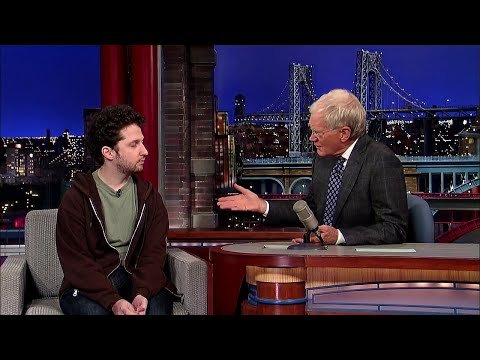
Joe Grossman was a writer for Late Show with David Letterman from 2004 until the show went off the air in 2015. He also appeared on the show 112 times in various capacities, usually as himself with a deadpan disposition that would more often than not exasperate Dave. Where did Joe come from? How did he end up writing for David Letterman & Co, and how did he end up on camera so many times? Did he always want to perform? Joe, who happens to be one of Mike’s all time favorite on-screen talents for Late Show opens up and answers all those questions and more in this hilarious episode of The Letterman Podcast. He also reveals the great new job he just got.
The Letterman Podcast is brought to you by The Hello Deli. Go to Hello-deli.com to order and Late Show with David Letterman or Rupert merchandise. He also makes a mean sandwich!
Please feel free to share this episode with as many of your friends and rivals you can think of. In fact, why not make it a game? Could you share it with 3 people? How about 5? 10? Sure you can. And while doing that, feel free to like and subscribe to the show as well. Every time someone does, Mike will feed a treat to a puppy. You don’t want to keep the puppy waiting do you?
Episode Transcript
Read full transcript
okay rert David Letterman hasn't been on CBS for Years yet his merchandise is still killing it the only place that you can get official Letterman Leo with David Letterman merchandise is right here at the hello Deli how do people get this merchandise other than coming in here obviously you want to come in here if you're in New York right come to the Edan theater come to uh the hello Deli get yourself a p sha for sandwich uh or something else and then buy some merchandise if people can't make it to New York what's the best way to get some of this mer well they can get on my website um hello deli.com yep and order it there now do you pack that yourself do you pack it uh this merchandise and send it off to people yourself I I do okay if um if people ask you to add onions to the order will you add onions to the order absolutely that sounds great uh the hello Deli is the sponsor of the Letterman podcast we are so grateful for that rubert we're so grateful for you and on a personal note thank you for the years and years and years of entertainment that you have brought not just America I'm Canadian but brought the world thank you very very much my pleasure thank you for watching absolutely welcome once again to the Letterman podcast as always I am Mike Chisum as always I am excited to be here uh by the way for those of you who are viewing us on the YouTubes or the spotifi um you're going to see that things are improving uh or or or in progress towards the uh goal of improvement we are doing the studio here we've done some upgrading uh right now you're getting a bit of a film Noir kind of a deal uh as we behind the camera are are are remixing the studio and and doing things up here so uh hopefully uh you enjoy the technological improvements we here at the Letterman podcast are putting into place uh I am so excited about this is a separate uh for today's show uh I talked to Joe grman and Joe Grossman was my guy he just was uh I look at um and this is not not a slight to anybody uh who was a behind the scenes person that ended up in front of the camera throughout all of the The Saga of late night and the journey of Late Show um I really loved every single one of these staff members um and I think that's probably shown for the ones that we've talked to already um but Joe was just my guy and the reason he was my guy was because I had so much love for this franchise U of daveid company by the time Joe showed up in ' 04 uh I I you know I make no bones about how much I loved what Dave and Company evolved into I loved the Big Show um you know late show was incredible and and the fact that uh in ' 04 I started seeing this awkward uh person who claimed to be a writer um you know but didn't really say very much had this dead pan down and it's one of those people where it's like is this really a is this really one of the behind the-scenes people or is this an actor that they hired portraying one of the behind the-scenes people you know but Joe is very very much it's it's it's evident uh very quickly into our conversation how funny he is uh ridiculously funny he was a gen xer like me and I I I won't talk about that too much in the intro because we get into it right away almost in part one here but at the end of the day I just when I when he showed up on the show uh I was delighted because it was like someone that I just finished playing Dungeons and Dragons with the night before ended up working uh on The Late Show with David Letterman or Late Show with David Letterman the next day it was literally like one of my buddies uh was working for my favorite broadcasting uh franchise ever and and and um you know it's funny I haven't been you know I'm not going to I'm not even going to knock on Ro when I say this because I have no expectation of any of these people that I meet but I have had not been disappointed with anybody uh that I've met so far in this process um it's just been so everybody has such a similar uh disposition in so many ways and and I gotta tell you I was a little nervous talking to Joe at first because he was my guy he he really was you know uh that last night that we saw Dave a month before he retired uh he would was part of the monologue and I was delighted by that I was like okay you know what you don't get a chance to go see the show live very often um I hope some of my favorite things happen and and Joe being there you know kind of right in front of me I was in the front row right in front of me was was really awesome um I just he had so many so many things that I appreciated very very much that's apparent in this conversation too because I mean I I you know I did talked to Don beforehand uh don Giller talking about you know Joe appeared on the show 112 times just a lot of times over over the years um it was really cool to be able to kind of Fanboy over him uh a little bit especially because it just made him so uncomfortable um I would even wager that that that Joe grman uh is more uncomfortable being fanboyed over than David lman which is which is quite the statement uh just I'm so grateful that I have him in my life now that I can I can just uh send a message to uh part one here talks about where Joe came from uh how he ended up being um going to New York and ended up working for for for Dave and Company and it ends part one ends uh talking about the new job he just got six weeks ago which is exciting and part two next week we'll pick up right there where we left off and uh and go from there but I am extremely proud uh to present this episode of the Letterman podcast Joe Gman part one get going now um okay so here's the thing I have uh you were always one of my very favorites in the entire world and I'll tell you why um I'm a gen xer and you know where I fell in love with Dave and Company was as a child watching adults act in ways that I as a child really enjoyed and I just kind of followed it up and and and and as I matured uh somewhat um you know that I I got excited about the whole um my sweet spot like my graduation year was when all the kafuffle was happening going from NBC to CBS and all of that and I I yeah absolutely I became an adult uh watching that but then watching Late Show I was an adult and then one time I don't even know if it was your first appearance or not I think your first appearance was in ' 04 uh you started working for Leo when uh April 5th 2004 okay and I I think it was like um I asked Don's about it uh the first one that we came up with was it was like a staff member of the week or something like that in the audience uh yeah I think it was yeah over that audience shot week the Act five in in the business sure um yeah and you know Allan would just do a silly announcement over the big sweeping shot of the audience and uh yeah I think it was the sangles who wrote that one the Eric and Justin stangle the head writers who hired me and it was just a silly announcement about the the employee of the night I I don't remember what it was for U it was just congratulating me on like as I think eating something weird or something like that and I don't think it was even my name I think it was just my photo with some other uh name but yeah that was that was I think my I I have a list somewhere they made of me of all my appearances I just have to dig it up but 112 of them uh oh I didn't know it was that many wow that crazy like that's a that's a huge number and I'll tell you why I got excited I knew you were a writer there um and and that was that was great all your bits were ones that I I just appreciated so much and there's two reasons for that number one you appeared to be similar to me you appeared to be a Gen X kid sure who had probably observe the same thing that I observed adults acting silly and you got to go work there and I just would live vicariously through that and the second thing is you're a Gen X kid I'm a Gen X kid you came out to Enter Sandman and and those two things right there solidified me never mind the fact that your jokes and your dead pan were so good I just thought oh my God there's a gen xer working for Dave and writing for him I don't know if any of that is true that's just what I thought in my 20s when I was seeing you for the first time uh am I am I on base like that is that is that is that right uh yeah I think so I mean I mean I I I'm I was born in 75 so yes I'm a 76 kid I am okay so we're about the same there you know well pretty you know a little later Gen X um yeah I was 28 when I joined uh the Letterman staff and at the time I was a very young writer it was there were only two of us who were about the same age me and Jeremy Wier and then everyone else was a little bit older yeah know 30s summoned to their 40s and you know Mulligan who's a he's Timeless really um so yeah I was certainly younger and I was one of the writers who uh had grown up watching Dave whereas before it seemed like more of the writers had been people who certainly not I mean Dave aged as the years went on and the writers kind of stayed the same age because they were replaced so it's like Dave started out with his peers then they started out with people who are like his younger brothers then eventually it turned out it became people who are like his young enough to be his kids yeah um so yeah um as for the inter Sandman thing uh I cannot take any credit at all for that that was a and forgive me if I get this wrong I think that was Lee Ellenberg and Jeremy Winer but it's possible was Tom rck who did that I don't know which exactly I think it was LE and Jeremy uh and and and I guess that's a reference to I hear that in in sports games uh athletes like the the Batters often come up with a little song to play them on yep and I think they just thought that was a funny sort of homage to that to have me come out to this big high energy aggressive badass kind of song and then I come out there with my Tommy Nome energy barely mumbling loud enough to be heard on the microphones so and fantastic and Enter Sandman and then you come out and and the monotone dead pan like yes that so so it it matches in all sorts of ways I just loved it so much um my magical night you know I've talked about it a lot on the show here my magical night there pictured behind us me and Dave uh you came out that was a that was a month before the retirement uh one of the first sketches of the evening so Dave comes out he referenced our conversation I had that magical moment uh you know willing the lily pads that led to this show uh but in the monologue so he comes out and references us our exchange beforehand but in that monologue you and RJ came out and you did a gag where it was uh it might have been your last time actually out there uh doing one of these gags you did a you did a highlight of of of appearances on the show of your two appearances on the show yeah uh do you remember that night or are they all a blur it is kind of a blur I I I remember that that bit uh I I I uh I think yeah aring came out to show a real it was it was probably like what three clips of us basically just walking out like we just had a minute ago earlier and uh it's it's the classic Letterman device of let's do a little bit of buildup to something that's going to be very disappointing and a waste of time absolutely and that's kind of what show was all about it was a it was a let's find we have an hour of time to kill every night let's just find vaguely interesting or disappointing ways to kill that time so absolutely um but yeah that was yeah R.J and I did a whole bunch of appearances in probably that last year or two yeah um and and I'm happy to talk about every appearance I did and and whatever things and I I know you're very effusive in your praise of of of of the writers and everyone else off the show um but I have to say I can't really take credit for much of any of that uh I don't think all of my appearances I think were written by other people I never wrote myself into the show y um I wasn't like you know Lucy saying hey put me in the show make me a star no uh so it's like the the other writers sensed from the beginning oh this is a person who's not very comfortable with attention so therefore what we have to do is give him the attention that will create some sort of a awkward magic um but you know always liked having staffers on rather than actors playing characters so anytime you could turn a staffer into a character that was helpful and especially if it was someone who you could tell wasn't really entirely comfortable being on the air I mean that's how I mean rert G he's a smart friendly guy but you can tell he's not exactly you know Mr uh you know he's not super telegenic and like you know let's let's entertain America you know he's like yeah he's trying trying to sell sandwiches and here comes a camera into the Del oh he'll be friendly but like you can tell he's not dying to a star and you know Biff and uh you know Pat farmer and going back to the old shows you know alar or uh you know Larry Bud Melman you know he was an actor but just barely an actor and and and the thing that they all have in common is they kind of probably don't belong on camera right uh they're not super uh photogenic they're not super charismatic they don't have any discernable Talent so of course it's going to be fun for Dave to put them on there and and and see if he can kind of some awkward uh energy out of them so I was very very uh pleased to be one of those people who the the show latched on to in that way I never expected it or or imagined it would happen but the other writers were very kind enough to try experimenting with me like that so well it's fascinating uh in many many ways and and you've done a very very good job of truncating two or three of my questions right there and I love that because um you know the the idea that the other writers would write things for you oh let's use Joe in this or oh let's have a let's have a a Grossman bit over there um and and the the unlikely blessings that that gives you not only you know being on camera we talk we talked to Art Kelly about this as well um you know suddenly you know there's another Union that you're having to get involved with and all these things you're an actor now and uh and and and beautiful little benefits come from that um did you did you ever get a taste for perform because of those things I mean you came out and I I I imagine uh you know if you would ever do standup or something like that I imagine like a Steven right type type act where you could just you know deadpan or were you having a hard time did you have a hard time staying dead pan uh throughout all of those appearances not usually I mean I I I practice those a lot not so much to get the lines down as it is just to kind of make it autopilot so I wouldn't have to think too much and I wouldn't have to worry about losing focus and accidentally smiling or laughing right the hard part there was uh you know like it was only a few lines to memorize usually I didn't get a lot of dialogue or if it was if I did have lines they were actually in that little notebook I'd be flipping through or something read them instead of having Q cards um and that was my real notebook by the way which I used to Ed to drop down ideas the other writers thought oh let's put Joe's Notebook into the bit fantastic uh but the only thing I had to worry about with those those pieces in terms of breaking or something it was Dave going off script yes because he would sometimes either just because he didn't like be too scripted or because he literally just wanted to screw with not lit he wanted to break you deliberately wanted to screw with you and it's like okay and it it I can only remember one time that it happened and it wasn't because Dave went off script actually I think it's just the line was just too rid ridiculously stupid that I I couldn't handle it uh and and I I I I there are many times that I came out and drank urine for various reasons it's not the thing I'm most proud of in life it's also not the thing I'm least proud of of in life it's it's probably somewhere in the lower to Middle qu quarter um but there was one where I think I was the was the survivalist Ox the Wilderness expert who was sort of like a Bear Grills type that was a Tom rupe piece I believe and uh and you know was drinking urine and I guess the joke was I wasn't drinking urine because I needed it to survive because I was here in New York City I just seem to enjoy it for whatever reason and one time Dave asked me oh by the way whose urine is that and the scripted answer that I'd prepared that was written for me I'd rehearsed it to make sure I wouldn't laugh and I still laughed a little bit was Herby Hancock and I think that was a reference to him having been on the show recently I'm not even positive that's true but it was just such a random out of the field answer that I I did break a little bit on that one response saying that for some reason I was drinking the urine of beloved jazz keyboard uh wizard Herby so um I'm sorry and then and as the other party question I might have to uh the performing The Performing performing bug um I I never had the desire to perform I I but I was always very secretly quietly delighted that that I got to do it it's like someone would write something for me and yeah outwardly I'm like oh yeah I guess I'll do one of these again if you want me to but inside it's like oh I get to be on Letterman you know I get to be on the show that I grew up watching I get to be whatever someone in that long line of you know uh Larry Bud Melman and Biff and R just another one of Dave's random stes I can I get to be one of those part of his company of uh awkward uh Misfits who can just barely choke out a line well enough to to Warrant being on television um in terms of actual performing um in the years before I I was hired as a writer I I made a few half-hearted attempts to figure out my how to reconcile my interest in comedy with my uh uh colossal social anxiety and so it's like well I guess I kind of want to do comedy but I don't want to be a comedian and what do you do and and yeah I remember like I first started getting interested in comedy in in the like mid 80s or so when I was 10 12 years old and uh that was during the big stand-up comedy boom so I was like well I guess if you want to be funny professionally you have to be a stand-up comedian and that always seemed distasteful to me not not that St of Comedy is distasteful but you to who you are in your disposition and and your biology it didn't it didn't reconcile right and if you're gonna be someone who wants to go up on stage and and basically say okay everyone quiet down because I'm funnier than you and I have things to say you really have to have the the talent to back that up and I knew that wasn't me and it was when I started watching Letterman in the late 80s probably and I would at the end of the show oh you know you probably heard lot of people say this then all these credits go by and oh look writers 10 or 12 names of people who I don't know who they are yeah but apparently they have generated this material and and that's a career option so if I can I I like it's sort of the the coward's way of of being in comedy it's like yeah I can write the jokes anonymously slide them under the door and then hide when they detonate and you know hurt someone else and then I just cash the check and go home it's it's the perfect uh perfect career path for a comedy coward such as myself a comedy coward yeah so um that became my sort of unspoken goal that I didn't tell anyone about uh in high school and when I moved to New York in in 98 and uh I thought well maybe I should at least try performing a little bit just if nothing else insinuate myself into comedy circles maybe get to know other people who might have a similar interest and people who might help you later on in your career so I I I did take classes at the uh upright citizen theater for I took level one and half of level two before I decided H it's it's I I I respect it it's just not for me the whole I got to ask you though in that class like okay so in that that year did you was anybody notable in that uh in those two classes of yours uh yeah I started I I took my first I I sort of dropped in and out of classes from 2000 to 2002 I think okay and in my level one class the introductory class that everyone has to take there were maybe like eight nine 10 of us uh and one of them was Ed Helms who no kidding has got on to a pretty good career a bit of a a bit of a career in front of the camera yeah yeah so uh and of course none of us knew oh this guy's gonna be a pretty big star someday he's gonna be in movies and on TV and you know he was just another kind of you know the class A lot of people who took these class at the time and this is sort of before improv became a thing that everyone did just for fun and do for corporate uh you know morale building events and stuff it was really just kind kind of weird nerds who were trying to get I I don't know um I I think he was already doing standup and had been for some years right uh but as far as I could tell he was just another kind of weird guy who was dipping his toe into comedy and and trying to see if it was something worth pursuing um but I I if you're gonna ask if we had any kind of interactions or anything I don't remember any really in particular I'm sure we did some scenes together that no one would ever remember and I can 100 100% guarantee you that he has no idea who I am sure um but yeah so so that was it uh so so I I did improv for like a year and a half yeah and um the thing I discovered was well one I don't like having a lot of people watching me yeah um I don't like being in front of a lot of people and having attention on me um and I don't like having to make stuff up on the spot it's terrifying to me oh yeah uh so again the idea like of writing stuff and being prepared I'm fine if I'm prepared I I'll go up in front of an audience and I'll go on you know going on Letterman I was nervous but not terrified it's like I know my lines I know what I got to do I'm fine yeah um but but acting it's like no I can't do the acting and all like conveying emotions and I I I don't have any emotions as far as I can tell uh so trying to convey them just did not seem fruitful and uh yes so I did that and then I also did uh standup comedy exactly one time yeah um I was working as a I was a writer and editor for a magazine in New York City called timeout New York um you sort of like a local entertainment arts and entertainment and listings magazine Y and for a few years I kind of ran their comedy section and also their their TV section for a little bit and uh someone had the idea of oh what if we send our kind of awkward uh comedy writer editor guy to go take a standup class and then write about so okay yeah I'll do that so I I I took an eight or 10 week comedy class at some local uh I don't even know what kind of operation they were but it was fine and you know basically it was just uh I I didn't really learn anything or pay attention much to the class it was to me it was just okay this is sort of my coming out as someone who in some way wants to do comedy yes and this is me sort of committing to it and uh so it's gonna be I go to this class every week and someone will make sure that I wrote something that week and then they'll force me to go up on stage at the end of the the thing so after eight or 10 weeks or whatever uh we had a a graduation show at Caroline's comedy club on Broadway very cool and uh yeah it's a nice place it's a real Club um performing at like four no it wasn't it might have been evening no I don't know if it was afternoon or evening whatever but it was just to an audience of friends and family so it's like the easiest it's the it's it's like absolute training wheels for any kind of performance but uh sure I will say I did very well uh being on a bill of complete amateurs who had no business doing comedy yep um by that standard there were i i i i slaughtered them but uh again but but you didn't get addicted to you did that feeling because that's where that moment is for many Comics a pivotal moment where they're like oh I like this I want to ride this lightning for the rest of my life that didn't happen for you no because I also knew enough from having interviewed comedians for the magazine and stuff just reading about comedy that a lot of comedians have that experience where the first night you just absolutely kill yes and then it's gonna be five years before you have another good night again it's like yes you know what let me go out on top um I did what did what I wanted to achieve as far as I'm concerned I'm George Carlin here so you know why oh there you go been there done that time to move on to the next thing because I've conquered standup I'm at I'm one for one no one has ever done as well as I have in comp it was fine and honestly I did a FIV minute set that I I still think back that was that was a fairly good joke and then a lot of it was oh God I can't believe I do you remember any of them I do um remember a few of them um I'm not sure if I want to share no no is there any that you want to throw out right now anything any premise any uh oh gosh probably not okay fair enough we'll move on yeah did you okay so so let's take it back um you know you're okay so you and I are very similar in the sense that we love this thing I you know I waited till I was 46 to to express it in this way it was very similar to you know um Dave has talked about how he did stand up because it was a discipline he knew that he would have to master or or be a part of but that wasn't his kind of end game I've done standup a few times this last couple years as this Awakening for me of being a a broadcaster and especially wanting to help preserve uh this body of work I just I don't know why I have it in me but I do so I can understand what you're talking about going and maybe getting some of these skill sets under your belt you're in high school you're watching this uh where did you end up in pursuant of the like were you were you in University and part of uh uh you know so many of your predecessors are you know I went to Harvard part of the Lampoon or or or you know things like that where did you end up and how did uh was comedy a part of it right after high school or did it take a while longer no uh yeah I I did not go to Harvard I didn't even consider it as an option because uh I've always been a very proud be student I really I'm smart enough to do pretty well without trying too hard and not one ounce smarter than that so yes I'm a slightly above average person and I'm very happy with that place sure um so I went to a a small liberal arts school and Portland Oregon called Lewis and Clark College which Northwest guy okay so I'm western Canada you're a Pacific Northwest guy I'm western Canada uh for college I was I grew up in Maryland just outside Washington DC so sort of a Suburban DC area and then I went across the country for college I Liv in Portland for almost five years um yeah uh there wasn't really a huge comedy community certainly at that time I I know today probably every campus has its own improv group and all that um at that time you know I I I work for the radio station and and the school newspaper basically any kind of media I could get involved with because I was sort of you know trying dabble on that like another way of just sort of testing the waters of being creative in some semi-public format um yes so I had a little radio show at midnight on Saturdays when other people were having social lives what was the focus of the show it was uh just me and my partner person just sitting there for two hours being idiots and again podcast before a podcast it sounds like yeah thankfully no no tapes of this were ever made um so there's that in the newspaper and and you know I tried dabbling oh let's do a little funny thing here and some of it was kind of cute but um again I was still sort of pre coming out in terms of being a comedy person there is a deep sense of shame in wanting to do comedy uh and and it's not entirely founded but something I've heard other people say and it always just for one thing just being a very quiet boring person um yeah it's sort of embarrassing like oh oh you think you want to be oh you think you're funny you want to make a living out of you can barely even you know get a sentence out in front of people well yeah but I can write pretty well yeah I can't talk funny but I can write okay so there there was some embarrassment in that and also was it imposter syndrome because that's something that I've had to deal with uh for sure in doing this who do you think you are in in in being the guy to host a letterman podcast like like why you and and I've really had to deal with that uh was that was that part of it as well is that sh about absolutely but also a lot of it is imposter syndrome and and of course it's not imposter syndrome if you really are a fraud um but that's kind of how I felt at that time and um but also I am just knowing myself uh I could be very judgmental over watching other people and thinking oh that guy thinks he's funny and it's it's not my favorite quality in myself but I know it's in there so I just automatically kind of projected that onto others and well if I'm this much of a prick judging other people then they're probably huge PRS and judging me too it's like yeah hold on though is that not an attribute of many comedy writers probably yeah um yeah you know when you're in the room and you're Mining and you're throwing out ideas is this anything like you don't get like Tommy talked about that on the show and and a few of the other writers too like you don't get attached to anything because you throw it out there and some people might say oh that's terrible or whatever yeah you know that's you kind of all do that don't you you have to learn to do that and that's always been very like I I'm very I am one of the worst writers you'll ever see in the room uh in terms of pitching ideas to a group of people interesting if you've got 10 writers I literally barely spoke my first probably two years I was at letter like most of our work at that time like 90% of our work was done in writing you know sit there your computer you type your jokes down you hand them in and then you go type some more there were occasional meetings in in the writer room where we' have to pitch things verbally but very rarely um which you know it's a double-edged sword like one okay it it helped me in that I didn't have to do that but also hurt me in that I didn't learn how to do that and develop a thicker skin um and I I got better after a couple years and I built up a little bit of confidence like okay I I'm I think I have permission to be here now I'm not a total fraud and you also see that you know everyone else here they're also just kind of struggling through the day every day you know I mean even the best writers I Steve Young is is is we all love Steve and look up to him but you also know that some days he comes in and he's like well I I don't know if I have anything but I I had this thought on on the walk to work this morning and maybe we can make something out of this and it's like you know you see that the people you admire uh also have vulnerabilities there and it was a very it was a very supportive room which not every place I've heard about is um I mean not to name names but you always hear about Saturday Saturday Night Live for example as being a very tank yeah it's a very competitive place and and justifiably so if you're a comedy writer and you're there and you have whatever 20 25 writers and there I don't know like eight or 10 slots open for sketches that week and and only 20 shows per year and you're fighting for your contract renewal of course it's going to be very competitive so uh there are places that that I think maybe rely too much on on on uh creating a culture of writers being afraid and right for all of Dave's reputation is sort of a a difficult or or or judgmental or whatever person the the the writer room in my experience and other people people might have different experiences but in my experience it was a very supportive place where I mean the good thing is it's you're doing five hour five shows a week you're doing 200 shows a year yep there's not it's not like there's a lack of opportunities you know it's like SNL where you're doing whatever 200 sketches a year and that's it like here we're doing thousands and thousands of jokes every year so it's like everyone you know we're all work in this together we're just trying to fill time yeah and no no one is trying to snipe at you over your ideas like oh no I'm going to kill his idea and get my idea in there it's like no if someone else gets an idea that's great that means we don't have to stay late tonight try to figure something out so it was really supportive the the better you do the better I do the better we all do we're all really in this together um I could name one or two exceptions but almost everyone there was like that and it made it a a very good place to learn how to be a writer and learn how to uh you know try to put your ideas out there of other people I I want back to this go ahead pleas no but also and I think I heard this in one of the other I've listened to your interviews with other writers and again thank you for talking I'm sorry about that but anyway no no no self-deprecation is hard to turn off isn't it um yeah uh but you know so many writers saying they came in well I only have half an idea today but maybe if I bring it up in the meeting someone else can you know the was Ali upid or whatever you know and come in with with with the the thing that'll make it work well I have an area that I think is very good but I don't know how we make this into an actual comedy piece and someone else would say well what if we present it in this way and it's like oh we can do this together and it really takes away some of that Terror of coming in at 9:00 am every day with a blank page so we're gonna get back to uh how you got from Portland to Letterman in a minute here because I do I think that's fascinating but at the end of the day I also what you just said I think is also equally fascinating I've talked to so many writers who ended up with Partners whether they came in as a writing team uh like Stephen Carl at the very very very beginning all the way to uh you know other people that just worked well together did you ever find that you gravitated towards somebody you know more than more than others and did you ever do any team writing or was it mostly you and then you submit it all and you you talk about this and then they help you punch it up and and there is where the uh camaraderie or the the collaboration was yeah uh the first few years that I was at the show we did things in a very solitary way uh you know we come in in the morning you go to your office you sit down and you start breking out ideas um uh so I yeah you were all kind of flying solo back then yeah that was very stressful but again it is you know it's throwing you into the deep end of the pool and and you learn to swim yep um after probably about three or four years that I'd been there I think it was shortly after the writer strike when we kind of decided to try to do things a little bit differently I think the strike sort of gave us a little bit of a bonding moment and in a way helped morale because it sort of United all against a common enemy yeah so um after that I think is when we started coming in every morning and maybe working together a little bit yeah uh and you could work you could work on your own you could work with other people um but that opened up as an option and I started working a lot uh with uh lee Ellenberg and Jeremy Wier who were two other writers uh both on my hit list of people to talk to so hopefully very good people to talk to if you can Le Lee had been there he'd been a writer for maybe three or four years when I got there but he'd also been at the show in other capacities for many years yeah and Jeremy was hired as a writer like just like a few weeks before I was um but okay there was a b of a turnover when you came in right there was but he'd also been there in other capacities as an assistant and such so he sort of spoke the language better than I did but he was still a new writer he understood the culture of the family so um again after I'd been there for about four years uh I started kind of four or five years maybe maybe even later than that actually but I would kind of barge in on there a little more huddles just two of them to say hey um can I kind of talk to you guys about some fractions of ideas and see if maybe you can help me with this um and and they were happy or they pretended to be happy to have me in there and uh and also was that hard the the Colossal social anxiety that you had the first few times you actually did that was that difficult for you yeah a little bit um but again by by by that point I think we developed enough for poor that I trusted them and they trusted me and it's like they they wouldn't they wouldn't put me on TV if they didn't think I was a decent and funny person to have around they wouldn't do that to someone they hate so they must like me a little bit okay um and and so yeah it seemed pretty safe and secure and they were always very very generous with their time and their ideas and again I there were you know I have to put mosti aside for a minute and say you know sometimes I did have a good idea that I could help them with so or you know they had a fraction of idea and like I I could figure out how to do it too yeah so uh yeah yeah so yeah uh later on we started doing things more together but there was still a lot of solitary work right up to the end I mean even on the the best day you're you probably spend 80% of your day just alone in your office cranking out top tens or or uh uh you know know your current events or Chiron quizzes or new books or you know all these refillable pieces I'd forgotten about I bet uh I bet you writing that way and knowing that you're effective that way it's cool that you're able to even recognize that and say that about yourself that's awesome um knowing that that that you when you had the page in front of you and you had time to revise things and the get at ref the that kind of thing Dave every prodction that Dave's ever done the right word at the right play seems to be a commonality um I bet you got a lot of top 10 jokes in I did okay on the top 10 that was always that was a the least challenging part of the show for me uh because it was pretty straightforward it's it's it's you know it it really is a very elegant device comedically uh uh just it's it's a great joke delivery system it's one setup with 10 punch lines it's so simple and effective and um you know you take a lot of swings on that uh you know you have probably at any given moment you might have seven or eight writers working on that and each one writes 30 40 50 jokes and so you have three or 400 jokes maybe I'm just guessing because I never assemble the list um but that's probably rough ballpark numbers three to 400 jokes to get 10 jokes yeah and so you know it's one of thing where things where where where it's low investment um as long you just have to crank out a lot so I was pretty good at that and even I mean day one I was I was okay getting jokes on the top 10 list even when it took me you know a year or two or sometimes even longer to to figure out other parts of the show yeah uh those kinds of things I was good at that fun facts was was fairly easy for me noty I nothing's easy but but low stress anything where it's just let's write a short joke about a specific thing the things that I found challenging were let's come up with something to fill three minutes of time in the middle of the show sure oh okay there's no specific assignment there it's just think of something funny like I I can't do that I wish I could there are writers who are very good at that I I can sometimes but it's not something I can just turn on or oh let's let's come up with a new act four for Allan like and of course Allen was great Allen was probably the strongest pure performer on the show in that unlike all of us studes he could really sell something where we're all just doing our dead pen thing and he is fearless yes so and versatile and like I mean oh my God what a performer Alan cter was H what a what a hand you guys had there that you could just play anything almost and he could and he could do it yeah and and he was so great for that and I loved Bill Wendell he but he was a very different kind of character uh who who he was kind of low-key and creepy in his own way uh in terms of his character not not not his real life but his character yeah no no no no of course you you watch the old show and you'll see you know they would do this running gag of of you know after the show Bill Wendell uh you know holds up Dave and Paul and steals their money and then you know it was a funny thing um but but with Allen it's like he could do anything he could do the the the big stuff the he could you know songs and and and he could do the creepy sexy stuff he could I don't know if you remember this but there was a while probably in the early 2000s where they would have him act out old scenes from Fred McMurray movies because I think Dave decided that that Allan at least in black and white bore some sort of resemblance to Fred McMurray you'd see him doing these old film Noir things it's like he's really good at this he's really good oh the voice was just oh yeah I I love Alan Allan cter is one of the reasons why this show started is because I've been waiting for this show for the Letterman podcast that interviews all you guys forever I've been I'm a podcast guy I've been waiting for it and and it's funny I befriended some of you guys and GS uh behind the scenes a little bit and it was great but when Allan died I looked at like I I looked at shecky and I said what the what the hell man like he would have been on this show that I'm doing here he would have been on that show five times a year he would have just loved it kind man all of that it's like okay it's if it doesn't happen it's not gonna happen let's make it happen and and that's why Allan calter I he has such a place in my heart um and and and let's just do a real quick plug Gill's got uh U um an Allan calter tribute that is just beautiful um it is so so good and well done and it shows all of the different versions of What Allan did on your guys' show and all the oh just so many different things the celebrity interview is one of my favorite things in the like did you ever write any of this stuff for Allan I know he had a few people that that that he was kind of their sweet spot did you ever write any notable things for Allan that you can off the top I mean we all wrote for everyone the show there's no one who's proprietary or anything um Allen's things like I I always heard it uh that Allen's character as we knew it was more or less created by Carter Bay and Craig Thomas who preceded me by a few years that they sort of invented the whole creepy Allen weird pervert Allen kind of thing that became an endless source of amusement for all of us yes uh and then when they left I think Lee and Jeremy kind of picked up the mantle and really became the uh the strongest writers for his bits like Lee uh was the one who came up with the Alan cter celebrity interview uh that was his uh format and it was it was a great great piece that that we did so many times and always just killed and it had the benefit of seeing the his guest reacting to the awkwardness there were a few times when I guess I don't know if Lee was busy or if he wasn't there that day or something a few times the sangles asked me to write one of those so I I wrote like maybe three or four of those which I was very happy to do but I'm sure if you watch them they come off as sort of like a weird offbrand version of it like it was okay maybe made in a different country and translated into a language then translated back you know which is hilarious in itself by the way yeah so I I I did the uh the RC Cola version of the Allen culture 70w it it tastes kind of like the real thing but it's a little bit off and I did a few I thought they were okay but I'm sure if you asked Lee he would say he meant well but it's my bit so I always felt a little guilty about that there Le is a great guy loveely I still work with him actually um uh but like I did one later on in this show it was actually for it was it was uh Robert Nero and Dustin Hoffman yeah uh were both on the show that night so I guess they decided well this is a great opportunity to do one of these celebrity interview things and I don't know if Lee was busy or whatever so they asked me to write it and I I did my best to sort of follow Lee's template and try to do things that wouldn't you know wouldn't do any disservice to what he created and uh I I thought it went pretty well it ended up getting cut from the show I heard someone say it was a little bit too mean Allan or Allan was being too mean no no no that that Alan might have been being too mean to the guests oh to the guests Okay and hofman like like I don't know um the the the footage does exist out there online I believe yeah from rehearsal or something and and I I thought it was pretty good uh the one line I remember you know because it's Dave complaining sorry it's Alan complaining that that that that Dave stole Allen's Thunder yeah Allan spent weeks trying to book his guest for the celebrity interview and and who does Dave have on tonight right before Allan the same guests so it's it's it's Allan yelling at Dave for oh I've just watched you sucking up to these guys for 20 minutes oh look at this and the one line I I wrote for that I thought I liked is you know talking about Dave sucking up to Dustin Hoffman was is you know oh it's so disgusting if I want to see a senior citizen jerk off Dustin Hoffman I I'll watch The Graduate so I thought that was a pretty good line um oh that is such a good line oh my God yeah so so there was that and and we also said some horrible things to dairo so clever I think Alan called him I think he called dairo Fonzi um so that that was a lot of fun but again I I I I have to confess that I I think the tone was probably not quite uh quite there and and Lee would have modulated it much better than I would but but yeah it I like at RC Cola float every now and then anyway so that sounds good I I want I want to go back and make and connect Portland and un radio show Joe uh to moving to New York that magazine that you wrote for was that your first gig and did you know okay screw it uh I've seen people go and become interns at this show and and I'm I'm gonna go and do the same thing I'm gonna go work for Dave I'm gonna that's my Conan O'Brien famously you know he had two job two he had two places he wanted to work when he left College David Letterman or Saturday Night Live that was his list was that was that you or was that sort of a did you have a few more lily pads jump across before you realized I'm going to go work for pants uh no I mean I I graduated in 97 uh and kind of lingered in Portland for a year not knowing what to do and not being able to find work and luckily this uh my my girlfriend at the time um had always wanted to move to New York and so she said let's just go to New York come on I want to go to New York let's go to New York for totally non-show business reasons she just always loved New York and she wanted to go to a she wanted to study to be a teacher here they have some very good teachers colle yep so it's like um okay I guess and and if I do that I guess I could try to weasel into this whole late night thing so we moved here in 98 and um oh my God my rough plan was well let me apply to the uh NBC and CBS page programs because I was just out of college I was close enough um and maybe I can somehow get it like an entry level job eventually like a receptionist or in the mail room at either Letterman or Conan because I loved Conan too like Conan in my mind had picked up so much of the energy that in some ways Dave had lost I still loved Dave at CBS it still felt like late night it felt like a person took over the franchise made it their own but it was still late night at the time right yeah I feel the exact same way y he certainly took it in his own Direction and and and and and and rebuilt a lot of the uh you know David sort of torn down all the the walls and made it all meta and opponent had like built those walls back up and reinforce them to create a very very artif deliberately artificial setting and that work great for him and and so I really respected that admired how well he did The Impossible of making his own version of the same late night comedy experimental laboratory and I I just love that and that's unfortunately something that that that doesn't really exist anymore um but yeah so I thought well if I can somehow you know weasel my way into one of these jobs that'd be great so moved to New York applied to both page programs got rejected by both yeah 98 04 is when you started with with pants so yeah you know there's there's six years growth somewhere in there so I kind of you know did some odd jobs and eventually I reapplied to the NBC page program just because it's like well let's see what happens and somehow I got in even though they really only like very outgoing extroverted people for some reason well that's actually what I've been told that they really want people who can sell the the company on these tours and stuff like I I don't seem like the ideal tour guide but I I I hold my own um but yeah uh so I got in there it's like this is it I'm here now what yeah um I'm in the building I'm allowed to be here I have a little ID badge I can get into the studios I'm in Conan Studio every day telling people about what happened in this place and yet I'm not really here so it's like I I I would I never really got the courage to go up to like the Conan offices and see if I can talk to someone like I once made a half heart attempt to talk to someone in the talent Department no no no in the research Department yeah to just sort of maybe is there anything you tell me about your job and how you got there it did not go well and I I just felt like a nuisance anytime I tried to talk anyone about these things so I basically spent a year not doing anything to advance my uh non-existent career and when that was done after a year they kick you out if you haven't found a real job so uh I felt like a total failure um did you love working at 30 Rock at that time like was it was it Mystique uh and then much of that Mystique was okay you know you you kind of level up a little bit because it's not Mystique anymore or or or were you is that not you no it it it was it was a huge thrill to just be in the building the first time and then to be there as I mean not really an employee I was I was an outsourced staff or to a attemping agency um but still I'm in there I have I get the discount to the commissary so you know it's something um but just the fact that you can make a commissary joke I mean how many times throughout the shows that we love growing up but you hear people talking about the commissary and things like that like I have to say they have replaced the commissary and moved it to a different part of the building it's a brand new not brand new but it's it's new from when I was there and maybe like five years old or something it is amazing I go there every day now and it's just yeah it's really good stuff okay well we're burying the lead a little bit you go there every day Joe Gman what the hell are you talking about you go there every day I'm sorry uh yeah I've been working for about a month now as as as a writer for this tonight's show which is uh at rockar Center so um they're in studio 6B right across the hall from Studio 6A where Dave and Kona were all those years so it's it's it's it's very uh exciting to be you know get off the elevator and you walk past and you see Studio 6 right there looks nothing like it did before no I believe the most recent long-term tenant of that studio was Megan Kelly's hour of the Today's Show so uh you know it's like it's it and before that it was Dr Oz yeah so it's like okay the magic is clearly gone but you still know that there are some really special ghosts wandering all right we're going to stop it right there Joe's working for The Tonight Show How great is that I mean ah man you know going from you know Late Show with David Letterman uh and then to Samantha B which we also talk a little bit about in part two and then now you know that ends in 2015 the the late show and he's moved over and is working for The Tonight Show with Jimmy Fallon I was delighted when I found that out I I didn't find out on air my reaction there was when I was cheering for him I was was excited about that um was even more exuberant when he actually told me where his new job was just what a thrill the fact that he gets to to go back um and it's this this this Gen X thing you know where you saw Dave rise up and all this stuff and the stuff with The Tonight Show the old Tonight Show and and all that stuff and then but the evolution of things that happened you got this genx guy that started with L show and then he ends up at The Tonight Show I just I love that very very much uh Joe congratulations on that I can't wait for part two by the way we're gonna talk a lot about part two uh including uh the little dust up with The Tonight Show uh and Conan O'Brien uh you know when that when that all happened Joe was on staff of course with with Late Show with with David Letterman and had uh a couple of my very favorite moments um during that little Saga as well uh Joe just incredible as you can see uh I'm I'm a kid a delighted delighted kid listening to him uh being made to laugh by him he's so funny he's just such a funny guy U I just can't thank you enough I'm never going to stop talking about how grateful I am uh for this here no matter how uh where it goes how big it gets it doesn't doesn't matter to me we're chronicling um the greatest body of broadcasting work in history that of David Letterman and Company uh here at the Letterman podcast thank you very much for everybody who has supported thank you to rert G and the hello Deli uh go to hellodd deli.com if you want to find Late Show with David Letterman merchandise rert merchandise uh or one heck of a sandwich um thank you so much please like please share Please Subscribe please come and join us become part of the conversation in the Facebook group that we have the Letterman podcast um yeah I guess that's it that's until we get to part two with Joe Grossman next week uh that is another episode of the Letterman podcast with Mike Chisum coincidentally I am Mike Chisum thank you and good night