The Letterman Podcast · Episode 50
Felicia Collins Part 1
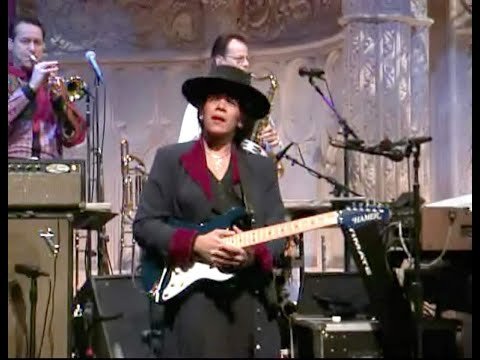
Felicia Collins has been a guitar player, vocalist, and percussionist for The CBS Orchestra/World’s Most Dangerous Band for over 25 years. She has also collaborated with some of music’s greatest artists during tours, solo projects, and she was a member of the Rock N Roll Hall of Fame’s house band. In this episode, Felicia and Mike have a fantastic conversation about some of her adventures and experiences before Letterman, including performing at Live Aid, her friendship with Nile Rodgers, and touring with Cyndi Lauper. She then tells the story of the phone call that would change her life, the day Paul Shaffer invited her to be a part of Letterman’s house band as they moved the show to CBS—and how she didn’t say yes instantly!
Felicia is such a kind woman and she is very grateful for the life she has and the things she has done. She also misses the Letterman gig very much. Mike and his wife also happen to think that Felicia might just be one of the coolest people walking the face of the earth.
As always, The Letterman Podcast is brought you by Rupert Jee and the Hello Deli. Rupert is such a good friend of our show, and his shop, which can be accessed online at hello-deli.com has all sorts of Late Show with David Letterman merchandise that can be purchased, and as always, if you ask him nicely, he might add onions to your order.
Please Like, Share, Subscribe To, and Leave a Positive Comment for our show, whether you want to or not. Acts of kindness like those will surely lead to receiving karma-tic response from the universe, like free movie tickets, or perhaps 10% off your next oil change.
Episode Transcript
Read full transcript
all right y'all thought that I might be fibbing this is proof right now the Letterman podcast we have one sponsor one sponsor only but it is Rupert G in the hello Deli thank you very much for sponsoring our show Rupert it's my honor Mike welcome once again to the Lettermen podcast my name is Mike Chisholm uh doing this is my favorite thing in the world I enjoy hosting this show more than any of you might imagine uh it is so much fun to go back and celebrate um and and kind of dive into the background of the greatest body of broadcasting work in history that of David Letterman and Company it's so cool to talk about some of these little things that happen behind the scenes that might have just been a moment or two uh that that sometimes is forgotten and and it's great to jog the memories of some of these people who contributed to this show in so many and entertained and delighted so many people uh for for decades and we're just so excited to be presenting these um long-form conversations with people who put this amazing body of work together uh today I gotta tell you I don't get nervous for a ton of these ones but I'm nervous for this one I'll flat out full disclosure it I'll tell you what the feeling is like it's like remember back in high school and and um you know you you get you go into your clicks and you're in your groups and you sit down in the classroom uh based on you know the seats that you want with people that you may be familiar with but every once in a while things get jumbled randomized uh maybe you're going on a field trip and suddenly you're placed beside somebody that you're gonna sit with for 45 minutes uh today's the nervousness that I feel is very akin to that I feel like I'm in grade eight and I suddenly got sat for 45 minutes beside the coolest girl in school that I've never talked to but I always know oh my God I'm sitting beside the coolest girl in school and we have to chit chat for 45 minutes that's what today's nervousness feels like I've talked a lot about how much I'm a music fan and um music has been tied to David Letterman's uh presentations and programs from the very beginning including to the things that he's doing right now as the time of this broadcast uh the the special with you two is about to drop on the big mouses now Network that's going to be really really cool I think about even on my next guest he said you know Jay-Z and Kanye and some of these amazing Larger than Life musical acts on and and I look at Late Show as kind of the Zenith the big platform the big stage of David Letterman's um you know nightly broadcasts and music was such a part of it the Architects behind what we saw on screen the musical The the CBS Orchestra um you know LED of course by Paul Shaffer but everybody had their role in the band got a couple of them on here already I am so thrilled to say we have another one here a gal that uh on the on my magical night scene Dave um on April 20th 2015 my wife proclaimed as we watched her turn around and walk home after the broadcast my wife proclaimed that is the coolest chick on the entire planet I could not agree more Felicia Collins thank you so much for coming on the Letterman podcast this is a big deal for me wow well thank you for inviting me Mike man I'm excited I'm excited I'm excited I'm trying to make this happen for a while you know I uh capital T yes but hopefully hopefully respectfully tenacious I don't ever want to be a bug to people uh but at the same time yeah I I I'm very grateful that you finally succumbed to uh uh to my pestering and this is you know this is the way to get me off your back so this is you you did it thank you for this I appreciate it very very much telephone um before okay so by the way part in in but don't let me finish the episode here uh without us talking about what's going to be happening with Sly and the Family you're you're slying the Family Stone uh concert that's coming up we're gonna take a video of that and we're gonna put it out there uh like early before this episode drops as a commercial I'm really excited about that uh the first question I have for you is is um you know the late show ended uh you know May 20th 2015 you know so we're getting on almost eight years from that time in that time you've dropped an album you've done all sorts of different performances all the time um are you playing are you playing as much maybe not as much as you were back then because you had a nightly gig but um what have you been doing since the show ended well I've been playing more with my own band than I was able to um back when I was doing Letterman because you know we had to be be there every night every day and every night but I'm getting to do more stuff with my my different bands now I have a few bands so it keeps me busy and I've been doing a lot of writing and you know we can do sessions now from from our home studio so I've been doing a lot of recording with people and in a way I'm busier than I was when I was going to work every day down at that Sylvan Theater which I missed by the way I can imagine you do oh God I missed that routine Mike you know it was just it was perfect for me because I've never been one that wanted to like claw up the recording artist the ladder and all that BS I just like to play and I like to play with people who can play and I like to I have the perfect gig to play with everyone I ever admired I could actually end up playing with it and it was all I needed that was all I needed I didn't need fame or anything you know what I mean I just wanted to do that well it's interesting you know and you have talked about this a little bit before but there's not a ton out there um that's right in your face about the origin I love the benefit of hindsight looking back because at the end of the day when you think about it you kind of hesitated at first when you got the call from Paul to to take the gig in the first place and it's really neat booking and bookending it talking about how the some of the hesitations that you had ended up being some of the things that you missed the most is that is that accurate yeah I'm because I didn't know that it was going to be you know exactly what I wanted you made Paul sweat for a couple days right well not intentionally I just didn't know like what it was you know I just I mean TV was foreign to me I I was a musician that would I had been on tour a couple of times already with um uh Al Jarreau and Cindy Lauper and as a matter of fact it was the last day of the Cindy Lauper tour I was in LA we had just come back from doing Leno because uh he was the host of Tonight Show at the time yeah I came in there was a note that I had gotten a call you know call your mother important so I called you know the hotel and left that note for me that message for me so I called her and uh she said Felicia Paul Schaefer called me but I said Paul Schaefer called you I was like Paul Shaffer from TV Paul Shaffer and she said well it sounded like that voice is I'm pretty sure it was him he said he got got your number from Nile Rogers I said yeah that sounds about right he said what did he want he said well he wanted me to to uh give you he he wanted your number to get in touch with you but I told him I would take his number and uh give it to you so you could call him and I just said that is so typical of my mother she would never get my mother out if my number out not even to Jesus Christ she would say you know what Lord I appreciate you're looking for my daughter but let me take your number and I'll have her call you and so I called Paul and that's when he told me that um he says I'm sure you've heard about all this going on with Letterman getting a new show and I was like well yeah I'd have to be on a different planet not to know it it was like the biggest news ever and he said well I'm um I want to talk to you about joining the band and I said really I said what happened to Sid and he said I still got said I want to expand the bed and that's when he told me wanted to add me and Bernie more uh Bernie Worrell yep on keyboards as well I was just I mean it was I was excited to be in a band with those but I didn't know how to do a TV show I was like I don't know what to do on a TV show was that the kind of thing I know how to do I'm it just seemed so foreign to me I really didn't think it was something that I was that I belong to you know so right I I had to think about it because I sure didn't know at the time of that phone call what I thought about it so I asked him if I could get back to him and he says sure he says like how long I said I don't want to give me I don't know about five days he says okay he says but let's not push it too much further than that because we we got to get moving on rehearsals and lock it down I said okay I'll call you in five days so I remember going out to lunch with some friends of mine out in L.A and uh and I asked algebra about it too so we're sitting there at the in the restaurant I had Al on one side my friend Jackie from high school on the other side yep and uh I was telling him I said this and I said I want to stay in town because I'm going to make myself meet Janet Jackson she's getting ready to go out on her on tour and I know if I you know I can make myself meet her I just know I Just Vibe it into existence manifest it yes yes Al was like Felicia who's in Janet's band I was like I don't know he said exactly laughs hahaha he said more people will know who you are on one night that first night of taping David Letterman yep then if you did 10 tours with Jan Jackson and so um I said okay but like what what is the gig I'm not sure what the gig is and then my friend Jack from high school goes Felicia you know what the gig is the gig is every day and steady how about that huh I said no how old are you how old were you with that how old is the time I think I just turned 29 yeah yeah like crazy like when you think about it and we're gonna before we you know we're gonna get to the The Late Show part of it here but I got to go back before that because I mean I I think about some of the experiences you had in your 20s um you know from your first public performance at Live Aid in 85 you were like 21 if I did the math right like like that is that is Bonkers you know Nyle Roger uh you know Nile Rogers like holy cow um I think about uh I think about good times and I mean that song to this day is being sampled and and you having the uh the pedigree of the skill where you can kind of play the guitar very similar and and can kind of mimic him and being known for that Live Aid one of the biggest concerts on the planet you're 21 years old playing with a couple people that you would end up playing with later on in life which is so interesting how things are you know Circle back um you know most musicians don't get a regular gig like that ever never mind you know before they're even 30 years old uh I I just I I really look at your career and think oh my goodness this is somebody who uh you know I don't as as renowned as you are and the things that you've done I just where's the book where's the movie like this is a an unbelievable career that you've experienced um you know Live Aid in 85.
uh when you stepped on that stage with the Thompson Twins like as a 21 year old how do you even fathom that like did you just grow up really fast or did you just grow up on the run like how did uh how did that happen um well that's a lot to unpack there a lot you can unpack any of it you want or none of it if you like whatever whatever you like I heard I heard how did I get there and I heard how did it feel at the time there you go Okay so the way it felt at the time was very exciting and I remember Nyle watching me making sure that I was going to be okay because he thought I would be overwhelmed but actually I was thinking it's about time like that's you know that's how I was feeling like yeah okay this is what now we're talking that's how I felt up there wow and Nile said at one point he looked over at me just to check on me he said and I was like dancing to the music it's like grooving like like I've done this a million times but I guess in my head I had I wasn't nervous I was just happy I was so happy and I remember thinking I said you know what my career is probably going to be blessed because my first step out like this is on this level and it's for a benefit to help somebody it wasn't even like a paid gig or anything it wasn't about business so the whole thing was so joyful and so magical and and I really felt like I was going to be blessed after that yeah yeah I uh I I looked at that performance and and and and again any time that I saw you there that's exactly what it looked like it looked like it looked like Joy personified you you just looked joyful up there um working with uh Nile a lot of people may not know his name but you certainly will know his work um in many ways I think the uh the sound of the early 80s and early to mid 80s uh was driven the way that you know some people say that Pharrell um or some of these other super producers have have driven what uh this the sound and the style of sound will be in the next you know few years here Nile is certainly one of those people that did that um at the time did you know you were working with kind of a musical genius and just uh you know or were you just playing and just happy to be playing of course I knew it I mean that's why I I met him I met him on purpose because I wanted to know him and actually um well actually the way I met Niall I was playing in a band um I think I was probably like in my late teens or maybe I just turned 20 or something like that and a friend of the Bands had invited she knew Niall and she invited him to come to our rehearsal and uh he just really fell in love with the band we could tell but then we never saw him again after that and then I was going to the movies with the bass player of the band uh one evening I was driving this car and I was parking and I happened to be parking on Niles block and and my friend zaric Zurich Foster got arrested Soul he was our bass player one of the baddest bass players that ever lived he said he said oh shoot there's Nile I said where he said over there that guy walking his dog and there was this guy walking this little Jack Russell terrier and I rolled down the window I was like yo Nile so he looked up like who's that so he actually walked over to see who it was he was like oh wow how you doing I said hey now remember us he goes yeah he goes up you know I wanted to sign you guys but that manager of yours I said manager and I said oh I know and we knew who he was talking about we didn't have any manager so I said well listen I guess it was meant to run into you because we don't have a manager so I don't know what that boy told you but um anyway I said I said let's exchange numbers because he said let me get your numbers I said how about we exchange numbers and then um I just kept in touch with him after I called him probably like about a couple weeks later and he invited me down to the student where he was working at the time which I think was the power station and uh told me to bring my guitar so I grabbed the guitar and I went to run out of the house but then I forgot to ask him where the studio was so I had to call him back jump in the cab and went down to the power station and he was uh recording Jeff Beck at the time so that's what I met Jeff and um we were just sitting in the room jamming on guitars and and he was just kind of he was smiling and giggling and like because I he thought I played just like him but I think we were both influenced by the same things okay yeah yeah because I didn't I mean I didn't mimic him I just I I thank you for saying that I was gonna ask that was my next question he has a very very specific style like when you listen to good times or you know Grandmaster Flash or Daft Punk whoever whichever incarnation of that that you hear he has a very specific style but you didn't mimic it you just happen to be similar yes gotcha you put it perfectly so that so we just stayed friends after we became friends that night and he he really respected me as a musician and and just loved having me come around and play and asked me for ideas when you know when it was mixing and stuff because I was so into the music and I was so happy to just be sitting there at the board with his engineer and going you know try muting right there and like during the time he would say okay you do it when the timing comes and I would do it off and on and and just things like that I was in heaven I couldn't believe I was there and that was happening and he's and Nile is the one that opened that door for me to just jump right into it like that on that level and um you know it was a great ride from from then on out it was fantastic and again you're a kid um in the studio I don't know the answer to this question but so it might might be no but did you get to when you were in the studio with him did you hear him monkey around with any uh like any of his Bowie stuff or his Duran Duran stuff or his uh Madonna stuff like I mean the list goes on and on did you hear him monkeying around with things that would become iconic at the time not specific parts to specific songs but just his style like like this picture like a a Nile Cloud yeah and he just like puts on his guitar and and has some of it rained down on him at any given time so then when you hear it on a record you you just know that that's it came from his pool you know what I mean yeah a hundred percent like when you look at the list and you start comparing these songs you can feel the through line through the music and and it's uh and again there are some people like Timberland is another example of that in more the Modern Age many times you can pick that out you can pick out that that's who produced that I would say that Nile is also uh got that in you know uh Rick rubin's another one too you can you can many times pick what's been produced by Rick Rubin many times there's signatures there there's a feeling of some sort and energy even um and you got to experience that in your formative years uh which is amazing uh no doubt um you uh so you have this relationship with him it leads to all sorts of different opportunities including uh playing with the Thompson Twins and um at that time you met what will and Anton right yeah yeah do you remember meeting them was that just uh oh hey nice idea and then you happen to see them later or did it like a dynamic continue on no that's exactly who they were because they'd been on TV since since I was in like high school or or something like that you know came back and uh so I of course I knew who they were that's when I also met Felipe says for Live Aid as well yeah and Rob Sabino and that's what I meant Mick Jagger like you know it was an awesome time it was great because to me I was just do I was just playing I was doing the music and it mattered I was gonna say it didn't matter who was there but it did because those people I looked up to and of course they were huge people but the excitement for me was just that I was glad I was being uh given the opportunity to play yeah and then I could participate and and enjoy this it was it was phenomenal it was you know it was it was the only way it was ever going to happen for me because I never studied music or or landed in into any channels that where the current would flow me there so it had to it had to come as a gift that was the only way it would ever happen for me I love the way you put that that is so uh it's whimsical it's awesome um the uh I'm gonna we're gonna get to the for the Lettermen fans we're gonna get there okay but you know I'm a huge music fan so this is this part we could do an entire podcast just on this um I want to ask about Al just a little bit here uh because I mean Al of course associated with I think probably the biggest song probably We are the world I would think uh you know because that was a that was a culture breaking song did you ever meet Quincy Jones back then I met Quincy I can't remember exactly when but you know it's been many many years since then so I've been around Quincy a few times oh yeah I bet I bet and that's uh oh there's a lot of stories I love his doc I watched his doc a couple of times over the pandemic I just love that uh the history that's there and and how you got intertwined in that and then also uh you know becoming part of you know the his the stuff that we look at now is history it wasn't history back then you were a part of it uh moving forward let's talk a little bit about before we get to Late Show uh Cyndi Lauper uh what I remember when I was a kid there were two female artists that broke kind of around the same time and if I would have had to bet all the money in my pockets which one would become you know kind of a global icon Cindy Lauper or Madonna I would have actually picked Cindy Lauper I I that this she's so unusual album and all the things that were around that uh she was breaking so big and and it just her Talent is just so evident um that that tour that you got to play on must have been insane oh that was great because um it was a brand new album of promoting and she picked a tour as a way to promote the new album rather than I don't know videos or whatever else is that the one with True Colors no no this is after that this okay it's called a hat full of stars oh have a little okay yeah yeah and it was like the most beautiful album and what she wanted to tour doing only that material so we were you know rehearsing it was all the band I think except for her bass player who was her musical director at the time um Ron Jenkins and uh in an all-new band and uh we were just rehearsing only that album and we've rehearsed for a couple of weeks before she joined she joined the band and she came and I remember telling her at rehearsal that um I said you know people are going to ask for I said Cindy we're only gonna do just this material I said this material is strong enough to carry a whole concert I said but you know people are going to ask or something yeah Girls Just Want to Have Fun or true colors or you know something you know they're gonna ask for that stuff and she was like I don't care I I thought if I gotta do Girls Just Want to Have Fun one more time I'm gonna shoot myself and I said well why don't you flip it she go flip it what do you mean what does that mean flip it I said like do do like an island version like the reggae version yeah yeah yeah so she thought about it she said what would that sound like so if we worked it up in rehearsal and she liked it and then that's that's what we would do when someone she would wait for some the fans to shout it out and demand it even though she had their attention for the entire new album nobody shouted out anything until we finish that out and that's how strong that material was and then sure enough somebody would you know ask for that song and we would play that version of it and she loved it so she ended up actually recording it that way that is fantastic um oh I did not this is why I do the podcast I love that I love that version of that song by the way when it because when it uh it's been I think it's been on either a live album or there was some sort of greatest hits where it's it's come out since then it's out there and to know that you were part of the origin of that uh incarnation of that of that Anthem that's really really cool to know that I thought I thought that was the way to get it in there without her being bored to death doing it the same old way uh and shout out to Cindy Lauper like she is a for those who haven't you know kept up with her she's had a few very very cool gems if you just go search for like her version of Please Don't Let Me Be Misunderstood it's one of my favorite versions of that song ever recorded it's so so strong it's really really beautiful um I I love that we talked about this at the time the were the psychotic Cowboys around this time The Psychotic Cowboys is the name given to the band that played for the Thompson Twins at live oh that's okay so that's okay and that was a that was Atlanta Atlanta Curry the member of the Thompson Twins who gave us that name gotcha so Anton and will part of that as well then yeah yeah that's when I met Anton and will yeah yeah um speaking of will he asked me to ask you about uh uh out loud right right that was out loud okay I try and research this as best I can Felicia I wanna you did a good job I was I was like this is what out loud is a band uh three member band Nyle Rogers police says and myself and that came about when uh I think Niall you know he was like the biggest producer on Warner Brothers at the time and they also gave him a deal for him to do a few uh solo albums right and he had done two already and this third one he wanted to make it a band so uh he called me I was living in the village at the time on Horatio Street and I was without and he called me up and uh told me you know that he wanted to make good on his third solo album but he wanted to do it as a band how would I like to be a member of the band I said of course he says if you could you know come on in we can do some of your songs and you can be the lead singer and I was like Wow and I said who else is in the band he said so far Philippe says and I was like I'm there because I love police and it was just the three of us it was a trio and um we started recording before we had a name of of the group and at the time Philippe he was like way into like comic books and stuff and there was always comic books laying around on the in the studio and I was looking at one and you know how in comic books they have the um you know the bubbles for the speaking or the thoughts yeah thought bubbles are yeah dialogue bubbles yeah I got comics laying around right here there we go just like that and with in that text you know there'll be like a every other word will be like a bold font yeah yeah it'll be like you know like that so I just it was some sentence one of the here the superheroes was saying you know we got to get out of here before it gets too loud or something like that and the word out in the word loud were in bold print and that's how I came up with the name out loud it was that stupid that's fantastic what kind of music was it and can people find it it was um geez what kind of music was that it was kind of a it was a little bit experimental yeah yeah I I brought one song in Nyle liked the song that I that he had heard that I wrote um a few years before that and he wanted to do it and he wanted to do it exactly like my demo so he wasn't even there the day we recorded it I remember going sitting there by myself and the fleet came in and put the horns on for me but all I did was copy exactly what I did on my demo only it sounded you know a lot better at the at a Skyline Studios you know with police playing you know so um yeah those songs were it was sort of like funky Pop I guess okay dance pop dance and it was kind of experimental it was different I don't know if people knew how to get with it or not it was very Nile it sounds like like that just you just kind of described you know he had his signature sound because he was using that cincovir and that single beer had a sound of its own you know everything all the drums were programmed on that and stuff and it sounded exactly like everything that he you know he was working on at the time sound wise not song wise but sound I think at the time we're gonna get okay Letterman fans we're getting there we're almost there just one last question before we get to uh your first couple weeks at the Ed Sullivan Theater I'm I'm fascinated to talk about that uh because of the change between the world's most dangerous band in the CBS Orchestra and there were significant changes the style everything got bigger I can't wait to get into this with you but at the time and and maybe the answer is still the same uh but at the end of the day will when he was on brought up a really good point um back then it was easier to be a music fan of everything my question for you is is what were you a fan of back then what's the type of music that was your go-to my my inkling is that you're gonna say everything a little bit of everything but um you know if you can remember back then it was so easy every genre the the release schedules of music that would get out there uh was very uh organized they're they're you could you could kind of almost be a fan of everything just like you could watch almost every TV network if you wanted to there was only three networks um obviously things changed along the way way do you remember what you were a fan of back then what stuff you listen to I sure do and and I'll start by saying that gig expanded my taste so broadly because when I started I was straight up with the funk I was a funk girl I was a funkateer yes I was and um you know and I I grew up you know when I was going out started going out at 14 15 that was at the height of disco yep and um you know anything with a Groove you know black music quote unquote Funk dance rhythm and blues that was my thing there wasn't a lot of rock and roll there was certain songs like on top 40 radio that that just infiltrated into me just from hearing it growing up and stuff but as far as just you know what came out my heart to play not so much rock and heavy metal and uh but when I got into the uh pause band the world's most dangerous band you know I was just so excited and open to to play whatever was being dished out for me to learn that it I was I wasn't hearing it as someone on the you know tuning in the radio to see what I wanted to listen to because a lot of those songs I would have just dialed in right past it you know right but to be sitting there learning it for to play you know in this new experience if I heard it in a whole new way whole new way like for instance one story that Paul still cracks up to this day is our first rehearsal you know we had run a few songs we did some P-Funk and this and that and the other and so then we took a little break and he put on the tape for what we were good after the break what we were going to start on next it was uh the kids were all right by The Who and he had it blasted he turned it on and blasted and I remember it like I shook like oh my God I literally had to walk out of the room I was like laughs I mean I'm ashamed to say it today but you know at that moment I was like oh my God like you know I had to go out of the room and Paul and will thought that was hilarious but now I love it you know I'm like I got my guitar slung low I had to acquire The Taste and then the you know like I said I was so open to you know you hear it in a whole nother way and there's a whole different appreciation for it when you actually learn the song yourself yes um that is hilarious like I I I love the idea that this experience you said yes to it you had to you know you got in there and then you start getting stretched and and I I I dig that very very much um before we get to CBS Orchestra there were a couple times that you did perform with the world's most dangerous man on Late Night on Late Night in Rockefeller Center where you're not there do I I have I don't think I have wrong no I was nah no first time was I don't think I had I don't think I was of age yet I have it in my head at the very end you did I might uh I might be wrong here John is taping something he might there might be something there I might have gotten it wrong though no I think I know what you're thinking of the last week uh before he closed the show on the old on NBC the late night yes I think the last week one of the guests was Cindy Lauper 1993 there it is right there okay yeah and I had just started I literally we just started with Cindy and I think that was our first gig out oh my God that's so funny yeah and it wasn't even the whole band it was uh I think Jan palsford on Keys yep me and maybe the background singers uh Catherine Russell and uh Chrissy faith I think that was I think it was just us with Cindy and and the world's most dangerous band okay so you performed on Letterman but you were with Cyndi Lauper at the time okay yeah uh yeah okay yeah Mark May 27 93 a month before the last late night so there it is okay um that that band okay everybody this is where we Bridge it over Letterman fans relax we're gonna get to Letterman right now this is where the bridge happened so so the question that I have for you is the world's most dangerous band uh and the CBS Orchestra are very different animals because uh for a variety of reasons not just because of the size in the in the in the the different instrumentation but also because you know many times the world's most dangerous band would play with an artist or the lead singer of a band or something like that they would come on and kind of collaborate whereas um what you guys did the CBS Orchestra was much bigger um you know very much a rock concert if you went into the Ed Sullivan Theater um you know you guys played it wasn't just uh playing the beginning of a song at the beginning of the bumper the end of the song at the end you played all the way through the energy was insane uh a very different gig you got hired as one of the extra pieces of the new incarnation of the band um what were the initial meetings like with was it was it all Paul leading the new vision of what was going to be was bones already um I guess he wouldn't have been there at the beginning it wasn't there yet yeah he wasn't even there yet so what was the initial what were the initial meetings like uh in talking about what the band was going to be you and Sid um you know lead Rhythm was that even a consideration or was it just uh let's see how we collaborate is that even a consideration or was it let's see a little bit above like first of all when I call back okay we had a little delay there but we're uh we're back now uh technical difficulties Everybody Somebody must have kicked out the plug or something um uh we're back we're talking we're right at the part where um um you know she had just taken the gig and it was a matter of uh what is going to be different between um you know what's going to be different with the CBS Orchestra how's it going to be different um you know you've got two guitars now instead of one is is it a matter of um you know Sid being a lead uh or or or or Rhythm or vice versa um the different styles of music we've already talked about how you know the different styles were those first few meetings where you were figuring out what it was going to be um was the rehearsal space in the Ed Sullivan Theater did you guys have your own special place where you were kind of uh deciding what the band was going to look and sound like or um yeah if you could just describe the first the preparation for uh for Late Show well when we first started it was uh we had a a room a big Studio rehearsal Studio locked out at sir which was a huge rehearsal facility for you know big Productions in Midtown not not too far from the at Sullivan Theater it used to be on 50th Street I think between 8th and 9th and um yeah with Broadway shows rehearse in there that kind of a thing is that what it was set up for you know probably I mean they had they had a lot of big production rooms like like any TV show or special or like the Grammys or Rock and Roll Hall of Fame anything that required a huge stage that was um the place to rehearse it's cool you know that you know if you had a crew and a production you know like normally just like me and my my Trio rock band we wouldn't book sir you know but but something you know something that had a big production and a crew you know you would you would use sir to to do your things so we rehearsed in there I think we had two weeks prior to the first taping which was uh it might have been August 30th or 31st yeah I can tell you it was one that's not a lot of time yeah well I mean the first taping was August 30th I think or either August 31st yeah 1993.
yeah yeah and we had two we started two weeks before that uh that is not a lot of time yeah but you know 25 30 songs or something like that so we know we knew that was going to be our first uh rotation yep so we just went in the studio and jammed those out and got used to playing with each other and then sounded great and I was just thrilled to be up there playing with these guys I'd been watching since I was you know a school kid you know it was great it's great you know and and I remember thinking like man Willie and those guys they they were very young at the time too because up until then talk show bands were like big bands Doc Severinsen man absolutely yeah yeah so they were the first like the loose band play band played James Brown and like did you do any vocals in that first 25 to 30 pieces that you guys uh were getting for the you no vocals at that point you were just straight up the time and it were like the first I don't know maybe maybe for three years yep yeah and then I don't know what happened something I had to sing a Christmas bit something you know and then we just little by little by little we started ease it in the vocals and turned out we had a bunch of lead singers of will Lee Paul yep um Bruce kapler on sax and Al Chez so we you know it was great to have a band like five lead singers in the band it was fantastic oh yeah like your backup you're you're whenever the the band needed to back somebody up or or the backup vocals that you guys did were fantastic and then whenever one of you would take lead on something it was really good as things progressed um okay so but at first instrumental band what about during the warm-up like the famous to me the famous one is dance to the music Sly and the Family Stone how you guys would get the crowd going um that wasn't at the very beginning then I think we start we had a warm up a warm-up at the very beginning but I think we used to start with uh synchronicity the police yeah I think that was our first we first began with synchronicity and you know gosh I can't remember what the other two songs were but I know we began with synchronicity yep and then did two other songs and then you know then Don says the Rolling Stones as well oh yeah yeah yeah that's right um as Don was a brown sugar he'll tell us in a second he can hear you too so he can he'll tell us in a second um he thinks that he said that's it that's it brown sugar he says uh he thinks it was after 9 11 that actually the vocals came into things so that that's very interesting that it would be that long before the vocals started uh really kind of penetrating what you guys did yeah um oh that's that's so okay so so you started with uh a smaller repertoire now now Dave is famous for um you know loving music for uh wanting to monkey with what you guys did like asking for songs sometimes a very short notice um and and so at the beginning when you guys are doing these rehearsal shows did Dave ever show up and request something was Morty coming in to check on to see how things were progressing or were you basically guys left alone to to build what you were building and then you just started uh rehearsing in the theater and piecing it together then well we only rehearsed at sir just before we started taping the show a couple weeks most like yeah after that everything was done in the theater except for when we were gonna add songs and we you know we'd have it outside rehearsal for that right but we started with our our little 30 song repertoire but then you know like these guys they know every song ever recorded so it was just a matter of time before other stuff just started filtering in just on a whim like maybe um the movie star guest she might say you know the first concert I ever went to my father took me to see whatever yeah in the Family Stone when I was 10 and so then Paul would look at us and go okay we gotta put it slide so then we you know we would just play thank you or something you know and so little by little just we just started playing other songs outside of that that first uh 30 song rotational repertoire and just after that just uh American pop became our repertoire everything absolutely well I'll remember I'll give you I'll give you an example just from uh from my point of view because I always like to make it about me um one of my favorite one of my favorite bands in the world is a band called Nine Inch Nails and I remember after Woodstock remember in Woodstock 90 uh 93 94.
um Nine Inch Nails made a really big splash 99 right Don no it wasn't 99 it was it was 99 was the train wreck this was the uh uh 94 I think it was um or 93 I forget which year it was Donald Donald tell me uh but anyway after that weekend uh performance Dave starts talking about Nine Inch Nails and oh let's get them on the band let's get them on the band let's get like he let's get them on the show I should say um and within a couple of days you guys were playing hurt as one of the bumpers um before commercials and things like it just it was so fast or I think about Eddie Vedder you know the Eddie Bear a moment that's early on too when you know Eddie comes on and and does an impromptu black um if there are some of those things where it you guys made it look like the turnaround between either a comment or an event something was ridiculously fast and I know you're you're all world-renowned top of the Heap when it comes to Talent musicians but that must have been terribly exciting having to react that quickly and and almost almost problem solve to try and get some of these moments um but did you just were you guys just so good that it looked spontaneous or was some of it spontaneous no it was we were so good that it could be spontaneous that's that's really how it was it was um I mean like in the beginning you know like with the whole style of it was all new to me like I said that gig was it was so expansive for me yeah uh you know I learned so much including how to hear quickly and because at first I was petrified I'm like what do you mean let's play that we didn't rehearse that that's not on the and I would be terrified I'm like oh my God we're gonna play this on television and I've never heard it before because like you know and then you know it's just like jump in the water and swim that's literally what it was and then after a few times of doing that then I just said okay it's not gonna change so I just gotta get with it and this is a really good time to talk about Paul uh don just brought up as well Sting's field of Golds was another one that Fields of Gold there was another one um oh Richard Dreyfus mentioned child is the father to the man which became the cape thing I want to talk about the cape thing for sure um but early on here so you're seeing Paul operate here you're part of this you've definitely are stretching yourself playing without a net in some ways um I I have submitted when I was in grade two or three a friend of mine uh introduced me to Letterman uh my friend of mine's father I should say he loved it and he said he look at Paul Shaffer and he had done something in the radio business and known Paul back in Canada back in the day and he goes mark my words that man has the greatest ear of any musician on the planet and I just remember that being a little kid and seeing my friend's dad tell me that um and and I mean it's been evident when you watch Paul and how quickly you know the understanding that he's a prodigy but it just his ear is so incred incredible um you saw that firsthand right away were you surprised by it or did his uh reputation already precede him um I've got that's you know more in depth what it was because I I really you know it's hard to tell when you're just a member of the television viewing public like you know like to have this man you know what his true Geniuses but when you work with them that's when you see you know for sure because I didn't I didn't know when I used to just tune in uh to TV and just see him play you know we just saw the finished product on television but when you're working with them and you just see how quick yeah whoever who said that he's got the the quickest it was it was I was over at my friend's house for a sleepover and the dad was he was an early adopter of Letterman and he had worked with Paul Shaffer years ago it's maybe in the radio business he had run into him or somehow some way right and he had gotten to see Paul do his thing and and knew that he wasn't uh a theory trained musician in the in the classical sense and and basically said you know there you know and Canadians are Canadians are like that we're happy when one of our own does well down south we're always like congratulatory we're like yeah go Team Canada so so he was really proud to see Paul doing what he was doing and he kind of proclaimed that to me and I'm this little kid looking up at him saying this and it's like okay well the Father the father wasn't classically trained or he was saying no he said Paul wasn't well actually I do believe Paul was he was okay as a child I'm pretty sure Paul was classically trained okay you know but most of his of course his his uh education yeah his real education you know came from playing rock and roll as as a teenager you know that was the music he fell in love with and um he learned everything and I think he had a he had a band when he was a teenager they were called the fugitives I saw a picture of once he was so cute and um yeah he just Paul yeah I think Paul first of all from being classically trained yes you know he was a little virtuoso as a kid and then using that's those skills to learn songs off the radio and television and play you know all of the rock and roll hits that were coming out yeah just really fine-tuned his ear so by the time he got 30 years in right you know 20 years in yeah you know it was instantaneous and and I can attest to that like once you start doing that when you're on that hot seat every day and it's like okay we're gonna play this right quick hear the chords CG F minor sharp diminished abolished nine and like you know okay pound it off three four bam in your life and it's like oh you know when you do that every single day yes your ear gets really really fast and at rehearsal too like we you know we would listen to stuff that we're gonna play for the play ons and stuff and you know we've only got like 20 minutes or something like that to get the whole show together that we're gonna do um so you know you better hear it fast you know you don't have you don't have 20 minutes to go play that again I'm sorry rewind that let me hear it one more time yeah you got to catch it the first time and um you know after you know after a year of that or six months of that you you're pretty quick you're pretty cool I want to talk about that because apparently you were the person uh who would be able to isolate parts and then sing them to people while they were feverishly writing their charts out apparently you were the the go-to gal on that uh did that happen fairly recently like you got sharp within the first couple years or is that something that developed later well actually that happened in the beginning because I would use that to save my ass because because there was so many songs that I just had no clue I'm like I don't know that song I never heard of The Bold brummels or whatever to call you know so I would start calling songs that I do and this was before we had the you know long before the internet where we could download stuff and hear it like you know so yeah oh yeah I would just you know dish out the parts and and the very first time I did it I think is what solidified their trust in me because if uh Chris Katan who used to be on Saturday Night Live yep was the guest and Paul was like okay what can we play for him so I said well you know one of his characters is called the mango I was just gonna say mangle themself absolutely and I was always trying to get us to play Mandrill or Chaka Khan so I said mandrel's got a song called mango me let's play it and so the band you know Poland they I never heard that but growing up I knew that was a huge hit yeah and you know for of that genre so I just gave everybody the beat that you know I gave Anton here's the hi-hat here's the kick here's the snare here's the horn parts here's the three the three horn harmonies here's the sax part here's the trombone here's the trumpet and you know here's the bass line and and I just caught like maybe the couple of minutes of the intro for us to play like once the groove started yep and the next day I came to the guys because I listened to it on television it sounded great and I brought the CD of mandrel CD Anthology in the next day to the guy's dressing room I said fellas I said I want you to hear how great you are and I put that on and they all thought it was a recording from the night before I said that's Mandrill and chess was like that's not us I said no but you guys that's what you sounded like but you know yesterday so after that Paul trusted me well that is so cool um yeah I I I just appreciate the uh the picture that you're painting for us of the the camaraderie of of how many people knew um in the band y'all had uh you had your lane and and you knew what that was and and and learning that is uh fascinating to me how how you gelled um and and how quickly you did it uh how quickly was it that you became uh that band where you were really specific on guests who were coming out like the first couple years I mean especially because of all the the attention on The Late Night Wars and all of that the The Late Show with David Letterman was I mean arguably the most uh the hottest show on television even though it was started at 11 35 at night all the biggest stars in the world were coming on um were you guys loose like okay we know so and so so-and-so is coming on tomorrow we're gonna play a clever uh reference that people may or may not get uh for when they walk out the walkout music because that's something that you did right away or is that something that developed later that develops later because in the very beginning we were not loose there was nothing loose about it yep you know like everybody was like because it was a brand new show and everyone was like you know kind of nervous like just you know paying attention to every detail and just like on our p's and q's and just pins and needles and you know it was It was kind of nerve-wracking in the very beginning then as the show started to settle in because one of the brilliant things about David Letterman is that he had his show um taped in real time you weren't there all day long and then they put together the show you know in time to go on the air at 11 30.
I mean we literally like we would start taping at 4 30 and we were done at 5 30 the hour and you know they had it down to the science because they've been doing it for years and I think it was a lot of the same crew that came over from NBC definitely so they knew how to by then they they just kind of had it down and that was one of the things I love about um Letterman's Comfort level that he could do that in the very beginning with the new show yeah we'd be there for hours all day but that was just the first few weeks like pretty much right away they got it down to where it was like okay here's our schedule we come in at 2 30.
and we've got we come on stage at 250 we rehearse our part of the show and then the guest artist comes on and we rehearse with them for 45 minutes and then we go upstairs and get ready for the show and then we come back down do the warm-up tape it at done at 5 30 we're walking out the door goodbye I've heard on many interviews um you guys talking about upstairs versus you know rehearsing in the theater and and I I just want to get a picture for um for those of us who are Letterman nerds that just care about this stuff what was upstairs like I hear that there was instruments and stuff like was it offices did you all have your own individual office was there an actual uh like sort of a rehearsal space a little bit up there as well or what what was upstairs upstairs and see you had the theater and then you had the office built yep now I can't really speak too much about the you know the office building because I didn't I wasn't over there that much once in a while I'd go over there to see somebody sure but for the most part my day took place in the actual theater okay and we would rehearse on stage yep um because we had you know we had our monitor engineer Larry Zinn he would be part of the rehearsals yeah and um and I think Tomo who did the front front of house I think he was part of our rehearsals too yeah and um so after we got done rehearsing on the stage we'd go behind the stage and go through the doors that went to the elevator yep the second floor you know one flight up was Dave's dressing yep and um then I forgot what was on the third floor but the fourth floor was the guy's Banner it was a huge room and all you know and there was a big a second room inside of that huge room where we kept our instruments right and then the fifth floor was the makeup and hair yeah and uh the number one guest dressing and then the sixth floor was the other guests dressing and the seventh floor was my dressing and I also had some guitars up on the seventh floor too as well as in the band Plaza how many guitars have you had there what was the record number of guitars that you had between the stage your private dressing room and the upstairs room how many guitars did you personally have there which I'm getting rid of now because there's just no reason for me to have something you're getting rid of your guitars yeah yeah it took a while to come to that you know decision but um I really don't I mean I love them all I really do and um but there's just no reason for me to have that many guitars anymore so okay so I gotta ask you this how are you getting rid of them like are you gifting them to certain people the way that uh Warren gifted you know kind of his guitar to Dave like are you giving them as special presence to people or you don't are you auctioning I might I might um I might get get the feel you know because I thought about that I said I know I'm going to end up giving so for me to give somebody a guitar I I don't if it's not maybe it won't be so big to the the receiver but for me it is like the hugest thing I could do that's how I view it I'm a collector So when you say this that to me is a big deal like that's a that's like like I'm thinking guitar that is saying something oh yeah like exactly that is like the it's sacred you could never ever or I'll say you should never ever question how I feel about you if I give you a good talk okay like I said the receiver I don't know they might not see it the same way no that's a that's a big deal um if ever you decide to uh to auction something off or if you want to do it that way if ever you're gonna um bestow uh one of these Treasures to somebody that way let us know and we'll make sure that we you know broadcast it uh you know our voice is getting bigger every day hopefully we'll be able to be at the point where it's like yeah somebody from the show is doing something uh and and we can really really megaphone that out for people that's uh okay yeah that's I'll probably you know unload I'll sell a few of them probably just yeah I'll probably give some a couple of way to somebody that's posting there a couple people that are close to me I don't know but there's one there's only one that I can think of that I would want to uh not auction off but just uh sell you know sell as a big ticket item and that's the guitar that I had signed at the concert for New York I had everybody sign and it's it's a beautiful um Alvarez Yari guitar that's a it has no sound hole so that I I chose that guitar because there's so much more space for signatures and it's white like a sheet of paper and I and I had everyone sign the guitar um first there was two guitars and I'd let everybody know that one one was mine personally and I got them to sign both at the same time everybody who's there Mick Jagger Paul McCartney for all the people that I can't think of right now but wow David Bowie everybody Roger um Roger Daltrey and Pete Townsend yeah everyone who who was there I uh people backstage who didn't perform but they were hanging out I even had them saying it the history that you just talked about right there um we'll get back to Late Show Letterman fans don't worry about it but it's Felicia Collins I'm gonna go all over the place for sure uh Rock and Roll Hall of Fame concert of New York I mean obviously that's a special uh thing unto itself but but the collaborations and then guess on the show um you know you talk about when you get there you had this you know very specific musical taste suddenly you're being stretched all over the place you're being stretched also with the people that you get a chance to meet uh watch perform or sometimes even collaborate and perform with um those first few years do you remember any early times where somebody showed up and either you guys were a part of it or you were just bird's eye view to it and you're like I can't freaking believe I'm here I can't believe I'm watching this you're having that religious experience that uh people who are music fans experience um that theater certainly was a vessel for those types of experiences whether you were creating them or being a part of them do you remember kind of the first time time or you remember your first couple times where your mind was stretching going I can't believe I'm seeing this yeah yeah I mean probably from day on a daily basis what you're describing it happened every single day every single day and I would just be at first I would approach it you know as work like I didn't have time to go there in my head yep until I got the music down and then I would look up and go oh my God I'm playing my girl with the Temptations right and just stuff like that would it would just blow me away and it would happen every day every single day it was just amazing I I was just so I was so happy and and I you know for me doing something that's that fulfilling brings out the best of me I mean I'll I'll get there early I'll learn all the stuff you know I do a better job at something I love absolutely then like you know being a cashier at Macy's or some sure when I was 17 I hated it so yeah I feel like I mean yeah yeah whatever you know I didn't care I I uh I I think about some of the the the early not just early but all the time um throughout the show when like I think about Buddy Guy because he was early on John popper and some of these people who would show up and play with you guys uh early on like um I think you had known Buddy Guy before before Late Show didn't you you had known him before no you didn't okay oh my God okay so there you go suddenly did you find out a week before oh yeah Buddy's gonna come in and play with us next week like is that what it was yeah pretty much we would yeah we'd find out like about a week ahead of time and we would get you know a copy of the music that we were uh Gonna Learn it'd usually be somebody with a new CD out sure you know in the beginning like like I said before we before there was a such thing as the internet we would get CDs yeah so my seat I got about a thousand of them in my parents house I know what you're talking about my CD collection went from like for until like about 2 000.
because and then and like it was the same artist coming on to do another song off the Same album we'd get the CD again so I would end up with doubles and I had to keep buying in my apartment I had to keep buying um what do you call it like shelves you know so bookshelves if you will yep for the CDs and then you have to re-alphabetize them all like I have one whole wall of just nothing but CDs because I can't even I'd need three lifetimes just to listen to them all yeah me too I can't get rid of mine though like my music collection is so like I was the kid in my early 20s that would hang out at the music store and and and we would drive to Vancouver to see gigs uh of Indie bands and all that kind of stuff music was just my it was it was it was I feel like I the psychological problems that I don't have now are as a result of all the release that I got early on because of music and just I love music so much um I can't get rid of my CDs I just they're they're just too they're too tied to me um so I know what you're talking about I I uh I think about some of those early early times uh the collaborations what the show did I want to go back to Dave loving music um Dave you know he asks for also legendarily asked for all sorts of different sometimes offbeat sometimes uh if it was he was going through something in his life uh and a song meant something to him hey can the band insert that in there um was that An Occurrence that would happen weekly monthly is that something that uh that that even hit your radar or did you go directly on the call with it it hit my radar connection between Paul Shaffer being there and David Letterman's being his show it's because of David's that that even opened up where you could have I think anybody else that would have been another big band kind of thing because that's how they all were that was the format but I think that if I was to guess I never really had this discussion with anyone but if I was to guess from my from my perch from my vantage point um it was David Letterman's love of music and what music meant to him in his life uh is what caused there to be a world's most dangerous ban I really do believe that he picked Paul because he knew Paul would deliver what he had in mind yeah and he and he knew so much music and another thing I didn't know until after being there was Dave's got perfect pitch and I don't even know if they overcoat and Underpants