
The Letterman Podcast · Episode 65
Robert Morton (Morty) talks about his years producing The Letterman Show, Tom Snyder, Andy Kaufman, and much more. He is also very charming in doing so.
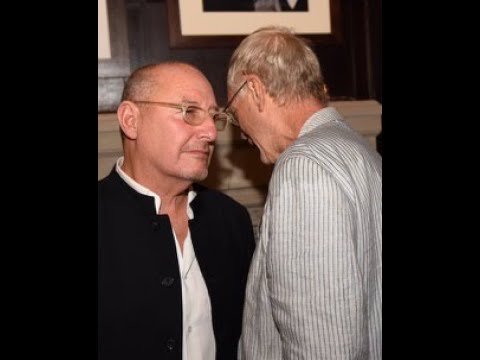
At the time of this episode's release, it’s been eight years since David Letterman finished his legendary run in late night broadcast television. We at The Letterman Podcast wanted to mark the occasion with some very special content, beginning with this episode.
Robert Morton was with Dave's Late Night from its debut in 1982 and became the show's Executive Producer by 1992, a position retained when Dave moved to CBS the following year. Morton was also an architect of Dave's production company, Worldwide Pants.He also might be one of the most charming humans currently walking the face of the Earth.
Morty has graciously shared some of the funny and insightful behind-the-scenes moments during his time working for Dave. Part one covers his early working years, including his involvement in the early expansion of cable television; working for Tom Snyder; relating a beautiful little Andy Kaufman story; and much more.This exceptional two-part conversation is the tip of a large iceberg we hope will continue both here and in other projects moving forward.
We at The Letterman Podcast would like to express our expansive gratitude for Morty–everything he contributed to the greatest body of broadcast work in history, that of David Letterman & Company, and of course his willingness to talk about it.
This episode is brought to you by Rupert Jee and the Hello Deli. Go to Hello-deli.com to purchase Late Show with David Letterman related merchandise.
Please join our group on The Facebook. You can also like, share, and leave a positive comment for the show. Please. Its cold. And there are wolves.
Episode Transcript
Read full transcript
You're watching the Letterman podcast with Mike Chisholm, endorsed by the Hello Deli. Yeah. Welcome once again to the Letterman podcast with Mike Chisholm. Coincidentally, I am Mike Chisholm. Let's not bury the lead. We got Morty. Robert Morton is on the Letterman podcast. Finally. Um I have talked to him back and forth and chatted back and forth with him for a while now. And uh it was it was cool. Like it wasn't just that he didn't want to come on. We wanted to release it kind of strategically. Um this is a dream come true conversation for me. Hopefully, I am a conduit for those of you who would ever want to have a conversation with Robert Morton. And uh and I I I asked the questions that uh you would like to hear asked. Uh we certainly certainly had a phenomenal uh introduction podcast here. One that's going to lead to more, I'm certain. Uh but we're strategic in the release of it. Now, this is coming out at a time right now. We're kind of marking the occasion that is uh the very last Late Show with David Letterman. Uh May 20th, 2015 is is a time where many of us who grew up with an institution, a broadcast institution, uh that behavior was then changed forever. So grateful that Dave is still doing stuff. Morty and I talk a little bit about the stuff that he's doing now.
Uh that might be more in part two. Yes, we're doing part two. Sorry about the you know, there's some people out there who are like, "Give us it all one big three-hour episode, two-and-a-half-hour episode." And then there are some that are like, "Please bite-size this for me. I have a life." And uh I understand. Uh so this one here, we just thought, "Okay, let's two-part it um between this Friday and next Friday. That's where the anniversary of May 20th falls. We might release a bonus episode in the middle there as well, you know, marking the occasion. We're going to we'll get the contest for the the late show rejection postcards that we're going to be giving away. That's going to be happening here in the next the next week. So find the come to the Facebook group, the Letterman podcast Facebook group. Find the contest post, like, share, make a comment, you get your name in there three times for that.
Um Yeah, I mean I just this this conversation with Morty was incredible. It was awesome. Don Giller was part of it. He was in the background the entire time feeding me stuff but also would pop in from time to time. And I mean Morty is just I I said this I've said this to a couple of folks who asked about it, who knew it was happening and and and he might be one of the most charming He might be the most charming human I've met. He is extremely charismatic, extremely charming. He knows how to tell a story and he's got thousands of them in his head. I I I hope you know, we talked a little bit about potentially a book for him if there's some sort of an you know, an oral history type book. Hey Scott Ryan. That that maybe we could figure out with with with Morty. I mean his stories have stories. It is a really really fun conversation that I I'm just honored to have had. And yeah, we're going to do part one right now. So um Again, don't know what else to say without further ado.
Without further ado Robert Morton part one. How many people now call you Morty? Do you get called Morty every single day? Like is that your moniker now or did that is that a an old phase? Every day. Every day. Every day. But you know something? I I was called Morty before Letterman. Right. Uh Letterman Letterman took a liking to it and kind of made it official. But I was always People always called me Morty in college. They called me Morty, Morty Pie, which is my email address. Yeah. So I I was always Morty. I wasn't going to say it out loud, but Morty Pie, when I saw that, it was I I The word I used was adorable. I'm like, "Oh, that's adorable." But I used to call me that in college. That was my nickname cuz I used to sing Remember that Beatles song, "Honey Pie"? I used to sing it, "Morty Pie." So. Uh scale of 1 to 10, how much How annoying have I been trying to get you on this show? Pretty annoying. Yeah, there we go.
You know something? It's It's funny because I was confused between your show and the guy that stole the microphone's show. And Jay's show, yeah. But you were on that show, too. You You You did I've seen you on that show. Yeah, I watched one episode where you were at a hockey game or something. Then O'Donnell. O'Donnell. That was when O'Donnell was on. Yeah, absolutely. I watched that one. So I was on And he was asking me to do the show, which I promised him I would do after you. So, you know. Oh, I I think you're going to really get a kick out of the Late Night Play Set. I think you'll like that a lot. Um You weren't there, though, Which brings up the question of that guy that's selling all the sets on What's his name? Thomas R. Yeah. Some funny stuff there. Uh well, you know what? That's funny you should say that. There's going to be some authentication happening with that. The chairs, obviously, are recreations. The microphone, obviously, isn't the the original one. Um and and it's Backdrop is that The backdrop is not the original backdrop. Well, there's There is, but there's three buildings missing.
There's three buildings No, I know One of them's not the real backdrop, and I know it because I would never have approved of that backdrop. When I if I was, you know, and that's when I was the producer of the show at the very beginning. Yep. If I saw that backdrop, I'd say, "Nope, no good." And I'm sure Letterman would agree. Yep. That's uh that's why I think it might be funny. But I don't want to hurt the guy's chances of making I got my eye on Paul's organ stand. I think that would look pretty cool here to host a podcast from behind that. it the modesty panel. That's how it's That's what it actually is referred to as, so you don't see up some girl's dress, you know. Um I'm so grateful for this uh that you're doing this today. Um Morty, I Growing up, I you know, all my cards on the table, um I thought you were the coolest human on TV. I I honestly did growing up. You were just You were the guy. Uh I loved your style. I loved how you how how you dressed. I loved your role within um you know, the the the the the Letterman mythos. Uh when Carter's book came out, you were one of the people that I wanted to know the most about. Um I just I I just really appreciate you doing this today. I can't thank you enough.
Oh, it's my pleasure. No, no. I I'm very flattered by you saying that stuff. None of it's true, but thank you. It's all true. Probably just ask Jimmy Kimmel with Letterman, for God's sakes. Well, that's You know what? Um I appreciate where he's coming from and his enthusiasm for Dave. And there is a generation of Gen Xers who your show your show did that. You guys are No, I I missed it all. I always say I I missed it because, you know, I was in the trench doing fighting the war, so I couldn't, you know, I couldn't really comment on it. I couldn't really enjoy it like the real fans enjoyed it. You know, every night I would go back into a dressing room and get the kicked out of me. You know, Actually not. And I I I'll I'll dispel a a myth there. Yep. I used to be the guy as I'm sure Rob Burnett was after me and I was as I'm sure Barry Sand was before me. Yep. You used to have to knock on the door after a show, after a good show. It was always easier. After a shitty show was was hellish. And I would be the first to knock on the door, go into Letterman's dressing room while he was undressing, taking his tie off, taking his shirt off.
Uh and he never and and and we'd go up to the office and the staff would stand outside. He He hated my jokes. He hated the the my guests. He hated the interview I did. He never did that. He was never the kind of guy that would place blame on anybody else. He was so self-critical. Yeah. And that that he just beat himself up. He wasn't ragging on anybody else. He wasn't He would be yelling at times, but it was yelling about himself. Yeah. I suck. Look at my hair. Look at this. Blah blah blah. And and it it it made me sad. Yeah. And and he went through that for for a lot of years. 14 years I was there, it was it was a nightly thing. And I always felt like, "Geez, he can't enjoy it. Enjoy it." You know, from what I understand, he's he's a different guy now, which is great. Which is great. How about you? Do you miss show business? I do. I do. I You know what I miss? I mean, I I like what I do.
I You know. Let's talk about that. Let's talk a little bit about that. All right. We'll get to it. I miss the big money. But there's no more big money. But there's no more big money. So the the business is that different. It's diluted. Yep. It's diluted. It's diluted. I miss the I don't miss the power, really. I miss the access. I miss getting every book that's printed. I I miss, you know, talking to guests and, you know, I miss the flow of information. I'm lucky that I have two young daughters who, you know, keep me updated with music, which was a benefit of producing the show. I heard, you know, Sheila Rogers would pitch music acts and then go in with Letterman and play them for him. Um you know, I miss hearing all the young music. Uh I miss the comedians and who's who's hot and who's not and who's ready and who's not ready. Yeah. Uh you know, it's it's it's I I miss that that flow of information and the access to information. You know, I used to get and one of the perks of being a producer, you get on the second night press list of all the Broadway shows.
So Yeah. I was a single guy. I mean, I was 48 years old when I got married. So, you know, I was single. I was a a crazy bachelor in New York. Yeah. And I would have tickets to the second night of every show on Broadway. There was the opening and then the the second night. And I'd have two seats right on the aisle, fourth or fifth row. And, you know, I had a charge account at Orso, where I used to eat every night. Yeah. And uh you know, I was a good date and it was fun. That would I miss that. You know, I miss New York, but I don't think I could ever live in New York the way that I did. Yeah. you're you're, you know, in Carter's book he says I was a prince of the city. You know, and I was. I I, you know, I as as much as Dave didn't like going out, I basically I loved it, but I also used to look at my role as being the front man. Yeah. You know, I was the guy that would go out and, you know, if I saw somebody famous, I'd ask him to do show and talk to them and, you know, and that that kind of, you know, was my thing. So, you know, I I enjoyed it, but I it also served a purpose on the show.
Well, you've eliminated about three of my questions here already. Um and and and I I just want to dive down that uh rabbit hole a little bit more. Uh you know, the the parties, the schmoozing, all of that stuff. I'm I'm that guy. Like in in my financial business, I enjoy the networking. I I enjoy things like that. I enjoy um these events and get-togethers and things. Uh and and the narrative has always been Dave loathes that stuff and you excelled at that stuff and it was one of the reasons why it was such a powerful uh combination. You know, Dave uh could focus on on on his uh his world the way that it was and you would go out and you would bring in some of these very cool um either icons of pop culture or or or folks who um you know, were on the cutting edge, who were coming up at the time in show business, that kind of a thing. Uh that was the narrative and you talking about this right now, again, I'm talking about why I thought you were one of the coolest guys in the entire world.
That was what I dreamt that it would be kind of like. I love that. Going to these parties up in Canada, you very, very depraved. Very vicarious, sir. A lot of vicariousness. But you know, I I it it worked against me as well. You know, I I think I think Dave kind of saw me as this gadfly and I think on one hand it might have embarrassed him a little because that's not the way that a producer of his show would be, but I saw the necessity and I I enjoyed it, as I said. And I think he kind of I I don't think he was jealous per se, but I think he would think, you know, well, why aren't I enjoying that life? And I don't think he was capable of it. He was not a social guy. So, you know, I think the combination I I think essentially it was a good thing for the show. Uh but I I I think I I created some resentment between the two of us because of it. Well, fair enough and and and pros and cons to everything, but I want to ask like off the top of your head, anybody that you booked at social events like that, you know, people obviously you you know, Carter calls you the prince of the city.
Um, you know, people see you at these events. Oh there's you know, the EP of the Letterman show. Uh, at the same time you must have been trolling at the at the same time. Like did you ever met people and book anybody from that? I would try to do it. I I don't particularly recall offhand. Obviously a lot, you know, I I I became friendly with a lot of people and you know, got got people on, but also um, you know, I would try for the biggies, you know, I was I I I met Cary Grant and I was all over him. You got to do the show, come on, blah blah blah blah blah. You know, and it was like, all right, why not? Try to get him. Yeah. Why not try to get this one, that one, you know, it was I remember the first time I met Hillary Clinton and when when when Bill was running for president the first term. Yeah. And I tried to get her on the show. I remember trying to get Tipper Gore when she was in the middle of the whole thing with with the rap music.
Yeah, absolutely. And you know, she oh, I just want to get tickets for my kids. That's all I want. They love the show. And I think I covertly got the kids tickets. I still have a thank you note somewhere from her, but you know, I I got the kids tickets and I don't think I ever told Letterman that Gore's kids were there, he would have flipped. So. Yeah, better he didn't know, right? He didn't like knowing who the audience members were and things like that. spotted my parents in the audience. Oh, really? During a break he said, are your parents in the audience? Um, you know, we've talked to a a couple of the old school writers about this and this is a good question to ask you as well. Um you know, and I want to get to the stuff before Letterman here. I want to talk about Tom Snyder today. I want to talk about There's a few things I wanted to talk to you about.
I'm fascinated by, but one of the questions that we asked a couple of the the old school guys were you know, you guys you talk about it being in the trenches, working your asses off. You ended up producing the coolest show on TV. The ascent as the college kids were all, you know, telling the world about what they had discovered. Um you know, you'd go to LA and suddenly the lineup would be around the block. And a lot of the writers, a lot of the people who were behind the scenes, they didn't know that that it was that popular because you guys were working so hard. Being at the level that you were, did you know that you were on the cusp of something and part of something that was changing things? I didn't realize it was Yeah, yes, I did.
But you know, then again, I and and I know Dave always gives credit. I always give credit. You know, Lorne Michaels made it all possible for us. Not directly. I mean, he he was a fan and and we all obviously knew him and liked him. But you know, he paved the groundwork for for that type of television. He really did. And he gave us license to do, you know, his his show and what he created gave us license to do what we did. You know, he was the first to hire the Harvard guys. And we just we just latched onto that and brought brought, you know, Merrill brought all the Harvard guys in. Yeah. It was a it was a great move. They were they were fantastic. Um Do you have a good relationship with Lorne? Yeah, yeah. Yeah, I I was friends with Lorne. I liked Lorne very much. He didn't take my call a couple weeks ago when I tried to get my daughter tickets for the Pete Davidson show. Then they canceled the show cuz of the strike, so Yeah. Yeah, I'm okay with that. Unfortunate.
Um now before Letterman and and I mean, you know, one of the one of the things that I've loved I I loved any way that I could connect with you at all at all. Oddball connection, Alex Bennett. Um you know, world-class broadcaster in his own right. Um you know, so you you were a fan of his as you were kind of coming up and learning your life skills, that kind of a a thing. Then you also worked with to lower the temperature in this room if you don't mind. Hold on a sec. Oh, please do. Please do. Very good. Um I get that a lot. Um so and then so guys like Alex Bennett, world-class broadcaster, you go over to Tom Snyder. And and I want to talk about Tom Snyder a little bit because, you know, we've been I've been talking with with Annie a little bit, um you know, news about the documentary, all these sorts of things. Um you were hanging out with broadcasters before Letterman and I don't know that that narrative gets taken out gets talked about enough. Um The Tomorrow Show, you're you were a part of that.
It's why Letterman hired me. Honestly. I mean, I was offered in 1980, Mhm. Letterman got his morning show. Yep. Uh I was working on The Tomorrow Show. And we never looked at Letterman as a threat particularly cuz, you know, we thought, all right, he'd do okay in the morning. Who Who knew? Actually, we didn't think that, but we could have. But we never thought that he would be taking over our time slot. Right. So So Jack Rollins, who was the legendary manager and was Letterman's manager and executive producer with Letterman of all the shows. Yep. He was with Woody Allen for all of Woody's movies. You know, Jack was a legend. He managed Harry Belafonte. You know, he was he discovered Nichols and May. He was he was quite the guy. You know, by the time we worked with him, he was in his I'd say 70s to late 80s, early 90s. Yeah. You know, so he was he he kind of lost a little of the uh of the zip, but but he was a wise, great guy to have on your side.
Yeah. Um I'm think what was the point of the story? Where was I? Well, you're late the morning show, but then also Oh, yeah, yeah, yeah, yeah, yeah, yeah, so so I had an office at NBC. And Stu Smiley, who was my college roommate and best friend, also worked for Rollins and was the point person for Letterman as his manager. And he was my college roommate. So, they used to come up to my office to watch the closed-circuit feed of the rehearsals. Yeah. And I would say, "Oh, they're doing this all wrong. Oh, they're doing this wrong." And this is when Bob Stewart was the producer, who was the producer of the Pyramid. He was a gangster guy, who Letterman trusted because Letterman felt comfortable with him when he always did the Pyramid as a guest. So, I would say, "Oh, this is, you know, talk show 101. They're doing the wrong thing. They're just They got to do it this way. They got to that way." And Jack would always agree with me. So, when they when they got rid of Bob Stewart early in the run, they offered me the the producer's job of the morning show.
Right. And I had a meeting with Brandon Tartikoff or was it Silverman? One I don't even remember who it was. And Nancy Geller was in in late-night programming, daytime programming. Uh and they offered me the job to produce it. At the time I was dating a woman who was a talent booker on the show. And when I mentioned it to her, she flipped out. She said, "I can't work for you." Blah, blah, blah, blah, blah. And then I told Snyder I was offered the job. He goes, "You're going to become the next producer of this show. You don't have to You don't have to take that job." So, I passed on the job. And they gave it to Barry Sand. Wow. Yeah. That doesn't get See, that narrative doesn't come out there enough, either. No, nobody knows that. That's that's that's a that's a a different different time. That's really interesting. So then when when he started the Late Night Show, Letterman called me. I was working at Good Morning, America at the time as a a writer and then an associate producer.
And he called me and he said, "I can't offer you the the job to run the show anymore cuz Barry Sand is with us, but you know, you could be the number two and produce segments and all that." So I said, "Yeah, sure." And then 14 years later, so. Um and we're going to get to that, for sure. I want to stay on Tom Snyder for a second. How long did you work for Tom? I worked for Tom for close to 2 years. And I and I wear a badge of honor uh I was fired by Roger Ailes. Well, there you go. There's famous and there's infamous. That's a little bit of both right there. Well, what happened was despite the fact that that Snyder promised me the producer's job, yeah, Brandon Tartikoff, who was running the network at the time, Snyder's girlfriend, a lovely and talented woman named Pam Burke, Mhm. was the producer of the show and she was a damn good producer and she knew how to handle Snyder. And the network decided, "Well, we're going to bring in Rona Barrett."
Which I was involved in also because Rona was a guest on the show and I produced her segment and she was so good as a guest, they said, "Wow, we should offer her the co-host job." And it was like, "Oh you god." And it was Yeah, you saw the the writing was on the wall at that point. and it was it was wasn't Rona's fault, per se. Uh Tom just resented having a co-host after so many years of of a solo act and he was right. He was right. That show was all him. Well, yeah, the long-form conversation and and it seemed like the network and all the the the the pinheads is and we'll get to them. Uh would come in and they would try and monkey with the formula, but the long form, the one-on-one was, you know, Tom's obvious strength. Like obvious. and it was the selling point of the show. Yeah. The reason guests the level of guests that he got wanted to do the show was because they had the luxury of time.
They didn't have to be rushed in, rushed out, but hold the book, show the clip, whatever and and and it's over. You know, they got a chance to really tell their stories and we used to have great guests. And and you know, I remember Sterling Hayden. Remember Sterling Hayden, the actor? He used to come and he'd smoke a pipe in the green room and it was filled with pot. And he'd just get he'd get so high and then go out and he was the greatest guest in the world, this old actor. And I'll tell you the audience would know him. He played the lieutenant who who Al Pacino shot in The Godfather, the cop that punched him and broke his jaw. Yep. His name was McCluskey in it. McCluskey, yes. Yeah, that was Sterling Hayden. That was Sterling Hayden. And he would come on and get high as a kite and come on and talk with Tom. this salty old guy. He He lived on a boat in Sausalito and was just the greatest. Tell stories about old Hollywood, about, you know, scandals and who he and it was great.
It was great. Well, and this is where I want to talk a little like I love that you have this reverence for old-time show business. You know, we talk about we'll talk about Jackie, I'm sure, before the the the show is over. I love that again, these are the people that were running late night, you know, Hal and and and these folks. But before we leave Tom, I just got to ask. So so with Rona, did she come in when the audience came in or did Was it like Death by a Thousand Papercuts? Did they bring in an audience first and then Okay.
What happened I'm sorry to interrupt you. No, don't be. Are you kidding me? Uh what happened was Um Brandon Tartikoff fired Pam Burke because she was a little too close and you know, they felt that he she couldn't tell Tom how to straighten out his act and you know, do what they wanted to do. Yeah, like nobody needed that kind of interference. Um and they hired uh Brandon Tartikoff's quote was, "I wanted to find the toughest producer that I could find." And he remembered Roger Ailes who produced the Mike Douglas Show and you know, did all the Nixon campaigns and you know, was was a political. And they hired him and he was the kind of guy that you'd say, "You know, I want to have so-and-so on the show." And his response would be "I got something on him. Don't worry, he'll do it." And you go, "What?" He goes, "I got something on him. Don't worry, he'll do it." But he'd say it about everybody that that every name we brought up and he never got anybody. You know, it was all bull it was all bluster.
And So I I I resented him, right? There's Sterling Hayden, by the way. There's Sterling Ah, look at that. Wow, nice. Thank you for that, Don. Yeah. He uh he So he came in as a producer Yeah. the job that I was promised. So I resented him right off the bat. And I I I just you know, I was I was a hippie. I I you know, I I couldn't tolerate that that Republican piece of And history proved me right. So It certainly has. So So I was just at odds with him and he fired me. Which was just fine. Which was just when they had the audience in? Yes. I used to Yeah. Used to do the warm-up for Tom Snyder's audience. Yeah. Yeah, I was the warm-up guy. What kind of stuff would you say? Um Did you have stick? Stick, you know, you know, the the usual warm-up stick, you know, you might be on camera, so don't be with someone you don't want to be seen with. Oh, that's fantastic. Um I I thank you for talking about that stuff there, cuz again, I think I I don't think people know that enough about you. Um He was the Snyder was the greatest guy. I mean, he he became a very dear friend.
Yeah. You know, we felt very rewarded that it was really rewarding when we offered him the Late Late Show. And there was never a question in our mind. You know, I I think Peter Lassally didn't necessarily agree with him because Peter came from the Carson camp and Carson hated Snyder. Yeah. Hated him. Snyder hated Carson. Yep. So, I think Peter was opposed to it, but then Peter ended up going out there and running that show. So, you know, I think he he grew to like him very much. Did Peter want Jon Stewart at the time or am I getting my timelines mixed up? You know something, we we we spoke to everybody. Yeah. And you know, we had had, this is interesting, and I don't think I've ever said this before. Uh we had considered having guest hosts like Carson had. Okay. And we were at CBS. And we had made an offer to Rosie O'Donnell to be the permanent guest host. And simultaneously Rosie was offered her daytime show. Yep. Simultaneously we all kind of took the position of, wait a second, she can't give up the chair. That's not what we do.
You know, and and Letterman always used to say it. He goes, you don't give up the chair. You know, and the first time he had guest hosts was when he got sick. Yep. So, we got out of the Rosie thing. She took her daytime show. And you know, that But that offer was made. That offer was made. Yes. Wow. Yeah. Man, that would have changed the landscape. Um Sure would have. Yeah. Who would chop after rag on if it changed everything? Uh we'll keep it in that second that that this uh this era for a moment uh and just keep talking about Tom for a second. Um again, one of the reasons why I thought you were cool as Larry shows up, there's Morty on Larry Sanders. And and uh you know, after Late Show and all that stuff, it was like right around the time that was all happening, you know, and and and then you guys sort of announced on Larry Sanders, but you didn't. It might have been Life Imitating Art that cuz that that whole 12:30 idea was was was was bubbling up fictitiously.
And then Life Imitates Art, I just absolutely loved that very, very much. Can you talk about Garry Shandling? Talk about that for a moment. I I I knew Garry, obviously. Yeah. And I was going out to LA for, you know, auditions or seeing somebody, some executive, I don't know who. Probably Moonves. And um cuz we were doing Raymond. No, it might have been before that. But I used to go out to Moonves and try to get him jazzed up about about Ray Romano. And I remember having a meeting with him and saying to him, "This is the guy that you're going to pull out for every press tour. This is the guy you're going to pull out to every affiliate convention." And Moonves was, "Yeah, yeah, yeah. Just do your pilot, you know." He didn't care. He did not care at all. It was funny. It was very funny. But uh I was I went out to LA and it was just about the time uh Did you remember MGM Grand Air? Yes. Oh, yes.
Yep. uh it was like a flying green room. It was every celebrity in the world. I remember Barry Shand telling me that he once sat next to Elizabeth Taylor on MGM and you know, it was like you'd see people. So Garry was on that flight. So we sat together and he goes, "Hey, while you're in LA, why don't you do my show?" So I said, "Well, what am I going to do?" He goes, "We'll figure something out. Don't worry." Two days later, I'm on the stage, you know, taping the you know, filming the the part. You know, on stage acting with Rip Torn. I was intimidated as all hell. I bet. Garry didn't bother me, you know, I I was fine with him, but Rip Torn it was intimidating having to act. Not really. I would hardly call what I did acting, but you know, it was fun. I enjoyed it. And Rip Torn was very reassuring. You're doing great, kid. You're doing great. Yeah, it's funny. I I assume you all watched Sanders. I mean, that that's that seems to be the scuttlebutt is that everybody in the industry in late the late night industry loved the show because it was, you know, it was so close in many, many ways and entertaining as all get out anyway.
When you see them talking about, you know, Dave's there and he's doing the wink wink nudge nudge to fictitious to Larry Sanders saying, "Oh yeah, no, we're doing we're getting Tom Snyder for the 12:30. We're getting Tom Snyder for the 12 like I I I always wanted to know the ins and outs of that." That was a different episode though. That wasn't the episode where they they went they were at this award show. Yes. You remember that? I have the award right here if you'd LIKE TO NO, REALLY? HOLD ON. It's not an Emmy, but they kind of made it look like it was an Emmy and Dave and he offers it to Garry. And Garry, come on, go ahead, take it. Take it. Well, really? Really? I can can confirm that this is THE AWARD. OH, THIS IS EXCELLENT. OH, that's excellent. It's called the American Television Award. Right? And it was an idea of the former late Laugh-In producer George Schlatter. And he had this idea, let's have a an award show to compete with the Emmys.
Yep. And you know, when you when you create an award show, you have to have like you you you have to follow all the standards and practices in the network. So, you have to really have a voting body. You have to abide by certain rules. I mean, it's a whole big thing. You can't just say, "Ah, I'm going to give out awards." You know, there has to be the the standards and practices. So, he created this award and, you know, Letterman won for best show. And you know, I think the only reason he went out was because Garry had this idea to do do Larry Sanders backstage. Yep. So, that was that was the episode. It was a great scene and they and again, life imitating art, the the whole 12:30 thing, it's going to be Tom there. I just love that so much. Did Garry ever call you when the you guys had made the decision you were out and and and they were talking about Garry for for taking over for you guys? Did he ever Did you ever talk to him at that point? No, I I don't think honestly Garry ever wanted it.
Yeah. I I know I think he was a name because he had success and he was funny and he he was one of the few guys that probably was capable of doing it on war. Yeah. Uh but I I think he was happy on the path he was on with Larry Sanders and, you know, doing that stuff. So, I I I I don't sense that, you know, Peter would know better, but I I don't know what kind of condition Peter's in. Yeah. But but Peter and and Garry were very close. They were very good friends. So, you know, I I know Peter was probably trying to convince him to do it, but I I really don't think Garry wanted it. Yeah. Um I want to go back to a thread that we started a little bit. The idea when with late night, um, you know, as cutting edge as it was, um, and and and as hip as it was, uh, the place was filled with folks who either had reverence for or had been part of showbiz history and and the older generation of like what my parents would look on as the, you know, the Bob Hope generation version of of showbiz and this reverence for it. Um, you know, you clearly have it. Uh, Hal Gurney.
You know, I worked for par. These these people that were surrounded So, it was the hippest show on TV and it was becoming the hippest show on TV, but surrounded by people who had been in the business in key roles like Jack, like Hal, yourself with the reverence of that. This is happenstance, right? You guys didn't plan that. It's just kind of how it happened, right? No, but but but but what happened was we we all believed in in Letterman. We all believed in his talent. We all believed in his vision. And eventually we all kind of understood what he was trying to do with the show. And despite the fact And and look, Letterman had reverence for show business also. Absolutely. You know, he he loved Carson. He loved, you know, he was a big movie fan. He, you know, Letterman was was a very learned guy in in in the business. And you know, he knew all the agents. You know, he never let on that he was but you know, in the beginning he had a hustle like everybody else. So, you know, I think he had a lot of respect for the business.
But then we realized we wanted to deconstruct the business. Yeah. And and once we all kind of got that that was the mission, we we just loved it. What could be more fun, you know? And Hal was the leader of it. Hal was the greatest at it. You know, between Merrill and Hal, you know, Hal did visually what what Merrill was doing on on paper. Yeah. You know, we I I always looked at Hal like another writer on the show, except he was looking for the visual joke. Yep. You know, and when Hal negotiated his deal, he got a producer's credit, which is why, you know, I think I gave you a picture of us getting our Emmys. You know, he was up there as as a producer receiving the award. So, you know, Hal Hal Hal was very valuable, very valuable. He changed the tone of the show without a doubt and created a blueprint where somebody in the control room is given a little bit of free reign to do just that and change the entire tone of the show, you know, whether it's a shot over at a musician who doesn't know they're on camera, you know, reacting or not reacting, just being deadpan, looking up into space, whatever it was.
The sound effects, things like that. Given given just given a shot. He he earned it. He really earned it. Yes. You know, I mean, I think as the years went on, Letterman just trusted him with his life. Yeah. Essentially. And that's how Letterman looked at it. It's my life. He's out there, it's his life. You know, and I think when you need that that bit of business to help help you along. Yeah. You know, when I became the the producer of the show, Letterman said to me, called me into his office, and he goes, "Marty, you could say no to this." He said, "There are times when I'm out there and it's very lonely." He goes, "You know, I'll look over to Paul and he's writing some music, doing his job, and I need somebody to to help me. You know, if a if a joke fails and I'm out there, you know, on my own, do you mind if I talk to you? Do you mind if I bring you into to the proceedings?" I said, "Hey, if it's going to make you more comfortable and it's going to help jokes, by all means." And that's when he started talking to me on the air. Yeah.
But it was very it was very considered and he asked me if I minded and I don't care. I was a ham to begin with so I I liked it. Um so that's kind of how that that started and I think it was the same with Hal, you know, I think he over the years over it wasn't even years with an S. I mean, it came very quickly that he he understood Hal's vision and understand understood that Hal shared his vision. Yeah. And gave him free reign like you said to do anything. We used to get we once got in trouble. Um I don't know if I've ever told this story down here, I uh after the shows we used to have cars waiting for us. I'd have a car, Letterman would have a car. My deal with NBC was I would get a and it wasn't a limo, it was, you know, a black Like a town car with a driver kind of a thing. Yeah. They take me one way. So I could take it home at night or I could take it to work in the morning, but I had a one-way trip every day.
That was my deal. Very generous of them. Yeah. Uh so I always used to take it out to go out at night and, you know, go to the theater, go to restaurants and do my thing. So one night I'm leaving and it's when I I had that I came down through the studio entrance right in the middle there at 30 Rock. Yeah. And I walked out on the 49th Street side to get my car which was facing west. So I I got into I'm walking into the little corridor. Do you know 30 Rock? I do. There's a a small corridor on 49th Street and there's a single revolving door. Yeah. In the corridor I see John Gotti has a guy by the collar and is screaming at this guy. You how dare you that up blah blah blah blah blah blah. And I like stop in my tracks, right? I get into the car and my driver said, "Did you see uh Gotti with Letterman's driver?" I said, "What are you talking about?" He goes, "That's Letterman's driver." Cuz that's the guy driving Letterman home.
So I it was just when cell phones came out and I had a I remember I had a Motorola flip phone and I called Letterman's office and I go "I don't know if this concerns you, but John Gotti has the guy that's driving your car against the wall and he's screaming at him and you know." And Letterman then gets crazy. "He's going to kill me. He wants me. They're going to kill me. I'm telling you something." And of course he didn't take that car, he got another car. But the backstory where Hal comes into it was uh Letterman had done a joke in the monologue about the mafia. And unbeknownst to any of us, one of the crew was friendly with John Gotti's daughter, Victoria. And got tickets to the show. And she was a blonde with big hair and very flashy. So Letterman did a joke about the mafia uh not knowing that Gotti's daughter was sitting in there. And Hal, being the perceptive director that he was, right after the joke is delivered, Hal does a cutaway to Gotti's daughter. Yeah. But after the show the crew member comes up to me and to Hal and he goes, "Guys, that was Gotti's daughter that you cut away to."
So I said, "Well, we could you know, what are we going to do? We got to edit it out." So this was well before the the car incident. So Letterman kind of put the two together and thought Gotti's killing me because I did a cutaway of it. I said, "Dave, we edited it out. It was never on the air." But she knew and told her father. Yeah, it was just a whole crazy thing. That was one of my many John Gotti uh uh Okay. I I was going to ask you, did you talk to anybody about every He was, you know, the guy that the Godfather that was out every night. And I was out every night. You know, I I used to go to this one restaurant, Columbus restaurant. He was there one night. And I asked the owner of the restaurant, I said, "I want to meet Gotti." I go, "Can you introduce me to him?" So, he goes, "Well, I'll have to ask him." And I see him walk over to Gotti and he he whispers to Gotti and Gotti just goes like that. Just shakes his head no and comes back. He goes, "All right, he's a little busy now, so."
But um another time I was at a club and there was this woman that I was talking to on the dance floor and she was just a real horrible person. And I think I said to her, "You skank." I you know, what whatever I said to her. Cut to I'm walking out and I see she's making out with Gotti. Oh, no. "Holy I'm a dead man here." I I just called Gotti's girlfriend a skank or whatever the hell I said to her. She was being a jerk. I start It was like an old Abbott and Costello movie where I'm like trying to sneak against the wall and edge my way out of the place. It was at Regine's nightclub on Park Avenue. And I'm trying to sneak out of the club without anybody seeing me. Yeah. As I get to where Gotti is a bunch of Gotti's henchmen pick this woman out pick her up and throw her out the front door of the restaurant. They physically threw her out. So, I say to one of the guys, I go, "What was that all about?" He goes, "This strange girl just started making out with Gotti and as she's kissing him, she's trying to steal his pinky ring." Oh my god. And I'm thinking, "What a great souvenir that would have been." The Godfather's pinky ring. Are you kidding?
So, I lived to see another day. It was, you know, it was a great feeling. That's what they call chutzpah, I think. went to take When we went to CBS, also from being out, I became friendly with with Bruce Cutler, who was Gotti's attorney. Right? Who was a mafioso guy, you know, he was a Jewish guy, but he had like a 19-in neck with red with tight suits, you know? And he was always out. And I I I liked him. I I always liked talking to him. And we were talking about going to CBS, and he wanted to make my deal for me. He said, "Let me make you a deal for you." I said, "Bruce." And I I And And it's the one thing I regret over the years, not having I I I I took it so seriously because, you know, it was a big break. It was a big show. I'm I'm the executive producer finally. Yeah. And I didn't have the the sense of irony or the sense of humor at the time to kind of say, "Oh, that'd be great. Go ahead, Bruce, make my deal. Go up to Brandon Tartikoff's office and scare the out of him." You know?
Today I would have, you know? In hindsight, it was it was a a missed opportunity for me to have the greatest story ever. It's not a bad story to begin with. So, I I I did not let him make my deal. This is beyond amazing. Um now, I got to ask I got to ask I'm going to ask on the camera. I don't Have you talked to anybody that you used to work with about you coming on here and and information they might have given me or anything like that? I literally have on my card, Morty, I hear John Gotti owes you one. I have that for right? I literally HAVE IT ON MY CARD. I'm going to get something. Can Can I go out and get something? Yes, please do. This is crazy. Um By the way, uh Da- Don has sent a bunch of pictures, and I'll show this to the audience right now, might as well. The Ernie Larry Sanders Larry TV award. There that is right there. faded. So, I don't know if you'll be able to see it. Okay.
I had a girlfriend who owned a restaurant in Brooklyn uh right across from the Brooklyn Courthouse. Yep. And Gotti is on trial for murder. And it was on Clark Street in Brooklyn. And for some reason I I don't know if this is standard procedure, but they used to let Gotti go out with his boys for lunch. He was He was in up for murder. I don't think he even had parole, but they'd let him go. So, he'd go to my girlfriend's little gourmet shop restaurant where, you know, she'd make all the food. They had like four or five tables there. And he would pay her, you know, he'd give her $1,000 and say, "All right, we're taking over." But he insisted on doing all the cooking. He'd get behind the counter and make all the sandwiches and fry all the burgers and do whatever, you know. He loved doing it. So, he did it one day, then the next day. And the whole trial he would eat there every day. So, I said, "Get me a Gotti's autograph.
Please get me Gotti Gotti's autograph." So, she gets me an autograph. I don't know if you can make it out. It's very faint. Oh, yeah. No, there it is right there. But basically what it says is, "Rob, you owe me one." And in parentheses, the number one. And it's signed John Gotti. There it is. Rob, you owe me one. One. There it is. And I heard something about you getting a little one of these from him a or something like that. He did this from across the room or something. I don't know if that's true or not, but I don't remember that one. Okay. Well, no, but it it it That But I had many brushes with Gotti. I I I used to see Gotti out on the town a lot. A lot. Yep. He was a a very visible figure in in the 1980s and early 90s. I once saw him after I left Letter Yeah, it was after I left Letterman. I'm just thinking. I got hired by a company to go to Branson, Missouri. And they wanted to this this this guy this promoter uh with my help we had a meeting with Monty Hall.
All right? Oh. And what we wanted to do was do a live version of Let's Make a Deal in Branson, Missouri. At one of the theaters and people would come all dressed up and we'd get a good host, you know, wouldn't be Monty Hall or somebody like that, but we'd get a decent host and we'd do a show every single day. Not not televised, but do a live show. People would pay to get in, whatever. Absolutely. big money. And you know, we would have first to have that. Now I think they do a lot of game show things down there. Yeah. Or or if there is a Branson still. So we had to go down to Branson for for like 5 days. And you fly into this little airport. And I was leaving. And I see Gotti's brother, Peter Gotti, who I had recognized. Gotti's wife. Gotti's daughter and Gotti's son. He was in the federal penitentiary in Missouri right by Branson. Wow. They and and this airport was, you know, there was one gate.
There was one gate. It was a little pow you know, like a little look like a little cabin. Had one gate. And maybe, you know, 15 seats in the waiting room. And I of course see them, so I sit myself very close to them just to eavesdrop. Yep. And all they were talking about we can't tell them this and we made a mistake by telling him this and It was great. It was great in Branson, Missouri. I have a brush with the Gotti's. It was terrific. So. Um Have you ever thought about writing a book? Like this is a like to me there's if there's one guy who should write a book, it's you. You know what a problem? And and I think having children convinced me of this. Yeah. I'll tell my children stories about, you know, this one and that one and how we did this on the show, how we did it. And they don't relate, they don't care. And I remember reading Warren Littlefield's book. And he had a whole chapter on Must See TV on how he built Thursday nights.
Yeah. Who the cares? And he's talking about how Shelley Long didn't extend her contract after the first season and blah blah blah, how we replaced Shelley Long and I'm thinking who cares about Shelley Long? Yeah. What's the relevance in in in the 2000s? You know, nobody cares. Yeah. And I I just thought I don't want to be that guy. You know, I have plenty of stories to tell. I have a list. I mean, I'll if I could find my phone, I'll read it to you. I have a list of stories that I've always kept this running list. Hold on, I'll find it for you. I've always kept this running list in case I ever did and I I was offered, you know, uh I don't know if you know, uh Wait one second. Okay. Steve Battaglia. Do you know Steve Battaglia, the writer? Yes. Steve wrote a book about uh David Susskind and I loved the book. It was a great book. You should read it. And he said to me, he goes, "You're the next David Susskind." He goes, "I want to write a book about you."
And I said, "Let me think about it." And then I thought about it and I go, "You know something? I'm not the next David Susskind. You know, I was producer for hire. David Susskind was this genius who had big companies and you know, whatever. So, I said no. I said I am I'm too modest for it. And then I got offered to write another book and I pitched it to a publisher and then I said, I don't want to tell these stories, you know, it's I'm not I don't want to be that guy that, you know, here, I'll show you. I have this book that somebody lent me. Yep. Johnny came lately by Fred de Cordova. Yeah. I remember when he wrote this book, I think Johnny was pissed. Yeah. everybody would, you know, I don't want to write a book about, you know, I ultimately it's going to be about Letterman. That's all they really care about. You know, so uh not for me. Seems to me like you could write a pretty good John Gotti book. Um but Exactly. I I don't know, man.
I I cuz I This is a This is something that that is close to my heart uh because the whole reason why I started this show was because I got pissed off that my 23-year-old uh daughter-in-law didn't know who Johnny Carson was. And and and then she showed me a piece of comedy that she thought was absolute genius and it was a direct direct like I'll I'll flat-out say cuz I'm not going to say who it was. A direct rip-off of the stuff you guys did and I'm like, no. And so I sat her down on YouTube and I found out I found the clip and one of one of Giller's actually, one of his uh big long compilations. I'm like, look. And she's like, wow, it's almost the same thing.
I'm like, yes. I I I don't like how um I think it's important. I like this is why Shecky and I bonded so much. I believe the transfer of knowledge is an important thing and and and when you think of a guy like Rick, I mean, the world is uh uh a lesser place because of that encyclopedia knowledge isn't here anymore and he didn't get a chance to download that information to other people. I I I firmly believe that. Um the anecdotes you're talking about delight me. I'm a 47-year-old guy. These These anecdotes that you're talking about delight me endlessly. I'm not saying there's a market for it, but I'm just saying that it's it's There are people who really appreciate this stuff. But, you know, it's funny. Uh my kids and I think the kids of my kid my I have a 17-year-old and a 21-year-old. Yeah. And uh two girls. Yeah. And you know, they see David Letterman on shows. They watch his show. They They know who he is and how funny he is. You know, they look at him as as the old cranky guy with the long beard, but but then again, they get the irony, they get the humor, they're smart kids. Yeah. And you know, it keeps me relevant. You know, when they go, "Yeah, you know, I I went up to visit my daughter in college She goes to Cornell.
So, I went up state this weekend and you know, she introduces me to his her friends and they go, "Oh, you're so cool, blah blah blah." And she says, "He used to be in TV. He used to produce David Letterman." You know, there's no there's no learning curve there. They know who David Letterman is. You know, and with with YouTube and with TikTok and with all of the the availability, they they've seen his stuff. You know? So, it's it's it's it's different than Carson. Carson's He stopped That's right. You know? Well, and and and uh I don't know if you watched the last 6 weeks of of of Dave's show um you know, before he left CBS or not, but but Senator Franken came on Al Franken came on at the time and he and he he he made a joke that Dave was going to become an eccentric recluse, you know, clearly referencing, you know, Johnny and and and and whatnot. And then also Dave's quirkiness. I think we all thought that, honestly. Oh, you did? I don't know. I I think it was the biggest surprise that he came back and thank God he did. He's still He's still the funniest, he's still the most capable, he still does the best interviews, you know.
Could not Could not agree more. Uh and he's doing the Tom Snyder thing. He's doing the long-form thing, which I think is really um it's smart strategically, but it also seems to make sense as to where he evolved, you know, talking about the times uh you know, at at the at the at the end of late show, uh how how, you know, the schedule used to be such a you know, we're we're live we're we're taped, but we're going to run the show like we're live. And and the reports of people would would would come out as the show uh got longer in the tooth, how Dave would spend more time talking to people in the audience. They would actually have to edit more of the interviews, not just cuz TV was becoming more rat-a-tat and and and commercial breaks were that much sooner. You didn't have a 9-minute segment with anybody anymore, but but he would actually start to do this and and and the curiosity that he has would naturally kind of come out a little more. So, to see him do long-form now is fantastic, and then What is that? Go ahead.
As much as he idolized the the comedic end of Johnny Carson and the likability and you know, whatever else that Johnny had going for him, which was plenty, I think he he worships Snyder for his ability to have those great conversations. Yes. And never gave a thought when we we did the late late show. The problem was when we gave the show to Snyder, we pitched it to him and Nightline was on at the time. Yeah. We said to him and said, "You know something, you're a better newsman than Ted Koppel. You know how to do interviews. When when the World Series is won, we want to do a live hookup with you and the winning pitcher. We want to do a hookup with you when whoever the world leader comes to town. And we had already given him the show thinking that he might really like that, being back in the spotlight as a serious newsman. Grand things, big things. Big things. Yeah. I'll never forget and Letterman and I have laughed about it ever since.
He came to us and he goes, "You know, cuz I do this show on CNBC." He goes, "I have a guest like Mr. Brisket and I have him on for a half hour barbecuing brisket." And he goes, "I love it. I love it." He goes, "I wanted that Mr. Brisket on my show cuz I don't want to talk to world leaders." He didn't want to do it. I had no desire. And we always laughed. Mr. Brisket is who we wanted. We wanted him to have, you know, whoever the prime minister of Russia was or the president of Russia. We wanted him to have world leaders. We wanted him to have the lead story in the New York Times every day. We would have that person on the show. Mr. Brisket. To become the, you know, that that that that diplomat, the broadcast diplomat of of of And he could have become that, but the Mr. Brisket thing is really funny. By the way, as he got older, he became more comfortable with that than he did with having, you know, real He liked lighthearted stuff. He was a funny guy. He was bigger than life. This guy was the biggest guy I ever knew. He got me in trouble once.
I'll tell you this one story. Um as I told you, I used to my roommate in college and then when we got out of college, Stu Smiley who managed Letterman, he introduced me to Letterman the first time I came out to LA and he said, "I want you to see this guy at the Comedy Store. He's He's an ex-Johnny Carson." So I went and Letterman's act was okay. He wasn't the greatest. And I go, "I I don't see it. I don't see this guy being Johnny Carson." I had no foresight at all. I thought, you know, he's a good comic, but, you know, Johnny Carson, I I I don't I don't see that. And, you know, as the years went on, obviously, I was proven wrong. So, anyway, I bring up Stu Smiley. So, I'm producing Snyder show, you know. So, the segment producer was my title. And I'm living with Smiley. And the movie Arthur had come out. Remember the movie Arthur with Dudley Moore? Dudley Moore. Yeah. And it was the premiere and they managed a guy named Steve Gordon who subsequently I became very good friends with. He passed away, had a heart attack.
Arthur was the one movie, his his, you know, big movie. He wrote and directed it. So, I was living with Smiley in an apartment that we sublet from Robert Klein. Yes. And it was a beautiful apartment on Riverside Drive overlooking the river. It was the greatest. And we paid $500 each a month. It was a $1,000 a month rent for this gorgeous Riverside doorman building. So, I'm upstairs and Smiley comes back from the premiere of Arthur. And Steve Gordon says, "Take my limo, go home, blah, blah, blah." So, Smiley calls me from the limo and says, "Come down." He says, "Get dressed. Come down. I got a limo." So, for us, you know, we're in our 20s. It was, "Wow, you got a limo. How cool." So, I go down into the limo and I go, "All right, where do you want to go?" He goes, "I don't know. Let's just drive around." So, we drive down to Park Avenue where all the hookers happen to hang out. And the car stops at a light.
We didn't have the doors locked. All of a sudden the two passenger doors open up and about seven or eight women of the night dressed in, you know, high heels and very short skirts if anything. You know, fur coats. They get in the car and they start rubbing us up and down. And we're like, "Oh my god, this is so great. We're in a limo. Look at that women The light changes. They split. Close the doors. All right. Well, you know, we're not spenders anyway, so. That was fun. Yep. So then we go to Ray's Pizza to get some pizza. And I reach for my wallet and it's gone. OH, NO. SO AT THE time I was dating that woman that worked for Letterman. Yeah. Whose name was Christine. And she uh we were pretty serious. And I told the story to Snyder. And he's all this is the funniest thing I've ever heard. I can't believe this. And he goes on the air that night and tells the story on the air. All right? And oh well the craziest thing happened to my producer Morty who's right here with me. Well well well he goes in and hookers run in and he goes for his wallet and it's gone.
I used to watch the show every night as I used to do with Letterman. Yeah. So I get home. I'm living with Christine at the time and that night I divert her from the TV. Whatever the excuse was. I said, "Nah, I don't really want to watch the show tonight." Blah blah blah blah blah. 12:30 straight up the monologue passes. I figured, all right, we could turn it on now. She had no idea that he talked about it. None of her friends will I nobody watch that show. So nobody's going to say to her the next day, "Oh, I heard about your boyfriend with the hookers blah blah blah." The perfect crime. Yeah, exactly. Cut to this was over the summer, I think. Cut to December. New Year's Eve. Steve Friedman who used to be the producer of the Today show was good friend of mine. And we went out on New Year's Eve with Steve and his wife Beverly. And after, you know, at midnight we did our thing. We had champagne wherever we were. We go back to his apartment. And he goes, "Let's watch Tom." I said, "Okay." And it's a repeat cuz it's New Year's Eve. Little did I know we were repeating that show. So I'm there with Steve and his wife, and me and Kristen.
And Snyder tells a story about my producer, Bob Morton, and in the car, blah, blah, she shoots me a look. If looks could kill. And we didn't date very long shortly thereafter. So, Snyder got me fired. Inadvertently. Oh. Um, uh, you know what, early on, okay, so, one of the things I I I meant to ask this question earlier, we're back at this period again, so I'm going to ask it again. Uh, or I'm going to ask it now. So, one of the things that Merrill talked about was that she liked, back in the day, uh, to prank the host. And I don't even know if it lasted past the morning show. I don't know if it happened in late show at all. Yeah, she would like to do things that Dave didn't know was going to happen because she relied on his razor-sharp wit to react to things. Um, that was something Was that something that, uh, that that made it to your ears, or was that something that ended up in Cuz I mean, they would imitate it. Like, one of the things that they would do, even deep into late show, was unexpected things would happen, and Dave would react to it, but clearly he was in on it.
Obviously, if it wasn't planned, Yes. expected things happened. I remember on the morning show when the set was on fire. You remember that? Of course, yeah. You know, I mean, they He didn't know about it, but he had to react to it, and obviously, being as smart and as talented as he was, as he is, Yes. you know, he he made something of it that was great. Yes. Uh, Merrill was the only one that could get away with that because she was his girlfriend, and they lived together, and they had a life together. Yes. But what, she got yelled at when they got home, and then they let it pass. Uh, when I was a producer, I think when Barry was a producer, he didn't want any surprises. Right. But you made it look spontaneous, and he would come off it look He made it look spontaneous, and that was his, you know, one of his great talents. But, if there was a walk-on, you know, I can't tell you how many times, and it was always the person you didn't want to walk-on.
big walks in the world. You know, Bob Hope would be across the hall, and he'd come in, and then, you know, he built NBC, for God's sake. And did Steve Allen do it once, or Jack Paar, maybe? One of them One of them did it. Yeah. Hope did it. Uh Burns did it. Yeah. Berle did it. All the old-timers that that was their thing. They'd walk-on to the Tonight Show. Yeah. So, I they would come into, you know, whoever was outside. I was always in the studio. They'd come up to me, and they'd go, "Milton Berle is outside, and he wants to do a walk-on." Yeah. And I'd go, "Let me find out." So, I'd go to Dave, and I'd go, "Milton Berle is outside." And Dave would go, "How can we say no? Milton Berle? Yeah, Mr. Television? How the can we say no to Milton Berle?" Yeah. "Okay, just be prepared." And he'd say, "All right, do it when?" Then he'd tell me when he'd take a lull, or or take a little breath. He'd go, "Do it then.
Tell Paul to have the theme music ready, whatever." And you know, we'd tell the stage manager, he'd cue Berle in, and Berle would walk in, but we would never tell Berle that we told Letterman. No. So, Berle would always think, you know, the guests would always think it was spontaneous. But Letterman just didn't, you know, Letterman was was interesting because and it wasn't about control. It was about he just had such a brilliant mind that he wanted to know how to get into everything, and how to get out of everything. Right. And and that's all he cared about. You know, people would say, you know, we used to give him the the interviews, and it would have the question and the answers, right? Oh, wow. Okay. So, he knew all the answers. So, and the reason he wanted to know the answers was he didn't want to step on their their punchlines. You know, hopefully all the stories ended with something funny. They were good stories with the payoff, with a punchline.
So, he knew what the punchline was, but he knew to lay back at that time when they were delivering the punchline. He never stepped on a punchline. He never stepped on a joke because he knew what was was about to happen. And he was great at reacting and generally they delivered it in in in a in a funny way. So, he was genuinely laughing even though he knew what was coming. Yeah. Uh but he it wasn't about control. It was about, you know, respect to the guest and letting them come out with with the punchline that they had prepared. You know, he knew what everything everything Andy Kaufman did on that show, he knew. And Andy Kaufman was smart enough to to tell because, you know, something he knew that Letterman would time it perfectly and would lay back when he had to and would not interrupt him when he wanted to have an argument and was screaming at Jerry Lawler. Yeah. You know, so it it was all very carefully executed on Dave's part. He was great at it.
Thank you for saying this. This is why we do the show. Um like you brought up Kaufman and Lawler. I'm going to talk about that right now a little bit because I had a conversation with Jerry Lawler in the fall and I was very frustrated that I hadn't had you on yet because if I had had you on, he would have come on this show at that point immediately. The I'm going to get to that in a second. The clout that he has or the the respect he has for you is is is significant. We're going to talk right now though about Jerry Lawler just had a stroke or he had a heart episode. Uh he's he's getting back. He's getting his speech back and all that. We just want to wish him the best healing. Um I had Jimmy Hart uh here in Kelowna where I live um who who who works with with Jerry and he actually worked with Andy up and down the south. Andy did a bunch of tours, wrestling tours. And when we had Jimmy here, everybody likes to ask him about Bret Hart who's a Canadian hero, wrestling hero.
All I wanted to talk to Jimmy about, I took him out for dinner, all I wanted to talk to about was Andy Kaufman because Andy Kaufman dove into wrestling and and I want to have Jerry on to kind of talk about this. I This is a story I don't want to get lost. Now, one of the things that Jerry said to me that when I talked to him a few months ago was um he goes, "Okay, well, let me ask you about your show. Uh have you had a guy named Morty on?" And you and I had been going back and forth at that point. I just kind of smiled and said, "Ah, not yet, but I think it's going to happen."
He goes, "Well, let me tell you something. When I can I think he said I'm pretty sure it's the I have it right. He said, "When we came back either to do Man on the Moon or he came back for something and he talked to you and he he said he was so proud because one of the things that you had said to him was oh, about the the show where where where he cuffed Andy. Uh we used to call that the famous show or the popular show or the it was something like that. There was a word that he used for it and he was so proud that he was part of the famous show or the popular show, whatever whatever the word it was. And and and you he had absolute great respect for you as he and I talked about that. Uh can you talk about Andy and Jerry that night a little bit? Did you know? I No. No. Good. I did not know and Jerry Mulligan, who was a segment producer, that he did not know. We were all surprised, but Letterman and Merrill I I don't know I don't think Merrill was there at the time, but Letterman and Merrill had the idea to put Andy on the show because they knew him. They knew him from the comedy clubs in LA. Yeah. And they trusted him.
Andy had terrific comedic instincts. He was he was brilliant. And Letterman trusted him like he trusted nobody else. So, he knew that Andy knew, once again, how to get into it, how to get out of it. Yes. Andy was Andy was brilliant at it. So, Letterman gave him that full trust. Yeah. And Andy always pulled it off beautifully. But Andy would come in for a week and sit in my office and and plot these these bits. Yes. He would just work out every beat and he would cast. He once came on and said he's adopting kids from from the inner city, you know. So, he came in and he did auditions. He had all these, you know, these African-American kids, these Puerto Rican kids and he was doing auditions with them and he was just brilliant. The big story with Andy that I have and I became very good friends with him. I used to have breakfast with him, I had lunch with him. I mean, I knew his brother, I knew his sister, I knew his parents. I I mean, I got very close with Andy. Close enough that he comes up to my office one day and and I don't think he was booked on the show.
Mhm. And he just comes up and he goes, "Morty, he goes, "My father made me do a will." I said, "Oh, well, you you're successful. You should You have money. You should have a will." He goes, "I have to get three witnesses to me signing the will." So, he asked me, he asked our talent booker Sandra Forton, and Barry Sand was the producer of the show at the time. He asked the three of us to witness his signing of his will. And I, of course, said, "Andy, let's do this on the show." I go, "Let's not do this now." And he wasn't sick. It was, you know, he was doing well. I said, "How great would it be if it's Letterman and Biff and whoever else signing the signing the will?" He goes, "Oh, that's a great idea. Let me ask my father." So, he calls his father and the father says, "Andy, it's something very serious. I I don't think you should make light of it and do it on the show." So, Andy always listened to his father. He trusted his father. It was a very bright guy. He was an attorney, I think. So, we did it in private.
Cut to when Andy passed away, uh I get a call from the the attorney and we had to put the will into probate. So, we knew that he had passed away and it wasn't a fake. Then on I went to the funeral and it was very sad. It was it was a funny day. I used to be friendly with Carol Kane. So, Carol and I went to the funeral together and it was in Westchester and they gave crazy directions. We we didn't know where the we were going and Carol and I ended up driving through the cemetery and we were at the wrong cemetery. They they were like a bunch of it's like a cluster of these cemeteries. Then we finally get to the right cemetery and we get there late and it was it was like a movie. Carol and I and we were laughing and it was like Andy did this. Andy Andy did this on purpose, so you know. He was he was something. He was something else. Uh thank you for talking to me about him today. That's uh And I have the will somewhere. I'll send it to you.
It's just a cover page. It doesn't really have any details, you know, who he left any and how much he had. Jesus, Rob. I I have the will somewhere. See, that would have been in the book. That would have been good in the book. See, there Well, and that's I think you easily have a non-salacious, just anecdotal book in you. I mean, God, that that's a that's a I'm so grateful to hear this story. Um Okay, I got to ask you a question. This is a this is a one-off. Is it The Late Show or is it Late Show? Okay, so that was a perfect spot to end it because it was almost right halfway through the conversation, so don't worry. Uh this time next week you're going to have part two uh that'll answer that little question, but I think we all know the answer or I think we all know what Morty's answer is going to be. Uh That Andy Kaufman's story just absolutely melted my heart. I think I think I've I've talked about it a lot on the show how much I appreciate Andy and the multi-facets of his um his performance genius. I just appreciate that so much. And talking about all the things that we talked about so far has been an absolute treat. Next week there's going to be some bombshells that that are going to be that are that are going to come out or one or two bombshells. If you're if you if you like to nerd out on this stuff like I do, you will certainly see it that way.
Um the Hello Deli hellodashdeli.com for Late Show with David Letterman official merchandise. Go there while you still can. Grab the stuff while you still can. Um you know, there's going to be people who have the opportunity to get mugs and hats and shirts and all that right now. And a year from now they might not have that chance. And so get it now. hellodashdeli.com. Very very grateful. This is our first anniversary of the May 20th since we've started. You know, when we started about a month later it happened last year. So a little bit less gravity, but now it's it's it's certainly here and we at the Letterman podcast are enjoying the nostalgia of the run up to and and and finally the culmination of Dave's 33-year run on broadcast network television. Go watch the episode. Let's all watch the episode together in this next little while. Maybe we should do a watch party. I don't know how to do that. I If somebody out there knows the legality of doing a watch party on YouTube with a whole bunch of people and the logistics of how to do it and have some ideas for me, I would love to do that. I would love to do more events with the community and interact back and forth, that kind of a thing.
But at the end of the day I think you know how exciting Uh, was for us to have have have Morty on and I hope that you scratched some of the itch. I promise you between this week and next week, it is just this full conversation that is hopefully going to lead to a lot more. We would certainly love that. Please like, please share, please subscribe, all that crap. Uh, I'll keep asking you to do that until I don't have to do that anymore and I can't wait till I don't have to do that anymore cuz I think it bugs the heck out of you. This has been another episode of the Letterman podcast with Mike Chisholm. Again, coincidentally, I am Mike Chisholm. Thank you and good night. Overcoat and underpants.