The Letterman Podcast · Episode 73
Matt Larkin might produce cooking competition shows now, but before that and Tosh and Lopez he got his start on Letterman
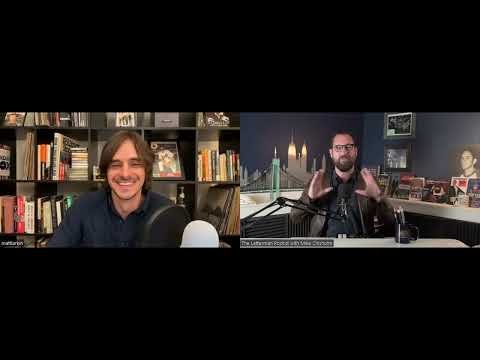
Matt Larkin has a successful career in television. He has worked on some of your favorite cooking competition shows as a producer and helped write for Tosh and George Lopez, but he got his start working for Late Show with David Letterman.
Going to New York City to chase his dream, Matt did all he could to get on as an intern for Late Show, became a faxer, and got hired on in the audience coordination department, creating some of his fondest life memories along the way. Matt and Mike have a fantastic conversation where Matt talks about many of his memories including some of the celebrities he met, the first joke he got on the air, his duties as an intern and then a page, and how he even got to represent the Late Show at the Ghostbusters Firehouse! Lots of fun info in this episode from a vantage point not represented enough.
The Letterman Podcast is brought to you by Rupert Jee and the Hello Deli! Go to Hello-Deli.com to put in your order for official Late Show with David Letterman merchandise. You won't regret it; this stuff will get you dates. With who or what, we cannot say. Please Like and Share and Ring the Bell and all that fun stuff.
Episode Transcript
Read full transcript
All right, yeah, I'm Paul Shaffer. I'm Will Lee. And you are watching the Letterman podcast. Welcome once again to the Letterman podcast. My name is Mike Chisholm. I am excited to host this show. I am excited for the guests that we have on here. And today is certainly no exception. The guy that we have on here is a guy by the name of Matt Lark. And Matt Matt is a is a successful He's had a successful career in television. All sorts of cool stuff. All right, it started with David Letterman. It started in the late years of the Late Show. And and he came on board. He He became a He was an intern. Became a page. And then, you know, as things were you know, at a crossroads for him, he moved over into tele He always wanted to be in television. And and and and working for Tosh, working for George Lopez, and then working getting into the production side of TV reality, cooking shows and things like that like Top Chef. I told my wife that I got a guy who's a who's a producer for Top Chef. And she was just like her mind melted. She loves that stuff so much.
But when I asked Matt if if if if he'd be willing to come on the show here and talk about his love or his his experience working for Letterman. I I said to him, I said, "Okay, you've done all this stuff in TV. Was your time at Letterman one that you would consider a highlight of your career?" And he messaged back immediately saying that it was one of the the the best times of his life. And oh, okay, perfect. Let's talk about that. And boy, do we ever. Lots of stories, lots of insight from inside the office building and the theater of the Ed Sullivan Theater. All sorts of very cool stories from Matt. I appreciate him like crazy. So, ladies and gentlemen, please welcome to the Letterman podcast Matt Larkin. So, um Matt, I got to tell you when I got my one of my favorite parts of the week is when I was going back and forth with you and you were like, "Hey, maybe I'll come on. Maybe I'll I'm not sure yet." And I said, "Well, okay, did you enjoy your time there?" And you said, "I've been in television for X amount of years, all these years, and my favorite part of of my television career was working for Letterman, that you loved it so much."
As soon as you said that, I was like, "This is going to be a really, really good podcast." Um I love that you're you you know, all the things that you've done in TV. I want to talk about that. But that you have this special place in your heart for this. You grew up watching Dave just like so many of us, right? Yeah, I I was a big late-night fanboy starting around the age of 14. If you want to hear my origin story Absolutely. It's it's a pretty good one. I I remember the summer of 2000, I was 14 years old and the show Survivor premiered on CBS. And I my family and I were a huge fan and immediately hooked like most of the country was. And I don't know if you remember, but in some sort of corporate synergy or a way to get viewers to tune in to Dave, they would have on the previous night's castoff on the next night's Letterman show. Yes. And so, that was that was what hooked me.
I wanted to see the previous night's castoff not really knowing anything about Dave or the show, but figured out, you know, at that point I was old enough to kind of stay up a bit later. And and I remember tuning in and then just instantly being hooked by this acerbic wit of David Letterman and how he he wouldn't even have them on into the onto the couch or in the chair. He would keep them off to the side and just roast them for like 3 minutes and I I thought it was the greatest thing I'd ever seen and from that point forward, yeah, I was just a huge Letterman Late Night fanboy and uh and then, you know, started watching routinely. I put a television in my bedroom so that I could watch late at night and was just hooked by the comedy and the guests and the musical guests. I mean, it all it all spoke to me.
The New York of it all, I grew up in I grew up in upstate New York and so I always felt a connection to the city and um and then, yeah, just seeing how he would incorporate his staffers in always really appealed to me and the interns.
So, yeah, as soon as I had the opportunity, I I wanted to apply and I always knew I wanted to work in television, but that that show really spoke to me. Uh there's a gentleman who worked for CBS for for almost 50 years by the name of George Schweitzer. He was in charge of marketing. He Listening to the story about Survivor and how that's how you got in the synergy you're talking about. I'm going to send him that clip and he will grin from ear to ear. I promise you that. Awesome. that is that is so cool that that that was your gateway over to Dave. I love talking to folks who are who are younger than I am and and and I love exploring the the the younger fan base, the people who came along, you know, into the Late Show run and became became fans of Dave. I love that. So much so Would you say that that that watching that you you said you knew you wanted to get into television, but clearly inspired by the show, the New York of it all, like you talked about. What did you want to get into?
What were your original aspirations of getting into TV? What did you want to do? Yeah, I mean, it it it was really really anything. I remember I grew up watching Seinfeld with my parents every week and they would you know, do kind of the I think season 4, the show within a show where they shoot the pilot and a lot of the production that went into that. I remember also the year 2000 SNL did its 25th anniversary show and show and showed a lot of the behind the scenes and broke the fourth wall a lot and I was just consumed with what this production was and what it was to put on a show. So it was kind of I guess producing was always something I aspired to do and then eventually writing as well as I became more and more of a comedy nerd and got more into stand up and I loved Conan and and worshipped him as just a a comedy writer and and performer. So yeah, it was kind of a combination of the producing and writing and there was a producer at Letterman named Matt Roberts who I really respected and he was great to me with advice and mentoring and he he had the perfect job to me because he was both a segment producer where he would interview these A-list guests and produce amazing comedy segments and interviews with them.
Mhm. But then he was also credited as a writer. He he would, you know, submit material and and write material along with the writing staff. So some sort of hybrid there is is is what I always wanted to do. Matt is a guy that I was just at an event in New York and there was a whole bunch of Letterman people there and Matt was there and I chicken I wanted to go and introduce myself to him but I and it's so ridiculous these little games that we play in our head because if I know for a fact by reputation if there's one guy who would be an enthusiastic greeting and and welcoming presence it would be him but I didn't I chicken out. But he's a dream guest that we have for this show. Obviously I'd love to have him on. I I love that you were inspired by him and that he he treated you well. When you talk about the idea of breaking the fourth wall, no wonder you would have you would have gravitated to Letterman the moment you saw that.
I mean, Letterman made stars out of out of out of so many you know, guys and gals that worked for the union, you know, that were production people of all different sorts and and like having Joe Grossman on here for example, that to me, I was so thrilled to have him on. Obviously, he's a writer and some of the things that he came up with and and and we explored that. But I'm starstruck cuz it's Joe and and and how many times he was on the show and the clever ways that they they they used Joe just so much fun and that show in particular.
I don't know if any other show has has really done it the way that Letterman has done it and and since then I don't think that there has been one either. Really, really cool. So I want to know, let's let's move down the origin story a little bit further. You knew you wanted to get into TV. Was this a university internship that kind of a thing? Did you go right into a film school or to a technical school that had to do with television or did you go right into the workforce? Yeah, I mean, so when I was applying to colleges, obviously, I I had that in mind. I was applying to schools like Syracuse and NYU getting wait listed by some getting kind of you know, I knew how Syracuse was like kind of the gold standard and I I got into the main school but not into Newhouse. But ultimately like so many of us it was you know, the the place that was cheapest that was the the right choice in the end for me which was the University of Vermont. Which really didn't have any sort of film or TV program. They actually this is kind of funny.
I originally went in as a communication sciences major thinking that was like communications and then when I got there, they were like oh no, this is like where people like ASL people with actual you know, communication, learning disabilities. So, That's a kick in the balls right there is what that is. Yeah, I found that out the hard way at orientation, but I pivoted hard to the English major and I I was, you know, I I was always a fan of English. I was kind of that side of the brain, English and social studies more so. And my mom is an English teacher, a high school English teacher, so grew up loving literature and film, obviously, and television, so all that. So, I was like, all right, well, I'll I'll go into English. Yep. And then my freshman year, they had a film minor, but my freshman year they upgraded it to a film major. So, I it was film and television studies all of a sudden was a new major at UVM and I just added that to my course load and I actually did a double major in English and film and television studies and yeah, had some great professors there.
We It was a lot more history and theory-based. They didn't have much of a production set up, uh which was tough. So, I guess I that's how I knew like I would have to really get some on-the-job experience and I didn't have any real film or TV world connections or foot feet in the door, so I I decided, okay, I'm going to my junior year was like, I'm going to have to really go hard after some internships. Uh okay, so your junior year and and and and as you were doing that, is Letterman right on the horizon? Is that something that you kind of you saw a through line? Like I mean, we saw that as fans of the show. We saw these interns that would be featured, sometimes even on camera. You know, you kind of knew there was a thing where that's a route. Is that something that was kind of part of the master plan from the beginning or is this something that occurred to you midstream? No, it was always on my radar.
I I always loved how he put interns on camera and, you know, I think anybody who grew up around that time, there now it's Tik Tok and YouTube, but back then it was like everybody wants to be on TV at some point. So there was some secret hope that I would get on camera. Uh as a Letterman intern. But also, if you go back to that time, I remember there being like publications, you know, college publications, whatever, would do reports on the best internships out there for college students and kind of in any field and always right at the top rankings was was The Late Show with David Letterman. So You're kidding.
Yeah, it was always like a highly ranked college internship around the time I was in school. So I was like, well, I want to work there anyways and it's prestigious apparently. So let's go for it and I uh I applied for the summer after my junior year originally. Summer semester was always the most competitive because obviously just logistically it's the easiest for kids to pull off. Um I didn't get in that semester. I I did get an internship out in here in LA with Sony Pictures Television in their development department. Oh wow. So that was that was my first internship which was amazing and really cool in hindsight cuz at the time I remember they were pushing hard for this quirky, unique pilot they had just shot to get picked up. And it turned out to be Breaking Bad. And so I was there kind of for the genesis of Breaking Bad and many other prestige TV shows. And so uh I got to ask. I'm sorry. I got to ask.
What did you see when it came to Breaking Bad? What were some of the things that you got a chance to see? I mean, Uh yeah. Did Jesse Pinkman say I mean, So by the time I was there that summer of 2007, they'd already shot the pilot as part of pilot season. And so it was it It just a screener. They were like, hey Matt, go watch all the pilot screeners and, you know, type them up or, you know, do coverage on them." So, I watched it and there was kind of this buzz about, "Oh, it's about a science teacher who decides to cook crystal meth." And like, there's a whole sequence where he's in his underwear for half the episode. And it was just like everybody's mind was just kind of spun out by by that. But, I remember my desk was right outside the office of an executive named Chris Parnell who now runs Sony Pictures Television. And I remember sitting outside of his office and kind of hearing these conversations with him on the network calls with AMC begging for them to pick up this show.
Like, just his belief in it and and how he knows that there's magic here and and they seemed like they were kind of on the fence whether they were going to pick it up or not. But, obviously they did and it became one of the greatest shows ever. So, it was cool to be in that world through all that. That is very cool. I mean, obviously that's got to be a crown jewel highlight of the things that you did coverage on. Any other notables? Um I just remember that at the time they had a show called Damages on FX that was very it was great. I don't know how popular it was, but I thought I really loved it and it was great. I was also a big fan of The Boondocks which they produced and were producing at the time. So, they were I mean, Zack Van Amburg and Jamie Erlicht, they run Apple TV now and and those are some heavy hitters and power players. So, it was cool to be part of that. And then, while I was there a you're a 19-year 20-year-old? 19? 20?
I'm 20 21 years old, yeah. And I I'm staying with my aunt and uncle who who live here in LA and I didn't have a car. They were schlepping me to and from the Culver Studios lot every day. God bless them. And it was but that was how laser-focused I was on like I need to make this happen and if I want to pursue this dream. And the the people I worked with there have gone on to to do amazing things in television. So it was really great. Was there a job potentially waiting for you if you decided to kind of quit midstream and jump in? You hear stories about this kind of thing that sometimes happens. Was there a temptation ever to say, "Okay, you know what? Let's jump in right now." or did you know you were going back for your next year? Um yeah, well so I I definitely I think I could have gone back to Sony and and started kind of on the assistant track and and gone the development route. I I I think I I did pretty well there and and hit it off with all that whole team.
But I So I guess just a recap how it all went to Letterman. I I then applied for the fall semester while I was there. Uh And I got a call for an interview. Um I was I was here in LA doing the Sony internship and I had to fly back to the East Coast. Uh my mom took me to Macy's and bought me a suit for my my interview. Awesome. Uh my dad drove me down to to Letterman. It was probably like a June or July. It was so hot. I remember it being so hot. Had you been to the Ed Sullivan Theater before? Yes. Good question. I I had been I had gone down to the city. My mom took me down for my birthday probably about a year year and a half before and I was one of the the rubes walking through Times Square who got recruited by what I later found out was a page just desperately trying to get people to come to the show and hand out tickets. And which is a job I later did. And so I got a Yeah, I got a ticket to the show.
And I think we had my brother with my little brother with me. He wasn't old enough to go, so I had to go alone, but that was fine. It I was It was a dream come true. Yep. And yeah, it was it was an amazing experience in taping. So, you were somewhat familiar with the landscape. Yeah, a little bit, but Yeah, yeah, for sure. But then, you know, get going up into the Ed Sullivan Theater office building is is a whole different beast. Uh, and then that interview process to this day is the most intense interview I've ever had. I I can't wait to go through it with you. Who Okay, so who are the principals here? Was it was it you know, I I hear that many times it's it's you know, you got a point person and then you end up going to other department heads and things like that and having multiple people. Is that the treatment you got? Yes, exactly. So, the first person I met with was a woman named Janice Penino, who was Yes.
the VP of human resources and ran the internship program and amazing lady. Was great to me for those years and you know, she So, I had a kind of initial interview with her. Yep. And then yes, to your point, then they they run you through this car wash of probably six different departments and people that you're meeting with to They're all kind of deciding if they want you Do they want to fight for you if if you know, you get kind of through the process. Um, and so yeah, I met with all those departments. Research, talent, there was an 11th floor production internship, a 12th floor production internship, a writers internship, which is probably the most coveted one to work right in the writing department. Um, music, and special a human interest. Yeah. So, yeah, I went through that. It was probably 3 hours that it took total and they're just shuffling you along and you're you're passing other candidates in the hall kind of eyeing them up as you go along.
So yeah. any of the names of who interviewed Do you remember some of the people who interviewed you? Yeah, for sure. Ryan you? Uh I did not interview with Shecky. Don't know that he got an intern. He was pretty much a one-man band Yeah. from from what I remember, but Ryan Williams was the human interest talent coordinator. Um I met with a woman named Jackie. I'm sorry, I'm blanking on her last name, but she she interviewed for for talent. Yep. Uh Kim Reynolds was Jerry Foley's assistant. So she interviewed for 11th floor production. Uh I met with the research team who Ben Fertig was a researcher. I'm still in touch with him to this day. I've been friends with him and uh Let's see, who else? Um Don Ferrina, I think on the 14th floor for for the writers. So yeah, they they do a good job of cycling you through and then from what I understand, it's you know, they decide however there eight interns that they're going to bring in and then each department kind of has to fight over who they want out of that group and I ended up in the talent department. So which I was pretty happy with.
So uh let me ask you this. I mean, you do a you do a phase of internship at Sony. So you you know, you've had your foot in the door of production a little bit, that sort of thing. Did it serve you for that interview or was it more just attitude and and and your first impression do you think that that got you the gig or a combination? No, I think having experience definitely served me both in just getting the interview to begin with and then getting through the interview process and getting the offer. It seemed like they wanted people who, you know, had a clear passion for television, but also what you know, had some on-the-job experience. And they didn't really care how big of a comedy nerd you were or how much you wanted to be a writer. It was more is this is this someone who's going to be a good fit for the team here. Right. Did they care that that you were an enthusiast of the show? Yeah, I yeah, I think that definitely goes far, but I think by that point most of the candidates had expressed that in some way and were definitely fans and and wanted to pursue that dream, yeah.
How long between the interview and and finding out that hey hey talent's interested in you? How long of a wait time did you have? Oh man, I would say probably a few weeks. I don't remember exactly, but uh You go back to Cali. You go back to California. Yes, yeah, exactly. So so now I now I fly back on Southwest back to Los Angeles. I'm back. You know, everybody at Sony's rooting for me and they know how big of a dream that is for me. But yeah, it was probably a really tough couple weeks where I was just waiting for that phone call and I don't remember exactly how I I got word. I think it was a phone call now that I I think back. Um And then by that point it was game on, you know, they're sending you an internship packet with all the details and all this information of what you're going to need. You're getting a staff list where Dave's name is literally on it as the host. And just yeah, just the cool I mean it was the coolest thing and it was so exciting and then yeah, it was finished up at Sony, had amazing time there, met Mel Brooks, who's another hero.
Wow. Yeah, just just incredible like Mitch Hurwitz walked through my office one day on his way to a pitch meeting. Like it was the coolest. Um and so that that was that was great. Um but yeah, nothing could really compare to what I was in for leading up to Letterman. Oh, no kidding. Um oh, you've done such a good job of setting the stage. Now now you get the call, you know that it's going to be happening. Uh do you got to do a semester of school in between there and and and then you're going or like So I had um finessed it so that by the time my senior year had rolled around, I was uh I had fulfilled all my requirements. Uh all my my course requirements and that uh if I did if I did have to go back to school, it was just going to be all elective courses just for the the to max out the credits. Um but I I figured out how I could finesse it so that I I could get internship credit uh and and just finish up my senior year that way. And so that's what I did.
It was a mix of the internships and then had to do a couple online courses which we had even back then and uh and never went back to Burlington, Vermont for my senior year, but I was already off and running. I was like I've been in LA, I've been in New York, there's no way I can go back at this point. So Yeah, that's that's fantastic. I love to hear that. Um so okay, uh preparing to okay, time to go to New York. Um even back then, you know, you know, Frank sang about it decades ago, if I can make it there, I can make it anywhere. Uh where did you what part of the city did you live? Uh what was it like?
Uh was it was it student loans that got you there? Were you beg, borrowing, and stealing? How was the first How was the settling into the city and how did that work for you? Yeah, so they at some point along the way that summer, they had uh connected us with the rest of the interns from for that class. And so uh I connected with the writers intern a guy named George and Agnieszka and the research intern a guy named or one of the research interns a guy named Doug Brady. Yep. And we decided hey let's try and find housing together in the middle of Manhattan which is easier said than done. We started out We we did we found this place on the Upper West Side that was amazing and I I don't know how we landed it. Uh but but we did but before we could move in there we had a couple weeks at the show that we needed to kind of close the gap with so we were all crammed into this very tiny apartment on the Upper East Side.
Yep. Uh that again I guess we found things through Craigslist back then so that that was the way and um and then my parents were amazing with with supporting me with the rent and I had some you know uh scholarship money and and kind of student loan money coming my way that since I wasn't using it for actual board and and course load at at college Yep. I was able to put towards that um but uh yeah it was three guys crammed into you know actually in hindsight it was actually a pretty big apartment for New York so we had a little roof kind of terrace area um I I miss I miss that place a lot. I can't imagine what it rents for now. Yeah you know it's uh I I think you talk about living up state I'm Western Canada and I mean I just the pull of of New York the magnet that is New York.
I think for just certain people certain certain personalities the pull of that city is the stronghold that it has on people's hearts is is is tremendous and and you go there and how dense it is how small the lodgings are that sort of thing, does not matter. The magic just covers it all. And and I love hearing you talk with such fondness about being cramped as much as you were and and finding the magic in that, finding the you know, these things. So, what month are we talking here? You're closing up this gap before you get into the Upper West Side apartment. What month are we talking here? What time of year?
Yeah, so just just real quick, I just want to touch on your last point. But yeah, I mean, again, growing up in upstate New York, I was a giant Yankee fan. So, we'd go down to the city for games. I grew up watching NYPD Blues, you know, Seinfeld, of course, which took place in New York, SNL. So, yeah, again, like like you said, it's just this this draw, this beacon that like was in addition to Letterman, like that was just a dream of mine on its own was to live and work in New York someday. I love Broadway and and musicals and and all of that, too. So, but yeah, so ultimately, I think it was like the third week of August when we started. They had just come back from probably a two-week summer break hiatus. So, yeah, then then they they threw us right into the fire. How so? Let's do it. This is This is great. How did they throw you into the fire? Yeah, so we we show up day one, they they stuff us all into the eighth floor conference room, which is where human resources and kind of the administration floor was.
And we're all so nervous and just like not really talking to each other. Janice comes in and welcomes us and she just by the way. I've only met her in person once and then we've gone back and forth, but from all accounts, just absolutely efficient and delightful. Yeah, she's amazing and and a true New Yorker as well. So, you you have to love that. And and she's just so matter of fact with how she talks to people and and lays things out. So, she kind of came in and and gave us her spiel, and I guess uh the two things I I remember most from it are uh don't wear costumes on Halloween because some intern had made that mistake once, and Dave actually put her on the show uh to kind of roast her a little bit, and um they just decided from that point forward, yeah, we don't really wear costumes to the office uh on Halloween or for any occasion. So, uh they made that very clear since we were the fall semester, and then Yeah.
uh and then she also said, you know, you will see Dave in the hallways, and and when you do, don't cower in fear. Uh look him in the eye and say, "Hi, Dave." And uh because he doesn't want to feel like some monster that people are afraid of. So, I love that you're saying this No, Matt, this is great that you're saying this because uh so many times the uh the stories get uh convoluted, and it's a game of telephone, right? And they're exaggerated and all that kind of stuff. Hearing it right from the horse's mouth here, it's not don't ignore Dave, make don't make eye contact, all that like the way that some narratives have have explained it. During your time there, absolutely make eye contact, say hi to him, that kind of a thing. Don't cower. Love that you're saying this. This is great. Yeah, and I you know, I have worked uh on studio lots out here in LA where you hear the opposite. It's it's don't make eye contact with them. People have been fired for making eye contact with certain daytime talk show hosts who I won't name. Um but uh but yeah, it it was it was the opposite there. It was uh you know, they you know, don't they was obviously with a caveat of like don't corner him and try to try to engage him in conversation, but yeah, definitely just just give him a cheery hi Dave and and move on your way. And so that was really cool to hear as you're starting out.
I was talking to Grossman not too long ago and he and he told a story about how he got trapped in a stairwell and Dave was there and he didn't know what to do, that kind of a thing. There was that nervous thing and I said to him I said I always I live vicariously through stories like this. When I when I when I would hear these even if it was conflicting, whatever, as you're talking about it, back in the day I was like, okay, if I was an intern there and I was crossing paths with Letterman in the hall, this is so I'm such a weirdo. But in in my in my teenage years I was like, no, I know exactly what I would do. I'd be walking by him and I would just put my hand up for a high five. And if he did it or didn't do it, it wouldn't matter. That would just be a great moment. That's what I would do.
I love that you're telling that you're talking about this because I've heard this from other people, but there have been books written where they talk about how it's the opposite, how how at one point at one point Dave had to actually I don't know if it was Janice or not. If I have her on the show I'm going to ask her. At one point somebody was told, "Hey, tell the staff to say hi to me. Please tell them not to cower." And and and I wonder if this might be, you know, after that incident or whatever that caused that. It's it's great that she actually said to you, you know, don't let that happen.
So you're in this meeting getting assaulted with all of this information at once. Excited the entire time? Like are you just are you on pins and needles or is it fear? Is it is it numb? What what what's going through your mind? Yeah, I mean it's it's everything. It's again, it's a dream come true. I'm in the Letterman offices about to do this internship I've dreamed of doing. So definitely excitement, but also so nervous and you know, again, they shove you in there with 10 other people you've never met before and you're going to be working with very closely, very long hours for the, you know, next several months. And so somebody broke the ice at some point and we we kind of started to chat and get to know each other, which which was great. But then, yeah, eventually they sent us on our way to our different departments and what was cool was the previous semesters interns, some of them would come back to to actually train us. So, now they're showing us the ropes within our departments of the day-to-day and and what you have to do.
Uh and your talent, that's where you ended up at first. Yeah, yeah, which I think is is, you know, also a very coveted department cuz, you know, the the guests are a big part of the show and and obviously Dave would get the A-list guests and so, yeah, it was a very intense department, but also one I was really proud to be a part of. Is this where segment producers would have been under that umbrella as well and and and and that's that's okay? Yeah, yeah, all it was So, yeah, it was a combination of talent bookers and segment producers, some of whom did both jobs. So, you know, Matt Roberts was down at the end of the hall. Sheila Rogers ran the depart- the talent department. Uh She's almost number one like my list of people. She is I'm a huge music fan. Yeah. So, Sheila is actually like like I almost want her as much as I want Dave on the show. Like I she is so impressive in in what she's in her her music knowledge and and and and the shaping of that show and the music acts that were booked. I like I secretly I want to do a secret a second podcast called Live on Letterman that just focuses on the music and like I'd have to love have her as a co-host. Like like she is her brain is so impressive to me and I just I really appreciate Sheila. So, glad you mentioned her name.
Yeah, yeah, and you know, for a hipster like myself at that time, they were just having all the best indie bands on and that was a great era for indie music and Dave's obviously a big fan of rock and rock music, so yeah, that was that was also a cool reason to be there at that time. Brian Teta was there. He's now the executive producer of The View. He did a lot of the sports guests and and and also a lot of the big names as well. Maria Pope was another one. Yeah, Sarah Billington was kind of the TV guest booker. She was great to us. Yeah, up up and down. Everybody was really great, but it was also a department where you had to be on your game. Like and I guess the best way I can illustrate that for you is is the phones on the 11th floor. I don't know if you've heard about the phones. A little bit. Yeah, so especially on the 11th floor. I guess you you had our on, right?
From from so the 11th floor phones that was kind of what was drilled into us as talent and turns all the interns would have to do that at some point, but it was drilled into us that first day like you better get good at answering the phones and you better do it right and if you do, you'll stand out and if you don't, you'll get pulled off the phones and it's not the best look. So that was something I was like, all right, I I know that I need to get good at answering these phones and you some may think like oh it's just answering a phone, what's the big deal, but First impression, right?
Yeah, first impression and also it was a massive switchboard of everybody on that floor and so what would happen and we were trained and everything by Becky Hagadorn was the 11th floor receptionist, so she trained us and walked us all through it, but Um, was uh, we would have to you would have three or four calls coming in at the same time. And what you would have to do is within literally 1 second prioritize those four calls based on the importance of the person receiving the call. So, um, so let's say three calls are coming in. Uh, you'd have to go Late Show please hold, Late Show please hold, Late Show, and then take the most important call which was probably like Martin Short calling Maria Pope or something like that. Which actually happened. So, um, or you know, whoever that night's guest was calling in for their pre-interview. Uh, we don't want to leave Steve Martin or whoever on hold or have their call drop. Um, so it was it was this whole system and uh, I I like to think I I'm I'm quick on my feet and can think like that in the moment. Uh, so I I I I mastered the phones.
I'm proud to say. During that time, I mean, I'm I'm certain that if you're getting three or four at a time, you kind of don't have even time to process, you know, who it might it is that might be calling. There might have been other times though where you could process it. Um, okay, Steve Martin Martin Short from Maria Pope, great. Any other notables as we're talking about the phones here? Any other notables that came in that that were were kind of fun for you? Yeah, the other one I thought of for you, it was actually a a hiatus week. So, I I later on I was a page and I would cover the phones during hiatus weeks. They would pay me like a PA rate to come in and just the office was dead. Nobody was calling in, but I would cover whoever the phones for whoever did call. And so, that week I was actually covering the 12th floor phones. Yeah. For art. And Mary Tyler Moore called and yeah. Jesus, royalty. Oh my god.
Yeah, exactly. And she called and she asked to speak to Dave cuz they obviously have a history together. Yep. And I had to explain we're on vacation right now, but I'm happy to take a message and Mary Tyler Moore in her later years lived in this uh luxury condo building in Manhattan. And that condo building had a hawk that lived on some sort of pillar or something on the roof of the building. And it was actually it's actually a famous hawk. I think it just recently died. It was in the the news and everything, but Oh my god. Mary Tyler Moore wanted to basically pitch a documentary to Dave about this hawk and its story. And so instead I got to hear the pitch for this documentary from uh comedy legend Mary Tyler Moore. So Wow. She was so lovely and and warm and and and sweet and we had a really lovely conversation and I I took the message and and left it for Dave and I think I think she ultimately did produce something about the hawk. I don't think it was with Dave, but yeah, that that was a real passion of hers at that time.
That is so cool. The fact that you have this anecdote, Matt, is so it's great and I appreciate you sharing it with all of us. This is this is fantastic. Yeah. Um okay, so talent department, okay, running the phones, what are some of the the other things that were you just getting coffee? Were you helping to prep uh pre-interviews and things like that? Like was it everything in between? Yeah, I was so every morning there was a coffee run for the whole department. Yep. Um it's pretty standard. Then there was something called the morning report which uh was myself and the other talent interns who I should mention Carrie Kemper who's gone on to a great TV writing career of her own. The thing there was that and I guess I learned it after the fact but they were they were very much an analog show in a increasingly digital world. So every night we would have to set various VCRs around the office to record the next morning's morning shows on each the Today Show, Good Morning America, The Early Show.
Yeah. And then our first job of the day was to sit in intern alley which was this basically storage closet where they shoved all the interns into and we would kind of scrub through each morning show and create a list of all the chyron's or lower thirds headlines that were airing on the morning show. So and then we would distribute this massive packet with a bunch of other news stories all over the office. So every department got it. I don't I really wonder how many people actually read it but we did we did it nonetheless. Writers read it. Yeah, the writers certainly did it. of writers definitely read it. Yeah. Yeah, the writers read it. I know Ryan Williams the human interest coordinator he would always come back and and want a tape of some human interest story to potentially book someone. So yeah, it was great for for obviously topical comedy. Yeah. And so but yeah, that was that was a big part of what we did but I just remember you know, we had to run it on just so many sheets of paper at the photocopier.
The photocopier would get jammed Yes. constantly. We'd have to fix the photocopier. So it was kind of a headache at times, but also just some good mindless intern work at the start of the day. So, Did you divide up the shows? Like, did you have Did you get Regis Regis and Kathie Lee and and and so-and-so got the other ones, or was it a rotation? No, exactly. Yeah, I I can't remember how we divvied it up, but I would take, you know, two shows and Carey would take the other one into the conference room and scrub through it there and and we would Yeah, we would get it all down on paper for everybody. Your Sony job actually helped you out a little bit on that, doing coverage on these things. Yeah, yeah, no, and and and honestly, you know, my big part of my producing career has been something we call hot sheets, which is just another name for the same thing, but it's basically a report at the end of a shooting day of everything that happened that you then send to the network. So, it's a lot a lot of paper, a lot of writing, but yeah, I was well suited for it.
It all ties together. Um okay, so that's a big part of your day right there. Then we move on throughout the day and and And what are some of the other tasks? So, then we would we would have to cover phones for lunch breaks for the receptionists. They would, you know, call us in to cover the phones. I don't think we ever had to make lunch runs. Everybody was kind of good about, you know, they wanted to get out of the office and and go for a walk and and get their own lunch. So, that was never a big thing. Um Did you go to Rupert's very much? Oh, yeah, a lot I went there almost every day. And I was a big fan of Rupert's, too. And and still am. He was one of my favorite players on the show. And I would get a bacon, egg, and cheese, and you know, some if if if it was the winter and I was kind of sick, I would always get a hot tea from there. So, Rupert was always great to me and his partner, as well.
So, yeah, I know you've you've you've done you've had him on quite a bit. Uh Well, it's it's not only that I'm I'm going to say it right now because, you know, it's so weird to see the deli for sale and and and talking to Rupert. We have one sponsor here at the Letterman podcast, one sponsor only, it's Rupert Gee in the Hello Deli. Beautiful. there has never been a a time where it's more important for folks. The mugs, the caps, the shirts, all that stuff. Rupert is still the only official place that you can get Late Show with David Letterman official merchandise and Rupert Gee merchandise. And that I would even almost say the Rupert Gee merchandise might be eclipsing the Letterman stuff right now because it's for sale and there's stuff happening and I'm not going to tell say what's happening, but go to hellodashdeli.com if you want to get any of this stuff. And and for those in New York, like May just came back. I just saw her the other day, but um not sure how long the place is going to be operational. So, go back and do your pilgrimage. Hopefully, they will have a little bit of a structure and there will be like a a last month or something like that for people to go say hi, but go to hellodashdeli.com to get any Late Show with David Letterman merchandise or Rupert Gee Hello Deli merchandise. So, there you go. Perfect organic way to throw them in here right now.
No, happy to help plug Rupert and May and the Hello Deli. And I had a Hello Deli t-shirt somewhere along the way and uh they were always really sweet to me and and I I loved their food, too. So, yeah. The food is good and it's affordable. Like it's it's it's a really awesome uh little soup and sandwich shop. It's so it's so great. Yeah. absolutely. So, you covered the phones for lunch uh for people. You went out had your lunch that sort of thing. Then the afternoon. Now we're getting closer to showtime. Yeah, yeah. So, tension Was the tension going up throughout the day as you got closer to showtime or were you immune to that because of the repetitive nature of things? I would say I was immune to it just because everybody was immune to it, you know, that unless there was some big guest like a a politician or someone where there was a little added tension.
Like it was so routine and everybody was so comfortable and and that was what I loved about it was it's like you come in, you work all day, you tape the show, and then you kind of unwind, and then you come back and do it all again the next day. And and that I just loved that you know, we in the business we call it a strip show where airs every night, but that was uh I just loved that routine of every night this is what we're doing. Um and so yeah, so then as the afternoon kind of came around kind of the coolest perk or or uh job we had as talent interns was to uh put together the gift bags for the guests. So uh Awesome. What are we talking about? What went in those bags? Here we go.
Yeah, I mean it it was pretty standard uh late show merch, a couple t-shirts, a mug, a hat, um you know, nothing too fancy for, you know, George Clooney or whoever, but um but that was that was what we gave them and uh and then, you know, the real perk of it was I guess as a way to have the interns, you know, get comfortable around A-list talent, we got to actually deliver it to the guests themselves in their dressing rooms. So Outstanding. Yeah, so every at the beginning of every week uh Carrie and I would uh look at the upcoming guests and do kind of a fantasy draft of who each person would get to deliver the gift bag to and and pick our favorites and uh yeah, then so that was the system we worked out. It worked really well. And you know where I'm going next. Who who did I get to deliver to? There were some notables that yeah. Well, I mentioned him already, so George Clooney Yep. uh was I mean, you walk into a room with George Clooney and how can you not just be like, "Oh my god."
Cool as Yeah, just cool and the charisma and I remember that day we were throwing stuff off the roof and so I I walked in kind of as that bit was happening and he was watching it happen from his dressing room what better vantage point as it's flying past. And I'm like hey hey Mr. Clooney just wanted to thank you for coming on we have this for you and I handed to him and he goes should I throw it out the window? You know classic Clooney was that's a good Clooney. Yeah thanks so and I was just so starstruck and you know what a what a cool guy. I remember again giant Yankee fan and right after he was fired by George Steinbrenner we had Joe Torre on the show. And I remember that episode. Yeah yeah. Oh my god. So I got to deliver his gift bag and um I should mention another perk was that there was kind of this handshake agreement with the guests when they came on that they would autograph things for staff and so we were included in on that I probably abused that privilege a little bit but you know hey I had to take advantage of it and Brian Tetto was cool enough to get me a signed baseball by Joe Torre it's been on my I'm looking at it right now on my bookshelf. I've had it ever since so yeah he he was kind of distracted at the time by whatever bit was was airing but but you know he he he gave me a nice hello and and that was really cool.
I have to say some of the cooler friendlier guests were the rappers who you may not expect that from you know you might get it intercepted by an entourage or or their team or whomever but TI was like one of the warmest people I've ever met. Oh, that's great. dapped me up and bro hugged me. Like he was so appreciative. Just grateful. Oh. gift bag and and that was like the peak of his career, too. Or maybe just as he was blowing up, but he was he was really great. Um will.i.am was really cool uh when we had him on. Uh And so yeah, I would I got I guess I will say Dr. Phil was maybe not the warmest person I've ever met, but uh you know, that's okay. Yeah. Um yeah, but we we we had some good ones and and yeah, I got some great autographs over that time and that was that was a really good kind of training ground for, you know, becoming a producer. Yeah. Where you have to be comfortable around talent and uh not, you know, be starstruck or, you know, unable to find your words. So.
Dr. Phil I think gets a pass because um you know, we just had uh Oh, was it Craig Thomas? I forget I I forget who it was that we just talked and they they were the ones who came up with the Dr. Phil's words of advice. Sure. Ongoing bit that just was so so good and I can imagine that when like I remember the episodes where he would be on and he was kind of ready for war. Like he was he was he was kind of good to go there. I would think that his mind would be elsewhere. Uh that is that is so charming. Um love the idea that that they are prepping you. They're giving you a life skill uh as long as, you know, you can hack it and I you know, I think most people would be able to. Uh I'm certain there would be some that that that kind of got washed out because of that sort of skill, not being able to hack it. That's really neat that you were able to do that. Um okay, so you made the gift bags. Uh what would happen after What would you be doing during showtime?
Well, that's show that's showtime right there. I mean I yeah. Yeah, yeah, that was a big part of it. Yeah, that had to, you know, deliver those kind of before they would go on for their segments. Um, the but yeah, during the taping. Yeah. Um, and then, yeah, it was really after that it was just kind of being on standby for anything that might be needed. Um, you know, they the the talent uh the bookers would al- always be down there uh during the show on standby for the guests. And so, they may call up and and need something, you know, if if a Band-Aid or or anything that, you know, might be needed. So, we were just standing by. And then, after the taping, um we uh yeah, we were just then we were just ready for anything that the talent department might need. And And it was pretty quiet uh as after that point. Uh you know, people started to go home, but um but yeah, there was we we probably worked we probably stayed in the office until uh 7:00, 7:30. So, a a good hour or two past the taping and just ready for anything that might be needed. So.
Uh well, during the show, when you would have one of the guests be part of some business outside, uh you know, uh I think of you know, Serena Williams, you know, with tennis balls outside or or or a quarterback throwing footballs into a cab, things like that. If if if one of the talent Bill Murray all of his intro his entrances many times were very um you know, big. The Beastie Boys, uh when they came in and they were performing, that kind of a thing. Would you ever be called on to do something special because the talent or a guest was doing something special? Would you ever be assisting in that? Um nothing really comes to mind. That was usually we we had a great team of comedy producers who worked directly with the writers to uh to produce whatever that was. So, um and then, you know, again, that was maybe more of a production department intern responsibilities. So, yeah, that that that's not something I can say we ever really helped with.
Off the top of my mind, yeah. Okay. Now, how long did you stay in talent? At the Late Show? Yeah. Well, your entire like you cuz you ended up in audience as well, right? Yeah, well, so I should also mention so I was I was a talent intern. I was dedicated to talent for that whole semester that whole internship. I should mention though that because it's relevant the writers went on strike in the middle of our internship. Oh, you were there for Oh my gosh. You were there for that strike. Okay, yeah. So, that was the fall of 2007 and and having been in LA that summer I and you know, someone who took an active interest in the entertainment industry I there were already rumblings that it was coming. And sure enough, yeah, the first week of November the writers walked out. So, I yeah, so our internship we the the tapings were no more after November and we ended up I'm sure you you remember, but Dave Dave was great and paid the staff anyways and we kept coming into the office and you know, would kind of work on whatever projects you might be able to muster up if you're not taping a show. But there are only so many ways to reorganize a filing cabinet. So, Yeah, and it's not like you can write new material and things like that.
That's what the point is. No, I remember yeah, Jeremy Weiner on the week that they were about to walk out. I was at the elevator bank with him and he was like, don't you effing scab. As a joke, of course, but also serious. But yeah, there was no opportunity to to scab anyways, cuz we went dark. We show went dark and Dave was in full support of the writers. And we we yeah, we came in the office every day, but it was pretty bleak at the time, you know, cuz we were um you know, for us as as interns, all we wanted was to be there for the Thanksgiving show and the Christmas show and you know, what better place to be at that time of the holidays, but um yeah, unfortunately, we were deprived of that a little bit, but it was, you know, historically, it was looking back, it was kind of a cool time and and cool to be a part of. We'd go picket, we would go meet up with the writers in Times Square and Did you try and grow a I I I still am not able to grow a beard, so it definitely was not able to back then. But yeah, we would go you know, Bill Scheft was the strike captain, so we would go uh and just kind of walk the picket line with them in support and and yeah, that was you know, it was it was tough. I remember Brian Teta throwing out there like, what's worse, the the writers strike or the baseball strike? And we would have a big debate over that.
As you know, baseball fans who could remember the the baseball strike, so um yeah, but you know, at the end of the day, it was certainly a bonding experience. We played a lot of cards, a lot of card games got played. And just and we were constantly refreshing Nikki Finke Deadline, just constantly refreshing Nikki Finke for any information we could get. So yeah, really really interesting and now it's come full circle with the writers on strike now, of course, so yeah. It's it's been fun to talk to some of the the folks that I've developed kind of friendships with and and and and and I've asked them about the difference between like I was at Young's a couple of Steve Young's a couple weeks ago and we talked about this for I was there for about 3 hours we talked about it for 20 minutes. And and and the difference between that strike and and and the one going on now and when they're able to go to different productions and disrupt production enough that they have to strike for the day strike production for the day and and and I just I'm really grateful that right now kind of on the eve of of of of this AI and and and some of the things that are coming into play here.
Um Craig Thomas came on and he did a really good job talking about this a couple weeks ago. The idea that writing shouldn't be a side gig. You know, you look at you watching Survivor with your parents and and having this through line knowing that you want to be part of TV and writing might not have been the thing that drove it like that but we want to create something that that kid who does want to be the writer and and and and is really invested in it can go and do that as a career and it isn't just some side hustle and it isn't just some you know, five-week deal here and and and and it can be a real career still. The AI stuff streaming all of this. I hope I really really hope that we can come up with a really good deal for a long time. You know, and it's not just studios taking the next you know, 10 years to try and figure ways around the deal but but it's something that everybody can can benefit from it because at the end of the day we want more creative. I mean, I understand how AI works and taking other things and putting them all together and mashing them together for new ideas.
Well, I want the people who are inspired by the muse. You know, true inspiration, truly new things and we need to foster an opportunity to do that and so I just I'm glad that this came up today. Just support the writers and we want the writers to I know the director's guild I believe just I think they signed on but if if if SAG SAG is a chance that SAG could go, right? And if that go that that's the case then we got to figure this out before everybody comes back. Am I Am I right? You're You're an industry guy. So, am I am I full of or am I kind of No, no. You're You're absolutely right. The The Directors Guild made a deal, uh which was kind of expected cuz they're they're not the the type to strike and historically. So, that was expected. Um my brother is actually a talent agent out here. So, he works with uh actors and yes, they're negotiating now with SAG uh SAG-AFTRA. We'll see what happens on that front.
Um but yeah, actually you know, the day today we're speaking it's uh day 50 of the writer's strike and it's crazy how fast it flies by and on unfortunately no progress has been made. So, um but I remember back then you mentioned Steve Young talking about He told a story about how he went into a a Verizon store, I think, for a new cell phone and he was looking at it and all of a sudden some bit popped up that he had written. Uh it was airing on this cell phone that he was looking at and he was like, "I should be getting paid for this." Uh you know, and and he was absolutely right and they should get paid and um streaming has now become this massive machine and and monster that um yeah, we have to make sure people are compensated fairly for that stuff. So, yeah.
Absolutely. I'm glad we got a chance to talk about this uh at this point here. Um you know, and and Dave famously I I I was going back and forth a little bit with with with Chef. I swear to God, I'm not trying to drop names. I I really was doing this and he he talked about how when Dave made the deal uh separately, how good it was because Dave could come on then and start hammering and and and actually how how how good it was as a as a thing. But back then, uh was it weird knowing that you guys kind of had this backdoor sort of deal done while others didn't have that. You guys came back earlier than everybody else. Yeah, so um I remember internship wrapped up without any fanfare because there there were no holiday shows. There there was none of that. Yep. Um I went home upstate uh and you know, the plan I think for the show was to bring in the new crop. They had hired new spring semester interns.
And so I was going to be going back to to train them. And over that holiday break, like December 28th or something, deadline.com uh announced that yeah, Dave had made this interim deal that was going to allow us to come back. So yeah, there there was some weirdness there knowing that uh we were going to be the only show with writers, really the only project at all with with writers. Um and that you know, Conan and The Daily Show and and everybody else was coming back uh writerless. So um but you know, we were just so happy to come back and and to have the writers back in the building and and to to be doing shows again. So um I'll actually just while we I know we talked about souvenirs and stuff, but Absolutely. it's coming up now. I'll share it with you now. Um we uh I kept the first script from our first show back after the writer's strike. Aw. And um I'll show it to you here. So I I had to censor it a bit cuz there's kind of a naughty photo on the front of uh god, all I want to know is what's under that.
Yeah, I'll tell you off air, but um Okay. Basically, it's just imagine a a writer uh a male writer from the writing staff in a sensual pose in a in a lawn uh and then it's Mulligan. Got to It's got to be Mulligan. I'll I'll tell you I'll tell you who it is, but uh it's uh the the caption it says miss me and Yeah, and then as you can see for every script well, we had writers, but nobody else did they dropped the W in the late show header to the bottom and then it's like that's a writer kind of picketing. So Oh my God. Yeah. Oh, that is And I'll It's kind of a cool time capsule if you indulge me cuz the rundown here from it has the rundown at the at the beginning of every every script was the shows rundown. So You know, it has obviously the monologue. Dave entered with 12 dancers with picket signs. Yeah. Um And then They would do desk pieces and then our first guest back was the late great Robin Williams.
Yeah. Um I guess they did a they did a cold open I should mention too which was Senator Hillary Clinton. Yeah. Written by the great Tom Ruprecht. Oh. And the line he wrote for her was for eight long weeks David Letterman has been off the air due to the writer's strike, but tonight he's back. Oh well, it was good while it lasted. Perfect. Um and then let's see. So then they would then they decided that even though we had our writers back, we would fill time with get to know your staff. So that was a segment we did where Dave would just bring on a staffer and interview them for the act four or whatever it was act six actually. Um Lupe Fiasco was the musical guest and then We taped two shows that day cuz as you know, we would tape two shows on the first day of the week. And in the so we had Senator Clinton Hillary Clinton in the first show The first guest back in the second show was Donald Trump.
Wow. And then more get to know your staff and Shooter Jennings was the MUSICAL GUEST. SO GOD, THAT'S AMAZING. YEAH. That would have been Oh my god, that would have been way early for Shooter. Yeah, pretty exciting day. Wow. There's a there's a our long national nightmare is over a joke somewhere around here, but we can't I guess I I can't I can't nail it right now. That is a hell of a way to come back. Yeah, it was you know, a lot of fanfare and and you know, you had to cuz you know, every show was coming back, but we were the one with writers and I think everybody was kind of looking to Dave now as as sort of a guide since he was able to to strike that interim deal. You know, you were there during a time where there there are there are certain periods where Dave became more the statesman, you know, more the the leader. Of course, 9/11 being being you know, a huge example of that, but there are other examples throughout his tenure where where he became the guy that people looked to. He became the guy that would you know, say the thing that needed to be said through that sarcastic wonderful filter that he had the the the irreverent filter that he had. I think this is a this is definitely an example of that. You got to see it first hand.
That's amazing. Knowing though, you're an intern, talent intern, there's a spring crop coming. You're going to be teaching them. Was there ever moments where it's like this this ride might be coming to an end or did you kind of know already that there was some continuation a foot? Yeah, well so I had it in my mind that since I I felt like I had been deprived, right? You know, wasn't wasn't blaming anybody, but I felt like I had been deprived of No Darlene love for you. Yeah, no, and exactly and I was a big fan of the Christmas show and the Thanksgiving show was where they usually brought interns on camera and and everything. So, um it was I I felt deprived of that half of the internship and um so I got it in my mind that I need to be a page. I need to go back. This is this is unfinished business for me. Um it was cool to go back and train the new crop of interns and and you know, come back and get a little taste of all that, but um I I pretty much insisted on a an interview for the page program.
Good for you. Yeah. Uh talked to Lee about that, you know, and he he talked about a lot of There's a lot of cool little adventures from being a page from That's a That's a That's a That's a That's a neat gig. Um and I'm I'm certain you had fun doing it. Like I'm certain it feels like you were present the entire time uh based on your recollection of things and that delights me beyond anything because there were like I said, there were people from the other side of the continent who were living vicarious through you guys and gals. So, um was it seamless? Basically your last days an intern and then your first days a page were, you know, Um I think they were pretty much No, I think I probably uh interviewed maybe as as I was wrapping up the internship and training the new interns uh and then there was a good 3 weeks in between uh interviewing. Yeah, torture. Uh heading back upstate um and you know, now I'm I'm not going back to college. So, it's if I didn't get the the page job, I I didn't know what I was going to I was going to do. Um probably come out to LA. Um Yep.
But uh but yeah, again, you know, had that dream still of working and and living in New York and and knew my time at Letterman was not over yet. So, um thankfully they hired me in the page program. I was a terrible page. Let me just put that out there. I was not the best page. Um As you probably remember from attending tapings, the the Late Show pages have to be the cheerleaders of the show. They called it an indoctrination. The audience gets indoctrinated at one Yes. No, yeah, absolutely. There's a there's a system there. So, were you direct under David K or would it have been that it would have been Dave's department? Okay. Well, yeah, Dave David ran the department and then Jennifer Ray was the the page coordinator. And yeah, I you know, look, you as a page you had to be perky and smiley and you can probably tell I'm not really that type of person. I'm not the highest energy person. So, I I I wasn't the best fit for it.
You know, there are other page duties. Again, we would go into Times Square to to recruit people for the audience. I you know, always hit my quotas there and and you know, relish that opportunity. I imagine that must have been an easy sell. Like Yeah, well, you know, in in the dead of winter when there's nobody out and it's bitter cold and or snowing, it got pretty get pretty tough to to get to hit your numbers. But yeah, of course, you know, so many tourists coming through Times Square, we had to ask them a trivia question to show that they weren't totally, you know, they had some knowledge of the show. And so, yeah, there's a whole process on the I apologize, man. Would anybody ever get on the gold list from that? Like would you ever run into somebody who was like a super fan and be like, yes, and answer not just that trivia question, but the enthusiasm, the way they were dressed would be like, okay, we want this person and we want them on a gold list. Would that ever happen?
Yeah, I mean yeah, so I guess the uh you know, it's it's a TV show, right? So, you want it's a visual medium, you want things to look good. Yep. Um and you want things to look good for Dave, too. So, um if you stumbled upon uh an attractive couple in their 20s or 30s who were well-dressed, that was gold. That was who you wanted because they would get seated right up front, you know, to make things look good. And so, uh so yeah, we we wanted them uh and you know, but but we you know, at a certain point we we had to fill these the theater, too. So, um yeah, you didn't want a crazy stalker who knows everything about the show, either. Oh, there you go. Yeah, that's true, too. Yeah, you did Yeah, okay. that's the flip side of it, I guess. Um and then then in that case, you might ask them a really, really difficult trivia question that nobody would ever get. Um but you know, for the most part, it was just like, "Hey, we need 50 people for the theater today.
Like, can you go out to Times Square and find them?" But uh yeah, that you know, and that was a cool way to to just meet people and and we we'd be out in in the middle of Times Square. There'd be people uh trying to fill comedy clubs uh their audiences. The Scientologists were out there with us trying to recruit people. So, Never mind the Elmos. Um They're right. Elmos, the creepy Cookie Monsters, and everybody. So, yeah, uh that you know, it it was a it was one of the tougher parts of the page job, but um a necessary one, and uh it it you know, you got extra hours for it, so that was cool, too.
Oh, that's cool. Um by that point, I'm I'm a I'm a nerd for the jackets. Uh, a Like, by that point, I guess you would have gotten what you got them at Christmas time, right? Is that the Yeah, yeah. So, we uh we did get one uh for my fall internship, which was kind of up in the air would we be getting the the Christmas party was canceled cuz as we weren't going to you know do it without the writers and uh but Dave was good about the jacket. So, I'll show you the jacket I have here. This is from uh 2007. Oh, I love that one. Yeah. Yeah, this is a good one. That's great because and you must have loved that too cuz it's got a little bit of a Yankee flare to it a little bit. Yeah, baseball for sure. that's a great one. Very classic and then um I kept this too. This was the card that came with it, which was just a small envelope and then it said "Season's Greetings David Letterman." Uh I always loved that he signed it David Letterman, you know, it's like we're we're on that basis, I guess. Um But uh yeah, and then I did get one the following year, too. It's at my parents' house, but uh it just said "Pants" on the breast. Um Oh, yeah.
The worldwide pants and um a little more subdued, but uh but yeah, I was a sucker for those crew jackets, too. I I I wanted them so bad. I got seven of them. You're you're preaching to the choir. I mean Yeah, yeah. That was the just the coolest gift at Christmas time, so. Yeah, that's fantastic. I uh Okay, so how long did you stay a page for and uh any other adventures uh like because you had a rotation, right? As to if you were going to actually be in the theater for tapings and things like like how many tapings did you see? Yeah, so I mean there, the show's going, you're basically allowed to watch the show at that point. Yeah, that was definitely the the real perk of it was we got to be inside for the tapings because when you when you're an intern or a staffer, you don't get to be in the theater for tapings. So, um yeah, there were different positions. What That changes the entire deal for you. Holy cow.
Yeah, absolutely. I mean, um you know, yeah, cuz we we all wanted to watch the show and and whether whether it is a stunt or a A-list guests or great musical act, whoever. Um so, yeah, they would position us. And I guess for those who don't know, as pages we were also kind of the ushers for the theater. So, you know, leading people to the bathrooms or, you know, seating people. So, um so, yeah, we we would position ourselves throughout the theater and keep an eye on things, keep people off their cell phones, and keep people quiet if they were getting rowdy, and um Did you ever kick anybody or did you have to bring uh Mike Rubini over to you know, stop some Yeah, I don't I don't think I ever had to kick anybody out, luckily. Um so, but I I was usually again, as as one of the lower-energy pages, I was usually positioned in the balcony. So, I I was already with the riffraff up there. You know, it was accepted by that point.
But, um the position that we ultimately figured out I was best suited for was um seating the main floor as as we loaded the audience. So, um which was basically just a giant 200-piece puzzle that you had to solve in a matter of like 3 minutes. So, um but I have a good mind for that sort of thing, and I was able again to like think really quickly, and uh I I ended up, you know, really excelling at at seating the main floor as a page. So, that was my my bread and butter back then. Um so, moments that you got a chance to see, whether it's musical, whether it's any iconic uh you know, late show moments, things like that. There's got to be a bundle that you had a chance to see in that time period. Yeah, the one that I always think back to I mean, cuz they all kind of blend together at a certain point, I'll be honest, Uh uh taping after taping. Um but I can mention a few. Um one was a a really magical moment between me and my friends where uh uh for the Christmas show, Darlene Love, Jay Thomas, which I always loved, too.
Rest in peace. Um Rangers 40, absolutely. Yeah, uh so for that show, on that day, all of my friends from high school happened to be making their way into the city to make their way upstate for Christmas. Um and so I was able to get most of them tickets and uh and then I think maybe Bill de Lace had to sneak a couple on to into the theater for I want to interview Chief so bad. That's awesome. Yeah, how however we did it, it was a Christmas miracle. Oh, we we all got inside and then, you know, it we're we we all love Christmas, so it was just great to see Darlene perform and then the snow coming down and the sax solo and everything. That was And then I was on the main floor for that show as well, um for once, and so I got to to be there as well and and take it take it all in with them, so. Yeah, that's Um so that was great and then I uh another role I had at the show uh I I was a faxer or a freelance writer for the monologues, so um yeah, I that was couple months into checks there, Matt?
I I got some $75 checks, uh and Steve Young, who we've mentioned, was kind of a leader of all that and and God bless him because he had to take so many uh pimply-faced early 20-somethings uh showing up at his office, knocking on the door, begging to be freelance writers, and he was always very diplomatic and very sweet about it. Um he uh he would usually tell you like, "Hey, we're pretty full right now. Come back in a few months' time." And which which happened to me, but then eventually I went back and he gave me a shot, and um yeah, it took me a few times to uh to get in there and a couple months probably to get my first joke on, but Do you remember what it was? I Not only do I remember what it was, I have the cue card still. Um What was it? Great. So yeah, so this is the cue card from it that Tony got for me. Um if you can see it here. And it's basically It's a Regis joke. Of course it's a Regis joke.
joke. Yeah, so um and it's it's pretty cool because there's kind of a story behind it. They rewrote it at some point cuz there's like masking tape here. So they reworded it somehow. Um the uh this don't cross here at the bottom, that was something new that had just been implemented where Dave always used to go to commercial after the monologue, and then at some point they decided, you know, I I it was probably a strategy to keep viewers around, um he wasn't going to go to break. He was going to throw to Paul and the band. Um or or no, I'm sorry. He was going to it. They Yeah, flipped it. Yeah, it used to be say hello to Paul Shaffer, and then they would play him to the desk, but then they switched it to a commercial break. Yeah. Right. So yes, exactly. I'm sorry. So but so they had to remind him to not cross because he was he was going to do, I think, like great moments in presidential speeches or something like that.
So So the don't cross is there to remind him, but also that tells you that this was the last joke of the monologue, which means it was both raunchy and strong. So um I was pretty proud of that. This my mom framed it up nice for me and it's hung on my wall every This is my prized possession. Like if if I if I need to escape this apartment ever, this is coming with me. And so I was right out Unfortunately, I wasn't inside the theater for it when it happened, but I was right outside the theater and able to I was like listening through the door and and was able to hear it and I was like, I think that was my joke. And called upstairs to the people who had access to the monologue list and the the initials of who was credited with each joke and sure enough it was mine. So and my grandma my grandmother was a big fan of Regis as well. So it was all kind of perfect. Yeah.
I don't have the clip unfortunately. Yeah. Do you remember what about what day it was approximately? It was yeah, probably I want to say July of 2008. It's it's buried in my email somewhere. So figure it out. Yeah. Yeah. We'll get that. That's too special to not have. We'll try and figure that out. So Oh, that'd be awesome. Yeah, I would love to have that. Yeah. That's that's a beautiful beautiful thing. Yeah. And it was great. I mean Go ahead. Sorry. No, how many did you get on you know throughout your tenure being a freelancer like that? Probably you know, a couple dozen. It was pretty rare unfortunately, but you know, we the again the the fact list got heavier and heavier and God bless Steve Young for reading all those jokes over that time. About probably a year and a half later, they ended up being like, all right, this has gotten too bloated. Like we need to cull this a little bit and Streamline the list.
Yeah, and cut a lot of us loose, but you know, for that year and a half I I stayed up late every night and and wrote up page of jokes and sent it in and you know, refined it in the morning, or added any stories in the morning that I could, and it was uh it was just a real lesson in comedy. And I mean, you know, how can you beat that? Um Yeah. learning how to be concise with your jokes, and and brief, and and word things uh the right way, land things the right way. So Yeah, you're also paying your dues in a in a in an environment that is just like that is I'm a big personal development guy, and and and there's a that what you did that exercise there. I mean, you got it on air. You got you got you win. But, you know, at the time, you know, you might not realize that what you're doing are building skills uh that that are going to serve you for the rest of your life, skills of tenacity, um not giving up.
Like that is that is that's beautiful that you did that outside of your position there. And I know a lot of folks there did. Um but it it just says to me that that is the quality of people that they were looking for for these types of programs these these these positions. And and and the show itself, World Wide Pants as a company, uh such an excellent example of promoting people from within, people ending up being uh having these crazy careers in writing, or executive producing for that matter with Barbara, you know, where they didn't intend on it, but they did such a good job of hiring from within and and elevating people. So, that is that's really cool that you had that happen. That's Yeah, and and honestly, I I should add too, you know, the day I got the call that I was being cut loose from the facts-or-list was one of the saddest days of my life, but it was also, to your point, such a good lesson in show business.
Like uh nothing is permanent in show business, and uh now, you know, I've been a TV producer for 16 years now, and I've had shows get canceled. I've had opportunities slip through my fingers for whatever reason and you know, just a lesson to not think not take things personally and that that those things happen and you just have to you know, take them as they come and and use them to to grow. So, yeah.
This is the bridge I wanted to cross to kind of finish the episode, but I want to make sure that we haven't you know, that we haven't finished mining some of the page stuff there. Are there any other things as part of How long were you a page before you eventually cuz that was your last position before you left, right? Yeah, so the page program was a year-long program. I did the full year and and I was there, you know, with the thinking that oh, I'll be here ready to interview for any jobs, any staff jobs that come along and I interviewed for a couple and nothing ever worked out, but it was so hard, but the other thing too was that even though I had dream of becoming a staffer and working my way up to writer or producer, everybody at the show was telling me don't do that. Like, you don't want to do this. Dave's not going to do this show forever and you're you're going to pay your you're going to pay your dues, you're going to climb the ladder and then Dave's going to retire. So, go to LA, like go west, young man and that's where the opportunity is and I was stubborn about it. I didn't want to hear that, but ultimately they were right and so I hung around as long as I could, but eventually, you know, had to accept that all right, that chapter's done and we're going to move on to the next part of my career.
Would it be appropriate to give a shout-out to anybody who gave you that that that valuable advice? Was there any mentors there that any you know, what? Let's generalize it a little bit more. Were there any mentors there that that that that you had that were staffers that you appreciated while you were at had your tenure there. Absolutely. I mean, so like in terms of that advice, Janice was number one. Like she she she did not pull any punches with that. And she was right as she usually is. Paul Mecala I was really close with who ran the mail room and he now is the head head writer of the Tonight Show as you know. He and Chris Galetta who is another great writer they they all said that to me and again they were right. You know, Matt Roberts he he did his best to try to to get me some opportunities in New York. But ultimately it's there's just not enough work in New York for what I wanted to do. And and LA was where I had to come and it was when I moved to LA where things really started to take off for me.
And I want to talk about that. Well yeah, okay. I just want to ask this because I think I know what we'll finish on. Were there any When I asked you straight up during our Dex conversation that delighted me so much, I asked if you kept any souvenirs and your words were yeah, I raided that place. Do you still have more stuff and if so we're going to finish off with that stuff. And I want to talk about your trip to LA first and then we'll finish off with the stuff that you kept. Sure. You finish and then you you did you know what you were flying into when it came to LA or was it just okay, time to go boots on the ground. I don't have any real contacts. I've got to just kind of start from scratch. Yes, I should mention first that I stayed in New York for another year and was an assistant Yes, I was an assistant for a talent manager there and learned very quickly that I did not want to pursue that side of the business.
Just wasn't for me. Loved had great experiences, met some great actors. Actually met Martin Short through that job who is a hero of mine. So you know, don't have any ill will towards it, but it just I needed to be in production. I needed to be working on a show. So, I came out and April of 2010, I moved to LA. And it was it's so funny because after all these years of networking and trying to make connections, I it was my best friend from high school who gave me my first job as a PA on Tosh.0. And yeah, so he was the production manager on Tosh and he needed a PA and brought me on board. 2011, that Tosh was blowing up at that point. Yeah, no, it it was it was the exact time that he was starting to blow up and they were talking about him like being the new face of Comedy Central over Jon Stewart and and things of that nature. So, they obviously had a hell of a run on that show. I did 3 months there as a PA. Also got to submit jokes for Tosh and and you know, it just kind of kept that ball rolling.
That was such a fun show to work on. I mean, for anybody who's watched it would know. And then at when I was at Tosh that summer after a few months, uh one of the writers and this is how the industry works out here. It's it's everybody word of mouth. Like, hey, do you know somebody who'd be good for this? So, one of the writers got hit up saying, "Hey, we we're hiring a monologue writer's assistant for George Lopez's talk show. Do you know anybody who might be good?" And so, he put me up for that having monologue experience and and so and a a writer's assistant job as you probably know is very coveted. So, I I I got offered and I I really agonized over it cuz I knew Tosh.0 was a really safe bet in terms of job security and where that show was going, but I also knew that a writer's assistant job is you you just can't pass it up. So, um so I moved over to Lopez and uh worked for George over there and then that's funnily enough, a month later I was working with Robert Morton. So, I was going to ask if you had crossed paths with Morty or not.
Yeah. Yep. Yeah, isn't he fantastic? He I I love Robert Morton so much. Yeah, he's the best and he uh the the show was undergoing some retooling as I was getting there and uh Morty was brought in as part of that and uh so to run the show and uh you know, so I was geeking out hard on working with Morty. Um and you know, definitely relaying that I had been a part of Letterman and so uh really loved working with Morty. He he brought me of a storyteller. Oh, yeah. His stories I I just I could listen to him all day. And I mean, I told him as as as as as I was courting him for this thing and finally finally he came on and we've got a good little rapport Morty and I. I wore jackets and jeans because of that guy. Like seriously, he was one of the coolest in the whole world when I would watch him on Letterman back in the day. I love Morty and talking to him even like yeah, they say don't meet your heroes. That's one that I met oh, he is so great and such a good storyteller and so many amazing stories.
Yeah, and it's so cool to like see him on his episode of Larry Sanders and uh Talked about that. He had the American Okay, he had the American Television Award. He's got it in his living room. The one that that No, give it back that Yeah, he's got it in his living room. I just Yeah, and he was great to me. He he was always really good to me. He brought me on to a Tom Papa project after the fact after Lopez wound down and you know, yeah, so he was great and then and George was great to me, too. I can't say enough good things about George as well. Oh, that's fantastic. Yeah. Okay, and and what let's bring it to now. What are you doing now? Yeah, so so Lopez got canceled ironically enough by uh we got pushed up by Conan. Conan, yeah. So, I I do like to mention that that happened. Um Yeah. And then yeah, so then it's you know, it's it's the freelance TV grind and the next opportunity that came along was on a competition reality show called Face Off which was about special effects makeup artists competing against each other.
So, it wasn't exactly what I had been pursuing or dreamed of doing, but uh it was it turned out that it they were having their own success at that point and and then there was a lot of room for advancement. So, I hold on. Not necessarily what you were dreaming, but maybe realized or unrealized or maybe at that moment you realized it, you were totally prepped for it. You were you were ready for that job, uh you know, yeah. And then I I I should rephrase that because what I what I ultimately realized was that the dream was just to work in television. I didn't really care like if it was late night or a sitcom or a game show, Survivor, like whatever. I I didn't really care. I just wanted to be in the middle of everything and be on a production. So, um and that show was a hit and it was awesome. I I had we made some great television and uh we ran 13 seasons on that show. So, uh you can't shake a stick at that and um and I just I cut my teeth there.
I mean that that show is what made me a producer because I learned all the skills of how to interview, how to edit, pre-production, just just every I became so well-rounded there that I can't say enough good things about my time on that show and then that you know competition reality is a really fruitful part of television so that springboarded to shows like Top Chef and you know so for the past 5 years or so I've been working mostly in cooking competition shows and I guess the thing I'm most proud of recently is a show called Fast Foodies which was on a network here called TruTV.
Yeah. And it streams on HBO Max now Max. Yeah. But it was the reason I'm proud of it is because it was the perfect marriage of comedy and competition and we were just kind of we basically it was a it's a satire or a parody of the cutthroat pressure cooker competition shows but we get to do a lot with comedy on it and so we're very inspired by Letterman and shows like Eric Andre Yeah. adult swim type stuff where we go into post and we just totally have our way with it. So so very proud of that and yeah just it's been a long fruitful career for me ever since. And I'm glad that we talked about that because I'm going to go back to the beginning of what what you said is okay well you've been working in TV for a long time yeah okay so but did you like your Letterman time and then immediately yeah it's some of my very favorite memories that I had and I just I love that so much again we've had on this show so many of the different eras and I mean you know when you got people who you know, came in older at the beginning of late night and then, you know, you move, you know, into into into folks who kind of cut their teeth in late night and then they went off and did their own projects, you know, with the Simpsons or some of the other places that that that that folks went.
You know, folks who came in midstream into into into late show or or at the beginning of late show, I should say. Different eras, you know, from a baby boomer all the way down to millennials who have been impacted somehow some way in the orbit of what is David Letterman and company. I love talking to the younger folk who who came into it at that point. It's so great to talk to you about this stuff. You know, as we kind of bring it to the close here, you rated the joint. What are some of the other things that you took from from the Ed Sullivan Theater Well, I've I've shown I've shown most of them by this point as they've kind of come up organically. This was my my badge. Oh, you kept the badge. So many people keep the badge. Had to keep the badges. There's an intern one underneath this page one. So, they just kind of plastered it right on top there. Fantastic. Let me see. I have a Excuse me one second.
Yeah, no problem at all. you have a lot of these there, but yeah, this is one of the pencils. So, I have one of those. Yeah, and then you know, just a lot of autographs. There's a Bill Murray autograph there, autograph there. Got This is a Jay-Z autograph here. Wow. Big fan of his, so Me too. I I love the hip hop Letterman connection and and again, if we ever do this live on Letterman, there's going to be a whole bunch devoted to the idea of how connected Dave is to hip hop, how he gets I don't know how he did it. We had Biff's kid on Jamie Jamie Henderson a couple weeks ago and he's a huge hip hop fan and we talked about it. We kind of marveled at it how Dave got this pass into the world of hip hop and how that world has embraced him the way that they have. So, anyway, that's fantastic. So, you met Jay-Z on the show. I I didn't get to meet him, but I think my my co-intern got that. But, oh no, you know what it was? I got intercepted by That was one where I did get intercepted by the entourage. So, but that's okay. I understood and he was nice enough to sign that record for me.
And then, can I share one more quick story with you? as many stories as you want, man. We're we're good. We're We're into the good overtime right now. Okay, good. So, this is This is not a direct Letterman souvenir, but this is a an FDNY t-shirt. Uh ladder eight. And the story here is that during the writers strike, you know, there was nothing to do except for the occasional errand. And so, one day the phone rang in intern alley, one of Dave's assistants. I picked it up. One of Dave's assistants called me up to the Dave cave, which was Dave's office. Um and she was like, "Hey, Dave was walking around Tribeca this morning and some firemen down there saw him and you know, shouted out hello to him and he wants to send down some late show merch to them. So, will you bring it down there?" So, right? That's the Ghostbusters firehouse, isn't it? Exactly right. So, yes. So, she's like, "It's It's on the corner of Varick and North Moore. So, just go down there and and drop this off to them." So, I get down there.
No sign of a fire truck or any firefighters at all. They're They're out on a call or something. But, I realize that I look as I look through the window, there's the the Ghostbusters sign is hanging in it. And I'm like, "Oh my god, this is the Ghostbusters house." And you know, I'm a up with the grew up with Ghostbusters every as you probably did too. So, giant fan. So, I was like, "Oh my god, this is amazing." But, I also I'm like, "What do I do? They're not here. I can't just like leave it here on the doorstep for them. So, um I hung out. It probably took 30 or 45 minutes for me to see their fire engine coming around the corner a couple blocks away. And they're coming back and as they pull in I'm like, "Hey, I'm from the Late Show, you know, Dave wanted to send you guys some t-shirts and stuff and here they are." And they're like, "Oh, awesome. Awesome. Thank you so much. Hey, you know, we uh we just went out and picked up stuff for lunch. You want to come up and eat with us?" And so Yeah, I had to make a quick Yeah, and I had to make a quick decision cuz like if we had been in production, I don't think I would have been able to say yes.
Right. And even still I was like, "I don't know. They they might not like it if I don't come right back." But the writers were on strike and we weren't filming shows. So, I was like, "Yeah, I'm going to come up and have lunch with these guys." So, I got to hang out in the firehouse with Ladder 8. They cooked an amazing meal. I think like sausage and peppers. I ate and watched daytime TV with them. They gave me a tour of the whole house, where they sleep, where they hang out, everything. Um couldn't have been nicer guys. And and and you know, I have a lot of first responders in my family, too. So, that was really special to me. And and then it was all you know, took a picture with one of the helmets on and everything. And then to cap it off, I I couldn't help. I had to ask, "Is it cool if I slide down the pole?" They were like, "Yeah, yeah, yeah. Go for it." And they there's a whole technique that to sliding that you have to like propel yourself around it sort of and really I just kind of like ended up slowly creeping down.
Yeah, a little kind of creep down it. But um I mean, that that's still one of my one of my favorite stories. This t-shirt's another one of my prized possessions. Like uh yeah, I I wear it all the time and all because of David Letterman and the Late Show. So yeah. Oh, that was a fantastic one. Uh the inertia of the pole you couldn't quite get it, but one day. Um Yeah, right. Matt, I I I'm I I bugged you a little bit and and and I'm so grateful that that you you succumbed to it, if succumbed is a real word. Uh you used to come to to it. Uh thank you so much for doing this. I hope it's I I I feel like this has been so much fun. Um I appreciate this very very very much and and the whole reason we do this show is um I have for whatever odd reason I'm compelled I just had Tom Dreesen on again yesterday. Um and I mean, you know, he is that guy for Frank Sinatra. He's the guy who, you know, he's the the flag uh bearer for for for that. Um I have a beautiful little granddaughter and and she is going to know everything about Letterman and what Letterman meant to the culture and all of that. I don't know why I'm compelled to do it, but I am. Every single one of these stories uh are are fascinating to me.
Uh this has been so delightful. I I just appreciate you so much. Anybody who has these little stories that you know of um you know, that might have kind of fallen out of the you know, because they were only there for for six the folks who were there for 6 months, I want to hear their stories, too. Especially the ones who were attached to the in their hearts and in their minds the way that you are with yours. Congratulations on the career that you've had and uh you know, I can't wait to follow what else uh is going to come from Matt Larkin uh in the next days to come and and and years to come in entertainment. Uh but thank you very much for being part of this structure that so many of us find so dear to us. Matt, I just can't tell you how much I appreciate this. Oh, yeah. Thanks, Mike. It was an honor to come on and and share these stories with you. So thanks for having me, man. Amazing. Uh we'll say our goodbye privately. I'll hit the stop right now, but thank you so much. Matt Larkin, everybody.
Thanks. Overcoat and underpants.