The Letterman Podcast · Episode 128
Hillary Rollins could very well be the daughter of the greatest manager Hollywood has ever seen…oh, and he managed Dave too
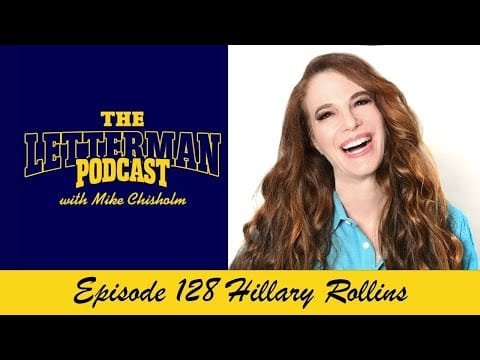
Episode 128 of The Letterman Podcast features Hillary Rollins, daughter of the legendary Hollywood manager Jack Rollins.
In this episode, Mike sits down with Hillary to discuss her father’s remarkable career and his profound influence on the world of comedy and entertainment. Jack Rollins managed and produced for some of the most iconic comedians in history, including Woody Allen, Robin Williams, and of course, David Letterman.
Hillary shares personal stories and insights about her father’s legacy, his work with Letterman, and how he helped shape the landscape of late-night television. They also discuss how invested she was in the comedy world in New York growing up due to her father’s influence. Plus, they tease an upcoming project being worked on as a tribute to Jack Rollins.
This episode is brought to you by hello-deli.com, the only source for official Late Show with David Letterman merchandise, run by the legendary Rupert Jee.
Please be sure to like, share, and subscribe to The Letterman Podcast! Leave us a positive comment too—your support helps us keep the show going. And if you don’t, we’ll be forced to find a new job… maybe as comedy writers?
Episode Transcript
Read full transcript
hey it's me John Beckerman and you are watching the Letterman podcast with Mike Chisum and coincidentally I am Mike Chisum that's your bit right that's your bit that's my bit doing your bit welcome once again to the Letterman podcast my name is Mike Chisum I'm stoked about today's episode because it is the beginning of I don't know it's be of it's the beginning of a very special project that we have going here with the Letterman podcast today's guest is Hillary Rollins um you may recognize the last name Hillary Rollins is the daughter of Jack Rollins Jack Rollins the legendary Hollywood manager um Trends Setter u in the business of show he is uh also David Letterman's very first major manager um and the manager that uh helped um Dave during the morning show days the the the uh late night days of course and then um you know we don't really go through the story of how how Jack's tenure with Dave ended I think that's something that's going to come out it's G to come out um moving forward not necessarily even in the Letterman podcast but uh there's another project that's going to be happening and um when you he hear Hillary and I talking and by the way we are famously uh we we get along famously uh introduced to her by Steve Wier Steve and Lori um have grown up with Hillary have known her for for decades in different capacities and uh I'm just really grateful the first time I hung up with Stephen Lorie um and I would ask questions about Jack Rollins I used to talk to shecky and ask about questions about Jack I've always been curious about um the fact that Dave has surrounded himself early on with Cutting Edge writers but also old show biz Cutting Edge people you know of the day but also old show B and Jack is certainly the an example of of an old Showbiz um manager and uh responsible for many many many other careers and helping to shape many other careers including Woody Allen Harry bellonte uh Robert Klein among many many many others uh Billy Crystal um and talking to Hillary is you know our friendship is evident the moment you see and and Hillary can I and I can talk all day um she's coming on the Letterman podcast now now her her relationship with the show wasn't nearly as deep as her sister Francesca and Franchesca is going to be coming on in the next couple weeks okay and she was an intern there and and did a whole bunch of other stuff early late night so she's and she's got lots of story so that's GNA be fascinating talking to Hillary gives a really good description of her dad and who he was and what he did and we talk we do talk about Dave of course and and the show but but we really talk a lot about Jack here and we've got a project that we're working on that I'm really excited about I want to talk a little bit more about it as we move forward but but the long and the short of it is uh we're exploring the idea of of doing a a documentary on Jack and um they've asked me to be a part of that and I'm really excited about it and so Hillary and I we do reference that a couple of times this conversation more to come on that lots more to come on that lots more podcasts to come on that we're going to do a a podcast series on Jack and have some very special guests on there and then at that point we're going to try and get that made into a documentary and so we're very excited about it um uh I'm not going to say anything more specific other than to a point we want to get the band back together a little bit and some members of the band who haven't played in quite some time and it'd be very fun to have them part of this project and that's really I'm going to say about that uh Hillary is fantastic I her and um you know why you listening to me right now let's uh let's get Hillary Rollins on here daughter of Jack Rollins uh the Letterman podcast very proud to present the lovely and talented Hillary Rollins all right I'm stoked about this one I'm really stoked about this one Hillary um before okay obviously dad Jack Rollins uh David Letterman's first profile manager um you know I want to get into that but I want to go through the list here because uh and I mean this is not the entire list but we think about um you know the the definition of a of a talent manager uh in comedy uh here's the list as we go part of the list Lenny Bruce Woody Allen Robin Williams Joan Rivers Billy Crystal Mike Nichols Elaine May Paula Poundstone Martin Short Robert Klein Tony Bennett Jim Carrey dick Cavit Diane Keaton Martin Short Jimmy tingle uh Howard storm Melissa Manchester Steven Wright and Andrea Martin not even close to being the entire list but good Lord did your dad ever manage a lot of talent he did I mean I would say that he would argue that some of the people on that list were not actually clients he had an impact on the lives of a lot of them and and that was part of the deal with him because he really didn't work with contracts for the most part he really worked on handshakes and let's see whether there's something I can do for you with you so there were all kinds of people who would say oh yeah Jack Rollins was my manager and we were like but but some officially were and and and lots of other people were sort of came through how he impacted them in some way yeah well the word wisdom Lenny Bruce he would never have said i' managed Lenny Bruce but he got Bruce his first job okay in a nightclub and you know that's that was what was management back then so he got he got Lenny okay that statement though okay just that statement that you just said okay but he got Lenny Bruce his first job in a night club is that not the first night of modern standup comedy as we know it like isn't that isn't that where it started right there well I I like to think it is yeah so so there's definitely yes a lot of people were you know Life Is You Look Backwards and it's like absolutely he was the most influential um okay so I want to uh I gotta ask so so so growing up when did you know when did you and your sisters know that your dad wasn't necessarily like some of the other dads around you I know I know you grew up with a lot of creatives and and and and people who are were creatives and that sort of thing but but your dad was Cut From a Different Cloth uh you know obviously when did you know that that was the case well you know honestly I didn't for a very long time I mean I grew up on the upper west side in a very normal to us upper middle class family and all the people around me were the same you know it was Upper West Side Jews west of Broadway between Broadway and Riverside doctors lawyers businessmen actors writers whatever they all had kids um they were big Apartments you know it was it was sort of I mean Mrs masel gets it wrong in my humble opinion please cut that out nope I'm not cutting it out how do they how do they get it wrong uh they didn't live it I lived it I you know my father did work with Joan Rivers who it's Loosely based on and he had a mixed feelings about her and that time in his life and my father was not necessarily a reliable narrator in as we say in in the literary world because because he didn't work so much in on contract and he was very not a he was the genius at not being a businessman and making a business out of it in a way um he would tell his own sto like she was a client as far as I was concerned and as far as she was concerned but years later when he she pissed him off or he didn't like something about it he goes I never managed her well this you know but you know he did but there were others who he didn't who was sort of the who would say they managed he managed them so you know he had a very mixed bag with certain things so he managed singers too and not very well necessarily and yet the thing that created the entire management world for my father and put him on the map was Harry bellanti yep and so that's you know it's a very strange you know the obstacle in the path is the path kind of path and so I would say that um I don't know what I was saying but you got no so growing up I was growing up you know Stillen miror lived in the around the corner and I was I knew their kids they were we were all went to public school we all went to people went to I we weren't religious so we didn't but I went to other kids' bar mitzz at Road of schom the Upper West Side was just our little world and it we were normal that's how it felt it wasn't Hollywood there was a lot of and and my father hated LA and we weren't in the movie business and we didn't know from this I'll tell you when I really noticed it though when people when you were in kindergarten first grade and second grade and they do the you know what did your father do for a living day there you go and I would say my father is a maner maner because I'd ask him what do you do and he'd say I'm a manager so I'd say I'm manager and they'd go you mean he he's a none of us knew what we were talking about oh he manages Ste Leonards over there where you get your uh was he a was he a human resources manager and I was like I don't know what you're talking about like I know what you're talking about he like okay so I guess I kind of wished he was a had a title that meant that I could understand yeah but wasn't a big deal it was just like okay it's this thing that he does he works with people in Show Business later on it got really fun okay and we're gonna get there we're gonna get there for sure um but but there's something about you and your sister Franchesca that that that I found uh delightful in in hanging out with you um a couple weeks back and and and the idea was I know this is the case with you and I think she said it as well if it wasn't for your father you would have been a standup which doesn't surprise me even a little bit you've got the chops you've got the giftings you've got the sensibility there's no question spending time with you I you know I see it immediately spend a lot of time with stand-ups I totally totally see that um so that being said you coming up in a Time surrounded by comedy whether you knew it or not maybe you're in the eye of the hurricane of Comedy that was around you but there was a sensibility there to keep his daughters away you both you know you you've gone into show business in a different in a different different you you've let your creative Spirit fly I want to talk about that uh as we go through this but but the idea that you would have been a standup if it wasn't for your dad just tickled me Delight endlessly um and I think your sister said the same thing I think or a version of it a version of it anyway U so so safe to say growing up teenage years you loved Show Business you loved the aspect of of the things that were going on around you uh but did he actually like say to you yeah Over My Dead Body will you get into this business or okay how did that talk about that a little bit if you don't mind he didn't um nether did my mother um I think at times they thought maybe we should but um no they always said look they were very straight up and and we're all were pretty clear about it too you know as he his my favorite quote of his look this is the business where you can make a killing but you can't earn a living so wow if you if that's you know but I far be it for me to tell anyone that not to do it cuz as my mother would say we took the risk we did it you know if you got to do and the other thing you always hear in in the Arts and I do think it's true I mean I'm a writer and I'm a comedy person as well as other kinds of writing and so is my sister you know we we we we do related things and we kind of skirt around it and straight up standup would have been I mean it a too late there there are days I think do it now he's dead next time I'm in La let's go to the store let's do it well I was thinking if I could do zo yeah right but Jesus scary thought but I will say this I want to do a dinner with you and Zoe fredman by the way I think that would be oh my God that's gonna be that that that will be a fun night when we be no no no and she's great I love her and I didn't know her much then but we but I knew her parents parents and she knew mine and we knew each other's we crossed paths so much and now we're like why God we live in the same town and you know she's awesome she's awesome so I mean that's a lot of that was I think we have a lot to say about because it was a very different Show Business my daughter will tell you all about the nepo babies today we weren't nepo babies in that way okay because there wasn't it wasn't a uh it wasn't the kind of career well there's a lot of reasons why I suppose but you know what hold on when it comes to nepotism I just got to say this the one thing too is is is I think that today that term has a different meaning than it did back in the day that don't get me wrong president of the company brings in the sun to groom for the position okay there can be some sort of but I've talked to so many second and third generation cameramen so many second and third generation you know folks who were on the crew like there's a lot of people who just take up the family mantle you know because they're going to go to work with Mom along the way and they understand it and they get it and it's just part of their life right the same thing was with electricians or guys who drive breed trucks it's the same deal um some people just get into the family business yeah because that's really sort of in a way how it was and and whether you go in the family business or not there's a price right so everybody it's that's basically my parents they you know I used to kid them about like thanks for the you know I mean this is typical of upper Westside Jewish families of that generation but you know you gave us piano lessons violin lessons tap lessons comedy lessons took us to the different and then and then said no when we said we're going into show business like it's not that's not okay that and they were postwar and they didn't you know they'd been through the depression and the fact that they did worry about our finances but my father was very old world and I don't think they thought we'd ever have to earn a living we were going to get married you know to men who would earn a living there you go so why not let your daughter an artist but you know it didn't really work out that way speaking speaking of the war so he spent time in India during the war right he did did he ever talk about that with you yeah it was weird he was it wasn't weird but I mean it was you know my father was very much a a first generation immigrant son like he was the boy from Brooklyn yeah who spoke English when everybody else in the family you know yish was his first language his parents came over from the old country his I didn't know this till years later but his um he was not the first child there was this baby born in the Old Country his Grand my grandfather came over first and S sent money back as they one did for his wife and daughter to make and the daughter died before waiting for the boat waiting for the money baby the infant wow which happened a lot absolutely why so many families had eight 10 kids because that's that was that was that was the normal and I did not know this because that's also the Immigrant experience of put that behind you yeah make a new family here don't talk about the dead baby starting fresh so years later in the family like however my sisters and you we I found out there was this baby born in the old country and then um he he was very um uh not you know he didn't reflect openly much with us yeah you know he was that kind of an old and yet he did he you know we we got it we understood coming from so I don't know this was appropo of something and now I can't no no no no I asked where it's India during the war but but no you so here's what he did in India never ate Indian food his experience was very much it was a very u i I don't think going first of all thank God he was in India and not where there was you know where the action is yeah so but he was he found it very disturbing I think and I would always say how could you I love Indian food and you know like the smells were different the people were different the culture shock was huge for him and he was you know he was also um a soldier you know they weren't exactly and the other thing that was really interesting was that they had servants because they W everybody did and he was very uncomfortable with that but you couldn't not have them that was you had to have that was part of the economy and they were rich as soldiers and he was was a poor boy but whatever it cost they had like a manservant it was just a weird experience for him and I was fascinated to hear about it I was like really he wouldn't my father wouldn't eat gar he couldn't stand up when he'd smelled garlic I was like how could you live in New York City and not like garlic he was just very old school and set in his ways yeah and lived in that kind of you know the bubble that bubble of yeah of whatever that was for him so and then he goes and has this old world guy goes and has three strong daughters who marrying well is the least of their concerns um and and and uh least but not the most either um I can imagine the three of you stretched him considerably in your own ways more so than the talent in many ways that he he dealt probably and many people understood that that he was you know better equipped to be a father to the talent yes than he was to these three daughters which I can see in retrospect with a lot of love wasn't necessarily fun at the time we won get into that now but sure yeah when will we get into that oh wait we can talk about that we can talk about that more to come more to come um so growing up um you you you stated earlier well wait a second later on though I really really liked that world when what what age were you when that world started to become sort of appealing and oh my goodness Dad's part of something that that's going to lead to some pretty awesome experiences how old were you at that were you a teenager enjoying those times I was probably a pre-teen oh man okay good and even I mean I had my you know unhappiness is that were family and personal and and dad's business didn't have any impact on how I felt sure everybody does absolutely absolutely I had like my 11th birthday party at The Bitter End Jesus know I because I was in New York because of that because of that connection my I I went to a Beatles Concert when I was eight okay I got to experience things that that seemed cool but I didn't know how cool they were until other people started reflecting back how cool they were yeah then I could take friends to a be you know like not a but to the nightclubs with me to the see comedy so I was doing that younger than anybody who who it didn't grow up in it would have for sure who are some of the artists back then that you that you liked 10 11 12 who are some of the artists back then like was more about music for me like for instance for a short while this is a funny story I think my because I'm in music now to some degree I'm a songwriter y my father managed a rock band for a little while yeah and which was not his you know but by then the management company had enough fingers and enough pies and a comedy had started being opening acts for rock and roll and vice versa and that was a very that that was a big change in the comedy world that's the pre- Letterman really that's the uh Klein Robert Klein years and that yep was really kind of you know in Melissa Manchester and those connections because her husband was a manager in my father's company so there were like you know the management company grew and became a production company and other things as well and at that stage you know and he had he did on and off have singers in his world and he always said you know I just I love he my father was interesting about music I will tell you my mother was a singer and my mother was very Musical and we grew up very steeped in musical theater and even some Opera and pop and Beatles and all that stuff so that was as much of an influence being the age and the time and the place we were Yeah in our young years and and my father I always had the feeling that he would not notice if music disappeared well interesting no he didn't dislike it no he appreciated it and he could spot Talent he could spot the talent for it spot Talent he understood people's responses and one of the reasons I think he when he could spot talent for it I think because you know the best musicians and musical experiences are not just about the music they're about the delivery of the music yes right they're about the way people receive the music and hear the music and the experience they have and when that's working it's its own magic and so he understood that magic naturally understood it he's the one that told Harry bellonte to sing Calypso right yes and so there he was he he had he understood the talent yeah but he understood it not from a musical point of view necessarily logical rather than emotional um no I'd say I'd say more um holistic oh that's an even better way okay I think he saw now you could look at it now as racist that he told him to sing Calypso but at the time Harry was as my father said the handsomest man my parents I mean he was the handsomest man May the handm this me anyone's ever seen you know so I don't know if there was racism they didn't have a wasn't racist in my viewpoint but no it was a world in which a black man had a different uh path potentially as a singer and he was a nightclub singer this is how the story was told in my and and he was doing okay but he wasn't special yeah enough he wasn't gonna be you know I mean you look at the black nightclub singers at the time like um you know Sammy Samy Davis junor Sammy Davis yeah I mean the the talent is I personally you know I don't think anybody surpasses that Talent yeah you know certain talents that you're like well of course that person had to succeed at that it was like they were their the gift is just goes through them yeah but Harry had something else like when you look at his Tonight Show stuff like Harry had a Harry had an all roundness to and Sammy did I mean mean who am I comparing like we're comparing Giant right but but but Harry had this smooth silkiness to him that could translate to all these other areas but I think that at the time so but success wise yeah to try and carve out a career in smooth nightclub world when it was Peggy Lee y or Sammy Davis he was just another singer and you gotta stand out yeah and I think what my father saw was okay you're a good enough singer you're a good singer you're a incredible handsome yeah and you have this exotic what we now call would look at as racist to take advantage of the Exotica of it but he was like no no no sell who you are sell the island thing and a lot was going on at the time too there was a um big Push by the you know Library of Congress to collect folk songs and folk music in this country and worldwide I mean folk music had CH was not it was it was commercially viable the Weaver the the pop it was a pop you could be a star and and make a lot of money with this folk music in a way that you can't anymore yeah folk was pop and it was like roots and music and your own create your own so he helped create the myth of and and and that's part of what it is is myth making right it's storytelling yeah that's what what management is as opposed to getting someone a gig he would dress people he would not at the beginning I mean he didn't have to do that but it was like they were a marriage they were a partnership and creating an act Y and the Act was the music the look The behavior the S you know it was like it is still but it's not it's not um it's been institutionalized differently now it wasn't institutionalized then well some would say though the blueprint that he um and and Joffrey like everybody but at that time but but but he was you know the trend Setter and and the guy who built the blueprint that others recognized is uh system systemize oh what Jack is talking about here just naturally off the top of his head or from his heart or from his the holistic I love that word holistic I think that's a great way of putting it um we can take that and we can repeat that we can systemize it we can actually come up with a formula and if you look today uh you know Endeavor and and all these these big compan gigantic companies uh that that that were rooted in management of talent and the powerhouses they have become there is an argument to be made that it started with Rollins and Joffrey uh joffy joffy sorry it's okay but they're going to catch on that one they'll get oh yeah absolutely Rollins and jofy absolutely um I think it's fair and I'm you know I I try to be um objective because I don't want to just you know blow you know because I was you know we don't blow our own horn that easily in yeah but um I think that's fair and my father would would he would probably not have agreed to that until till the very end of his life in retrospect he would never you know he Shrugged when you said that but then he didn't you know then he tells the story about there was no such thing so he begrudgingly I think begrudgingly would agree and I think that there's a lot of management and talent today you know because so when I came up one of the things that was fun was when I was only 18 no what was I 20 I was working as a waitress in a comedy club and I brought my father in I I set up a showcase for a bunch of young comics so I was like playing manager do you remember any of the names on that bill oh yeah this was this is who I brought him Jerry Seinfeld I was good I am good I inherited my father's eye and my father's and I still do it a lot I do it with people but I do it from in a different way yeah start [ __ ] monetizing it can I just say because I spent a lot of my time on it yeah I get that okay Seinfeld you let you led well that's a good list so far he turned Seinfeld down which is always one of my favorite stories he did not want Seinfeld and years later I said dad you think you were wrong about Seinfeld and he said nope what he said I'm very happy for him I would not have been the right manager for him that was my father's genius too by the way Mitsy Shaw also turned down Jerry Seinfeld at The Comedy Store yeah there you go and and I will take that and and it's the right thing to do because you don't feel it it's not real it's organic it's got to be like a marriage yeah he felt he felt it he saw it he knew Jerry had the you know the material and the he saw the path he said he not mine it's not for me yeah he had the gift it's just not Jack's gift it's somebody else's gift it's somebody else's gift yeah it's George jiro's gift right yeah and and that's right because look how well Jerry did you know absolutely did were George Shapiro and your dad friends I don't know I don't know all right that's something we we should explore we should explore that question we should explore that as we look into different projects yeah yeah for sure okay so started with Seinfeld who else who else my daughter worked at at um briefly worked at realin yeah and I brillstein I didn't know but I know that brillstein very much said I'm modeling myself on Jack Rollins I mean it down the road it's a terrible place now I hear but I think that was sort of the you know the Next Generation and well we're GNA get to that because because it went from David Letterman to Mike Ovitz and and and and you talk about next Generations and and you talk about somebody who's taken the who took the uh the blueprint that was there and blew it up in in in his own way with his own you know so we're going to get to that I still want to go back to this bill that you created what was the comedy club and and then Jerry Seinfeld was the first one who else who else okay um I won't remember them all but I'll do the best I can Seinfeld Larry Miller do you know Larry yep um you know I remember the lineup I just don't remember names because I stoned but let's try it again give some cues here we got Seinfeld Larry Miller um there were no women think about that yep there was maybe one woman comic that I knew then I mean honest to God um the um Larry David no Larry David was not because Larry David mostly worked at The Improv ah and we were at the comic strip right and I was at the comic strip as a waitress so I was able to set up a showcase there because I was an employee there and sure every I knew everybody and they knew me and so they were like sure you know they my I didn't wouldn't have gotten the job if my father hadn't been Jack Rollins I was an inexperienced waitress and I was a [ __ ] loser but I learned real quick how old were you at the time I was 20 20 okay so 20 we all know what we were like when we were 20 that being said how many of those Talent though went hey hold on a second that girl that was just sure serving screwdrivers to table five that's Jeff Rollins daughters like a lot of them and it was a mixed bag for me because you know they I was a dating age and you know Co Comics are funny and I'm you know an adorable and they're also [ __ ] up yep and so I never knew if somebody wanted to go out with me because of me or I wanted to go out with them because of them or they wanted my father you know that was always loaded right loaded on top of it when I started I realized later I was so obnoxious I mean I ended up to being a a good waitress and I loved that job but you know I was pretty entitled about like I didn't know what I was doing nobody really knows were supposed to be singing waitresses when they open that was their thing I wasn't any of these things I came in the youngest everybody else was at least over 21 only in New York could you be serving drinks at 20 legally in those days you wouldn't even be able to do that now so I was just an idiot I was a good idiot but I was I was I was really good at certain things and when it came to that my point is simply that um the the CL the people that I hung out with were the it was very Club Centric in those days a lot of guys played all three clubs yep yeah there was a real Community around improv comic strip and catch and I hung out when but I did end up as a waitress at improv eventually but this was doing my and and they were kind of different things so I knew Larry and I tried I liked Larry I was like try to have a conversation Larry couldn't ey and have a conversation they couldn't do it or at least not me really oh it was you know I don't know what it was I was too young to I've been at the time I just thought of [ __ ] comedians yeah you know but I think now it was just I still sort of think that but it's you know whether it was you know on the Spectrum or just whatever it was he was he was a piece of work to have a conversation but he was one of the funniest men I ever knew I loved his standup loved Larry David's standup I love hearing stories about Larry David's standup um you know the famous one about him you know coming out not like in the cut of the audience's jib and basically yelling at the audience and then turning around and walking off St I mean all of these Originals who were so you know original yeah he come out and do this bit about people Samoans they're not people they're pancakes they got the round brown face I mean just oh no crazy [ __ ] and he was the funniest man I ever I me there were a couple people like that what's his name so but they were different they didn't he didn't playover at the comic they because they had different Bookers and they they had their favorites and who could give you a good spot and all of that yep so that's the long answer but then you had the guys and gals but you know more so guys back then a lot more so guys back then who like you said they would try and do you know they'd try and work multiple times a night because of the craft they wanted it like like Seinfeld's a very good example of that how he would have try and get sets three or four times a night if he possibly could Eddie Murphy would do the same thing when he was coming up like different different folks would go and do that and and and you have an interesting vantage point because you would see some of the people who were maybe uh content going once or twice a week just in your spot versus some of the folks who were like really going after it and you got to watch all of that Jerry Seinfeld and again I don't want to I I I I I don't want to say something on camera on is it not negative really no okay but it's it was honest to my experience at the time because I have great admiration for Jerry I think he's incredibly talented and I think the show was one to this day I watch it going I don't watch it that often but when I do I go um it's still funny you know makes absolutely it's brilliant yep it's each time you go this is so original you couldn't have seen it coming it it's a life-changing piece of work and Jerry takes gets credit for it as much as and all of them for sure absolutely but he has ice water in his or that was always my experience that he was 100% had ice water in his veins yeah which is a good thing to have if you want to make it in Show Business yeah you hear know that many times you you go on that many especially for a standup too I mean okay there's the hearing no that many folks who are on the acting side of things get you know the rejection but then also to get rejected by as you're developing material to go on all these bombing runs to to to find one little piece uh that can be used for a bigger hole um I mean yeah yeah idea having R waterer in your veins yeah and I don't know that that that's even fair or true to his friends and his wife and his kids and all that I'm just saying that no professionally you're saying professionally professionally at that age he was like 19 yeah I mean he knew who he was and what he wanted to do yeah he did it with so I I knew him when he was with his college girlfriend and she was a sweetheart and she was really heartbroken by him and we're all heartbroken by our College sweethearts were not supposed to be with them long term but at the time it was clear that he W he was like I'm this is what matters to me and being married to you is not of interest to me yeah you know the priorities of of of of a of a stand up H and he's yeah he's one of many many standups who would have that same exact same blueprint the love of the cow is higher than right and was really comfortable like yeah delaying all that and being like just very um well that's what I meant by ice water very uh you know it's I wish I had more of that myself laser laser focus towards goals yeah um who are some of the other when get to I we're setting a very very nice stage for Letterman by the way speaking of letter I don't know if you knew this or not Jerry was one of the only Comics the only stand-ups who was allowed to go on Carson's Tonight Show and Late Night with David Letterman oh interesting I don't know if you knew that or not he was one of the old if not the he was one of the only ones that could do both shows and it was okay with everybody so that just shows the appeal of of of Jerry because if you look at the comics that appeared on The Tonight Show and that was its own ecosystem and you look at the comics who appeared on Late Night with David Letterman um during that time during that time because the Tonight Show I mean obviously the Run was you know a lot bigger than when uh you know late night was on after it but but but uh Tonight Show Comics were different than late night with David Letterman Comics oh for sure did you like I did not know that in that sense that I was not you know I've told you this but I didn't I was not a I watched a little Letterman but I was not a long let long Letterman viewer yeah you and your sister were completely opposite in that regard whereas she you know became an intern on the show and all that sort of stuff like well and we'll have fresa on here to talk about that but I think five years made a big difference yeah the age difference that age difference you know we weren't two years apart we were five years apart it's huge of what's culturally that's a huge difference yeah I was already just done with that piece of my of of following it like i' done comedy in a way like i' done been five years a waitress you know 12 Years a Slave um before we get to Dave here I got to ask about Woody beforehand so so in your teenage okay so I'm trying to I'm trying to do the timeline in my head when Woody like starts winning Oscars and starts becoming Woody Allen like when your dad found him obviously he was a standup um you know unrefined all of that sort of stuff and and and and and he really really helped Woody and I've got dozens of quotes from Woody here you know really really helped refine and direct Woody on all of Woody's films I believe up until uh up until very recently anyway um Rollins and jofy were in the in the you know the credit produced by um you know Woody Allen is a force of nature from a from a creative standpoint I don't think that can be denied um as in your formative years did you like Woody Allen movies oh yeah yeah I was going going to say they're right to yeah well first of all you're the target audience I think I would think well first of all Anni Hall is a classic MH and you can whatever you else you think of any of the Woody Allen story you cannot deny that no one can it is a great romcom when I hate romcoms I don't hate them all but I am not I'm suspicious of romcoms there's the standup right there coming out there's the that's it right there that's that sensibility that's one of those sensibilities right there y be spotted yeah I'm a little suspicious of the old romcom and and and she quit was something I had to grow up peing right yep and um now now it's it's very chic to be oncom well it was a [ __ ] chick flick and it was a put down and it was a lie nobody finds true love with the person they hated at the end of the day you know so am so formulaic and there's a place for it you know but um and I don't hate them all but one of the reasons I tend to be very suspicious is that Annie Hall is so [ __ ] good postmodern it it changed what it meant to be a romcom yeah and it does not have a happy ending and it has some of the greatest [ __ ] writing and directing and conceiving of quirky [ __ ] life it it it's it's Gra un breakingly great movie in my opinion and it won an award when no comedies W won that award and can I just get be a little bit pissed off for a minute here at the Academy yeah do you know that when my father died at a 100 after accepting the award for Annie Hall as best picture which was a absolute Dark Horse in y every sense of the word including that Hollywood hated Woody Allen yep hated New York yep my father hated Hollywood so and they had never made a comedy best picture it was against every [ __ ] odds and I was there I got to go to that Awards that's another story someday not a great experience for me but anyway okay yeah another story yeah and when my father died that year in the Oscars immemorial he was not in the immemorial really he was a hundred years old too he also produced TV as well as films so even if Hollywood hated him the academy should have yeah absolutely the academy you know he was and we called him the next day we were Furious we were like wait a minute cameramen publicists people you've never there was no you know really and they said well a lot of people died this year oh Jesus okay okay and they said he's on the website but we couldn't put everyone in the film wow so I just thought okay that's that is that is the Hollywood Story and my father by the way my sister she called him and then I said you know what Dad wouldn't have given a [ __ ] yeah we gave a [ __ ] we felt it was a slight and just wrong like we we needed it we kind of needed it we wanted to see it up there and we got plenty of other positive blah blah blah I'm not but you know it was just like surprising and yet not yeah that's surprising to me um H yeah I wonder if I wonder if some sort of project could go after the academy for an honorary something or other down the line that would be kind of interesting to see that happen I don't think it's even necessary but I do think it is uh I just think it's part of the story War yeah well that's a that's a good way of looking at it I love that um so Annie Hall to you like like it was funny because talking to you to the contrast between your sister about Letterman you know I showed her somebody gave me a uh uh the one of the original Late Night with David Letterman jackets and and and and I showed the picture of it when we were at dinner and she's like oh I got some of those and and she was like really really ramped up to start talking about the Letterman stuff would it be safe to say that her enthusiasm on the Letterman side your enthusiasm for the Woody Allen side would be sort of applicable like is that no no my but my enthusiasm for St stand up I was I here's what I would do I would go every night to the clubs before I was working as a waitress there when I was too young when I needed to get up for school if my father if Klein was doing sets to break a material my father would take us all and then that would be you know fine and then he'd have to go back every night and I'd say please can I go again please my mother would say you have school tomorrow it's Sunday it's Tuesday and I go I promise I'll get over for school and I never did I always you know [ __ ] up that up but I and my older sister my younger sister was too young then yeah you know my older sister who was only three years older and was also arti you know she was a dancer and she was brilliant and in Arty but this wasn't she said why would you go again you saw it I said it's different every night it's live comedy's different every night so is music really if it's live but yeah and she said and I'm I'll I'll see a movie Once I am not this generation that goes oh let's watch that again yeah oh I've seen it yep maybe 30 years from now I'll watch again you know but but comedy is life stand Up's different is life standup is different and I couldn't get enough and I was a writer you know I was born to be a I probably would have done standup I wasn't doing standup but I was creating the the the material inside me for writing you know I I got the same thing I I watch standups because they're writers y right and I understood the sensibility and I wanted more and I wanted more feed me feed me feed me well okay so here's the other part like like I could watch if Burr was on a was on a five night run somewhere um you know in a small Club I would want to go and watch Burr all five nights because I would want to watch him develop the material I would want to watch the tweaks and see if I could hear the different tweaks between some of the words the emphasis on certain syllables whatever it is I would love to hear the process of the evolution of a bit um it seems like that was right up your alley right up my alley there you go there you go right up my alley and it was right up my dad's alley and so those were the things that was something we really shared yeah um and he he you know they let me go they I argu they argued but they sort of shrugged got it that's okay that's what she's it's her Jam yeah you know um it was part of my jam for sure so uh yeah no go ahead no no you so I would say that my so when by the time of Letterman um I was just in my 20s and I internships you know I was was beyond that yeah I was busy trying to get something going for myself um safe to say you dug writers you you enjoyed writers and and what they do like yeah always did you ever have any musicians all my boyfriends were either keyboard players or writers not by choice did you ever spend any time with Merl Marco I didn't and I wish I had I did not know her I was very impressed at the time that um there was a woman head Rider as everyone was it was unheard of I was a little jealous a little only just because I wasn't even writing then yet but I was like really no no yeah and there was a little snarly Nar I looked back and go wow was the world [ __ ] up I was like well of course meril Marco's the head writer she's his girlfriend oh yeah so unfair wow and then you realize that the genius that is there is oh man yeah so in years later I never really had I never even I don't think I ever met her but I I reached out I think when my father died something we had a Facebook thing or some kind of a thing and I said and she was very nice and I I I I you know I'm a fan I don't follow her but I would like to I would like to read more of her and I think she's got a great substack I highly recommend it yeah yeah yeah yeah anyways okay so so so so um now I knew a lot of the other do some of the other women you know yeah oh there were a couple of women who were so great and one of them died young did you did I can't think of her name now most of the women's standups Were Gay that I knew and that was before they were coming out yeah it was a male world that's that is a very different time when you describe that and and and the evolution World The Evolution that you've seen in standup um huge you know yeah yeah it's it's it's uh it's amazing Len boozler was the first postmodern woman standup and the only one and I was a huge fan and I still am I'm trying to get her I'm desperately trying to get her on the show oh she'll come oh well yeah I haven't I haven't reached out in a while I'll reach out I'll reach out again and her eyes said she should come because I saw her not that long ago at a comedy thing and and she was always really warm to me and I really am a fan and love her and just put in my a word say h absolutely really do it um well and and so we talked about this uh I forget who it was with uh but anyways a recent episode we talked about um like like someone like B Midler like when bet came up through the clubs and whatnot and it's funny when you're the the the line that that that was said in the episode I forget who said it was um you know if you're G to be the tip of the spear you got to be sharp like I think about women like her I think about women like Sandra burnhard I think about women who you know as as they were coming up to Trend to carve the path in this jungle for others to follow man you know 100% and that's why For Better or For Worse the handful of like Phyllis Diller okay people you know I I think she was a genius yeah I think she was a genius now would I want to see her do that material today no of course not but she was balls out taking it on and so was uh you know Joan Joan yep and so was Elaine and there's a very direct lineage and you can see it with the same thing with Seinfield and you know you see that lineage and these are the shoulders we stand on I think that would be an interesting you know place to look at to you know a comparison of that the the male and female lineage to today when there's when it's just a genderless world sort of comedy yeah you know it's funny I I think about that all the time I think about material I love going back and looking at old stuff and and and comparing it to the new and and I don't I'm not a guy who I I'm a guy who very very easily can understand the fact that different time different lens different time like I'm I'm I'm I'm really good at that um you know young people are very triggered and it's like grow up yeah yeah it's it's it's it's frustrating to see that because that's see that's just it my wife and I just went to France not too long ago and I mean like if if some of the stuff that we saw in France was in America it'd be torn down and ripped apart and all this sort stuff whereas the French just like hey here's what happened and they describe the statue that we're looking at and the atrocities around it and it's like okay that was the time atrocities got it let's not do atrocities again you know right and I get it I I sort of get it I did get it to some degree with the southern American yeah stuff but only what I to me the solution was for everywhere that you had a a you know a Confederate thing you also un erect an anti-confederate yeah like you an African-American anti-slavery here's what really like this is history yes and unless we unless we know it and face up to it we're du to repeat it right anding it out to me was sort of like it was performative actually yeah yeah yes it becomes something that bothers me you know I mean I I know I can get criticism I say stuff on podcasts that I would never say anywhere else that's the beauty of podcast that's why the medium that's exactly right that's our that's our bread and butter where the good stuff comes out and nobody hears it it's perfect I love it it's the best medium of all time it's You Preach to the You Preach to the converted that is if they're there listening it's because they want to hear what you have to say there you go exactly yes um but but I think about to go back to the original point though I think about like um Robert Klein his Opera pimp uh bit is incredible like the Opera pimp and if you if if you think about the Opera pimp today in 2024 and he does the Opera pimp perfect converts completely it isil so it's it's it's it's the perfect bit because it is timeless because everyone still knows what a pimp is everyone still knows what Opera is and combining the two concepts is just genius now like it was genius then and then you get some pieces like uh you look at some of Rodney stuff and Rodney stuff would never play now you know uh uh you know unless it was some sort of a a reactionary a revolutionary thing because the pendulum swings but then watch out because the pendulum's going to swing back right and we saw it uh you know I saw it growing up Andrew Dice Clay um I I I want to ask about him because you know he took this one character that he had in an Act full of many different characters M and then this one character The Dice Man goes and blows up and he's [ __ ] selling out MSG in the '90s you know I had no idea that he had other characters oh see there you go yeah yeah Andrew Dice Clay not interested that's where the world's going in comedy today not interested and that was the dice that was one character that he had of multiple characters uh like he's really really really talented but that one there for whatever reason it hit a it hit the right nerve or the wrong nerve whatever you want to look at it yeah it's cultural it's there's a Zeitgeist always and and there's a massive movement and it's like it's like why Letterman hit when Letterman hit and before that why why um you know dick Cavit hit when Dick Cavit yeah because we were in a different cultural moment Dick's an amazing guy dick is an amazing guy he is yeah um boy what a combination of wit and charm and and and vocabulary and tal oh my God that is just and humility even though people don't think so because but he does have humility I've never found him to be somebody who didn't understand where he fit in in in things anybody who's willing to do this show has humility I'll just say that and he's a great great magician I love it when he does a card trick that was my thing about knowing him a little bit growing up was that wherever you go if you could get five minutes alone with him he do a car trick who doesn't love magic I love magic well that's Alman as well alman's the same deal uh did you know Jeff at all did you know Jeff Alman all no I mean I met him yeah but I met him but I didn't know yeah same thing magician like he just you know um yeah I I Adore dick Cavit so so so much and um I love comparing the titans of talk show you know uh you know Tom Snyder loved him as well and and and you talk about conversation and and how he was more just the conversation dick CIT seemed to be able to do it all also an expert of the pommel horse I don't know if you knew that or not but like quite the athlete back in the day that makes sense because he's at that little tight muscular kind of frame that would be somebody who would do great in gymnastics there you go seriously there you go I makes perfect sense his wife was a trip too yeah yeah do you never knew no yeah she was amazing she was an actress and beautiful and very very smart smart very smart I mean I didn't know her well she was very mysterious to me but she was she was exotic to me because she was not nothing like my mother she was this very you know elegant exotic non-jewish actress professional actress who didn't have kids didn't want kids and was just kind of fascinating to me um okay so let's get to the place where so so you're you you've done a really good job setting the table as to where you were uh what you have seen at the time that Jack came into David Letterman's life and uh it's it's really interesting when you go through Dave's uh you know history with managers and whatnot um do you remember when Jack came in uh to to to David Letterman's career do you remember hearing about it what was what was your first memory of hearing about David Letterman so I was in my early 20s um and I as I said I was less I was sort of I left the comic strip I wasn't waitressing anymore I was I was moving forward or out of that a little bit yep and so it was like another thing that Dad did it was like great you know he did they did a lot of things but I understood at the time what I understood at the time was you know that he didn't find Letterman that his partner did okay yeah um and Letterman was a Weatherman in the Midwest and a a standup and they saw kind of whatever it was they were bringing in my father wasn't Talent scouting anymore he was like you know so but if some they saw something I don't know what the story was but the younger managers were like this guy wants to we think and he had a lot of qualities that they were they were very good at what they did too you know for the most part y um and and and to be honest my father was very gifted at certain things and not so good at other things and his Partners you know like any firm you know there were different strengths and um so I think they I can't remember who it was who found him which partner or whether couple of them together or they whether Letterman reached out to Rollins and jofy perhaps that's what happened most likely but he didn't seek it out but it was this interesting deal because he was so Midwestern yeah as was Johnny as was Dick as was you know and let's be honest talking about the truth of it there was no place for ethnic in late night or talk show no at all no place for women no place for anything that was not bland enough in the eyes of the networks and the American Zeitgeist to allow everybody else to have all that other cultural stuff could go through but the the person sitting behind the desk yeah had to be a white Bland not Bland but not Bland none of them were Bland they were all no but American no CU American America is not Bland and I don't think America has ever been Bland but it had to be an American uh a stereotypical American of the time it had you had you couldn't sell the show without that kind of a of a anchor period yeah and um Letterman seemed to have a lot of potential clearly yes so it was a good it was a good um it was a good find right to your knowledge had he already done his Tonight Show shot at that point he had already done his Tonight Show stuff right I don't know what I remember was that I remember I became aware of him when it was the daytime show okay and the daytime show was a was I was like really who's gonna watch a daytime show and basically I was told nobody but that's that's they're gonna audition him on a daytime show and as soon as I see that he's not a daytime show that'll be his audition and I was like okay I it was it was and they immediately took it to the nighttime grade and everybody thought as you know that that was the beginning of the path to Carson yep yep and it was it was it was a done deal I think that is an interesting done deal um I mean I I wasn't inside it but as a young person watching it who was enough inside I was like well yeah that's how I get it now they're grooming him for that but then Dave created you know its own yeah he turned out to be more interesting than that yeah he created his own uh ecosystem within within the talk show world and and really at the end of the day if Carson was the blueprint at that point Dave became the blueprint and and and if you look at the shows today how many of the shows have elements of zaniness that and it can go back to Steve Allen Steve Allen had that like there's no question like and it goes back to Johnny Winter and joh Jonathan Winters absolutely people breaking you know Steve Wier will tell you all the ways that the fourth wall were broken by the comedian early TV comics and it's true and Letterman was not inventing the wheel but he was hitting it at a moment in a cultural shift from it's the Reagan years yep and that meant something it was it was it was so smart we're dub yes oh that's a great way of putting it absolutely I love the way you put things um I'm WR thank yeah well it's it's but I just love some of the like yeah we want to be dumb we're you know we're not dumb we're so smart we're dumb exactly and and and the other part is we are going to make fun of celebrity in a way that has never been done before we are going to absolutely Lampoon um you know one of the things prisoners and also it was there was no here's the thing that really noticed changed in comedy the the jewishness of Comedy that is the poor me I'm a victim I'm the I'm the butt of the joke yep became very unpopular in that realm yeah it the comedy went from being laughing at me or with me to I'm laughing at you that was the Harvard boy change right in the 80s absolutely oh yeah the Lampoon the the pipeline and that was the pipeline and it hadn't been a pipeline before the pipeline before that had been Jewish and not not and by Jewish I mean not I not not the main culture the subculture right just Jazz right and when the white cultural Elite started building television and film on their terms out of humor when they'd been building you they'd been building railroads and and law firms for years but they hadn't been building comedy yeah and they kind of had their moment and it it it was fine except and there was a lot of funny I'm not saying it wasn't funny but it got mean-spirited to me a lot of it got mean-spirited Y in a way that I was like H and it felt to me again like boy humor did you and your dad ever talk about the style of comedy and how comedy was evolving in that time absolutely yeah oh I mean we got granular about that piece of it but yeah I'll tell you here for instance why didn't he manage Bruce because my father hated he wouldn't work anybody who worked blue oh there we go there we go that's how much the gentle he was known as the gentleman manager yeah now he but he also said I said but Dad he didn't just work blue he was a genius he goes yeah I could recognize that I didn't disagree with him but just like Seinfeld not my gift that's not my that's not my yeah I don't want to deal with it and he was right because he would have it would not have been it wouldn't he wouldn't have done anything for that first of all the guy was an addict yeah you know and my father it just would never have it was not gonna make great things happen for either of them but he could see the he could see the brains and the talents and the genius and he would never deny when people would say later on I mean I was mad at him when I when I was a kid I was pissed that he didn't why didn't he manage the Beatles right you're gonna be a big manager and why didn't you manage ladyy Bruce that would be cool yeah once I read the biography and you know oh yeah yeah I I would Joan Rivers Joan Rivers work blue though right no she really didn't in the club she didn't okay I thought I was I always wondered that about her because she always seemed to be right on the edge of it anyway um but uh yeah F of my father you didn't say [ __ ] you just didn't the comics would I mean you might on stage but you didn't it wasn't the it wasn't the joke he liked writers really yeah he understood that the great Comics were writers you know that they could do more than just it brings me back to Woody like I I love watching uh Woody Allen stand up I love watching his stand up and then and and and you talk about okay now here's where he nurtured and and helped send him over to being more the writer the filmmaker uh as opposed to the the the standup you know even as as as an actor of course I mean his comedic timing is fantastic and all these things like like Dave didn't want to be Dave Letterman also I would compare the two Dave was a broadcaster a flat out broadcaster who learned the discipline of standup and happened to have a razor sharp wit and and and the timing that is of the Gods like you know oh my God the comedy Gods blessed him with with with with timing and wit but at the end of the day the heart of it he's a broadcaster and and and some of these it feels like a similar conversation with Woody you know where okay yeah you you have the discipline of standup but you're going to use it for so much more and and even as you perform W's case Woody was already using it for so much more yeah I he was a paid writer when he was 17 18 years old that's true too yeah yeah yeah yeah he already was a writer he left a very lucrative writing job where he was making good money y for those days for for a young man without a college he didn't finish college or whatever yeah he left it to do standup and make 200 bucks a week if that yeah and it was a risk I mean he had a wife mhm um and I don't know that I don't so I think that the that that Woody saw himself I think my father's genius was to say I think Woody was well the way I always interpreted and heard it was that he was a writer and he was frustrated because he was really not getting the actors and standups to do the joke the way he heard it so at some level he could write for them but he also could write like he also had a vision right yeah for for what the funny and he did wasn't a performer he thought but he really was because he'd come to my parents and he would read them stuff he'd written and they'd be peeing on the floor because the material was funny but also his delivery was funny because he was Woody cuz he was uncomfortable and he was neurotic and he was you know before he was Woody Y and he kept saying you've got to do this in front of people and Woody was like really you know how do you compare Woody Allen and and and and Larry David well let me just finish this I will say fin zo sorry yeah please do I will say that I think that Woody also probably always saw himself as a film maker okay serous of that being the ultimate because intellectually and spiritually wood he is very artist yeah driven even though he's funny and probably on the Spectrum and whatever else is going on he he you know he himself has wide you know a deep interest in filmic stuff clearly he saw other dimensions of of presentation he saw multiple dimensions of it I think he knew that I don't think he knew what it was but I think he had that young artist genius thing of like this ain't it kid yeah and so he so he was willing to explore what Jack Rollins said which is because by then my father had made a star you know he had developed a few people like Nichols and may yeah and what he was in that same vein of genius and not fitting into the the norm or necessarily like what's the slot for that are you a writer are you a standup are you an actor yep are you a director as with Nichols may it turned out when Nichols really want wanted to do was direct movies damn it and he did a damn good job of it you know you can't argue with that but there was nothing like the nickels and M sketches the the comedy duo yeah absolutely absolutely never been of none of the other Duos compared in my opinion um I would just say that I think that Woody uh Woody's development again makes sense retrospectively and maybe together they knew that without knowing it consciously that makes so much sense uh Woody and Larry David would you would you comparative similar a lot of similarities there in my mind yeah I mean you know sure except that I mean they person personalities I think are very different yeah just as people but I think they're sort of self created authorship of their own uh personal alteris or brand or whatever you want to call it yeah it's not dis similar you know and they to marry to Letterman too they also all have a degree of awkwardness to them including Dave Dave also had that awkwardness which they could almost guide like a like a tool like use as a tool um to make the audience feel something I I I just feel like awkwardness is something that is uh it's it's it's it's might not necessarily like you take projects like the office or things like that and they where they use it as a you know right it's it's the Helm of the ship is awkwardness but but right to see us stand up or a broadcaster or someone use that tool the way that they can uh I I feel like all three of share that ability good point I never even thought of that but I think that's a really good point I think it's a lot of it is um you know just in terms of kind of psychological and entertainment Theory you know the audience needs a a some a cathexis with somebody right it's I I don't know the word I wish I did uh can you say it again please um connection okay so catharsis is where you cathexis yeah I think it's called a cathx yeah I gotta need to I need to okay I'm trying to stamp it I'm trying to stamp it into my long-term memory right now that's a well I'm a know-it-all and half the time I'm wrong so oh if you just made the word I'm I'm on board let's call Webster right now let's make it happen a cathexis anyway sorry I didn't mean to I just I dig it you you're projecting you want to see you reflected in some way to make the emotional connection right that's we do with an actor in a certain role or with a or with a performer and you can do that that by being the hero and the person I want to be I'll look at Beauty I'll look at you know or and I will look at someone who doesn't seem who who can embody my own sense of awkwardness and make it okay make it safe reflect it back and also in a controlled way yeah I mean would he would he changed so many lives For Better or For Worse what people forget when when with the Scandal about the kids is that a million nerdy skinny homely Jewish boys who were funny and insecure suddenly could date shik of goddesses now whether you think that's a good thing or not I had a 100,000 boys in my generation who were my cohorts [ __ ] rocked their world because it did not exist before wow I love that perspective he never saw that I mean that's the genius of Annie Hall he was sexy yeah Woody's not sexy in most people's ideal yeah he was the anti-hero of comedy and he always got the girl and she was younger and pretty six the goddess we hate that but we love it um and it doesn't play well anymore you know but it did at the time well yeah I mean I mean and now we're talking it cultural it's a 40 it's 40 years old now right I'm probably more than that now I think about it it's probably I mean that movie plays well but I mean that that oh the idea I see idea you know that mean people now want to say about Woody could he stop at 79 having a 40 25y old girlfriend on screen it's enough already and you know they're not wrong in a lot of respects as my daughter would say they are not wrong um just a couple more Letterman questions for this first and this is the first time like like not tell and tells out of school you and I are buds um we're going to do this more often and there's more to come there is more to come there's stuff happening uh in the background and we're excited about it um I just have to I got to go pick up my granddaughter and and so you know I got to go do that um your dad had an office in 30 Rock no he didn't have an okay he did yeah I think he did my father had an office on 57th Street that was his home yes you know and so I think when they when they were by the time in the many incarnations of the show part of his deal was that he probably had an office at 30 Rock but I don't think and he would go in when he had to but I don't know how that he spent I never I think I was there one once or twice it was and the reason I'm saying that is because I I knew the answer to that question folks that was one of the ones where I actually knew the answer to the question um the the the life of Jack Rollins was gigantic it was really really big we we we kind of started shedding the light into it here today but I got to tell you Hillary there are so many uh writers from back then um I I ask about Jack when we have a an episode focused on The Late Night years um I ask about Jack almost every single time with every single guest and and one of the things that I love uh about the how the connections that you kind of made today is there are so many folks who worked for that production in all sorts of capacities when I ask him that question they say you know what yeah he came in and he sat me down and we and he he gave me all this advice and it it absolutely changed my life or it was profound or was it they use you know oh his wisdom he was so wise I've heard that a lot and and and and he didn't go to his at 30 Rock that often like you're you're talking about how but um you know as as opposed to his office on you know his main office I'm I'm saying you know I'm not saying he didn't go there a lot I'm saying that you know comparatively he had a lot of stuff going on in his world and you and I have done a really really good job of of talking about this and we're going to go further down the rabbit hole we're gonna have Franchesca on here she's going to talk about it but your dad I mean the amount of people that he influenced and the amount of people that he you know didn't manage but he directed them or he did manage them it is such a massive number um the uh the 100th birthday party that was put on for him of course you know his funeral people still talk are talking about his funeral and it's how many years after nine years after the fact something like that and they're still talking about his funeral your your dad was a legend and and I'm I'm so grateful that you know that and I'm so grateful um that he was part of this this Letterman universe that we we we love so much Dave surrounded himself with it was weird like you said he he had a lot of these uh the pipeline from from from from the Harvard writers and whatnot he had some of these old school writers with him and then he had old Showbiz people around him like H gurny like Jack Rollins and it was it was such a neat Alchemy having that and having your dad uh painting a picture of who your dad was knowing that he was Dave's manager at the time um of Dave's Ascension that is a really really neat place to be and I'm really grateful that you've taken time to come here and talk about me with this talk about this with me I should say and uh I look forward to more so if there's anything that you want to say like to close up this episode here is there anything what I just said there that sprung into for you it's really beautiful to hear and I really appreciate that and and you know it lands for me um so differently today than it would have at another time so I'm grateful to you well and and and I can't wait to do it again because I got to get this stuff out yes and move well there's a lot more to come like I'm fulfilling you know one of these are a lot of bucket list things and having this conversation about I finally realized I I wherever I am in my life in Show Business I live through stuff that only I have that version of it other people have other versions and I'm not going to live forever either and just want to talk to people who want to like remember what it was for archival purposes as much as anything else and it's also you know they're dead and gone and you miss them even though they drove you crazy you only parents um this is the way we keep it alive and we're going to do a lot more of that uh I'm going to say my I'm going to say my uh outro right now just please stay on we'll say our goodbye privately buddy and we'll uh we'll take it from there thank you so much for coming on the Letterman podcast today the first of lots more to come okay that's uh H those who those who have watched this thing from the very beginning number one what's wrong with you number two you know that this conversation and and the ones like this are the things that make me that drive me forward I love talking about this and and uh Hillary and I uh could do this all day we will do it all day there are lots of other venues that are coming we're gonna have Franchesca on to talk a little bit about her experience she actually interned at the show and and and whatnot but I'm really glad we started with Hillary here to talk about Jack Rollins and uh I've been wanting to do a tribute show to him for a long time this is the first um and we're going to go from there uh the Letterman podcast is one sponsor one sponsor only right now that's hellodd deli.com Rupert may not own the deli anymore but he still has hello.com get yourself some official Late Show with David Letterman merchandise uh hats mugs t-shirts all that crap go for it uh thank you very much this has been another episode of the Letterman podcast with Mike Chisum coincidentally I am Mike Chisum thank you and good night overcoat and Underpants