The Letterman Podcast · Episode 189
Steve Singer worked for 30 Rock for 40 years, but his favorite were working for Late Night from 86-93
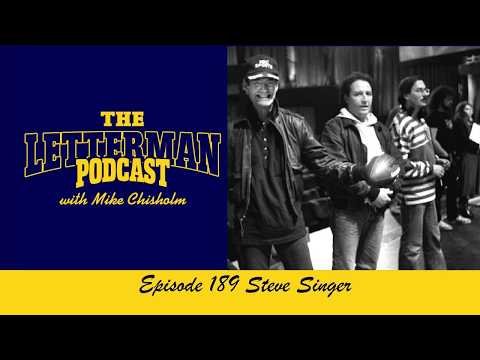
Episode 189 of The Letterman PodcastThis week’s guest is Steve Singer, who worked in the audio department at Late Night with David Letterman from 1986 to 1993, right in the thick of the NBC years. As a trusted member of the Studio 6A team, Steve helped shape the sound of the show night after night, handling live audio and contributing to what viewers at home heard during one of the most beloved eras in late night history.Steve and Mike take a lovely trip down memory lane as Steve reflects on what he considers his favorite chapter from a remarkable 40-year run at 30 Rock. He talks fondly about some of his favorite musical moments, including seeing Sonny and Cher up close, mixing the show, helping mic guests for signature segments like Stupid Pet Tricks and Stupid Human Tricks, and working around the unforgettable performances that featured Paul Shaffer and the World’s Most Dangerous Band.It’s a warm, funny, and highly specific behind-the-scenes conversation with someone who helped make the chaos sound smooth.Before you go, make your way to Hello-Deli.com — the one and only home of official Late Show with David Letterman merchandise, lovingly maintained by the legendary Rupert Jee. Buy a mug, buy a shirt, buy a memory.And if you enjoyed this episode, please like, share, subscribe, and leave a positive comment. We’re not above asking. In fact, we’re getting pretty good at it.
Episode Transcript
Read full transcript
Hi, this is Chris Harris and you are watching the Letterman podcast.
It's the Letterman podcast. It's bet better than all those podcast about those other men. Let let the fun begin. Welcome once again to the Letterman podcast. My name is Mike Chisum. All right. Uh we're getting back on the horse. where more episodes are starting to come out now. Um, and and and I just want to say thank you to everybody for your patience as I'm going through all the things that I'm going through, the craziness of of life and and and as we try and get our uh our families trying to get things back in order and and and and firing on all cylinders. And there's so much good stuff happening um in the world of Letterman uh and and and uh you know, he's going on tour again. Uh by the time this airs here, I'll have probably seen him in Vancouver. He's going to be part of the Netflix is a joke festival down in LA. Interviewing Martin Short, interviewing John Melany in front of an audience. That's fantastic. Uh, more my next guests on the way. Just lots of good stuff going on. It's good time to be a Letterman fan with all the stuff that's going on out there. It's nice to think back uh to when late night was a little bit different. Um, certainly far less serious and and more entertaining. And uh that's the sweet spot of the productions of David Letterman and Company. Now, um, hey, for those who like people who worked for the original, the OG, the late night guys, we got one.
Steve Singer was the audio guy for, uh, the audio mixer. Uh, he was in the booth, the guy in the booth from ' 86 all the way until they left in 93. Uh, he says himself of his multi-deade career with NBC working in 30 Rock, the Mecca, uh, which he loved and and was grateful for every every every minute of it. Uh the funnest time that he had in his career was working for Late Night with David Letterman. Steve's a great guy. Um it's just fun to get to know him, ask him about the job and what his experience was like. Uh the late uh the Letterman podcast has one sponsor, one sponsor only, and that is hello-dy.com. Go to hell-delly.com. One of your only sources for official Late Show with David Letterman merchandise. They got mugs, they got the old shirts. Uh I think he's still got Rupert shirts. Rupert is still running. Hello-delli.com. head on over there for some Letterman merch. You can also go, of course, to the official Worldwide Pants store and get Barber Gain shirts and uh one like the one I'm wearing right now. Um, but you're not here to listen to me blather on. You are here uh to to to to celebrate the greatest body of broadcast work in history. Uh that of David Letterman and company. Please enjoy my conversation with audio guy Steve Singer.
Uh Steve, I can't I can't thank you enough for coming on here uh to talk about uh the career that you have you have uh had. You just retired not that long ago. How long did How long ago did you retire?
I was at NBC for 45 years as an audio engineer.
You were at NBC for 45 years. And you cut out just for a second there. What when did you actually retire?
Uh the end of 2024. the last couple of days of 2024.
The I mean the ridiculous uhly obvious question to to to start with is my or observation even is my word the changes that you have seen in broadcasting during your tenure in that career. Uh my okay so the changes you have seen where did you start and how did you start in broadcasting? Well, uh, before before I was at NBC, I worked in radio at a couple of radio stations around Long Island, which is where I live.
Yeah.
And back in 1980, uh, when the, uh, network was planning to send their employees overseas to Moscow to cover the 1980 Olympics, they hired a large number of temporary employees, and I was one of those employees. As it turns out, if you'll remember, the US boycotted the Olympics and it turned out to be a bust. Um, but I was lucky enough that I managed to stay with them for all those years.
Um, the optics of the optics of what you just said is very very interesting to me. Uh, the Soviet Union is hosting the Olympics, so we're going to hire a whole bunch of people. It sounds like they're hiring a bunch of expendable people to send over to the Soviet Union.
Well, no. What what it was is they they they they sent over the established staff people creating a lot of vacancies in New York for the temporary employees locally.
You had to hold down the employees. That's what I was.
Yeah. I had very very little experience and honestly I don't know how they came up with hiring me but they did.
Okay. So here we go. Some experience in radio and suddenly you're going to the Mecca. You're going to 30 Rock. you're going to the RCA building. Um like I I I assume that wasn't lost on you. Uh even if it was going to be a temporary thing,
it was a temporary thing and um I managed to learn a lot by um meeting a lot of the older, more experienced people and relied on them to show me the rope and I really developed an interest in it. What was the major difference between what you had learned up to that point in broadcasting and then moving into uh the the the big- time television at that point? What was the biggest learning curve for you?
My broadcasting was almost non-existent. I mean, a couple of small radio stations in the area, but like you said, this was this was the big time. This is being at 30 Rock and I get to, you know, walk around the building and seeing these studios that I was uh famili 190 uh 30 Rock, lots of transition happening in the United States. You get this job. Where did uh you end up? What what what shows in 1980 when you when you were learning the ropes of this thing? Were you a jack of all trades from show to show?
Yes, I was.
Every day was something different. And I started as being uh uh the audio department but uh be being an audio assistant setting up microphones and doing things on the floor which again I learned on the fly and learned from the guys who were there before me that were nice enough to show me show me the ropes.
And at that time in 1980 I mean you got guys who worked on Johnny Carson's Tonight Show when he was
there were guys there were guys that were around for the Kennedy assassination. They would sometimes talk about it as well as Jack Parr and and Johnny Carson. Sure.
Wow. And news. I assume news was a big one for you.
Mostly news because uh most of the events, the broadcast from 30 Rock were news. There were a handful of entertainment shows, but primarily news. So that's where my background started in in news broadcast.
That makes sense. It makes sense. And ever worked on SNL at all? only in an ancillary position if they needed a hand for one special uh segment or something. Uh very rarely. They were pretty much self-contained.
They hired their own people and they had their own list. So uh very very rare rarely. Um what was the buzz like around 30 Rock at that point? And I mean, you know, just with the perspective of of of all these years now in between, you go back and you think what were the things that people were were excited about talking about? Um what was the vibe like uh there? I mean New York was a very very different city in 1980 than it is now. And and um you know just just surviving you know you think about Frank's song if I can make it there I can make it anywhere. Um, you know, that was a very unique time in New York with that uh overlay of phrasing. Like, was it difficult for you to make it in New York or is it something where always a New Yorker and just uh you just roll with the punches?
I am.
Oh, it cut out again.
I was certainly familiar with 30 Rock. We used to sneak into the building when I was in in college. You know, security was different to non-existent back then.
You know, you'd wave to the guy and he'd let you in. Um, but I was in the building many times before I started working there.
Yeah. Um, you fell in love with it obviously.
I did.
Yeah,
I did. I really did. I I knew that I wanted to do something in this business. I didn't necessarily know what. Had the road gone one way, I I would have done something else. Or if it went the other way, I would have done something else. But I knew um like back in high school that I wanted to do something in this business, be a part of it somehow.
Oh, that's fantastic.
And the fact that it was technical and audio, it just the road just happened to lead that way.
But as far as as far as an industry, I knew that I wanted to do something in that from way back.
I gotcha. I feel you. Uh so so as your um I I just uh I've got a little some notes here. um your first credit on the show was April 8th 86. That was your first credit on the late night uh that we could find um program. So, so between when you started there and you worked at late night um you know was it was it was it an interesting transition to get you to late night or was because obviously Letterman was going since ' 82 and so so there must have been a tremendous amount of buzz in the building about this show that has just started to get all this steam and take off. I was working across the hall in 6B. I was mixing live at 5.
No kidding.
Which which at the time it was the biggest show, right? It was a huge show at the time.
So you got bothered by late night as the next door neighbor. They were they would prank live at 5 all the time. You were you were one of the people the recipients of those pranks.
Yeah. What would happen is my audio booth door overlooked the hallway in 6A and I would keep the door open and I'd be mixing like this, you know, like looking out the hall to see, you know, the animals and the clowns and all the hoopla that was out in the hall.
Uh, and I said, "Gee, that looks that looks great."
So, I I did that for a while.
Were you ever in the booth when they would come and interrupt the show and and and and prank the show? There was I was doing Live at Five the day uh Dave came across the hall and interrupted Al Roker doing the weather. Uh that was preset because we had to we had to set up some stuff for it. Um but yes, I I was there. I I did that one. Yeah,
I appreciate you talking about it being preset because there were so many moments on late night where the the thing that I loved about late night so much is that they would blur the lines as to is this real or is this not real? And and I think a great example of that is certainly when they would go over and and start messing with you guys at Live at Five, you it looked so spontaneous and each spot you guys would do um you know the audience was thinking this is this is spur of the moment and random. Um but mostly it was predetermined and it was it was uh it was something that where you guys had a heads up on, wasn't it? Well, that one technically we had to plan it because I needed a copy of Al's microphone and and and they needed a copy of and I need a copy of Dave's mic. So, we needed to we needed to so we so we would hear both sides of the conversation. Um, so that was planned. Um, I remember once I guess he would send the camera into the 6B green room uh the Joan Collins I mean I I remember a lot of these episodes. I don't remember everyone, but I remember a lot.
He sent a camera uh to the uh green room where Joan Collins was. I don't know if you remember that, but I I do remember that. Uh that was that was spur of the moment. Uh there's one memory u so so so I'm I'm broadcasting from Canada and uh a lot of NHLers uh end up uh folks who who played for the National Hockey League end up retiring in the area that I that I live in. One of the guys is named a legendary New York Islander by the name of Bob Bourne. And Bob Bourne came on my other podcast that I host. It's a men's mental wellness podcast. And he told a story about how after they had won, I don't know what it was. It was their maybe their third Stanley Cup, something like that. Um Bob Bourne brought the Stanley Cup with maybe Mike Bossy or one of them to live at Five and Dave had his people come in and steal the Stanley Cup from the Live at Five audience and put it on his desk. And uh those are the antics like that that to me encapsulates perfectly the antics of what Dave brought to the table. Did it was there like a noticeable jump in the crew and all the people that you worked with once uh Letterman started firing on all cylinders and started doing that stuff? I mean, it might it must have made work terribly fun and and and certainly uh not ordinary.
A lot of what of a lot of what he did when he took off and did these things were a result of planned events not working. Um like a prop not working or I remember I remember one time he went to make a phone call. They used the phone call on the air a lot. The equipment at the time was not the most reliable. So, it didn't sound the greatest. So, he went to pick up the phone to place a call and the guy I can't hear you or went into feedback or it just didn't work. Yeah. So, he got up nonchalantly, went to the backstage, took out a fire axe and just chopped up the telephone. And I mean, you can't write that. It just it just happened. Mhm.
Uh uh I remember, you know, similar things happening where props just didn't work the way they worked in rehearsal. And again, he would take off and he would build upon that. I don't know if he liked doing that because he felt they were relying on him to do all the work.
Sure.
You know, here you have this bit planned and rehearsed and it doesn't work. And now what does he do? He's got to finish it.
That's right. You do that once or twice. It's funny, but he can't be expected to do that every single time.
Well, and and and it's interesting because, you know, all these years later, what is the thing that Dave is is is maybe most known for? And it's his it's it's his uh reaction time. It's his wit thinking on his feet, the spur-of the- moment stuff that comes out.
Um but yeah, like it's a little bit like, you know, dance monkey, like we're going to rely on that. Well, okay. Um but at the especially at that stage at the very beginning of the production um you know you don't know that you necessarily have you know the quickest draw in the west all the time when it comes to that stuff and then the technical problems they come up and and they create their own you know kind of issue here. So yeah uh go ahead.
Well technically speaking um back in the in the 80s mid 80s things were not as polished and slick as and reliable as they were in the latter part of the years. I mean, you could never get you could never get by with that towards the end of the show at the CBS show, right? They they had a higher level and a higher expectation um than they did back in the early days. In the early days, it was just a little, you know, lowbudget cheap talk show with a lot of uh obscure guests and it kind of grew from there.
Absolutely. The and and a little bit of the uh the inmates running the asylum kind of a vibe to it, right?
That's what it was. Yes.
Um, last I think it was last week that was Hal Gurnie's birthday.
Yeah. He was 101 years old.
I I was I was telling somebody that I owe my career in of indirectly to Hal Gurnie because when I started mixing the show back in 1988, I didn't have a strong uh background mixing a a show like that.
And it was a little it was a little rough. It was a little rough in my area. And uh it got back to me by more than one person that Hal would have meetings with this the the the the show and the company saying, "Well, what do we do? Should we replace him, you know, and get somebody else?" And it was Hal that said, "No, no, let's give him a little time to to get settled and get comfortable in there." And uh and I did settle and got comfortable, but uh it got back to me that Hal supported me in that uh in that area. So, I'll always be grateful to him for that. a legend literally had your back. Um
that's like I said, it got back to me by more than one person.
Oh man.
So I will always be grateful for Hal and indirectly um um credit him for the long career that I have even after the show left. It was 32 years after the show left that I continued and you know did many many other shows.
Oh Steve that's
so thank you very much. That's such a beautiful sentiment and and a thank you to Hal for everything because he was a legend at that time. I mean, he's one of those guys that's one of the guys that worked for PAR, you know, that one of those guys that was around long before you were the you showed up there and and the fact that
before I was born. Yeah.
Yeah. Like that's that's that's that's beautiful. That's a that's a beautiful thing.
Al was a pleasure to work with.
He was just he was just so even keel and and and quiet and and and funny. Yeah.
Um, just a pleasure.
Oh, that's I love I love hearing that. Who were some of your other uh Foxhole buddies at that time? Like like at the time that you if you came over in 8086 or whatever it was, April 86, I think he said it was. Um, who were some of the Foxhole buddies that were there with you that you you worked with in the trenches?
Uh, you'll remember Bob Rooney. Bob Rooney was a star, an on camera star. I I don't know. I don't know how they determined that, but uh he got to be a regular day player on that show many times. I worked with him for years.
Yeah. Yeah. Um because when you're there, are you're not al are you alone in the booth?
Yes.
Okay. So, it's just you. And what are you responsible for uh as late night is going on? Uh what are you responsible for as that's happening?
I was the production mixer. I was responsible for the audio and the sound, the overall sound of the show. Uh we did have somebody in a music room, Mike Dug at the time, would mix the music um and and he would send it to me and I would integrate the music with the production mics uh and the audience and any video type tape playbacks and some sound effects playbacks that we had in another room and I would incorporate all those elements together and mix the show. So, my title was broadcast mixer, I guess you'd call it.
Y and and this is all real time. It's not all in post. This is like a lot of this is real time.
Zero post.
There you go. Okay.
I don't think there were ProTools back then. They might have been. They had multitrack recording. We never multitracked the show.
Yeah.
So, what we did at 5:30 is forever and ever, good or bad. Some of them were not that good. But um
let's talk about some of the things that were there ever any times where um you know something fell to you or on you or you were blamed for that that that made it onto camera that affected the show?
Oh yeah. Uh yeah, there would be audio mistakes. I I can't think of anything specific, but you know, a speaker not working. This guy is across the studio or across town and he couldn't he couldn't hear him. there was a problem and oh yeah this you know so that was that was my fault that happened once in a while but once I got comfortable they happened less and less.
Yeah. Well but
and and it always got a big laugh because if something went wrong there was Dave to to pick up the slack and and you know make it funny.
Well and you know Robert Morton and I were talking about this again the other day just the idea of the tone of the show celebrating failure. You almost wanted something to go wrong you know because of that. But but but the part the beautiful part about it is you can't it has to be real. It can't you can't pretend that something went wrong or or whatever unless it's part of a an out there bit. It's when things actually went wrong that's when things uh it was organic and that made it that much more entertaining. Uh not fun for you while you're sitting in your booth though.
Yeah. Yeah. When it's Yeah. When it's you is not funny. When it happens to the other guy it's it's funny. But when it happens to you it's not necessarily funny. Uh but the mistakes happened less and less as as I got more experienced and the technology improved.
Yeah.
You know, the wireless microphones, they redesigned them and now they're fine. Everybody uses them without a second thought. Back then they were
they were so so um you would be there when you were they were like during rehearsal if they were going to use the telephone like you talked about before. Uh that was you you were a huge part of that process, right?
Yes. Okay. Um, one of the things that Rick used to talk to me or she told me about and I mean I think he he even found apparently he found a tape of them. Um, many times Dave when he would be testing the phone system for a segment. Okay. You know what I'm talking about.
I have them. I have them. three I have three CDs that someone made or maybe two CDs that someone made of old Dave's uh test phone calls
which would be the equivalent which
which would be the equivalent of a teenager making phony phone calls in the day but much much funnier.
Yeah. Oh yeah. Like like like Rick has told me. And I mean some of them have made their way I don't know some of them have made their way to the to to the public and it's hilarious. It's the funniest thing you'd ever think of. It's it's it's Dave calling uh book publishers and or or or different uh different businesses and whatnot and and bothering them. Dave purely being Dave, not even for anybody's entertainment except for the very small few people like yourself that are testing the equipment. You have three CDs of it. You and I will have a conversation when uh uh when the when the when the record light goes off. Uh that is unbelievable that you have that. That is a time capsule and also just a brilliant brilliant piece of history, comedy history that you have. Uh you were the guy that helped him test the phone and listen let's
he once called up a local police department and told him his car was in the shop. Can I can I borrow one of your patrolled cars to run some errands? Now if I did it, it it wouldn't be funny. But I I don't know. His was funny. So,
you know, it's like um and there this is out there in the universe. When Tom Snyder hosted his show, his radio show, Dave many times driving home would call in and prank Tom Snyder's uh radio show. He would do the same thing and and and just Dave's penchant for mischief is just uh it's one of the things that we love so much about it and the tone of the show. It was a very mischievous show. Um, was that frustrating for you or was it easy for you to kind of get a little less tight uh tight-knit and enjoy the ride when it comes to this stuff?
I did just on once I got comfortable doing my job,
it was a scream.
It was I mean I I I remember some some of the Larry Bud episodes, but man, I I couldn't see straight. I was laughing so hard. Um, and of my, and I tell people this if they care to know, but of my 45 years working, those eight years were without a doubt the highlight of my time there on that show.
And had the show not left, I'm I'm hope, you know, I think I would have stayed, you know, for forever or who knows. But, uh,
I wanted Yeah. Let's talk a little bit about that because like you know a bunch of the crew um either had the opportunity and and and took it had the opportunity didn't take it or or or didn't quite get the opportunity to move over to CBS and and and and there's a lot of people that were put into into terrible you know decisions whether or not because they wanted to so badly but it was an unproven thing. seniority where they were all of the stuff that you know and and again 30 Rock is you know they they didn't just work necessarily on late night they might be working on other stuff as well and just the way of it. Were you ever um were you ever tempted to say no you know what the circus leaves I want to go with the circus.
I sure was.
Yeah.
But like you said I needed stability in my life you know it's taking a chance. I had I guess 14 years there. I was settled into the place. You're going to an unknown place.
Yep.
Uh I I I was just afraid, honestly, afraid to take the chance.
Yeah. I went over to the theater a couple of times to visit some friends, so that was nice. But um I think I made the I think I made the right choice. I mean, I was there for the eight years, loved it, and I went off to do many, many other projects that I'm happy with. So, uh, as it turns out, it it worked out fine for me. And I know some people that did go, uh, and I've lost touch to most of them, so I I don't really know how things worked out. I assume fine, but I don't know for sure.
Yeah. I mean, um, it would be such a difficult such a difficult thing, especially if you are, you know, somebody who loves broadcasting, like leaving 30 Rock itself. 30 Rock like I'm a big hockey fan. You know, we talk about home ice advantage, you know, when when the home team gets their fans and all that. 30 Rock might be the greatest home ice advantage that there is in broadcasting.
Well, the Ed Sullivan Theater is is is fine, too. I mean, uh, you know, it's a it's it's a nice place. Uh, for me, it I just couldn't afford to take the chance.
Yeah, I Yeah.
And things changed a little bit, too. They got more serious when they went over to CBS from what I hear.
Oh, they elevated. They had to, like you say, you know, it wasn't the inmates running the asylum anymore. It was the inmates now inherit uh the the the the Tonight Show, the biggest show on TV. We got to all step up. And then, you know, they had to change the tone of the show to the point where like there's going to be a lot of people who um only who who tune in to this episode in particular because it's it focuses on the late night years. Like there's a huge contingent of of uh enthusiasts who love late night exclusively, you know, that that was that once once once um late night left 30 Rock, so too did a portion of the audience. There's going to be a lot of people who are who are excited that you're here and we're talking about the late night days. Uh because it was such a magical time, because it wasn't elevated to that place you were talking about. It wasn't as
forward- facing. it wasn't as serious uh when it came to things, you know. Um
so, okay. So, you've given a good um did you just do that? Were you just in the booth the whole time or or did you move into any other department for late night?
Um I I started as an audio assist on the floor.
Yeah.
Because one of the guys retired. I did that for uh a year and a half to two years. And then um they needed to change the mixer on the show, so they had me do it. They pretty much said, "You're going to do it."
I said, "Well, you know, I don't really have a background doing this type of show." And they said, "Well, you better learn because you're going to be doing it." So, they threw me into that position. And like I said before, I was a little bit uncomfortable because and hesitant because I had never done a show like that. And uh you know, you had to be ready for anything at any time.
Yeah. because he could do anything. Um, but once things settled down and I got comfortable, it was it was pleasure. I mean, I used to get to work early. How many people get to work early, can't wait to get to work to see what was going to be happening for that day? I I loved it.
Was the rehearsal even more entertaining than the actual show? Yeah, they ran I don't I don't I don't have it and I don't know if it exists, but a lot of times they ran a tape in the back of the rehearsals.
Uh I don't know where they are uh or even if they exist, but uh at one time I know that every day they used to record the rehearsals and get a big laugh out of it.
Um oh man, I can I can imagine. So, like the first year and a half, like being on the floor, uh, seeing some of the things that that that you'd see, where was your where was your position while the show was being, um, recorded, where were you standing on the floor?
Just out of camera range. Just literally uh on the floor, but out of camera range.
So, like in between Dave and the blue doors or like around the blue doors or
uh, it it could be either there or more more often I think was on the other side of the studio by Paul's piano. Okay. All right. So,
and um if things are going ticky boo, you know, you're kind of on autopilot. You're able to watch what's going on there.
If things are going well, I shouldn't have to do anything.
Yeah.
They didn't use wireless mics in the very beginning. They insisted on a boom.
Yep.
Uh which was one job less for the audio assist because he didn't have to mic guests. They only had a handful of wireless mics. Uh but they insisted on using the boom for guests.
Okay. Um, here's where I want to where I want to start mining your memory banks. So, so the times where you're on the floor and you're literally, you know,
10 feet away from what now is considered uh, you know, some of the greatest uh, broadcasting material ever. Um, what are some of the memories that that you have of things that you saw um, while you were on the floor?
Oh, uh, Sunny and Share.
Oh my gosh.
The Sunny and Share Sunny and Share Show.
Yes. So, I was right next to the band, Paul. And I remember that uh Sunny was as nice as could be. He came around to everybody on the floor, introduced himself, and at the end of the show, at the end of the day, he went around to every person and said, "Thank you very much." I thought that was that was pretty nice.
That's that's that's that's the moving moving in uh those are the the the deeds of a of somebody who wants to be in politics or is in politics. That's for sure,
I guess. So,
and and you almost want Sher to be a little bit untouchable, don't you? You almost want her to be
She did not have the same reaction that that he did. Uh but uh I thought that was very very nice. He went literally to every person on the floor, not knowing who they were or what they do. Uh he would go up and say, you know, introduce himself and say thank you at the end of the day. I thought that was very very nice.
That's an amazing moment right there. That's that's very very cool. Uh what else back then that that's a phenomenal one to lead out on? There's no question that that's a historic moment when it comes to entertainment uh seeing that. What are some other things that you remember?
I don't know. Gee, I don't know. I remember the monkey cam. Do you remember the monkey cam?
Of burn.
Monkey cam.
Yeah. I think I think I I it was a long time ago. I think the monkey didn't do what he was supposed to do and he did some things that had to be cut out because they did he
was not obedient. I remember that. I remember being on the floor. I remember uh was it Kmart the Magician? You know, all the episodes. Kmart.
Yep.
And Dave would make fun of him a lot. And I remember being on the floor with his props. And uh I I I thought that was funny. I like the Jack the Jack Hannah and his animals.
That was a scream. Again, it was Dave, you know, Dave doing his counterpart to the to the animal segment. Uh but that was a scream. Uh, so what I'm hearing is is is it sounds like um when things out of the ordinary like that would happen, stupid human tricks, stupid pet tricks, um you know, these segments that that that that um included, you know, extra uh extra people out of the ordinary stuff. It sounds like those are the days that you you you really enjoyed when you're on the floor because they mixed up the uh
Right. A little bit.
You're right there. As long as the camera doesn't see you, which you're not supposed to. Uh it was great.
It was great. It was, like I said, it's really the highlight of my of my professional career. It it was so enjoyable. People were so nice. I know you a lot of them. You know, a lot of them. You do a lot of interviews with them.
Yeah.
They were all just the nicest bunch of people.
I haven't gotten everybody. So, anybody who uh anybody who's part of that crew that wants to come on here and have a conversation with you or is willing to not wants to, hell, no, most no. Almost no one wants to come on the show. Anybody who would be willing to have a conversation with me about this, uh, I would I would love to. Um, at this point here, we're getting into the times when anniversary specials were happening, prime time specials were happening. You get to the point where, um, you know, A&E is is is is broadcasting reruns and and and Rick uh, before his passing, Rick told me a lot about about that. Were you part of mixing those special projects and things like that as well?
Yes, that's another highlight of my years. I did the uh the 10th anniversary special at Radio City.
Wow.
And the 8th anniversary special at the LA Amphitheater. There was no 9th anniversary special for some reason. They just didn't do it. Um I did the the 10th, the eighth, I guess the seventh, the sixth, uh fifth. What year would the fifth be? I I don't recall that.
Um
that's 87 probably is year five. 87. I think that might have been an 8H. There was one of them was done in 8H. I don't remember. I I can't remember which one. But the two highlights were Radio City.
Yep.
Cuz here you're mixing to me mixing a crowd of over 5,000 people and a huge all-star band.
Yep.
That was that was great. And uh very similar to the
um Yes.
Yeah.
Yes, man. Yes. We're not in Kansas anymore. Like, like that's that's big time show business stuff right there. That's huge.
Again, Mike Delug mixed all the music from the trailer next to ours, but yes, he had Bob Dylan. Um I I was there. No, no, it was it was it was an all-star. Who Who's um and and Okay, so you would mix that stuff as well. So, you're you're a part of it. Like I mean, you had to learn kind of the dialect of the show and and and all of that. Those shows those shows were multitracked and remixed. They did send them out of house
cuz they wanted those are prime time shows. They had to be absolutely perfect,
right?
Um so they they sent them out of house. They multitracked everything.
They remixed it and it aired in prime time because the stakes and obviously the stakes in prime time are are very high.
Yeah.
Not that there was anything wrong with the mix. I think it was fine. But but that's what you do. You you you make it perfect. It's that extra level of polish. Yeah. No, absolutely. But what about like we go to Chicago and places like that? Did you go on the road?
Yes. Yes, we did Chicago in 89, I think it was. Yeah. My son was one year old. So, yes. So, we did a week at the Chicago theater.
I think about those shows and and and and uh whenever late night would go on the road or or they would do something a little extraordinary.
Um and and and the audiences always had a different feel to them. Now, obviously, it's a different size, different room. It's it's it's a theater rather than a studio, all of that sort of stuff. But I felt like when it came to the audio, um I noticed uh there was a measurable difference between the audio of the studio audience and when you went to Chicago, like it felt like a party. It felt like it was just it was way more ruckus. And and and is that something that um you know, you guys focus on? It's like, okay, we're in a different place here. We want the audio presentation to come across differently to show people that not just with their with their eyes but also with their ears.
Oh, absolutely. Well, first of all, the 6A audience was only 200 people about
in the I don't know what the Chicago theater is. It's a few thousand. It's it's pretty big. And Radio City is over 5,000. I'm not sure what Chicago is,
but like I said, it's a special event.
Yeah. So the crowd is really into it, really into it. And to me, for my job, that's what makes the sound of the show is the is the audience, how the audience relates to to Dave and the music act and putting it all together. So yes, the the special events, the crowds were amazing. It's like it was like you almost didn't have to do anything because they just mixed themselves. They were just uh at a level um that that they sounded so thrilled to be there.
Yeah. I mean it was it was like that that show uh it was lightning in a bottle and and it
was a lot of fun also.
Yeah. Well, there you go. Like Yeah. And I mean I want to I want to I want to hear any other any other stories you have about that because I mean you people talk about their formative years and and and how many people who worked for that show said the sentiment that you've said earlier. I mean dozens of people have said to me those were the happiest days of my life like like you know obviously decisions got to be made you know people decide to have families or or or different career choices with spouses and things like that and life happens and and and so for people who have been kind of where life happened and they floated away 10 15 20 years later will still say those were the happiest times of my life. I I I still say that to anybody that you know cares cares. Uh uh yes. Um they were and shows always come to an end whether you know whether they're on the air for two years or 10 years or 20 that you know shows end and uh you go on to your next project.
Yeah. Was
for me that was that was the thing to do.
And was it late night with Conan O'Brien? Did you move over to Conan after that?
Uh I did not move over. I eventually got to they they what they did is they changed the entire crew or most of the crew for whatever reason. It it happens. Um it took a little while, but I got to be the f-in mixer on Conan. So I did I did a number Yeah, I did a number of uh
of of the Conan shows when the regular audio mixer was not there. So that was fine. I was I was perfectly happy with that.
Okay.
That was a lot of fun.
Yeah. Sure. Of of course. And I mean, you know,
very very similar. Very similar. I remember the first time I did it, I said, "Okay, Conan is Dave, Max is Paul, audience is the same." Uh, you know, it was a certain similarity between the two shows.
Um, was the vibe the same? uh as far as what
well the inmates running the asylum like like the one thing about Conan um you know the silly seemed to translate very very very well um you know the late night silly for Dave is is the late night silly for Conan yes it was
yes I would say so that's a good question but yeah I would say it was the same idea to me it felt like I said very similar that that Conan is Dave Max is Paul the audience is the audience so it's it's going to be just like that and yeah it was the same thing. The writers running around coming up with these wacky ideas.
Yep.
Yeah. Also enjoyard.
I also I also enjoy doing that show. Yeah.
Oh, that's good. That's really good. And and and um was there cuz when you were working Okay, so when you were in your heyday for late night, was that your beginning, middle, end of the day or did they have you working on other projects that uh other broadcasts that NBC had going? No, that was the day. We would come in uh 11ish and be out by 6:30, 6:45. That was the day. 4 days a week.
By 6:45 you're out. Like that's that's that's great hours, too. Like, like you had you had the show itself and then you had great hours within the show. Like you really did have a sweet spot.
They were good hours. There was no fixes. Like I said, we didn't multitrack everything to sit in an edit session for a couple of hours afterwards. We didn't do that. the guys I'm thinking of. Yeah. Yeah. Exactly.
Now, now they probably do or, you know, all the shows do. They probably fix whatever needs to be fixed. But back then, you were done at 6:30, 6:40, were out the door.
Wow.
Good or bad, you were done.
Good or bad. Well, that's the thing. It's the box of Kleenex, right? Like there's always another show. Um,
right. There's always tomorrow. Hal used to come by every night. Every night to every person, good or bad, he'd say, "Thank you very much. Thank you. He might say, "What happened?" "Well, this happened on that night." Okay, thank you. But every night without fail, he'd go to everybody on the crew and say, "Thank you." But that being said, he does that and then is Hal moving over immediately to the postmortem. Is that like because he would have been part of that, I would think, where they talk about all of that, you know, goes around, talks to the crew, whatever, finds out everything and then goes to the postmortem, I would assume. Right.
You know what? If they did, it was upstairs. Yep.
Away from the studio. So, honestly, I have no idea what went on
after that. Uh that is a beautiful beautiful thing because I mean, you know, you think when you're the director and and especially if there are technical problems or whatever, the buck is going to stop with that person.
They come to you. Yeah.
And they Yeah. Yeah. So, so, so um Oh, that's a beautiful beautiful thing that Hal H howal would do that. I I
Yes. That was very very nice. Did he go upstairs to a postmortem? I don't know because everything was discussed upstairs. If Dave was unhappy or if something didn't work, they did not do that in front of anybody in the studio. They would take it upstairs to their offices and then do whatever. Nobody, you know, whatever happened, nobody knows, which is the right thing to do because you don't want a lovely sentiment that it's Yeah. Because it it rolls downhill, right? It gets bigger and it rolls downhill. And isn't it nice to hear that that that No, no, no. It kind of stopped there at that point. And if you know there's something to be said the next day, it can be said you know civily and all of that sort of stuff.
And if it's something that needed to be addressed, they would address it the next uh morning, first thing in the morning and say, "All right, we need to do this. We need to do that or whatever it is." Uh but uh I assume they took their issues and problems up to the office and discussed it up there.
So I wasn't, you know, nobody in the studio was aware of anything that went on. Who were some of the other uh um you know um department heads or producers and whatnot that you worked with? Like did you work with Morty very much? Did you work with uh did you work with Shecky at all? Did you work with any of the
Oh, yeah. Worked Yeah. Well, Shecky. Yeah. Shecky. Morty. Morty was the prod I think he was a head writer when I wasn't he a headwriter?
Uh head segment producer perhaps. Uh Rob Bernett was a headwriter for a while. Steve O'Donnell was a headwriter. Um
Rob Bernett was an intern when I started on the show.
Oh my gosh. She was still an intern back then. Okay. So, yeah. Yeah. Morty,
I have I have we got we we we got they were very generous with the swag.
Yep.
But I did have to purchase my uh yellow late night varsity jacket.
You purchased it? Did you?
I had to purchase and sign up with intern Bernett. I remember that.
With Wow. Wow. So, so you saw Rob's uh entire evolution and I mean you look at a guy like that. He's got a feature coming out here pretty quick. Um and and and just a titan in the Letterman universe and you saw
where is he now? By the way, where is he now? I haven't heard his name mentioned in a while.
Uh he he just directed a feature um that's coming out. Uh, I don't know exactly when it is and I don't want to spoil anything if I'm not supposed to say it, but that's out there that that that he just finished a feature right now and I think they're
editing. They're in post, I think. Might even be done now. So, yeah, he's uh
he's he's he's doing real well.
And um and so is Morty, actually. I just talked to Morty the other day. He's doing
Oh, they did. I know Morty's doing well in LA.
He is. He's doing he's doing
selling home.
I'm bugging him to write a book and uh I'm pestering him and pestering him, pestering him. He's got he's got he showed me this list once when we did um breakfast a couple years ago and it's like he's got 30 uh just keywords and every single keyword is an amazing show business story or story of New York, old New York, whatever it is and and you look at them all and all of those stories would be a book. And so I'm bugging him right now trying to get him to uh
he's got he's he's got stories
and if you look in his phone if you look in his phone book you'd see some some you know big time names. Uh yeah, he would he would be one that has plenty of stories.
Well, it's funny and when we talked about it, one of the things it wasn't so much I want to tell all these stories about show business. It was it was I want to talk about New York and he and he has this this love affair of New York back then, you know, the way that it's mystical to me living in Western Canada. I always wanted to go to New York just was this this this this not just romantic but this mystical place and and and and Morty felt that way in real time living there back then. And that's one of the things and that we talk about is just how much he loved that. And you think about it like you were a part of the epicenter of what many would say was the coolest thing that was in New York at the time and you were part of it. And and and the question that I love to ask uh the late night alum especially is did you know it? Did you know real time what you were a part of while you were there or was it only reflection afterwards uh to realize holy cow I was part of that?
I think it was I I I think it was afterwards at the time it was just a job. I'm going to work. This is this is my job. Um, but but but that show at that time was the show that they would talk about the next day. Did you see Letterman last night? You see what he did with the thing? Uh, I don't know if shows do that anymore.
That's that water cooler effect, right?
That's what they call it, the water cooler. I remember being um I was single at the time being in a bar and they had the late night on TV and I was with some people at the bar and uh I said, "Oh, watch what's going to happen now. The thing is going to happen." And sure enough, the thing was happening. I said, "How did you know that?" And I'm like, "Well, I'm there every day. I work on the show." So, I felt I felt, you know, for for two seconds, I felt like important.
Um, yeah. No, that's that that's the dream cuz I was the guy, you know, in high school where where where our water cooler was. The other guy who's walking past you where you both are in the secret club of knowing what Late Night with David Letterman is. And as you're walking by each other going to the next class, did you see that moment last night when that Yeah. Oh my god. And you just
that was that electricity that was there and that so many of us still carry to this day more so I think for for for for the productions of David Letterman than any other show
ever. I I just think it it had a it had it's the first late night show that had a cult following and it became a cult-like show
and and and it's still that way to this day. You know, I don't and again, no offense to Mr. Leno or some of these other people that are out there, but there is no, you know, groups of people that are like trying to keep that stuff alive the way that there is um for Dave's crew. And I think also just the people that he inspired, you know, we talk about Conan, but you look at all of the different uh broadcasters, performers, uh hosts that are out there, all of whom uh have been influenced by what you guys, it wasn't just Dave, it was what you guys did because the tone of the show, every department was a character,
you know, even the sound department like like you weren't the sound effect guy, right?
No, I wasn't. But but yes, the breaking glass or or whatever whatever else he did, Bruce. Yes, he was great.
Yeah. with Bruce of the the game show Ding or X or or or yeah, like you say, the Breaking Glass or all of that sort of stuff. Every department of that show was a character. And I don't know that we've ever seen that even since then. I don't know if we've seen it the way that you guys did it. Um but again, yeah, that that's the question. It's real time. Do you understand how different the show is at that point?
You know,
I think it was I think what we did is we just went to work and did what we had to do that day. That's it. I don't I don't think we really thought about we thought this is funny. This is really funny stuff. Uh but that's it. Like I said, we come to work and it's just your job.
You know, some of the guys would work on on late night. Some of them would work on nightly news. It's just a it's just an assignment and it's just where you go for that day. I mean, I was lucky enough to have it full-time for eight years, just under eight years. Uh but it was just a job, enjoyable job, but um just a job. We at the time we didn't think this that 33 years later we'd still be talking about that show.
Yeah, that's for sure. Um, okay. So, uh, other I'm a big music guy. Huge music guy. You mentioned Sunny and Sher earlier. Um, any other musical moments? Are you a music guy? Do you do like you're an audio guy, but are do you enjoy music? And
I used to I used to play drums 100 years ago, but yeah, I still I still have an interest. I don't I don't play, but I I still have an interest in it.
Oh, yeah. We had we had big um I I can't remember well like I said the all-star bands from the from the specials that was big. I remember uh
like you said Bob Dylan and Carol King did the eighth or the sixth one of them at Radio City. Carol King, Billy Joel
Joe Walsh.
Yeah. Um, I can't I can't remember, but uh
and that's crazy because like on a day-to-day basis, you would have
sometimes some of the biggest artists in the world who come in to literally jam with Paul and the band and they're they're coming in, you know, and
yeah, any anybody any musical act that in in when in when they were in 6A, um I don't know if it was a rule or a contract, I don't know, but they would really play with Paul in the band. very rarely if ever did they bring their entire uh band.
I don't know where that came from.
So when you're plugging in a variable every single day, does that even get predictable? Like even though it's somebody who's out who doesn't necessarily understand the vibe of what goes on every single day with Paul and the band, you know, they're different they're a different uh a different variable gets added to it. Um, did even that get tight as a drum or was it different for every person because obviously everybody's got a different vocal range. Everybody's got a different
Yeah. Well, a little of each. I mean I mean you know most part of it it's it's every day. This is what we do. We have, you know, a band or or musician coming in and he has these number of inputs, a guitar and he brings a guitar with him for example.
Yep.
Um, yeah, it got down to be it got to be a routine after a while.
Mhm. Uh, and things went smoothly for the most part,
right?
I remember there was one time, I can't remember who it was.
I can't remember who it was. There was only one time that they had to stop because the artist pulled the power off his amplifier.
And electric guitar doesn't make any noise without an amplifier. I can't remember who it was. Uh, so obviously you have no choice but to stop and and do it. But that that's the only time that I could think of that they actually had to stop and and start over again.
And I I can't remember who it is. I just can't remember.
You're talking about live at five, right? And that's that's a high that's that's you're no net there. You're you're live. That that's just it.
Um but you move over to Dave and they love to film it like it was live. Like they didn't like to stop tape ever, right?
Ever. Ever. Uh, like I said, there was the one time, and I can't remember who it was, that that he pulled the power cord off his amplifier. Um, that's like it. That's the only time that I could think of that they had to stop and do something over again. They started right on time, 5:30, 30:30.
Uh, they never said, you know, hold, hold for 10 minutes. A lot of the other shows that are taped, they'll say hold for 10 minutes when they go off and do this show. Like I said, 5:30 they would record in real time.
Yep.
Um, a lot of times they would go late and he would apologize and bump a guest instead of instead of editing. Well, I guess they had to edit some. I I don't really know.
Uh, often the guest would be bumped. He'd say, you know, I'm sorry to so and so. We ran out of time. We'll have them back another time. But it was pretty much real time every night. Real time.
Don't get me wrong, I understand the power of an edit. I understand the power of what can be done in post, but the feeling, the momentum that you're you're talking about, like like hold for 10. I'm sorry. No. So, what are we going to do? Get a warm-up guy out to keep the audience live?
Got a warm-up guy dying out there who who's trying to keep the audience awake and uh and you're just waiting 5 minutes, 10 minutes. No, every night right on time. 5:30. I don't know why it was 5:30, but that was the time they taped. Uh everything everything was timed out to the second when Dave would come out and say hello. It was literally 90 seconds as if that was live too. Every every night 90 seconds before 5:30 he would walk out say hello you know blah blah blah they'd say 30 seconds and they'd count them down as if it was live which is great
because I I would much rather do live.
No question. And and I'm I'm certain that and I'm glad I'm glad to hear you say it because you you've got the experience with like real live and then also the feeling that they were translating. I think like you know a lot of these things looking back on what made late night great was things like what you're talking about here where okay um you know we want to have that feeling of live. It's going to be like it's a character in the show. It's it's a momentum. It's a feeling. You can't
you can't really explain it. It's not super tangible, but you know, when the intensity is there, like no, no, no, we're live. There's a different everybody elevates to a different place, I think.
Well, yeah, because if you say, all right, hold 10 minutes. Or if you say, okay, stop everybody. We're going to do something. It takes the spontaneity out of it, and they they didn't want that. They wanted to keep it, like you said, as if it was live,
which is great. And it's good for everybody, not just for for Dave or the or the band, but for for everybody to get that mentality of this is live. We're doing it live. Okay. So, I I prefer
I Yeah. Well, again, like from a viewer standpoint, I think it translates. I'm I'm I'm I'm certain it translates. It just feels higher stakes, if that makes any sense. Uh you know, higher stakes to a a completely goofy show. You know, higher stakes for something that doesn't matter, but it does matter. And it did matter. and and it and it it certainly uh moved the needle. It changed things in so many ways. Um you obviously the CDs that you have that's that's unbelievable. Oh my goodness. Uh that you have those. Did you keep any other souvenirs from the show?
No, not really. I remember when it when it when the when the show went away, it it went away. It was a Friday night and I came into work early Saturday morning and the first thing I did is I went into 6A. I thought I could find something. The place was stripped down to the to the walls first thing Saturday morning. I mean, they literally wanted everything out of there.
Wow.
I would have taken something maybe one of Kathleen's set pieces or or something to have. Uh but when I came in the next morning, there was nothing there. It was it was stripped.
You mentioned Kathleen's name. Let's talk about Kathleen Ankors for a second. Did you did you have very much time with her? She was a very very special person from everyone I've talked to who knows her. Right. She designed the late night set. She did the Rosie O'Donnell set, I believe. And I guess she did the Late Show set.
Yeah, this is one of her bridges. That's That's
Oh, yeah. See, something like that. I would have I would have loved to have something like that from 6A. I didn't realize that first thing the next first thing in the morning, the next day, it would be gone.
Wow. Um, and you were there for the rap party?
Oh, yeah. Yes. Yes. When did you get told Springsteen was the guy? Do you remember that? When And that was a that was a
well kept secret.
I think I think most of the times we didn't know who was on the show till that morning anyway.
Right.
So I don't think it was announced earlier early that that he was going to be on.
No, it wasn't. It was a he was the surprise. And so, you know, if there's anybody who's going to be brought in, uh, you know, to that circle of trust early, it's going to be the audio guy. So, I would assume that you probably knew that,
uh, before anybody. I don't I I I don't recall, honestly. I don't recall. But most for the most part, we didn't really know what was going on until that morning.
Gotcha.
Uh, as far as as Bruce Springsteen that day, I don't recall. I don't remember. I've watched the show back. I thought, uh, oh, this is very good. He was a big he was a big draw as he is today.
Yeah. I I that that last show on late night um I don't know if you can get closer to a perfect show. It was it was it was uh it captured everything from summing up the tone of of of what had been built so far to giving highlights as to what the new tone was going to be as Dave elevated and moved into more of that, you know, that 11:30 vibe that we talked about. Like he felt he felt bigger than the show at that point. the show, you know, it had elevated to this point where it was like it has to evolve into something else. And I think the last show did a very very the last late night, I should say, did a very very good job of of of of capturing all of those feelings and putting them into one um you know, one aimed broadcast. And I mean, Bruce Springsteen coming out, I don't know if there's anybody better to sum up something like that and to sing Glory Days. Um what a what a what a fitting tribute on everything. And on that show, I mean, you guys always fired on everything. You know, you celebrated failure, all of that. The whole thing is you guys had a phenomenal crew and mostly didn't fail. It was so good. But on that last show, it felt like everybody just elevated it that much that much higher. It was such a beautiful, magical moment.
Fortunately, Will wasn't there. I think he was off working somewhere.
He was in Japan. I believe he's in Japan.
Oh, yeah. Unfortunately for that, but yeah. No, it was great. Like I said, it was it was a highlight of my years. And uh it's great to talk about it and um I I enjoyed it. I uh
Did you keep in contact with Will?
No, I saw him when we went when we went over to the theater about two weeks before the late show ended.
Oh, yeah. Yeah.
Uh uh me and a couple of guys that that worked in 6A. We took a walk over to the theater to see whoever, you know, to kind of say goodbye, hello, and goodbye to the remaining people. Most of the staff wasn't even born when when we were in 6A, right? Because I was 30 somewhat years ago.
Um, but it was fun to go over there and see uh the people that I did know. So, I saw Will and Sid and Biff and Paul and all those people.
Um, you know, Will Will's Well, you you know, you if you've watched what we do, he's a friend of the show here. He Will and I are are buds and and uh I can't wait to get out into New York and see him play at the bitter end again. and and and the last time I came out uh he and Paul were doing something uh with Osnoi and and something at the bitter end and they still do play that kind of stuff. I I just it's really cool to see that so many people are still uh hanging out. Are you still tight with anybody that you worked with back then?
You want to know something? I'm the only person and and I've been out for one year. Um I'm the only person that was still there. Most everybody else has either retired or passed away unfortunately.
Yeah.
Uh I did see Paul uh uh about a year and a half ago. Uh I ran into him. I had to kind of reintroduce myself to him because you know I got
of course
a little little grayer in in 30ome years. He's like, "Oh yeah, you know." So he was he was very very nice. Very nice. I haven't seen I haven't seen Dave. I ran into him once when he was on Conan in the in the very beginning. He was
there Dave came back.
He was on Conan show as a guest in the very beginning of Conan.
Yeah. Um
so I saw him in the hall. I went up to him and and said hello.
That's really it. Everybody went on their separate ways.
That's phenomenal because you you talk about how you you filled in on Conan from then but you weren't you know you weren't the guy. The fact that you were there the night Dave came back that is a historic night. like like there are many people out there Conan himself who say that Conan O'Brien's uh fortunes changed that night. Everybody was thinking he was DOA that show was going to be cancelled. You know, you got back to the week to week uh you know, I'm sure the crew would be talking about it, you know, like um and and and the night that Dave showed up, the night you're talking about, that is so cool that you got to be there for that because that night in particular was is credited as the night that turned things around for Conan.
Yeah. There was another another day that he was on late night uh not Seth Meyer show that Dave was a guest. Uh I was doing something else I think in the early morning so I wasn't I wasn't in the area to stop by. I would have liked to have said hello.
Uh but that day I was doing completely different hours so I I wasn't around. I did run into Anton once when when Seth Meyers had a band a few years ago. They had guest drummers week. Uh, and I was in the building and I said hello to Anton. He was again very very nice.
Yeah.
He was doing a guest guest shot on Seth.
Those guys, I mean, they're uh they're what we call in Canada a beauty. Anton's a beauty. He's just he's he's a great great guy. Great stories, great history. Just uh so personable and so kind. That's the other thing. That's the other thing about that crew. Um very few unkind people. lot of kindness in that crew like like like like like like like you know just the vibe there a lot of people just really really happy and wanting other people uh to feel good to win just a lot of kindness on that crew
I think so I think so like I said everybody in the control room on the floor everybody was very very nice I mean they had a job to do and there was a hier hierarchy you know the guy on the top has more power than the guy below you but that's okay um but overall everybody was very nice and really a pleasure to work with.
And any any Christmas party memories?
We had Christmas parties. Yes, we had at the at the skating rink. Um, we did that once. We did something downtown once. I I don't remember where it was.
Uh, they were very generous with the parties.
Yeah. I've heard a lot of very fun Christmas party stories. uh when you worked for the show, obviously this, you know, the other the other gift that many of the late night alumni got that the late show alumni didn't get as much was actual like facetime with Dave, you know, like like a lot of, you know, there are people at Late Show near the end of the run, you know, they worked there for a couple years and they'd only seen him once or twice, you know, kind of in in in the flesh. Uh not the case though for the late night crew. Uh you guys would have seen him a lot more. No, when we when we worked with him, he was quite approachable.
Yeah.
Whether it was in the hall or there was a more than a couple of times that me and a friend of mine um just went up to his office. Hey, knock on the door. Hey, got a second? Yeah. Hey, what's up? You know, different different. It It was just different. It was just different.
Uh yes, I heard the same thing where people who worked on the Late Show for years and years said, "You know, I never even met the guy."
Yeah. Yeah. Um but when we were with him uh in 6A he was right quite approachable.
I had two kids and he sent over you know roses and uh he was very approachable different almost like a different person. Again
the stress level was much much less in in late night. Right.
Um
absolutely
he might have changed a little bit but uh he had his pressure. I well I would say that yeah like like I wouldn't necessarily say the stress was less because when you look at the turnaround time of of of of uh you know the late shift and when it happened I mean the idea of is he's going to stay is he going to leave all of this sort of stuff like when that was happening that was a different type of pressure but it's funny you talk about like the broadcast crew a huge number of people who love this show are in the broadcasting profession they they're an audio guy they're a camera guy. They're a mixer. They're a news director. A lot of people for whatever a lot of people who love broadcasting and love being part of a crew. A lot of broadcasting crews love the show that you guys put on. And I think it was because they made you guys they made part of the crew characters in the show. And you could tell Dave was a pure broadcaster and I think he liked talking to people who liked being part of the technical part of the the show because that's what he did back in the day back in Indiana.
Yeah, I think so. I Yeah, I think the same thing. I do. Yeah. And they enjoyed it. It was a thrill to them. Imagine, you know, coming to work and part of your job was being part of the show,
right? That's not that most people don't have that in their job.
Absolutely. Yeah. Like Biff is the most famous stage manager the world has ever seen, right?
Yeah. Yeah. Biff did Biff Biff did quite well. Um, I can't thank you enough, uh, uh, for for for being willing to open up here and to tell me some of these things, Steve. It's it's it's it's really special. I appreciate it so much. Um,
well, I'm I'm glad to do it. I I think it's great that, like I said, 33 years after the show left, people still have an interest in it.
I do. Uh, and not just an interest, but like I got a seven-year-old granddaughter who's like my everything. and and and um I've been waiting with baited breath to make sure she likes what you guys did. You know, when I show her footage of of the steamroller rolling over things or throwing things off the tower or some of the things that you guys did, she laughs her little butt off and and it it just it it delights me. Um that it translates still after all of these years to somebody who is, you know, and and and and and you know, it shows that humor is uh is something that it can traverse time. It it really really can and and certainly what you guys did does that if you're entertaining people even to this day. It sure shows what you guys did and how important it was and it was really important to me and many other people. Uh what you guys did was important and it's so nice to be able to say that to you and to say thank you very much for for doing the job that you did or or or even screwing up the time that you did that led to this moment, whatever that was. Like
yeah, my mistakes got a big laugh.
That's right. That's right. But I just it's it's it's a pleasure to be able to even thank you for that, Steve. I I am I'm so grateful. And uh
I think it's great that that like I said, you and your your viewers still maintain an interest in that show all these years later. That's great.
Yeah. Well, we do. Um
if I can if I can answer anything else for you, please you can contact me anytime.
Oh, yeah. And I appreciate that as well. And and and uh well, here's a question for you. Do you still have a CD burner? Sorry. We'll talk about that off camera. We'll talk about that off camera. Um, I just thank you so much for taking time today. Uh, oh, by the way, as the time that we're recording this, it's going to come out a few weeks later or whatever. At the time we're recording it, you okay? Are you are you up to your armpits in snow? Is it still uh how how bad is it out there right now?
Bit cold. It's about 11 degrees outside.
Oh.
Uh, and and and last week's snow is going to be around for for a while because it's not supposed to warm up in anytime soon. That's the first time New York can say that in a few years now. It's like probably four or five years. Yeah,
it's like the old days.
But we'll get through it. We'll get through it. I have the I have the furnace going. You may hear it. I have the furnace going. So, uh
it's fine. You're in Canada. You're used to it.
Oh, we're defin Oh, yeah. I'm used to it. I'm like, "Hey, yeah, welcome to our world." Um I can't thank you enough today so much, Steve. Uh uh thank you. This has been another episode uh of the Letterman podcast um with Mike Chisum. Coincidentally, I am Mike Chisum. That's Steve Singer. Thank you and good night.
Let the fun end.
They don't talk to me.
Yeah,
I don't talk to them. Bang. Zoom.
All right.